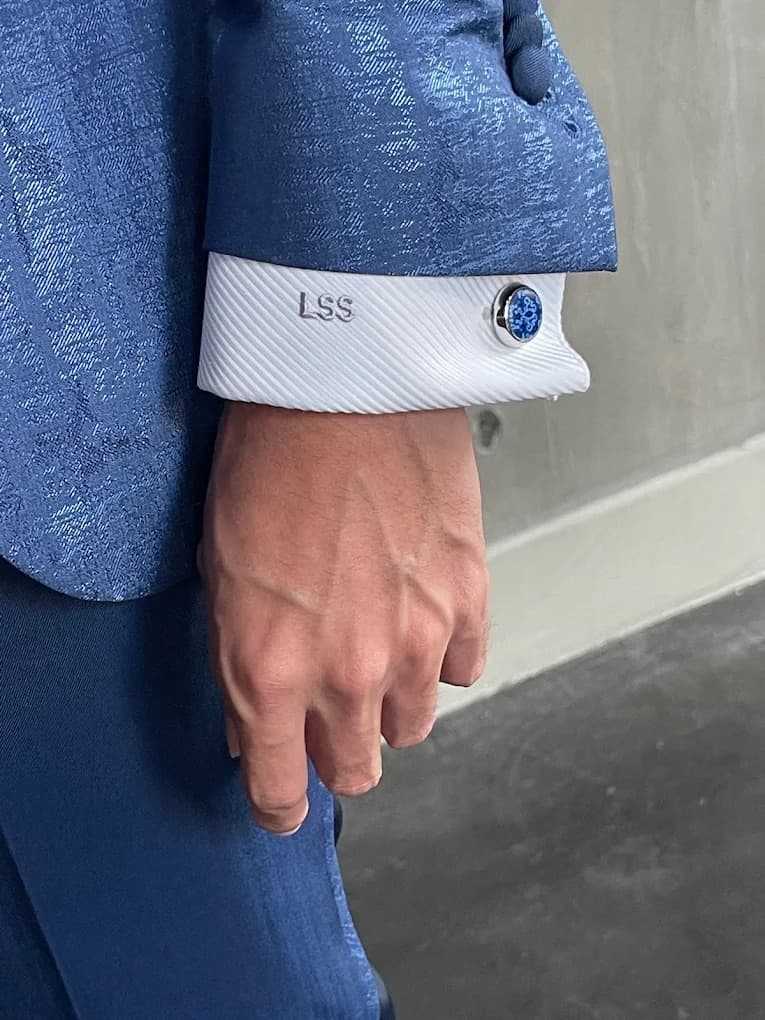
The word bespoke carries more weight than most people realize. It does not simply mean custom or expensive or well made. It carries within it a centuries-long tradition of craftsmanship, of garments spoken for before they existed, built entirely around the person who would wear them. To understand bespoke tailoring is to understand one of the most enduring human arts, and one that is very much alive today in workshops like Bespoke By CB in Miami.
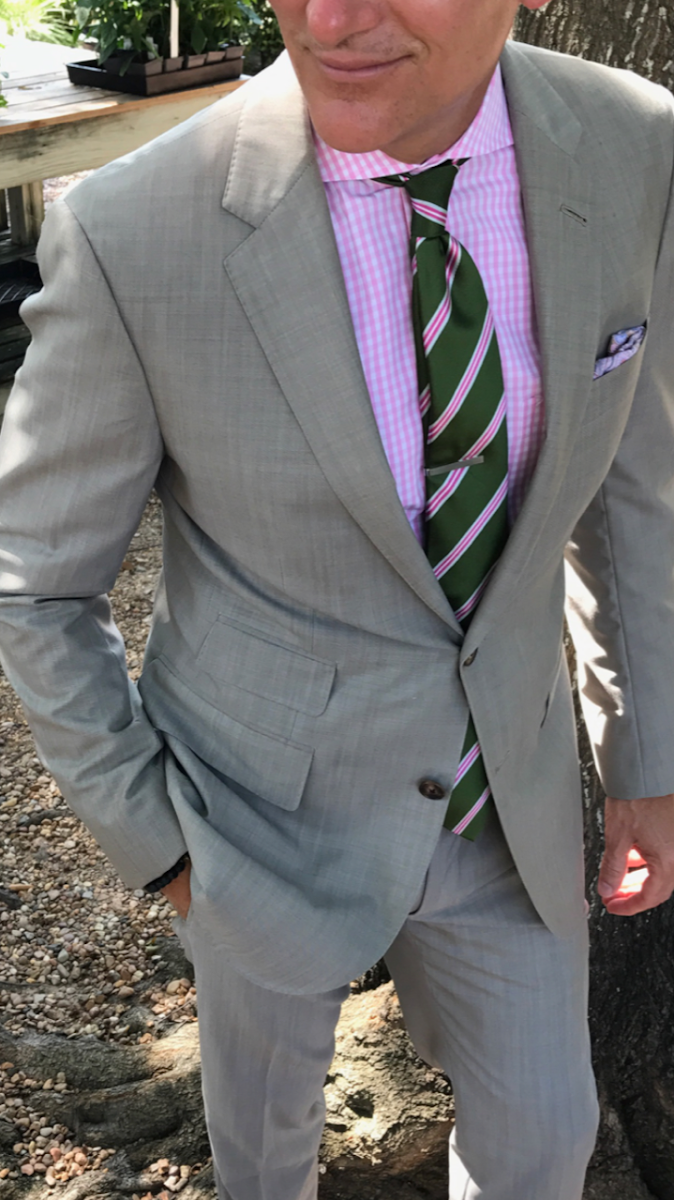
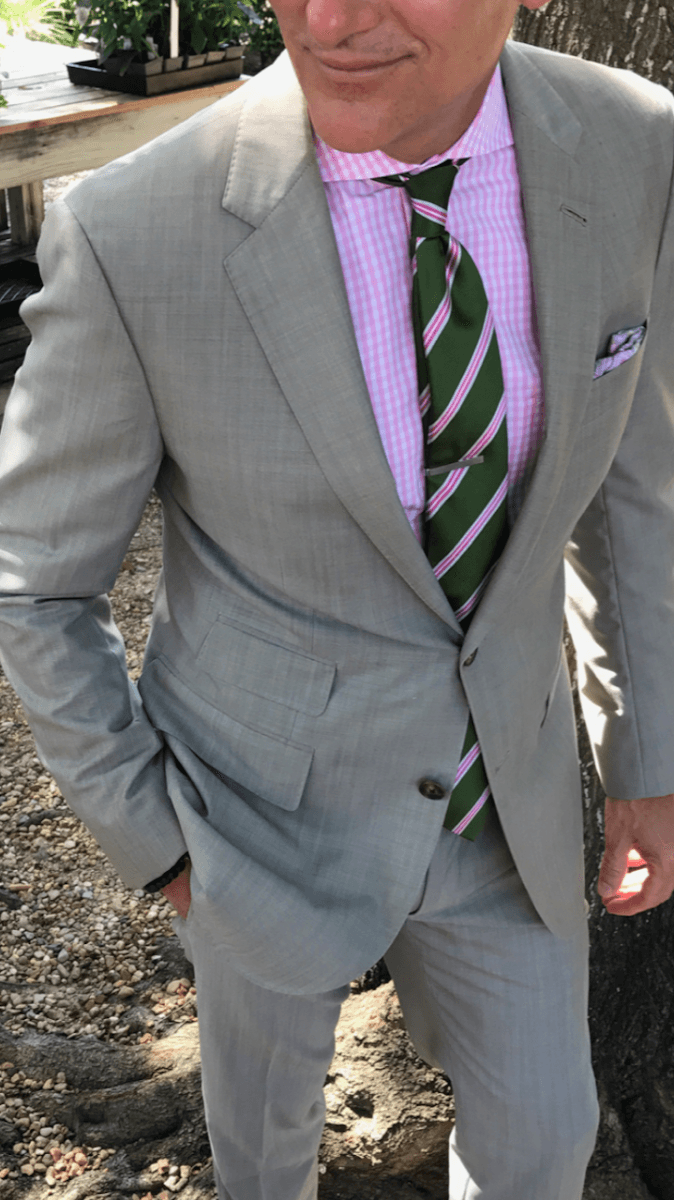
Christian Boehm has spent more than 37 years practicing the bespoke tradition in South Florida. His work is rooted in the same principles that governed the craft centuries ago: a pattern built uniquely for one person, construction by hand at every critical stage, and a relationship with the client that deepens over time into something resembling fluency. To understand where bespoke comes from is to understand why what Christian does at Bespoke By CB is genuinely different from anything available off the rack or even in most made-to-measure showrooms.
The Origins: Before Savile Row
The history of bespoke tailoring begins well before the street most people associate with it. In medieval Europe, skilled craftsmen produced garments for wealthy patrons, creating clothing that fit the individual rather than the average. These early tailors were not retailers. They were artisans operating on commission, their livelihood dependent on their ability to translate a human body into fabric and structure.
By the 16th and 17th centuries, tailoring guilds had developed in England and across Europe, formalizing the craft into a recognized profession with standards, apprenticeships, and designated trades. A journeyman tailor would spend years learning pattern drafting, cutting, and the hand-stitching techniques that give bespoke garments their unique character. This knowledge was transferred person to person, master to apprentice, over generations.
The suit as we understand it today did not exist in this early period. Men of the 17th century wore doublets and breeches, followed by the coat, waistcoat, and breeches combination that preceded the modern suit. What unified these garments across their different forms was the principle that underpins bespoke to this day: each piece was cut specifically for the person wearing it, based on a pattern derived from their individual measurements and physical characteristics.
Savile Row and the Formalization of Bespoke
The street that defines English tailoring for most of the world dates its association with the trade to the late 18th century. Savile Row in London's Mayfair district became the address of England's finest tailors during the Regency period, a development closely tied to the influence of Beau Brummell, the cultural figure whose advocacy for impeccable fit and clean, unornamented tailoring defined the gentlemen's wardrobe for generations.
Brummell's influence was extraordinary. Where the fashionable men of the 18th century had favored elaborate embroidery and ornamentation, Brummell insisted that the quality of a garment resided entirely in its cut and fit. A coat that fit perfectly needed nothing else. This principle, which seems obvious today, was genuinely radical at the time, and it set the philosophical foundation for everything Savile Row would come to represent.
By the early 19th century, Savile Row had consolidated its reputation as the center of English bespoke tailoring. Houses such as Henry Poole, Gieves, and later Anderson and Sheppard established the traditions and techniques that remain the reference point for bespoke tailoring worldwide. Each house developed its own aesthetic, its own house style, a characteristic silhouette and construction approach that clients could rely on across decades of commissions.
The process that emerged on Savile Row during this period established the benchmarks still used to distinguish true bespoke from lesser forms of custom clothing. A pattern cut from scratch for each client, using their unique measurements and the cutter's observation of their posture and physical characteristics. A basted fitting using the rough-constructed garment to check and refine the fit before the suit is finished. Extensive hand-stitching at the lapels, the chest, and the buttonholes. A construction process that could take dozens of hours for a single garment.
The British Suit and the Art of the Cut
The British bespoke tradition developed a distinctive approach to suit construction that remains one of the dominant schools in tailoring. The Savile Row aesthetic emphasizes a clean, structured shoulder with moderate padding, a suppressed waist that creates a clear silhouette, and a prominent chest that conveys authority and physical presence. The house cut of a Savile Row firm was, and still is, the particular expression of these principles that defines their aesthetic identity.
This structured approach contrasts with the other great school of bespoke tailoring, the Neapolitan tradition, which developed on the Italian island and in the workshops of Naples over a parallel timeline. Where Savile Row built in structure, Neapolitan tailors constructed lighter jackets with a softer, more draped silhouette, relying on the fabric itself rather than canvas and padding to create shape. The result was a garment that felt more relaxed in motion while still maintaining refinement.
Both traditions informed the development of bespoke tailoring as it spread beyond Britain and Italy during the 19th and 20th centuries. American custom tailoring, which developed its own character through houses in New York, Chicago, and later across the country, drew from both schools while adapting to the different physical and cultural context of its clients.
The 20th Century: Challenges and Resilience
The history of bespoke tailoring in the 20th century is partly a story of challenge. The industrial revolution had introduced ready-to-wear clothing at scale, and by the early 20th century, mass production had made suits widely accessible in a way they had never been before. For the first time in history, a man of modest means could afford to dress in a suit without visiting a tailor.
The two World Wars and the economic upheaval between them compressed spending on bespoke clothing dramatically. In Britain, the austerity regulations of World War II literally restricted the amount of fabric that could be used in a suit. Savile Row adapted, producing garments within the constraints while preserving as much of the craft as conditions allowed.

The postwar period brought a cultural reassessment of clothing that created further pressure on traditional tailoring. The rise of designer ready-to-wear in the 1960s and 1970s shifted attention away from the bespoke tradition toward branded fashion. Clients who might previously have built their wardrobes at a tailor began building them at designer boutiques instead.
Yet bespoke tailoring did not disappear. It contracted, concentrated, and refined. The houses and practitioners who survived the 20th century's challenges were those who maintained the highest standards, those whose work was genuinely irreplaceable by the ready-to-wear industry because it was built on individual relationships, individual patterns, and a level of craft that no factory could replicate.
The Global Spread: Bespoke Beyond Savile Row
As the 20th century progressed, the bespoke tradition spread beyond its European origins in ways that enriched rather than diluted it. American tailors developed their own significant traditions, adapting the craft to American bodies, American work environments, and American aesthetic preferences. The Brooks Brothers sack suit became a cultural artifact in its own right, though it represented a domestication of bespoke principles rather than their fullest expression.
The truly significant development was the emergence of skilled practitioners outside the traditional tailoring centers who had trained in the old schools, learned their craft from masters in the tradition, and carried that knowledge to new markets. This is exactly the lineage that informs Christian Boehm's practice at Bespoke By CB in Miami.
Christian's 37-plus years in the craft represent a direct connection to the principles that have governed bespoke tailoring since its formalization on Savile Row. The pattern drafted from scratch for each client. The multiple fittings that allow the cutter to refine the garment as it takes shape on a specific body. The hand-stitching at the critical points of the jacket, the lapels, the buttonholes, and the canvas, that distinguish bespoke construction from the fused, factory-sewn alternatives that dominate the ready-to-wear market.
What Bespoke Actually Means
The term bespoke has been stretched considerably in contemporary commercial language. Ready-to-wear brands routinely describe their made-to-measure programs as bespoke. Online services offering minimal customization use the word to suggest a level of craft and personalization they do not actually provide. Understanding what the term genuinely means helps clients evaluate what they are actually being offered.
True bespoke tailoring has several defining characteristics. The pattern is created from scratch for each individual client, not modified from a standard block. The garment goes through one or more basted fittings before it is finished, allowing the cutter to assess and refine the fit as the garment takes shape on the client's actual body. Key elements of the construction, particularly the chest canvas, the lapels, and the buttonholes, are executed by hand. The entire process is supervised by an experienced craftsman who knows the client's body and maintains the pattern over time.
By these standards, made-to-measure, however good, is a different category. Made-to-measure starts from a pattern that already exists and adjusts it to a client's measurements. It is often excellent. It is not bespoke. At Bespoke By CB, the commitment is to the genuine standard, a pattern created for each client and a process that honors the tradition of the craft.
Bespoke Tailoring in Miami Today
Miami is an unusual setting for a bespoke tailoring practice in some respects. The city's climate, its cultural diversity, and the particular character of its professional and social environments create demands that differ from the contexts in which the Savile Row tradition developed. Heavy wools and structured British silhouettes, however magnificent in London, do not serve Miami clients well in the heat of a South Florida summer.
What Christian Boehm has developed over more than three decades in Miami is a practice that is genuinely bespoke in its methods and philosophy while being perfectly calibrated to the city and its people. The fabrics he recommends and stocks, from the lightweight tropical wools of Scabal and Dormeuil to the breathable linen and wool-linen blends that handle Miami's climate without sacrificing elegance, reflect a deep understanding of what the craft requires in this specific environment.
The clients he serves, professionals in Brickell and Coral Gables, grooms planning ceremonies across Miami-Dade, Broward, and Palm Beach counties, executives whose wardrobes need to work in both boardrooms and outdoor events, are the modern equivalent of the patrons who made bespoke tailoring possible over its centuries of development. They are people for whom clothing matters, who understand that a garment built for their specific body is fundamentally different from anything they can buy off the rack, and who value the relationship with a craftsman who knows their body, their preferences, and their life well enough to serve them year after year.
That relationship is, ultimately, the most enduring element of the bespoke tradition. It is not just about the garment. It is about the connection between a skilled practitioner and a client who trusts them with something as intimate as how they present themselves to the world.
Learn more about the full bespoke suit process and what to expect when you commission a custom garment at Bespoke By CB. You can also explore the difference between made-to-measure and true bespoke for a deeper understanding of what the craft actually involves.
FAQ: The History of Bespoke Tailoring
What does the word bespoke actually mean?
Bespoke comes from an old English verb meaning to speak for something in advance, to commission it. A bespoke garment was one spoken for before it existed, ordered and built specifically for one person. The term entered tailoring language in the 17th and 18th centuries and has been associated with the highest level of custom clothing ever since.
What makes Savile Row historically significant to bespoke tailoring?
Savile Row in London's Mayfair became the address of England's finest tailors in the late 18th century and formalized many of the practices that define bespoke tailoring today. The tradition of the individual pattern, the basted fitting, and the hand-stitched construction were codified and perfected on this street over two centuries of practice, establishing it as the global reference point for the craft.
How is bespoke different from made-to-measure?
Bespoke starts with a pattern created from scratch for each client. Made-to-measure starts with an existing pattern and adjusts it to a client's measurements. Bespoke also typically includes multiple basted fittings and significantly more hand-stitching. The result is a more precisely fitted garment that accounts for the individual client's posture, asymmetries, and physical characteristics in ways that made-to-measure cannot.
Is bespoke tailoring still relevant in the modern era?
Absolutely. The ready-to-wear industry has expanded enormously, but it cannot replicate what a skilled bespoke tailor does. Bespoke tailoring remains the only way to obtain clothing built precisely for your body, by someone who knows your body and will maintain your pattern over time. For clients who wear suits regularly, the difference in fit, comfort, and longevity justifies the investment decisively.
How do I find a genuine bespoke tailor in Miami?
Look for a clothier who offers individual pattern drafting, multiple fittings before the garment is finished, and an established track record with clients over time. Bespoke By CB, founded by Christian Boehm, has been practicing the genuine bespoke tradition in Miami for more than 37 years. Visit bespokecb.com to learn more and schedule a consultation.