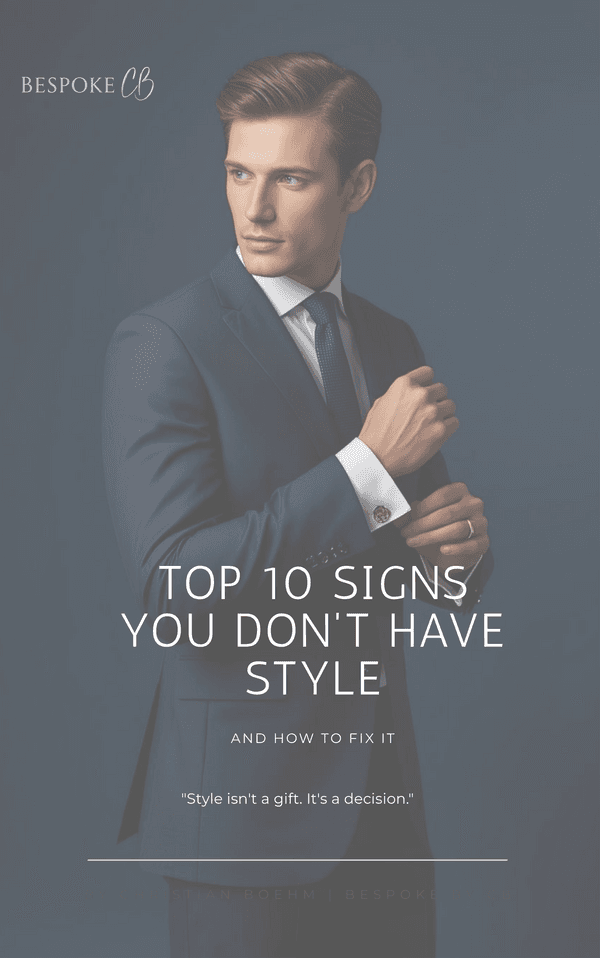
When a man puts on a tuxedo, he is wearing one of the most carefully evolved garments in the history of menswear. The proportions, the details, the fabric choices and their relationship to each other: none of it arrived by accident. Every custom tuxedo carries within it roughly 140 years of refinement, debate, social negotiation, and cultural reinvention. Understanding that history does not make a tuxedo more complicated to wear. It makes wearing one more meaningful.
At Bespoke CB, Christian Boehm has been crafting custom tuxedos for Miami's black tie season for more than 37 years. The charity galas at Vizcaya, the benefit dinners at the Pérez Art Museum Miami, the formal events at Brickell City Centre, the private celebrations that call for a man to arrive in his best: these are the occasions that reward a tuxedo built specifically for the man wearing it. This is the history behind that garment, and what it means when Bespoke CB builds one for you today.
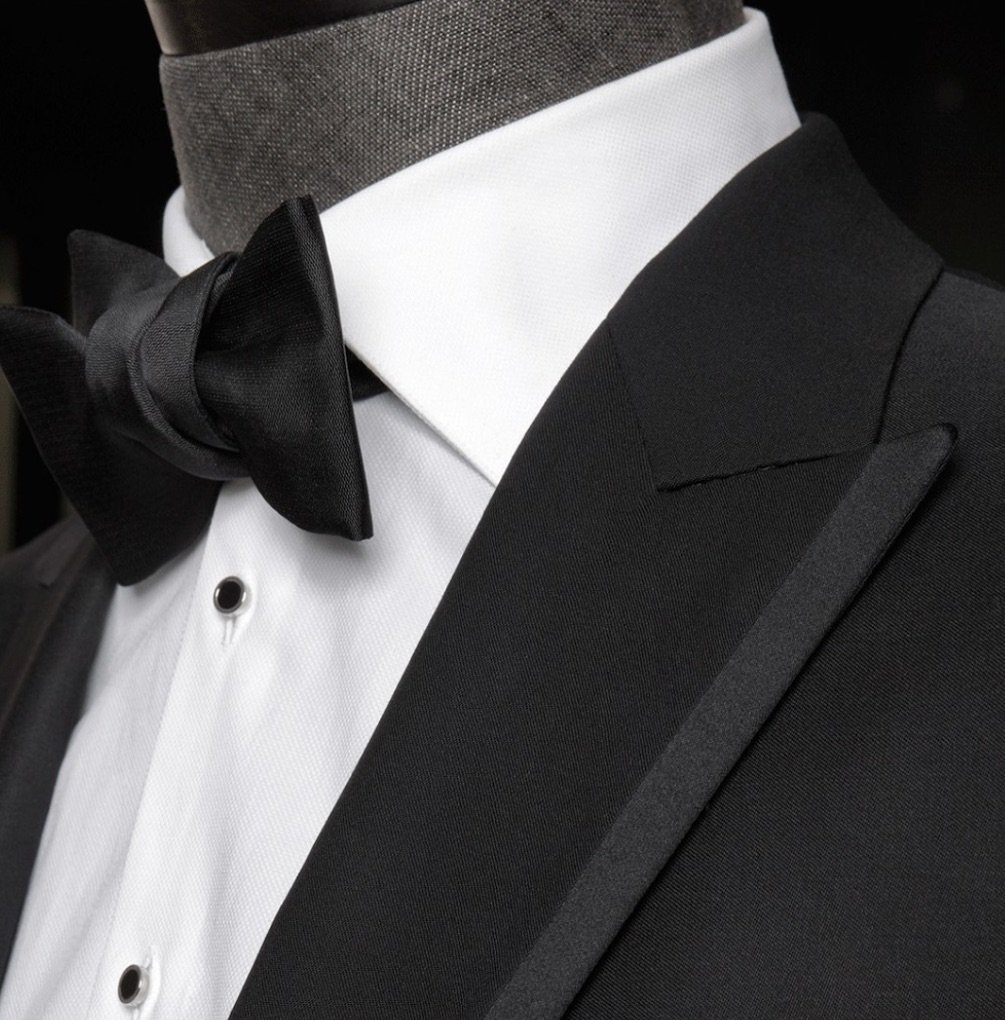
The Origin Story: Tuxedo Park and the Birth of the Dinner Jacket
The year was 1886, and the setting was Tuxedo Park, New York, an exclusive gated community about forty miles north of Manhattan that served as a retreat for the American financial elite. The Tuxedo Club had just opened, and its social calendar was active and demanding. It was here, at an autumn ball, that a group of young American men appeared in a new style of formal jacket: a tailless, single-breasted black coat with satin lapels, worn without the traditional swallow-tail coat that had been the standard of formal evening dress since the early nineteenth century.
The story is commonly associated with Griswold Lorillard, heir to the tobacco fortune, who is credited with introducing the style to the Tuxedo Park social scene. Whether Lorillard originated the design or simply popularized it in American society, the result was decisive. Within years, the garment associated with that community's name had become the defining piece of American formal menswear.
The design itself drew on an English innovation. The Prince of Wales, later King Edward VII, had been wearing a similar shorter evening coat at his estate at Sandringham for informal evening occasions, departing from the elaborate formality of the frock coat and the ceremony of the white-tie tailcoat. The American interpretation at Tuxedo Park took this English informality and transformed it into an American social institution.
The Tuxedo Crosses the Atlantic
The dinner jacket took somewhat longer to establish itself in Europe, where the formality traditions were older and more entrenched. White tie and the full dress tailcoat remained the standard for formal evening occasions across European society well into the early twentieth century, and the dinner jacket was initially regarded as an informal alternative appropriate only for smaller gatherings and less ceremonious occasions.
However, the dinner jacket's practical advantages were difficult to argue against. It was less elaborate to put on, more comfortable to wear for an extended evening, and less physically restrictive than the white-tie ensemble with its stiff shirt and elaborate accessories. By the early decades of the twentieth century, the dinner jacket had become the standard of formal evening wear for most occasions below the level of state dinners and the most ceremonious court events.
The terminology settled into its now-familiar pattern: Americans called it the tuxedo, after its place of origin in American social life. The British called it the dinner jacket, a term that remains in use in British English. The French called it le smoking. The garment was the same; the names reflected the different cultural contexts in which it had been adopted and naturalized.
Decade by Decade: The Tuxedo Through the Twentieth Century
The twentieth century tested the tuxedo across decades of social upheaval, cultural change, and shifting aesthetic ideals. The garment survived all of it, adapting at each stage while retaining its essential identity.
The 1920s brought the tuxedo into the golden age of American formal entertainment. The era of speakeasies, jazz clubs, and the great ballrooms of New York and Chicago made the dinner jacket ubiquitous for any man who moved in social circles. The silhouette of the period was long and lean, with single-breasted jackets, wide lapels, and the elegant understatement that characterized Jazz Age formality.
The 1930s and 1940s saw the tuxedo associated with Hollywood's construction of masculine glamour. Fred Astaire danced in white tie and the finest formal wear, but the dinner jacket was everywhere in the imaginary of the era's most sophisticated men. The tuxedo became the garment of aspirational formal occasions, the signal that the evening mattered.
The 1960s brought the Rat Pack and their particular interpretation of effortless formal dressing. Frank Sinatra, Dean Martin, and Sammy Davis Jr. made the tuxedo feel simultaneously impeccable and relaxed, worn with the ease of men who were entirely comfortable in formal clothes. The shawl collar tuxedo became associated with this era's specific brand of cool.
The 1970s pushed the tuxedo through its most experimental decade. Velvet jackets in burgundy and midnight blue, ruffled shirts, wide bow ties, and polyester constructions tested the limits of what the dinner jacket could absorb before losing its identity. The decade ultimately demonstrated that certain core elements of tuxedo design were structural rather than stylistic: remove them, and the garment becomes something else entirely.
The 1980s and 1990s returned the tuxedo to its more classical proportions, with the shoulder-dominated silhouette of the eighties giving way to the minimalism of the nineties. Both decades reinforced the value of quality construction and appropriate fit as the central determinants of how a tuxedo performs.
The Modern Tuxedo: What Changed and What Stayed the Same
Contemporary tuxedo design has retained the essential vocabulary of the form while allowing for meaningful individual expression. The satin or grosgrain lapels remain the defining decorative element. The single-button or double-button closure at the jacket front remains standard. The matching satin or grosgrain side stripe on the trouser remains the expected detail that completes the ensemble.
What has evolved is the range of acceptable expression within those parameters. Peak lapels have returned to favor alongside the classic notch and shawl. Double-breasted tuxedo jackets have experienced a revival among men who appreciate the additional formality and presence they provide. Midnight navy has become a widely accepted alternative to black as the primary tuxedo color, particularly flattering under artificial light where navy reads as darker and richer than black itself.
The fit revolution that has transformed all of menswear in recent decades has been particularly consequential for formal wear. A properly fitted tuxedo, cut to the specific measurements and proportions of the man wearing it, is categorically superior to the rented or off-the-rack alternatives that remain the default for most men facing a black tie occasion. The difference is visible from across a room.
Miami's Black Tie Culture: Where the Tuxedo Lives Today
Miami's formal event calendar is among the most active in the American South. The city's philanthropic culture, its arts institutions, and its status as a gathering point for the international community generate a consistent demand for formal wear that extends throughout the year and peaks in the winter social season.
The Pérez Art Museum Miami hosts benefit galas and formal events that attract Miami's cultural and business leadership. Vizcaya Museum and Gardens has served as the setting for some of the city's most memorable formal occasions, its Italian Renaissance gardens providing a backdrop that rewards the full ceremony of black tie dressing. The Brickell City Centre complex hosts corporate events and social occasions that call for formal wear throughout the social season.
Charity events supporting causes from education to healthcare to the arts fill Miami's formal calendar from October through April. These are the occasions that justify the investment in a custom tuxedo. A rental will get a man through a single evening; a custom tuxedo built by Christian Boehm will serve him across a decade of Miami's most important occasions.
For a guide to decoding Miami's black tie dress codes, what to wear to a Miami gala covers the full spectrum of formal occasion dressing. And for those who have never commissioned a custom tuxedo, custom tuxedo options in Miami provides an overview of what is available in the market. For a deeper look at tuxedo styling options, the best custom suits in Miami covers the full range of formal and semi-formal custom options.
The Bespoke Tuxedo at Bespoke CB: How It Is Made Today
A custom tuxedo commission at Bespoke CB begins with a consultation about the specific occasions you attend and how you want to present yourself at them. Christian Boehm, with more than 37 years of formal wear experience, guides you through the decisions that define the garment: lapel style, button configuration, fabric choice, trouser cut, and the finishing details that distinguish a tuxedo built for a specific man from one built for a generic size.
Fabric selection covers the full range of appropriate tuxedo wools, from classic black worsted to midnight navy tropical weights suited to Miami's climate. The lapel facing, the trouser stripe, and the accompanying shirt and accessories are all considered as part of a coherent formal presentation rather than isolated individual decisions.
The process runs 8 to 12 weeks from initial consultation to delivery, with multiple fitting sessions along the way. Each fitting refines the garment's relationship to your body, addressing the proportions that only reveal themselves as the construction progresses. By the time the finished tuxedo arrives, it has been built for you specifically: your measurements, your occasions, your sense of how a formal garment should carry itself in the room.
Frequently Asked Questions
When did the tuxedo originate?
The tuxedo as a distinct style of formal evening wear emerged in 1886 at Tuxedo Park, New York, where a group of young American men wore tailless dinner jackets to a formal ball at the Tuxedo Club. The style drew on an English precedent associated with the Prince of Wales, who had been wearing a similar informal evening coat at his Sandringham estate. From that American debut, the garment spread globally over the following decades.
What is the difference between black tie and white tie?
Black tie, the modern standard of formal dress, calls for a tuxedo or dinner jacket with matching trousers, a formal shirt, and a black bow tie. White tie is a higher level of formality, requiring a full dress tailcoat, white waistcoat, white bow tie, and the full ceremonial accessories associated with the most formal occasions in Western dress. For the vast majority of Miami's formal events, black tie is the correct standard.
Is midnight navy a correct choice for a tuxedo?
Yes. Midnight navy has become a widely accepted and sophisticated alternative to black for formal wear. Under artificial light, the color of virtually all evening events, navy reads as darker and richer than pure black. Many experienced formal dressers consider midnight navy the more elegant choice precisely because it shows more depth and character under evening lighting conditions.
How does a custom tuxedo compare to renting for a Miami gala?
A rented tuxedo provides a single night of approximate fit with no investment in quality or longevity. A custom tuxedo from Bespoke CB fits your specific measurements, is built from quality materials, and serves you across years of Miami's formal events. For men who attend black tie occasions with any regularity, the custom investment pays for itself across a small number of wearings, and the quality and fit difference is visible to anyone in the room.
How long does a custom tuxedo take at Bespoke CB?
The full bespoke tuxedo process at Bespoke CB runs 8 to 12 weeks from the initial consultation through final delivery. The process includes a consultation, fabric and detail selection, comprehensive measurements, and multiple fitting sessions that refine the garment progressively. Plan accordingly if you have a specific event date and want the garment to be delivered comfortably in advance of it.
Commission Your Custom Tuxedo for Miami's Black Tie Season
Bespoke CB's showroom is in Brickell, Miami. If you have a gala, a charity event, a formal wedding, or any occasion on Miami's black tie calendar, the time to begin the tuxedo commission is now. Christian Boehm brings more than 37 years of formal wear expertise to every consultation, and the result is a garment that carries 140 years of tuxedo history in a cut built specifically for you.
Schedule your custom tuxedo consultation at Bespoke CB today.