What to Look for in a Custom Tailor
Choosing a custom tailor is one of the most personal decisions you will make for your wardrobe. The right tailor becomes a long-term partner: someone who understands your body, your style, and your preferences over years and dozens of garments. The wrong choice means wasted money and disappointing results.
In Miami, the stakes are higher than in most cities. You are dressing for a market that understands style, where professional appearance matters enormously, and where the climate creates specific technical demands that many tailors simply are not equipped to meet. The wrong fabric in Miami heat will ruin your day. The wrong fit in a Brickell boardroom will undermine your confidence.
After 37 years of custom tailoring in Miami, here is what I tell every new client to consider before committing to any tailor.
1. Measurements Matter: How Many Do They Take?
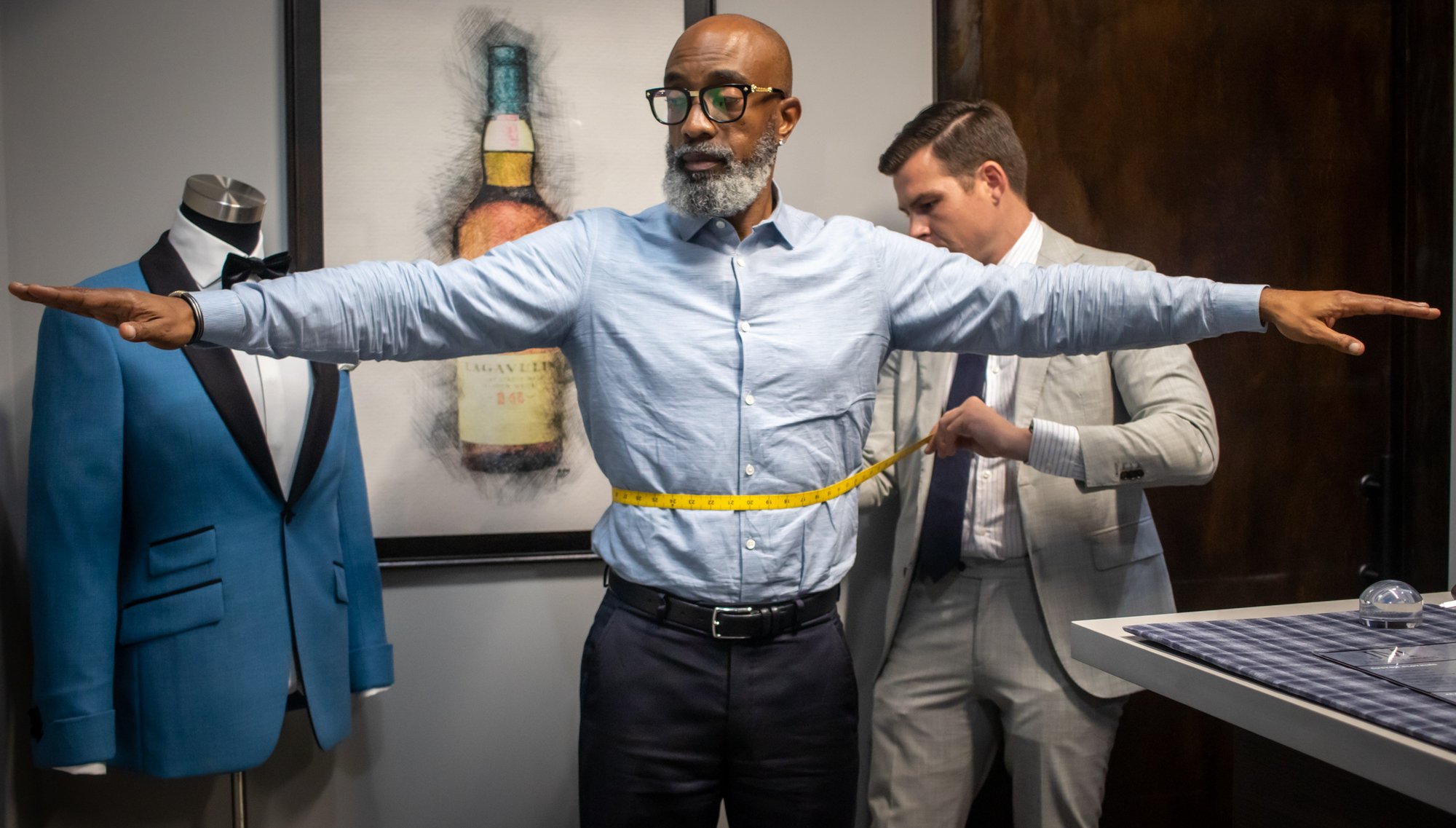
This is the single biggest differentiator between true bespoke and everything else. A true bespoke tailor takes 30 or more unique body measurements. Made-to-measure operations typically take 10 to 15. Off-the-rack takes zero.
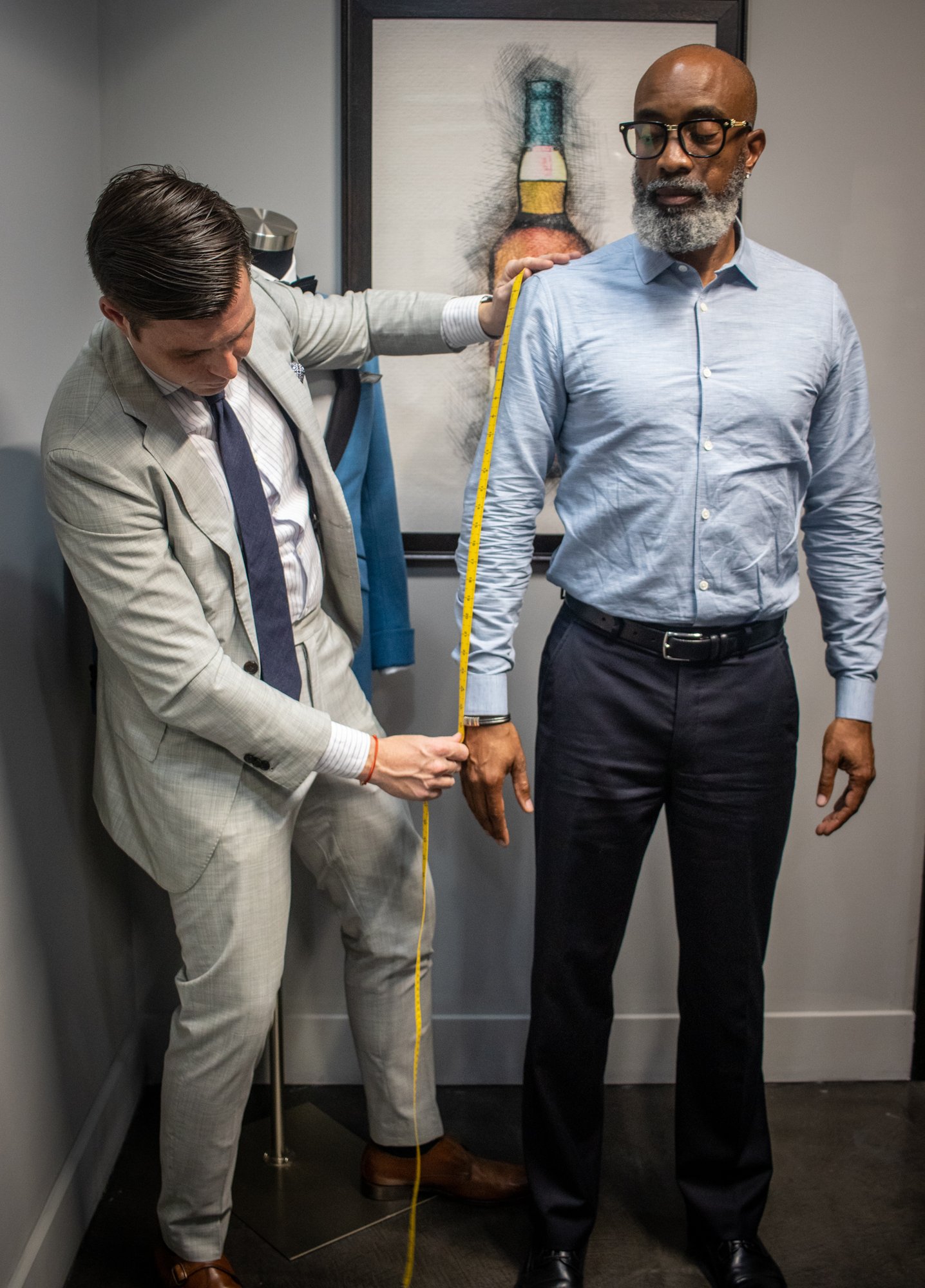
At Bespoke By CB, I take 34+ measurements for every client. Why? Because your left shoulder may sit slightly higher than your right. Your posture, your stance, the way you carry your arms: these all affect how a garment should be cut. I also measure your seat, your thigh circumference, and the drop from your natural waist to where your trousers will sit. Fewer measurements mean more assumptions, and more assumptions mean a less precise fit.
Ask any prospective tailor directly: how many measurements do you take? If they cannot give you a specific number, or if the number is significantly below 30, you are not looking at true bespoke. You are looking at an enhanced made-to-measure service: which can still be excellent, but is a different product entirely.
A related question: do they measure you in the clothing you plan to wear underneath? A dress shirt adds thickness at the collar and shoulders. A dress trouser sits differently depending on whether you wear a belt or braces. A thorough tailor accounts for these real-world variables.
2. True Custom vs. Made-to-Measure
These terms are often used interchangeably in marketing, but they are fundamentally different products:
Bespoke (true custom): A unique pattern is drafted from scratch specifically for your body. Every element: fabric, lining, buttons, lapel width, pocket placement, sleeve pitch, chest canvas: is your choice. The result is a garment that does not exist anywhere else in the world. It is made for you and only you.
Made-to-measure: An existing base pattern is adjusted to approximate your measurements. You get some fabric and detail choices, but the base pattern limits what is possible. If the base pattern has a certain shoulder construction or chest shape, you are working within those constraints even with your measurements applied.
The practical difference is visible in the fit. A bespoke pattern accounts for your specific posture, proportions, and body quirks. A made-to-measure pattern accounts for averages. For most people, the average is not quite right. For some people, it is significantly wrong.
If a tailor cannot tell you clearly whether they draft a new pattern or modify an existing one, that is a significant red flag. The answer to this question tells you more about their operation than almost anything else.
3. Fabric Selection
A great tailor offers fabrics from the world's finest mills: not a limited in-house collection of synthetic blends or mystery fabrics. Look for names like Scabal, Dormeuil, Loro Piana, Holland & Sherry, Vitale Barberis Canonico, and Drago. These mills produce cloth that drapes beautifully, breathes properly, and lasts for years: often decades with proper care.
In Miami specifically, you want a tailor who understands warm-weather fabrics. They should be able to speak knowledgeably about the difference between a 7-ounce tropical worsted and a 9-ounce year-round wool, and why each matters in South Florida's heat. They should know which linens hold their shape and which will wrinkle by noon. They should be able to recommend a fabric that performs beautifully at an outdoor Art Basel event in December and an indoor boardroom meeting in August.
At Bespoke By CB, I personally curate the fabric selection from these mills. I do not carry house brands or mystery fabrics. When you choose a Loro Piana summer wool or a Dormeuil winter flannel, you know exactly what you are getting: and I can explain precisely why I am recommending it for your specific use case.
Be wary of tailors who push a particular fabric without asking about your needs. The right fabric depends on your lifestyle, your events, your travel schedule, and your climate. A good tailor asks before recommending.
4. The Fitting Process
A proper bespoke process includes at least one fitting during construction: often called a basted or canvas fitting. This is where the garment is loosely assembled in rough form and tried on your body before final finishing. The tailor checks the shoulder line, collar fit, chest balance, sleeve pitch, jacket length, and trouser break. Adjustments are marked, noted, and executed before the garment is completed.
This fitting is not optional. It is where the difference between a good fit and a great fit is made. Even with 34 measurements, a body in motion and gravity reveal things that measurements alone cannot. The collar standing away from the neck. The right sleeve rotating slightly forward. The seat of the trouser pulling when you walk. These corrections require a physical fitting to identify and address.
If a tailor promises a perfect fit with zero fittings, they are not doing bespoke: they are doing made-to-measure and calling it something grander. Demand at least one basted fitting during construction. Any tailor unwilling to provide this is cutting corners.
At our first fitting, I check everything: shoulder line, collar fit, sleeve length, jacket length, and trouser break. Any adjustments are recorded in your personal profile so future orders are even more precise. Over time, your file becomes a comprehensive picture of your fit preferences, and each new garment is more precise than the last.
5. Where the Consultation Happens
In South Florida, you should not have to drive across town and fight traffic for a fitting. A good tailor offers in-home or in-office consultations as part of their standard service. I come to you: your home, your office, or our Miami Brickell showroom. For clients outside South Florida, we offer virtual consultations and can coordinate measurements through a trusted local tailor in your city.
The consultation should never feel rushed. When I sit down with a new client, I spend time understanding who they are, what they do, and what they want from their wardrobe. This conversation is as important as the measurements. The best tailors are also students of their clients.
6. Pattern Storage and Reordering
One of the greatest advantages of true bespoke is that your pattern is kept on file indefinitely. Once I have your measurements and have built your personal pattern, you can order new garments from anywhere in the world without being re-measured. A phone call or email is enough to initiate a new order.
This matters more than most clients realize at first. Over the years, your lifestyle changes. You need a new suit for a promotion. You want a second tuxedo for gala season. You need a casual blazer for a new style direction. Having your pattern on file means every one of these orders is faster, easier, and even more precisely fitted than the first.
Ask any prospective tailor: do you keep patterns on file, and for how long? Some tailors discard patterns after a few years. At Bespoke By CB, your pattern stays on file indefinitely. You are investing in a relationship, not a transaction.
7. Construction Quality Indicators
When evaluating a tailor, ask specifically about their construction methods. Key indicators of quality work include:
Floating canvas vs. fused interlining: floating canvas breathes, drapes naturally, and lasts indefinitely; fused interlining blocks airflow and can delaminate after dry cleaning
Hand-stitched lapels: the lapel roll is set by hand using a pick stitch; machine-stitched lapels lack the softness and natural roll of hand work
Hand-worked buttonholes: each buttonhole finished with a silk gimp cord, not machine-cut; the difference is visible and tactile
Lining choices: for Miami, half-lined or unlined jackets are often preferable; a good tailor will discuss this with you rather than defaulting to full lining
Baste stitching at fitting: the garment should come apart easily at the fitting to allow corrections; over-assembled garments at the fitting stage suggest rushed work
Questions to Ask Before You Commit
How many measurements do you take per client?
Do you draft a new pattern or modify an existing one?
Which fabric mills do you carry?
How many fittings are included, and at what stages?
Do you keep my pattern on file for reorders?
Can you come to me for the consultation, or do I need to come to you?
What is the turnaround time?
What happens if the fit is not right after delivery?
What construction method do you use: floating canvas or fused?
Are buttonholes hand-finished or machine-cut?
The answers to these questions tell you everything you need to know about whether a tailor is the right fit: pun firmly intended. A confident, experienced tailor will answer all of them clearly and without hesitation. Evasive answers are information too.
Red Flags to Watch For
Over 37 years, I have heard about every type of disappointment clients have experienced with other tailors. The most common red flags:
Vague language about process: terms like "custom fit" and "tailored for you" without specifics about measurements, pattern drafting, or fittings
No fitting during construction: a tailor who delivers your finished suit as the first try-on is not doing bespoke
Unusually short turnaround: quality bespoke takes 8 to 12 weeks; two-week turnaround on a "custom suit" means shortcuts
Limited fabric selection: a narrow swatch book from undisclosed mills suggests the tailor is not working at the level their marketing implies
No answer on canvas type: if they cannot explain the difference between floating canvas and fused interlining, they are not working at a master level
Ready to Experience True Bespoke?
If you are in Miami, Fort Lauderdale, West Palm Beach, or anywhere in South Florida, I would love to show you the difference that 37+ years of experience and 34+ measurements make. Book a consultation at our Brickell showroom, or I will come to you: your home or your office, wherever is most convenient. There is no obligation, and there is no better first step toward a wardrobe that truly fits.
The Difference a Professional Clothier Makes
A professional clothier occupies a fundamentally different role than a tailor or a retail salesperson. A tailor executes construction work on a garment that has already been designed. A retailer sells garments that have already been manufactured. A clothier works with you from the beginning: understanding your needs, guiding your choices, managing the construction process, and delivering a finished garment that is precisely right for your body and your life.
Christian Boehm has spent more than 37 years building relationships with clients across South Florida. These relationships span decades and multiple garments, which means he understands your wardrobe, your preferences, and your body in ways that no single transaction ever could. This continuity of service is what makes the clothier-client relationship so valuable and so different from any other purchasing experience in menswear.
Why Bespoke By CB Is Miami's Trusted Custom Clothier
Christian Boehm has spent more than 37 years perfecting the craft of custom clothing. From his base serving the Miami area, he has dressed executives, professionals, philanthropists, and families across South Florida, including Brickell, Coral Gables, Palm Beach, Boca Raton, and beyond. Every garment that leaves the Bespoke By CB studio carries his signature commitment to precision, quality, and personal service.
What distinguishes Bespoke By CB from other custom clothiers is not just the quality of the garments, though that quality is exceptional. It is the relationship between clothier and client. Christian takes the time to understand your lifestyle, your professional needs, your social calendar, and your personal style before recommending a single fabric or cut. The result is clothing that fits not just your body but your life, clothing that works seamlessly across every occasion and every season.
The bespoke process at Bespoke By CB typically takes 8 to 12 weeks from initial consultation to final delivery. During that time, clients work directly with Christian and his team on fabric selection, construction details, and the iterative fitting process that ensures every dimension is correct. The experience is collaborative, educational, and genuinely enjoyable for men and women who take their appearance seriously.
Ready to experience the difference that bespoke clothing makes? Visit Bespoke By CB to schedule your consultation with Christian Boehm. The full bespoke process takes 8 to 12 weeks and produces a garment that fits your body and your life in ways no off-the-rack option can match.