
Why Fabric Is the Single Most Important Factor in a Luxury Suit
When most people think of a luxury suit, they picture sharp tailoring, a perfect fit, and an elegant silhouette. But the truth is that none of those things matter if the fabric is wrong. A beautifully cut suit made from mediocre cloth will look flat, wrinkle easily, and lose its shape within months. The same cut, executed in a world-class fabric from a legendary mill, will drape beautifully, breathe naturally, and last for decades.
At Bespoke By CB, we have spent over 37 years helping Miami's most discerning gentlemen understand that fabric is the foundation of everything. You can adjust a pattern, refine a fit, and tweak a silhouette, but you cannot upgrade a fabric after the suit is cut. The cloth you choose determines how the suit feels against your skin, how it moves when you walk, how it responds to Miami's humidity, and how it looks after twelve hours of wear.
This guide will walk you through everything you need to know about luxury suit fabrics, from the world's finest mills to the nuances of thread counts, fiber types, and climate-specific selections. Whether you are investing in your first bespoke suit or adding to a wardrobe of dozens, understanding fabric is the key to making choices you will be happy with for years to come.
What Makes a Suit Fabric Luxury
Not all wool is created equal. Not all cotton is created equal. And certainly not all suit fabrics are created equal. The difference between a mid-tier fabric and a true luxury fabric comes down to four factors: fiber quality, thread count, mill reputation, and weaving technique.
Fiber Quality
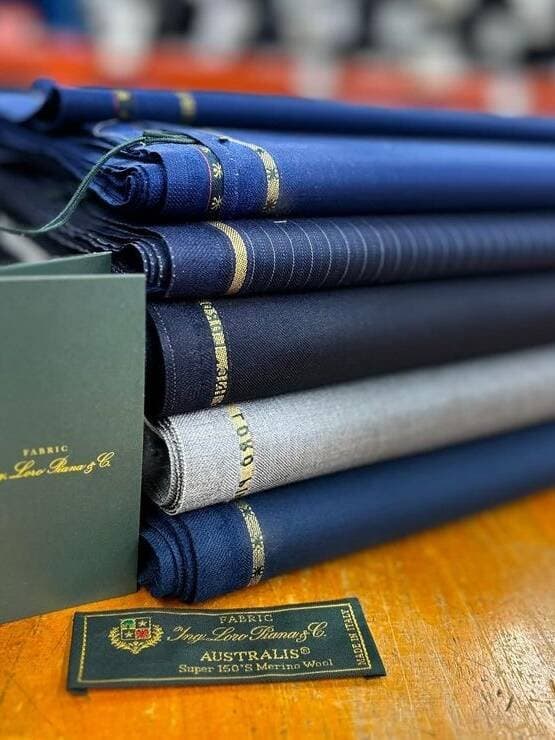
The finest suit fabrics begin with the finest raw fibers. Merino sheep bred in specific regions of Australia and New Zealand produce wool with fibers measuring between 11 and 19 microns in diameter. The lower the micron count, the finer and softer the fiber. Ultra-fine merino wool, such as that used by Loro Piana in their renowned fabrics, can measure as little as 11 microns, which is finer than cashmere. This is the starting point for any luxury fabric. Without exceptional raw material, no amount of skill at the mill can produce a luxury cloth.
Thread Count
Thread count in suiting fabric is measured using the "Super" numbering system, which we will explain in detail later. In simple terms, a higher Super number indicates a finer yarn, which produces a lighter, smoother, and more luxurious hand feel. However, thread count is only one measure of quality. A Super 120s fabric from a top-tier mill will outperform a Super 150s fabric from a mediocre mill every time. The skill of the spinner and weaver matters as much as the fineness of the yarn.
Mill Reputation
The world's great fabric mills have spent centuries perfecting their craft. Mills like Scabal, Dormeuil, and Holland and Sherry have relationships with the best wool growers in the world, access to the rarest fibers, and weaving traditions that date back generations. When you buy fabric from a prestigious mill, you are buying centuries of accumulated expertise. The mill's reputation is your guarantee of consistency, quality, and performance.
Weaving Technique
How the yarn is woven into cloth affects everything from drape to durability. A plain weave produces a crisp, flat fabric ideal for summer. A twill weave creates a diagonal pattern that drapes beautifully and resists wrinkles. A hopsack weave offers a textured, open surface that breathes exceptionally well. The same yarn, woven three different ways, will produce three completely different fabrics. Luxury mills understand this and offer dozens of weave variations within the same fiber category, giving you precise control over the character of your suit.
The World's Finest Fabric Mills
There are perhaps a dozen mills in the world that consistently produce true luxury suiting fabrics. Each has its own personality, strengths, and signature cloths. At Bespoke By CB, we curate our fabric selection from the very best of these mills, ensuring that every option we present to a client meets our exacting standards.
Loro Piana
Founded in 1924 in northern Italy, Loro Piana is synonymous with the absolute pinnacle of luxury fabrics. They are perhaps best known for their access to the world's finest natural fibers, including vicuna, baby cashmere, and extra-fine merino wool. Their fabrics have a distinctive softness and a depth of color that is immediately recognizable to anyone who has handled them. Loro Piana's summer wools are exceptionally light and breathable, making them a favorite for Miami clients who want luxury without sacrificing comfort in the heat.
Scabal
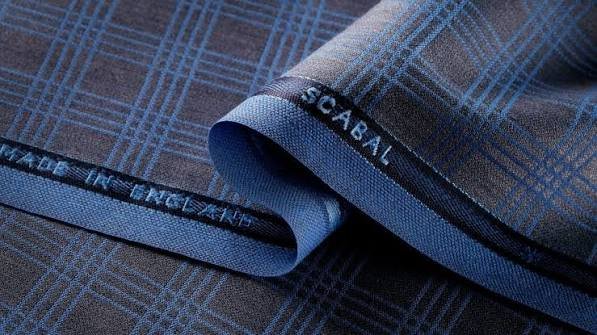
Based in Brussels, Scabal has been weaving luxury fabrics since 1938. They are known for innovation, having introduced the first Super 150s fabric, and later pushing the boundaries with Super 250s. Scabal is also famous for their Diamond Chip fabric, which incorporates microscopic diamond fragments into the weave for a subtle, unmistakable luster. Their heritage collection includes some of the most refined worsted wools available anywhere. For a client who wants a fabric that makes a quiet but definitive statement of luxury, Scabal is an extraordinary choice.
Dormeuil
A French mill with British weaving roots, Dormeuil has been supplying fabrics to tailors since 1842. Their signature cloth, Tonik, is a mohair-blend worsted that has been worn by heads of state, Hollywood legends, and business titans for decades. Dormeuil is also known for their exotic fiber blends, incorporating cashmere, vicuna, and guanaco into sophisticated luxury cloths. Their fabrics tend to have a crisp, clean hand feel with excellent recovery, making them ideal for clients who travel frequently and need suits that resist wrinkling.
Holland and Sherry
Established in 1836, Holland and Sherry is one of the oldest and most respected mills in the world. Their worsted wools are the gold standard for classic British tailoring, and their range is staggering, from rugged tweeds to the most delicate Super 200s worsteds. Holland and Sherry is particularly celebrated for their plain weave tropical wools, which are among the best hot-weather luxury fabrics on the market. For Miami gentlemen, Holland and Sherry's lightweight collections are often the first place we look when building a summer wardrobe.
Vitale Barberis Canonico
Often abbreviated as VBC, this Italian mill has been producing fabrics since 1663, making it one of the oldest continuously operating mills in the world. VBC is known for producing excellent fabrics at a more accessible luxury price point. Their Reinforced Classic collection is a workhorse for any custom wardrobe, offering Super 120s and Super 130s worsteds that balance luxury, durability, and value. VBC fabrics are an outstanding choice for clients building their first luxury wardrobe or adding everyday suits that will see regular rotation.
Super Numbers Explained: Super 120s to Super 250s
If you have ever shopped for a luxury suit, you have encountered the "Super" numbering system. Super 100s, Super 120s, Super 150s, Super 180s, all the way up to Super 250s. These numbers refer to the fineness of the yarn used to weave the fabric. Specifically, the number represents how many hanks of yarn (each 560 meters long) can be spun from one kilogram of raw wool. The finer the wool fiber, the more yarn can be produced, and the higher the Super number.
Here is a practical breakdown of what each range means for you:
Super 100s to Super 110s: Entry-level luxury. Durable, versatile, and excellent for daily wear. These fabrics form the backbone of a working wardrobe.
Super 120s to Super 130s: The sweet spot for most luxury suits. Soft enough to feel luxurious, yet durable enough for regular use. This is where most of our clients at Bespoke By CB begin their fabric journey.
Super 150s to Super 160s: Noticeably finer and softer. Ideal for special occasion suits and executive wear. Requires more careful handling but offers a truly elevated hand feel.
Super 180s to Super 200s: Exceptionally fine and luxurious. These fabrics have an almost silky texture. Best reserved for evening wear, important meetings, and occasions where you want to make an impression.
Super 210s to Super 250s: The absolute finest fabrics produced. Incredibly delicate, with a breathtaking softness. These are investment pieces meant for occasional wear, not daily rotation.
The most important thing to understand about Super numbers is that higher is not always better. A Super 250s suit is extraordinarily luxurious to the touch, but it will wrinkle easily, show wear quickly, and require careful maintenance. For a suit you plan to wear weekly, a Super 120s or Super 130s fabric from a top mill will look better, last longer, and ultimately be a wiser investment than a Super 200s fabric that starts to show wear after a few months.
At Bespoke By CB, we help clients navigate this balance between luxury and practicality every day. Christian Boehm personally guides each client through the suit fabric guide process, ensuring that the Super number you choose aligns with how often you will wear the suit, in what conditions, and for what occasions.
Luxury Wool: The King of Suit Fabrics
Wool is, and always has been, the king of suit fabrics. No other fiber offers the same combination of drape, breathability, durability, and natural elegance. Within the category of luxury wool, there are several important subcategories that every well-dressed man should understand.
Tropical Wool
Tropical wool is a plain-weave fabric that is lightweight, breathable, and ideally suited to warm climates. Despite being wool, tropical wool can feel almost cool to the touch. The open weave allows air to pass through freely, making it the go-to choice for Miami's climate. A tropical wool suit from Holland and Sherry or Loro Piana in a 7 to 9 ounce weight will keep you comfortable even in the height of a South Florida summer, while still looking crisp and professional.
Worsted Wool
Worsted wool is the most common and versatile luxury suiting fabric. The worsting process involves combing the wool fibers to align them, then spinning them into a smooth, strong yarn. The result is a fabric with a clean, flat surface that resists wrinkling and holds its shape beautifully. Worsted wool is available in every Super grade and in weights ranging from 7 ounces to 14 ounces, making it suitable for virtually any climate and occasion. If you are building a wardrobe from scratch, start with worsted wool.
Wool-Mohair Blends
Mohair comes from the Angora goat and has a natural luster that gives wool-mohair blends a distinctive, subtle sheen. These blends are exceptionally resilient, resist wrinkling better than pure wool, and have a crisp, dry hand feel. Dormeuil's Tonik fabric is the most famous example of a wool-mohair blend, and it remains a benchmark for luxury suiting. A wool-mohair suit is an outstanding choice for travel, long days, and evening events where you want a fabric that looks fresh after hours of wear.
Super Fine Wools
Super fine wools, typically Super 150s and above, are the pinnacle of wool luxury. These fabrics have a hand feel that approaches cashmere, with a smoothness and depth that is immediately apparent. They are best used for suits that will be worn occasionally rather than daily, as the extreme fineness of the yarn makes them more susceptible to wear. A super fine wool suit in a mid-grey or navy is one of the most elegant garments a man can own.
Cashmere and Cashmere Blends
Cashmere is harvested from the undercoat of cashmere goats, primarily in Mongolia and China. The fibers are incredibly fine, typically between 14 and 19 microns, which gives cashmere its legendary softness. In suiting, cashmere is rarely used alone. Instead, it is blended with wool to add softness, warmth, and a luxurious hand feel while maintaining the structure and durability that wool provides.
A wool-cashmere blend suit is the perfect choice for fall and winter wear. The cashmere adds a level of warmth and comfort that pure wool cannot match, and the fabric has a subtle, inviting softness that is immediately noticeable. For Miami clients who travel to cooler climates, a wool-cashmere blend overcoat or winter suit is an essential addition to the wardrobe.
Loro Piana produces some of the finest cashmere and cashmere blend suiting fabrics in the world. Their baby cashmere, harvested from kid goats under one year old, is among the softest natural fibers available. At Bespoke By CB, we offer a curated selection of Loro Piana cashmere blends for clients who want the ultimate in winter luxury.
It is worth noting that cashmere blends are not ideal for hot, humid climates. The very qualities that make cashmere wonderful in winter, its warmth and insulation, make it uncomfortable in Miami's heat. Reserve cashmere blends for your cold-weather wardrobe and choose lighter fabrics for South Florida wear.
Silk and Silk Blends
Silk has been associated with luxury for thousands of years, and it brings a unique set of qualities to suiting fabrics. Pure silk suiting is rare, as silk does not breathe as well as wool and can feel warm in hot weather. However, silk blends, particularly wool-silk and wool-silk-linen blends, are increasingly popular in luxury suiting.
Silk adds a natural sheen to a fabric that cannot be replicated by any synthetic treatment. A wool-silk blend has a subtle luminosity that catches the light beautifully, giving the suit a refined, formal quality. Silk also contributes to the drape of the fabric, helping it fall smoothly and elegantly.
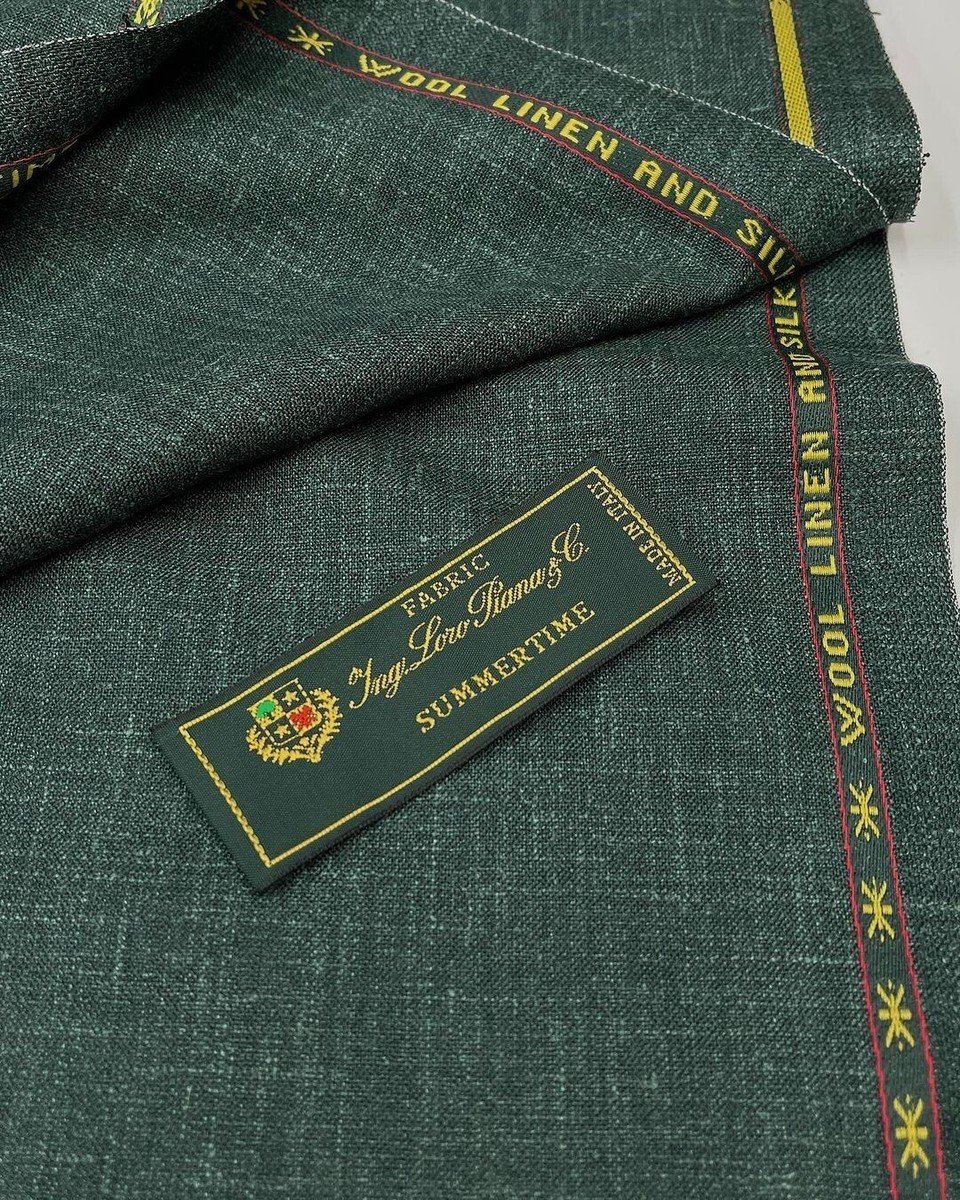
A wool-silk-linen blend is one of the most sophisticated summer fabric options available. The wool provides structure, the silk adds sheen and drape, and the linen contributes breathability and texture. This type of blend is perfect for an elegant summer suit that works equally well at a daytime event and an evening dinner.
For formal occasions, a silk blend suit in midnight blue or charcoal is a distinctive alternative to the standard navy or grey worsted. The subtle sheen elevates the fabric, making it appropriate for galas, weddings, and black-tie-optional events. At Bespoke By CB, we regularly guide clients toward silk blends for evening wear, as the fabric's natural luster is perfectly suited to low-light environments where it catches and reflects ambient light beautifully.
Linen for Luxury
Linen has a complicated reputation. It is one of the oldest textile fibers in the world, produced from the flax plant, and it has been used for clothing for over 5,000 years. Linen is extraordinarily breathable, absorbs moisture quickly, and feels cool against the skin, making it the natural choice for hot weather. However, it also wrinkles famously, which has led some to view it as too casual for formal wear.
In the luxury suiting world, linen has experienced a renaissance. The key is understanding that linen suits are meant to wrinkle. The wrinkles are part of the fabric's character, a sign that you are wearing a natural, breathable cloth rather than a synthetic imitation. Once you embrace this, linen becomes one of the most rewarding fabrics for warm-weather dressing.
Irish linen, produced primarily by mills like Baird McNutt, is considered the gold standard. It has a crisp, dry hand feel and a distinctive texture that looks better with age. Italian linen, from mills like Solbiati (now part of Loro Piana), tends to be softer and more refined, with a smoother surface. Both are excellent choices, and the preference between them comes down to personal taste.
For Miami's climate, a pure linen suit is a summer essential. A linen suit in a light weight, around 8 to 9 ounces, in a natural, cream, or light grey color, is the epitome of warm-weather elegance. It is perfect for outdoor events, beach weddings, and casual Fridays in a creative office. A wool-linen blend can extend the versatility of the fabric, adding structure and reducing wrinkling while maintaining breathability.
At Bespoke By CB, we carry a range of luxury linen fabrics from the finest European mills, and we encourage our Miami clients to consider linen not as a compromise but as a deliberate, stylish choice for hot-weather dressing.
Vicuna and Guanaco: The Rarest Luxury Fibers
If cashmere is luxury, vicuna is the impossible dream. The vicuna is a wild relative of the llama, native to the high Andes of Peru, Bolivia, and Chile. The animal produces one of the finest natural fibers in the world, measuring approximately 12 microns in diameter. Vicuna fiber is so fine and so rare that it was once reserved for Inca royalty.
There are several reasons vicuna is extraordinarily expensive. First, the vicuna cannot be domesticated. The animals must be rounded up from the wild, sheared, and released. This happens only once every two to three years, and each animal produces only about 200 grams of usable fiber. Second, vicuna was critically endangered in the 1970s, and strict conservation measures, while successful, limit the supply of fiber on the market. Third, the processing of vicuna fiber requires exceptional skill, as the fibers are so fine that they can break during spinning if not handled with extraordinary care.
A vicuna suit can cost upwards of $40,000 to $50,000, and a vicuna overcoat even more. The fabric has a softness that is almost beyond description, with a hand feel that seems to dissolve into the skin. It is also remarkably warm for its weight, as the fibers have a hollow core that traps air.
Guanaco is a related fiber, slightly less fine than vicuna but still exceptionally rare. Guanaco fiber measures around 16 microns and has a warm, reddish-brown color that is distinctive and beautiful. Like vicuna, guanaco is harvested from wild animals, making it a limited and precious resource.
Is vicuna worth the investment? For most clients, the answer is no, at least not as a first or second luxury suit. But for the collector who already has a comprehensive wardrobe and wants the absolute rarest, finest fabric in the world, a vicuna piece is the ultimate statement. At Bespoke By CB, we can source vicuna and guanaco fabrics through our relationships with Loro Piana and Dormeuil for clients who are ready for this extraordinary investment.
Choosing Luxury Fabrics for Miami's Climate
Miami presents a unique challenge for luxury dressing. The climate is hot and humid for most of the year, with temperatures regularly exceeding 90 degrees and humidity levels that can make even lightweight fabrics feel oppressive. Choosing the wrong fabric for Miami is not just a style mistake, it is a comfort disaster.
Here are the principles we follow at Bespoke By CB when selecting fabrics for our Miami clients:
Prioritize Breathability
The most important quality in a Miami suit fabric is breathability. You want a fabric that allows air to pass through, carrying heat and moisture away from your body. Open weaves, such as plain weave tropical wools and hopsack weaves, are ideal. Tight twill weaves, while beautiful, trap more heat and are better reserved for air-conditioned environments or cooler months.
Keep It Light
Fabric weight matters enormously in hot weather. We recommend fabrics in the 7 to 9 ounce range for most Miami suits. Anything above 10 ounces will feel heavy and warm, while anything below 6 ounces may lack the structure needed for a crisp, tailored look. The sweet spot for year-round Miami wear is approximately 8 ounces.
Embrace Tropical Wool
Tropical wool is the single best fabric for Miami's climate. It is wool, so it has the drape, recovery, and elegance of a luxury fabric, but it is woven in an open plain weave that breathes exceptionally well. A tropical wool suit in a Super 120s or Super 130s grade, in a weight of 7 to 8 ounces, will keep you comfortable and looking sharp even in the height of a South Florida summer. Holland and Sherry produces some of the finest tropical wools available, and they are a staple of our Miami fabric collection.
Consider Linen for Casual Elegance
For events that are less formal, linen is a natural choice for Miami. A linen suit in cream, tan, or light blue is perfect for outdoor events, beach weddings, and social gatherings where you want to look elegant but not overdressed. Embrace the wrinkles as part of the fabric's charm.
What to Avoid
Avoid heavy flannels, thick tweeds, and high-cashmere-blend fabrics for Miami day-to-day wear. These fabrics are wonderful for travel to cooler climates, but they will be uncomfortably warm in South Florida. Similarly, avoid very high Super numbers (Super 180s and above) for daily wear in Miami, as the heat and humidity, combined with perspiration, can cause these delicate fabrics to wear out more quickly than they would in a temperate climate.
How to Judge Fabric Quality
When you are holding a fabric swatch in your hand, how do you know if it is truly luxury? There are several tests you can perform, even without specialized equipment, that will tell you a great deal about the quality of the cloth.
Hand Feel
The most immediate indicator of quality is how the fabric feels in your hand. A luxury fabric should feel smooth, substantial, and alive. It should not feel scratchy, limp, or excessively slick. Run the fabric across the back of your hand, where the skin is thin and sensitive. A high-quality wool will feel smooth and slightly cool. A poor quality wool will feel dry, coarse, or harsh. This test takes seconds and is remarkably accurate.
Drape
Drape refers to how the fabric falls when held up. A luxury fabric should fall in smooth, flowing curves, not in stiff, angular folds. Hold a swatch up by one corner and let it hang. A good fabric will form a graceful curve. A stiff or heavily sized fabric will stick out at an angle. Drape is critical because it determines how the finished suit will look on your body. A fabric with poor drape will never produce an elegant suit, no matter how skilled the tailor.
Recovery
Recovery is the fabric's ability to return to its original shape after being creased. Take the swatch and crush it lightly in your fist for a few seconds, then release it. A high-quality worsted wool will spring back almost immediately, with minimal creasing. A lower quality fabric will hold the creases and look rumpled. This test is especially important for suits that will be worn for long days or during travel.
Crease Resistance
Fold the fabric sharply and press down on the fold with your thumb. Release and observe. A luxury worsted wool will show a minimal crease that quickly disappears. Fabrics with mohair content are particularly good at resisting creases, which is why wool-mohair blends are so popular for travel suits. If the fold leaves a sharp, permanent line, the fabric will not serve you well over a long day of wear.
What to Look for in a Swatch
When examining a fabric swatch at Bespoke By CB, look for consistency of color, uniformity of weave, and a clean, smooth surface. Hold the swatch up to the light to check for irregularities or thin spots. Look at the fabric from different angles to see how the color shifts. A truly luxury fabric will have depth and richness of color that cheaper fabrics lack. The surface should be even and consistent, with no loose fibers or weaving defects.
Luxury Fabric Care and Maintenance
A luxury suit is an investment, and like any investment, it requires proper care to maintain its value and appearance. The good news is that high-quality wool and wool blends are naturally resilient and, with the right care, will look beautiful for many years.
Storage
Always store your suits on wooden hangers with a wide shoulder profile that matches the natural shape of the jacket. Never use wire or thin plastic hangers, as they will distort the shoulders and create unsightly bumps. Hang your suit in a well-ventilated closet with enough space between garments to allow air to circulate. Do not cram suits together, as this prevents the fabric from recovering and can cause permanent creasing.
Use breathable garment bags, not plastic, for protection. Plastic traps moisture and can lead to mildew, particularly in Miami's humid climate. Cedar blocks or lavender sachets in your closet will help deter moths, which are attracted to natural fibers and can cause devastating damage to a luxury wool suit.
Cleaning Frequency
One of the most common mistakes people make is dry cleaning their suits too frequently. Dry cleaning chemicals are harsh and, over time, will strip the natural oils from wool fibers, leaving the fabric dry, brittle, and lifeless. For most suits, dry cleaning once or twice a year is sufficient. Instead of dry cleaning, air your suit out after each wearing by hanging it in a well-ventilated area. This allows the fabric to recover and releases odors naturally.
For minor stains, spot cleaning with a damp cloth is often sufficient. For wrinkles, a steamer is far gentler on the fabric than an iron. If you must iron, use a pressing cloth between the iron and the fabric to prevent shine marks, and always use a low temperature.
Pressing
A well-pressed suit looks dramatically better than one that is not, but pressing must be done correctly. If you press too aggressively, you can create unwanted shine on the fabric. At Bespoke By CB, we recommend having your suits professionally pressed rather than attempting it at home. A professional presser understands how to apply the right amount of heat and pressure for each fabric type, ensuring a crisp finish without damaging the cloth.
Travel Tips
When traveling with a luxury suit, always use a garment bag that allows the suit to hang rather than fold. If folding is unavoidable, fold the jacket inside out along the natural shoulder line to minimize creasing. Upon arrival, hang the suit immediately in a steamy bathroom for fifteen minutes. The steam will relax the fibers and release most travel wrinkles naturally.
For extended travel, consider packing a wool-mohair blend suit, as these fabrics resist wrinkling better than pure wool. A Dormeuil Tonik suit is an excellent travel companion, as the mohair content helps the fabric maintain its crisp appearance through long flights and busy schedules.
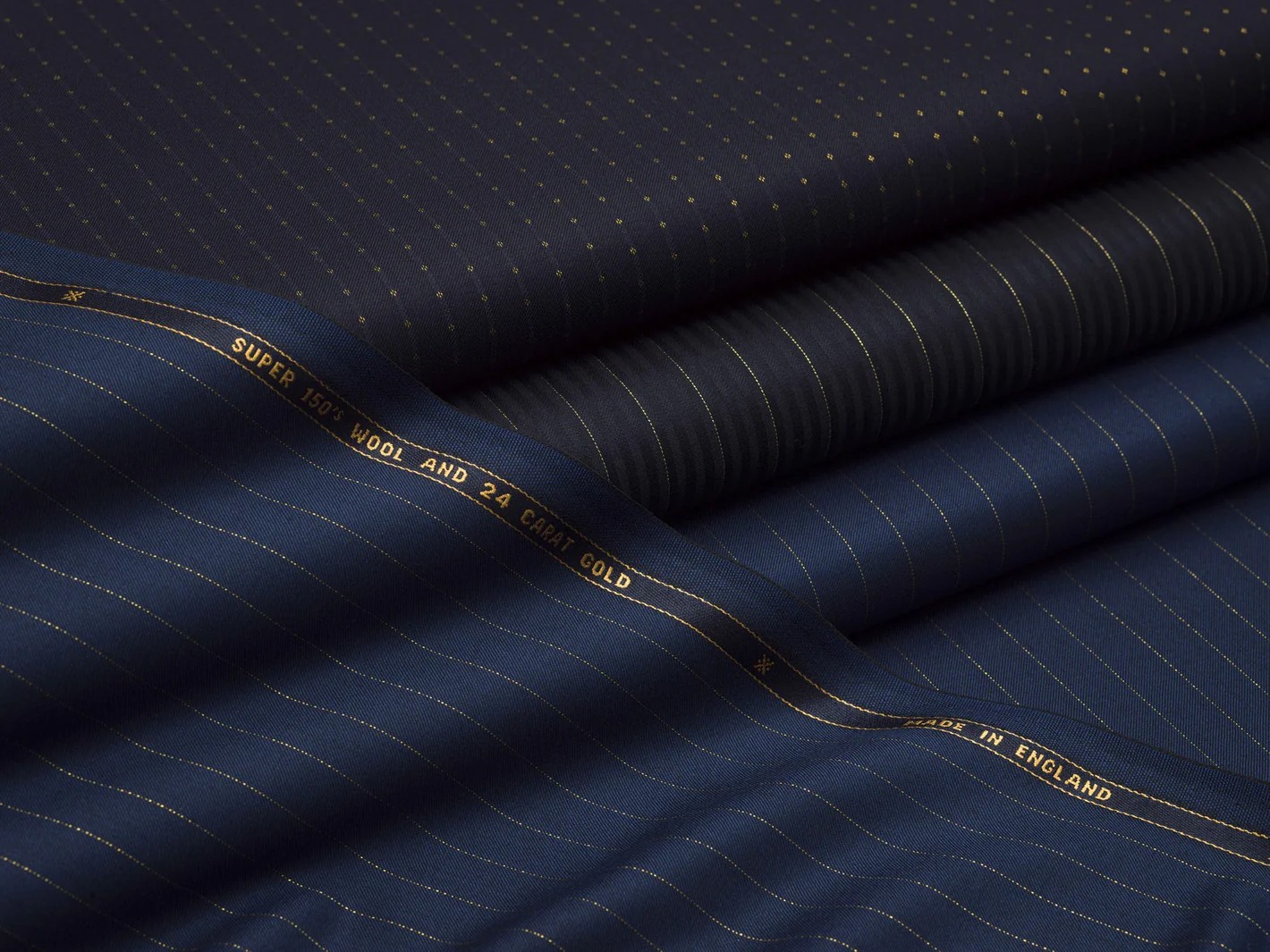
How Bespoke By CB Sources the World's Finest Fabrics
The fabric is the soul of a luxury suit, and the selection of that fabric is a decision that should never be rushed or left to chance. At Bespoke By CB, we have built our reputation over 37-plus years on a simple principle: we only offer fabrics that we would wear ourselves.
Christian Boehm, the founder and master tailor behind Bespoke By CB, has spent nearly four decades developing personal relationships with the world's finest fabric mills. He travels regularly to the mills in Italy, England, France, and Belgium, meeting with the families who have run these operations for generations. He personally inspects each season's new collections, selects the specific bunches and patterns that will resonate with our Miami clientele, and brings them back to our showroom for you to experience firsthand.
This is not a catalog operation. We do not offer every fabric from every mill. Instead, we curate. We choose the best tropical wools from Holland and Sherry for Miami's climate. We select the most refined cashmere blends from Loro Piana for winter travel. We identify the most distinctive silk blends from Scabal for evening wear. Every fabric in our collection has been chosen for a reason, and Christian can explain that reason to you in detail.
When you visit Bespoke By CB for a custom suit consultation, you are not simply picking a color and a pattern. You are entering into a conversation about your lifestyle, your wardrobe, your travel habits, and your personal aesthetic. Christian will guide you through the fabric selection process, explaining the differences between mills, Super numbers, and weave types in language that is clear and accessible. He will help you understand the difference between bespoke vs made to measure and which approach is right for your needs.
This level of personal attention is what sets Bespoke By CB apart. In an era of mass production and online ordering, we believe that the selection of a luxury suit fabric is, and should remain, a deeply personal experience. You should feel the fabric in your hands. You should see how it catches the light. You should discuss it with a master who has dedicated his life to understanding cloth.
Book a consultation with Christian Boehm at Bespoke By CB, and discover why Miami's most discerning gentlemen have trusted us with their wardrobes for over 37 years. Whether you are selecting your first luxury suit or refining a wardrobe of dozens, we will help you choose the perfect fabric for your lifestyle, your climate, and your personal style.
Frequently Asked Questions
What is the most luxurious suit fabric?
The most luxurious suit fabric is vicuna, harvested from the wild vicuna of the South American Andes. Vicuna fiber measures approximately 12 microns in diameter, making it one of the finest natural fibers in the world. A vicuna suit can cost $40,000 or more, and the fabric has a softness and warmth that is simply unmatched. For a more accessible luxury, the finest cashmere blends and super fine merino wools from mills like Loro Piana and Dormeuil represent the pinnacle of everyday luxury suiting.
What Super number should I choose?
For most clients, we recommend Super 120s to Super 130s as the ideal balance of luxury and durability. These fabrics are soft enough to feel genuinely luxurious, yet durable enough for regular wear. If you are building a special occasion suit, Super 150s to Super 160s will give you a noticeably finer hand feel. Reserve Super 180s and above for suits that will be worn occasionally, as these fabrics are delicate and will show wear with frequent use.
Are higher Super numbers always better?
No, higher Super numbers are not always better. While a higher Super number indicates a finer yarn and a softer fabric, it also means the fabric is more delicate, more prone to wrinkling, and less durable. A Super 130s fabric from a world-class mill will outperform a Super 180s fabric from an average mill in every practical measure. The key is to match the Super number to how the suit will be worn. Daily wear demands durability, which means lower Super numbers. Occasional wear allows for the luxury of higher Super numbers.
What fabric is best for Miami's climate?
The best fabrics for Miami's hot, humid climate are lightweight tropical wools in the 7 to 9 ounce range, with a Super 120s or Super 130s grade. Tropical wool is woven in an open plain weave that breathes exceptionally well, allowing air to circulate and heat to escape. Holland and Sherry produces some of the finest tropical wools available and they are a staple of our Miami collection. For less formal occasions, pure linen or wool-linen blends are also excellent choices for South Florida's climate.
How much do luxury suit fabrics cost?
Luxury suit fabric prices vary widely depending on the mill, the fiber, and the Super number. Entry-level luxury fabrics from mills like Vitale Barberis Canonico start around $75 to $120 per meter. Mid-range luxury fabrics from Scabal, Holland and Sherry, and Dormeuil typically range from $150 to $300 per meter. Top-tier fabrics from Loro Piana can range from $300 to $800 per meter or more. Vicuna and other rare fibers can cost well over $1,000 per meter. At Bespoke By CB, we work with clients across a range of budgets and help you find the best fabric for your investment.
Can I feel fabric samples before ordering?
Yes, and we strongly encourage it. At Bespoke By CB, fabric selection is a hands-on experience. During your consultation, Christian Boehm will present you with fabric bunches from our curated collection of mills. You will be able to feel each fabric, see how it drapes, observe how it catches the light, and discuss its characteristics in detail. We believe that choosing a fabric is a sensory experience that cannot be replicated online, and we would never expect a client to commit to a luxury suit without first handling the cloth.
How long do luxury suits last?
A well-made luxury suit, properly cared for, can last 15 to 20 years or more. The longevity of a suit depends on three factors: the quality of the fabric, the quality of the construction, and the quality of the care. A Super 120s or Super 130s worsted wool suit, worn in rotation (not daily), dry cleaned once or twice a year, stored on proper hangers, and pressed professionally, will provide decades of service. At Bespoke By CB, we have clients wearing suits that were made 20 years ago and still look magnificent. The key is to view a luxury suit as a long-term investment and to care for it accordingly.


