Achieving a truly great fit in a suit is an art, but it begins with the science of accurate measurements. While nothing replaces the expertise of a master clothier like Christian Boehm at Bespoke CB, understanding how to measure yourself for a suit can be incredibly empowering. It helps you make more informed decisions when buying off-the-rack and gives you a better baseline for discussions with a tailor. This DIY guide provides a foundational understanding, but always remember that custom is the gold standard for precision.
Whether you are hoping to find a better fit in ready-to-wear or simply want to speak the language of tailoring more fluently, knowing your key measurements is invaluable. After 37 years of fitting clients across Miami and South Florida, I have seen men walk in with measurements they took themselves and measurements taken by department store clerks, and neither is ever quite complete. This guide will walk you through every essential measurement, explain what each number means for your suit's fit, and help you understand where professional guidance truly makes the difference.
Why Measurements Matter More Than You Think
Most men assume that once they know their chest size, they know their suit size. In reality, a suit jacket involves at least six distinct measurements, and trousers require four more. Each of these measurements interacts with the others. A man with a 42-inch chest might have a 36-inch waist or a 38-inch waist. He might have a 35-inch sleeve or a 34-inch sleeve. He might have sloped shoulders or square ones. No single number tells the whole story.
Off-the-rack suits are built for a statistical average that may not reflect any single human being. That is why so many men struggle to find suits that fit well. The jacket might button comfortably but pull across the shoulders. The sleeves might be the right length but too wide at the forearm. Understanding your own measurements helps you identify these gaps and either seek out alterations or, better yet, invest in a custom garment built from the ground up for your body.
In Miami specifically, fit matters even more than in cooler climates. The heat means you are wearing lighter fabrics with less structure, and every imperfection in fit becomes more visible. A beautifully fitted suit in a lightweight tropical wool or linen looks sharp and intentional. A poorly fitted suit in the same fabric just looks like a bad fit with less excuse.
Essential Tools and Preparation for Self-Measurement
Before you begin, gather the right tools and prepare yourself for the most accurate results. Having a friend assist you will significantly improve accuracy, especially for areas like shoulder width and sleeve length.
- Fabric Measuring Tape: A flexible, cloth tape measure is essential. Avoid rigid metal tapes, which cannot conform to body curves.
- Pen and Paper: Record your measurements immediately. Do not trust your memory.
- A Well-Fitting Shirt and Trousers: Wear clothes that fit you reasonably well, but are not overly baggy or too tight. This gives you a realistic sense of your body's natural shape.
- A Mirror: A full-length mirror helps you check posture and tape placement.
- Good Posture: Stand naturally, relaxed, and upright, as you would typically wear a suit. Avoid slouching or tensing up.
- A Trusted Friend: Many of these measurements are genuinely difficult to take accurately on your own. A second pair of hands makes a real difference.
One more preparation tip: take your measurements at different times of day. Your body changes slightly from morning to evening, and most men are slightly larger in the evening after meals and activity. Taking measurements in the morning and again in the afternoon gives you a useful range to work with.
Step-by-Step Guide: How to Measure Yourself for a Suit
Here are the key measurements you will need for a suit jacket and trousers, with detailed instructions for each.
1. Chest Measurement
Wrap the tape measure around the fullest part of your chest, just under your armpits, with the tape passing over your shoulder blades at the back. Ensure the tape is level all the way around and not too tight. Breathe normally and keep your arms at your sides. This is a crucial measurement for jacket sizing and typically the number that determines your base suit size.
One important note: many men pull the tape too tight, thinking a snug measurement means a good fit. In practice, your jacket needs ease, meaning extra room built in so you can breathe, move, and sit comfortably. A professional clothier accounts for this automatically. When measuring yourself, keep the tape comfortably snug but not compressing.
2. Waist Measurement
Measure around your natural waistline, typically just above your belly button where your trousers usually sit. Do not suck in your stomach. Breathe naturally and measure at the end of a normal exhale. For trousers, this is a more accurate indicator than your pant size, which can vary significantly by brand and is often measured at the hip rather than the true waist.
3. Hip Measurement
Measure around the fullest part of your hips and seat, typically about 7 to 9 inches below your natural waist. This helps ensure trousers have enough room to drape smoothly without pulling at the seat or inner thigh. This measurement is often overlooked but is critical for trouser comfort, especially when sitting.
4. Shoulder Width
This measurement is best done with assistance. Measure straight across your back from the top of one shoulder to the top of the other, following the natural seam line of a well-fitting shirt. The tape should rest lightly across your upper back. Do not measure over the curve of the shoulder but along the flat upper back.
Shoulder fit is the single most important aspect of a suit jacket, and it is also the hardest to alter after the fact. If the shoulder seam does not sit precisely at the edge of your shoulder, the entire jacket will look wrong regardless of how well everything else fits. This is one reason professional measurement is so valuable.
5. Sleeve Length
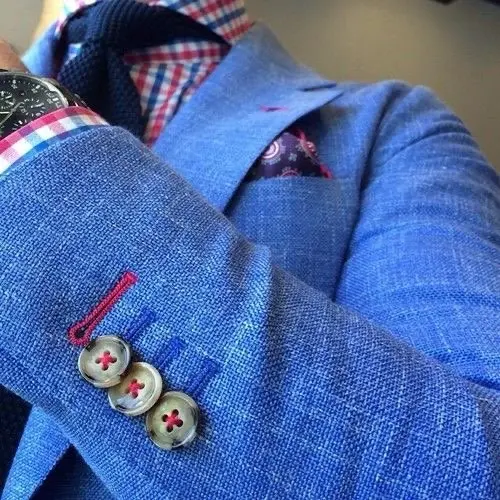
With your arm relaxed at your side and slightly bent at the elbow (as it naturally hangs), measure from the top of your shoulder down to your wrist bone. A finished suit sleeve should end just at or slightly above the wrist bone, allowing approximately half an inch of shirt cuff to show. That small reveal of shirt cuff is a mark of proper fit and good taste.
6. Jacket Length
For a traditional fit, the jacket hem should fall at approximately the same level as your knuckles when your arm hangs relaxed at your side. A modern or slim fit might be slightly shorter, ending around the base of your thumb. This measurement is somewhat subjective and depends on current style preferences, your height, and your proportions. Taller men often benefit from slightly longer jackets to maintain visual balance.
7. Trouser Inseam
Measure from the crotch seam down the inside of your leg to where you want the trouser hem to break on your shoe. Wear the shoes you intend to pair with the suit when taking this measurement. The amount of break, meaning the fold of fabric created where the trouser rests on the shoe, is a style choice. No break looks modern and sharp. A slight break is classic and traditional. A full break is old-fashioned but some men prefer it for comfort.
8. Trouser Outseam
Measure from the top of your waistband down the outside of your leg to the desired hem. This should correspond to your inseam measurement and gives a complete picture of your trouser length needs.
9. Neck (Collar) Measurement
Wrap the tape around the base of your neck where a shirt collar would sit. Slide one finger between the tape and your neck to ensure you have room for comfort. This is most critical for shirt sizing, ensuring the collar is neither too tight (which looks and feels constricting) nor too loose (which looks sloppy and ages any outfit).
10. Thigh Circumference
This measurement is often skipped but matters enormously for men with athletic builds or larger legs. Measure around the fullest part of your thigh with your weight evenly distributed on both feet. Trousers that are tight through the thigh create pulling and discomfort that no amount of waist adjustment can fix.
Understanding Your Measurements: What a Good Fit Means
Once you have your measurements, compare them to standard sizing charts. But remember, these are just guidelines. The true art of a well-fitting suit lies in balancing these numbers with your unique posture and body shape.
For the jacket: The shoulders are paramount. If they do not fit, the entire jacket will look wrong. The chest should be snug but not tight, allowing full range of motion. When you button the jacket, it should close without pulling at the button or creating an X-shaped wrinkle. The waist should taper gently, creating a clean silhouette without squeezing. Sleeves should reveal a hint of shirt cuff, approximately half an inch.
For the trousers: The waist should sit comfortably without needing a belt to hold them up. The seat should be smooth, not baggy or stretched. The break at the hem is a matter of personal style, from no break for a modern, sleek look to a full break for a traditional, conservative appearance.
Where Self-Measurement Falls Short
I want to be honest with you about the limits of self-measurement, because understanding those limits helps you make better decisions. There are several things a tape measure simply cannot capture:
- Posture: If you have a slight forward lean, a pronounced curve in your upper back, or one shoulder lower than the other (extremely common), a tape measure will not account for these. A skilled clothier adjusts the pattern for them automatically.
- Asymmetry: Most men's bodies are not perfectly symmetrical. One arm may be slightly longer, one hip slightly higher. A bespoke suit is built to match your actual body, not an idealized version of it.
- Movement: A suit is not a statue. It needs to move with you. A professional fitting includes watching how you sit, reach, and walk, and adjusting accordingly.
- Fabric behavior: Different fabrics drape and stretch differently. An experienced clothier selects and adjusts patterns based on fabric behavior, not just body measurements.
For those in Miami who find that even with careful self-measurement, off-the-rack still falls short, a custom suit is the ultimate solution. Christian Boehm's 37 years of experience at Bespoke CB ensures every garment is crafted to your exact specifications, accounting for every nuance of your body. You might also be interested in our guide on getting a suit tailored for insights into professional alterations.
Frequently Asked Questions About Measuring for a Suit
Is it accurate to measure yourself for a suit?
Self-measurements can provide a good baseline and improve your understanding of suit fit, but they are generally less accurate than those taken by a professional tailor or clothier. A professional accounts for posture, shoulder slope, and other subtle nuances that affect how a garment actually wears on the body.
What are the most important measurements for a suit jacket?
For a suit jacket, shoulder width, chest circumference, and sleeve length are the most critical measurements for achieving a good fit. The shoulder width is arguably the most important because shoulder seams are extremely difficult and expensive to alter after construction.
Should I measure myself with clothes on or off?
Measure yourself while wearing a thin, well-fitting dress shirt and dress trousers. This provides a realistic measurement of how a suit will fit over your clothing, and it more closely mirrors the conditions under which the suit will actually be worn.
How much shirt cuff should show below the jacket sleeve?
Generally, a suit jacket sleeve should be approximately half an inch shorter than your shirt cuff, allowing a small portion of the shirt cuff to be visible. This is a classic sign of proper fit and careful dressing.
Can I use my self-measurements to order a custom suit online?
While some online services accept self-measurements, for a truly bespoke fit it is highly recommended to have your measurements taken by an experienced clothier in person. This minimizes errors and ensures the best possible outcome. At Bespoke CB, we take your measurements in person, create a pattern specific to your body, and refine it through multiple fittings.
How often should I update my suit measurements?
A good rule of thumb is to take fresh measurements any time you have had significant changes in weight, fitness, or body composition, or at least once every two years. Bodies change gradually, and measurements that were accurate three years ago may no longer reflect your current fit needs.
Mastering the art of measuring yourself for a suit is a valuable skill that enhances your entire wardrobe journey. While it empowers you to make smarter choices, remember that the true pinnacle of fit is achieved through custom tailoring with a clothier who has seen thousands of bodies and knows how to translate measurements into garments that feel as good as they look. Visit bespokecb.com today to schedule a consultation with Christian Boehm, and experience the difference a truly custom fit can make.
Frequently Asked Questions
How do I know if my suit fits properly?
A well-fitted suit should contour to your body without pulling at the buttons, with the jacket covering your seat and sleeves ending at the wrist bone. Bespoke By CB in Miami ensures every suit fits flawlessly.
What measurements are needed for a custom suit?
A custom suit requires comprehensive measurements including chest, waist, hips, shoulders, sleeve length, jacket length, neck, and inseam. Bespoke By CB takes a full set of measurements for a perfect fit.
Can a tailor fix an ill-fitting suit?
Some fit issues like waist or sleeve length can be corrected, but shoulder fit is nearly impossible to alter. A custom suit from Bespoke By CB eliminates fit problems from the start.
How long does tailoring take?
Custom suit tailoring typically takes 8-12 weeks with multiple fittings. Standard alterations may take 1-2 weeks. Bespoke By CB in Miami provides clear timelines for every service.