The Math: Why One Navy Suit Outperforms Five Trend Colors
Here is a number most style guides will not give you: a well-fitting navy suit can produce at least 27 distinct outfits without buying anything else that you do not already own. Change the shirt. Change the tie. Lose the tie. Swap the shoes. Each combination is a different look from the same garment.
This is not a trick, it is the fundamental advantage of navy. Where a light blue suit limits you to warm-weather settings, and a black suit limits you to evening events, navy works everywhere. The boardroom. The rehearsal dinner. The Saturday brunch. The charity gala. The job interview. The date night. One suit, dressed up or down, and you are covered for every single one.
This guide is not going to tell you that navy is versatile. You already know that. This guide is going to show you exactly how to extract every outfit from a single navy suit, and how to avoid the three mistakes that make it look like you rented it.

The Five Shirts That Unlock Your Navy Suit's Full Potential
Most men own two shirts they wear with their navy suit: white and light blue. Those work. But they are the beginning, not the end. Here are the five shirts that give you the most range.
1. White dress shirt
The standard. Sharp, high-contrast, appropriate everywhere. Pair with any tie and any shoe. This is your default, and it should be, but it should not be your only option.
2. Pale blue dress shirt
The most underrated navy pairing. The tonal combination of navy over pale blue reads as sophisticated and cohesive without the high-contrast formality of white. Perfect for business settings where you want to look polished without looking rigid.
3. Pale pink dress shirt
The surprise that works. Pale pink under navy is warm, modern, and unexpectedly handsome. It is not a look for everyone, but the men who try it tend to reach for it again. The warmth of the pink against the cool of the navy creates a combination that photographs beautifully and gets compliments.
4. Cream or off-white shirt
The sophisticated alternative to white. Lower contrast, warmer tone, slightly more relaxed feel. This is the shirt you wear when white feels too formal but you still want to look put together. Particularly good for evening events and dinner dates.
5. Black crew-neck t-shirt
The deliberate casual move. Navy suit, black t-shirt, white sneakers. This is the outfit that says you know the rules and you are choosing not to follow them. It works for art openings, cocktail bars, and creative industry events. It does not work for business or formal settings.
Seven Tie Combinations That Change the Entire Outfit
The tie is the fastest way to transform a navy suit. Same suit, same shirt, different tie, completely different impression.
Navy grenadine tie, white shirt: The business standard. Subtle texture, no pattern competition, maximum professionalism. This is your job interview, your board meeting, your serious occasion tie.
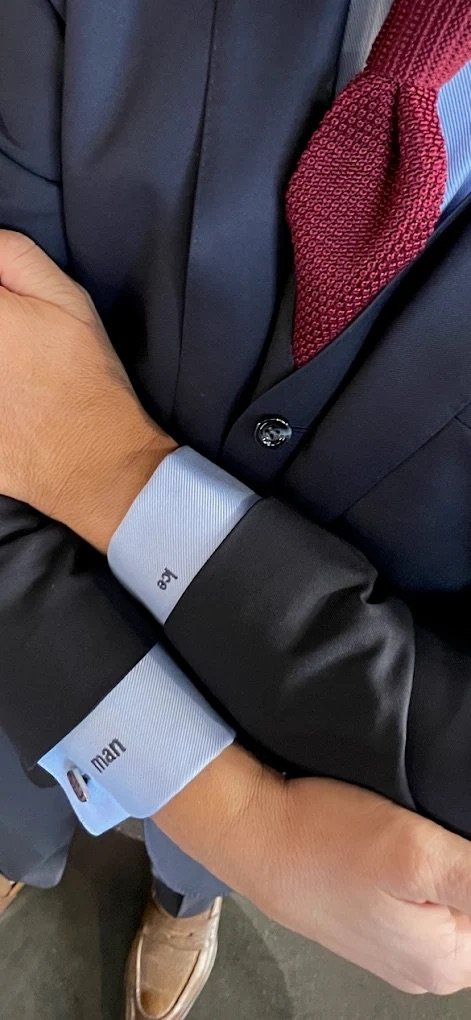
Burgundy knit tie, white or cream shirt: Warm, authoritative, and slightly less formal than silk. The texture of the knit gives the outfit depth. Excellent for dinner meetings and evening events.
Gold or mustard silk tie, pale blue shirt: The power move. Gold against navy is one of the most commanding combinations in menswear. It reads as confident without being loud.
Sage green knit tie, white shirt: The underused option. Sage green against navy is earthy, modern, and unexpected. It photographs well and works in any setting where you want to look interesting without trying too hard.
Striped tie (navy/white or navy/red), white shirt: The classic. Striped ties with navy suits are an American menswear tradition for a reason, they look sharp, they are easy to pair, and they never go out of style.
Pale pink silk tie, white shirt: The spring and summer option. Warm, approachable, and distinctive. Pair with brown shoes and you have a warm-weather look that stands out in a room full of navy and gray.
No tie, open collar, any shirt: The most versatile option of all. Remove the tie and your navy suit goes from boardroom to cocktail hour in ten seconds. This is the single easiest way to double the number of occasions your navy suit covers.
Navy Through the Seasons: What Works in July vs. December in Miami
Miami's version of seasons is not what the rest of the country experiences, but the adjustments still matter.
Spring and Summer (March through October)
Fabric: Lightweight worsted, tropical wool, or linen blends. The navy will absorb heat faster than lighter colors, so breathability is critical.
Shirts: Pale blue, pale pink, or white linen-blend shirts. Lighter colors and breathable fabrics keep you comfortable without changing the suit.
Ties: Knit ties in lighter colors. Skip the heavy silks.
Shoes: Brown loafers or suede monks. Black leather holds heat and reads as heavy in summer.
No tie: More often than not in summer, the right move is to lose the tie entirely. Open collar, pocket square, done.
Fall and Winter (November through February, yes, Miami has a version of this)
Fabric: Standard worsted or flannel. The slightly heavier weight is welcome during Miami's brief cool stretch and looks substantial at evening events.
Shirts: White or cream poplin. Higher contrast reads as more formal and more appropriate for evening events.
Ties: Burgundy, gold, or dark striped silks. The richer colors suit the slightly cooler light.
Shoes: Dark brown oxfords or black whole-cuts. The formality of the shoe can go up in winter without looking heavy.
The Three Mistakes That Make a Navy Suit Look Like a Rental
A navy suit is only as good as its fit, its fabric, and its details. Here are the three things that separate a navy suit that looks like it belongs to you from one that looks like you picked it up this morning.
Mistake 1: Shoulders that do not fit
The shoulders are the foundation of the entire suit. If they are too wide, you look like you are wearing someone else's clothes. If they are too narrow, you look uncomfortable and restricted. Ready-to-wear navy suits almost never fit correctly at the shoulder, this is where custom construction makes the biggest visible difference.
Mistake 2: The wrong navy
Navy is not one color. There are warm navies with a hint of purple, cool navies with a hint of gray, and mid-tone navies that read almost black in low light. The wrong navy for your skin tone will either wash you out or overpower you. This is something you can only judge in person, under real light, with a fabric swatch against your skin.
Mistake 3: Black shoes with everything
Black shoes are not wrong with navy, they are just not always right. Black works for formal events and evening occasions. Brown works for everything else. Brown leather in any shade from tan to oxblood gives navy a warmth and approachability that black cannot. If you only own one pair of shoes for your navy suit, make them brown.
At Bespoke CB, we build navy suits that fit perfectly because we start from your measurements, not from a size chart. Over 37 years, we have cut thousands of navy suits for Miami professionals, and we know which shades, fabrics, and details make the difference between a suit you wear twice a year and one you reach for twice a week. Schedule a consultation and let us show you what a navy suit should feel like.