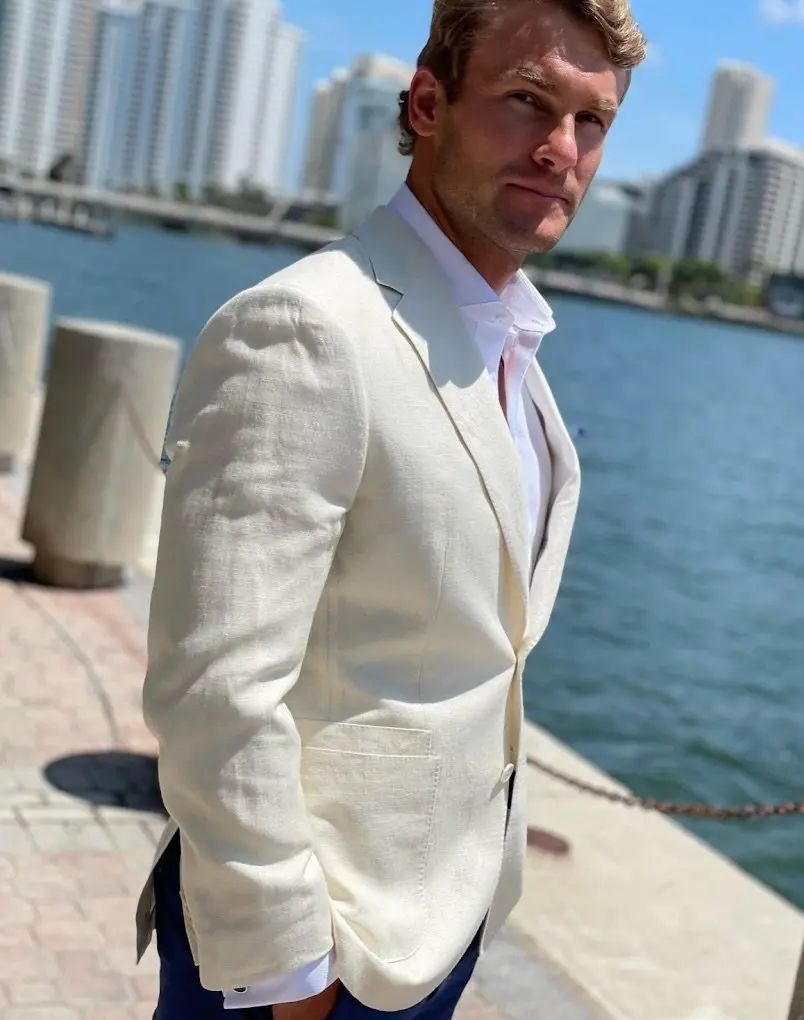
The Wrinkle Problem (And Why It's Actually the Point)
Every guide to linen suits mentions the wrinkles. Most of them treat wrinkles as a flaw to be minimized, managed, or apologized for. That is the wrong framing.
Linen wrinkles because linen is supposed to wrinkle. The wrinkles are evidence that you are wearing a natural, breathable, honest fabric instead of a synthetic blend that looks pressed but feels like a sauna. The men who look best in linen are the ones who stop fighting the material and start working with it.
This does not mean you should show up looking like you slept in your suit. It means you should understand that a linen suit with gentle, lived-in creases looks better than a linen suit that has been ironed stiff. The former reads as effortless. The latter reads as anxious. In a city where the temperature spends half the year above 85 degrees, effortless is the only look that actually works.
So here is the deal: embrace the wrinkle, choose the right fabric, learn how to pack it, and you will have the single most useful warm-weather suit in your wardrobe.
Christian Boehm walks a client through premium linen suiting fabrics at the Bespoke CB showroom in Miami.
Linen Blends vs. Pure Linen: The Honest Trade-Offs
The biggest decision you will make with a linen suit is not the color or the cut. It is the fabric blend. And there are honest trade-offs that most sellers will not tell you about.
Pure linen (100%)
The good: Maximum breathability. Nothing cools you down in hot weather like pure linen. The texture is unmistakable and handsome. The drape softens beautifully over time. The wrinkles give it character.
The bad: It wrinkles aggressively. After two hours of wear, it looks like two hours of wear. After a flight, it looks like you flew coach. If you need to look pressed for more than an hour, pure linen is not your friend.
Best for: Outdoor events, beach weddings, weekend social gatherings, and any occasion where you will be standing or sitting for more than an hour in heat.
Linen-cotton blend (70/30 or 60/40)
The good: The cotton adds structure and reduces wrinkling by roughly 40%. You get most of linen's breathability with noticeably better shape retention. This is the practical choice for most men in Miami.
The bad: You lose some of linen's natural texture and drape. It reads as linen-adjacent rather than pure linen. In extreme heat, it does not breathe quite as freely.
Best for: Business-casual settings, dinner meetings, events where you need to look put-together for several hours, and anyone who wants the look of linen without the full wrinkle commitment.
Linen-wool blend (50/50 or similar)
The good: Retains a crease, resists wrinkles, and drapes more like a traditional suit. The best option if you need one suit that can handle both warm and mild weather.
The bad: Does not breathe as well as pure linen or linen-cotton. Less of the signature linen texture that makes the look work. Reads more as a lightweight suit than a linen suit.
Best for: Men who travel between climates, or who need a single suit for Miami's version of winter (where 70 degrees feels cold) and summer.
The Three Linen Suits You Actually Need in Miami
Not every color works in linen. The fabric's natural texture and transparency mean that some colors look incredible and others look like a mistake. Here are the three that actually earn their place in a Miami wardrobe.
1. Navy linen or linen-cotton blend
The workhorse. Navy linen is the suit you reach for when you need to look sharp in heat. It works for business-casual lunches, rehearsal dinners, and any event where navy is appropriate but wool is not. Pair with a white or pale blue shirt and brown loafers. This is the first linen suit to own.
2. Beige or natural linen
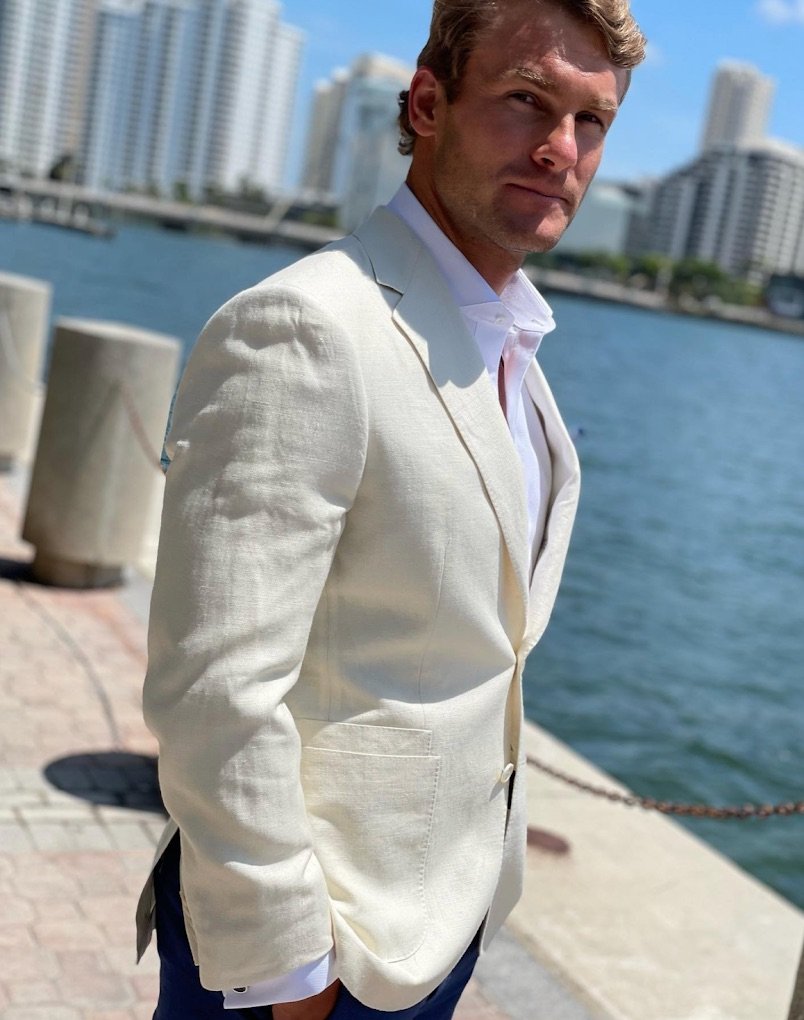
The summer classic. Beige linen in pure form is the most breathable suit you can own. It is the suit for outdoor weddings, beachside cocktail hours, and Saturday brunches in South Beach. Pair with anything, it is the most forgiving color in the most forgiving fabric.
3. Light gray linen
The underrated third option. Light gray linen reads as sophisticated in a way that beige does not. It is appropriate for evening events, business dinners, and any occasion where you want the breathability of linen with the visual weight of gray. Pair with a white shirt and black or dark brown shoes.
How to Pack a Linen Suit Without Making It Look Like You Slept In It
Packing a linen suit is a skill, and most men learn it the hard way, by unpacking a disaster. Here is the method that actually works.
Turn the jacket inside out. This protects the fabric surface and reduces visible creasing on the outside.
Fold along natural lines. Fold the jacket in half, shoulders together, and place it on top of your suitcase. Do not roll it. Do not cram it.
Use tissue paper between folds. A layer of tissue paper at each fold point creates a buffer that reduces hard creases.
Pack trousers on a hanger if possible. If you cannot, fold them along the crease line and place them flat. Do not stuff them into shoes or wrap them around other items.
Hang everything immediately upon arrival. Give the suit 30 minutes on a hanger in a steamy bathroom. The steam will release 80% of the travel wrinkles without touching an iron.
Never iron linen on high heat. If you must touch it up, use a medium-hot iron with steam, and iron on the inside of the fabric. Direct high heat on the outside will create shine marks that you cannot remove.
Linen Care Myths That Are Costing You Money
Myth: Dry-clean linen after every wear. Reality: Over-cleaning breaks down linen fibers faster than wearing it. Spot-clean when possible and dry-clean only when the suit genuinely needs it, typically every four to six wears.
Myth: Linen is too fragile for regular wear. Reality: Linen is one of the strongest natural fibers in existence. It is stronger wet than dry. What it is not is wrinkle-resistant, and that is a feature, not a flaw.
Myth: Linen suits are only for the beach. Reality: A well-cut linen suit in navy or gray is appropriate for any warm-weather business or social event. The fabric does not determine formality, the cut, color, and accessories do.
Myth: You cannot wear linen in winter. Reality: In Miami, you can wear linen eleven months out of the year. In northern climates, pair a linen jacket with heavier trousers for a seasonal crossover look.
Building Your Summer Wardrobe
A linen suit is not an island, it is the foundation of a warm-weather wardrobe that works together. Here is how to build around it.
Linen suit + white shirt + brown loafers: The default. Works everywhere from business-casual to cocktail hour.
Linen suit + pale pink shirt + no tie: Warm, confident, distinctly Miami. The pink shirt softens the formality without losing the sharpness.
Linen jacket + navy trousers: The separates play. You get the breathability of linen without committing to a full linen suit. This is your most versatile summer combination.
Linen jacket + white denim or chinos: The weekend option. Relaxed, sharp, and appropriate for everything from brunch to boat trips.
Linen trousers + cotton polo + white sneakers: The most casual linen outfit that still looks intentional. Perfect for South Beach Saturdays.
At Bespoke CB, we have been building linen suits for Miami clients for over 37 years, because we wear them ourselves. We know which blends hold up in humidity, which colors look best in Florida light, and which cuts make linen look intentional rather than accidental. Come see the fabrics and let us build the linen suit that actually works in the heat you actually live in.

Frequently Asked Questions
Will my linen suit wrinkle if I wear it for a full day?
Yes, and that is fine. Linen wrinkles. The key is choosing the right blend for your needs. Pure linen wrinkles the most but breathes the best. Linen-cotton blends (70/30) reduce wrinkling by roughly 40% while keeping most of the breathability.
Can I wear a linen suit to a black-tie event?
No. Linen is inherently casual regardless of how you style it. For black-tie events, you need a structured fabric like worsted wool, barathea, or velvet.
What weight of linen should I look for?
For Miami, 8-10 ounces is ideal. Lighter than 8 ounces and the fabric becomes too sheer. Heavier than 10 ounces and you lose the breathability that makes linen worth wearing in the first place.
How often should I dry-clean a linen suit?
Every four to six wears, or when it genuinely needs it. Over-cleaning breaks down linen fibers faster than regular wear. Spot-clean between cleanings.
Can I wear linen year-round in Miami?
Practically, yes. Miami's climate supports linen eleven months out of the year. During the brief cool stretch, a linen-wool blend gives you the look of linen with enough weight for lower temperatures.
Is a linen suit a good investment?
In Miami, it is one of the best. A well-made linen suit gets more wear than any other suit in your wardrobe because the climate demands it. The per-wear cost ends up lower than any winter-weight alternative.
Can a Man Wear a White Linen Suit in May?
Yes, and May is actually one of the best months to do it. White linen is a warm-weather fabric, and May in South Florida is already fully in summer mode. A white linen suit in May is appropriate for daytime events, outdoor weddings, cocktail parties, and resort occasions. The key is styling it correctly: pair with a light cotton or linen shirt in white or pastel, skip the tie for a relaxed look or add a knit tie for a more polished outfit, and choose loafers or suede shoes rather than polished oxfords. In South Florida, a white linen suit works from May through October. In more temperate climates, the window is Memorial Day through Labor Day, following the traditional warm-weather whites rule.
Styling a White Linen Suit
Shirt: White or pale blue linen or cotton
Shoes: Brown leather loafers, suede brogues, or white leather sneakers for casual
Accessories: Keep it minimal, a simple watch and a pocket square in a soft color
Fabric weight: Choose 8-10 oz linen for structure, lighter weights will wrinkle more but breathe better