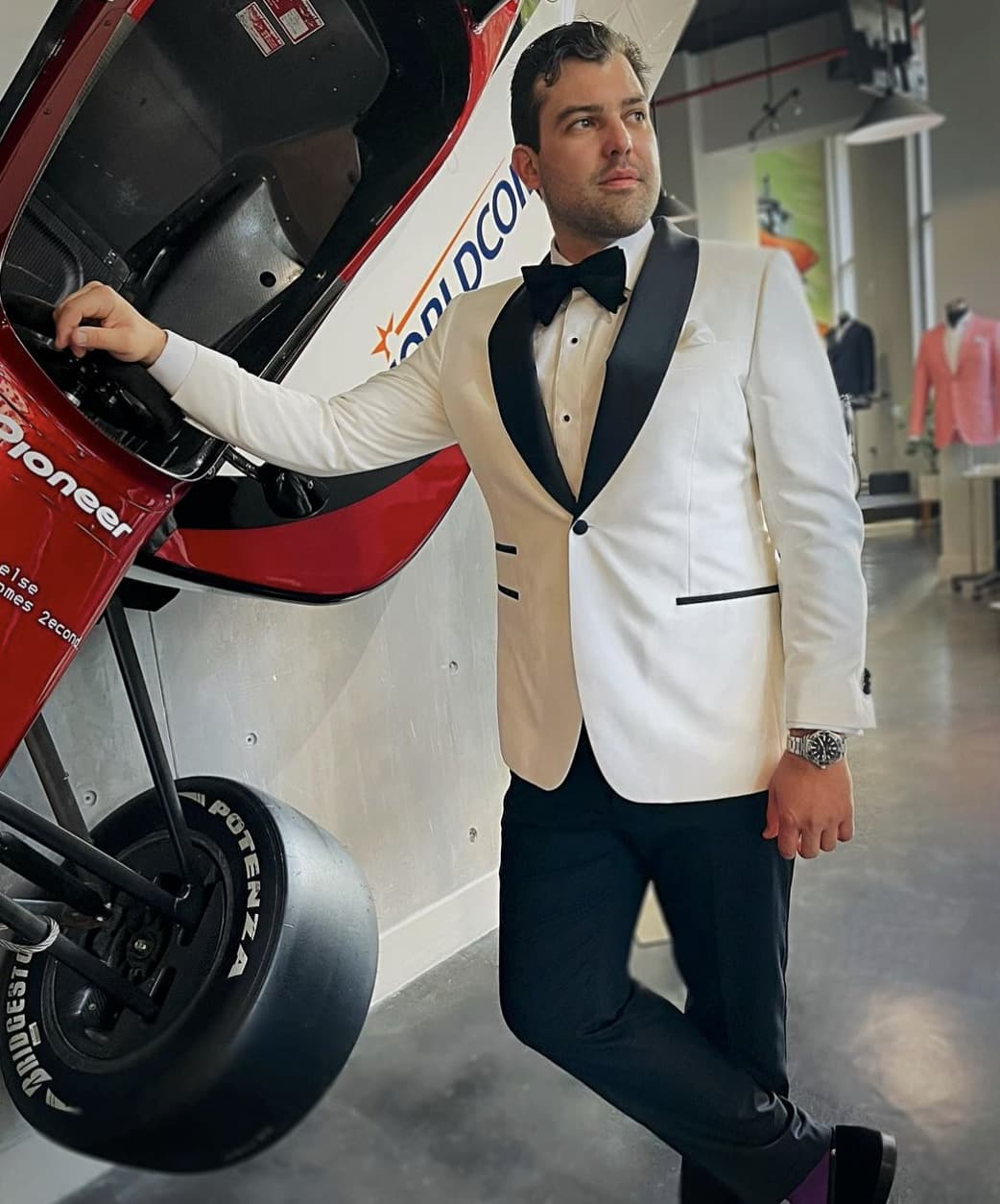
There's a moment in every well-dressed man's life when he encounters a tuxedo shirt with stud holes instead of buttonholes, and realizes he has no idea what to do with them. Tuxedo studs are one of those details that separate the men who know black tie from the men who are just wearing a tuxedo. They're small, they're functional, and they carry a surprising amount of sartorial weight.
At Bespoke By CB, we've been crafting custom tuxedos and formal shirts for clients across Miami, Fort Lauderdale, and all of South Florida for over three decades. In that time, Christian Boehm has guided countless men through the finer points of formal dress, including the art of tuxedo studs. This guide covers everything you need to know.
What Are Tuxedo Studs?
Tuxedo studs are decorative fasteners used in place of buttons on the front placket of a formal shirt. They serve the same functional purpose, keeping your shirt closed, but they're designed to be visible and to add a touch of elegance to a black-tie ensemble.
A typical tuxedo shirt will have four stud holes (though some shirts have three or five), and you'll need the same number of studs to fill them. The bottom of the shirt placket usually has a regular button or a hidden closure, since it's tucked into your trousers and not visible.
The Anatomy of a Tuxedo Stud
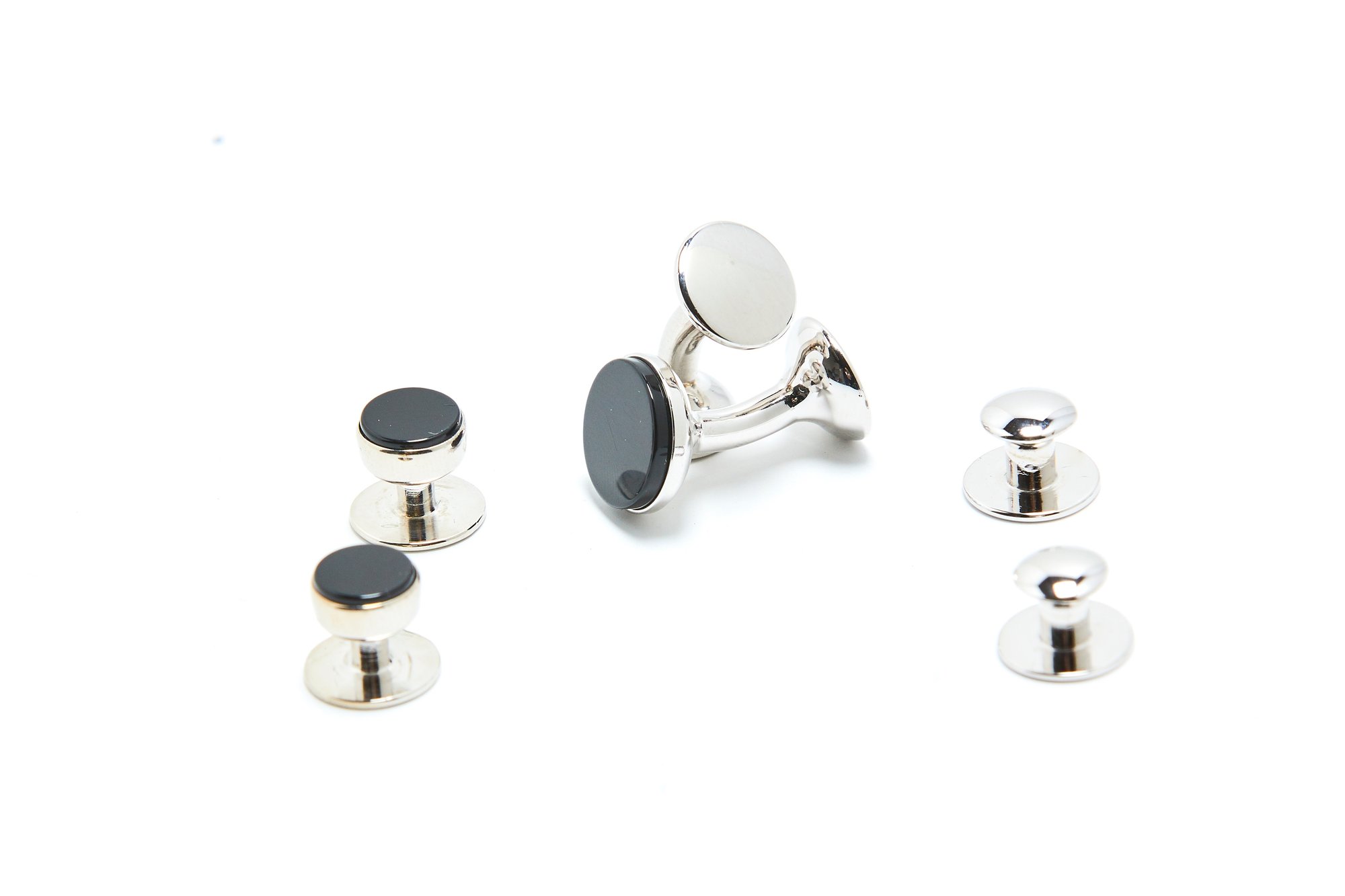
Understanding the parts of a tuxedo stud helps you appreciate why quality matters:
The face (or head): The visible decorative front of the stud. This is the part that shows on the outside of your shirt.
The post: The narrow metal stem that passes through the stud hole.
The back: The flat or slightly curved piece that sits against your skin. The back is usually hinged or has a tension mechanism that allows it to flatten for insertion and then snap back to hold the stud in place.
The mount: The setting that holds the decorative material (mother-of-pearl, onyx, etc.) in place on the face.
Quality studs have a smooth, well-finished post that won't irritate your skin or snag your shirt fabric. Cheap studs have rough posts and flimsy hinges that bend and fail over time.
Types of Tuxedo Studs
Mother-of-Pearl Studs
The most classic and versatile tuxedo stud. Mother-of-pearl has a subtle, iridescent shimmer that catches light beautifully without being flashy. It pairs with any tuxedo, black, midnight blue, or even a white dinner jacket, and works with any formal shirt color.
Best for: First-time stud buyers. If you own only one set of tuxedo studs, make it mother-of-pearl.
Onyx Studs
Black onyx studs are the most formal and conservative choice. They create a seamless, monochromatic look with a black tuxedo and black bow tie. Onyx studs are the standard for the most traditional black-tie events, state dinners, diplomatic functions, and ultra-formal galas.
Best for: Purists who want a flawless, understated black-tie look.
Gold and Silver Studs
Metal studs in gold or silver (or gold-plated and silver-plated) add a touch of warmth and luxury. Silver or platinum-toned studs pair beautifully with a black or midnight blue tuxedo. Gold studs are slightly more daring and work particularly well with warm-toned ensembles.
Best for: Men who want to add a subtle personal touch to their formal wear.
Diamond and Gemstone Studs
For the ultimate in formal luxury, diamond or gemstone studs make a statement. These are typically set in precious metal mounts and can be surprisingly subtle, a small, well-cut diamond catches light in a way that reads as elegant rather than ostentatious.
Best for: Black-tie weddings, galas, and any event where you want to shine (literally).
Novelty and Custom Studs
Many men choose studs that reflect their personality or interests, engraved monogram studs, studs featuring family crests, or studs in unique materials like enamel, turquoise, or exotic woods. Custom studs are a wonderful way to make a custom tuxedo feel truly personal.
Best for: Men who see formal wear as an expression of individuality.
How to Put On a Tuxedo Stud: Step by Step
If you've never used tuxedo studs before, the process can feel fiddly. Here's the correct method:
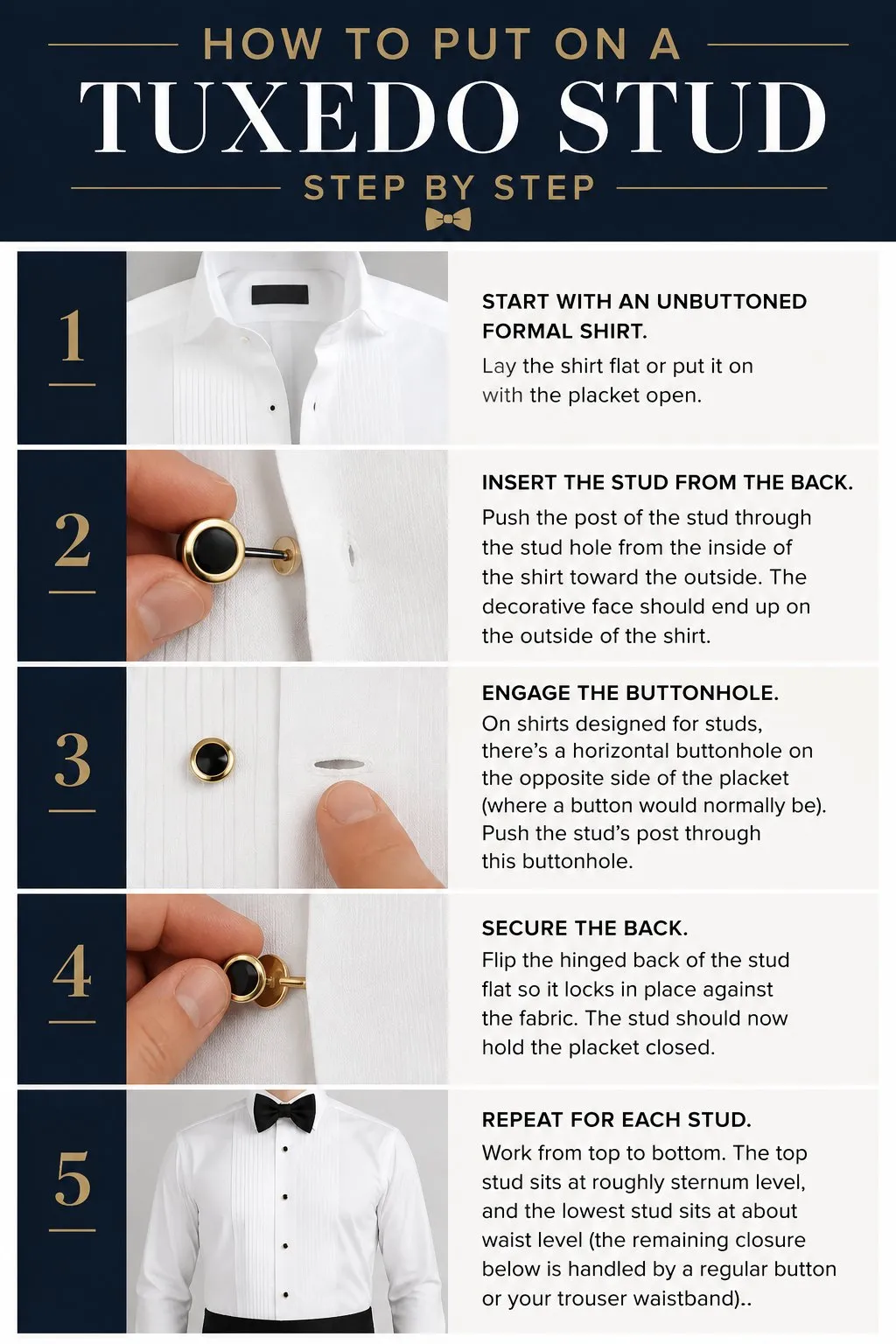
1. Start with an unbuttoned formal shirt. Lay the shirt flat or put it on with the placket open.
2. Insert the stud from the back. Push the post of the stud through the stud hole from the inside of the shirt toward the outside. The decorative face should end up on the outside of the shirt.
3. Engage the buttonhole. On shirts designed for studs, there's a horizontal buttonhole on the opposite side of the placket (where a button would normally be). Push the stud's post through this buttonhole.
4. Secure the back. Flip the hinged back of the stud flat so it locks in place against the fabric. The stud should now hold the placket closed.
5. Repeat for each stud. Work from top to bottom. The top stud sits at roughly sternum level, and the lowest stud sits at about waist level (the remaining closure below is handled by a regular button or your trouser waistband).
Pro tip: If your shirt has both buttons and stud holes on the placket (some do), the buttons are for the bottom closure and the studs are for the visible portion above the trouser waistline. Use the buttons for the bottom and the studs for the top.
How Many Studs Do You Need?
Most formal shirts are designed for four studs, though you'll occasionally find shirts with three or five. When you purchase a set of tuxedo studs, they typically come in sets of four or five. It's always a good idea to have a spare, so a set of five is ideal even if your shirt only takes four.
When to Use Studs vs. Buttons
This is a question we hear often at Bespoke By CB, and the answer is straightforward:
Use studs when:
You're wearing a tuxedo or dinner jacket with a formal shirt
The shirt has stud holes (not all formal shirts do, some have sewn-in buttons)
You're attending a black-tie event
Use buttons when:
You're wearing a business suit or sport coat
You're wearing a dress shirt (not a formal shirt)
The event is business formal rather than black tie
Some modern formal shirts skip studs entirely and use a hidden placket with regular buttons. This is a perfectly acceptable look, it's cleaner and more minimalist. But if you're investing in a custom tuxedo, we recommend going with stud holes. The studs add a level of tradition and craftsmanship that's part of what makes black tie special.
Pairing Studs with Your Tuxedo Shirt
Your studs should complement your tuxedo shirt and overall ensemble. Here are the key considerations:
Shirt Color
White shirts: The most versatile. Mother-of-pearl, silver, onyx, and diamond all work beautifully.
Ivory or cream shirts: Gold, mother-of-pearl, and onyx are the best pairings. Silver can look slightly harsh against warm-toned fabric.
Light blue or pink formal shirts: Mother-of-pearl is the safest choice. Avoid onyx with non-white shirts, as the contrast can look jarring.
Bow Tie Color
Black bow tie: Any stud works. This is the most traditional pairing.
Midnight blue bow tie: Silver or mother-of-pearl studs. Gold can work but creates a warmer tone that may not harmonize with the blue.
Colored or patterned bow tie: Keep studs simple, mother-of-pearl or silver. You don't want competing elements.
Cummerbund or Waistcoat
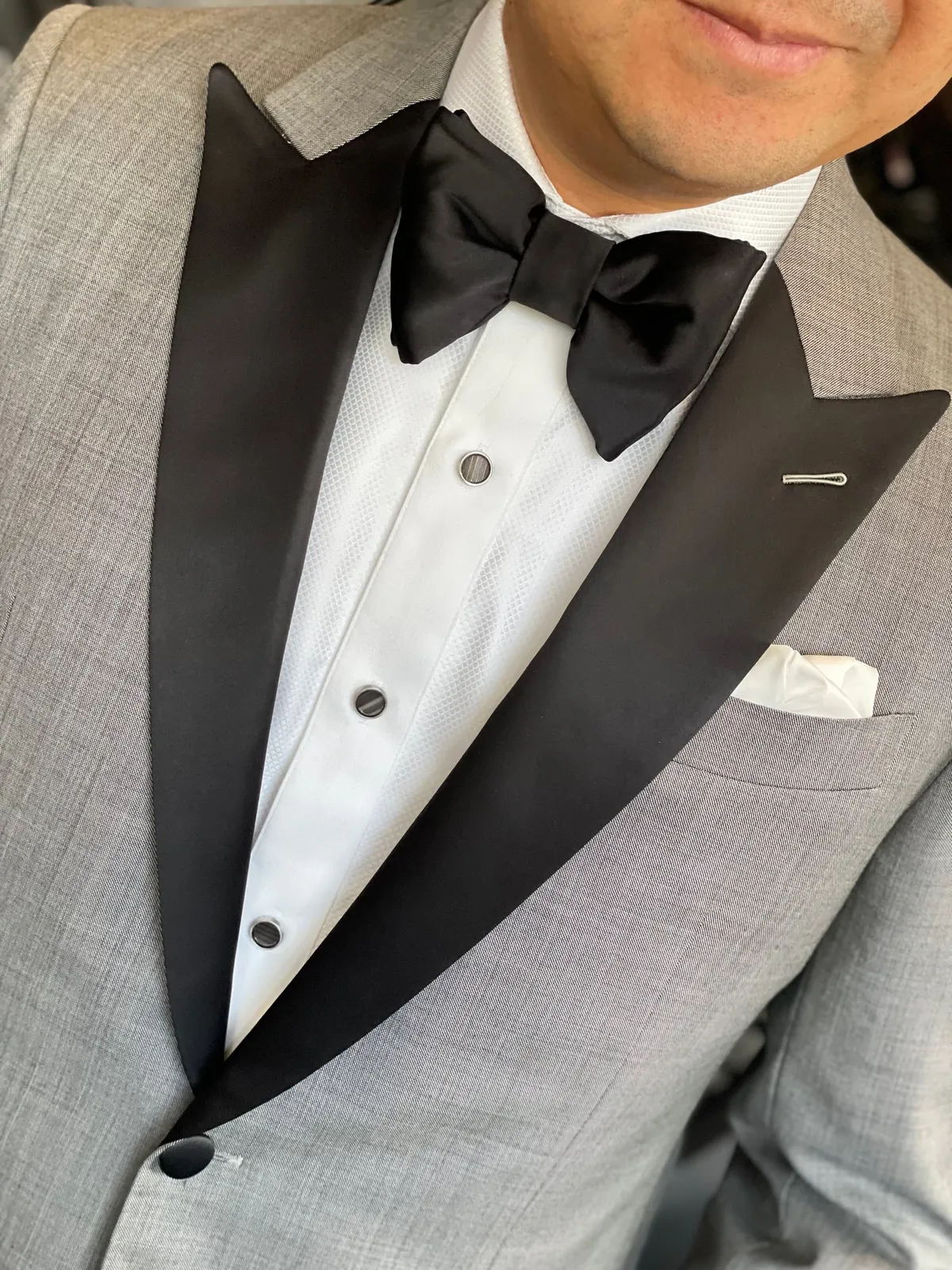
If you're wearing a cummerbund or waistcoat, your studs will only be visible from the chest up. This means you can be more subtle with your stud choice since they won't be the focal point of your ensemble. If you're wearing a double-breasted tuxedo (which is typically worn unbuttoned when seated), your studs will be more visible, choose accordingly.
Tuxedo Stud Etiquette
A few rules that separate the informed from the impostors:
1. Never wear studs with a regular suit. Studs are exclusively for formal wear. Wearing them with a business suit is the formal-wear equivalent of wearing a t-shirt with a tuxedo.
2. Match your metals. If your tuxedo has silver buttons, wear silver or silver-toned studs. If your tuxedo has gold buttons, wear gold-toned studs. Mixing metals is a tell-tale sign of a man who doesn't understand formal wear.
3. Invest in quality. Tuxedo studs are a lifetime purchase. A good set will last decades and can even be passed down through generations. Cheap studs bend, lose their finish, and look tacky.
4. Practice before the event. Putting studs in for the first time at 6:00 PM when your car arrives at 6:30 is a recipe for stress. Try them on with your shirt the day before.
5. Keep a spare. Studs are small and easy to lose. Always have a backup set, or at least a spare single, in your tuxedo accessories case.
The Bespoke By CB Approach to Formal Shirts and Studs
When you commission a custom tuxedo from Bespoke By CB, every detail is considered, including the shirt that goes with it. Christian Boehm will guide you through fabric selection, shirt style (pleated, piqué, or plain front), and the choice between stud holes or buttons based on how you plan to wear the ensemble.
Our formal shirts are constructed to the same exacting standards as our custom suits: 34+ measurements, a unique personal pattern, and hand-finished details. The stud holes are precisely sized and reinforced so they won't stretch or fray over time.
We also offer curated selections of tuxedo studs, chosen to complement our custom tuxedos. Whether you're looking for classic mother-of-pearl, elegant onyx, or something more personal, we'll help you find the right set.
Book a consultation with Bespoke By CB. We serve clients across Miami, Fort Lauderdale, West Palm Beach, Boca Raton, and throughout South Florida.
FAQ
Do I have to wear tuxedo studs?
No, you don't have to, but if your formal shirt has stud holes, you should. Wearing a formal shirt with empty, gaping stud holes looks unfinished. If you prefer not to use studs, choose a formal shirt with sewn-in buttons or a hidden placket.
Can I wear tuxedo studs with a regular suit?
No. Tuxedo studs are exclusively for formal wear, tuxedos and dinner jackets. Wearing them with a business suit is a fashion faux pas.
How much should I spend on tuxedo studs?
A quality set of mother-of-pearl or onyx studs typically ranges from $50 to $200. Precious metal and gemstone studs can range from several hundred to several thousand dollars. Since studs are a lifetime purchase, invest in the best quality you can afford.
Can I wear different studs on the same shirt?
You can, but it's not recommended. Mismatched studs can look careless. Stick to a matching set for a cohesive, polished appearance.
Do I need a special shirt for tuxedo studs?
Yes. You need a formal shirt with stud holes, these are different from regular button-down shirt holes. Stud holes are typically horizontal and slightly larger than buttonholes to accommodate the stud post. When you order a custom tuxedo shirt from Bespoke By CB, we'll ensure the stud holes are properly sized and positioned.
Where can I buy tuxedo studs in South Florida?
Bespoke By CB offers curated tuxedo stud selections at our Miami-area showroom. We also guide clients on the best stud choices for their custom tuxedos. Book an appointment to explore our formal wear accessories.
Frequently Asked Questions
What is black tie attire?
Black tie attire requires a tuxedo with satin lapels, a white dress shirt, a black bow tie, and black formal shoes. It is the most common formal dress code for evening events. Bespoke By CB in Miami creates custom tuxedos that ensure you look impeccable at any formal occasion.
What is the difference between a tuxedo and a suit?
The primary difference is the presence of satin on a tuxedo's lapels, buttons, and trouser stripe. Tuxedos are more formal than suits and are typically reserved for evening events. Bespoke By CB can help you decide which is appropriate for your event.
Should I rent or buy a tuxedo?
If you attend formal events more than once a year, investing in a custom tuxedo is more cost-effective and ensures a superior fit. Bespoke By CB in Miami offers custom tuxedos that will last for years and always look sharp.
What shoes should I wear with a tuxedo?
Patent leather Oxford shoes are the most traditional choice for a tuxedo. Well-polished black leather Oxfords are also acceptable. Bespoke By CB provides complete formal styling guidance from head to toe.
Can I wear a tuxedo to a wedding?
Yes, a tuxedo is appropriate for formal weddings, especially evening ceremonies with a black-tie dress code. Bespoke By CB in Miami can create a custom tuxedo tailored perfectly for your special day.