The 1960s fundamentally changed how men dress. After a decade dominated by the broad, boxy, heavily padded silhouettes of the post-war era, menswear underwent a radical transformation. The 1960s brought youth culture to the forefront of fashion, and with it came a silhouette that was razor-sharp, streamlined, and unmistakably modern. From the advertising executives of Madison Avenue to the Mod subculture dominating the streets of London, the suit was reimagined as a sleek, minimalist garment. At Bespoke By CB, we frequently work with clients who are inspired by the 1960s aesthetic. They want the sharpness of the era without feeling like they are wearing a costume. Understanding the history of this style is the first step to executing it perfectly today.
The Two Distinct Phases of 60s Menswear
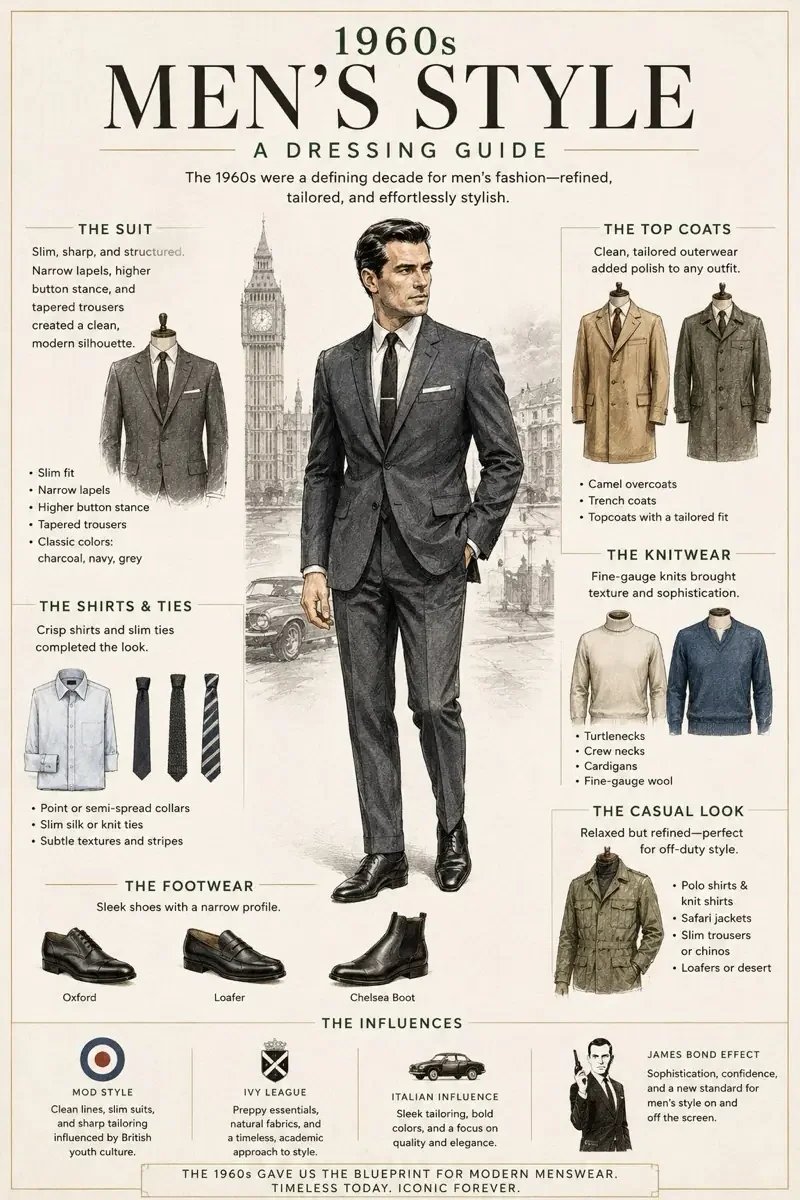
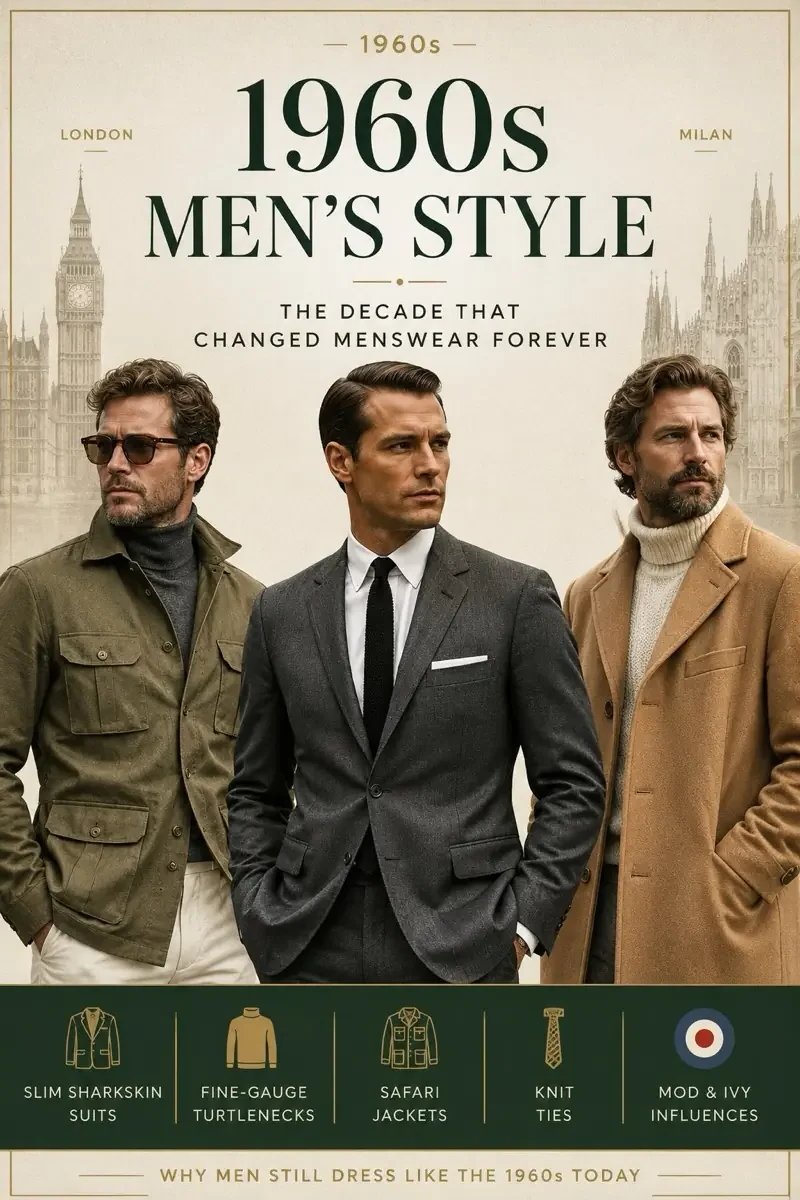
To understand 1960s tailoring, you must divide the decade into two distinct movements. The early part of the decade was defined by the American "Continental" look and the Ivy League influence. This is the aesthetic most people associate with the television show Mad Men or the early days of the Rat Pack. The jackets featured a two-button closure, narrow notch lapels, and minimal shoulder padding. The color palette was deliberately subdued, focusing on sharp greys, deep navies, and charcoal tones. Men wore skinny ties, crisp white shirts, and folded white pocket squares. The look was entirely about restraint and precision.
As the decade progressed, the cultural center of menswear shifted from New York to London. The late 1960s introduced the Peacock Revolution and the Mod movement. Driven by British rock bands and the youth culture of Carnaby Street, tailoring became bolder. Lapels began to widen slightly, double-breasted suits made a strong comeback, and fabrics became far more expressive. Men started wearing houndstooth, bold windowpane checks, and rich velvet. Despite these bolder choices, the underlying principle remained the same: the fit was always close to the body, clean, and intentionally tailored. If you are comparing this to the previous decade, our guide to 1950s menswear provides a perfect contrast to the slim revolution of the 60s.
The Anatomy of the 1960s Suit
The 1960s suit was an exercise in minimalism. The jacket was cut slightly shorter than the traditional standard, ending just at the seat to create the illusion of longer legs. The lapels shrank dramatically, often measuring two inches or less at their widest point. The shoulders were natural, meaning the heavy padding of the 1940s and 1950s was stripped away to reveal the wearer's actual physique. The trousers were equally revolutionary. Pleats were abandoned entirely in favor of a clean, flat front. The legs were cut slim through the thigh and tapered down to a narrow opening. These trousers were typically worn with a shorter break, or no break at all, allowing the shoe to be fully visible.
Fabrics played a crucial role in achieving this sharp look. Tailors utilized sharkskin, mohair blends, and tonic fabrics. These materials possessed a subtle sheen and a crisp, rigid drape that held a sharp crease beautifully. The stiffness of the fabric contributed to the architectural, clean lines of the suit. At Bespoke By CB, we help clients capture this exact architectural feel using premium fabrics that still offer modern comfort.
The Mod Style Breakdown
The Mod (Modernist) style took the slim silhouette to its absolute extreme. Originating among the working-class youth of London, the Mod movement was obsessively focused on tailoring and detail. A true Mod suit was characterized by a three-button jacket, often with the lapel rolling gracefully to the second button. Covered buttons were a popular detail, adding to the streamlined aesthetic. Ticket pockets were practically mandatory, placed just above the right hip pocket to add a touch of British heritage styling. The jackets featured deep side vents or, occasionally, no vents at all to maintain a perfectly unbroken silhouette.
The Mod aesthetic proved that attention to detail could elevate a simple garment into a cultural statement. The fit had to be flawless. A millimeter too wide, and the look was ruined. A millimeter too tight, and the suit became unwearable. This obsession with exact proportions is exactly why off-the-rack clothing can never truly replicate the Mod aesthetic. Only custom tailoring can achieve the necessary precision. When you browse the best custom suits in Miami, you will notice that the finest garments always prioritize this exact level of proportional balance.
Making It Modern at Bespoke By CB
At Bespoke By CB, we understand that wearing a vintage-inspired suit requires a delicate balance. You want to capture the essence of the 1960s, but you do not want to look like you are heading to a costume party. Making the 1960s look modern requires thoughtful adjustments to the extremes of the era. For example, instead of an ultra-skinny two-inch lapel, we might cut a lapel at two and three-quarters inches. This width still reads as slim and retro, but it fits harmoniously into a modern business or social context. You can explore different lapel options in our comprehensive guide to suit lapel styles.
Fabric updates are also essential. The original 1960s suits often utilized heavy, stiff fabrics that would be entirely unwearable in South Florida. At Bespoke By CB, we replace those heavy tweeds and thick mohairs with lightweight tropical wools, high-twist frescoes, and breathable blends. These modern luxury fabrics survive the Miami heat while still holding the crisp, structured lines that a 1960s silhouette demands. We maintain the flat-front trouser and the tapered leg, but we ensure the rise is comfortable and the thigh has enough room for natural movement. As Miami's premier custom clothier, Bespoke By CB ensures your retro-inspired suit feels as good as it looks.
We also incorporate classic 1960s details that remain incredibly stylish today. Side adjusters on the trousers eliminate the need for a belt, keeping the waistline clean and unbroken. We frequently add ticket pockets for clients who appreciate British tailoring history. Mother of pearl buttons can elevate a simple navy or grey suit, giving it that subtle, sophisticated edge that defined the era.
Essential Accessories for the 60s Look
A 1960s suit is only part of the equation. The accessories you choose will finalize the aesthetic. The skinny tie is perhaps the most iconic accessory of the era. A silk knit tie in a solid color, black, navy, or burgundy, pairs perfectly with a slim suit. Tie clips were highly popular and should be worn lower down on the chest to keep the tie anchored securely. Pocket squares were typically worn in a crisp, rectangular TV fold, peeking out just half an inch above the breast pocket.
Footwear choices during this decade were equally sleek. The heavy brogues of the past were replaced by Chelsea boots, sleek penny loafers, and minimalist oxfords. A sharp, polished Chelsea boot worn with a slim, no-break trouser is a look that originated in the 1960s and remains incredibly potent today. At Bespoke By CB, we advise our clients on the complete look, ensuring that every accessory complements the bespoke garment we have crafted for them.
Why Custom Tailoring is Essential for Slim Suits
There is a significant danger in buying "slim fit" clothing off the rack. In the ready-to-wear market, slim fit usually just means tight. A tight suit restricts movement, pulls across the chest, and ruins the drape of the fabric. A true custom slim suit, like the authentic garments from the 1960s, relies on sophisticated tailoring techniques rather than simply using less fabric.
At Bespoke By CB, we achieve a slim silhouette by cutting the armholes higher, which allows for greater range of motion without pulling the body of the jacket. We draft a chest canvas that provides structure without feeling restrictive. We tailor the trousers so they follow the natural line of the leg without clinging to the calves or thighs. Because we draft every pattern from scratch based on your unique measurements, we can deliver a close-fitting 1960s silhouette that remains entirely comfortable. Bespoke By CB offers a level of precision that mass production simply cannot replicate.
The Cultural Icons of 60s Style
The enduring appeal of 1960s menswear is largely due to the cultural icons who popularized it. Sean Connery defined the era as James Bond, wearing suits tailored with the famous "Conduit Cut" that featured a draped chest and suppressed waist. The Beatles brought the collarless jacket and the Mod aesthetic to the global stage. Steve McQueen, the undisputed king of cool, demonstrated how to blend sharp tailoring with casual effortlessness. Michael Caine showcased the sharp, working-class London aesthetic with heavy black frames and impeccably cut raincoats.
Our clients at Bespoke By CB frequently reference these icons during their initial consultations. They want the effortless sophistication of Bond or the sharp edge of Caine. By understanding the specific tailoring details that created those iconic looks, we can translate that inspiration into a custom garment that feels authentic and personal.
The Timelessness of Minimalist Tailoring
The reason the 1960s silhouette remains so relevant today is its inherent minimalism. By stripping away excess padding, widening shoulders, and baggy trousers, the 1960s suit placed the focus entirely on the wearer. It is a silhouette that flatters the male form by adhering closely to its natural lines. This minimalist approach has served as the default template for modern tailoring for the last two decades. When you commission a suit from Bespoke By CB inspired by the 1960s, you are not buying a trend. You are investing in a timeless architectural standard that will look just as sharp ten years from now as it did sixty years ago.
Frequently Asked Questions
Can I wear a 1960s style suit to a modern business meeting?
Yes, absolutely. A 1960s inspired suit is essentially a well-tailored, minimalist suit. By avoiding extremes, like ultra-skinny ties or overly narrow lapels, you can wear a slim-cut, flat-front suit to any corporate environment. It communicates precision, attention to detail, and a sophisticated understanding of personal style.
What fabric is best for a vintage-inspired suit in Miami?
At Bespoke By CB, we recommend high-twist tropical wools, fresco fabrics, and lightweight wool-silk blends for vintage-inspired suits in Miami. These fabrics provide the crisp, structured drape necessary for a 1960s silhouette while remaining breathable and comfortable in South Florida's heat and humidity.
How slim should the trousers be on a 60s style suit?
The trousers should be slim but never skin-tight. They should follow the natural line of your leg with a gentle taper from the knee to the ankle. The hem should feature a very slight break or no break at all, resting cleanly on the top of your shoe. We draft the pattern specifically to ensure you have enough room in the seat and thigh for comfortable movement.
Does Bespoke By CB make custom Mod style suits?
Yes, we specialize in crafting custom suits inspired by any era, including the Mod movement. We can incorporate authentic Mod details such as three-button fronts, ticket pockets, covered buttons, and side adjusters, all perfectly proportioned to your specific measurements.
What is the difference between a 1950s suit and a 1960s suit?
The 1950s suit was characterized by a looser, boxier fit. Jackets had broad, heavily padded shoulders, wider lapels, and a lower button stance. Trousers were full-cut and typically featured pleats. The 1960s suit was the exact opposite: natural shoulders, narrow lapels, a shorter jacket length, and slim, flat-front trousers. The 1960s introduced the streamlined, minimalist silhouette that still dominates modern tailoring.