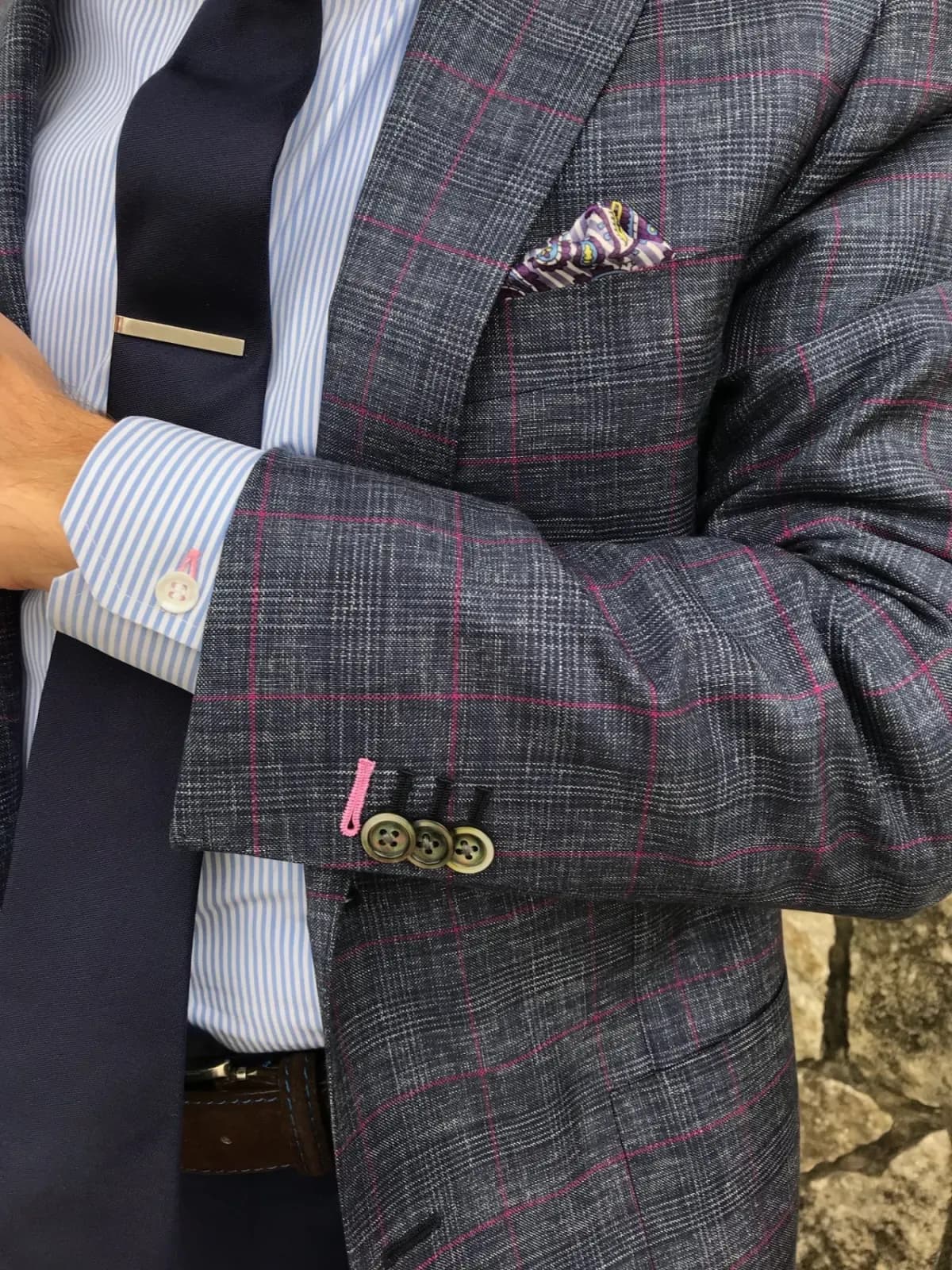
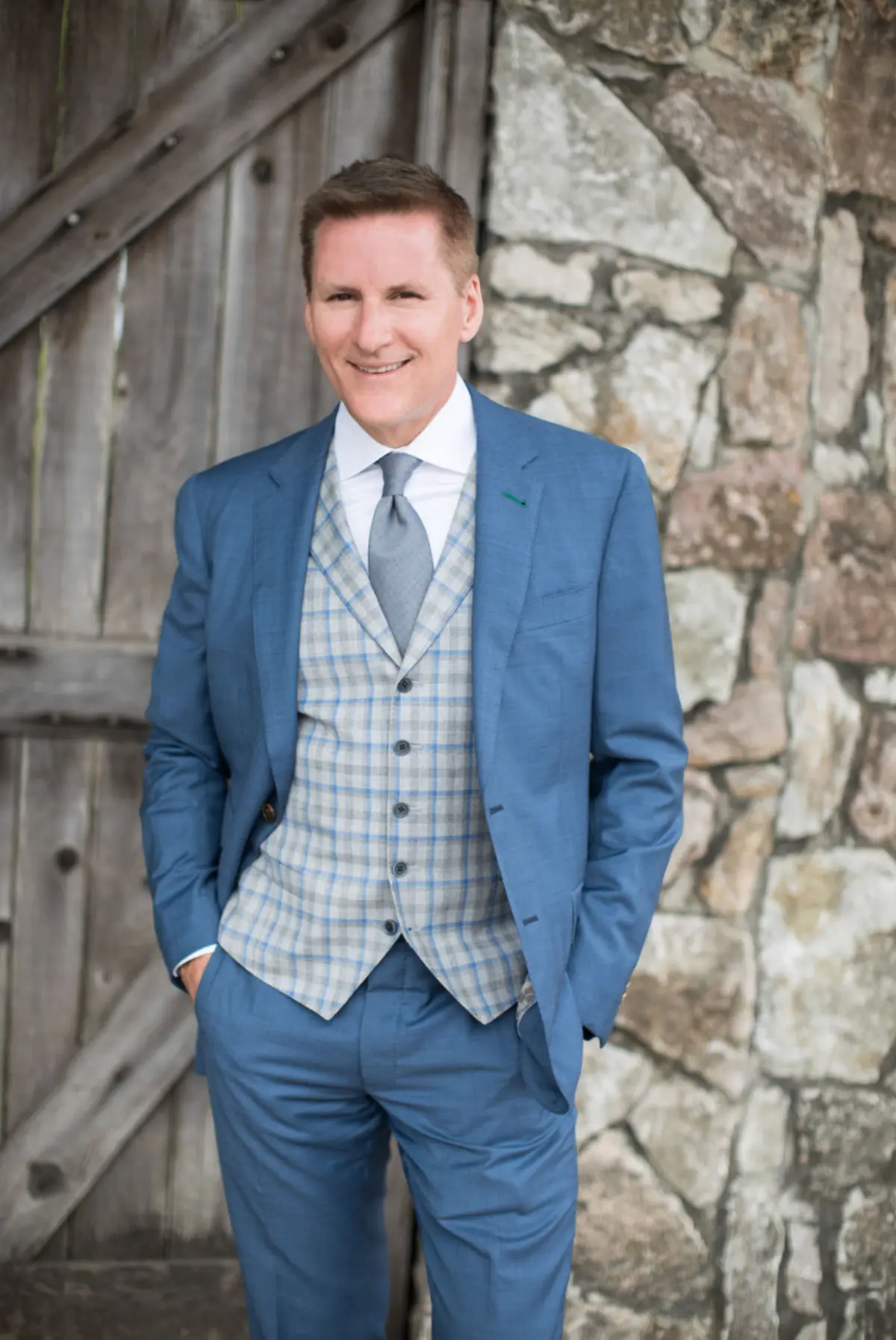
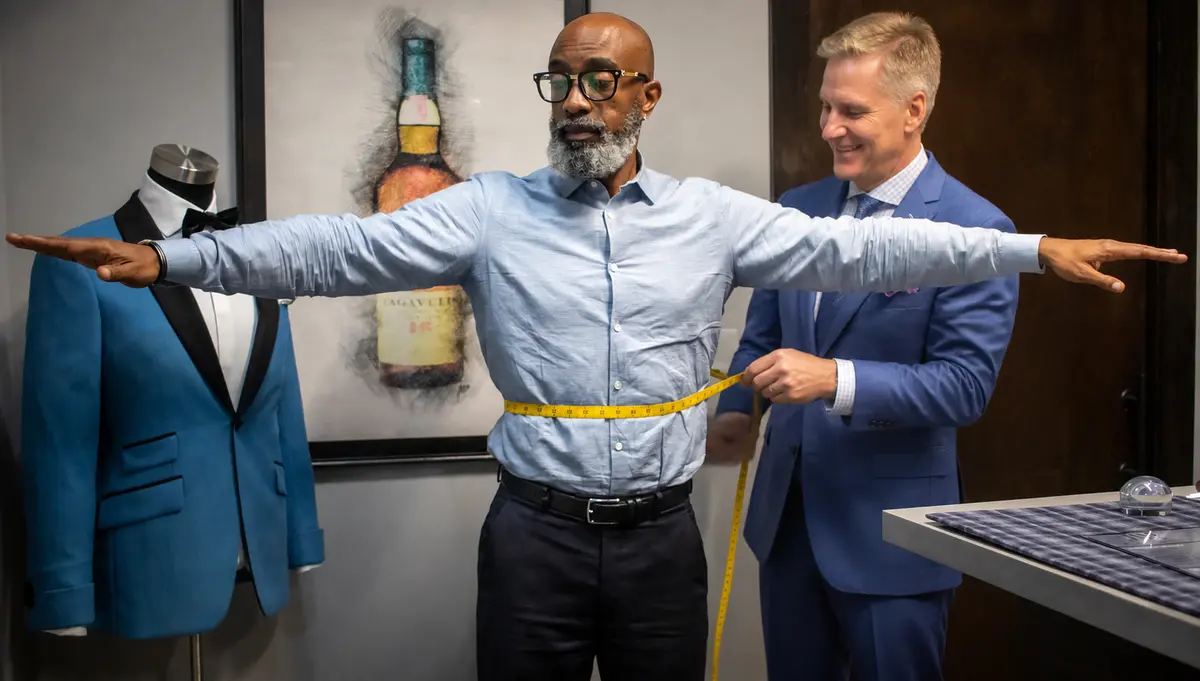
Most men think of a vest as something that goes under a suit jacket. A tweed shooting vest turns that idea inside out. It is an outer garment, built to be worn on its own or over a shirt and knit, designed with pockets you actually use and a fabric that actually protects you from the weather. At Bespoke By CB, we build custom shooting waistcoats for clients who appreciate the intersection of tradition and function, whether they spend their weekends in a dove field or a craft cocktail bar.
What Is a Shooting Waistcoat?
A shooting waistcoat, sometimes called a shooting vest or outer vest, is a traditional hunting garment with roots in the British countryside. It is cut from durable, weather-resistant wool tweed and built with features that serve a real purpose in the field: large bellow pockets on the front for cartridges and shells, a dedicated chest pocket with a protective flap, and reinforced shoulder patches that absorb recoil and provide grip when mounting a shotgun.
The shoulder patches are typically done in Alcantara, moleskin, or a contrasting felted wool. They are not decorative. On a working shooting vest, that reinforcement is what prevents the butt of a gun from wearing through the fabric at the shoulder over a season of use. The bellow pockets expand outward, so you can load them with dozens of cartridges without the vest pulling or distorting. And the roomy cut allows easy layering over a shirt, sweater, or both without restricting your swing.
But here is the thing: you do not need to shoot to wear one. A shooting waistcoat is one of the most practical and visually distinctive layers a man can own. The pockets hold your phone, wallet, keys, and sunglasses without any need for a bag. The tweed sheds light rain and blocks wind. The cut flatters a broad chest and shoulders. And the look, rich country tweed, horn buttons, patched shoulders, reads as confident and cultured in any setting.
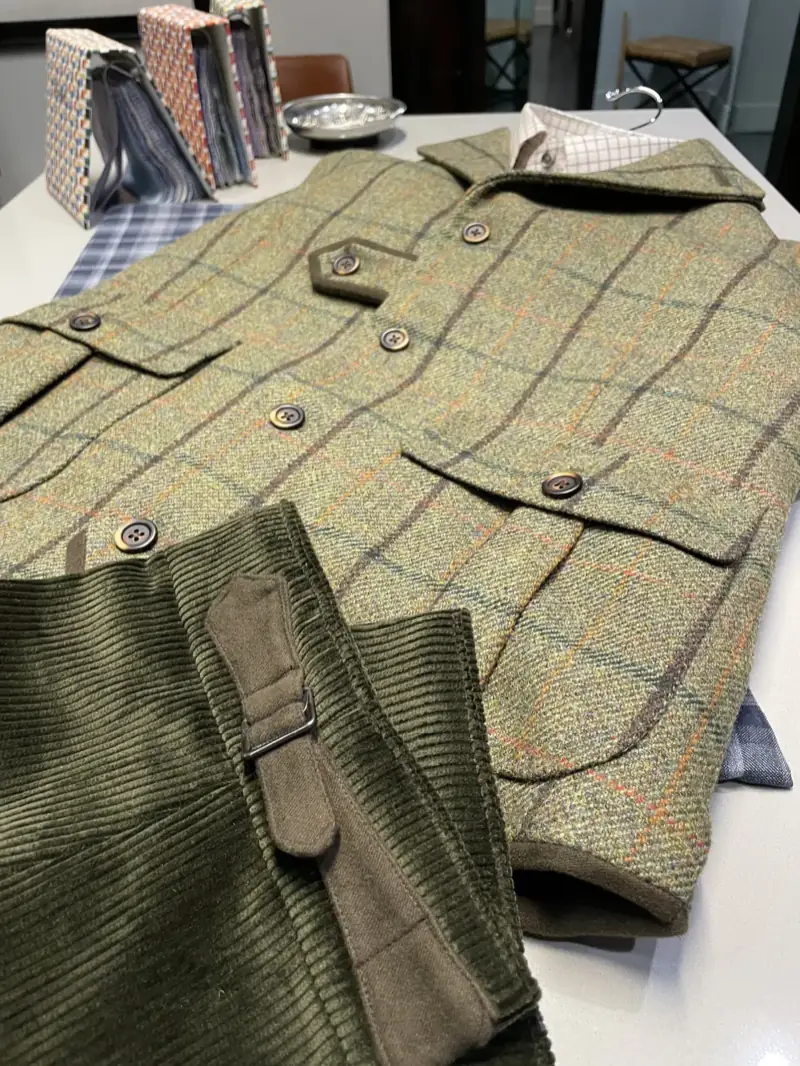
The Details That Define a Proper Shooting Vest
Not every tweed vest qualifies as a shooting waistcoat. The details are what separate a decorative vest from one built for purpose. Here is what to look for:
- Bellows pockets: These are the large, expanding front pockets with flaps. On a working vest, they hold 50+ cartridges. On a weekend vest, they hold everything you used to put in a messenger bag. The expansion gusset means the pocket sits flat when empty and grows outward when full, so the silhouette of the vest never changes.
- Shoulder patches: Alcantara, moleskin, or felted wool panels on both shoulders. These provide grip for a gun mount and protect the tweed from wear. Visually, they break up the expanse of the chest and add a layer of texture that makes the vest more interesting than a flat tweed front.
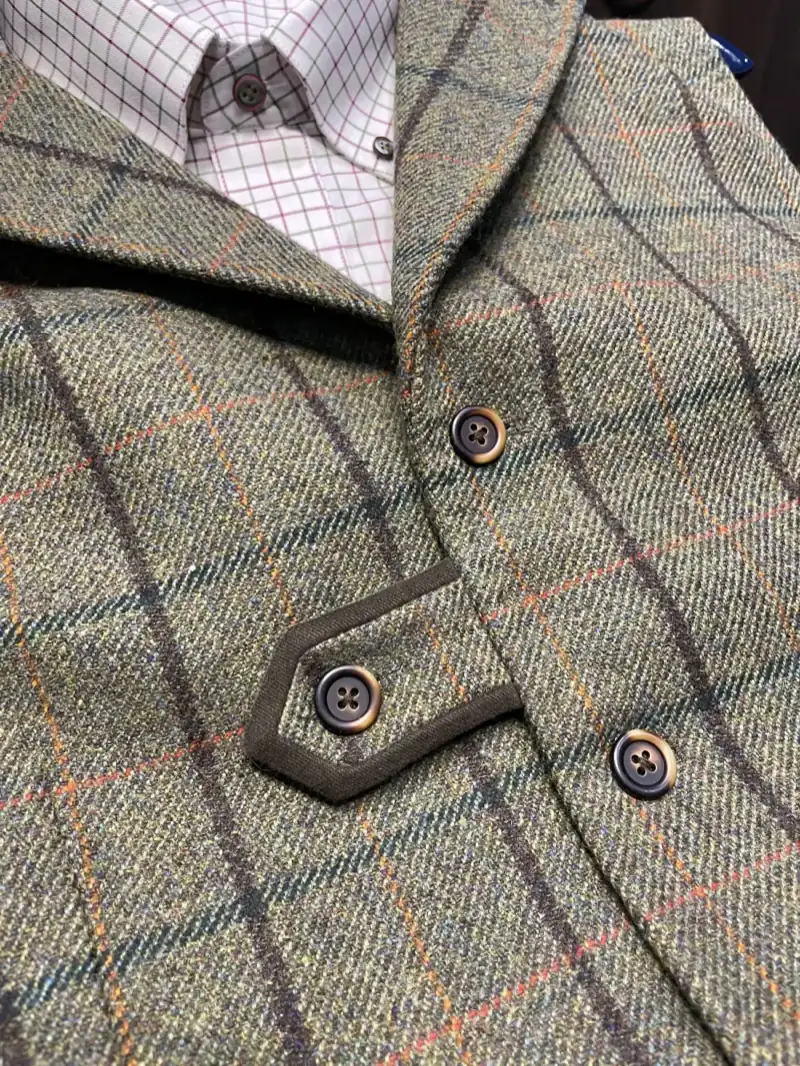
- Chest cartridge pocket: A dedicated pocket on the upper chest, often shaped with a distinctive hexagonal or diamond welt, trimmed in contrasting fabric and closed with a button. Originally designed for quick access to shells during a drive, it works equally well for a pair of sunglasses or a slim phone.
- Horn buttons: Real horn or high-quality faux horn in a warm tortoiseshell tone. The buttons on a shooting vest are meant to be worked with cold fingers, so they are larger and easier to manage than dress buttons.
- Roomy cut: A shooting vest is not cut close to the body. It needs to layer over a shirt and a sweater without pulling at the buttoning point. That generous fit is part of what gives it its distinctive silhouette, relaxed but authoritative.
Why Custom Matters for a Shooting Vest
Off-the-rack shooting vests are common in British country catalogs. They work reasonably well if you happen to match the manufacturer's idea of a medium. But the details are where a custom shooting vest earns its premium. When Bespoke By CB builds one, every element is yours:
The tweed: We source from Holland & Sherry, Ariston, Scabal, and the best British mills. You choose the weight, the pattern, and the color. A heavier 18-ounce tweed for cold mornings in the field, or a lighter 12-ounce that transitions from fall to spring in Miami.
The shoulder patch: Alcantara for a refined, modern look. Moleskin for a more traditional hand. Contrasting tweed for maximum country character. The shape and extent of the patch is up to you.
The pockets: Full bellow pockets with flaps, or slimmer patch pockets if you prefer a cleaner line for city wear. The chest pocket shape and trim are fully customizable.
The fit: Custom means the shoulders sit right, the length covers your waistband without looking boxy, and the armholes are cut high enough to let you move freely without the vest riding up. The roomy traditional cut is preserved, but it is roomy in the right places, your places.
How to Wear a Shooting Vest Beyond the Field
A shooting waistcoat is one of the most versatile layers in a well-dressed man's closet. Here is how to get the most out of it:
Weekend casual: Over a tattersall or flannel shirt, with dark jeans or corduroy trousers. The pockets replace a bag. The tweed replaces a jacket. You look like you got dressed with intention, not like you tried too hard.
Travel layer: A shooting vest over a henley or knit is the perfect travel piece. The pockets hold your passport, boarding pass, and phone. The wool regulates temperature. And it takes up less space in a carry-on than a sport coat.
Cocktail hour: A well-cut shooting vest in a refined tweed, over a white shirt with the sleeves rolled, is a look that works at any bar that does not require a jacket. It reads as confident and interesting without trying too hard.
At the hunt: Over a shooting shirt with a turtleneck underneath for cold mornings. That is what it was built for, and it still does it better than anything else.
Why Miami?
South Florida may not be the first place you associate with tweed, but the shooting vest has a place here. The lighter-weight tweeds, 10 to 12 ounces, are perfectly comfortable for Miami's air-conditioned restaurants and the weeks when the temperature dips below seventy. And for clients who travel to the Carolinas for quail season or to Scotland for grouse, a custom shooting vest built to their measurements is an investment that lasts for decades.
At Bespoke By CB, we build custom vests for every purpose, from formal three-piece suit vests to rugged shooting waistcoats. The shooting vest is the one that surprises people. Once they try it on, they wonder how they managed without those pockets for so long.
Frequently Asked Questions
What is the difference between a shooting vest and a regular vest?
A shooting vest is an outer garment designed to be worn on its own or over layers. It features functional bellows pockets, reinforced shoulder patches, and a roomier cut. A regular vest is typically an undergarment meant to be worn beneath a jacket, with a slimmer fit and decorative rather than functional details.
Do I need to be a hunter to wear a shooting waistcoat?
Not at all. Most of our clients wear them as everyday layers, for the pockets, the weather protection, and the look. The shooting heritage gives the garment its character, but its usefulness extends far beyond the field.
What tweed weight works best for Miami?
For South Florida, we recommend 10 to 12-ounce tweeds. They provide the texture and character of a proper country cloth without the weight. For travel to cooler climates, a 14 to 16-ounce tweed gives you more protection and a more substantial hand.
Can a shooting vest be part of a three-piece ensemble?
It can, but it is not traditional. A shooting vest is cut to be an outer piece, so wearing it under a jacket changes its proportions. If you want a three-piece suit, we would build a matching waistcoat. If you want a shooting vest, we build it to be worn on its own terms.
How much does a custom shooting vest cost?
Pricing depends on the tweed you select and the details you choose. Book a consultation and we will walk you through options that fit your wardrobe and your budget.