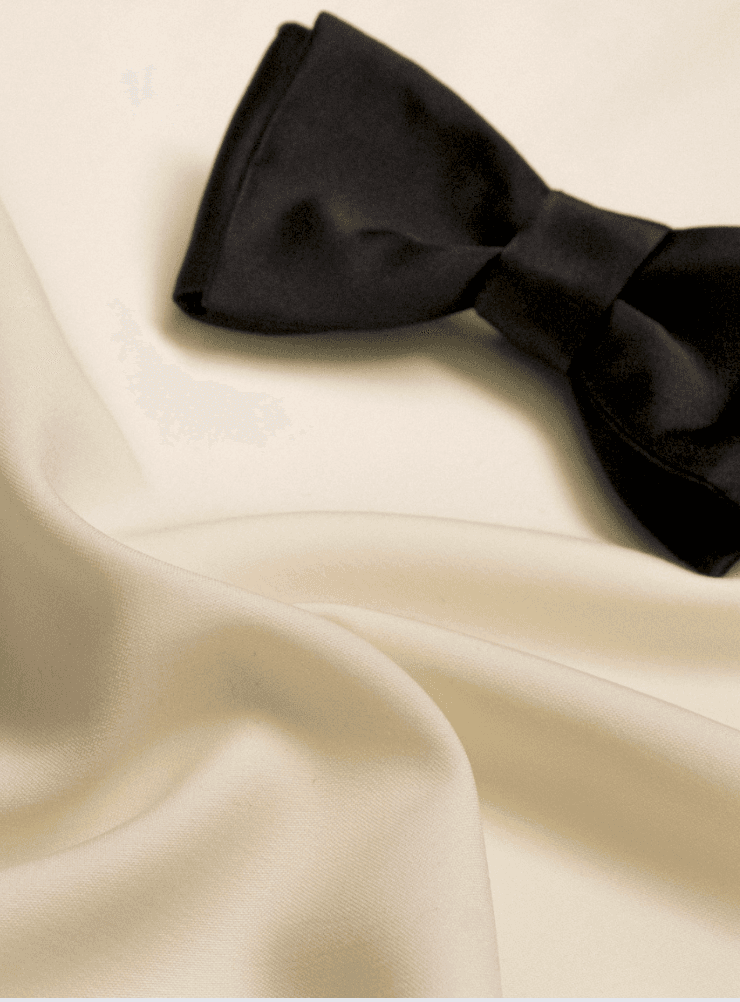
Bowties are a timeless accessory. From Winston Churchill to James Bond, the bowtie has become a style icon all on its own. Bowties are not only a must for formal occasions but can be used to show off one’s personality on everyday occasions.
The simple bowtie was originally a descendant of the knotted cravat. The first forms of the bowtie we know today were initially worn by Croatian mercenaries during the 17th century, when men needed a way to hold the openings of their shirts together. By the end of the 19th century, bowties made their way to French aristocrats who feel in love with the stylish accessory.
The popularity of the bowtie eventually made its way across Europe and evolved into a sign of wealth and luxury. Previously reserved exclusively for the most formal of occasions today, bowties have made their way into modern fashion.
At Christian Boehm, we know that it is not easy to master the art of how to tie a bowtie properly. Our custom clothing style experts are here to show you just how easy it is to conquer the bowtie.
Start with the bowtie wrapped around the collar of your shirt. You want to make sure that one end is longer than the other. Think of it like a pair of shoelaces.
Place the longer side of the bowtie over the shorter side.
Place Use the longer side of the bowtie to make a knot. Tie the bowtie back tight so that it wraps around the collar of the shirt.
Place the longer end of the bowtie to the side. Use the shorter end and fold it in half to create the initial shape of the bowtie.
*Make sure that there is an open loop on the end of the shorter side of the bowtie after you create the shape.
Take the long side of the bowtie and drape it over the middle of the shorter side. Like you would be creating a knot.
*Tip: To hold the shape of the bowtie in place, you can pinch the two sides of the shorter end of the bowtie or the end that is creating the initial shape.
By the shirt’s collar, there should be a small hole behind the shorter side of the bowtie. Take the smallest side of the longer piece of the bowtie and push it through the hole in the back.
*Try not to push it too far through as all of the fabric will come out.
For finishing touches, try tightening the bowtie to give it the desired shape.
Done!
Want to learn more about Christian Boehm?
Why Every Man Should Know How to Tie a Bowtie
I have been fitting men in Miami for over three decades, and I can tell you this with absolute certainty: the man who walks into a room having tied his own bowtie carries himself differently than the man who clipped one on. There is a quiet confidence that comes from knowing you did it yourself. It is the same confidence you get from wearing clothes that were made for you, not just sold to you.
The pre-tied bowtie is a convenience, and I understand the appeal. You are rushing out the door, you have a charity gala in South Beach at seven, and you do not want to fuss with fabric around your neck. But that convenience comes at a cost. Pre-tied bowties look flat. They look uniform. They look like every other man in the room who also grabbed the easy option. When you tie your own, the knot has character. It has slight asymmetry. It has life.
Common Mistakes I See Every Week
In my studio, I watch men struggle with bowties regularly. It is not because they lack intelligence or coordination. It is because nobody ever taught them properly. Here are the mistakes I see most often:
- Starting with the wrong side longer. The left side should hang about an inch and a half longer than the right. Most men try to make them even, which throws off the entire knot.
- Pulling too tight in the early stages. The first loop should be snug but not strangled. If you cinch it down too early, you will not have enough fabric to work with when forming the bow.
- Forgetting the center dip. A bowtie should have a slight pinch in the center, not a flat butterfly shape. That pinch is what separates a well-tied bow from a costume piece.
- Using the wrong fabric. Silk bowties are slippery and frustrating for beginners. Start with cotton or a cotton-blend. The grip makes learning much easier.
- Giving up after two attempts. Tying a bowtie is a physical skill, like parallel parking. You will be bad at it the first few times. Commit to practicing ten times before you decide it is not for you.
Choosing the Right Bowtie for the Occasion
Not all bowties are created equal. In Miami, our climate lets us wear lighter fabrics and bolder patterns. Take advantage of that.
Formal Events
For black-tie events, stick with a solid black silk bowtie. This is not the place for personality. A grosgrain texture is acceptable if your lapel facings match, but never mix satin and grosgrain in the same outfit.
Semi-Formal and Cocktail Events
A navy silk, a subtle paisley, or a textured wool bowtie all work beautifully. A lighter fabric like linen or cotton blends keeps you comfortable while looking sharp. Pair a navy cotton bowtie with a white or light blue dress shirt and you have a look that says you understand the dress code without being enslaved by it.
Casual and Creative Settings
This is where Miami lets you play. A floral print, a bold stripe, even a novelty pattern, these all work when the setting is right. The key is knowing your audience. If you are at an art opening in Wynwood, have fun with it. If you are at a board meeting, save the personality for later.
Fabric Matters More Than You Think
- Cotton: The best choice for beginners. The fabric Than You Think
- Cotton: The best choice for beginners. The fabric has grip, which means it stays where you put it while tying. Cotton bowties also hold their shape well throughout the day, which matters in Miami humidity.
- Silk: The standard for formal events. Silk drapes beautifully and catches light in a way that elevates any outfit. But it is slippery, so practice at home before wearing one out.
- Wool and Flannel: Perfect for fall and winter events, or for men who want a more textured, approachable look. A wool bowtie with a flannel suit says you know style without trying too hard.
- Linen: A Miami favorite. Linen bowties have a relaxed elegance that matches our climate. They wrinkle, but that is part of their charm.
The Psychology of the Bowtie
In a room full of men in straight ties, the man in the bowtie stands out. Not because he is louder, but because he made a deliberate choice. He chose the less common path. He chose something that requires skill.
I have fitted thousands of men over my career, and the ones who request bowties tend to share a few traits. They are confident but not loud. They appreciate tradition but are not bound by it. They want to look distinguished, not just dressed. If that sounds like you, then learning to tie your own bowtie is not just a skill, it is a statement.
Practice Makes Permanent
My final piece of advice is the simplest and the most ignored: practice. Tie your bowtie while watching television. Tie it in the morning before your shower. Tie it five times in a row until your fingers learn the movement without your brain having to direct every step. Muscle memory is the secret. Once your hands know the path, you will be able to tie a bowtie in under thirty seconds without a mirror.
The bowtie is not going anywhere. It has survived three centuries of fashion changes for a reason. It is timeless, it is distinctive, and when you tie it yourself, it is undeniably yours.
📅 Updated for 2026: This post has been reviewed and refreshed to reflect current trends, services, and availability in Miami's custom clothing market.