The Return of the Double-Breasted Suit
There are few garments in menswear that carry as much visual authority as a double-breasted suit. While the single-breasted jacket has dominated closets over the past few decades, the double-breasted silhouette has made a dramatic comeback among men who understand that clothing communicates power before a single word is spoken. In boardrooms, at weddings, and across Miami's social scene, the double-breasted suit has re-emerged as the choice of men who dress with intention.
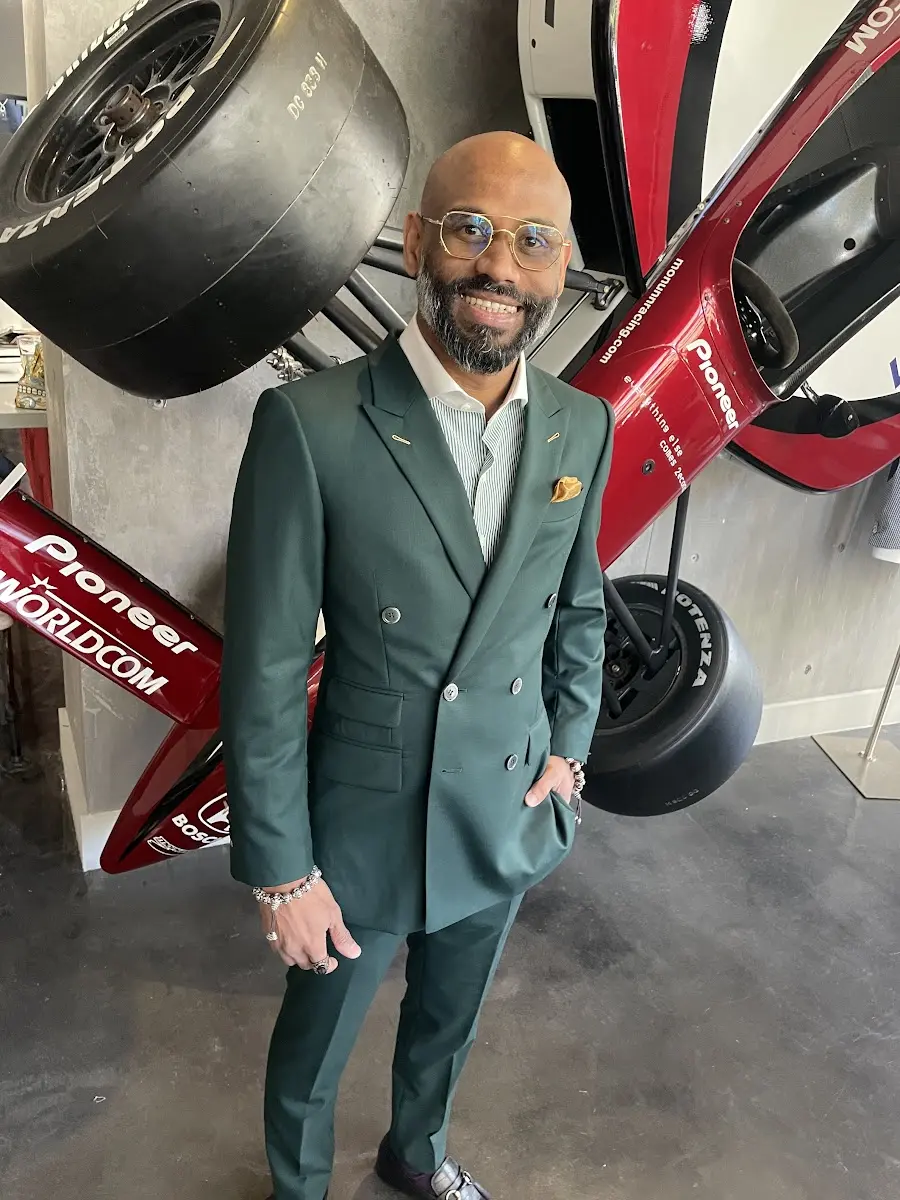
The resurgence is not accidental. Fashion cycles naturally revisit classic forms, but this particular return has been fueled by something deeper: a renewed appreciation for structure, proportion, and the kind of commanding presence that only a well-made double-breasted jacket can deliver. At Bespoke CB, Christian Boehm has been crafting double-breasted suits for clients across South Florida who want to stand apart without resorting to trendy gimmicks.
This guide covers everything you need to know about the double-breasted suit: its history, its construction, how to choose one, and how to wear it with the kind of confidence that turns heads at every event from Brickell to Palm Beach.
Understanding Double-Breasted Construction
A double-breasted jacket is defined by its overlapping front flaps, which create two parallel columns of buttons. Unlike a single-breasted jacket that fastens along a single vertical line, the double-breasted jacket wraps one side of the chest over the other, producing a broader, more structured front panel. This construction naturally creates a V-shaped torso line that flatters virtually every body type.
The most common button configurations are 6x2, 6x1, 4x2, and 4x1. The first number refers to the total buttons on the front, while the second indicates how many actually fasten. A 6x2 configuration, where six buttons are visible but only two fasten, is the most traditional and widely flattering option. It offers a balanced look that avoids both the severity of a 6x1 and the casualness of a 4x2.
The 4x2 configuration produces a shorter, sportier front panel that works especially well on shorter men or those who prefer a more contemporary silhouette. The 6x1, sometimes called the "Kent" style after the Duke of Kent who favored it, buttons at only one point and allows the lapels to roll more dramatically, creating an assertive, almost theatrical look that works beautifully at formal events.
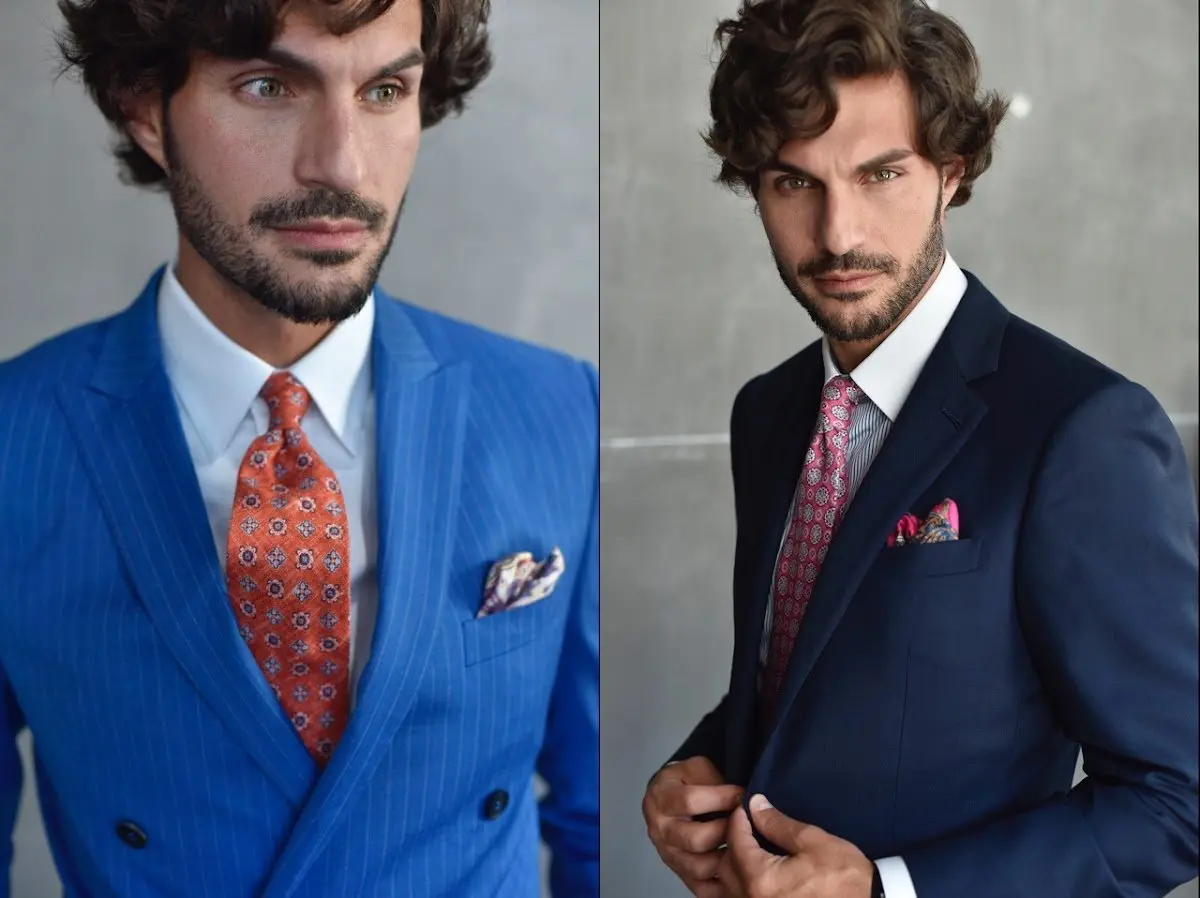
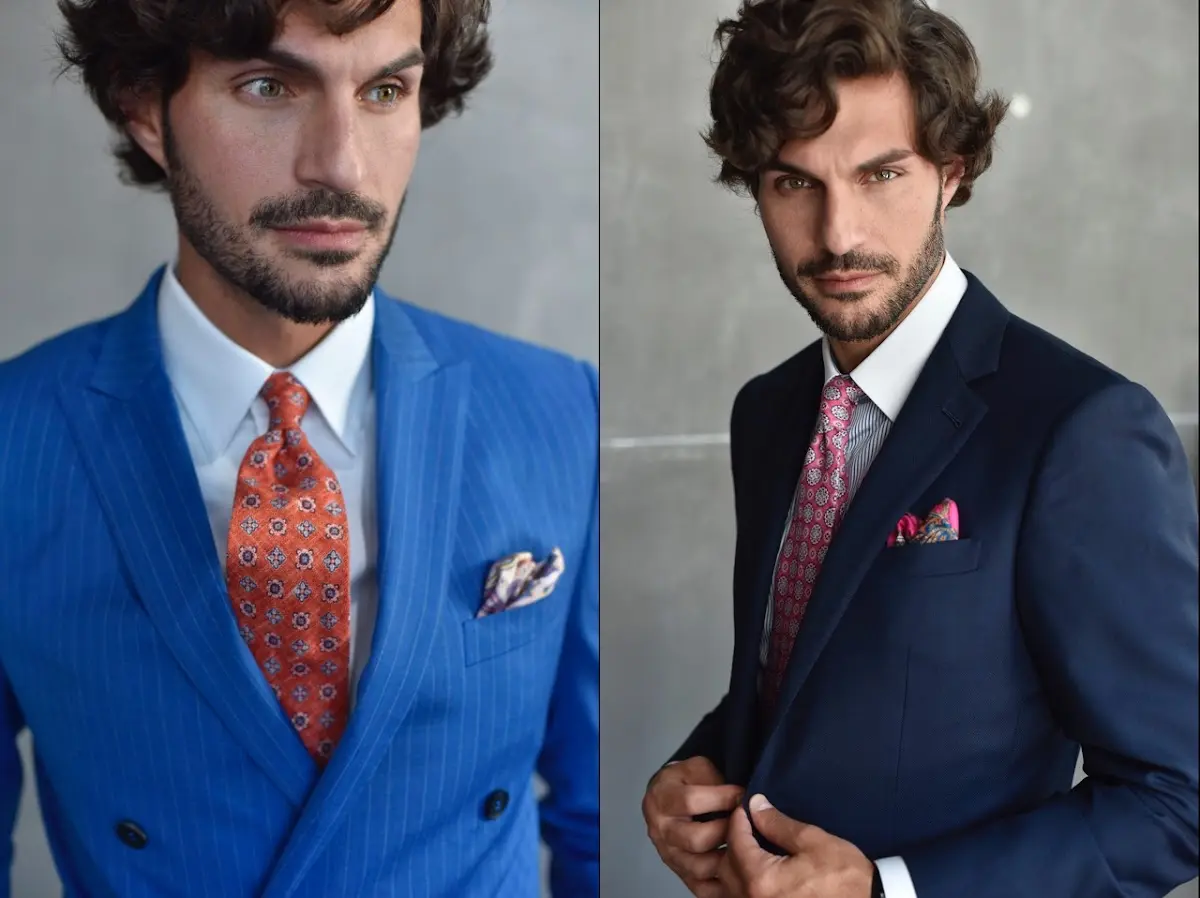
Peak lapels are the traditional companion to double-breasted jackets, and there is good reason for this pairing. The upward sweep of peak lapels mirrors the V-line created by the overlapping front panels, amplifying the visual effect of a broad chest and narrow waist. While some modern designers have experimented with notch lapels on double-breasted jackets, the peak lapel remains the definitive choice for a garment that commands attention.
A Brief History of the Double-Breasted Jacket
The double-breasted jacket traces its lineage to naval uniforms, where the overlapping front was designed to protect sailors from wind and cold on open decks. By the late 19th century, this practical construction had migrated from military dress into civilian tailoring, first appearing on overcoats before being adapted into lounge suits.
The 1930s and 1940s marked the golden age of double-breasted tailoring. Hollywood icons like Cary Grant, Fred Astaire, and Clark Gable wore double-breasted suits on screen and off, cementing the style as a symbol of sophistication and masculine elegance. The wider shoulders, fuller chest, and draping fabrics of that era were perfectly suited to the double-breasted form.
The 1960s and 1970s saw a shift toward slimmer, more minimalist silhouettes that favored single-breasted jackets. Double-breasted suits had brief revivals in the 1980s, when power dressing returned them to Wall Street, and again in the early 2000s among fashion-forward circles in Milan and London. Today, the double-breasted suit exists in a more refined, body-conscious form that combines the authority of its heritage with modern proportions that work for the way men live and move now.
Understanding this history matters because it informs the choices you make when commissioning a double-breasted suit. The garment carries cultural weight. When you button a double-breasted jacket, you are connecting to a lineage of men who dressed deliberately, who understood that presentation is a form of communication. That awareness, more than any specific style detail, is what makes a double-breasted suit feel powerful rather than costumey.
Who Should Wear a Double-Breasted Suit
One of the most persistent myths in menswear is that double-breasted suits only work on tall, slim men. This is simply wrong. The double-breasted jacket is one of the most flattering garments available when it is properly tailored, precisely because its construction allows a skilled tailor to manipulate proportion in ways that a single-breasted jacket cannot.
For men with broader builds, the overlapping front panels create a strong vertical line that slims the torso. The peak lapels draw the eye upward toward the face, counteracting any tendency for a wider frame to look boxy. Christian Boehm often recommends double-breasted jackets to his clients who want to project authority without relying on dark colors or conservative cuts to minimize their presence.
For taller men, the double-breasted jacket adds visual mass to the upper body, filling out a frame that might look lean or stretched in a single-breasted suit. The structured chest and defined shoulder line create proportion that balances height with substance.
Shorter men can absolutely wear double-breasted suits. The key is choosing a 4x2 configuration with a higher button stance, which shortens the visual distance between the lapels and the waist, creating the illusion of longer legs. Paired with flat-front trousers that sit at the natural waist and break cleanly at the shoe, a properly fitted double-breasted jacket can actually make a shorter man look taller than a single-breasted alternative would.
The only men who should exercise caution are those with very narrow shoulders and a wider midsection, as the overlapping front panels can add perceived width to the stomach area. Even in these cases, a skilled tailor like Christian Boehm can adjust the button placement, lapel width, and front dart positioning to create a flattering result.
Choosing Fabrics That Complement the Double-Breasted Structure
Fabric selection is critical for any suit, but it becomes even more important with a double-breasted jacket. The overlapping front panels mean there is more fabric across the chest and torso, which amplifies the characteristics of whatever material you choose. A fabric that drapes beautifully will look even more elegant in a double-breasted cut. A fabric that bunches or lacks body will look worse.
For business settings, a worsted wool in Super 120s or Super 130s is the ideal foundation. These fabrics have enough weight to hold the structured shape of the double-breasted front while maintaining a clean drape through the body. Mills like Loro Piana, Scabal, and Holland & Sherry produce worsted wools that perform exceptionally in this application.
Pinstripes and chalk stripes are a natural match for double-breasted suits. The vertical lines reinforce the elongating effect of the jacket's construction, and the pattern creates visual interest that justifies the more dramatic silhouette. A navy suit with a soft white pinstripe, cut in a 6x2 double-breasted style, is one of the most iconic looks in menswear.
For Miami's climate, fabric weight becomes a consideration. A tropical-weight wool in the 7 to 9 ounce range gives you the structure needed for the double-breasted front without trapping heat. Wool-silk blends are another excellent option, adding a subtle sheen that complements the formal nature of the silhouette while improving breathability.
Linen double-breasted jackets are popular for summer events and casual settings, but be aware that linen's tendency to wrinkle is more visible in a double-breasted cut because of the larger front panel area. A linen-wool or linen-cotton blend offers the relaxed texture of linen with better crease resistance.
Flannel, while traditionally a cooler-weather fabric, deserves mention because it is perhaps the most beautiful material for a double-breasted suit. The soft, slightly fuzzy surface of flannel creates a depth and richness that looks extraordinary in the structured form of a double-breasted jacket. For travel to northern cities during fall and winter, a charcoal flannel double-breasted suit is an unbeatable choice.
Fit Principles Specific to Double-Breasted Jackets
While many fit principles apply equally to single and double-breasted jackets, there are several areas where the double-breasted form demands specific attention.
The Shoulder
A double-breasted jacket generally benefits from a slightly more structured shoulder than its single-breasted counterpart. This does not mean the padded, exaggerated shoulders of the 1980s. It means a clean, defined shoulder line that creates the foundation for the jacket's strong visual geometry. The shoulder should end precisely at the edge of your natural shoulder, with just enough padding to maintain the line without looking artificial.
The Button Stance
Button stance, which refers to the vertical position of the fastening buttons on the jacket front, is arguably the most critical fit point on a double-breasted jacket. If the buttons sit too low, the lapels will gap open and the jacket will look like it is pulling apart. If they sit too high, the jacket will look pinched and uncomfortable. The correct button stance creates a smooth, natural roll of the lapel from the collar down to the fastening point, with no buckling or tension in the fabric.
Jacket Length
Double-breasted jackets should be slightly longer than single-breasted jackets to maintain proper proportion. The overlapping front panels create additional visual weight in the torso area, and a jacket that is cut too short will look unbalanced, like a vest rather than a jacket. The hem should fully cover the seat and align roughly with the bottom of a loosely curled fist when your arms hang naturally at your sides.
The Closure
When fastened, the jacket front should lie completely flat against the body with no pulling, gaping, or bulging. This is where custom tailoring proves its worth. Off-the-rack double-breasted jackets are notorious for fitting poorly at the closure because the overlap requires precise alignment between the front panels, the inner button, and the wearer's torso shape. Even small discrepancies in fit create visible problems that cannot be solved by a simple alteration.
Trouser Pairing
The structured, authoritative upper body of a double-breasted jacket calls for trousers that match its formality. Flat-front trousers with a medium rise, sitting at or just below the natural waist, create the cleanest line. Pleated trousers also work well, particularly with wider-legged, more traditional proportions. The key is avoiding trousers that sit too low on the hip, which breaks the visual continuity between jacket and pants and undermines the proportions the jacket was designed to create.
Styling Your Double-Breasted Suit
Business and Professional Settings
In a professional context, the double-breasted suit projects authority that a single-breasted suit simply cannot match. For business meetings, pair a navy or charcoal double-breasted suit with a white or pale blue dress shirt, a silk tie in a complementary tone, and polished oxford shoes. Keep accessories minimal. The suit itself is the statement, and overloading it with bold ties, flashy cufflinks, or competing pocket squares dilutes its impact.
For less formal business settings, a double-breasted blazer (rather than a full suit) worn with grey trousers or well-fitted chinos provides a commanding look without the full formality of a matched suit. This combination is especially effective for the kind of business-social events that define Miami's professional culture, where the line between meeting and cocktail hour is intentionally blurred.
Weddings and Formal Events
The double-breasted suit is a superb choice for weddings, galas, and other formal occasions. For grooms, a double-breasted jacket instantly distinguishes the man at the center of the celebration from his groomsmen, even when the entire party wears similar colors. The more dramatic silhouette photographs beautifully and creates a visual anchor in group shots.
For wedding guests in Miami, a light-colored double-breasted suit in cream, light grey, or tan linen is both appropriate and striking. Pair it with a patterned shirt or a colorful pocket square to embrace the celebratory atmosphere while maintaining the refined structure that the double-breasted form provides.
At black-tie events, a double-breasted dinner jacket offers an elegant alternative to the traditional shawl-collar tuxedo. In midnight blue or black, with silk-faced peak lapels, a double-breasted dinner jacket is both classic and distinctive. This is a look that belongs on the most confident man in the room.
Casual and Social Wear
The idea that double-breasted jackets are only for formal occasions is outdated. A double-breasted linen blazer worn open over a quality t-shirt or polo, paired with tailored shorts or relaxed trousers, creates an effortlessly sophisticated weekend look. In Miami, where the social calendar runs year-round and the line between casual and dressed-up is deliberately thin, this kind of elevated casual wear sets you apart.
The trick to wearing a double-breasted jacket casually is leaving it unbuttoned. When fastened, the jacket projects formality and structure. When open, it becomes a layering piece that frames the outfit beneath it. This versatility is one of the reasons that experienced dressers keep at least one double-breasted blazer in their rotation at all times.
Colors and Patterns That Work Best
Not every color and pattern works equally well in a double-breasted cut. The larger front panel and dramatic lapels create a canvas that amplifies whatever is on it, so your choices matter more than they would on a simpler jacket.
Navy: The default and the best starting point. A navy double-breasted suit is the most versatile option in your wardrobe, appropriate for business, weddings, evening events, and smart-casual occasions. It is the suit you will reach for most often.
Charcoal: Serious, elegant, and powerful. A charcoal double-breasted suit reads as more formal than navy and is particularly effective for winter events, evening functions, and situations where you want to communicate gravitas.
Pinstripe: As mentioned earlier, pinstripes and double-breasted construction are natural partners. The vertical lines enhance the silhouette's elongating properties, creating a look that is both classic and commanding.
Earth tones: Olive, tan, and brown double-breasted suits have become increasingly popular as menswear has embraced a broader color palette. These tones work exceptionally well in Miami's sunny environment and pair beautifully with cream shirts, knit ties, and suede shoes.
Bold colors: A burgundy, forest green, or deep rust double-breasted jacket is a statement piece that requires confidence to carry. If you are new to the double-breasted form, start with navy or charcoal before venturing into bolder territory. Once you understand how the jacket moves and feels on your body, experimenting with color becomes a natural and rewarding next step.
Common Mistakes and How To Avoid Them
The double-breasted suit is more demanding than a single-breasted suit, and certain mistakes can undermine the entire look. Here are the most common errors and how to sidestep them.
Wearing it unbuttoned at the wrong time: When standing, a double-breasted jacket should always be buttoned. The overlapping front is designed to be worn closed. Leaving it open while standing creates a sloppy, unfinished appearance. The only acceptable time to unbutton is when sitting down, and even then, some purists prefer to keep the inner button fastened to maintain the jacket's shape.
Choosing the wrong size: Because the double-breasted jacket has more fabric in the front, sizing errors are more visible. A jacket that is even slightly too large will look boxy and dated. A jacket that is too tight will pull at the buttons and create horizontal creasing across the chest. This is the strongest possible argument for custom tailoring, because getting the fit right on a double-breasted jacket off the rack is extraordinarily difficult.
Ignoring the inner button: Most double-breasted jackets have an interior button (sometimes called the "jigger" button) that anchors the overlapping front panel to the jacket's inner lining. This button must always be fastened, even when the outer buttons are undone for sitting. Skipping the jigger button allows the front panel to flap open and eliminates the clean line that defines the double-breasted look.
Over-accessorizing: The double-breasted suit is inherently more visually complex than a single-breasted suit. Adding too many accessories, a bold tie, a patterned pocket square, flashy cufflinks, and a lapel pin all at once, creates visual noise that competes with the jacket itself. Choose one accent piece and let the jacket do the rest of the talking.
Wearing overly slim trousers: Ultra-slim or skinny trousers create a top-heavy silhouette when paired with the fuller front of a double-breasted jacket. Trousers with a moderate, straight leg that tapers gently to the ankle create proper balance between the upper and lower body.
The Bespoke Advantage for Double-Breasted Suits
If there is one category of suit that absolutely demands custom tailoring, it is the double-breasted suit. The overlapping front, the specific button placement, the lapel roll, the jacket length, every element requires precision that off-the-rack manufacturing cannot deliver consistently.
At Bespoke CB, Christian Boehm takes over 30 measurements to ensure that every double-breasted jacket he creates sits perfectly on the wearer's body. The button stance is determined by your specific chest and waist proportions. The lapel width is calibrated to complement your face shape and shoulder width. The jacket length is set to your exact frame rather than an averaged size chart.
The result is a garment that looks like it was born on your body rather than draped over it. For a style that depends so heavily on precise fit, the difference between custom and off-the-rack is not subtle. It is the difference between looking like you own the room and looking like you borrowed someone else's jacket.
Christian offers private consultations throughout South Florida, from Miami and Brickell to Fort Lauderdale, West Palm Beach, and Palm Beach Gardens. Every appointment is tailored to your schedule and can take place at your home, office, or any convenient location. Visit bespokecb.com to schedule your consultation and discover why the double-breasted suit deserves a place in your wardrobe.
Frequently Asked Questions
Can short men wear double-breasted suits?
Yes. A 4x2 button configuration with a higher button stance creates a shorter front panel that elongates the legs visually. Paired with flat-front, medium-rise trousers, a properly fitted double-breasted jacket can make shorter men appear taller than a single-breasted alternative would.
Should you keep a double-breasted jacket buttoned when sitting?
You may unbutton the outer buttons when sitting for comfort, but always keep the inner jigger button fastened. This maintains the jacket's shape and prevents the front panel from falling open awkwardly. When you stand, re-button the outer fastening immediately.
What shirt collar works best with a double-breasted suit?
A spread collar or wide spread collar complements the broad peak lapels that typically accompany double-breasted jackets. The wider collar opening mirrors the expansive lapel line, creating visual harmony between the shirt and suit. Avoid narrow point collars, which look undersized against wide peak lapels.
Is a double-breasted suit too formal for everyday wear?
Not at all. While the double-breasted suit is more structured than a single-breasted suit, it can be dressed down effectively. A double-breasted blazer worn with chinos and a polo creates a polished yet relaxed look. The formality depends on fabric choice, color, and how you style it rather than the button configuration alone.
How much does a custom double-breasted suit cost?
At Bespoke CB, pricing varies based on fabric selection, construction details, and customization level. Contact Christian Boehm through bespokecb.com for a personalized consultation and quote. Every suit is built to your exact measurements, body shape, and style preferences.
Double-Breasted Suit Meaning: What Exactly Is a DB Suit?
A double-breasted suit is a jacket with overlapping front panels and two parallel columns of buttons, as opposed to a single-breasted jacket which has one column. The term "double-breasted" refers to the construction of the jacket front, where both sides overlap and fasten with buttons on the overlapping side. This design originated in naval uniforms and has been a staple of menswear since the 1930s. A true double-breasted jacket typically has 6 buttons (6x2 configuration, meaning 6 buttons with 2 that actually fasten) or 4 buttons (4x2). The overlapping front creates a structured, broad-shouldered silhouette that many men find flattering. At Bespoke By CB, Christian Boehm cuts each double-breasted jacket pattern from scratch based on your 34+ measurements, ensuring the lapel rolls correctly and the jacket closes without pulling.
Frequently Asked Questions
Is a double-breasted suit still in style?
Yes, double-breasted suits remain a stylish and sophisticated choice. Modern double-breasted suits have a slimmer, more tailored cut than their predecessors. Bespoke By CB in Miami offers contemporary double-breasted suits that look sharp and current.
How should a double-breasted suit fit?
A double-breasted suit should fit close to the body with the lapels lying flat against the chest. The jacket should button comfortably without strain. Bespoke By CB ensures a perfect fit for their custom double-breasted suits.
When should I wear a double-breasted suit?
Double-breasted suits are appropriate for formal business settings, important meetings, and evening events. They project authority and sophistication. Bespoke By CB in Miami creates double-breasted suits for any occasion.
Can I wear a double-breasted jacket as a blazer?
Yes, a double-breasted jacket in navy or a solid color works well as a blazer when paired with contrasting trousers. Bespoke By CB can design a versatile double-breasted jacket for your wardrobe.