When you walk into a boardroom, your suit speaks before you do. In the first three seconds, before you've shaken a single hand or made eye contact, the room has already formed an opinion. Your suit is your visual headline , it tells people whether you're someone worth listening to.
Most executives understand this instinctively. The CEO who shows up in a wrinkled, ill-fitting off-the-rack suit sends a message of carelessness, no matter how sharp the presentation slides are. The one who arrives in a beautifully cut, well-fitted bespoke suit signals attention to detail, respect for the occasion, and quiet confidence. This isn't about vanity. It's about strategic self-presentation. Your wardrobe is a tool, and like any tool, it works best when it's purpose-built.
Why Executive Suiting Matters
Presence isn't an abstract concept. It's the cumulative effect of how you carry yourself, how you speak, and , critically , how you present yourself visually. For executives, the suit is the foundation of that presentation.
A well-dressed leader commands attention without demanding it. There's a reason heads of state, Fortune 500 CEOs, and top trial lawyers invest heavily in their wardrobes: they understand that authority is partly visual. When your clothing fits perfectly and looks intentional, people subconsciously attribute that same precision to your thinking.
The opposite is equally true. A powerful man in a poorly fitted suit undermines his own credibility. The shoulder seam that droops, the jacket that bags at the waist, the trousers that pool at the ankle , these aren't minor aesthetic issues. They're signals that say "he didn't bother" or worse, "he doesn't notice the details." For an executive, that's a dangerous impression to leave.
The Executive Wardrobe Essentials: The Three-Suit Foundation
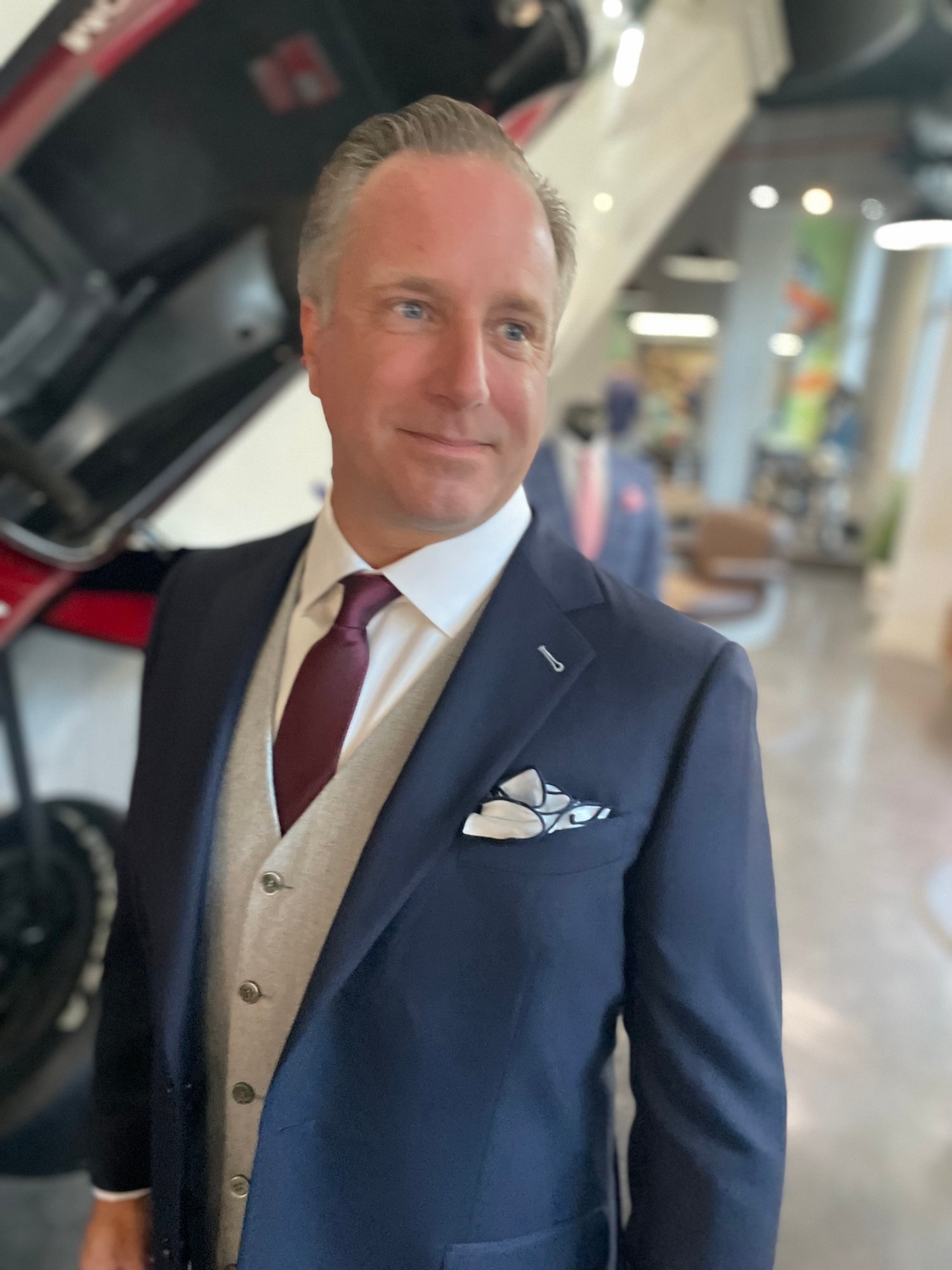
Every executive needs a foundation of three core suits. These are your workhorses , the suits you'll reach for 80% of the time. Get these right, and everything else is a variation on a theme.
Navy: The Power Anchor
Navy is the single most versatile suit in a man's wardrobe. It works in every season, every setting, and every level of formality. For executives, a navy suit in a mid-weight wool is non-negotiable. It pairs with every shirt and tie combination, transitions seamlessly from boardroom to client dinner, and projects quiet authority. If you own only one suit, make it navy.
Charcoal: The Gravitas Suit
Charcoal grey carries weight. It's the suit you wear when you need to look serious , board presentations, earnings calls, difficult conversations. Charcoal has a formality that navy's versatility doesn't quite match. It says "I'm in charge" without saying anything else. A charcoal suit in Super 130s wool is the second must-have in any executive wardrobe.
Light Grey: The Approachable Authority
Light grey rounds out the foundation. It's warmer and more approachable than charcoal, making it ideal for client meetings, networking events, and daytime functions. In Miami's climate, a light grey suit in a lighter-weight fabric is particularly useful , it reflects light, stays cooler, and still looks like a million bucks. Choose a shade that complements your complexion; not so pale it looks washed out, not so dark it competes with your charcoal.
These three suits , navy, charcoal, and light grey , form the backbone of executive dress. Build these in bespoke fit first, then expand. Everything else in your wardrobe should complement these three.
Fabric Choices for Executives
Fabric is where most executives get it wrong. The suit can fit perfectly and still look wrong if the fabric doesn't match the context. Here's what you need to know.
For daily executive wear, Super 120s to Super 150s wool is the sweet spot. These fabrics offer an excellent balance of drape, durability, and comfort. Super 120s is rugged enough for everyday wear with a refined appearance. Super 130s and 140s offer a finer hand and better drape for more formal occasions. Super 150s is luxurious but delicate , save it for special occasions, not the Monday morning briefing.
For executives in warmer climates like Miami, tropical wool is essential. This open-weave fabric breathes beautifully, resists wrinkling, and maintains a crisp look even in humidity. A tropical wool suit in navy or light grey is the Miami executive's best friend. The fabric is lighter, the weave is more open, and the comfort level in 90-degree heat is night and day compared to a standard worsted wool.
Want to explore fabric options in person? Browse our fabric library , we carry hundreds of options from the world's finest mills, selected specifically for executive wear.
Fit: Why Off-the-Rack Fails Executives
Here's the truth that department stores don't want you to know: off-the-rack suits are designed for an average body that doesn't exist. They're cut to fit a statistical composite, not a human being. For an executive who needs to look impeccable, that's a fundamental problem.
Shoulder Fit: The Dealbreaker
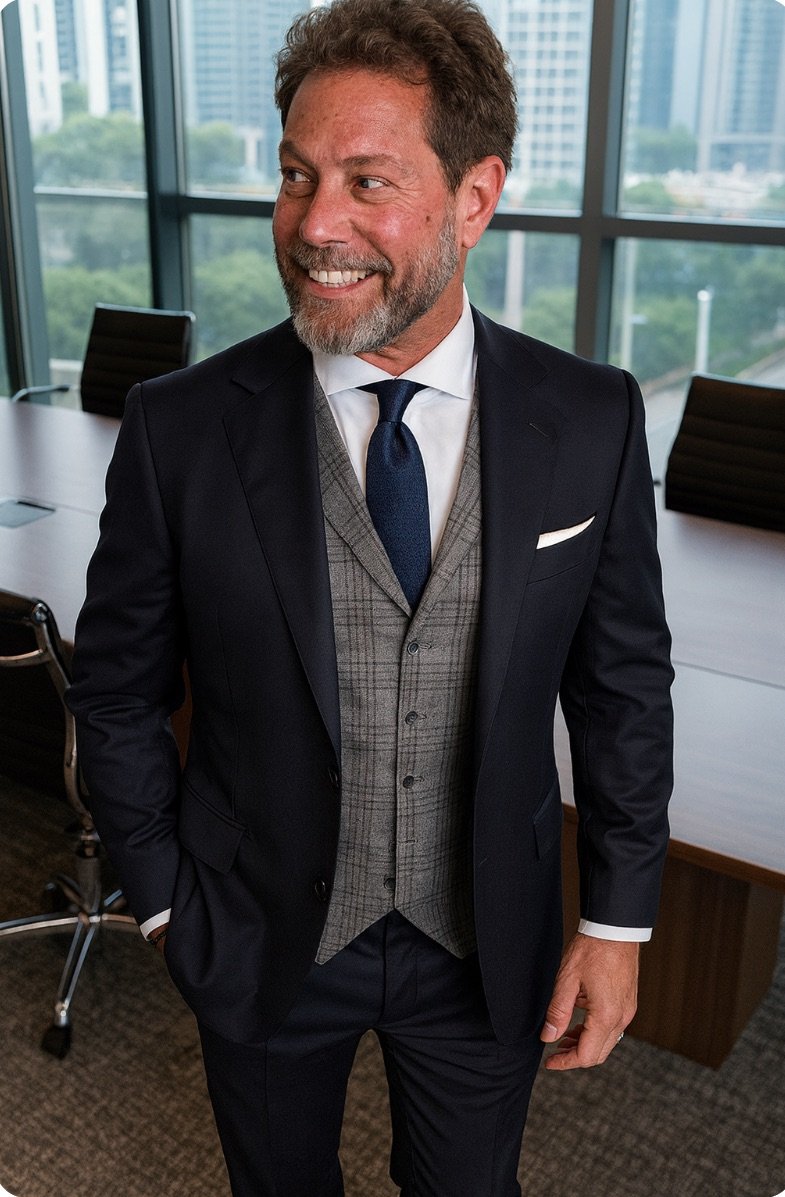
The shoulders are the structural foundation of a jacket. If the shoulders don't fit, nothing else matters , no amount of tailoring can fix them. Off-the-rack suits typically have shoulders that are too wide (to accommodate more body types) or too padded (to create the illusion of structure). A bespoke suit is cut to your actual shoulder dimensions, creating a clean line from neck to sleeve with no excess fabric or padding. This is the difference between looking like you're wearing a suit and looking like the suit was made for you.
Waist Suppression: Defining the Silhouette
A suit jacket should follow the natural taper of your torso. Most off-the-rack jackets are cut straight through the waist, creating a boxy silhouette that adds 10 pounds and subtracts 10 IQ points from your visual impression. Proper waist suppression creates a clean V-shape that communicates fitness, energy, and attention to detail. This is a standard feature of bespoke tailoring, not an alteration you request.
Trouser Break: The Finishing Touch
The break , where your trouser leg meets your shoe , is a small detail with outsized impact. Too much break and you look sloppy. No break and you look trendy, not executive. A slight break (a small indentation in the fabric at the front of the shoe) is the classic executive standard. It's clean, traditional, and universally appropriate. Your trouser length should be set during a fitting, not guessed at by a sales associate.
The Power of Subtle Details
The mark of a truly well-dressed executive is in the details you don't immediately notice. These are the elements that separate a bespoke suit from a good off-the-rack suit , and they're the elements that other well-dressed men will clock instantly.
Peak vs. Notch Lapels
Notch lapels are the safe, standard choice. They work for everything. Peak lapels, by contrast, make a statement. They're wider, more assertive, and historically associated with formalwear and power. An executive who chooses peak lapels on a navy or charcoal suit is signaling confidence and authority. It's not aggressive , it's definitive. For a boardroom suit, peak lapels are a power move.
Ticket Pockets
The ticket pocket , a small pocket above the right hip pocket , is a traditional Savile Row detail that most men miss entirely. It adds a layer of sartorial sophistication that sets your suit apart without calling attention to itself. Other well-dressed men notice it. Everyone else just registers that your suit looks "right" without knowing why.
Working Buttonholes
Surgeon's cuffs , functional buttonholes on the jacket sleeve , are another hallmark of bespoke tailoring. Off-the-rack suits have faux buttonholes because the sleeves are cut long and adjusted after purchase. A bespoke suit has working buttonholes because the sleeve length is set during construction. It's a detail that means nothing to most people and everything to the people who know. That's exactly the point.
Color Psychology in Business Dress
Color communicates. Understanding what each color says allows you to choose your message deliberately.
Navy says: competent, trustworthy, authoritative. It's the color of leadership. Studies consistently show navy is perceived as the most professional suit color. For first impressions, high-stakes meetings, and public speaking, navy is your safest power play.
Charcoal says: serious, decisive, commanding. It's heavier and more formal than navy. Charcoal is the color for moments that require gravitas , board presentations, legal proceedings, financial announcements. It signals that you understand the weight of the situation.
Light grey says: approachable, confident, composed. It's less formal than navy or charcoal but no less authoritative. Light grey is excellent for relationship-building meetings, daytime events, and warmer climates. It shows you're comfortable enough in your authority to dress with a lighter hand.
Brown and earth tones say: grounded, accessible, reliable. These are excellent for one-on-one meetings and internal collaboration, but they lack the authority of navy and charcoal for high-stakes settings.
Choose deliberately. Don't default to the same suit every day , vary your color to match your message.

Accessories for Executives
Accessories are where executives either elevate their look or undermine it. The rules are simple but absolute.
Ties
Your tie should be proportional to your body and your lapel width. A tie that's too narrow looks trendy; too wide looks dated. Aim for a blade width of 3 to 3.25 inches. In terms of color, deep reds, navy, and burgundy are the executive standards. Avoid novelty patterns, bright colors, and anything that could be described as "fun." Your tie should complement your authority, not compete with it.
Pocket Squares
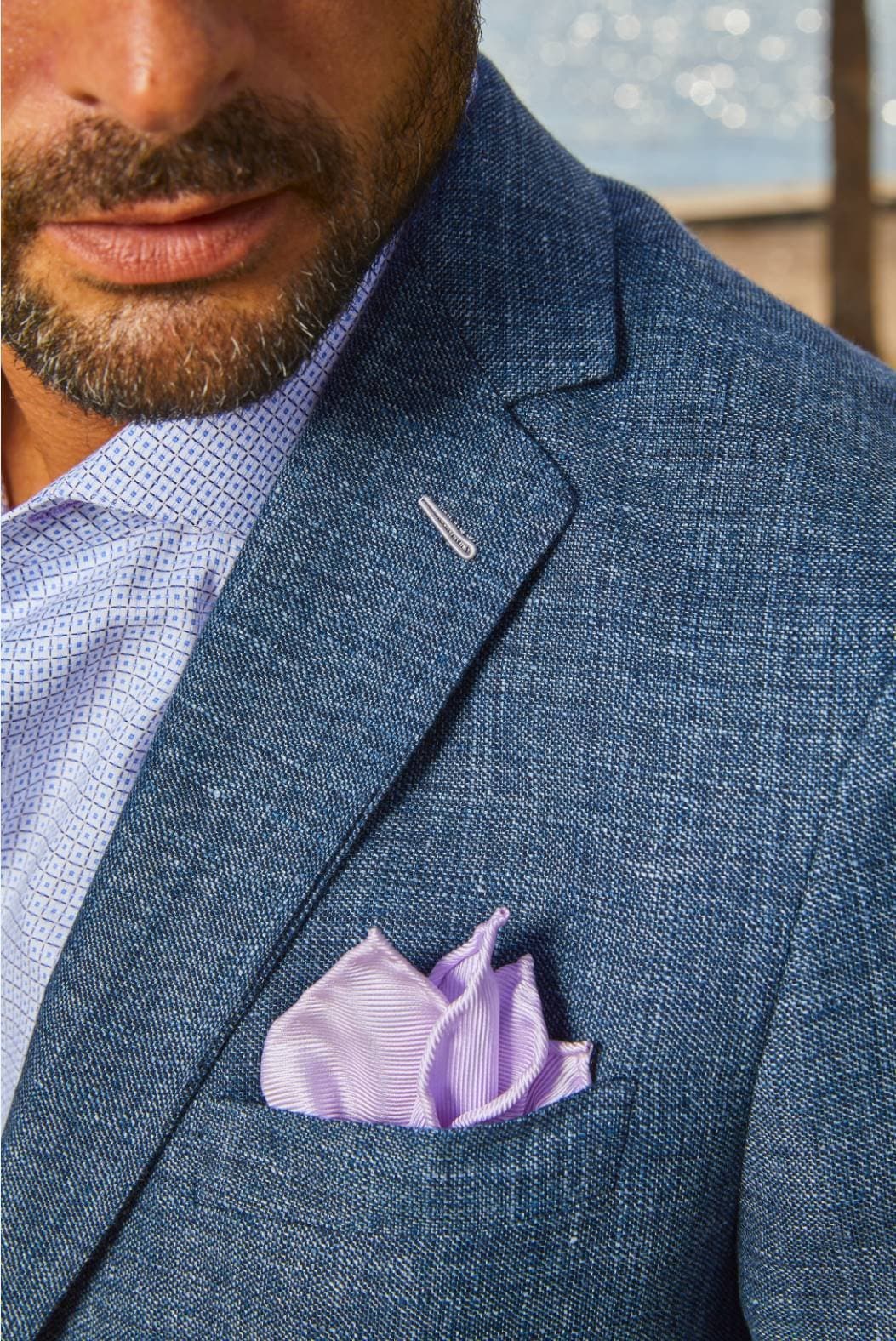
A pocket square is mandatory. A bare breast pocket looks unfinished. Choose a white linen or cotton square with a straight fold (TV fold) for maximum professionalism. Silk squares in subtle patterns work for less formal settings. Never match your pocket square exactly to your tie , it looks like you tried too hard. Coordinate, don't replicate.
Watches
A watch is the one piece of jewelry an executive should always wear. Choose a classic, understated timepiece , a steel or gold case with a simple dial. A dress watch with a leather strap works with any suit. Save the sport watches for the weekend. Your watch should say "I value quality and restraint," not "I just got a bonus."
Shoes
Black oxfords are the executive standard for formal settings. They pair with navy and charcoal suits perfectly. Brown shoes work with navy, grey, and earth tones but avoid them with charcoal for formal occasions. Invest in two pairs of quality shoes and rotate them , leather needs rest to maintain its shape. Polish regularly. Scuffed shoes undermine everything else you've done right.
Boardroom vs. Business Casual vs. Client Meetings
Understanding dress codes isn't about following rules , it's about reading the room. Here's how to calibrate.
Boardroom
Full suit, tie, pocket square. This is the maximum executive expression. Navy or charcoal, white or light blue shirt, conservative tie. The goal is to look like the most put-together person in the room without looking like you tried. This is where your bespoke foundation suits earn their keep.
Client Meetings
Match your client's formality level, then dress one notch above. If they're in business casual, wear a sport coat and dress trousers. If they're in suits, wear your best suit. The principle is respect: you're showing the client they matter enough for you to make an effort. First meetings should always default to a suit, regardless of the client's known dress code.
Business Casual
Business casual does not mean no jacket. An executive in business casual should still wear a sport coat or blazer with dress trousers and an open-collar shirt. The jacket is what separates an executive from a middle manager. Skip the tie, keep the structure. A tailored navy blazer with grey trousers is the gold standard.
Building a Cohesive Executive Wardrobe
The biggest wardrobe mistake executives make is buying suits one at a time, without a plan. The result is a closet full of suits that don't work together. You end up with a navy pinstripe, a brown check, a grey windowpane, and nothing that coordinates.
A cohesive wardrobe is built systematically. Start with your three foundation suits , navy, charcoal, light grey , all in solid colors. These work with every shirt, every tie, every shoe. Then add strategically: a navy pinstripe for variety, a brown or olive suit for daytime, a summer suit in lighter fabric. Each addition should complement the foundation, not compete with it.
Plan your shirts the same way. Start with white and light blue , the two most versatile dress shirt colors. Add a bengal stripe and a subtle check for variety. Every shirt should work with every suit. Every tie should work with every shirt. This isn't restrictive , it's liberating. You'll never stand in front of your closet wondering what goes with what.
This is where working with a tailor changes the game. Instead of buying random suits on sale, you're building a deliberate wardrobe with professional guidance. Book a consultation and we'll help you design a wardrobe strategy, not just buy suits.
Miami Executive Style: Climate-Appropriate Authority
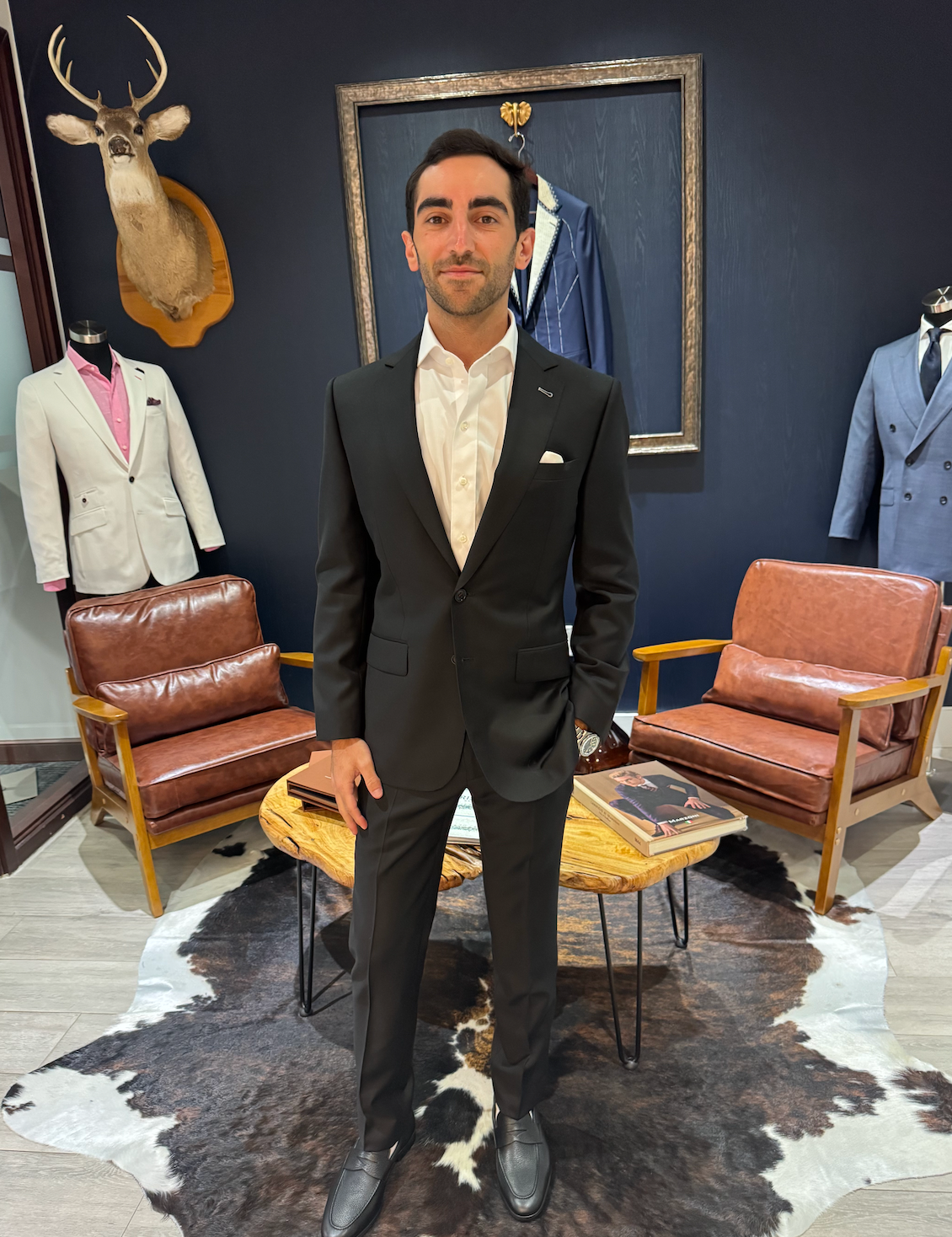
Miami presents a unique challenge for executive dress. The climate demands lighter fabrics and more breathable constructions, but the boardroom still expects authority and polish. The good news: you don't have to choose between comfort and credibility.
Tropical wool is the foundation of Miami executive style. It offers the drape and structure of traditional worsted wool with significantly better breathability. In Miami's humidity, a tropical wool suit keeps you looking crisp while keeping you comfortable. For the hottest months, consider a high-twist wool or a wool-linen blend , these fabrics have natural texture and breathability that works in South Florida's climate.
Color matters more in Miami. Lighter suits , light grey, tan, medium blue , are both climate-appropriate and culturally correct. A heavy charcoal suit in July in Miami looks like you're from out of town. A light grey tropical wool suit looks like you understand where you are.
Construction details can be adjusted for climate too. Half-canvas construction is lighter than full canvas while maintaining structure. Lining can be reduced or eliminated in the body of the jacket. These are choices a bespoke tailor makes with you , an off-the-rack suit doesn't give you the option.
Time-Saving: In-Office Fittings for Busy Executives
Here's the reality: executives don't have time to visit a tailor three times for fittings. Between meetings, travel, and the demands of running a business, the traditional tailoring process doesn't work.
That's why Bespoke By CB offers in-office consultations. Christian Boehm brings 37+ years of bespoke tailoring experience directly to your office. He brings the fabric library, takes your measurements, and handles every fitting on-site. You never leave your building. The suits come to you.
This isn't a gimmick , it's a service designed around how executives actually work. Christian has dressed CEOs, managing partners, and business leaders across Miami, and he understands that your time is the most valuable thing you have. The consultation takes 45 minutes. The fittings happen at your convenience. The suits are delivered to your office. Everything is handled.
In an era where time is the ultimate luxury, having your wardrobe built by a master tailor who comes to you isn't just convenient , it's the executive solution.
Frequently Asked Questions
How many suits does an executive need?
Every executive should start with three core suits: navy, charcoal, and light grey. These cover 80% of professional situations. From there, expand strategically , a pinstripe for variety, a summer-weight suit for warm climates, and perhaps a brown or olive for daytime events. Five to seven well-chosen suits will serve almost any executive's needs. Quality over quantity, always.
How often should I replace my suits?
A well-made bespoke suit in a durable fabric (Super 120s-130s) should last 8-10 years with proper care. Rotate your suits , never wear the same suit two days in a row , and store them properly with adequate hangers and space. Have them dry-cleaned only when necessary, not after every wear. A good suit is an investment that pays dividends over time.
Can a tailor fix an off-the-rack suit?
A tailor can adjust waist, length, and some details on an off-the-rack suit, but they cannot fix the shoulders, alter the fundamental cut, or add the structural elements that make a bespoke suit superior. If the shoulders don't fit, the suit is a lost cause. The money you spend buying and altering an off-the-rack suit would be better invested in a bespoke suit that fits correctly from the start.
What makes bespoke better than made-to-measure?
Made-to-measure adjusts a pre-existing pattern to your measurements. Bespoke creates a pattern from scratch based on your body. The difference is structural: a bespoke suit is built around an individual canvas that conforms to your body over time. Made-to-measure uses factory construction. The fit, drape, and longevity of a bespoke suit are in a different category entirely. For an executive who wears a suit every day, the difference is immediately apparent.
How do I care for bespoke suits?
Rotate your suits , give each one at least a day to rest between wears. Use wide wooden hangers that support the shoulders. Steam, don't iron. Dry-clean only when visibly soiled, not on a schedule. Store in breathable garment bags, not plastic. And when you travel, pack your suits in a proper garment bag , never check them. Treat your suits like the investments they are.
Do you offer in-office consultations in Miami?
Yes. Bespoke By CB offers full in-office consultations throughout the Miami area. Christian Boehm brings the complete fabric library to your office, takes your measurements on-site, and handles every fitting at your location. With 37+ years of experience dressing executives, this service is designed specifically for busy professionals who can't afford to spend hours traveling to a tailor. Book your in-office consultation today.