
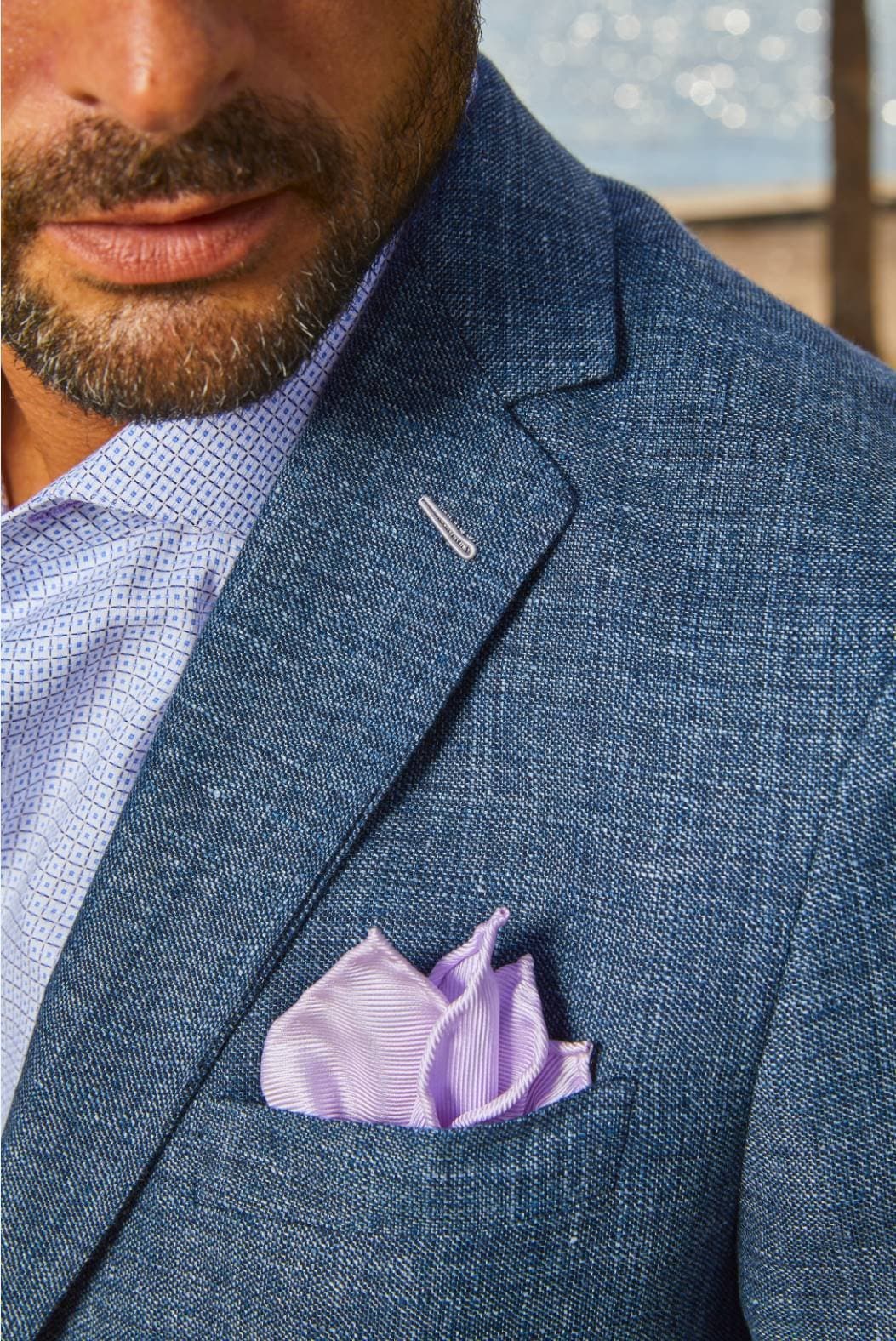
Fabric choice makes or breaks a suit. You can have the finest tailoring in the world, but if you're wearing a heavy flannel in July, you'll be miserable before lunch. The right fabric for the season is the difference between looking sharp and feeling sharp , and they're not always the same thing.
This guide breaks down exactly what to wear in each season, with specific weights, weaves, and mill recommendations. Whether you're dressing for a Miami boardroom or a New York winter, you'll know precisely what to ask for at your next fitting.
Understanding Suit Fabric Weight
Fabric weight is the single most important factor in seasonal comfort. It's measured in ounces per linear yard (oz/yd) or grams per square meter (g/m²). The lighter the cloth, the more breathable it is. The heavier it is, the more insulation and drape you get.
Here's the breakdown:
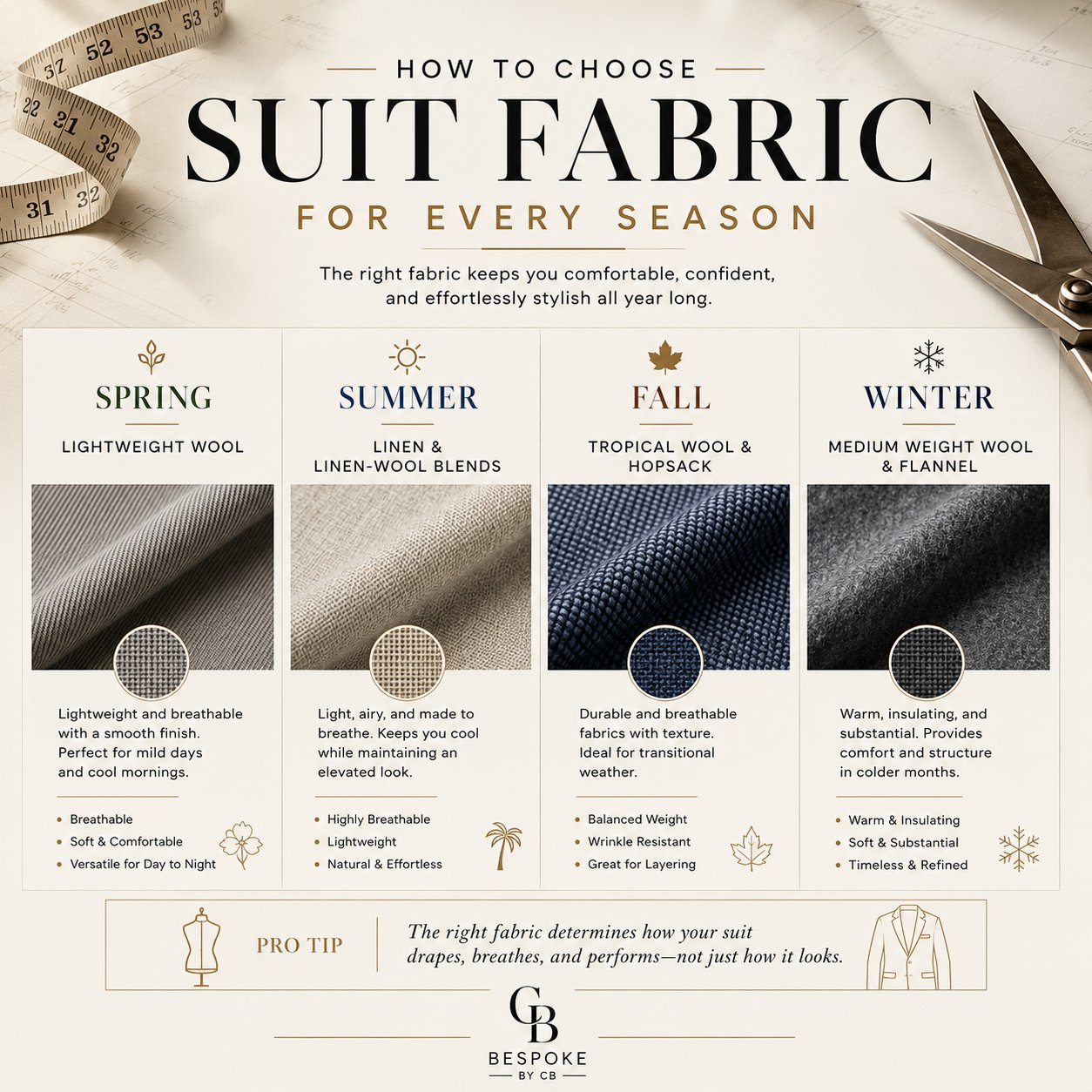
9–10 oz / 270–300 g/m²: Summer weight , linen, tropical wool, fresco, seersucker
10–11 oz / 300–340 g/m²: Year-round weight , worsted wool, hopsack, lightweight twills
11–13 oz / 340–390 g/m²: Fall weight , mid-weight twills, beginning flannel, cavalry twill
13–16+ oz / 390–480+ g/m²: Winter weight , heavy flannel, donegal tweed, cashmere blends
Weight affects two things: comfort and drape. Heavier fabrics drape more cleanly and resist wrinkling. Lighter fabrics breathe better but crease more easily. The trick is matching the weight to the climate you'll actually be in , not the climate you wish you had.
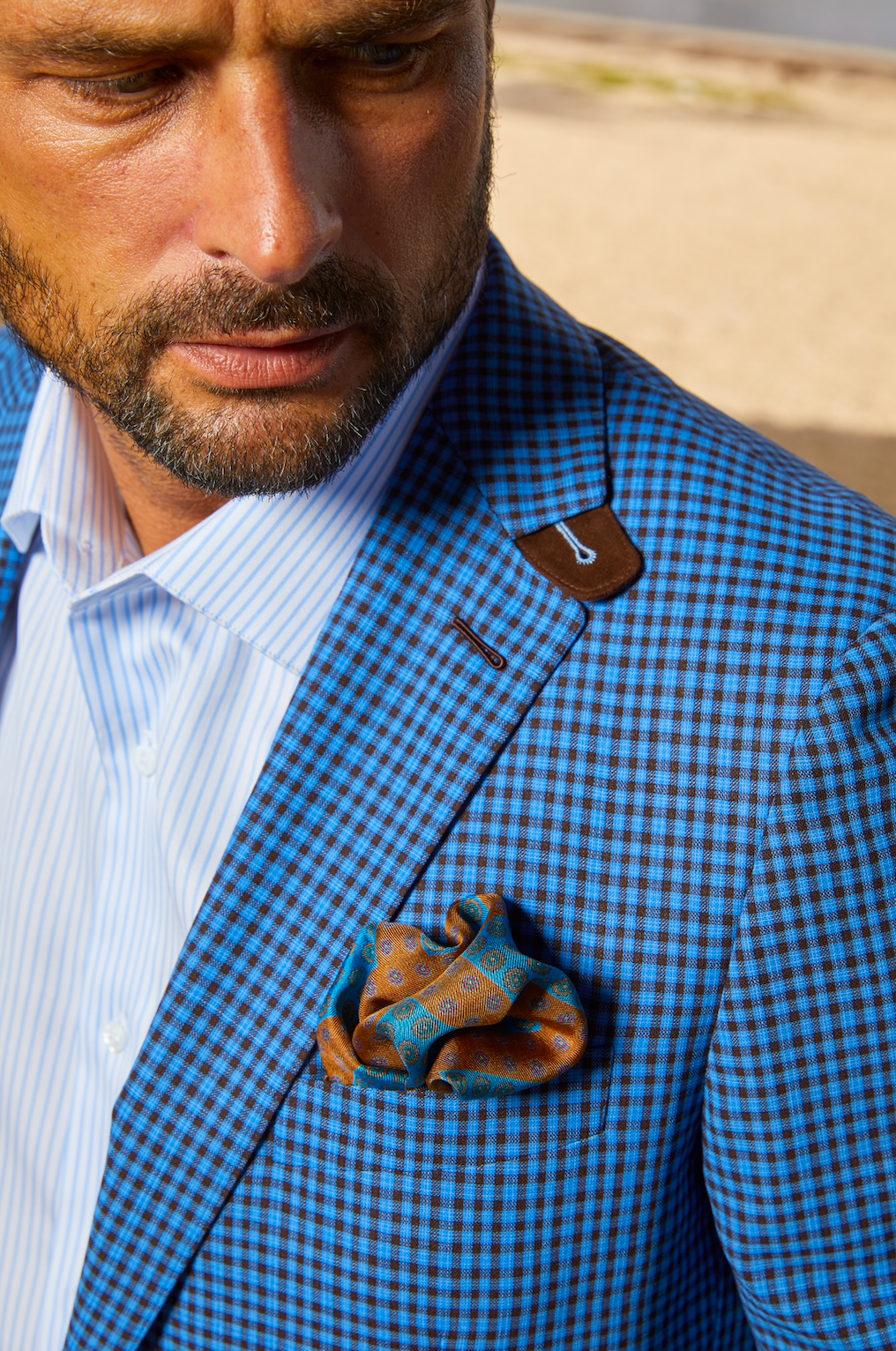
Weave Types Explained
The weave determines how the fabric behaves. Same fiber, different weave, completely different suit. Here's what you need to know:
Plain Weave
The simplest weave , one thread over, one thread under. Crisp, durable, and breathable. Hopsack is a type of plain weave with a looser, more open construction. You'll find it in summer and year-round cloths.
Twill
A diagonal rib pattern. Twill is the most common suit weave because it drapes beautifully, resists wrinkles, and has a subtle sheen. Heavier twills lean formal. Lightweight twills work year-round.
Tropical Weave
A loose, open plain weave designed specifically for hot weather. It allows maximum airflow while maintaining a dressy appearance. Not as durable as twill, but unmatched for summer comfort.
Fresco
A high-twist yarn woven in a plain weave. Fresco is the gold standard for summer wool , crisp, breathable, and surprisingly wrinkle-resistant. It has a slightly dry hand feel that some people love and some don't. If you want one summer wool fabric, this is it.
Seersucker
A puckered weave where alternating stripes are woven at different tensions. The puckering holds the fabric off the skin, allowing air to circulate. It's inherently casual and doesn't need ironing. A summer staple, especially in the American South.
Spring Suit Fabrics (March–May)
Spring is the transition season. Mornings are cool, afternoons warm, and the weather changes weekly. You need fabrics that breathe but still have enough body to hold a shape.
Lightweight Wool (10–11 oz)
A 10-ounce worsted wool is the ideal spring fabric. It's light enough for a 70-degree afternoon but substantial enough for a 55-degree morning. Look for Super 120s to Super 130s , the thread count gives you a smooth finish without being too delicate.
Cotton-Linen Blends
A 60/40 cotton-linen blend gives you the best of both worlds. Linen adds breathability; cotton adds structure and reduces wrinkling. These blends work beautifully for spring suits that need to transition from day to evening.
Hopsack
Hopsack's open construction makes it perfect for spring. It's not as rumpled as linen, not as heavy as twill. A navy hopsack suit is arguably the most versatile spring garment you can own.
Summer Suit Fabrics (June–August)
Summer separates the men from the sweaty. If you're wearing the wrong cloth in 90-degree heat, no amount of tailoring will save you. Here's what works:
Linen (7–9 oz)
The undisputed king of summer fabrics. Linen is made from flax fibers and is significantly more breathable than any other suit cloth. It wrinkles , that's not a flaw, that's the character. Embrace it. A pure linen suit in navy or light gray is a summer essential.
Mill recommendation: Loro Piana offers exceptional linen blends. Their "Summer Charms" collection pairs linen with silk or wool for added refinement.
Tropical Wool (9–10 oz)
If your office requires wool year-round, tropical weave is your answer. The open plain weave allows air to pass through while keeping a dressy appearance. It's the most formal summer option.
Fresco Wool (9–10 oz)
High-twist yarn, plain weave, maximum airflow. Fresco is what you wear when you want wool in July but don't want to suffer. It has a drier hand than standard worsted wool and a slightly more textured surface.
Mill recommendation: Holland & Sherry offers a beautiful fresco book. Their "Fresco" collection is worth every penny.
Seersucker (8–9 oz)
The fabric of Southern summers. The puckered weave holds the cloth off your skin, creating natural ventilation. Seersucker is casual by nature , pair it with a knit tie and loafers, not a silk tie and cap-toes.
Cotton Blends (9–10 oz)
Cotton-linen and cotton-wool blends offer a middle ground. They breathe better than pure wool and wrinkle less than pure linen. A cotton-linen suit in tobacco or olive is a summer wardrobe workhorse.

Fall Suit Fabrics (September–November)
Fall is where suiting gets interesting. The drop in temperature lets you reach for fabrics with real character , texture, weight, and depth.
Flannel (11–13 oz)
Flannel is a brushed wool with a soft, slightly fuzzy surface. It's warmer than worsted wool, drapes heavier, and has a matte finish that looks rich and substantial. Gray flannel is the quintessential fall trouser fabric , but a full flannel suit in charcoal or mid-gray is a statement piece.
Mill recommendation: Drago produces some of the finest flannel available. Their mill in Biella, Italy has been perfecting the cloth for generations.
Tweed (12–14 oz)
Tweed is a rough, textured woolen cloth originally woven in Scotland. Donegal tweed , with its characteristic flecked coloration , is the most versatile for suiting. Tweed is warm, durable, and looks better with age. It's not office-formal, but for weekend wear and country events, nothing compares.
Mid-Weight Wool (10–11 oz)
A step up from summer weight but not yet flannel territory. Mid-weight worsted wool in a twill weave is the most practical fall suit you can own. Navy or charcoal in this weight will carry you from September through November comfortably.
Winter Suit Fabrics (December–February)
Winter is about insulation without bulk. The right heavy fabric keeps you warm and looks structured , not puffy.
Heavy Flannel (13–16 oz)
The winter version of flannel is denser, heavier, and warmer. A 16-ounce flannel suit is a serious garment , it holds its shape all day, drapes like a dream, and keeps you warm in 30-degree weather. Charcoal heavy flannel is arguably the most elegant winter suit a man can wear.
Cashmere Blends (12–15 oz)
Wool-cashmere blends (typically 80/20 or 70/30) add softness and warmth without significantly increasing weight. The cashmere fiber is finer and traps more air, giving you better insulation per ounce than pure wool. These blends have a luxurious hand feel that's immediately noticeable.
Mill recommendation: Scabal offers stunning cashmere blends. Their "Diamond Chip" collection includes cashmere blended with Super 150s wool , exceptional for winter formal wear.
Donegal Tweed (14–16 oz)
Donegal tweed in heavy weight is built for real cold. The flecked coloration comes from differently colored neps woven into the cloth. It's rustic, warm, and distinctive. A Donegal tweed suit is a once-in-a-lifetime purchase , these things are practically indestructible.
Cavalry Twill (13–15 oz)
A steep, pronounced diagonal twill originally developed for military uniforms. It's dense, durable, and warmer than standard twill. Cavalry twill in dark navy or charcoal makes a commanding winter suit with a distinctive visual texture.
Year-Round Suit Fabrics
Not every climate has four distinct seasons. If you're building a wardrobe from scratch, start with year-round fabrics before specializing.
Worsted Wool (10–11 oz)
The most versatile suit fabric ever made. Super 110s to Super 130s worsted wool in navy or charcoal works in every season except the hottest days of summer and the coldest days of winter. If you own one suit, this is it. If you own three, two should be this.
Hopsack (10–11 oz)
The open weave of hopsack makes it slightly more breathable than a tight twill of the same weight. It's the perfect year-round choice for warmer climates. Navy hopsack is the Swiss Army knife of suit fabrics.
Lightweight Twill (10–11 oz)
A standard twill weave in 10-11 ounce weight gives you the best drape-to-breathability ratio. It's slightly warmer than hopsack but more structured. A gray twill suit will carry you through 10 months of the year in most climates.
South Florida Fabric Guide
Miami doesn't have four seasons. It has summer, slightly less summer, and two weeks of "winter" where people pull out a sweater at 65 degrees. If you live in South Florida , or custom suits are on your mind , here's how to adapt:
Most of the year (April–October): Stick to 9–10 oz fabrics. Linen, fresco, tropical wool, and seersucker are your daily drivers. Pure linen for social events, tropical wool for the office, and fresco when you need to look sharp in 90-degree heat.
"Cool" months (November–March): You can get away with 10–11 oz year-round worsted wool. This is the time to wear your hopsack and lightweight twill suits. Flannel is overkill unless you're traveling north.
What to avoid: Heavy flannel, tweed, and cashmere blends have essentially no place in a Miami wardrobe unless you travel regularly. They'll sit in your closet 11 months out of the year. Invest that budget in better summer fabrics and more versatile year-round cloths instead.
The Miami essentials: Two linen suits (navy and light gray), one fresco wool (navy or charcoal), one hopsack (navy), and one tropical wool (charcoal). That's a five-suit rotation that will handle 95% of what South Florida throws at you. Add a cotton-linen blend for variety and you're set.
When to Choose Wool vs. Linen vs. Cotton
The fiber you choose matters as much as the weight. Here's the decision framework:
Choose Wool When
You need formal business attire
You want wrinkle resistance and drape
You're dressing for evening events
You need one suit to handle multiple settings
The temperature will vary throughout the day
Choose Linen When
It's genuinely hot (85°F+)
The setting is social, not corporate
You're outdoors or in poorly air-conditioned spaces
You're okay with visible wrinkles (they're part of the look)
You want to look relaxed and intentional
Choose Cotton When
You want something between linen's informality and wool's formality
You're wearing the suit in spring or early fall
You prefer a matte finish with no sheen
You're building a casual wardrobe, not a formal one
How Fabric Weight Affects Comfort and Drape
Weight is a trade-off. Here's what you're trading:
Lighter fabrics (9–10 oz): More breathable, less drape, more wrinkling. The suit will feel lighter on your body but may look slightly less structured. In hot weather, this trade is worth it.
Mid-weight fabrics (10–12 oz): The sweet spot. Enough drape to look polished, light enough to be comfortable across a wide temperature range. This is where most of your wardrobe should live.
Heavy fabrics (13–16 oz): Maximum drape, maximum structure, maximum warmth. The suit will hang perfectly all day with zero fuss. But wear one of these in summer and you'll understand why the trade exists.
Drape isn't just about looks , it's about how the suit moves with you. Heavier fabrics swing more naturally, return to shape faster, and resist the "rumpled" look that lighter fabrics develop over a long day. If you're investing in a bespoke suit, the drape should match the climate you'll wear it in.
Recommended Mills
The mill matters as much as the weave. Here are the four we rely on at Bespoke By CB:
Loro Piana
Italian luxury mill known for the world's finest cashmere and linen. Their summer fabrics are unrivaled , especially the linen-silk blends. If you want the best summer cloth available, start here.
Drago
A Biella-based mill specializing in fine wool and flannel. Drago flannel is the gold standard , soft, dense, and beautifully finished. Their Super 130s and 150s lines offer year-round versatility with a luxurious hand.
Holland & Sherry
British heritage with Italian production. Holland & Sherry excels at fresco and tropical weight cloths. Their "Fresco" book is the benchmark for summer wool. They also produce excellent flannel and cavalry twill for colder months.
Scabal
A high-end mill with a reputation for innovation. Scabal's cashmere blends are exceptional, and their "Diamond Chip" collection , woven with actual diamond fragments , is a conversation piece. Their winter weight fabrics are among the warmest and most refined available.
Building Your Seasonal Wardrobe
If you're starting from zero, here's the order of operations:
Year-round navy worsted wool (10–11 oz): Your first suit. Handles 80% of situations.
Year-round charcoal hopsack (10–11 oz): Your second suit. Slightly more breathable, works in warmer weather.
Summer linen (9 oz): Your third suit. Navy or light gray. For hot days and social events.
Winter flannel (12–13 oz): Your fourth suit. Charcoal. For cold weather and formal winter occasions.
Fresco wool (9–10 oz): Your fifth suit. Navy. For hot offices that require wool.
Donegal tweed (14 oz): Your sixth suit. For personality. A brown or gray Donegal is a lifetime garment.
This progression gives you coverage for every season and every dress code. Adjust the order based on your climate , in Miami, linen and fresco come before flannel and tweed. In Chicago, reverse it.
Ready to build your seasonal wardrobe? Book a fitting with Bespoke By CB and we'll guide you through the cloth selection based on your climate, lifestyle, and wardrobe goals.
Frequently Asked Questions
What is the best all-around suit fabric?
A 10–11 ounce worsted wool in Super 120s to 130s. Navy or charcoal. It works in every season except extreme summer heat and deep winter cold. This is the fabric every wardrobe should start with.
Is linen appropriate for business?
It depends on the office. In creative industries and warm climates like Miami, a linen suit is perfectly acceptable. In conservative corporate environments, tropical wool or fresco is a better choice , they maintain a dressier appearance while still offering summer breathability.
How do I care for different fabric types?
Always hang suits on wide wooden hangers after wearing. Let them rest 24 hours between wears. Steam , never iron directly. Linen can handle more frequent cleaning; wool should be brushed and aired. Heavy flannel and tweed rarely need cleaning at all. Dry clean only when truly necessary , chemicals degrade natural fibers over time.
What Super number should I choose?
Super 110s to 130s is the practical sweet spot for daily wear. Higher numbers (150s, 180s, 200s) are finer and softer but less durable. They're beautiful for special occasions but will show wear quickly if worn regularly. For a workhorse suit, don't go above 130s.
Can I wear flannel in Miami?
You can, but you probably shouldn't. South Florida's climate makes flannel uncomfortable for 10+ months of the year. If you live in Miami full-time, invest in fresco, tropical wool, and linen instead. Save the flannel for travel to cooler climates.
How many suits do I need for a complete wardrobe?
Five to six well-chosen suits cover every season and occasion. Start with year-round worsted wool and hopsack, add summer linen and fresco, then winter flannel and tweed. Rotate them properly and they'll last a decade or more.