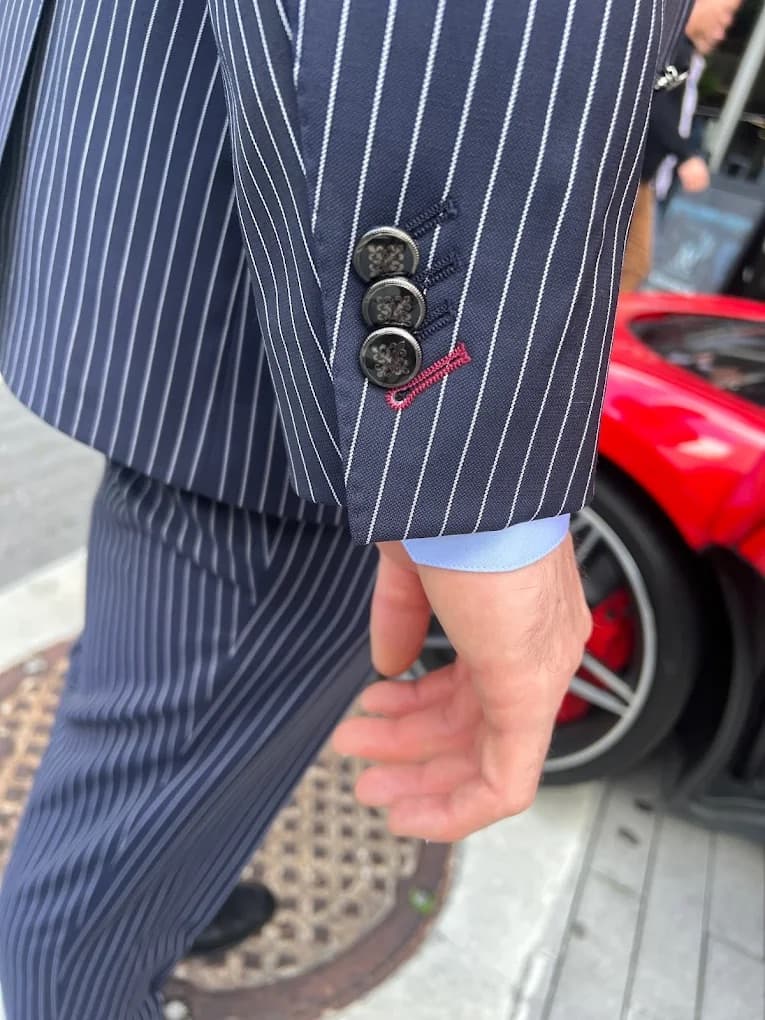
Men’s style in the 50s is often considered one of the most influential periods in modern fashion. The decade blended post war refinement with emerging youth culture, creating a balance between polished tailoring and rebellious edge. Structured suits, crisp shirts, leather jackets, and denim all became defining elements of the era.
Understanding men’s style in the 50s is essential for anyone who appreciates timeless tailoring, clean silhouettes, and confident dressing. Below at Bespoke CB, we break down the key elements that shaped this iconic decade and explain why they still influence modern wardrobes today.
Tailored Suits Defined the Decade
At the heart of men’s style in the 50s was structured tailoring. Suits were not optional for most professional or social settings. They were the standard.
Jackets featured strong shoulders, defined waists, and slightly longer lengths than many modern cuts. Trousers were typically high waisted with a clean drape and a fuller leg compared to today’s slim silhouettes. Fabrics like wool flannel and worsted wool were popular, offering both durability and structure.
Colors leaned conservative, with navy, charcoal, and medium grey dominating business wear. Patterns such as subtle pinstripes and windowpanes added sophistication without overwhelming the look. The overall impression was polished, masculine, and intentional.
This era established the blueprint for the power suit, emphasizing posture and proportion.
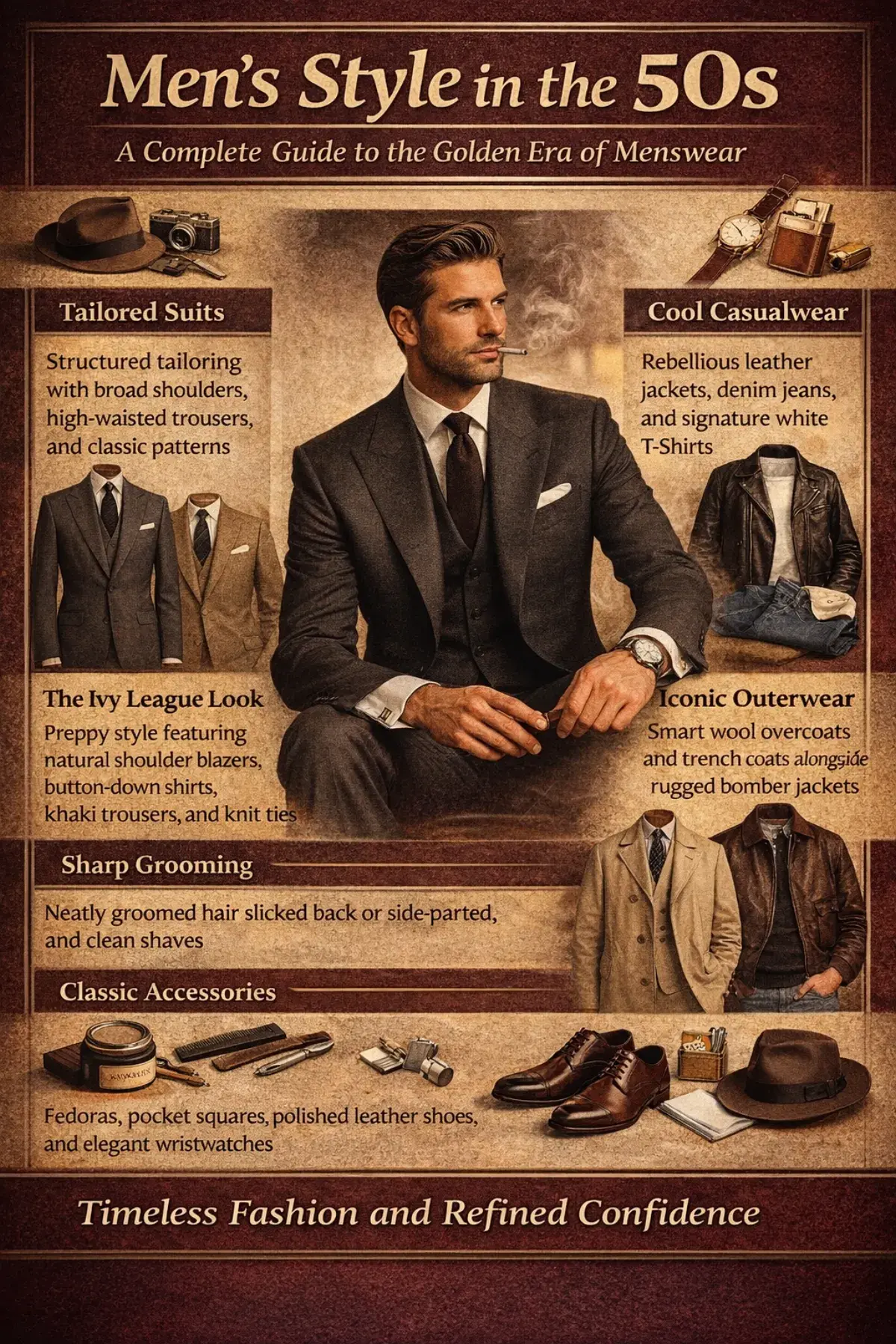
The Rise of the Ivy League Look
Men’s style in the 50s also introduced the Ivy League aesthetic, a cleaner and slightly more relaxed approach to dressing.
This style centered around natural shoulder jackets, slimmer lapels, and less padding than traditional tailoring. Button down oxford shirts became staples, often paired with knit ties or rep striped ties. Khaki trousers and loafers offered a collegiate alternative to formal suits.
The Ivy League look brought a youthful energy to men’s fashion without sacrificing refinement. It was understated, smart, and practical, making it a foundation for modern preppy style.
Casualwear Began to Evolve
While tailoring dominated formal settings, men’s style in the 50s marked a turning point for casual clothing. For the first time, off duty fashion began to define identity.
Denim jeans gained mainstream popularity, particularly among younger men. Paired with simple white t shirts or work shirts, denim symbolized rebellion and individuality. Leather jackets also became iconic, introducing a tougher aesthetic that contrasted sharply with traditional suiting.
This decade marked the beginning of casualwear as a meaningful expression of personal style rather than simply functional clothing.
Outerwear Made a Statement
Outerwear played a significant role in men’s style in the 50s. Structured topcoats, trench coats, and wool overcoats were essential layers for colder months.
The silhouette remained clean and tailored, often mirroring the shape of the suit underneath. Coats were designed to enhance the overall look rather than hide it.
At the same time, bomber jackets and shorter casual jackets gained popularity, particularly among younger men embracing emerging cultural shifts. This duality between refinement and rebellion defined the decade.
Grooming Was Part of the Style
Men’s style in the 50s extended beyond clothing. Grooming was equally important.
Hair was neatly styled, often slicked back or parted with precision. Clean shaves were standard in professional environments. Presentation was considered a reflection of discipline and respectability.
This emphasis on grooming reinforced the structured, intentional nature of the decade’s fashion.
Accessories Completed the Look
Accessories were never an afterthought in men’s style in the 50s. They were subtle but essential.
Hats such as fedoras and trilbies were still widely worn in the early part of the decade. Pocket squares added personality to tailored suits without overwhelming the look. Leather dress shoes, often cap toe or plain toe styles, were polished and well maintained.
Every detail contributed to a cohesive appearance. Nothing felt random or accidental.
Why Men’s Style in the 50s Still Influences Fashion Today
The reason men’s style in the 50s remains relevant is simple. It was built on proportion, quality, and confidence.
The decade mastered the balance between structure and ease. Tailored suits projected authority. Casualwear introduced personality. Grooming reinforced discipline. The overall result was a cohesive approach to dressing that felt both refined and authentic.
Many modern tailoring houses still draw inspiration from this era because its fundamentals never go out of style.
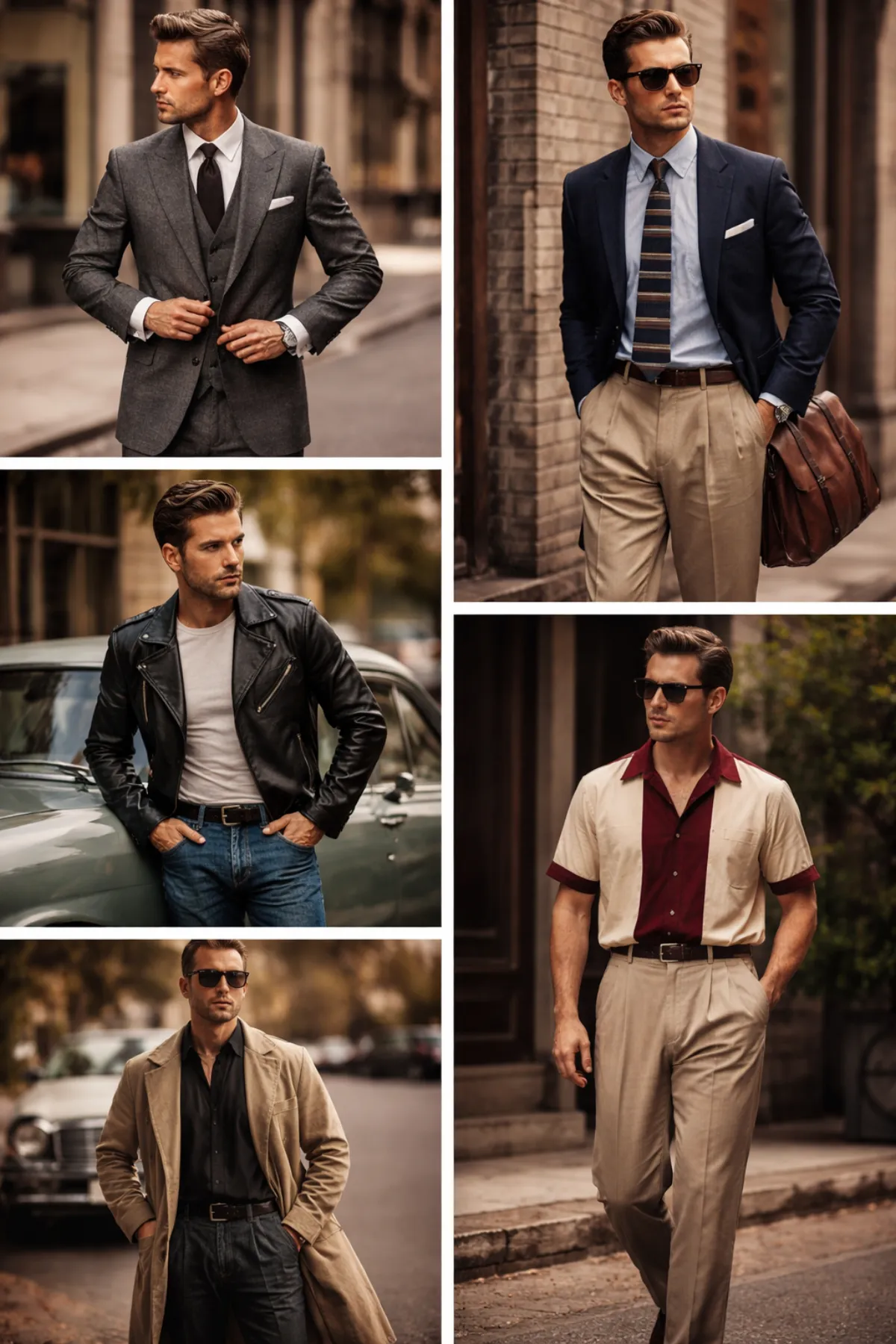
Men's 1950's Style Inspiration
Men’s style in the 50s represents a defining moment in fashion history. It blended classic tailoring with emerging individuality, creating a foundation that continues to shape modern menswear.
Whether you are drawn to structured suits, Ivy League refinement, or rugged casual wear, the influence of the 1950s is unmistakable. Its legacy proves that great style is not about trends. It is about timeless principles executed with confidence.
Want to have a 1950's inspired custom made suit? Book your appointment today at Bespoke CB.
Every garment from Bespoke CB is constructed with full canvas interlining, hand-finished details, and premium fabric sourced from the finest mills in the world. These are not marketing claims. They are construction facts that produce a garment you can feel the difference in from the moment you put it on. The lapels roll naturally because the canvas has been hand-padded. The chest drapes cleanly because the construction moves with your body. The fit is precise because the pattern was drafted for you and only you.
What distinguishes Bespoke CB from other custom clothiers is not just the quality of the garments, though that quality is exceptional. It is the relationship between clothier and client. Christian takes the time to understand your lifestyle, your professional needs, your social calendar, and your personal style before recommending a single fabric or cut. The result is clothing that fits not just your body but your life, clothing that works seamlessly across every occasion and every season.
The bespoke process at Bespoke CB typically takes 8 to 12 weeks from initial consultation to final delivery. During that time, clients work directly with Christian and his team on fabric selection, construction details, and the iterative fitting process that ensures every dimension is correct. The experience is collaborative, educational, and genuinely enjoyable for men and women who take their appearance seriously.
Ready to experience the difference that bespoke clothing makes? Visit Bespoke CB to schedule your consultation with Christian Boehm. The full bespoke process takes 8 to 12 weeks and produces a garment that fits your body and your life in ways no off-the-rack option can match.