At Christian Boehm, every garment we craft is built from the world's finest fabrics and individually constructed by master tailors. But even the best custom suit will show signs of wear over time if it isn't properly maintained.
The good news? A few simple habits can add years to the life of your wardrobe. Here are seven steps to keep your suits looking sharp season after season.
1) Don't Over-Dry Clean Your Suit
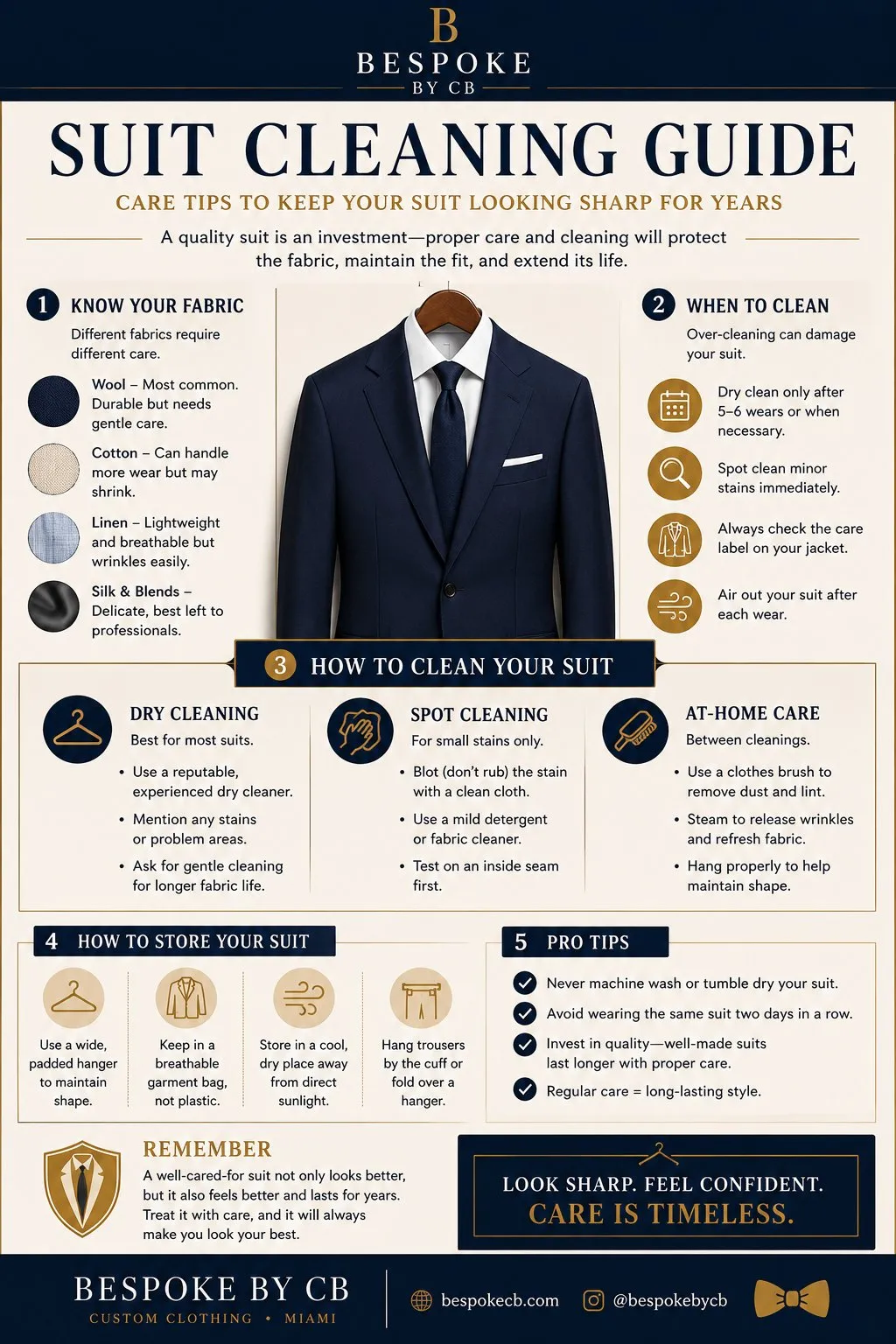
It's tempting to drop every suit off at the cleaners after a week of wear, but dry cleaning uses harsh solvents that strip natural oils from wool fibers. Over time, repeated dry cleaning weakens the fabric and can dull the finish, not to mention the risk it poses to horn or mother-of-pearl buttons.
A better approach: rely on the smell test. If your suit still smells fresh after a day of wear, hang it up, let it breathe, and move on. Reserve dry cleaning for when you actually notice odors or visible soil. For small stains, blot the area with a damp cloth immediately. Waiting makes it harder to lift.
If you're investing in quality fabric from the start, whether that's a Super 150s from Scabal or a seasonal flannel from Holland & Sherry, proper care becomes even more important. Finer cloths deserve finer treatment.
2) Steam Instead of Ironing
A high-quality garment steamer is one of the best investments you can make for your wardrobe. Steaming after each wear relaxes the fibers, removes light wrinkles, and eliminates trapped odors, all without the direct heat that damages wool.
At Christian Boehm, we recommend steaming your suit jacket and trousers after every wear. It takes about 90 seconds and does more to preserve the fabric than any trip to the dry cleaner.
This is especially true for custom shirts and structured pieces. Steaming preserves the shape and drape in a way that pressing simply can't match.
3) Never Put an Iron Directly on Your Suit
If you must press, use a pressing cloth, a clean cotton or muslin square between the iron and your suit. Direct contact with a hot iron compresses wool fibers and can create an unnatural sheen on the fabric surface, sometimes permanently.
In our Miami showroom, we often see jackets that have been pressed too aggressively, leaving a shiny patch on the lapel or seat. Once that happens, it's very difficult to reverse. When in doubt, steam. If you absolutely must touch up a crease, use the lowest effective heat and keep the iron moving.
4) Use a Sturdy Wooden Hanger
When your suit isn't being worn, it should always be hung on a wide, shaped wooden hanger, not a wire hanger from the dry cleaner, and not a slim plastic one.
The right hanger supports the shoulder roll and keeps the chest piece from collapsing. A proper wooden hanger should be wide enough to reach the edge of each shoulder, preserving the structure that was built into your jacket during construction.
When you pick up your suit from Christian Boehm, you'll receive a wooden hanger sized for your garment. Use it. It's not an accessory, it's part of the care system.

5) Brush After Every Wear
A soft-bristle horsehair brush should be part of every suit owner's kit. After each wear, brush your jacket and trousers from shoulder to hem, using slow, gentle strokes. This lifts dust, lint, pet hair, and surface debris before they can settle into the weave.
Wool is particularly prone to trapping dust and particles between its fibers. A quick brushing after each wear prevents buildup and keeps the nap looking fresh. For lighter tropical weights that are popular in Miami's climate, this step is especially important. Finer weaves show dust faster.
On days when you don't have your brush handy, a lint roller works as a quick stand-in. Just don't make it a habit, the adhesive can leave residue over time.
6) Rotate Your Suits
A suit needs at least 24 to 48 hours of rest between wears. The fibers in wool have a natural "memory". Given time to relax, they spring back to their original shape. Worn day after day without a break, those fibers compress and stay that way.
The practical rule: if you wear a suit to the office on Monday, give it Tuesday off. Three wears per week is the maximum for any single suit if you want it to last. This is one of the best reasons to build a rotational wardrobe. When you have multiple suits to cycle through, each one lasts significantly longer.
7) Protect Your Suit While Traveling
If you're traveling with a suit, a breathable garment bag is non-negotiable. It shields the fabric from dust, moisture, and rubbing against other items in your luggage.
When flying, carry your garment bag on the plane whenever possible. Checked luggage gets compressed and tossed. If you must pack a suit in a suitcase, fold it using the standard jacket-over-trousers method and place it in a breathable cotton garment bag inside the case. We cover this in more detail in our suit packing guide.
Avoid plastic garment bags, which trap moisture and can promote mildew. The breathable cotton bag you receive with your Christian Boehm garment is ideal.
STORING YOUR SUITS IN MIAMI'S CLIMATE
Miami's high humidity presents unique challenges for suit storage. Mold and mildew are real risks if suits are stored in poorly ventilated closets. Here are some Miami-specific storage tips:
Store your suits in a closet that has air circulation. If your closet is small or poorly ventilated, consider a standalone garment rack positioned in a room with air conditioning. Avoid storing suits near bathrooms, where shower steam can raise humidity levels.
Use cedar blocks or lavender sachets instead of mothballs. Mothballs contain chemicals that can leave a persistent odor in wool. Cedar naturally repels moths and absorbs moisture, making it ideal for South Florida's climate.
Silica gel packets placed in your closet can help manage humidity. For clients with extensive wardrobes, a closet dehumidifier is a worthwhile investment. Aim for a relative humidity between 30% and 50%.
Never store a suit that has not been properly cleaned and aired. Even invisible traces of perspiration can attract moths and cause discoloration over time. Steam the suit, let it dry completely, and then store it.
WHEN TO PROFESSIONALLY CLEAN VS. SPOT CLEAN
Understanding when to dry clean versus when to handle a stain yourself can save your suits from unnecessary wear. Here is a practical framework:
Dry clean when: The suit has persistent odors that steaming doesn't resolve, there are oil-based stains from food or cosmetics, or the entire garment has accumulated visible soil. Even then, ask your cleaner to use a gentle process and request that they protect horn or shell buttons with foil.
Spot clean when: You have a small water-based stain like a coffee splash. Blot immediately with a clean, damp white cloth. Work from the outside of the stain inward to prevent spreading. Never rub, as this damages the fibers.
Steam only when: The suit has been worn once and has no visible stains or strong odors. Steaming after each wear is the single best maintenance habit you can develop.
Avoid home remedies like using soda water or vinegar on wool. These can alter the pH of the fabric and cause color changes that are impossible to reverse. When in doubt, consult a professional cleaner who specializes in fine garments.
Keep Your Investment Looking Its Best
The difference between a suit that looks worn out after two years and one that still turns heads after ten comes down to care. Dry clean sparingly. Steam regularly. Brush after every wear. Hang properly. Rotate. And always travel with a garment bag.
These aren't complicated habits. They're small decisions that compound over time. Your wardrobe will thank you.
Questions about caring for a specific garment? Stop by our Brickell showroom or book a consultation. We're happy to walk you through it.
Frequently Asked Questions About Suit Care
How often should I dry clean my suit?
You should dry clean your suit no more than once or twice per year, and only when you notice actual odors or visible stains. Over-dry cleaning is the number one cause of premature suit wear. Between cleanings, rely on steaming and brushing to keep your suit fresh.
Can I hand wash a wool suit?
No, wool suits should never be hand washed or machine washed. Water causes wool to felt and shrink, destroying the structure and fit of the suit. Always use a professional dry cleaner for wool garments, and even then, only when truly necessary.
How do I remove wrinkles from my suit without an iron?
A garment steamer is the best tool for removing wrinkles from a suit. Steam relaxes the fibers without compressing them, which is what an iron does. Hang the suit in a bathroom while you shower can also help, but be careful not to let the suit get damp. For persistent wrinkles, a professional press at your dry cleaner is the safest option.