Choosing a wedding suit color is one of the most visible style decisions a groom will make. Fit may be the foundation, fabric may control comfort, and tailoring may decide whether the suit looks expensive, but color sets the first impression. It tells guests whether the wedding feels classic, coastal, formal, tropical, modern, romantic, or intentionally bold before anyone notices a lapel width or trouser break.
The right color also has to do practical work. It should photograph well against the venue. It should respect the dress code. It should coordinate with the bride, partner, wedding party, florals, and decor without looking like a costume. It should flatter the groom's complexion. It should feel appropriate in South Florida heat if the ceremony is outside. Most importantly, it should make the groom look like the central man in the room, not just another guest in a nice suit.
That is why color should never be chosen from a tiny swatch in isolation. At Bespoke By CB wedding appointments, the conversation starts with the full wedding environment: ceremony time, venue light, dress code, season, partner's outfit, photographer style, and how much the groom wants to stand apart from the wedding party. A navy suit that looks perfect for a sunset waterfront wedding may feel too casual for a black tie ballroom. An ivory jacket that looks incredible at a resort may feel out of place at a conservative evening ceremony. Context is the difference between stylish and random.
Start With The Wedding Setting
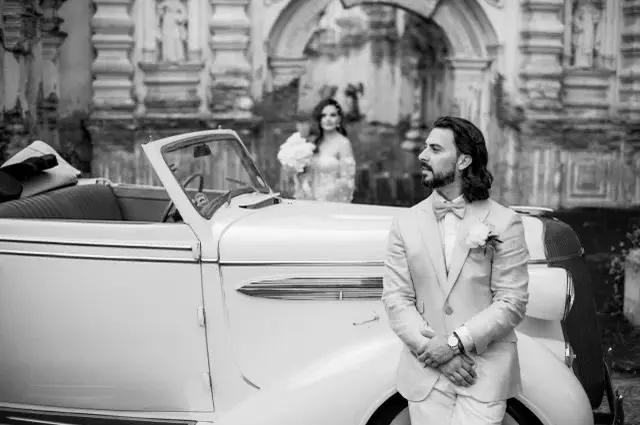
The venue usually gives the first color clue. A garden wedding, beach ceremony, rooftop reception, historic estate, church service, and black tie ballroom all ask for different visual weight. Color should support the setting, not compete with it. A pale tan suit can look relaxed and confident on sand or stone, but it may disappear in a dim reception room. A black tuxedo can look perfect in a ballroom, but it may feel heavy under direct afternoon sun in Miami.
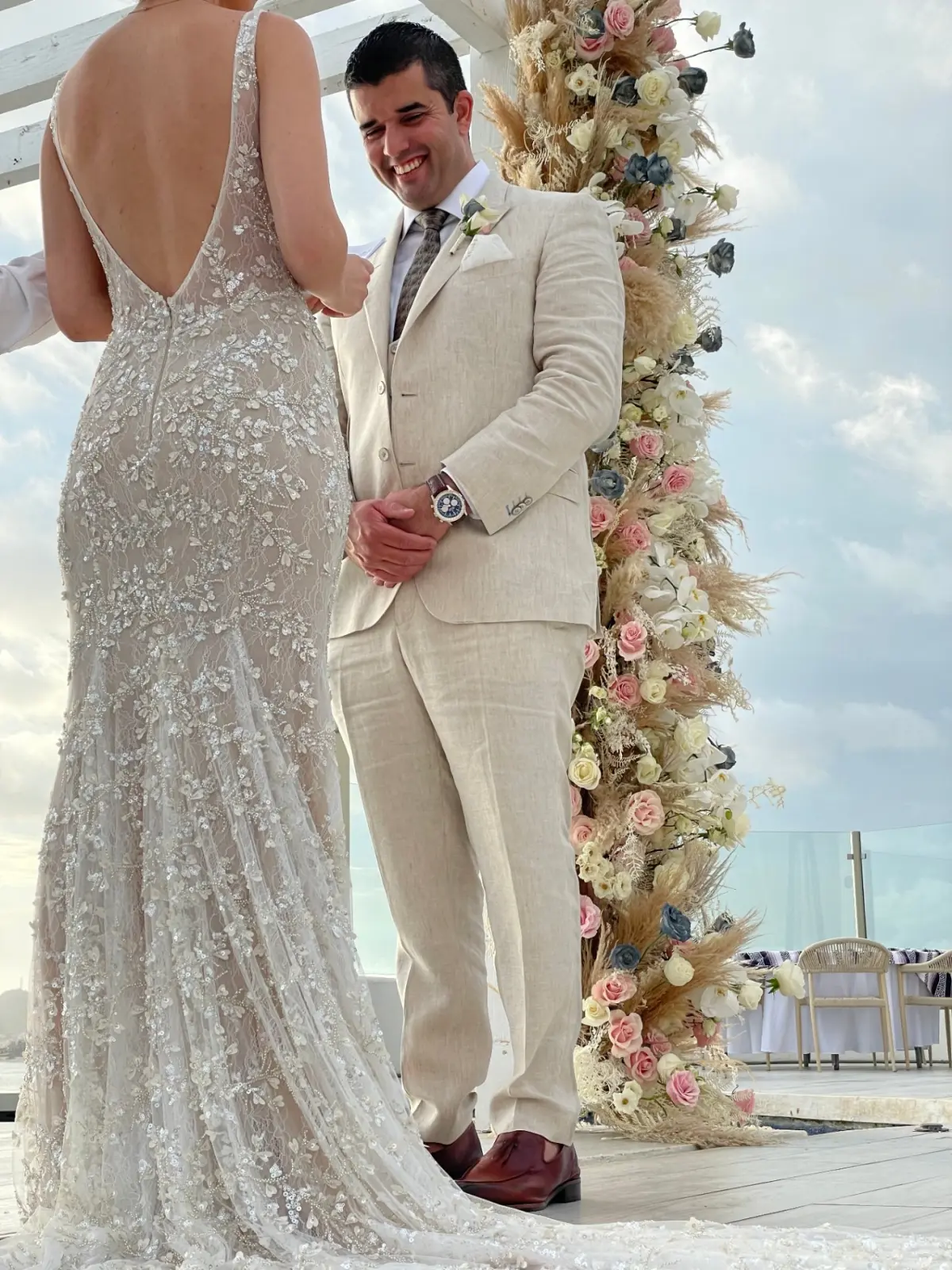
For outdoor South Florida weddings, lighter colors often make sense because the environment is bright. Ivory, light grey, soft blue, tobacco brown, stone, and muted green can all feel natural in daylight. The key is choosing a shade with enough depth to hold shape in photos. Very pale cloth can wash out if the sun is harsh, especially beside a white dress or light floral palette. A well chosen ivory or cream should have warmth and texture, not a flat paper white effect.
Evening weddings can carry darker, richer colors. Midnight blue, black, charcoal, deep green, chocolate brown, burgundy, and navy all become more powerful under artificial light. They give the groom presence and create a cleaner contrast against white shirts, boutonnieres, and formal shoes. If the reception has candlelight or a dramatic indoor setting, darker cloth usually photographs with more authority.
Navy: The Most Flexible Groom Color
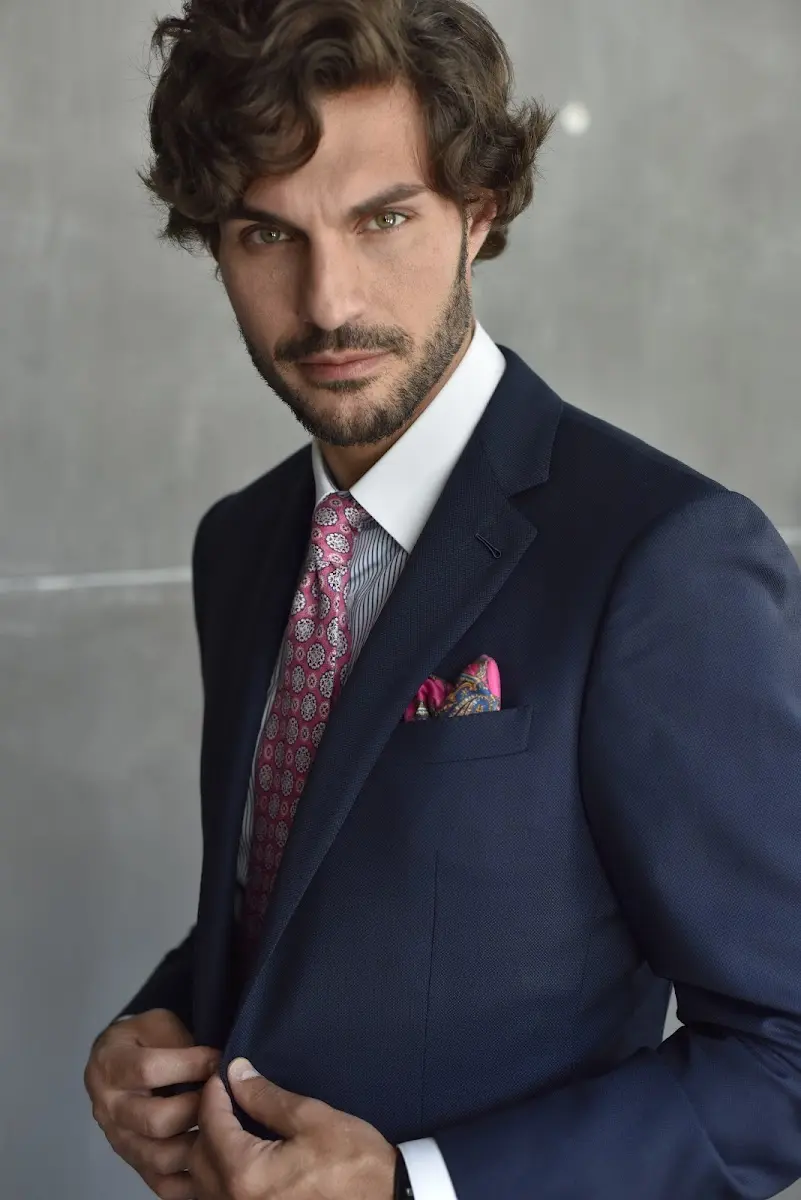
Navy is popular because it solves many problems at once. It is formal enough for most weddings, softer than black, flattering on a wide range of skin tones, and easy to coordinate with bridesmaids, groomsmen, florals, and decor. It works at hotels, yachts, gardens, country clubs, and destination venues. For many grooms, navy is the safest color that still feels intentional.
The mistake is treating every navy as the same. A bright blue navy can feel young and energetic. A deep midnight navy can read nearly black in evening photos. A textured navy hopsack feels more relaxed, while a smooth worsted navy feels sharper. If the groom wants to look classic but not corporate, texture and styling matter. A wedding navy should not look like a Monday office suit with a boutonniere pinned on it.
Navy is especially strong when the groom needs separation from groomsmen. The groom might wear a deeper navy three piece suit while the wedding party wears lighter blue or grey. He might choose a peak lapel, vest, tonal buttons, or a stronger shirt and tie combination. If the party is wearing navy too, the groom's suit needs a different cloth, silhouette, or accessory plan so he remains visually distinct.
Black, Midnight, And Formal Dress Codes
Black is the clearest formal signal. If the invitation is black tie, a tuxedo is still the correct answer. A black suit can be elegant, but it is not the same as a tuxedo. Satin or grosgrain lapels, a proper formal shirt, evening shoes, and a bow tie create a different level of ceremony. For men comparing suit and tuxedo options, the distinction matters because photos will show the difference.
Midnight blue is often a better black tie choice than many grooms expect. Under evening light, midnight can look richer and darker than black, while still giving subtle depth. It is traditional, refined, and less predictable than a standard rental tuxedo. A midnight tuxedo with a black satin peak lapel or shawl collar gives the groom formality without looking generic.
Black works best when the wedding itself has enough formality to support it. A black tuxedo at a ballroom wedding looks natural. A black suit at a noon beach ceremony can feel severe. If the groom wants a dark look for an outdoor wedding, deep navy, charcoal, or a textured dark green may give a better balance between elegance and setting.
Charcoal And Grey For Refined Restraint
Grey is underrated for weddings because it can move from soft daytime style to serious evening formality depending on shade. Light grey feels fresh, warm weather appropriate, and polished for garden or coastal weddings. Medium grey is balanced and easy to coordinate. Charcoal is more formal, mature, and often more flattering than black for men who want depth without full black tie.
Grey also gives room for accessories. It can handle a white shirt and black tie for a sharp formal look, a pale blue shirt for softness, or a tonal tie for a quiet, elegant effect. For a spring or summer wedding, a light grey suit with a proper fit can look sophisticated without feeling heavy. For a city or evening wedding, charcoal with a crisp white shirt can feel almost as formal as black while still reading as a suit.
The main risk with grey is flatness. Cheap grey cloth can look dull in photos. The solution is not loud styling. It is better fabric. A subtle herringbone, sharkskin, birdseye, mohair blend, or fine texture gives the color dimension. When building through custom suits, those cloth decisions are as important as choosing the shade itself.
Ivory, Cream, And White Dinner Jackets
Ivory and cream are strong wedding colors because they feel celebratory. They are especially good for tropical destinations, waterfront venues, rehearsal dinners, and warm evening receptions. A cream dinner jacket with black trousers can be one of the most elegant ways for a groom to stand out while staying within formal tradition.
There is a difference between an ivory suit and a white dinner jacket. An ivory or cream suit can work beautifully for daytime ceremonies, garden weddings, beach weddings, or fashion forward grooms. A white or ivory dinner jacket is a black tie alternative, usually worn with black formal trousers, a formal shirt, and evening accessories. Mixing those categories carelessly can make the outfit look unresolved.
The bride or partner's outfit matters here. The groom does not need to match the exact dress color, but he should not accidentally clash with it. Bright white, warm ivory, champagne, and cream can look different next to each other. A side by side comparison is worth doing before finalizing cloth. If the partner's outfit is a cool white, a very yellow cream jacket may look disconnected. If the partner is wearing warm ivory, a cold white jacket may look harsh.
Brown, Tan, And Earth Tones
Brown and tan wedding suits are no longer fringe choices. They can look excellent when the wedding has natural materials, tropical landscaping, warm florals, wood, stone, or a less traditional dress code. Chocolate brown feels rich and confident. Tobacco and camel feel warm and stylish. Tan and stone feel relaxed and beach appropriate.
These colors need precision because they can move casual quickly. A tan suit in a weak fabric can look like vacation clothing. A tan suit in a refined linen blend, tropical wool, or wool silk blend can look intentional and elevated. Brown works particularly well for fall inspired palettes, rustic venues, and men who want something softer than navy but stronger than beige.
Skin tone is important with earth colors. Some tans can wash out fair complexions. Some browns can look too close to the skin if there is not enough contrast. Shirts, ties, pocket squares, and shoes can fix a lot, but the base cloth still has to flatter the wearer. This is where seeing a large cloth length near the face is more useful than picking from a phone photo.
Green, Burgundy, And Statement Colors
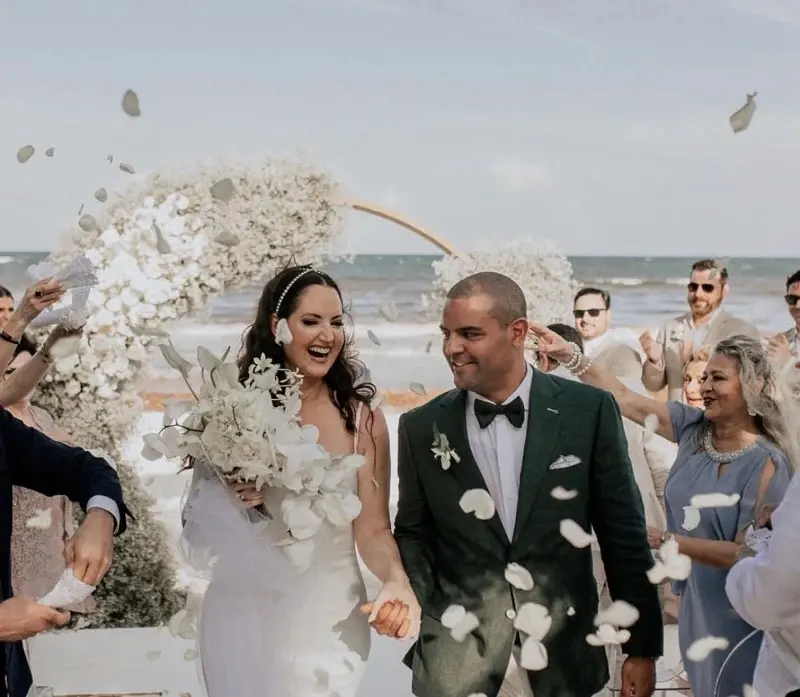
Statement colors can be excellent for the right groom. Deep green, burgundy, plum, teal, and even soft pink can look sophisticated when the cloth quality, venue, and dress code support them. The word statement does not have to mean loud. A dark green suit at a garden or beach wedding can look natural and elegant. A burgundy dinner jacket at an evening reception can feel festive without crossing into costume.
The safest way to use a bold color is to control everything around it. Keep the shirt clean. Keep accessories refined. Let the cloth be the personality. If the suit is green, burgundy, or teal, avoid stacking too many competing colors in the tie, pocket square, socks, and boutonniere. A groom should look deliberate, not decorated.
Bold colors are also useful when the wedding party is wearing neutrals. If groomsmen are in navy, grey, or black, the groom can wear a deep green dinner jacket, burgundy tuxedo jacket, or ivory suit and immediately stand apart. The contrast should feel planned with the wedding palette, not chosen at the last minute.
Match Color To Complexion
The most overlooked color question is whether the shade flatters the groom's face. Wedding photos are mostly faces and upper bodies. A suit color that makes the skin look tired, red, pale, or yellow will be visible in every close photo. The best color should make the groom look awake and balanced before accessories are added.
Men with high contrast features often look strong in deeper colors like navy, charcoal, black, midnight, or dark green. Men with softer contrast may look better in medium blues, softer greys, warm browns, stone, or muted green. Warmer complexions often handle cream, camel, olive, chocolate, and tobacco well. Cooler complexions often look sharp in navy, charcoal, icy grey, black, and blue based tones.
These are starting points, not rigid rules. Lighting, hair color, shirt choice, and personal style change the answer. A good fitting should involve seeing cloth near the face, not just against a table. If a color looks great on the hanger but drains the groom's face, it is the wrong wedding color.
Coordinate Without Matching Everything
Grooms sometimes think coordination means matching the wedding palette exactly. That can create a flat, overly themed look. A better goal is harmony. The groom's suit should relate to the palette through contrast, undertone, or accessory color without disappearing into it.
If bridesmaids are in sage, the groom does not have to wear sage. Navy, cream, chocolate, charcoal, or deep green may all work, depending on the venue. If florals include burgundy, the groom might use burgundy as a tie or boutonniere accent rather than wearing a full burgundy suit. If the decor is neutral, a richer suit color can add depth.
The groom should also be distinct from guests. If many men will arrive in navy or charcoal, a special lapel, vest, dinner jacket, cloth texture, or color shift helps him stand out. The difference does not need to be flashy. It only needs to be visible in group photos.
Use Fabric To Control Color
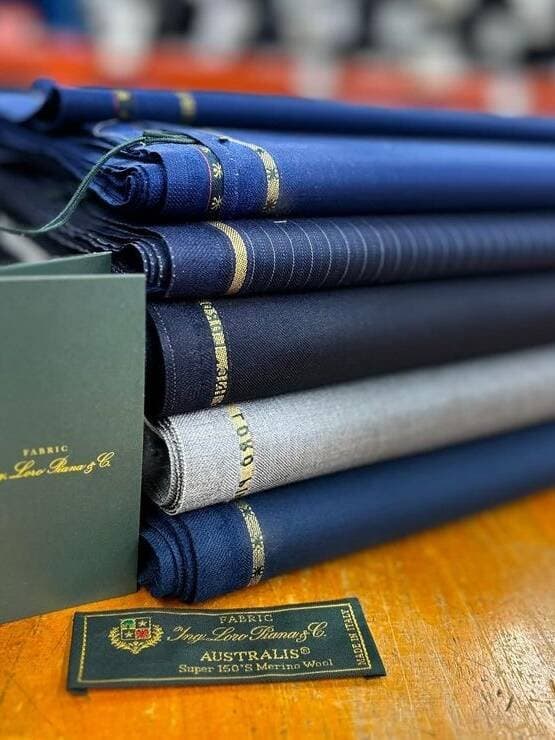
Color and fabric are inseparable. The same shade of blue looks different in tropical wool, linen, mohair, velvet, flannel, silk blend, and jacquard. Matte cloth feels quieter. A slight sheen feels dressier. Linen softens color and wrinkles naturally. Velvet makes color deeper and more evening appropriate. Pattern can break up a bold shade and make it easier to wear.
Miami weather also matters. A dark suit in a heavy cloth may look sharp in a fitting room and feel punishing during an outdoor ceremony. A pale cloth with no structure may feel cool but look rumpled before portraits. The right choice balances breathability, drape, wrinkle resistance, and formality. The fabric advice in our summer wedding suit fabric guide is useful whenever heat, humidity, or outdoor photos are part of the plan.
Texture also protects against looking generic. A navy suit in a standard business cloth can feel ordinary. A navy suit in a refined high twist wool, subtle hopsack, or mohair blend feels more ceremonial. A green suit in the wrong shiny cloth may feel theatrical, while the same color in a dry textured wool may feel mature and stylish.
Think About Photos Before Finalizing
Wedding color choices live forever in photos. Ask how the suit will look next to the partner's outfit, against the venue, beside the wedding party, under daylight, and under reception lighting. Dark suits create strong contrast but can lose detail if the photographer underexposes. Light suits feel fresh but need enough body to avoid washing out. Bold colors can be memorable, but they must support the groom rather than dominate every image.
Group photos also reveal hierarchy. The groom should be easy to identify. If he and the groomsmen are in the same color, his lapel, vest, shirt, tie, boutonniere, or jacket style should separate him. If he wears a different color entirely, the wedding party still needs a visual relationship through undertone or accessories.
Fit affects color perception too. Light colors reveal pulling, wrinkling, and poor trouser lines more quickly than dark colors. Dark colors hide some issues but can look heavy if the shape is wrong. Before locking in a color, make sure the chosen silhouette supports the groom's build. Our wedding suit fit strategy explains how body proportion should guide the final pattern.
A Practical Color Framework
If the wedding is black tie, start with black or midnight blue tuxedo options, then consider an ivory dinner jacket if the setting supports it. If the wedding is formal but not black tie, navy, charcoal, dark green, chocolate, or a refined three piece suit can work well. If the wedding is daytime, outdoor, or coastal, look at light grey, ivory, stone, tan, soft blue, or textured navy. If the groom wants personality, consider a statement color in a controlled silhouette.
For most Miami grooms, navy, cream, dark green, charcoal, and light grey are the strongest starting points. They cover the broadest range of venues while still allowing personality through cloth, lapels, lining, buttons, shirt, tie, shoes, and boutonniere. Brown, burgundy, teal, and patterned dinner jackets are excellent when the groom has a clear style point of view and the wedding design gives them a reason to exist.
The final decision should feel obvious when all pieces are seen together. The suit should flatter the groom, suit the venue, coordinate with the partner, and photograph cleanly. When those conditions are met, color stops feeling risky. It becomes the thing that makes the wedding look considered from the first photo to the last dance.
FAQ
What is the safest wedding suit color for a groom?
Navy is usually the safest wedding suit color because it works for daytime, evening, indoor, outdoor, formal, and semi formal weddings. It flatters most complexions and coordinates easily with many wedding palettes.
Can a groom wear an ivory or cream suit?
Yes. Ivory and cream can look excellent for tropical, resort, garden, and daytime weddings. The shade should be compared with the partner's outfit so the two colors complement each other rather than clashing.
Is black too formal for a wedding suit?
Black is not too formal when the wedding supports it, especially for evening or black tie settings. For daytime outdoor ceremonies, black can feel heavy, so navy, charcoal, cream, or lighter seasonal colors may work better.
Should the groom match the groomsmen?
The groom should coordinate with the groomsmen but should not disappear into the group. A different shade, vest, lapel style, fabric, boutonniere, or accessory plan can make him stand apart while keeping the party cohesive.
What wedding suit colors work best in Miami?
Navy, ivory, light grey, stone, tan, dark green, and midnight blue all work well in Miami. The best choice depends on the ceremony time, venue, dress code, season, and whether the wedding is indoors or outside.