Just like your jackets, the fit is everything when it comes to looking for your garments. The biggest problem we see with off the rack clothing is that it does not correctly fit. Unless you are the manufacturer's exact specifications, the garment is going to need some alterations.
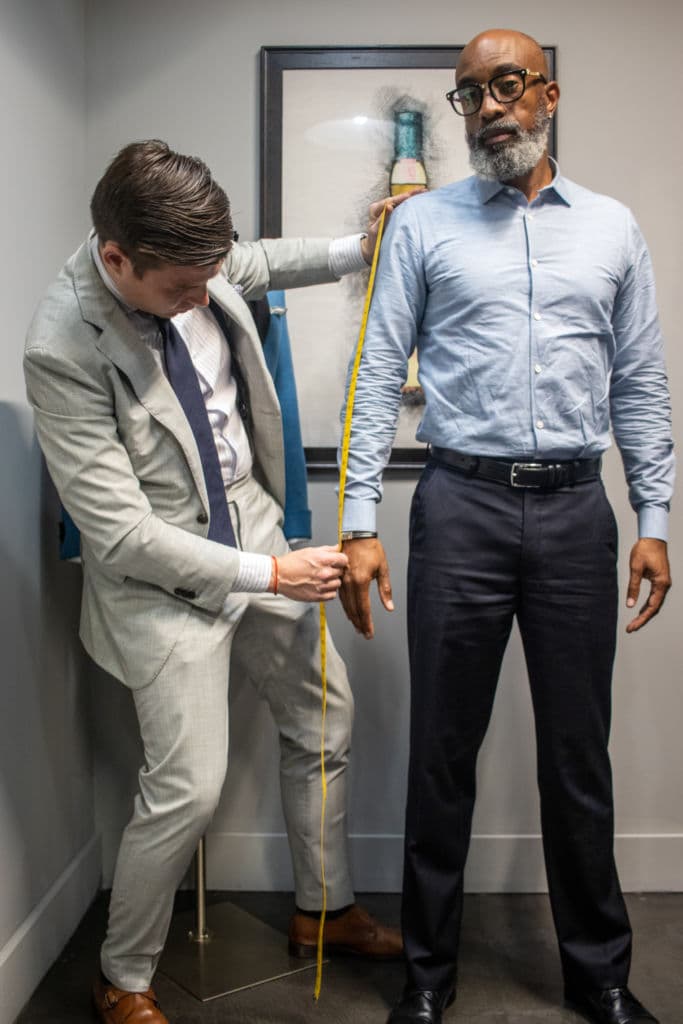
At Christian Boehm, your fit is our specialty. With a team of some of the best custom clothiers in the industry, we create a superbly fitted garment that is made exclusively for you. While our specialty is custom clothing, below is a great guide prepared by our Christian Boehm clothing team that will give you some great tips on how a suit pant should properly fit.
HOW SUIT PANTS SHOULD PROPERLY FIT YOU
Waist
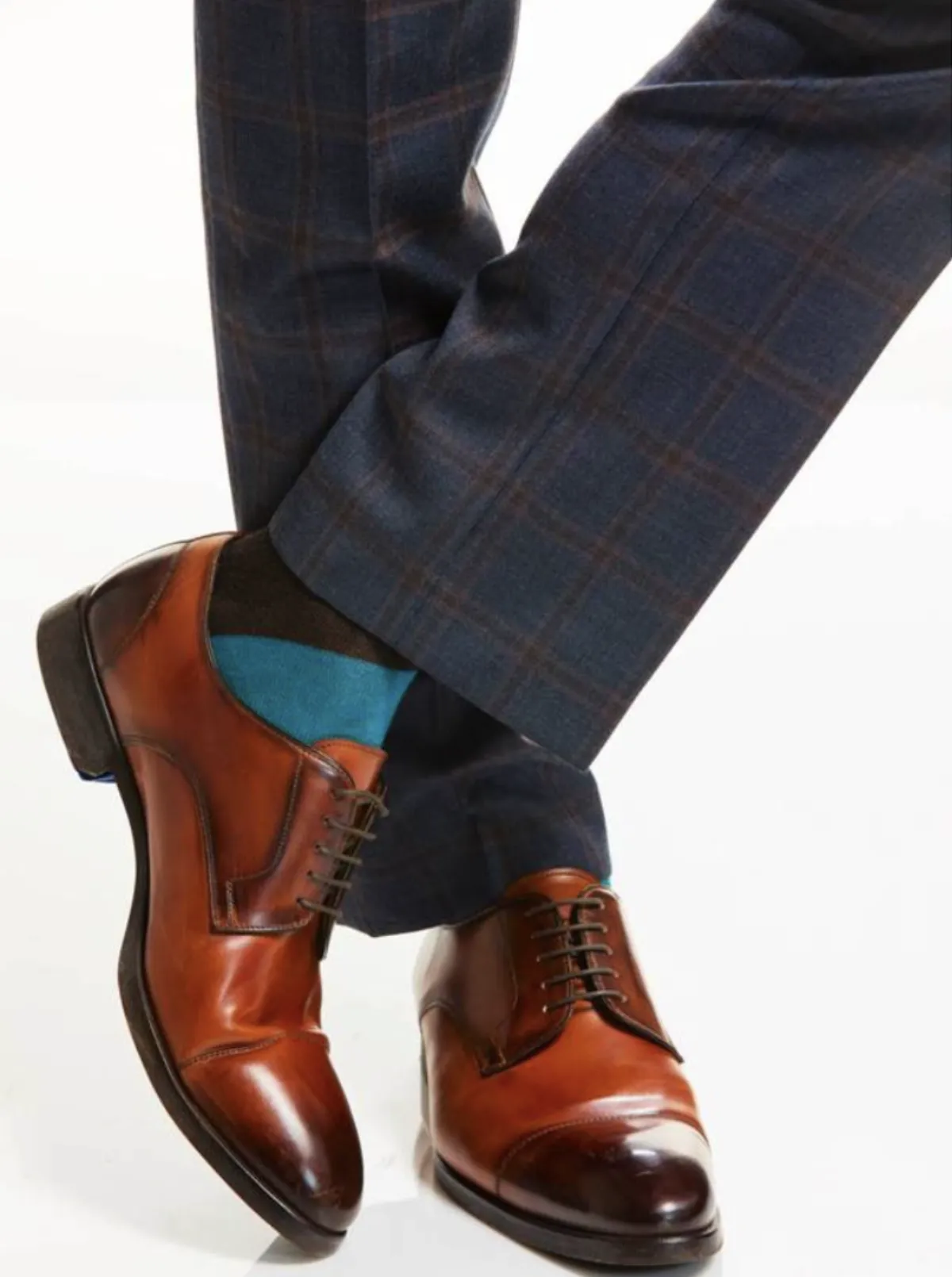
Your suit's dress pants are constructed to sit parallel to the floor and at the top of your hipbone for maximum comfort and mobility. The biggest variable in the waist of your pants is the variable of how flat your stomach is. If your stomach is not flat, this will cause issues that will need to be remedied through alterations by a good tailor. The larger the stomach protrudes from the waistline, the more the tailor will have to lower the front waistband and, in some cases, the back waistband to achieve a good fit.
HIPS
When standing in your normal relaxed position, your pants hips should lay without excess on the sides and without pulls across the front or back. How your pants hips lay on you is in relation to the size of your buttock. Ready-to-wear pants are cut to fit a normal shaped buttock.
If you have a prominent buttock, you will have to make adjustments, which can include releasing the hips and even lowering the front waistband to get them to fit. If you have a flat buttock, adjustments will be necessary, including reducing the hips in the back and or the sides.
LENGTH
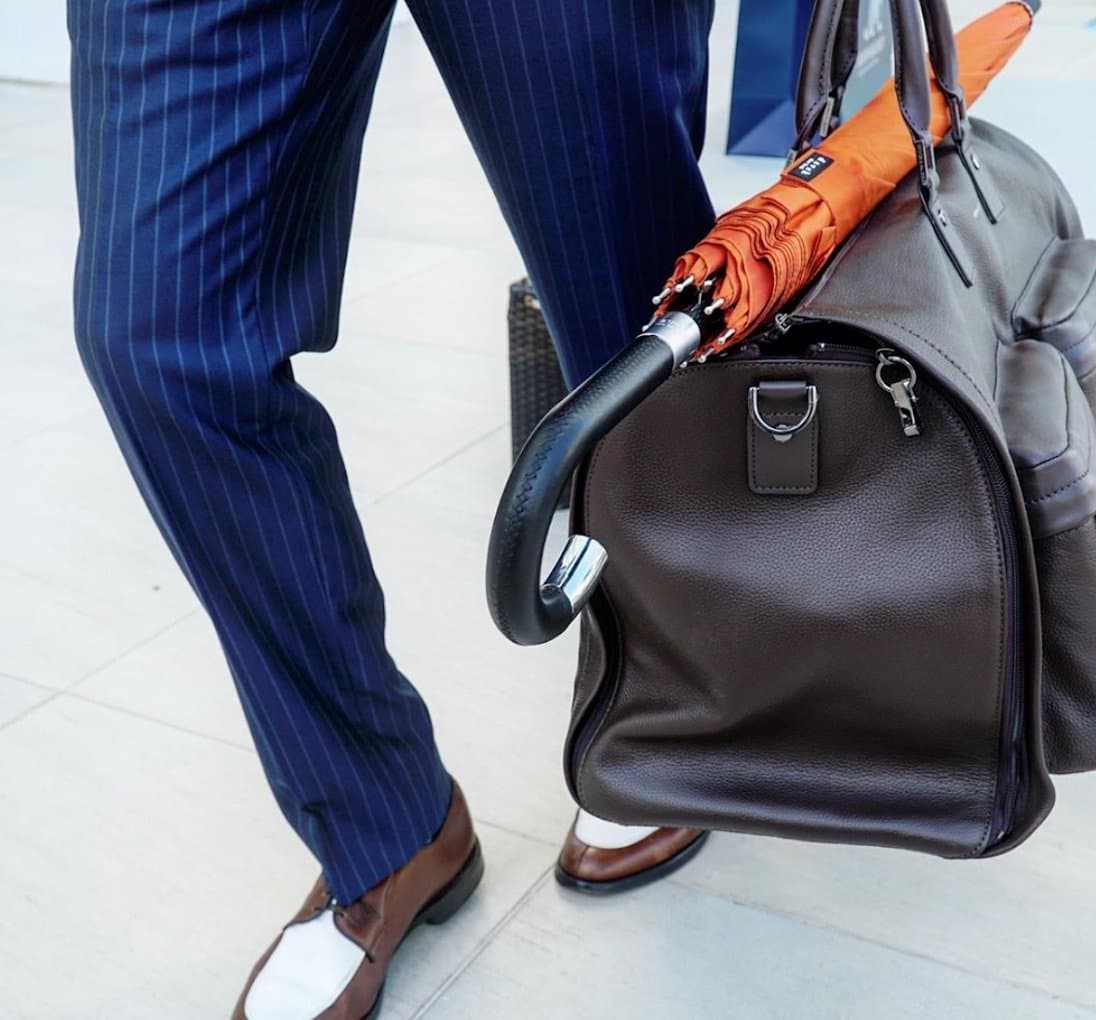
The length of your pant comes down to your personal preference. A general rule for today's pant length is to have the pant's hem cut so it falls 1" above the dress shoe's heel. If choosing a no-cuff option, we suggest you have the tailor cut the bottoms on a bias with the front of the pant to be 1/2" shorter than the back, which will reduce the break on the front of your dress shoe.
THIGH
The amount of cloth over a thigh depends on the pant's style and your preference. A flat front pant is cut with less cloth than a pleated pant. When standing and looking at your pant from the side, the amount of cloth that exists over your skin thigh can be adjusted.
In general, if wearing a flat front pant, you want to have no more than 3" of cloth total over the largest part of your thigh. If wearing pleated pants, you want to have no more than 5" over the largest part of your thigh. If there is excess or not enough cloth over your thigh, adjustments may be necessary by your tailor.
CALF
The amount of cloth that drapes over your skin calf depends on the pant's style and your preference, just like the thigh. As a general rule for a flat front pant, when standing and looking at your pant from the side, look to have no more than 2" of cloth over your skin calf. If it is a pleated pant then look to have no more than 3" of cloth to drape over your skin thigh. If there is excess or not enough cloth over your calf, adjustments may be necessary by your tailor.
THE BREAK: UNDERSTANDING PANT HEM STYLES
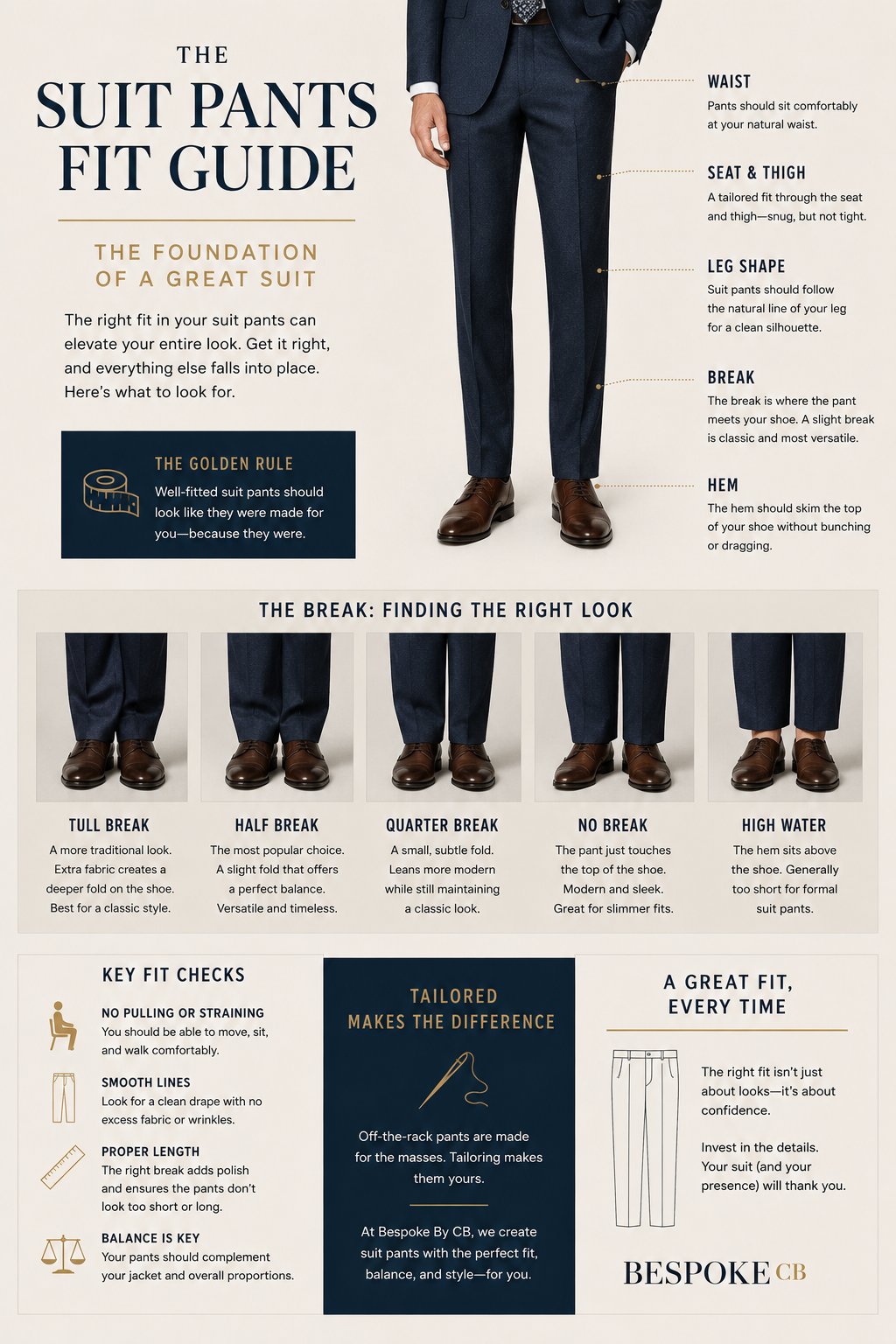
The break refers to how your pant hem meets your shoe, and it significantly affects the overall look of your outfit. There are four primary break styles to consider:
No Break: The pant hem touches the top of the shoe without any fold or crease. This creates a clean, modern look that works particularly well with slimmer cuts. No break is ideal for Miami's warm climate as it keeps the pant lighter and more breathable. It also showcases your footwear, making it a favorite for men who invest in quality dress shoes.
Slight Break: A small fold at the front of the pant where it meets the shoe. This is the most versatile option and works for most body types and occasions. It is slightly more traditional than no break while still maintaining a contemporary appearance.
Medium Break: The hem rests on the shoe creating a moderate fold. This is a classic look that works well for traditional business environments and more conservative dress codes.
Full Break: The pant extends further onto the shoe creating a deep fold. This is the most traditional break and works best with wider leg openings. Full break adds weight to the bottom of the pant, which can help the drape on certain body types.
CUFFS VS. NO CUFFS
The decision to cuff or not cuff your pants is largely personal, though there are some guidelines. Cuffs, also called turn-ups, add weight to the bottom of the pant, which improves the drape and keeps the pant hanging straight. They also offer a more traditional, tailored appearance.
No-cuff pants offer a cleaner, more streamlined look. The absence of cuffs makes the pant appear slightly longer, which can be beneficial for shorter men. No-cuff pants also work better with flat front styles, while pleated pants traditionally pair well with cuffs.
If you choose cuffs, a standard width is 1-3/4" for most pant styles. For taller men, 2" cuffs can work well, while shorter men should stick to 1-1/2" cuffs to maintain proportion.
PANT RISE: WHY IT MATTERS
The rise of your pants is the distance from the crotch seam to the top of the waistband. Rise dramatically affects both comfort and appearance. A proper rise ensures your pants sit at the right position on your torso and creates a smooth transition from jacket to trouser.
Standard Rise: Sits at the natural waist, just above the hipbone. This is the most traditional and versatile option, working well with both jackets and sport coats. Standard rise creates a balanced proportion between torso and legs.
Lower Rise: Sits below the natural waist. While fashionable, lower rise pants can create issues with shirt staying tucked and may not pair as well with jackets. They work better for casual settings without a jacket.
We generally recommend standard or slightly higher rises for men who wear suits regularly, as they provide better comfort, keep shirts tucked, and create a more elegant silhouette when worn with a jacket.
SUIT PANTS FOR MIAMI'S CLIMATE
In Miami's warm, humid climate, pant construction and fabric choice are particularly important. Lightweight wool fabrics in tropical weaves allow maximum airflow while maintaining the structure and drape that dress pants require. Look for fabrics in the 240 to 280 gram range for optimal comfort.
For lined pants, a half-lined option with lining only in the seat area provides the structure you need while reducing heat retention. Fully unlined pants offer maximum breathability but require careful fabric selection to ensure the pants still drape properly.
Lighter colors also help in warm climates. Navy, mid-gray, taupe, and khaki shades reflect more sunlight than dark charcoal or black, keeping you cooler during daytime events. These colors also pair well with the lighter color palettes that dominate Miami style.
FREQUENTLY ASKED QUESTIONS ABOUT PANTS FIT
How tight should suit pants be?
Suit pants should be fitted but not restrictive. You should be able to sit comfortably without the waistband digging in, and the thigh should have enough room for natural movement. If you see significant pulling at the pockets or stress lines across the front, the pants are too tight.
Should pants match the jacket exactly?
For suits, yes, the pants and jacket should be cut from the same bolt of fabric. For sport coats, the pants should complement the jacket in color and pattern but do not need to match. This is the fundamental difference between a suit and a sport coat outfit.
How often should I have my pants altered?
Your body changes over time, so it is wise to have the fit of your pants evaluated annually. Minor weight fluctuations of even 5 to 10 pounds can affect how your pants fit at the waist. A skilled tailor can make small adjustments to keep your existing wardrobe looking sharp.
Frequently Asked Questions
How do I know if my suit fits properly?
A well-fitted suit should contour to your body without pulling at the buttons, with the jacket covering your seat and sleeves ending at the wrist bone. Bespoke By CB in Miami ensures every suit fits flawlessly.
What measurements are needed for a custom suit?
A custom suit requires comprehensive measurements including chest, waist, hips, shoulders, sleeve length, jacket length, neck, and inseam. Bespoke By CB takes a full set of measurements for a perfect fit.
Can a tailor fix an ill-fitting suit?
Some fit issues like waist or sleeve length can be corrected, but shoulder fit is nearly impossible to alter. A custom suit from Bespoke By CB eliminates fit problems from the start.
How long does tailoring take?
Custom suit tailoring typically takes 8-12 weeks with multiple fittings. Standard alterations may take 1-2 weeks. Bespoke By CB in Miami provides clear timelines for every service.