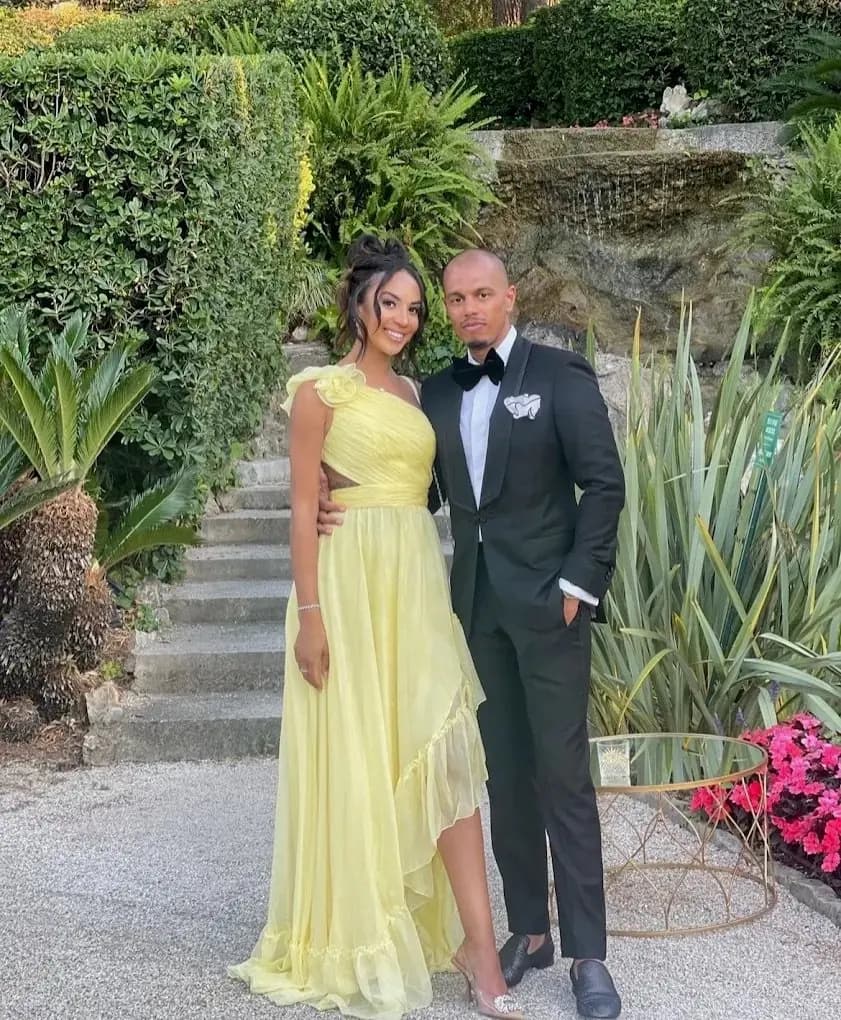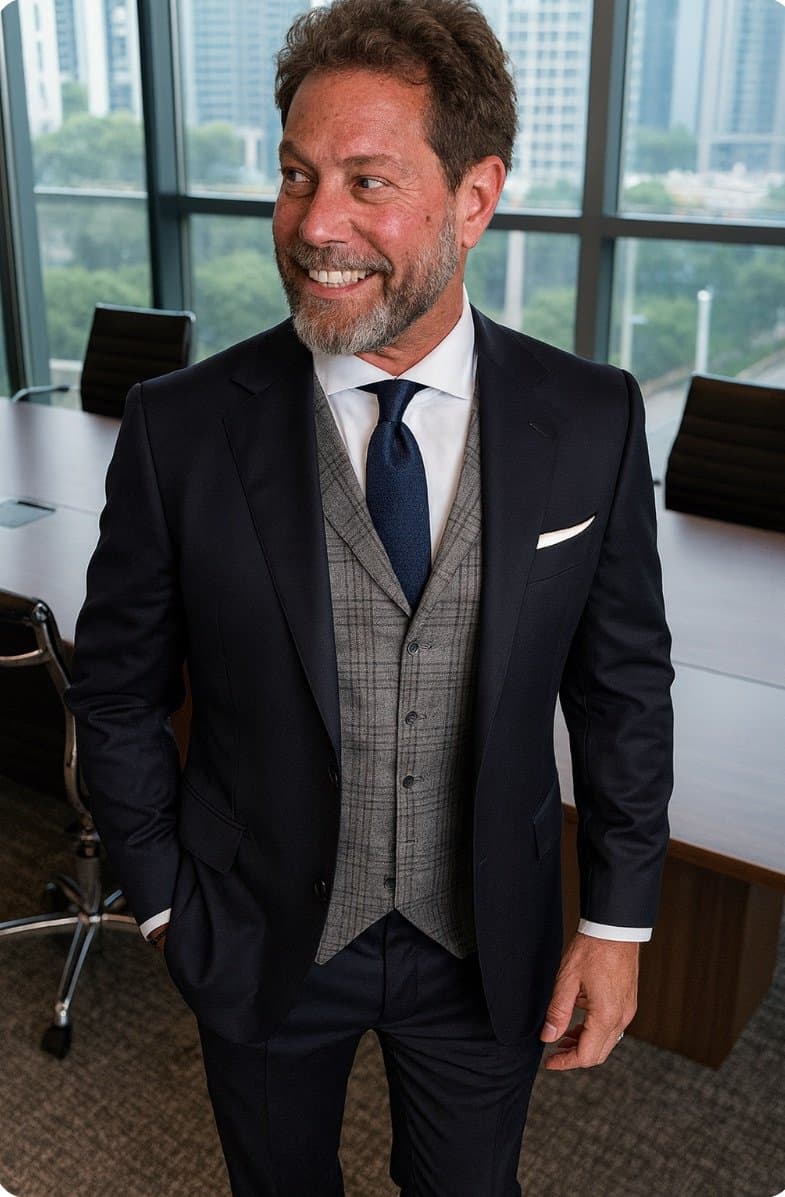
Walk into any department store and you will find racks of suits in every size, color, and price point. They look reasonable on the hanger. They look considerably less reasonable on most human bodies. The reason is simple: off-the-rack suits are designed for a statistical average, and almost no one is a statistical average. A tailored suit, by contrast, is designed for one person: you. That single difference is the foundation of everything that separates a suit that looks fine from a suit that looks exceptional.
The Fit Problem That Off-the-Rack Cannot Solve
The fundamental issue with a normal, off-the-rack suit is not quality or price. It is geometry. The human body does not come in standardized sizes. Shoulders are wider or narrower than the chest suggests. Arms are longer or shorter than a size chart predicts. Torsos carry weight differently at the stomach, the chest, and the back. A suit that fits the chest gaps at the waist. A suit that fits the waist pulls across the chest. A suit that fits the shoulders hangs too long in the sleeves. This is not a complaint about off-the-rack suits. It is simply how manufacturing works at scale.
A tailored suit begins with your measurements, not a size chart. Every dimension of the garment, including the shoulder width, chest circumference, waist suppression, seat, rise, thigh, and inseam, is derived from your actual body. When the jacket fits the shoulder perfectly, the rest of the garment can be engineered to follow your specific proportions rather than working against them. The result is a suit that appears to have been grown on you, because in a meaningful sense it was.
Christian Boehm, who has spent more than 37 years working with clients across Miami, Palm Beach, and South Florida, describes the moment a client puts on a properly fitted bespoke suit for the first time as consistently revelatory. Most men have never experienced a garment that actually fits them. Once they do, the difference is impossible to ignore.
Construction Quality: What Is Actually Inside the Suit
The difference between a tailored suit and a normal suit is not just visible from the outside. It lives in the construction hidden beneath the fabric. Off-the-rack suits are almost universally fused, meaning the front of the jacket is bonded to an interlining using heat and adhesive. This process is fast, inexpensive, and produces a reasonably crisp garment when new. Over time, the bonding separates, the fabric bubbles, and the jacket loses the clean drape it had when you first bought it. Most fused suits begin to show this degradation within three to five years of regular wear.
A fully canvassed tailored suit uses an entirely different internal architecture. A structured layer of canvas, traditionally made from horsehair and other natural fibers, is hand-stitched to the jacket front. This canvas layer moves with the body, molds to the wearer's chest over time, and retains its structure indefinitely. It also gives the lapels their distinctive roll, a gentle, natural curve that fused construction cannot replicate. This is why a well-made bespoke suit looks better after five years of wear than a fused suit looks after one. The canvas has shaped itself to you.
If you are weighing the difference between having an existing suit altered versus commissioning something new, our post on suit alterations: when to alter and when to go custom provides a useful framework for making that decision.
Fabric Selection: The Difference You Can Touch
When you choose a tailored suit, you select your fabric from a curated range of mill cloths rather than accepting whatever was chosen by a manufacturer's purchasing department. This distinction matters enormously, particularly in South Florida where the climate demands specific fabric performance.

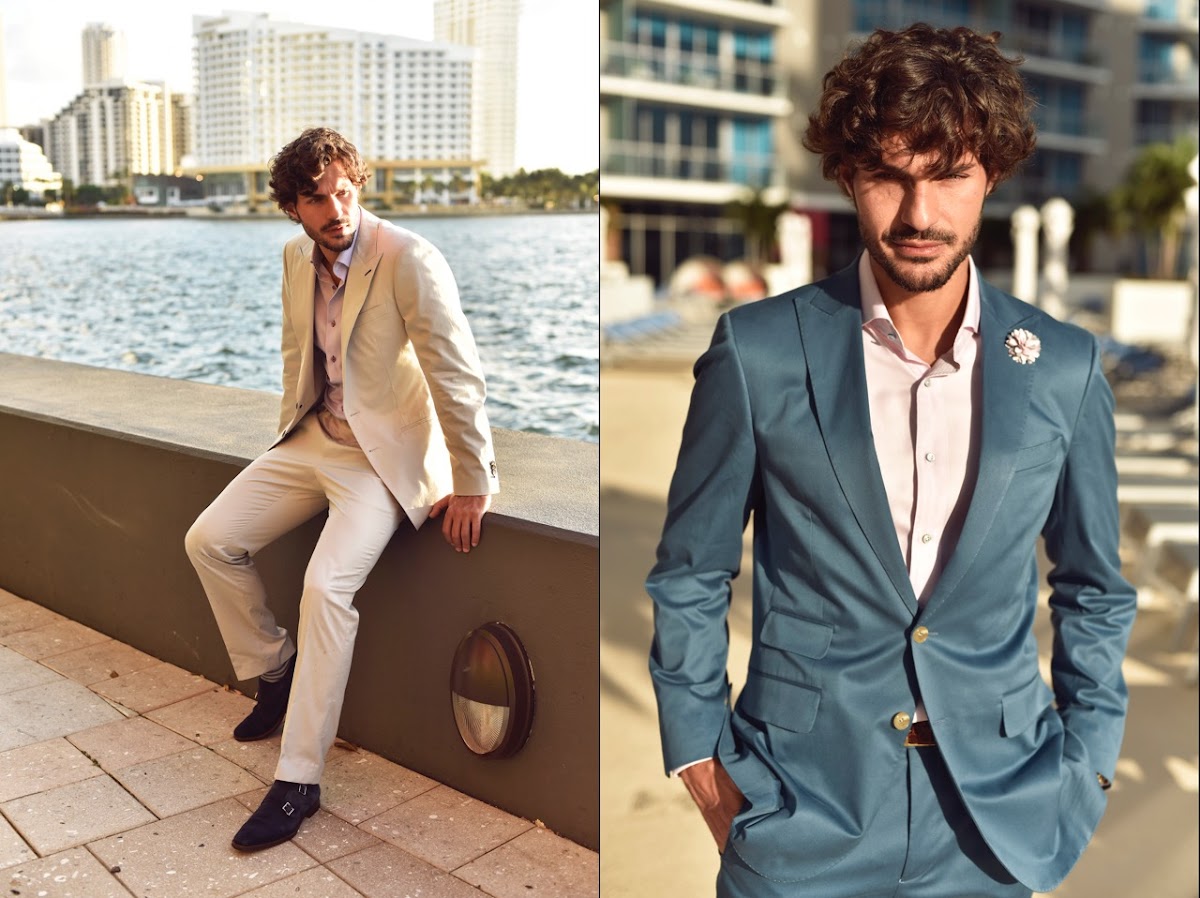
A tailor working with a client in Miami will recommend fabrics from storied mills that produce tropical-weight wools, open-weave fresco cloths, high-twist yarns, and linen blends specifically engineered to breathe, resist creasing, and maintain their structure in heat and humidity. These are fabrics that simply do not appear in the supply chains of most off-the-rack brands. They are also fabrics that, once you have worn them, become the new standard against which every other suit is measured.
Beyond performance, fabric selection gives the tailored suit its personality. The subtle texture of a fresco, the sheen of a fine Super 150s wool, the depth of a herringbone or a chalk stripe, these are not details available on a department store rack. They are choices made by a man who knows exactly what he wants and has the resources to achieve it.
Longevity and the True Cost of Ownership
The price of a tailored suit, particularly a fully bespoke garment, requires a different framework than the price of an off-the-rack suit. Consider the cost over time rather than the cost at point of purchase.
An off-the-rack suit at a moderate price point typically lasts three to seven years before the construction begins to visibly fail, the lining deteriorates, or the fusing separates. A well-made bespoke suit, maintained with appropriate care, routinely lasts 20 to 30 years. The initial investment in a tailored suit, amortized across its lifespan, often proves to be considerably less expensive per year of wear than a succession of off-the-rack replacements.
There is also the question of alterations. Bodies change over time. A tailored suit is constructed with seam allowances and structural margins that make future alterations genuinely possible. The canvas construction means the garment can be taken in, let out, and adjusted without compromising its integrity. An off-the-rack fused suit has no such margin. When it no longer fits, it is typically discarded.
This is not a minor point for Miami's professional community, where a man may wear his suit multiple times a week across business, social, and ceremonial occasions. The suit that fits him precisely at every stage of his life is not a luxury. It is a practical investment in his professional presence.
The Confidence Factor: What Fit Actually Does to a Man
There is a well-documented psychological dimension to wearing clothing that fits correctly. A suit that fits pulls the shoulders back, creates a clean vertical line, and presents the body at its best. This is not vanity. It is the result of a garment that was designed to work with a specific body rather than against it.
The effect is visible to others and felt by the wearer. When a suit fits correctly, a man does not think about it. He walks into a room and focuses entirely on the meeting, the negotiation, the conversation, or the occasion. When a suit does not fit, the awareness of it is constant: the jacket bunching at the back when he sits, the sleeves that are too long, the waist that gaps or pulls. That low-level distraction is not imaginary. It costs something.
At Bespoke CB, we hear this observation from clients regularly after their first fitting. The experience of wearing something made for them, rather than worn despite its compromises, changes how they carry themselves. That change in presence and confidence is not a sales pitch. It is what happens when the right garment meets the right body.
The Bespoke Process: What to Expect
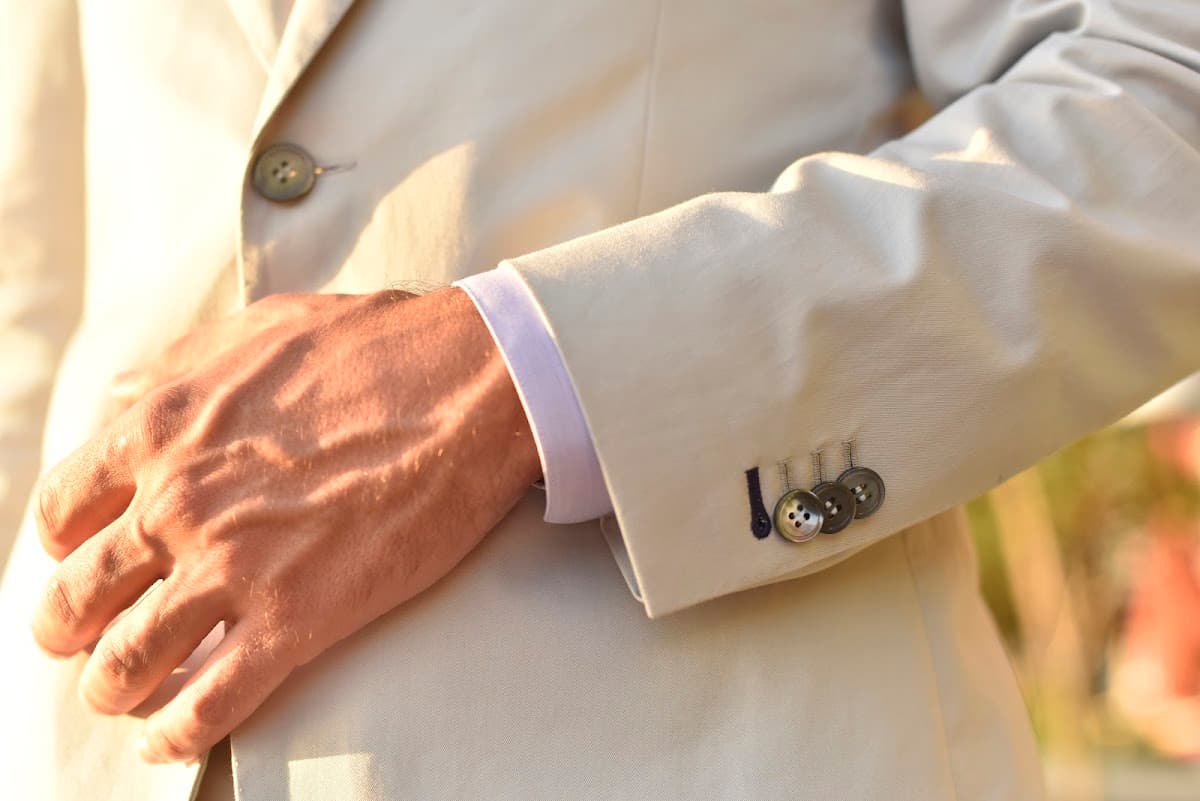
Choosing a tailored suit, particularly a fully bespoke garment, is not a transaction. It is a collaborative process that typically takes 8 to 12 weeks from the initial consultation to the final fitting. During that time, a client works closely with their clothier on fabric selection, construction details, functional choices like ticket pockets, working buttonholes, and lining selection, and the iterative fitting process that ensures every dimension is correct.
This process is not only practical. It is genuinely enjoyable for men who take their appearance seriously. Understanding the craft behind the garment, seeing the stages of construction, and developing a relationship with a clothier who knows your body and your preferences over years and decades is a different category of experience than a department store purchase.
For those new to working with a professional clothier, our post on what sets a professional clothier apart explains what to look for and what to expect from the process. And for those considering their options across South Florida, we have also covered what makes a men's clothier exceptional in Miami Beach.
Frequently Asked Questions
What is the difference between bespoke, made-to-measure, and off-the-rack?
Off-the-rack suits are manufactured in standard sizes with no customization. Made-to-measure suits start from an existing pattern that is adjusted to your measurements, offering better fit at a lower price point than full bespoke. Bespoke suits are built from a unique pattern created specifically for your body, constructed with the highest level of handwork and craftsmanship, and represent the pinnacle of what a tailored garment can be.
How long does a bespoke suit last compared to an off-the-rack suit?
A well-maintained bespoke suit made from quality fabric and fully canvassed construction can last 20 to 30 years. Off-the-rack suits with fused construction typically begin to deteriorate within three to seven years. The difference in longevity is a primary reason the per-year cost of a bespoke suit often proves lower than the cost of repeatedly replacing off-the-rack garments.
Is a tailored suit worth it if I only wear suits occasionally?
For men who wear suits for high-stakes occasions, including important business meetings, professional milestones, weddings, and social events, a tailored suit is almost always worth the investment. The occasions where a suit matters most are precisely the occasions where fit and quality make the greatest difference to how you are perceived and how you feel.
Can an off-the-rack suit be altered to fit like a tailored suit?
Alterations can improve an off-the-rack suit meaningfully, particularly in the waist, seat, and sleeve length. However, structural limitations like shoulder width, chest shape, and the fused interlining cannot be corrected through alterations. A suit can only be adjusted within the constraints of how it was originally cut and built. This is why significant fit issues often make replacing a suit with a properly tailored garment the more cost-effective long-term choice.
How do I begin the bespoke suit process at Bespoke CB?
The process begins with a consultation where we discuss your lifestyle, wardrobe needs, fabric preferences, and style goals. From there, we take full measurements, guide you through fabric and construction selections, and begin the pattern work. The full bespoke process typically takes 8 to 12 weeks from initial consultation to final delivery. You can schedule your consultation directly through our website.
The case for a tailored suit over a normal suit is not abstract. It is the difference between a garment that works for you and one that you work around. If you are ready to experience what a suit made for your body actually feels like, visit Bespoke CB and schedule your consultation with Christian Boehm today.