
The turn of the millennium brought a seismic shift in menswear. After the oversized, shoulder-padded excess of the 1980s and the slouchy minimalism of the 1990s, the 2000s cracked everything open. Tailoring got skinny. Lapels narrowed to a blade-thin width. Ties shrank to ribbons. And a new generation of men, raised on style magazines and red-carpet coverage, started caring about fit in a way that hadn't happened since the 1960s.
If you lived through it, you remember the moment. Hedi Slimane took over Dior Homme in 2000 and sent models down the runway in jackets so slim they looked painted on. Thom Browne launched his label in 2001 with cropped trousers and shrunken blazers that practically demanded you show some ankle. The term "metrosexual" entered the cultural lexicon. Grooming products multiplied. And suddenly, every guy on television, from James Bond's Daniel Craig reboot to the cast of Entourage, was wearing a suit that actually fit.
The 2000s didn't just change how suits looked. They changed how men thought about clothing. Style became personal. Fit became obsessive. And the foundation was laid for the modern custom tailoring movement that we're still living in today. At Bespoke By CB, we see the legacy of the 2000s every time a client walks in asking for a "slim but not tight" fit. That phrase, and the expectations behind it, were born in this decade.
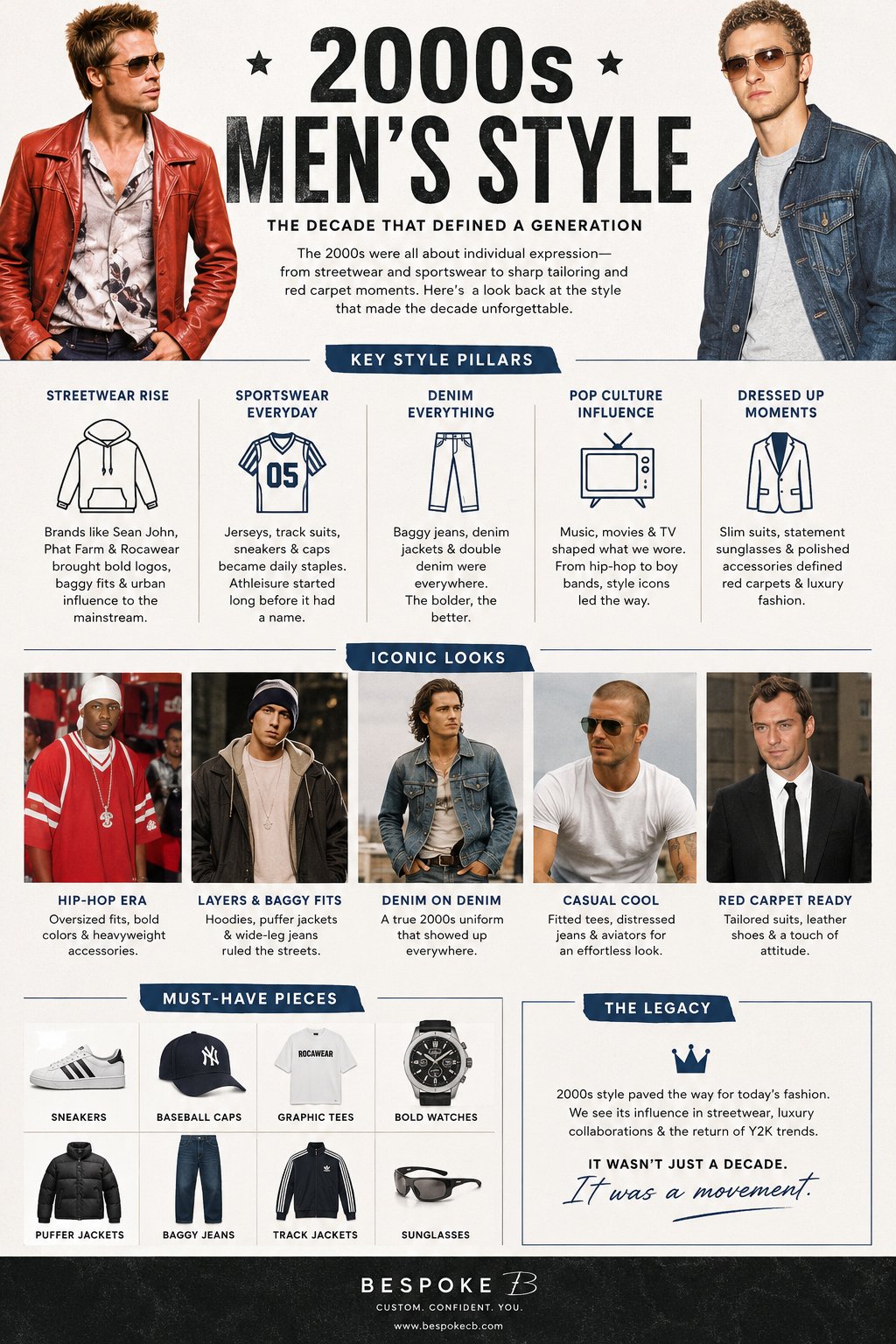
The Hedi Slimane Revolution at Dior Homme
You can't talk about 2000s menswear without talking about Hedi Slimane. When he was appointed creative director of Dior Homme in 2000, the menswear landscape was still dominated by loose, boxy silhouettes. Designers were making suits that looked like they belonged on a stockbroker from 1987. Slimane threw all of that out.
His early collections featured jackets with high armholes, narrow shoulders, and a waist that nipped in dramatically. Trousers were low-rise and tapered to a near-skinny hem. The models were wiry and androgynous, and the whole aesthetic felt more indie rock than Wall Street. Karl Lagerfeld famously lost 90 pounds just to fit into a Slimane-designed Dior suit. That's how powerful the moment was.
The Slimane effect rippled outward. Within a few seasons, every major house was showing slimmer tailoring. High-street brands like Zara and H&M copied the silhouette. And men who had never thought about the cut of their jacket started asking whether it was "too baggy." The idea that a suit should follow the body's natural lines rather than hang off it became the new default.
At Bespoke By CB, we still see clients who bring in photos from that era. They want that Slimane-era narrow shoulder and clean drape, but adapted for a real body, not a runway model. The beauty of custom tailoring is that we can honor the 2000s slim aesthetic without making it costume. We adjust the armhole height, the waist suppression, and the trouser taper to flatter each person's build. That's the difference between wearing a trend and wearing a suit that actually works for you.
Thom Browne and the Shrunken Suit
If Hedi Slimane made suits skinny, Thom Browne made them short. When Browne launched his eponymous label in 2001, he introduced a look that was almost confrontational in its proportions. Jackets stopped at the hip. Trousers broke above the ankle, exposing bare skin or colorful socks. The overall effect was preppy, eccentric, and unmistakably deliberate.
Browne's aesthetic was rooted in Ivy League traditoin, but subverted. The grey flannel suit, the oxford shirt, the club tie, all were there, but shrunken and rearranged. He showed ankle on men who had never shown ankle before. He treated shorts as a legitimate tailoring garment, pairing them with blazers and ties. It was playful, but it was also serious. Browne was making a case that menswear didn't have to be stuffy, and that proportion was the most powerful tool in a tailor's kit.
The Thom Browne look was polarizing. Some saw it as genius. Others saw it as a man wearing his son's suit. But it got people talking about fit and proportion in ways that went beyond "does it hug or drape." It introduced the idea that a suit could be a design statement, not just a uniform. And it paved the way for the creative tailoring we see today, where showing a little sock is a stylistic choice, not a wardrobe malfunction.
At Bespoke By CB, we love working with clients who want to push proportions. Maybe not to Thom Browne extremes, but to a place where the suit feels personal. A slightly shorter jacket. A trouser with a clean, no-break hem. A cropped pant that works with loafers. These are all 2000s ideas that have aged beautifully, and they're available to every client who sits down for a custom consultation.
The Rise of the Metrosexual and Male Grooming
The 2000s also changed the conversation around male grooming and self-care. The word "metrosexual," coined by Mark Simpson in the mid-90s but popularized in 2002 by a Salon article, described a new kind of straight man who was invested in his appearance, his skincare routine, and his wardrobe. He wasn't ashamed of caring about clothes. He was proud of it.
Magazines like GQ, Esquire, and FHM saw circulation spikes. Television shows like Queer Eye for the Straight Guy, which premiered in 2003, made style advice mainstream entertainment. Men started buying moisturizer. They started getting manicures. They started thinking about which shoes went with which belt. The cultural permission to care about appearance, which had been quietly building since the 90s, exploded into the open.
This shift mattered for tailoring because it meant men were paying attention. They weren't just wearing whatever the department store handed them. They were looking at magazines, watching red carpets, and developing opinions. They wanted suits that reflected their personality, not just their job title. That hunger for personalization is exactly what fueled the custom clothing boom that's still growing today. Bespoke By CB exists in part because the 2000s taught men that their clothes could be a form of self-expression.
James Bond and the Action Hero Suit
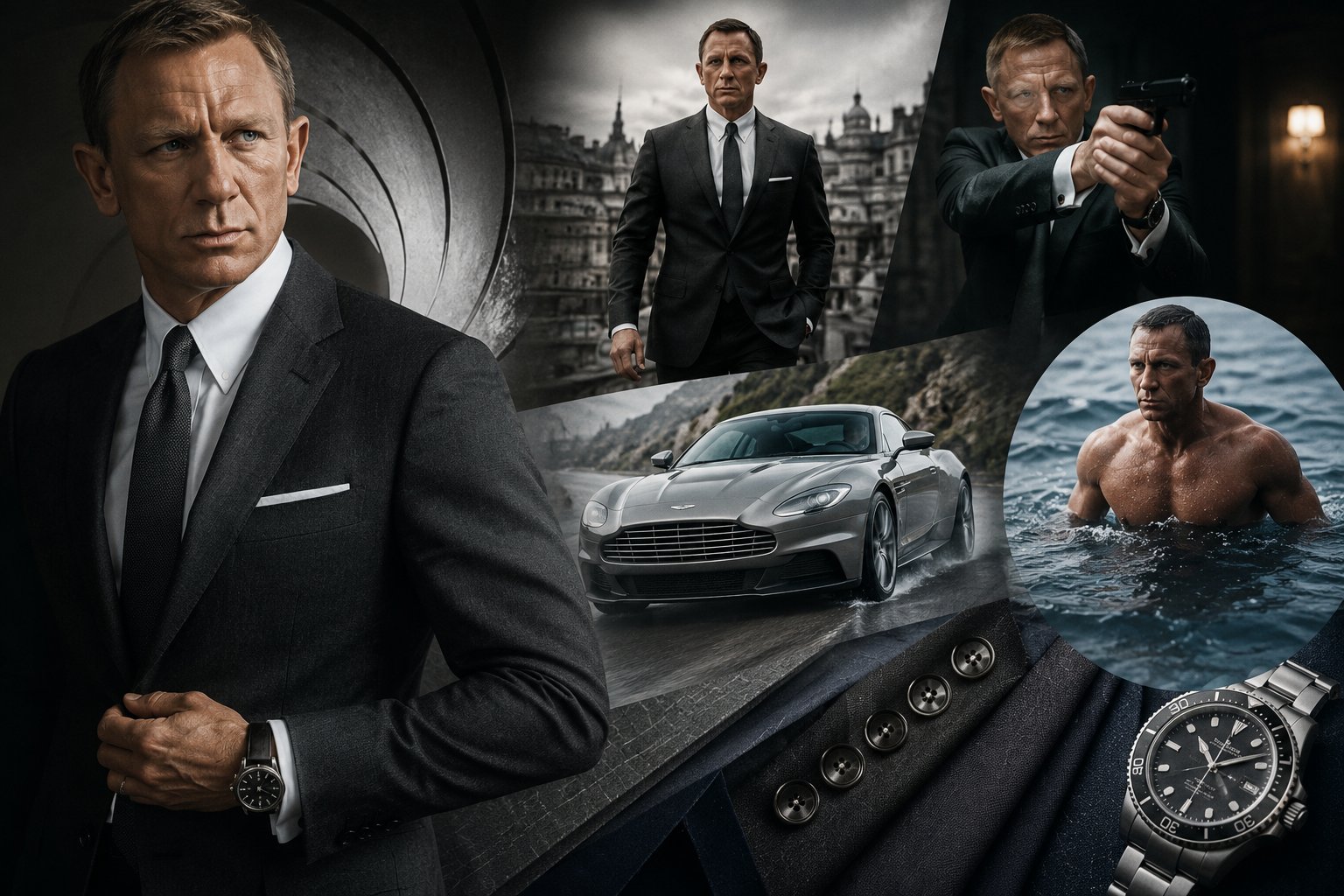
When Casino Royale hit theaters in 2006, it didn't just reboot the James Bond franchise. It rebooted the way men thought about suits. Daniel Craig's Bond wore tailoring that was athletic, close-fitting, and unapologetically masculine. The suits, designed by Lindy Hemming and later by Jany Temime, were cut to move. They had high armholes, clean shoulders, and trousers that sat flat without excess fabric pooling at the ankle.
This was a revelation. For years, action heroes had either worn no suits at all or worn suits that looked like they'd been borrowed from a larger man. Craig's Bond made tailoring look tough. He fought in a suit. He ran in a suit. He emerged from the ocean in a trim pair of swim trunks and made the whole world pay attention. The message was clear: a well-fitted suit wasn't fancy or precious. It was functional. It was cool. It was for men who did things.
The Casino Royale effect was immediate. Men came into tailoring shops asking for "the James Bond suit." They wanted something slim, structured, and athletic. They wanted a suit that made them look like they could chase someone through a construction site and still make it to the casino by 8 PM. Bespoke By CB still gets that request. The Bond suit is really just a well-cut, close-fitting suit with clean lines and no fuss, and it's exactly the kind of thing we specialize in. We build it with Miami-appropriate fabrics so you can wear it in 90-degree heat without wilting.
Television and the Rise of Style Conscious Characters
Beyond Bond, the 2000s gave us a wave of television shows that made style a central character. Entourage premiered in 2004 and made Los Angeles swagger, fitted tees, and premium denim a national obsession. Mad Men debuted in 2007 and, while set in the 1960s, profoundly influenced how modern men thought about tailoring. Don Draper's slim grey suit and white shirt became a template for men who wanted to look sharp without looking trendy.
Then there was Gossip Girl, which launched in 2007 and brought prep back to the forefront. The show's male characters wore ties, blazers, and overcoats with a swagger that felt both classic and fresh. It introduced a younger generation to the idea that dressing well was aspirational, not antiquated.
The cumulative effect of all this screen time was that men had more style references than ever before. They weren't just looking at one designer or one celebrity. They were absorbing a whole ecosystem of images, and they wanted in. Bespoke By CB sees this legacy in every consultation. Clients come in with phone screenshots from movies and TV shows, pointing to specific lapel widths or jacket lengths they want to replicate. The 2000s made that kind of visual literacy normal.
Fast Fashion and the Democratization of Trend
The 2000s also saw the explosion of fast fashion. Zara, H&M, and Uniqlo expanded aggressively in the US market, offering runway-inspired looks at mall prices. For the first time, a guy in suburban Ohio could buy a skinny suit that echoed Dior Homme for under $200. The quality wasn't comparable, but the silhouette was close enough to participate in the conversation.
This democratization had two effects. On one hand, it got more men into tailored clothing. A cheap skinny suit was still a suit, and it was better than cargo shorts and a polo. On the other hand, it revealed the limitations of mass production. The suits didn't fit right because they weren't made for the individual. Shoulders were too wide. Waists were too loose. Trousers were too long. The fast-fashion slim suit looked great on a mannequin and disappointing on a real person.
This is where the custom tailoring movement found its opening. Men had tasted the slim silhouette and liked it, but they wanted it done right. They wanted a jacket that actually hugged their shoulders. They wanted trousers that actually broke at the right point. They wanted the 2000s aesthetic without the 2000s compromises. Bespoke By CB was built to solve that exact problem. We take the proportions that the 2000s popularized and execute them properly, with fabrics and construction that fast fashion can't touch.
The Music Scene and Indie Tailoring
The 2000s music scene played its part too. Indie rock bands like The Strokes, Arctic Monkeys, and Franz Ferdinand wore slim suits on stage and in their music videos. Julian Casablancas in a tight leather jacket and skinnier tie, Alex Turner in a narrow-lapel suit, these were the new style icons. They made tailoring feel rock and roll again.
Rap and hip-hop also evolved. Artists like Kanye West, Pharrell Williams, and Andre 3000 pushed menswear in experimental directions. Kanye's preppy-influenced outfits, Pharrell's cardigans and slim trousers, and Andre's bold patterns and shorts suits all challenged the notion that a suit had to be conservative. They opened up a space where tailoring could be playful, colorful, and culturally specific.
This musical influence matters because it broadened the audience for tailoring. You didn't have to be a banker or a lawyer to wear a suit. You could be a musician, a creative, a student. The suit became a canvas for identity, not just a professional requirement. Bespoke By CB serves clients from every walk of life, and the 2000s helped make that possible. We dress executives, artists, grooms, and guys who just want to look sharp on a Friday night. The decade taught men that tailoring belongs to everyone.
Slim Fit vs Skinny: Understanding the Difference
One of the most important legacies of the 2000s is the vocabulary it gave us. Before the decade, most men described suits as "regular" or "relaxed." After the 2000s, everyone was talking about "slim fit" and "skinny." But these terms are not the same thing, and understanding the difference is key to getting a suit that actually works.
Slim fit means the suit follows the body's lines with minimal excess fabric. The armholes are higher. The waist is suppressed. The trousers taper from the knee down. But there's still room to move. The jacket doesn't pull at the button. The trousers don't cling to the thigh. Slim fit is a proportion, not a size.
Skinny, on the other hand, is a compression. Skinny suits are tight. They restrict movement. They look great on a 6-foot-tall, 140-pound model and awkward on almost everyone else. The 2000s confused these two categories. A lot of men bought skinny when they meant slim, and ended up with suits they couldn't sit down in.
At Bespoke By CB, we always guide clients toward slim, not skinny. A slim suit flatters every body type because it's built around your actual measurements. We can make it as clean and close as you want, but we'll never make it so tight that you can't function. The 2000s taught the world to love a narrow silhouette. Custom tailoring is how you get that silhouette without the suffering.
Making 2000s Style Work Today in Miami
Here's the thing about 2000s menswear: the core ideas are still relevant. The slim lapel. The clean trouser. The high armhole. The no-break hem. These are all hallmarks of modern tailoring, and they all trace their popular roots to the 2000s. But wearing them in Miami requires adaptation. The fabrics that worked in London or New York don't work in South Florida's heat and humidity.
That's where Bespoke By CB comes in. We take the 2000s aesthetic and rebuild it for the tropics. Think lightweight wools in the 8-ounce range, linen-cotton blends that breathe, and half-lined jackets that keep you cool without sacrificing structure. We can do the Slimane shoulder, the Browne crop, the Bond silhouette, all in fabrics that won't have you sweating through your shirt by 10 AM.
We also update the proportions. The ultra-narrow lapel of the early 2000s has given way to a slightly wider, more balanced lapel that frames the face better. The super-low-rise trouser has been replaced with a more comfortable mid-rise. The shrunken jacket has evolved into a tailored-but-not-tiny jacket that hits at the right length for your torso. These are refinements, not rejections. The 2000s gave us the DNA. We're making it livable.
How Bespoke By CB Brings 2000s Style Into the Present
As Miami's premier custom clothier, Bespoke By CB is uniquely positioned to translate 2000s menswear into something that works for the modern man. Our process starts with a consultation where we discuss not just measurements, but lifestyle. How do you want to feel in your suit? What do you do while wearing it? Where are you going? These questions matter because a suit that looks like a 2000s runway piece but falls apart at a Miami outdoor wedding isn't a success.
We offer hundreds of fabrics from Italian mills like Loro Piana, Vitale Barberis Canonico, and Drago. We can build you a super-120s wool suit in charcoal with a subtle pinstripe that nods to the decade's power-suit revival. We can do a crisp white shirt with a spread collar that echoes the Bond aesthetic. We can craft a linen-blend blazer with a clean, slim shoulder that feels like Thom Browne without the theatrics.
Every Bespoke By CB garment is made to your exact measurements. That means the slim fit you want is actually slim for you, not for a hypothetical average. The shoulders fit. The waist suppresses where it should. The trousers taper to the right opening for your shoe size. This is the promise that the 2000s made but couldn't keep through mass production. We keep it, one client at a time.
Bespoke By CB also offers custom shirts, which are essential to completing the 2000s look. The decade popularized the spread collar, the French cuff, and the fitted shirt. We make all of these in Miami-friendly fabrics like bamboo, linen, and lightweight cotton. Pair one of our custom shirts with a slim suit and you've got a look that's 2000s-inspired but thoroughly modern.
If you're ready to explore what 2000s-inspired custom tailoring can do for you, book a consultation with Bespoke By CB. Whether you want the full Bond treatment or just a cleaner, slimmer everyday suit, we'll build it from the ground up. The 2000s proved that men care about fit. We're here to prove that custom is the best way to get it.
Looking for more decade inspiration? Check out our guides to 60s men's style, 70s men's fashion, 80s power suits, and 90s minimalism for the full evolution of menswear.
Frequently Asked Questions
What was the defining menswear trend of the 2000s?
The defining trend was the slim fit revolution. Designers like Hedi Slimane at Dior Homme and Thom Browne introduced dramatically narrower silhouettes, with high armholes, suppressed waists, and tapered trousers. This replaced the boxy, oversized suits of the 1980s and 1990s and set the standard for modern tailoring.
Are 2000s suit styles still wearable today?
Yes, with adjustments. The core ideas of the 2000s, clean lines, higher armholes, tapered trousers, are still the foundation of modern suits. The key is to avoid the decade's extremes, like ultra-skinny fits or super-short jackets, and instead embrace a balanced slim fit. Bespoke By CB specializes in updating 2000s proportions for today's bodies and climates.
What is the difference between slim fit and skinny fit?
Slim fit follows the body's lines with minimal excess fabric but still allows comfortable movement. Skinny fit compresses the body and restricts motion. The 2000s popularized both, but slim fit has endured while skinny has largely fallen out of favor. A well-made slim suit flatters every body type, which is why Bespoke By CB always recommends slim over skinny.
How did the 2000s influence custom tailoring?
The 2000s made men care about fit in a new way. Magazine culture, television, and red-carpet coverage gave men visual references and vocabulary. They started wanting suits that matched specific looks, which mass production couldn't deliver. This drove demand for custom tailoring, where every measurement and proportion can be controlled. Bespoke By CB exists in part because the 2000s created that demand.
Can I get a 2000s-style slim suit for Miami's climate?
Absolutely. Bespoke By CB builds slim-fit suits in lightweight wools, linen blends, and breathable cottons that work in South Florida's heat. We use half-lined construction, lighter interlinings, and open weaves to keep the 2000s silhouette without the 2000s discomfort. Book a consultation to explore our Miami-friendly fabric options.


