For those of us who wear a tie every day for work, we still ask ourselves if we are wearing the correct tie length. Even if you have never worn a tie in your life, you have seen pictures of someone who looks like a little boy trying on their dad's old tie.
Wearing the incorrect tie length can be distracting to everyone around you. Here is a guide our custom style experts put together to help ensure you nail down the correct tie length for your body.
The History of the Tie
Most experts believe that the necktie originated sometime in the 17th century during the Thirty Years' War in France. Croatian mercenaries that King Louis XIII hired wore a piece of cloth around their necks as part of their uniforms. While these ties added a decorative effect to the uniforms, they also served a functional purpose of keeping the top of the jacket closed.
King Louis XIII fancied these closures so much that he made them mandatory for all royal gatherings. In honor of the Croatian soldiers who fought during the war, King Louis XIII named these ties "La Cravate," which is still the French word for necktie today.
The early 17th century neckties bear minimal resemblance to modern-day ties, yet they remained popular with men of all economic stature for over 200 years. Today, ties are available in many widths, materials, patterns, and colors.
5 Tips for Determining Your Proper Tie Length
1. The Tip of the Tie
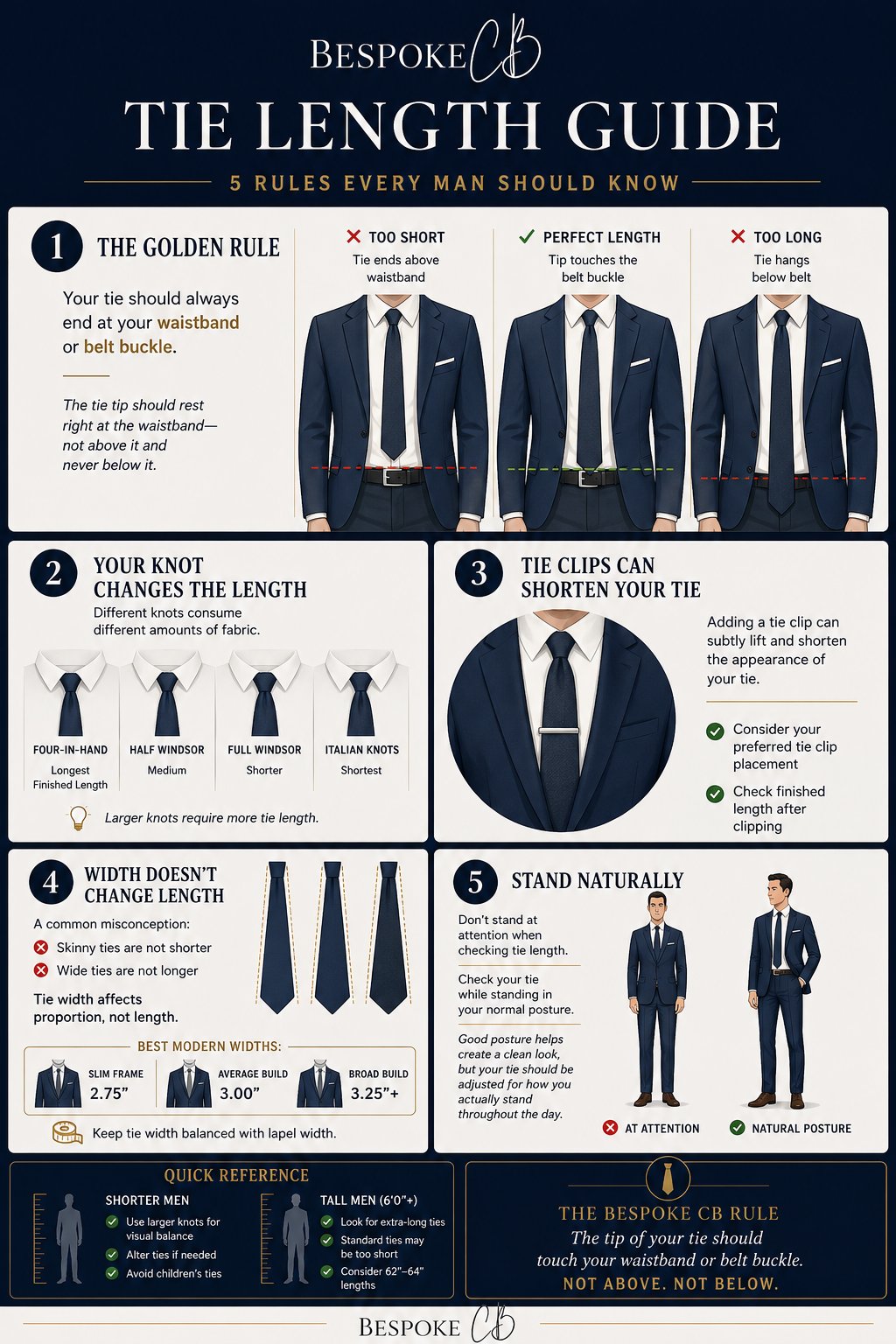
The quickest answer to proper tie length is this: the tip of the tie (regardless of the shape) should hit right on top of your belt buckle or waistband when standing up straight. Never above or below.
Regardless of whether you are wearing a jacket and the bottom of the tie is covered, it should always rest right at the belt buckle.
To make sure that no man is left behind, the tip of the tie refers to the front end of the tie. For diamond ties, the tip refers to the point at the very end of the diamond. For square ties, the tip is the cut-off blocky point at the bottom.
2. Watch for the Length of the Tie
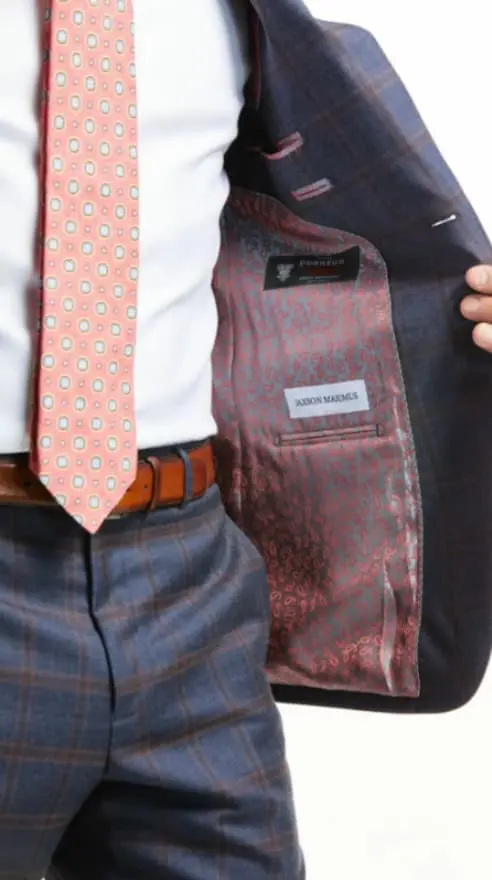
While most ties are manufactured at a standard length of 57 inches, the length of your tie should depend on the type of knot that you are going to be using. Depending on your personal preference, some knots require one or two loops. If using an Italian-style knot, you may use a few more loops. All of these knots can shorten the length of your tie.
Keep in mind that regardless of the type of knot you use, the same rule applies: the tie should always hit your waistband.
3. Keep in Mind the Tie Clip
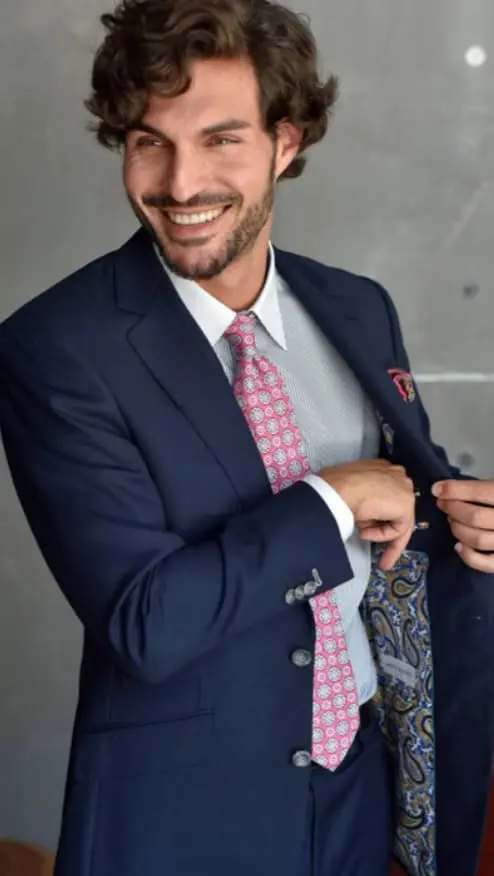
For that sophisticated look, you may choose to wear a tie clip. A word of caution: some tie clips can shorten the length of your tie. If you are going to be wearing tie clips on a regular basis, you might want to factor in that sizing difference when buying your ties.
4. Tie Width Does Not Matter
When it comes to determining your tie's proper length, the width of your tie has no effect on the finished look. The width of your tie comes down to personal style preference more than anything. Regardless of the width of your tie, you still need to have the tip of your tie fall at your waistband.
That said, tie width does matter for proportion. A skinny tie on a broad-shouldered man looks out of balance, while a wide tie on a slim frame can overpower the wearer. The standard tie width today is around 2.75 to 3.25 inches, which works for most body types. If you wear a custom suit with a narrow lapel, choose a narrower tie to maintain proportional balance.

5. Have Good Posture
As trivial as it sounds, having good posture is key for maintaining your look. When getting ready in the morning, try not to straighten out too much or flex in the mirror. This is not how you are going to be standing normally. Instead, try standing how you usually would. This allows you to adjust the length of your tie depending on your body's natural stance.
You will look far better being realistic about how you stand than trying to yank your pants up.
Tie Tips for Shorter Men
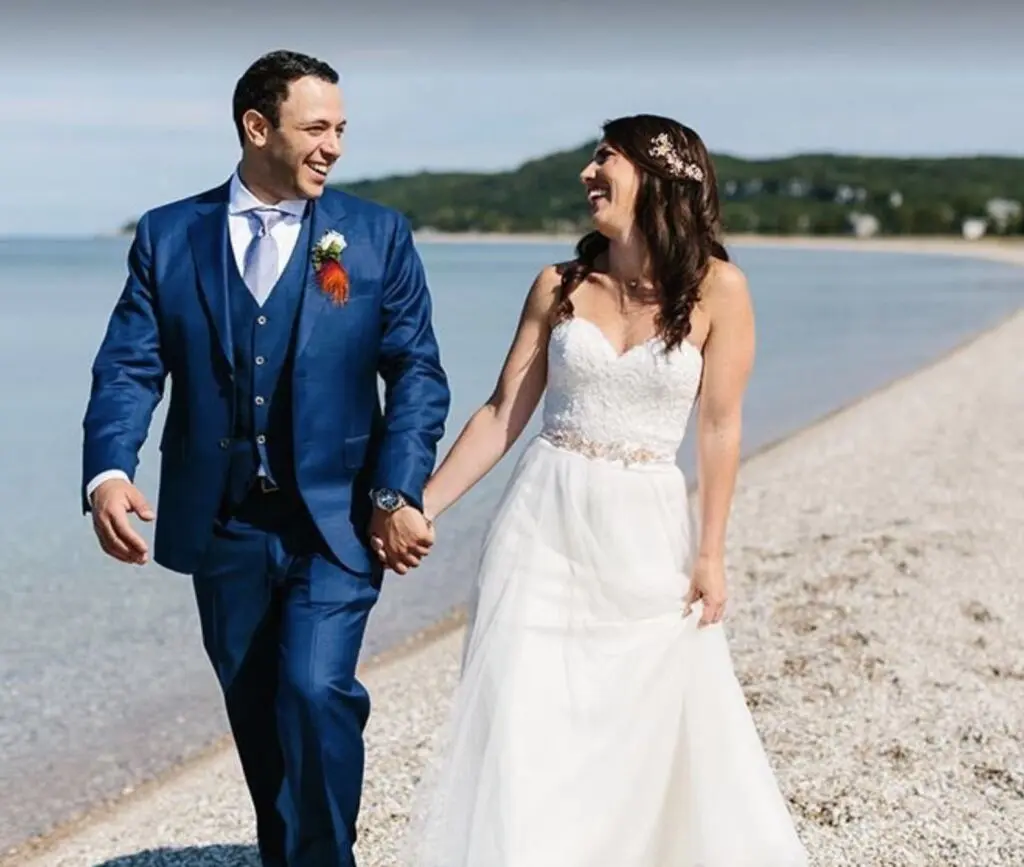
It is almost impossible to find a universally flattering tie for all body types. If you tend to fall on the shorter end of the scale, we recommend taking advantage of the extra length in your tie by adding a larger knot. This can give the illusion of a stronger and more powerful stance. A good suggestion would be the Windsor knot, a symmetrical and larger knot that is one of the most popular in the United States.
Whatever you do, do not buy a child's tie. Instead, opt for a regular length tie and bring it to your tailor to get altered to fit your body's proportions best. Keep in mind the golden rule: the tie tip should always fall at your waistband. Never below or above.
Tie Tips for Big and Tall Men
Taller guys have a much harder time shopping than shorter guys do. Since the standard length of a tie is 57 inches, this is not enough fabric if you are over 6 feet tall. If you tend to fall on the taller side of the scale, we recommend searching for manufacturers that carry an extra-long range, typically 62 to 64 inches.
A smaller tie knot will be your best friend if you fall outside the normal sizing range for ties. Knots like the Four in Hand knot work best because they take the least amount of fabric off your tie. Try to avoid knots like the Windsor, which takes much more fabric and shortens your tie even more.
If all else fails, a foolproof option is to get your ties custom made for you, ensuring that they fit you perfectly. At Bespoke By CB, we can help you source custom ties that match your custom suit and your body proportions exactly.
Choosing the Right Tie for Your Outfit
Getting the length right is only half the battle. The tie you choose needs to work with the rest of your outfit. Here are a few quick guidelines:
With a navy suit: Burgundy, dark green, or patterned ties in warm tones. Navy is a neutral base that works with almost any color.
With a charcoal suit: Deep reds, blues, and muted patterns. Charcoal is serious and formal, so keep the tie in the same register.
With a patterned suit: Solid ties in a complementary color. Let the suit pattern be the star and keep the tie simple.
With a tuxedo: A black silk or satin bow tie. Long ties do not belong with black tie. See our custom tuxedo guide for more.
With a blazer and odd trousers: This is where you can have fun. Knit ties, textured silks, and bold patterns all work in a smart-casual context.
Tie Materials and How They Affect Length
The fabric of your tie affects how it hangs and how much it stretches over the course of a day:
Silk: The standard. Drapes beautifully and holds its shape. Most ties are silk or silk-blend.
Wool and cashmere: Thicker and bulkier. These ties tend to sit shorter because the knot takes up more fabric. Account for this when choosing your length.
Knit ties: Flat-bottomed and typically shorter than woven ties. The tip of a knit tie hitting slightly above the waistband is acceptable since knit ties are more casual.
Linen and cotton: Lighter and stiffer. These do not drape as gracefully as silk but work well in summer and casual settings.
Common Tie Length Mistakes to Avoid
Too short: The tie tip above the waistband makes you look like a child. This is the most common and most damaging mistake.
Too long: The tie extending past the belt buckle looks sloppy and careless.
Crooked tie: A tie that is not centered down the placket of the shirt draws attention for the wrong reasons.
Wrong knot for your collar: A small knot in a wide spread collar looks lost. A large knot in a narrow collar looks cramped. Match the knot to the collar spread.
Ignoring the dimple: A tie without a dimple at the knot looks flat. Take the time to create a small dimple just below the knot for a polished finish.
How a Custom Suit Improves Your Tie Game
A properly fitted suit makes every accessory look better, including your tie. When your shirt collar sits correctly around your neck, the tie knot holds its shape and the tie falls at the right length. When your jacket is cut to the right proportions, the tie is framed properly by the lapels and the V-shape of the open jacket.
At Bespoke By CB, every custom suit is made from 34+ body measurements with a pattern drafted from scratch. The collar fits your neck exactly, the lapels are proportional to your chest, and the overall silhouette makes every tie you wear look better. Custom shirts with the right collar spread complete the picture.
Book a free consultation at our Miami Brickell showroom to see the difference that proper fit makes.
Frequently Asked Questions
Where should the tip of my tie hit?
The tip of your tie should rest right on top of your belt buckle or waistband when you are standing up straight. Not above, not below.
What is the standard length of a tie?
Most ties are manufactured at 57 inches. Extra-long ties are typically 62 to 64 inches for men over 6 feet tall.
Does the knot affect tie length?
Yes. Larger knots like the Windsor use more fabric, which shortens the tie. Smaller knots like the Four in Hand use less fabric, leaving the tie longer.
Can a tailor shorten a tie?
Yes. A tailor can shorten a tie from the back end (the part that sits behind the front blade) so the front tip hits your waistband correctly. This is a better option than buying a child's tie if you are on the shorter side.
Should I wear a tie clip?
A tie clip adds a polished touch and keeps your tie in place. Place it between the third and fourth buttons of your shirt, and be aware that it can slightly shorten the apparent length of your tie.
What tie width should I choose?
The standard is 2.75 to 3.25 inches. Match the width of your tie to the width of your jacket lapels for a balanced look. Narrow lapels call for narrower ties, and wider lapels work with wider ties.