Black Tie vs White Tie: Understanding Formal Dress Codes
Formal dress codes have shaped menswear for over a century, yet the distinction between black tie and white tie remains one of the most misunderstood elements of gentlemanly attire. If you have ever received an invitation stamped with one of these dress codes and felt a wave of uncertainty, you are not alone. The rules governing formal wear are precise, and getting them right signals a deep respect for tradition, for your host, and for the occasion itself.
At Bespoke By CB, we have spent over 37 years guiding men through the nuances of formal dress. From custom tuxedos crafted for Miami galas to full white tie tailcoats tailored for international diplomatic events, we have seen firsthand how the right formalwear transforms not just a look, but an entire experience. This guide breaks down everything you need to know about black tie vs white tie, so you can walk into any event with confidence and quiet authority.
What Is White Tie Attire?
White tie is the highest formal dress code in Western menswear. It is the most rigid, the most elegant, and the rarest. When an invitation calls for white tie, you are being asked to dress at the absolute pinnacle of sartorial tradition. There is no room for interpretation, no room for creative liberties, and no room for shortcuts. Every element of the ensemble is prescribed.
The Tailcoat
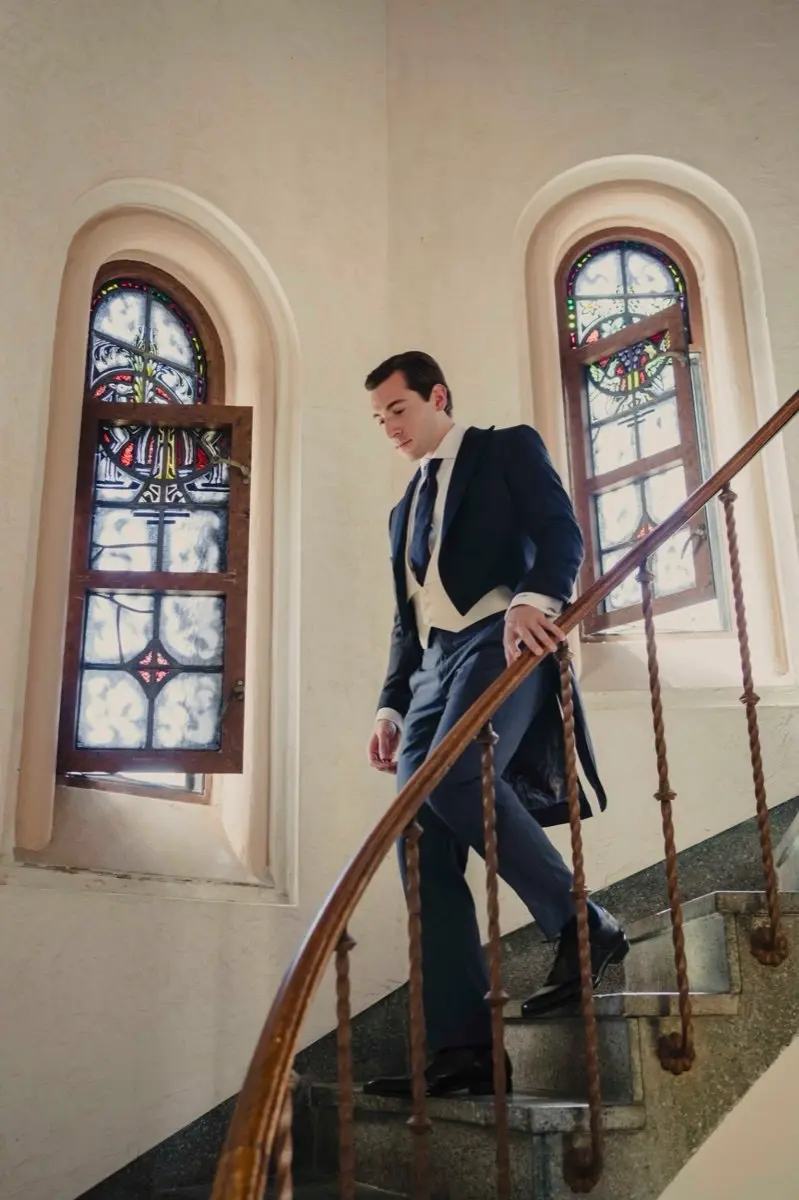
The centerpiece of white tie attire is the tailcoat, traditionally black with a peak lapel faced in silk satin or grosgrain. The tailcoat is cut short in the front, ending at the waist, with long tails extending to the back of the knees. It is fastened with a single button at the front waist, and it is never buttoned closed beyond that one point. The tailcoat is the defining garment that separates white tie from every other dress code.
The White Waistcoat
Worn beneath the tailcoat is a white waistcoat, traditionally made of pique cotton or marcella fabric. The waistcoat is low-cut, typically with a V-shape or U-shape neckline, and fastens with buttons or studs. It must be white, never ivory or cream. The waistcoat is what gives white tie its name, the white waistcoat paired with the white bow tie creates the distinctive look that has defined this code since the early 19th century.
The White Bow Tie
The white bow tie is non-negotiable. It must be white, it must be self-tied (never pre-tied), and it is traditionally made of pique cotton to match the waistcoat. The bow tie is worn against a wing collar shirt, and its tails should point outward, not downward. A pre-tied bow tie at a white tie event is a serious faux pas that experienced eyes will catch immediately.
The Wing Collar Shirt
The white tie shirt features a detachable or attached wing collar, stiff and standing upright. The shirt itself is white pique cotton or marcella, with a starched front. It fastens with shirt studs rather than buttons, typically gold or pearl. French cuffs are mandatory, worn with cufflinks. The shirt is one of the elements that most clearly distinguishes white tie from black tie, where a pleated or textured front is more common and a turn-down collar is standard.
Trousers
White tie trousers are black, matching the tailcoat, with a stripe of silk braid down the outside seam. They are high-waisted, designed to be worn with suspenders (braces) rather than a belt. The silk stripe should match the facing of the tailcoat lapel, whether satin or grosgrain. The trousers break slightly at the shoe, but not excessively.
Footwear
Patent leather opera pumps are the traditional white tie shoe. These are low-cut slip-on shoes with a bow detail, made of black patent leather. Patent leather oxfords are an acceptable alternative, but opera pumps remain the gold standard. Shoes must be black, polished to a mirror shine, and worn with black silk dress socks.
Accessories
White tie accessories include white kid gloves (carried, not worn, and removed upon arrival), a pocket square in white linen or silk, a top hat (black silk or hatters plush, worn outdoors and carried inside), and a boutonniere if the event calls for one. A dress cane is optional but traditional. Studs and cufflinks should be understated and elegant, typically gold or pearl.

What Is Black Tie Attire?
Black tie is the most common formal dress code encountered today. It is formal, elegant, and refined, but it is a step below white tie in the hierarchy of dress. When you receive a black tie invitation, you are being asked to wear a tuxedo, the quintessential formal ensemble that has defined evening wear since the 1880s. For a deeper dive into the specifics, our guide to black tie attire covers every element in detail.
The Tuxedo Jacket
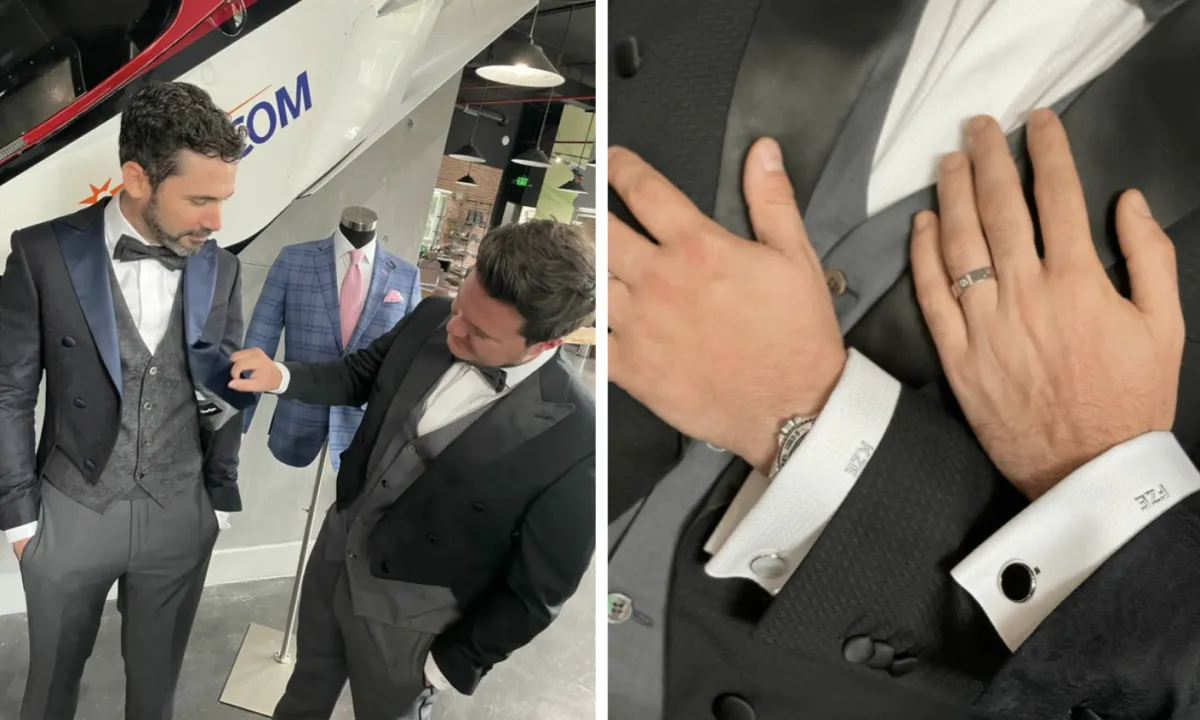
The black tie jacket is a tuxedo, traditionally black or midnight blue, with silk-faced lapels (peak or shawl). Single-breasted one-button or two-button jackets are most common, though double-breasted jackets are also acceptable. The facing material, whether satin or grosgrain, is a matter of personal preference and should match the trouser stripe. Unlike white tie, there is more flexibility here. You can choose peak lapels for a more formal look or shawl lapels for a softer, more elegant feel.
The Black Bow Tie
The black bow tie gives the dress code its name. Like white tie, it should be self-tied, though the rules around pre-tied bow ties are slightly more relaxed at black tie events than at white tie. Still, any man who takes formalwear seriously will learn to tie his own bow tie. The fabric should match the lapel facing, either satin or grosgrain.
The Formal Shirt
The black tie shirt is white, with a textured or pleated front. French cuffs are standard, worn with cufflinks. The collar can be turn-down or wing, though turn-down is more common in contemporary black tie. The shirt fastens with studs or buttons, and a bib front is traditional but not required.
Trousers
Black tie trousers are black, matching the jacket, with a silk stripe down the outside seam. They can be high-waisted or standard-rise, and are worn with suspenders or, less formally, a cummerbund. A belt should not be worn with a tuxedo.
Footwear
Black patent leather shoes are the standard for black tie. Opera pumps are the most traditional, but black patent oxfords are widely accepted. Well-polished black calfskin shoes are sometimes seen, though patent leather is preferred. For more styling guidance, our tuxedo styling guide offers detailed recommendations.
Accessories
Black tie accessories include a cummerbund or waistcoat (not both), a pocket square in white silk or linen, cufflinks and shirt studs, and optionally a boutonniere. The cummerbund should match the lapel facing and is worn with the pleats facing upward. A black or midnight blue waistcoat is an alternative to the cummerbund.

Key Differences: Black Tie vs White Tie
Understanding the distinction between black tie and white tie comes down to a handful of critical differences. Each element of the ensemble changes between the two codes, and mixing them up is a serious sartorial error. Here is a side-by-side comparison.
Jacket
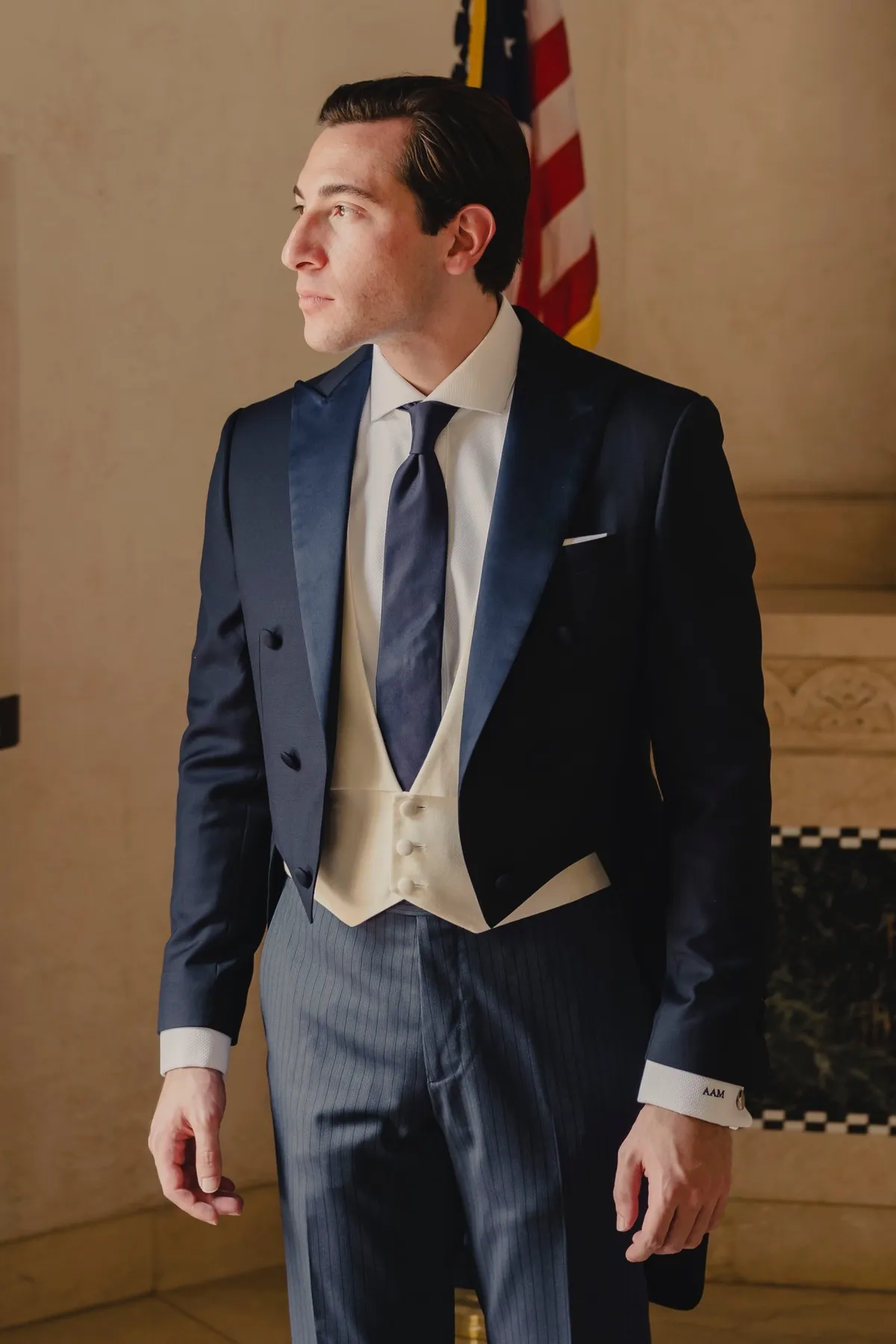
White tie requires a tailcoat, short in front with long tails in back, fastened with a single button. Black tie requires a tuxedo jacket, which can be single or double-breasted, cut to a normal length, with silk-faced lapels. The tailcoat is the single most visible difference between the two codes.
Trousers
Both codes call for black trousers with a silk stripe, but white tie trousers are always high-waisted and worn with braces. Black tie trousers can be standard-rise and offer more flexibility in cut.
Shirt
White tie demands a wing collar shirt with a stiff, starched pique front, fastened with studs. Black tie uses a turn-down or wing collar shirt with a pleated or textured front. The stiffness and formality of the white tie shirt is markedly greater.
Tie
White tie requires a white self-tied bow tie in pique cotton. Black tie requires a black self-tied bow tie in satin or grosgrain. The color of the bow tie is the simplest way to distinguish the two codes at a glance.
Waist Covering
White tie requires a white pique waistcoat, low-cut and fastened with buttons. Black tie calls for a cummerbund or black waistcoat. The white waistcoat is a defining feature of white tie and one of the elements that gives the code its name.
Shoes
Both codes favor patent leather, but white tie is stricter. Opera pumps are the standard for white tie, while black tie allows more flexibility, including polished calfskin oxfords in some circles.
Accessories
White tie includes a top hat, white gloves, and a dress cane as optional but traditional accessories. Black tie is simpler, with a cummerbund, pocket square, and cufflinks completing the look.
When You Will Encounter White Tie
White tie events are rare in modern life, which is part of what makes them so special. You are most likely to encounter white tie at the following occasions:
- State dinners: Official government dinners, particularly in European monarchies and at diplomatic functions, often require white tie. The Vienna Opera Ball, for example, is a famous white tie event.
- Royal events: British royal events, including certain state banquets at Buckingham Palace, maintain the white tie tradition. The most formal royal occasions may even specify additional elements like decorations and medals.
- Debutante balls: Traditional debutante balls, particularly in Europe and among certain American social circles, require white tie for gentlemen. The Queen Charlotte's Ball in London is a notable example.
- Opera and ballet premieres: Opening nights at prestigious opera houses, such as the Vienna State Opera or La Scala, have historically called for white tie, though black tie is now more commonly accepted.
- Exclusive society events: Certain charity galas, benefactor dinners, and heritage society events maintain white tie as their dress code to preserve a sense of occasion and tradition.
If you attend a white tie event, it is an experience to savor. The level of formality creates an atmosphere unlike anything else, a room full of people dressed at the absolute height of elegance. Bespoke By CB has dressed gentlemen for white tie events across the globe, and we can tell you that the effort is always worth it.
When You Will Encounter Black Tie
Black tie is far more common than white tie. If you attend formal events with any regularity, you will encounter black tie regularly. Occasions that call for black tie include:
- Galas and charity dinners: Most fundraising galas, particularly in the United States, specify black tie. These are among the most common black tie events in Miami and South Florida.
- Weddings: Evening weddings, especially formal or black tie weddings, often request black tie for guests and sometimes for the wedding party. Some couples opt for black tie optional to give guests more flexibility.
- Award ceremonies: The Academy Awards, Golden Globes, and similar events are black tie occasions, though attendees often push the boundaries of the code with creative interpretations.
- Corporate events: High-end corporate dinners, anniversary celebrations, and industry galas frequently call for black tie.
- New Year's Eve and formal parties: Upscale New Year's Eve parties and formal holiday events often specify black tie to elevate the evening.
Can You Wear Black Tie to a White Tie Event?
No. Wearing black tie to a white tie event is a significant breach of protocol. White tie is the most formal dress code in Western menswear, and showing up in a tuxedo when the invitation calls for a tailcoat signals that you either did not understand the dress code or chose to disregard it. Either impression is damaging, particularly at diplomatic, royal, or heritage events where tradition is the point.
The difference is immediately visible. A room full of tailcoats makes a single tuxedo stand out, and not in a good way. If you receive a white tie invitation and do not own a tailcoat, the correct response is to acquire one, either through purchase or rental, or to decline the invitation. Bespoke By CB can craft a custom tuxedo or a full white tie tailcoat ensemble tailored to your measurements, ensuring you meet the code perfectly.
Can You Wear White Tie to a Black Tie Event?
Technically, yes, but you should not. White tie is more formal than black tie, which means that wearing a tailcoat to a black tie event will make you noticeably overdressed. While being overdressed is generally considered less of a sin than being underdressed, at a black tie event, a tailcoat will look out of place and may come across as attention-seeking.
There is one exception: if you are attending an event where you have reason to believe the dress code may be elevated, or if you are part of a wedding party and the couple has requested white tie elements, then a tailcoat may be appropriate. In general, though, match the dress code on the invitation. If it says black tie, wear a tuxedo. If it says white tie, wear a tailcoat. Simplicity and precision are the mark of a well-dressed man.
White Tie in Modern Times
Is white tie still relevant in 2026? The answer is yes, but with caveats. White tie is no longer a common dress code, and the occasions that call for it are increasingly rare. However, that rarity is precisely what gives white tie its power. When a white tie event occurs, it is because the host has made a deliberate choice to elevate the occasion to the highest possible level of formality.
White tie has evolved in small ways. The fabrics are sometimes lighter, the cuts sometimes more comfortable, and the accessories sometimes simplified. But the core elements, the tailcoat, the white waistcoat, the white bow tie, and the wing collar shirt, remain unchanged. This is a code that has resisted the pull of casualization for over two centuries, and it continues to represent the pinnacle of formal menswear.
At Bespoke By CB, we believe that white tie is worth preserving. There is something extraordinary about putting on a tailcoat, something that changes how you carry yourself, how you interact with others, and how you experience an evening. The formality is not a constraint. It is an invitation to be your most elegant self.
Black Tie vs White Tie for Weddings
Choosing between black tie and white tie for your wedding is a significant decision that affects everything from the atmosphere of the event to the experience of your guests. Most couples choose black tie or black tie optional for their wedding, as it is formal without being intimidating. White tie weddings are rare and typically reserved for evening ceremonies with a strong traditional or cultural component.
Black Tie Weddings
Black tie is the most popular formal dress code for evening weddings. It creates a sophisticated, elegant atmosphere without placing an undue burden on guests, most of whom either own a tuxedo or can rent one. If you choose black tie for your wedding, be clear on the invitation. Simply print "Black Tie" at the bottom, and your guests will understand. If you want to give guests more flexibility, "Black Tie Optional" is a considerate alternative.
White Tie Weddings
White tie weddings are extraordinary events. They require a significant commitment from guests, who must acquire or rent a full tailcoat ensemble, and they create an atmosphere of unmatched elegance. If you are planning a white tie wedding, give your guests ample notice, at least three to six months, so they have time to source the appropriate attire. Consider including a note with the invitation explaining the dress code and where to acquire white tie elements.
What to Tell Guests
Whatever dress code you choose, clarity is key. Do not assume your guests know the difference between black tie and white tie. A brief note on your wedding website or a small card included with the invitation can prevent confusion and ensure everyone arrives appropriately dressed. If you are working with Bespoke By CB for your wedding, we can provide guidance for your guests and even arrange group fittings for the wedding party.
Formal Dress Codes in Miami and South Florida
Miami presents unique challenges for formal dress. The climate is warm and humid for much of the year, which means that traditional heavy wool fabrics can be uncomfortable, particularly at evening events. At Bespoke By CB, we have spent decades perfecting formalwear that works in the South Florida climate without sacrificing elegance.
Fabric Choices for Black Tie in Miami
For black tie events in Miami, we recommend lightweight wool suiting, typically 8 to 10 ounces, or even tropical weight wool for the warmest months. Midnight blue is an excellent alternative to black, as it photographs richer and can feel slightly cooler in warm evening light. The lining of the jacket should be minimal to maximize breathability.
Fabric Choices for White Tie in Miami
White tie is more challenging in a warm climate because the tailcoat, waistcoat, and stiff shirt create layers that trap heat. For white tie events in South Florida, we recommend the lightest acceptable pique cotton for the waistcoat and shirt, a lightweight wool for the tailcoat, and minimal lining throughout. Opera pumps in patent leather are relatively cool since they are low-cut, which helps.
General Tips for Formal Wear in Warm Climates
- Choose the lightest weight fabric that maintains the structure and drape required by the dress code.
- Avoid fully lined jackets in favor of half-canvas or unstructured construction where the code allows.
- Opt for silk or silk-blend socks, which are cooler and more breathable than cotton.
- Consider a midnight blue tailcoat or tuxedo, which can feel slightly cooler than black in warm evening conditions.
- Allow time to acclimate before the event. Arrive early, find a cool room, and compose yourself before entering the main event space.
Bespoke By CB has dressed hundreds of men for formal events in Miami and across South Florida. We understand the balance between tradition and comfort, and we know how to build formalwear that looks impeccable in the tropical climate. Our custom suits and tuxedos are crafted with your environment in mind, not just your measurements.
How Bespoke By CB Can Help You Master Any Dress Code
Navigating formal dress codes can feel overwhelming, but you do not have to do it alone. Bespoke By CB has been Miami's premier custom clothier for over 37 years, founded by Christian Boehm, a master tailor with deep roots in European tailoring tradition. Christian's expertise spans the full spectrum of formal menswear, from custom tuxedos to full white tie tailcoat ensembles, and his commitment to craftsmanship ensures that every garment is built to the highest standard.
When you come to Bespoke By CB for formalwear, the process begins with a consultation. We discuss the event, the dress code, the venue, the climate, and your personal preferences. We take precise measurements and guide you through fabric selections, cut options, and styling details. Whether you need a black tie tuxedo for a Miami gala or a complete white tie ensemble for a diplomatic dinner, we tailor every element to your body and your occasion.
Our formalwear is built to last. A well-made tuxedo or tailcoat can serve you for decades, attending countless events and maintaining its structure, drape, and elegance. We use only the finest fabrics, from English and Italian mills, and every garment is constructed with full canvas or half canvas construction for a superior fit that improves with wear.
Bespoke By CB also offers guidance for groups. If you are planning a wedding and need to coordinate the wedding party, or if you are organizing a corporate event and want to ensure your team is dressed consistently, we can arrange group consultations and fittings. We also provide dress code guidance for your guests, helping everyone arrive appropriately dressed and confident.
Book a consultation with Bespoke By CB today, and let us help you master any dress code with confidence. Whether it is your first black tie event or your fiftieth white tie occasion, we are here to ensure you look your absolute best.
Frequently Asked Questions
Is white tie more formal than black tie?
Yes, white tie is the most formal dress code in Western menswear, ranking above black tie. White tie requires a tailcoat, white waistcoat, white bow tie, and wing collar shirt, while black tie calls for a tuxedo and black bow tie. The tailcoat is the key visual indicator that white tie is the more formal of the two codes.
Do I need a tailcoat for white tie?
Yes, a tailcoat is mandatory for white tie. Without a tailcoat, you are not wearing white tie. The tailcoat, with its short front and long back tails, is the defining garment of the white tie dress code. If you do not own a tailcoat and are invited to a white tie event, you will need to purchase or rent one. Bespoke By CB crafts custom tailcoats tailored to your measurements for a flawless fit.
Can I wear a regular suit to a black tie event?
No, a regular business suit is not appropriate for a black tie event. Black tie requires a tuxedo, which is distinguished from a suit by its silk-faced lapels, silk-striped trousers, and the addition of a black bow tie. If the invitation says black tie optional, a dark, well-tailored suit is acceptable, but for a strict black tie event, you need a tuxedo.
What color bow tie is required for white tie?
The bow tie for white tie must be white. It is traditionally made of pique cotton to match the white waistcoat, and it must be self-tied. A black bow tie at a white tie event is incorrect, and a pre-tied bow tie of any color is unacceptable. The white bow tie is one of the elements that gives the dress code its name.
How far in advance should I order a tuxedo or tailcoat?
For a custom tuxedo or tailcoat, we recommend booking your consultation at least 8 to 12 weeks before the event. This allows time for the initial consultation, fabric selection, measurements, construction, and one or two fittings to perfect the fit. For white tie, which involves more components and more complex construction, allow closer to 12 weeks. Rush orders are sometimes possible, but giving yourself adequate time ensures the best result.
Can women wear suits to white tie events?
White tie traditionally calls for women to wear floor-length evening gowns. However, modern interpretations are evolving, and some events may accept a formal evening suit for women, particularly if it is a tailored, floor-length design. Always check with the event host if you are unsure. For black tie events, women have more flexibility, with knee-length or floor-length dresses and formal suits both generally acceptable.
What is the difference between a cummerbund and a waistcoat at black tie?
Both a cummerbund and a waistcoat serve the same purpose at a black tie event, which is to cover the waistband of the trousers and the lower portion of the shirt. A cummerbund is a broad sash worn around the waist, typically in black silk, while a waistcoat is a vest, which can be black or a contrasting color. You should wear one or the other, never both. The choice is a matter of personal preference, with cummerbunds being more traditional and waistcoats offering a more structured look.
If you have any further questions about formal dress codes, Bespoke By CB is here to help. With over 37 years of experience and a deep commitment to sartorial excellence, we are your trusted partner for all things formal. Book a consultation with us today and let Christian Boehm and our team guide you to effortless elegance.