Best Fabrics for a Custom Tuxedo
When you invest in a custom tuxedo, the fabric you choose is the single most important decision you will make. A tuxedo is not just a darker, shinier suit. It is a garment built for the most formal occasions in your life, and the fabric determines how it looks under candlelight, how it photographs, how it feels after five hours at a gala, and how many years it will last in your wardrobe.
This guide walks you through every major tuxedo fabric option, from classic worsted wools to sumptuous velvets and silks. We will cover fabric weights, climate considerations, color recommendations, lapel facing options, and how to match your fabric to the event. By the end, you will know exactly what to ask for when you book a consultation for your custom formalwear.

Why Fabric Choice Matters More for Tuxedos Than Suits
A business suit is designed for daytime wear, office lighting, and practical comfort. A tuxedo is designed for evening events, formal photography, and settings where every detail is scrutinized. The fabric of a tuxedo needs to do things a suit fabric does not.
First, tuxedo fabrics must interact beautifully with formal lighting. Under chandeliers, spotlights, and camera flashes, the way a fabric catches and reflects light is critical. Wool has a matte finish that looks refined and understated. Silk and mohair blends have a natural sheen that reads as luxurious. Velvet has a deep pile that absorbs and reflects light in rich, complex ways. The wrong sheen level can make a tuxedo look cheap or flat in photographs.
Second, tuxedo fabrics need superior drape. A tuxedo is cut closer to the body than a suit, and the fabric must flow smoothly over the shoulders and chest without wrinkling or bunching. Heavy, dense fabrics like cavalry twill may work for suits but are too stiff for the elegant silhouette a tuxedo demands.
Third, tuxedo fabrics live in a world of tradition. The black tie dress code guide has evolved over more than a century, and certain fabrics carry specific meanings. Barathea wool is the traditional choice for black tie. Silk facings on lapels are a hallmark of formalwear. Understanding these conventions helps you make a choice that respects tradition while expressing your personal style.
Wool: The Foundation of Formal Elegance
Wool is the most versatile and widely used tuxedo fabric, and for good reason. It drapes beautifully, breathes well, resists wrinkling, and comes in a range of weights and finishes that suit nearly any formal occasion.
Super 120s Wool
Super 120s wool is the workhorse of formal tailoring. The "Super" number refers to the fineness of the wool fiber, measured in microns. Super 120s has a fiber diameter of around 18.5 microns, which gives it a smooth hand feel while maintaining excellent durability.
For a tuxedo, Super 120s wool is an outstanding choice for several reasons. It holds its shape through long evenings, resists the wrinkling that comes from sitting and standing repeatedly, and has a refined matte finish that looks elegant under any lighting. It is also the most affordable of the premium wool options, making it ideal for a first custom tuxedo.
Super 120s wool is available in several traditional weaves. The most formal is Barathea, a pebbled weave that has been the standard for black tie jackets and trousers for generations. Tropical wool is a lighter, more open weave that breathes better in warm climates, making it a strong choice for summer events.
Super 130s Wool
Stepping up to Super 130s gives you a noticeably softer hand and a slightly more refined surface. The fibers are finer, around 18 microns, which means the fabric feels silkier to the touch. This is the sweet spot for many custom tuxedo clients: it offers a perceptible upgrade in luxury over Super 120s without the fragility that comes with higher Super numbers.
Super 130s wool is excellent for year-round tuxedos. It has enough body to hold a crisp crease in trousers and a clean line in jacket lapels, but it is soft enough that the jacket feels comfortable against the skin. If you are building one tuxedo for all occasions, Super 130s in a medium weight (around 250 to 280 grams per meter) is hard to beat.
Super 150s Wool and Above
Super 150s and higher are where wool enters true luxury territory. The fibers are 16 to 17 microns or finer, producing a fabric that feels almost like cashmere. The surface has a subtle luster that looks magnificent under formal lighting, and the drape is exceptionally fluid.
The trade-off is durability. Finer fibers are more delicate, and a Super 150s tuxedo will show wear more quickly than a Super 120s. For a tuxedo that you wear three or four times a year, this is rarely a problem. But if you attend formal events monthly, you may want a more robust cloth for your workhorse tuxedo and a finer cloth for special occasions.
At Bespoke By CB, we often recommend Super 150s for clients who already own a standard tuxedo and want something elevated for weddings, galas, or other high-visibility events. The difference in hand feel and appearance is immediately noticeable.
Barathea Wool: The Traditional Choice
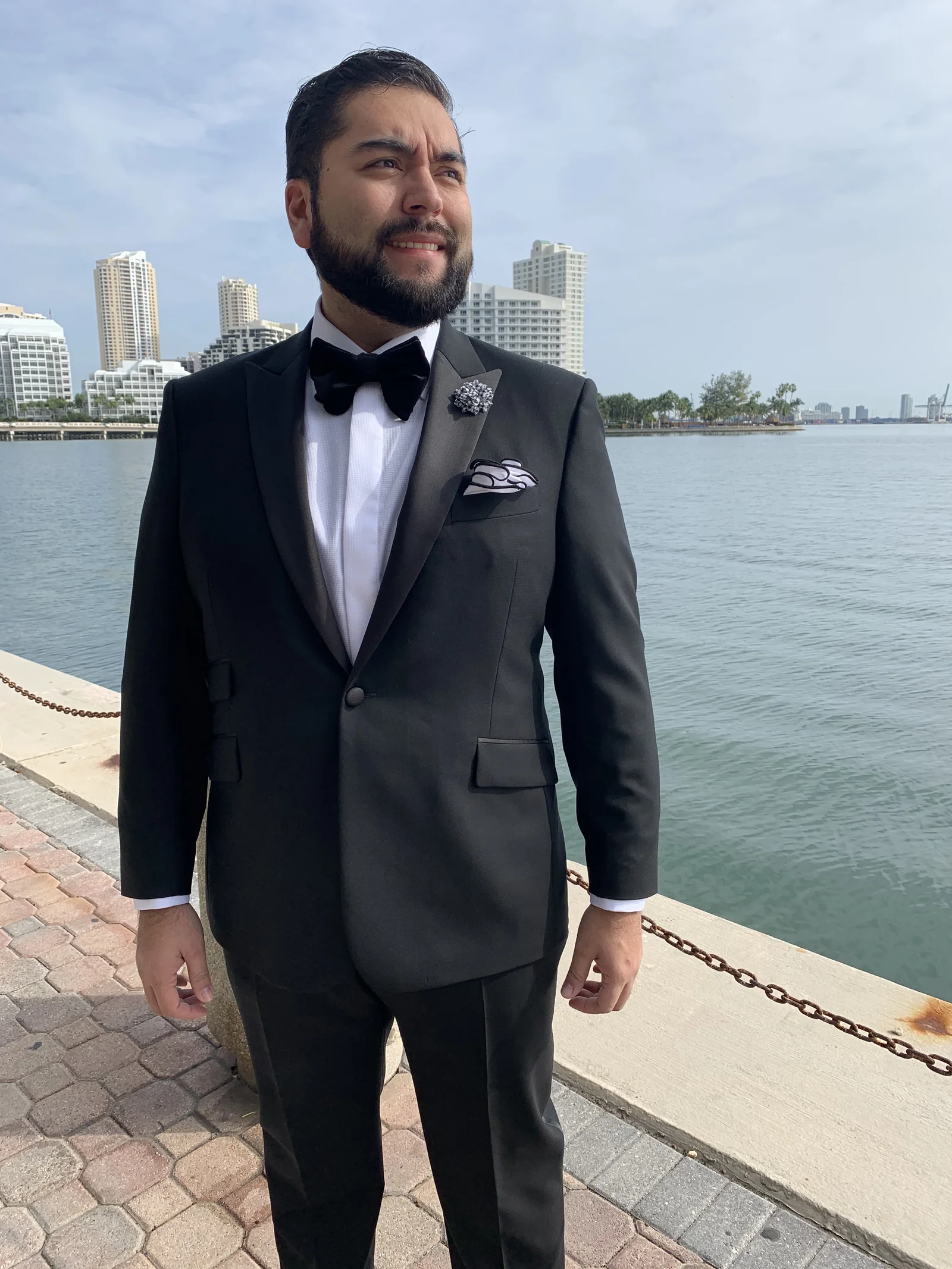
Barathea deserves special attention because it is the most traditional tuxedo fabric in existence. It is a woven fabric with a distinctive pebbled or ribbed texture, made from worsted wool (and sometimes wool-silk blends). The texture gives it a matte finish with a very subtle depth that looks extraordinary under low evening light.
True Barathea is woven on specialized looms, and the best mills are in England and Italy. For a classic black or midnight blue tuxedo, Barathea is the gold standard. It pairs naturally with satin or grosgrain lapel facings, and it has a weight and drape that make a jacket hang beautifully on any body type.
Tropical Wool
Tropical wool is a plain-weave fabric that is lighter and more breathable than Barathea. It was originally developed for warm-climate wear, and it is an excellent choice for outdoor weddings, summer galas, and any formal event in South Florida or similar climates. Tropical wool typically weighs between 200 and 240 grams per meter, making it one of the lightest formal wools available.
The lighter weight does mean tropical wool wrinkles more easily than Barathea, so it is best for events where you will not be sitting for extended periods. It also has a slightly more open weave, which means it is less opaque. Your tailor will need to use a higher-quality lining to prevent show-through.
Silk: The Pinnacle of Black Tie Luxury
Silk has been associated with formalwear for centuries, and it remains the most luxurious fabric you can choose for a tuxedo. Silk tuxedos are not for every occasion, but for the right event, nothing else comes close.
Silk Faille
Silk faille is a ribbed weave with a subtle horizontal texture. It has a moderate sheen, more than wool but less than satin, and a firm body that holds its shape exceptionally well. Silk faille is the traditional fabric for formal trousers, where the ribbed texture adds a touch of refinement without being flashy.
A full silk faille tuxedo is a statement piece. The fabric has a distinctive rustle when you move, and the surface catches light in a way that reads as unmistakably formal. It is best for indoor evening events in cooler weather, as silk does not breathe as well as wool.
Silk Dupioni
Silk dupioni has a more pronounced, irregular texture than faille. It is woven from doubled silk threads, which gives it a crisp hand and a slubby surface that catches light beautifully. Dupioni is less formal than faille but more interesting visually, making it a great choice for someone who wants a tuxedo that stands out without being ostentatious.
Dupioni works particularly well in colors other than black. A deep burgundy or forest green silk dupioni tuxedo is a stunning choice for a winter gala or a holiday party. The texture adds richness, and the natural sheen of silk gives the color depth and complexity.
Shantung Silk
Shantung silk is similar to dupioni but lighter and with a finer texture. It originates from the Shandong province in China and is known for its irregular, nubby surface. Shantung has a raw, organic quality that looks less polished than other silks, which some clients love for its character and individuality.
For a tuxedo, shantung silk is best used for dinner jackets rather than full suits. An ivory or champagne shantung dinner jacket paired with black wool trousers is a classic warm-weather formal look that has been popular since the 1930s.
Velvet: Plush Luxury for Winter Events
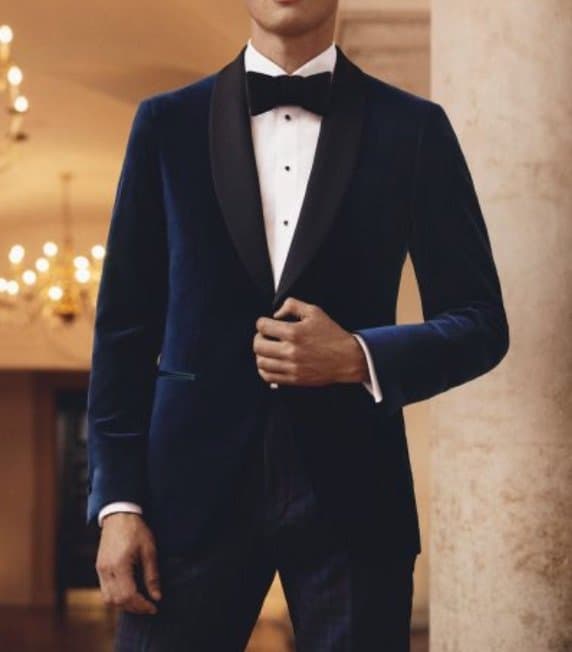
Velvet is the most distinctive tuxedo fabric, and it is having a major moment in formal fashion. A velvet tuxedo jacket is bold, tactile, and unforgettable. It is also one of the most seasonal fabrics, best reserved for cool-weather events from late October through February.
Velvet is woven with a dense pile that gives it a soft, fuzzy surface. The pile can be made from silk, cotton, or synthetic fibers, and the quality of the pile determines the fabric's depth and sheen. Silk velvet is the finest, with a lustrous surface that shifts color as you move. Cotton velvet is more matte and durable.
For tuxedos, the most popular velvet colors are deep, rich tones that take advantage of the fabric's light-absorbing properties. Deep burgundy is a classic, as are forest green, navy, and black. A black velvet tuxedo has a depth that plain black wool cannot match, and it looks extraordinary under low lighting.
The key consideration with velvet is weight. Velvet is heavy, often 350 grams per meter or more, which makes it warm and sometimes restrictive. It is not the right choice for a long event in a warm room. But for an outdoor holiday party, a winter charity gala, or a New Year's Eve celebration, nothing is more memorable.
Bespoke By CB has seen a surge in velvet tuxedo requests for holiday-season events. Our recommendation is to treat velvet as a second tuxedo, not your first. Build a versatile wool tuxedo first, then add a velvet jacket for special occasions.
Mohair Blends: Sheen, Durability, and Formal Character
Mohair is wool from the Angora goat, and it is one of the most underrated tuxedo fabrics. Mohair has a natural sheen that sits between the matte finish of wool and the glossy finish of silk. It is exceptionally durable, resists wrinkling better than any other formal fabric, and has a crisp, cool hand that feels wonderful in warm weather.
Mohair is usually blended with wool for tuxedos, typically in a 70/30 or 60/40 wool-to-mohair ratio. The blend gives you the drape and breathability of wool with the sheen and resilience of mohair. A wool-mohair blend tuxedo has a subtle luster that looks fantastic in photographs and a crispness that holds a crease all night long.
For clients who want a tuxedo that looks formal without being flashy, mohair blends are an excellent choice. The sheen is understated, but it is clearly more refined than plain wool. Bespoke By CB often recommends mohair blends for clients who attend formal events frequently, as the fabric's durability means it will look great for years.
Mohair blends are also outstanding for warm climates. The fibers naturally wick moisture and allow air to circulate, which makes them a top choice for Miami and South Florida formal events. If you want one tuxedo that works in every season and looks sharper than standard wool, a wool-mohair blend in midnight blue or black is an inspired choice.
Linen and Linen-Silk Blends for Summer Formal Events
Linen is not a traditional tuxedo fabric, but for outdoor summer weddings and warm-climate black tie events, it has become increasingly popular. Pure linen is too casual and wrinkles too easily for formalwear, but linen-silk blends solve both problems.
A linen-silk blend typically contains 30 to 50 percent silk, which adds sheen, drape, and wrinkle resistance to the linen base. The result is a fabric that looks relaxed but refined, with a textured surface that reads as intentional rather than rumpled.
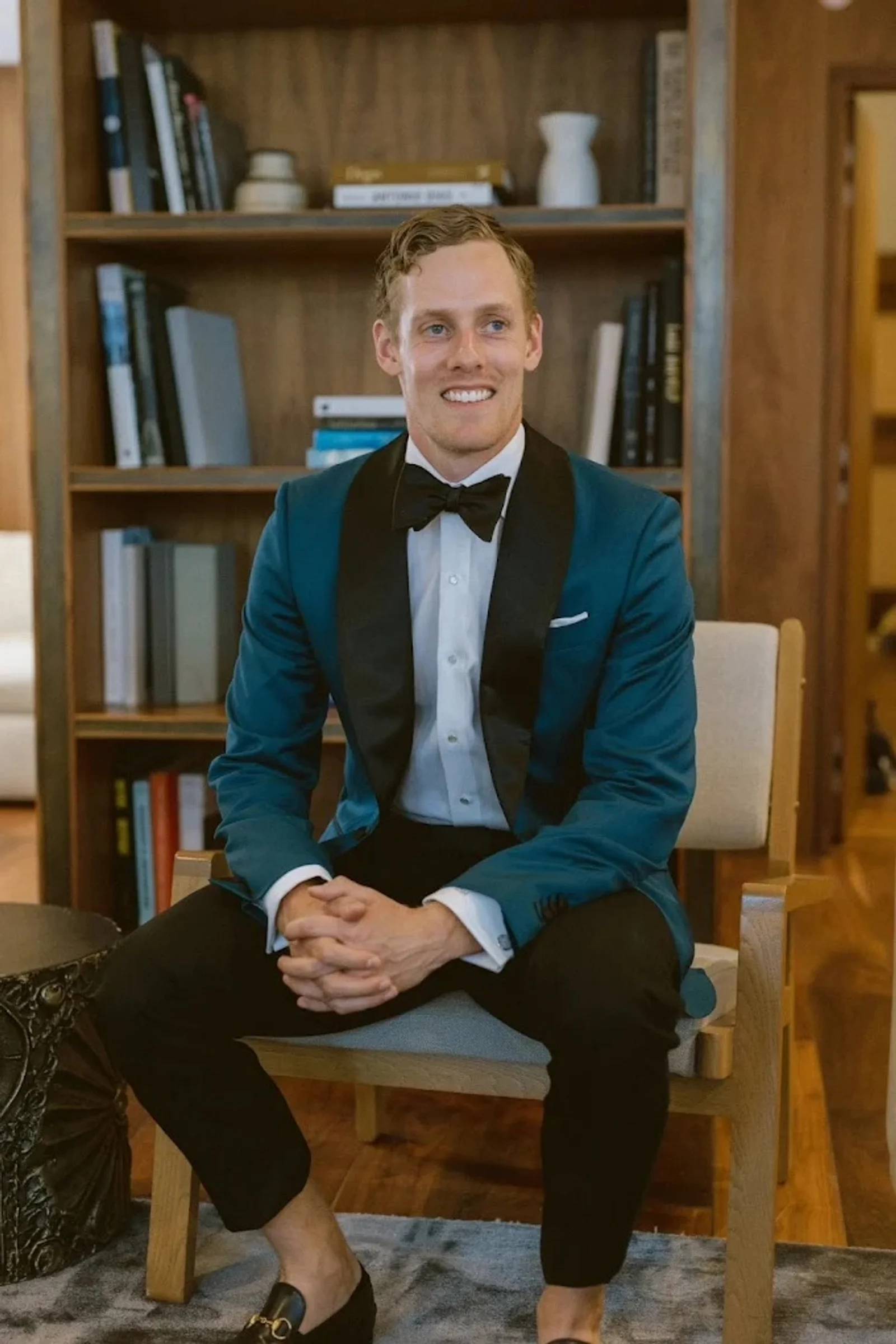
For a summer tuxedo, consider an ivory or cream linen-silk dinner jacket paired with black or navy wool trousers. This is a classic look that works beautifully for beachfront weddings, garden parties, and any formal event where the temperature might exceed 80 degrees. The linen keeps you cool, and the silk ensures you still look dressed up.
Bespoke By CB has dressed many clients for South Florida outdoor weddings, and linen-silk blends are one of our most requested summer formal fabrics. The key is to embrace the wrinkles as part of the fabric's character. Linen will crease, and that is part of its charm. If you want a perfectly smooth surface all night, choose tropical wool instead.
Fabric Weights and When to Wear Each
Tuxedo fabric weight is measured in grams per meter (g/m), and it determines how warm the garment is and how it hangs on your body. Here is a quick reference for choosing the right weight:
- Lightweight (180 to 230 g/m): Best for summer events, outdoor weddings, and warm climates. Tropical wool, fine Super 150s, and linen-silk blends fall in this range. The lighter fabric breathes well but may wrinkle more easily.
- Medium weight (240 to 290 g/m): The most versatile option. Super 120s and 130s wool, Barathea, and wool-mohair blends typically fall in this range. These fabrics work year-round for indoor events and are the best choice for a first tuxedo.
- Heavyweight (300 g/m and above): Best for winter events and cold climates. Velvet, heavy Barathea, and some silk failles fall in this range. These fabrics drape beautifully and feel substantial, but they will be too warm for summer or heated indoor events.
Color Recommendations by Fabric
The fabric you choose should inform the color of your tuxedo. Some fabrics look better in certain colors because of how they interact with light and how the dye takes to the fibers.
Midnight Blue Wool
Midnight blue is the most underrated tuxedo color. In evening light, it often looks darker and richer than black, which can wash out under artificial lighting. A midnight blue Barathea or Super 130s wool tuxedo with satin facings is a timeless, sophisticated choice that stands apart from the sea of black tuxedos at any formal event.
Black Silk
Black silk has a depth and sheen that plain black wool cannot match. A black silk faille or dupioni tuxedo is formal, dramatic, and elegant. The sheen of the silk gives the black color a richness that photographs beautifully. This is a bold choice that works best for evening indoor events.
Deep Burgundy Velvet
Burgundy is the most popular velvet color for tuxedos, and for good reason. The deep red tone has a warmth and richness that complements the plush texture of velvet. A burgundy velvet dinner jacket over black wool trousers is a show-stopping look for a holiday gala or winter wedding.
Ivory Dinner Jacket
An ivory dinner jacket is a warm-weather classic. Traditionally made from silk, linen-silk blends, or cream tropical wool, an ivory jacket paired with black trousers is the standard for daytime formal events and summer evening occasions. It is fresh, elegant, and distinctive without being trendy.
Black Wool with Satin Facings
The most versatile tuxedo you can own is a black wool tuxedo with satin lapel facings. It works for virtually any formal event, in any season, and it will never go out of style. If you are buying your first custom tuxedo, this is the combination we recommend above all others.
Satin vs Grosgrain Lapel Facings
The fabric on your lapel facing is a small detail that has a big impact on the overall look of your tuxedo. There are two traditional options: satin and grosgrain.
Satin is a smooth, glossy weave that gives the lapel a high-shine finish. It is the more formal of the two options and the most popular choice for black tie. Satin facings look particularly good on wool tuxedos, where the contrast between the matte wool body and the shiny lapel is striking. Satin is also used on the trouser stripe, creating a cohesive formal look.
Grosgrain is a ribbed weave with a duller, more textured finish. It has a subtle sheen that is less flashy than satin but still clearly formal. Grosgrain is the more traditional choice for British-style black tie and is often paired with Barathea wool. Some tailors and clients prefer grosgrain because it is more understated and because the ribbed texture adds a layer of visual interest.
There is no wrong choice. Satin is bolder and more contemporary. Grosgrain is quieter and more traditional. At Bespoke By CB, we show clients both options during their consultation so they can see and feel the difference in person.
The Difference Between Suit Fabric and Tuxedo Fabric
Many clients ask us whether they can use a suit fabric for a tuxedo. The answer is technically yes, but the results are usually disappointing. Here is why.
Suit fabrics are designed for daytime, business, and social wear. They prioritize durability, comfort, and a matte finish that looks appropriate in office lighting. Tuxedo fabrics are designed for evening formal wear. They prioritize sheen, drape, and a refined appearance under low light.
When you use a standard suit fabric for a tuxedo, the jacket often looks flat and dull under formal lighting. The lack of sheen makes it read as a dark suit rather than formalwear. The fabric may also lack the body and drape needed for the closer, more structured cut of a tuxedo jacket.
That said, some suit fabrics can work for tuxedos if chosen carefully. A high-quality Super 130s or 150s wool with a subtle natural luster can serve double duty, especially if you add satin or grosgrain facings to elevate the formality. For a deeper dive into this topic, see our luxury fabric comparison guide.
Climate Considerations for Miami and South Florida
If you live in or attend events in South Florida, climate should be a primary factor in your fabric choice. Miami formal events happen year-round, and the heat and humidity from April through October can make a heavy tuxedo miserable.
For warm-climate formal events, the best fabrics are:
- Tropical wool (200 to 230 g/m): The most breathable wool option. Holds a crease reasonably well and looks sharp in any setting.
- Wool-mohair blends: The mohair content adds sheen and moisture-wicking properties. Excellent for humid environments.
- Linen-silk blends: Best for outdoor events. The linen keeps you cool, and the silk adds enough formality for black tie.
- Lightweight Super 150s wool: The finest fibers create a fabric that feels almost weightless. Best for short events where wrinkling is less of a concern.
Avoid velvet, heavy silk, and dense Barathea for Miami summer events. Save those for December through March, when South Florida evenings can be surprisingly cool and the heavier fabrics feel comfortable and appropriate.
Bespoke By CB specializes in dressing Miami clients for formal events, and our fabric recommendations are always informed by the local climate. We know which fabrics will keep you comfortable at a beachfront gala in July and which ones are better saved for a January charity dinner.
How to Choose Fabric Based on Event Type
Different events call for different fabrics. Here is a quick guide:
Weddings
For evening weddings, a Super 130s wool tuxedo in black or midnight blue is the safest and most elegant choice. For daytime or outdoor summer weddings, consider an ivory dinner jacket in tropical wool or linen-silk, paired with black wool trousers. For winter weddings, a velvet dinner jacket in burgundy or forest green is memorable and appropriate.
Galas and Charity Dinners
Galas are the perfect occasion for a statement tuxedo. This is where silk, mohair blends, and velvet shine. A black silk faille tuxedo or a midnight blue wool-mohair blend makes a strong impression without crossing into flashy territory. For holiday galas specifically, velvet is the expected and appreciated choice.
Opera and Theater
Traditional black tie is the standard for opera and theater openings. A black Barathea wool tuxedo with grosgrain facings is the most appropriate choice. Keep it classic and understated. The focus should be on the performance, not your outfit.
Corporate Events and Award Ceremonies
For business-adjacent formal events, choose a fabric that is formal but not ostentatious. A Super 130s or 150s wool tuxedo in black with satin facings strikes the right balance. You want to look polished and successful, not like you are attending a costume party.
Budget vs Luxury Fabric Tiers
Tuxedo fabrics span a wide price range, and understanding what you get at each tier helps you make a smart investment.
Entry Level ($200 to $400 per meter)
Super 120s wool from reputable mills like Vitale Barberis Canonico and Drago falls in this range. These are excellent fabrics that will produce a beautiful, durable tuxedo. You are not compromising on quality, only on the rarity of the fibers.
Mid-Range ($400 to $700 per meter)
Super 130s and 140s wool, wool-mohair blends, and some silk blends from mills like Loro Piana, Scabal, and Holland & Sherry. The upgrade in hand feel and drape is noticeable, and these fabrics often have more interesting weaves and finishes.
Luxury ($700 to $1,200 per meter)
Super 150s and above, pure silk faille, high-end silk dupioni, and premium wool-silk blends. These fabrics are extraordinarily refined and produce a tuxedo that feels and looks like a true luxury garment. The fibers are rare, the weaving is specialized, and the result is unmistakable.
Bespoke Luxury ($1,200 and above per meter)
Silk velvet, the finest Super 200s wool, and custom-woven fabrics from the world's most exclusive mills. At this level, you are paying for rarity and craftsmanship. A tuxedo made from these fabrics is a once-in-a-lifetime garment.
How Bespoke By CB Helps You Choose the Perfect Tuxedo Fabric
Choosing a tuxedo fabric from a description on a page is difficult. You need to feel the fabric, see it under different lighting conditions, and understand how it will work with your body type and your planned events. That is where Bespoke By CB comes in.
When you book a consultation with us, you get access to swatch books from the world's finest mills. We lay out fabric options organized by weight, season, and formality level, and we walk you through the characteristics of each one. You can hold the fabric up to the light, feel the texture, and compare two or three options side by side.
Our team brings deep expertise in South Florida formalwear. We know which fabrics perform well in Miami humidity, which ones photograph best under the lighting at the Adrienne Arsht Center, and which ones are appropriate for a Ball at the Biltmore. We take the guesswork out of the process.
Bespoke By CB also offers guidance on color, lapel facings, and construction details. A tuxedo is a complex garment with dozens of decisions, and our job is to make those decisions easy and enjoyable. Whether this is your first custom tuxedo or your fifth, we ensure the fabric you choose is the right one for your needs.
In addition to fabric selection, we help you coordinate your tuxedo with the rest of your formal wardrobe. If you already own men's custom suits, we can ensure your tuxedo complements them in color and style. Your formal wardrobe should work as a cohesive collection, not a set of disconnected pieces.
Care and Maintenance for Different Tuxedo Fabrics
The fabric of your tuxedo also determines how you should care for it. Proper maintenance extends the life of the garment and keeps it looking fresh for every event.
Wool Tuxedos
Wool is the most forgiving fabric. After each wear, hang your tuxedo on a wide wooden hanger in a breathable garment bag. Let it rest for at least 48 hours before wearing it again so the fibers can recover their shape. Spot clean minor stains with a damp cloth, and have the tuxedo professionally dry cleaned no more than once or twice a year. Over-cleaning damages wool fibers and shortens the garment's life.
Silk Tuxedos
Silk is more delicate than wool and requires careful handling. Never spot clean silk with water, which can leave water rings. Take silk tuxedos to a dry cleaner who specializes in formalwear, and clean them only when necessary. Store silk garments in a cool, dry place away from direct sunlight, which can fade the color over time.
Velvet Tuxedos
Velvet requires the most specialized care. Never iron velvet, as the heat will crush the pile. Use a steamer to remove wrinkles, and always steam in the direction of the pile. Store velvet jackets hanging, never folded, and keep them in a breathable bag. If the pile becomes crushed, a professional can restore it using specialized equipment.
Mohair Blend Tuxedos
Mohair blends are durable but can be prone to shine if pressed too aggressively. Have your dry cleaner use a pressing cloth, and never press directly on the fabric surface. Mohair is otherwise as easy to care for as wool.
Linen-Silk Blend Tuxedos
Linen-silk blends should be dry cleaned only. The silk content means water spotting is a risk, and the linen content means the fabric will wrinkle no matter what. Embrace the wrinkles as part of the look, and have the garment pressed before each event to start the evening looking sharp.
Frequently Asked Questions
What is the best fabric for a first custom tuxedo?
The best fabric for a first custom tuxedo is Super 120s or Super 130s wool in black or midnight blue, with a medium weight around 250 to 280 grams per meter. This combination is versatile, durable, appropriate for nearly any formal event, and priced at a reasonable entry point. You can wear it year-round, and it will last for years with proper care.
Can I wear a velvet tuxedo to a summer event?
We do not recommend velvet for summer events. Velvet is heavy and warm, and in temperatures above 75 degrees, it will be uncomfortable. Save velvet for events from late October through February. If you want a statement fabric for summer, consider a silk dupioni dinner jacket or an ivory tropical wool jacket instead.
What is the difference between satin and grosgrain lapel facings?
Satin is a smooth, high-shine weave that gives lapels a glossy finish. Grosgrain is a ribbed weave with a duller, more textured surface. Satin is bolder and more contemporary, while grosgrain is more traditional and understated. Both are equally formal, and the choice comes down to personal preference.
Is midnight blue or black more appropriate for black tie?
Both are equally appropriate. Midnight blue is actually the more traditional choice for black tie, as it was popularized by the Duke of Windsor in the 1930s. In evening light, midnight blue often looks darker and richer than black, which can appear flat under artificial lighting. Black is more common and more versatile, but midnight blue is more distinctive without breaking any rules.
How much does fabric affect the cost of a custom tuxedo?
Fabric typically accounts for 30 to 50 percent of the total cost of a custom tuxedo. Entry-level fabrics from quality mills start around $200 per meter, while luxury fabrics can exceed $1,200 per meter. A tuxedo requires about 3.5 to 4 meters of fabric, so the difference between an entry-level and luxury fabric can add $2,000 or more to the final price. The upgrade is worth it if you attend formal events regularly and want a garment that feels extraordinary.
How do I choose a tuxedo fabric for an outdoor Miami wedding?
For an outdoor Miami wedding, prioritize lightweight, breathable fabrics. Tropical wool (200 to 230 g/m) is the best all-around choice because it holds its shape and looks sharp in photos. Wool-mohair blends are also excellent because the mohair wicks moisture and adds sheen. For a more relaxed look, a linen-silk blend dinner jacket in ivory or cream paired with black or navy wool trousers is a classic warm-weather formal combination. Avoid velvet, heavy silk, and dense Barathea, which will be too warm. Bespoke By CB has extensive experience dressing clients for South Florida outdoor weddings, and we can recommend the perfect fabric for your specific venue and time of year.
Final Thoughts
Choosing the best fabric for your custom tuxedo is a decision that affects how you look, how you feel, and how long your garment lasts. The right fabric makes you look like you belong at the most elegant event of the year. The wrong fabric makes you look like you rented your outfit.
Take the time to understand your options. Feel the fabrics. Consider your climate, your event calendar, and your personal style. And when you are ready, work with a tailor who can guide you through the process with expertise and honesty. Bespoke By CB has built its reputation on helping clients make these decisions with confidence, and we would be honored to help you build a tuxedo that will serve you for years to come.
Author: Bespoke By CB