
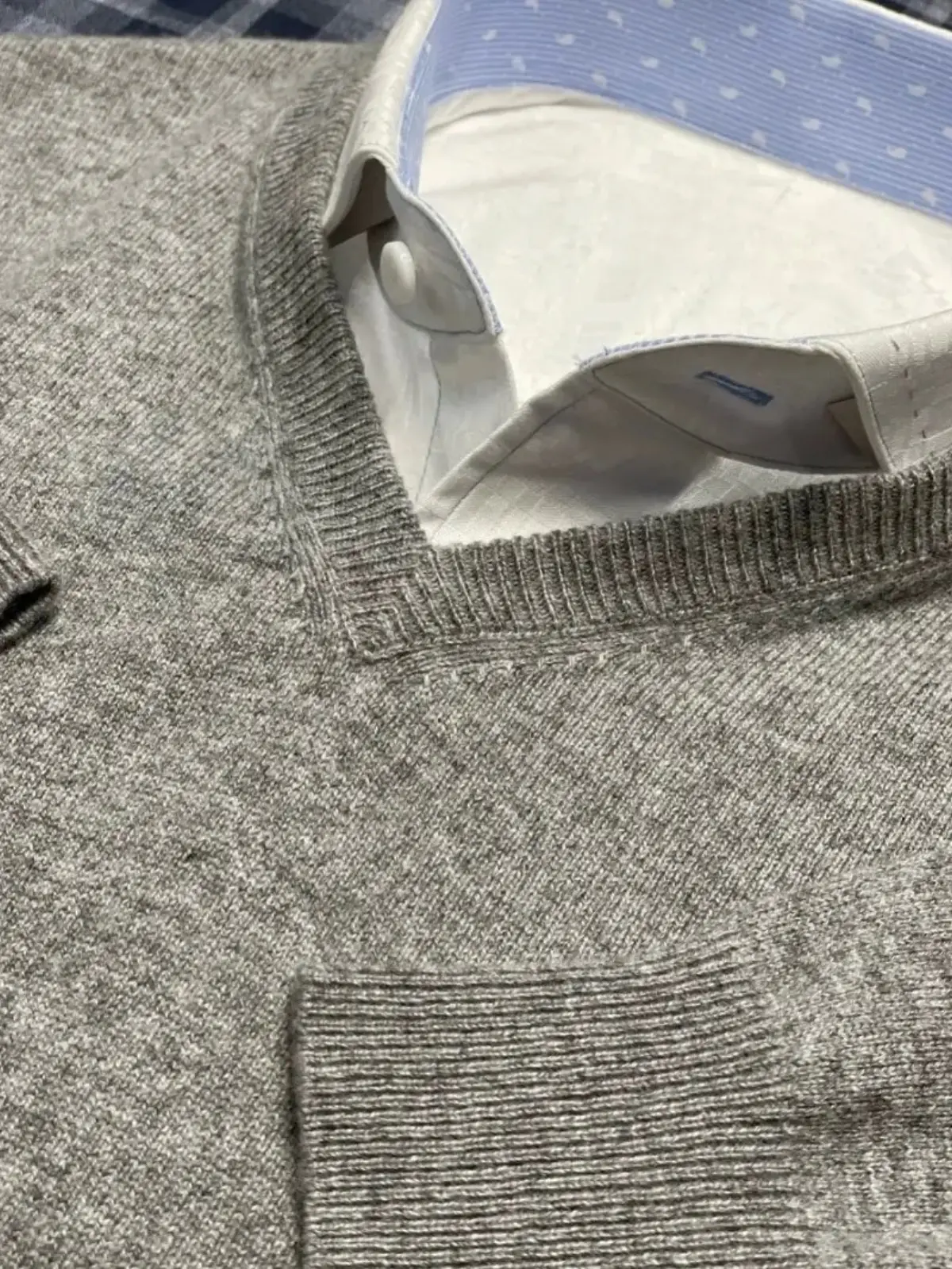
When clients come to Bespoke By CB for custom suits, the conversation usually starts with the jacket and trousers. Fabric, lapel style, fit, buttons. But the question I get almost as often is what to wear under or over that suit. The knitwear layer is where a lot of guys go wrong, and it is usually because they do not understand the difference between cashmere and merino.
Both are luxury fibers. Both look refined. Both feel better than anything you will find in a department store. But they serve very different purposes in a tailored wardrobe, and choosing the wrong one can mean sweating through a boardroom meeting or looking underdressed at a holiday party. This guide breaks down what makes each fiber unique, when to wear it, and how to build a knitwear collection that complements your custom suits.
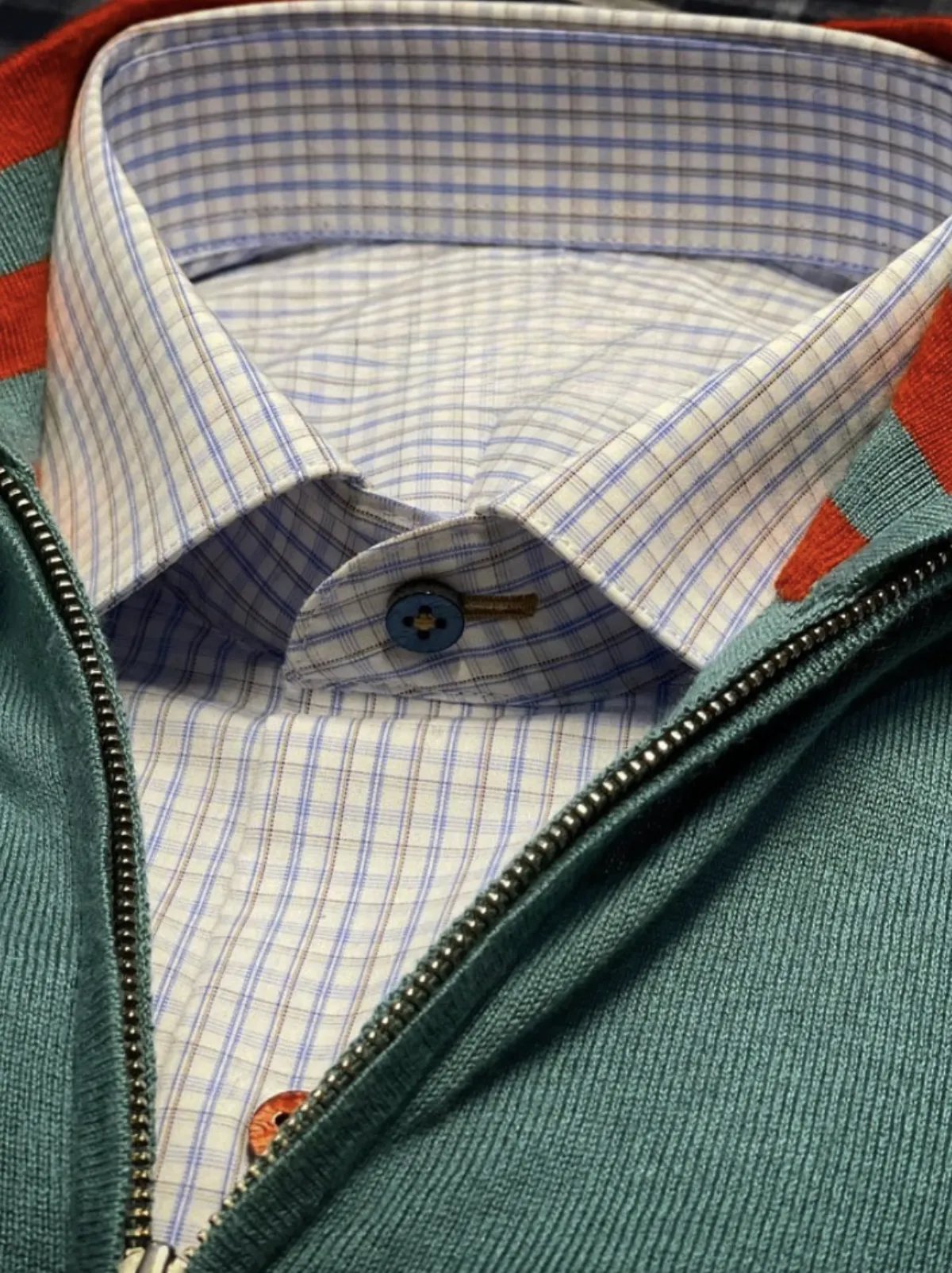
What Makes Cashmere Special
Cashmere comes from the undercoat of cashmere goats, primarily in Mongolia and Inner Mongolia. The goats survive brutally cold winters at high altitude, and their undercoat is nature's answer to that environment. Each goat produces only about 150 grams of usable fiber per year. To put that in perspective, it takes the annual yield of roughly four goats to make a single sweater.
That scarcity is why cashmere costs what it costs. A quality cashmere sweater starts around $200 and climbs quickly from there. But the price reflects something real. Cashmere fibers are incredibly fine, typically between 14 and 16 microns in diameter, which is significantly finer than even the best sheep's wool. That fineness is what gives cashmere its signature softness. It does not itch. It does not scratch. It drapes against the skin like silk.
Cashmere is also remarkably warm for its weight. A thin cashmere sweater can be as warm as a much heavier wool garment. This is because the fine fibers trap more air pockets per square inch, creating insulation without bulk. For travel, this is invaluable. A cashmere sweater packs small and keeps you warm in a cold airplane cabin or a drafty hotel conference room.
The Drawbacks of Cashmere
Cashmere is delicate. Those fine fibers that make it so soft also make it prone to pilling, especially in high-friction areas like the underarms and sides of the torso. Pilling is not a defect. It is the nature of the fiber. But it means cashmere requires more careful handling than merino.
Cashmere is also less breathable than merino. In a warm room, a cashmere sweater will hold heat against your body. In Miami, that matters. Even in fall and winter, outdoor temperatures can hit 80 degrees. A cashmere sweater that feels perfect in a 68-degree restaurant will feel oppressive the moment you step outside.
Durability is another consideration. A well-made cashmere sweater, properly cared for, can last years. But it will not last as long as a merino sweater of comparable quality. The fibers simply are not as tough. If you are building a knitwear rotation that you wear weekly, cashmere should be your special-occasion layer, not your workhorse.
What Makes Merino Practical
Merino wool comes from merino sheep, a breed that originated in Spain and is now raised primarily in Australia and New Zealand. Merino fibers are fine, typically between 17 and 24 microns, which puts them in the same league as high-grade cashmere in terms of softness. But merino has properties that cashmere does not, and those properties make it the more practical choice for everyday wear with a custom suit.
The first is breathability. Merino fibers have a natural crimp, a waviness that creates tiny air channels throughout the fabric. These channels allow moisture vapor to escape, which means merino regulates temperature far better than cashmere. In a warm room, merino breathes. In a cool room, it insulates. This adaptive quality is why merino base layers are the standard for outdoor athletes and why merino sweaters work so well as a layering piece under a suit jacket.
The second is durability. Merino fibers can bend back on themselves thousands of times without breaking. Cashmere fibers, by contrast, are more brittle and will break down under repeated friction. A merino sweater can handle regular wear, gentle machine washing in a cold cycle, and the daily friction of a jacket lining without pilling significantly. A cashmere sweater in the same rotation will show wear much faster.
The third is versatility. Merino comes in a wide range of weights and weaves. A lightweight merino sweater at 12-gauge knit can be as thin as a t-shirt, making it ideal for wearing under a fitted suit without adding bulk. A heavier 7-gauge merino knit can be as warm as a cable-knit fisherman's sweater. This range means you can find a merino piece for almost any situation.
The Drawbacks of Merino
Merino is not as soft as cashmere. It is close, especially in the finer grades, but there is a perceptible difference. If you have sensitive skin, you may notice a slight texture with merino that cashmere eliminates entirely. For most men, this is a non-issue. But if you are wearing a sweater next to bare skin for hours, cashmere wins on comfort alone.
Merino also lacks the prestige factor. Cashmere carries a certain signal. When someone touches your sweater and feels that impossible softness, they know it is cashmere. Merino feels great but does not have the same luxury cachet. In a social setting where subtle signals matter, that counts for something.
When to Wear Each With a Suit
The practical question is when to reach for cashmere and when to reach for merino. Here is how I advise clients at Bespoke By CB.
Wear Cashmere When
You are attending an evening event, a holiday party, or a dinner where the ambient temperature will be controlled. Cashmere shines in air-conditioned restaurants, hotel ballrooms, and private clubs. The warmth-to-weight ratio means you stay comfortable without a bulky layer under your jacket.
Cashmere is also the right call for travel to cooler climates. If you are flying from Miami to New York in December, a cashmere sweater under your custom suit gives you warmth without the weight of an overcoat on the plane. It looks refined when you remove your jacket, and it packs into a carry-on without losing its shape.
Choose cashmere for occasions where you want to signal quiet luxury. A charcoal cashmere crewneck under a navy blazer at a gallery opening says you understand quality without saying anything at all.
Wear Merino When
You are dressing for a workday, a business meeting, or any situation where you will be in and out of air conditioning all day. Merino's temperature regulation handles the transition from a cold office to a warm parking lot to a moderately warm restaurant without breaking down.
Merino is also the right choice for layering under a suit in Miami's climate. Even in late September, our outdoor temperatures hover in the high 80s. A lightweight merino sweater under a suit jacket gives you the polished look of knitwear without the heat retention of cashmere. When you step outside for lunch, you will not immediately regret your clothing choice.
Choose merino for any day when you need your knitwear to work as hard as your suit. It will survive the day, look sharp at 5 PM the same way it did at 9 AM, and go back in your closet ready for another wear next week.
Knitwear in Miami's Air-Conditioned Environments
Here is something I tell every client who doubts that knitwear has a place in Miami: you do not dress for the weather outside. You dress for the climate you will actually be in. And in Miami, that climate is air-conditioned.
Most office buildings in Brickell and downtown Miami keep their thermostats between 68 and 72 degrees year-round. Restaurants are often colder. Hotel conference rooms can feel like meat lockers. If you work in one of these environments, you are effectively living in a temperate climate for eight or more hours a day, regardless of what the sun is doing outside.
This is where knitwear becomes essential. A lightweight merino sweater under your suit jacket gives you a removable layer for when you step outside and a warm core for when you are in a 68-degree office. A cashmere sweater in your bag gives you an evening option for dinners and events where the AC is aggressive and the dress code is smart.
The mistake is thinking Miami's heat makes knitwear irrelevant. It does not. It just means you need to be strategic about weight, fiber, and when you put it on.
Cardigan vs. Crewneck vs. V-Neck
The style of your knitwear matters as much as the fiber. Each silhouette serves a different purpose in a tailored wardrobe.
The Crewneck
The crewneck is the most versatile knitwear shape. A fine-gauge crewneck in merino or cashmere sits cleanly under a suit jacket without competing with your shirt collar. It creates a smooth, rounded neckline that works with or without a tie. For a polished business look, a navy or charcoal crewneck under a gray suit is understated and sharp.
The crewneck is also the best choice for wearing a sweater on its own. Remove your jacket and a crewneck still looks complete. It is the most balanced silhouette for men with average to broad shoulders.
The V-Neck
The v-neck exists to show your shirt and tie. If you are wearing a dress shirt and tie under your suit and want a sweater layer, the v-neck is the correct choice. The v-shaped opening frames the tie and collar without covering them. A v-neck over a bare shirt with no tie can look a bit unfinished, so reserve this style for occasions where a tie is part of the equation.
The depth of the v matters. A shallow v, ending about two inches below the collarbone, is the most versatile. A deep v that exposes half your chest reads as casual and can look awkward under a suit. If you are buying one v-neck sweater, choose a shallow cut in navy or dark gray.
The Cardigan
The cardigan is the most expressive knitwear piece. It functions as a soft jacket, which means it works both as a layering piece under a topcoat and as an outer layer on its own. A fine-gauge cardigan in merino can replace a sport coat in a business-casual setting. A chunkier cashmere cardigan can be the star of a weekend outfit.
For suit wear, a fine-gauge button-through cardigan in a dark color works as a layering piece under a jacket on cold days. But this is an advanced move. Most men are better served by a crewneck or v-neck for under-suit layering. Reserve the cardigan for situations where the sweater is the outermost layer.
How to Care for Luxury Knitwear
Both cashmere and merino deserve better than a washing machine and a wire hanger. Here is the care routine I recommend to clients.
Washing
Hand wash in cold water with a gentle wool wash, or use the wool cycle on your machine if it has one, with cold water and no spin. Never use regular detergent. The enzymes in standard detergents break down protein fibers like wool and cashmere. A dedicated wool wash like Eucalan or Soak is formulated to clean without damaging the fiber.
After washing, do not wring the sweater. Press it gently between two towels to remove excess water, then lay it flat on a dry towel in its natural shape. Flip it once after a few hours. Drying flat prevents the sweater from stretching under its own weight.
Storage
Never hang knitwear. Gravity will pull the fibers down and stretch the sweater into a shape it will never recover from. Fold sweaters and store them in a drawer or on a shelf. If you are storing them for the season, place them in a breathable cotton storage bag with a cedar block to deter moths.
Rotate your knitwear. Do not wear the same sweater two days in a row. Give the fibers 24 to 48 hours to recover their natural shape before wearing the piece again. This single habit will extend the life of your sweaters more than anything else you can do.
Pilling
Pilling is normal, especially with cashmere. When pills appear, do not pull them off by hand. That pulls more fiber out of the sweater and creates new pills. Use a fabric comb or a dedicated electric pill remover to gently shave the pills off the surface. Do this every few wears to keep the sweater looking fresh.
Building Your Knitwear Rotation
If you are starting from zero, here is the order I recommend for building a knitwear collection that works with your custom suits.
Start with two merino crewnecks, one in navy and one in charcoal. These are your everyday layers. They will get the most wear, handle the most abuse, and look sharp under any suit you own. Add a third merino in a seasonal color like burgundy or forest green for fall and winter.
Next, add one cashmere crewneck in a color that complements your most-worn suit. If you wear a lot of navy, choose a medium gray or camel cashmere. If you wear a lot of charcoal, choose a navy or bottle green cashmere. This is your special-occasion sweater.
Finally, add a fine-gauge merino v-neck for days when you wear a shirt and tie. This rounds out your collection and gives you a knitwear option for every situation you will encounter in a tailored wardrobe.
When you are ready to build the suit side of the equation, book a consultation and we will walk you through fabric, fit, and styling options that pair perfectly with the knitwear you already own.


