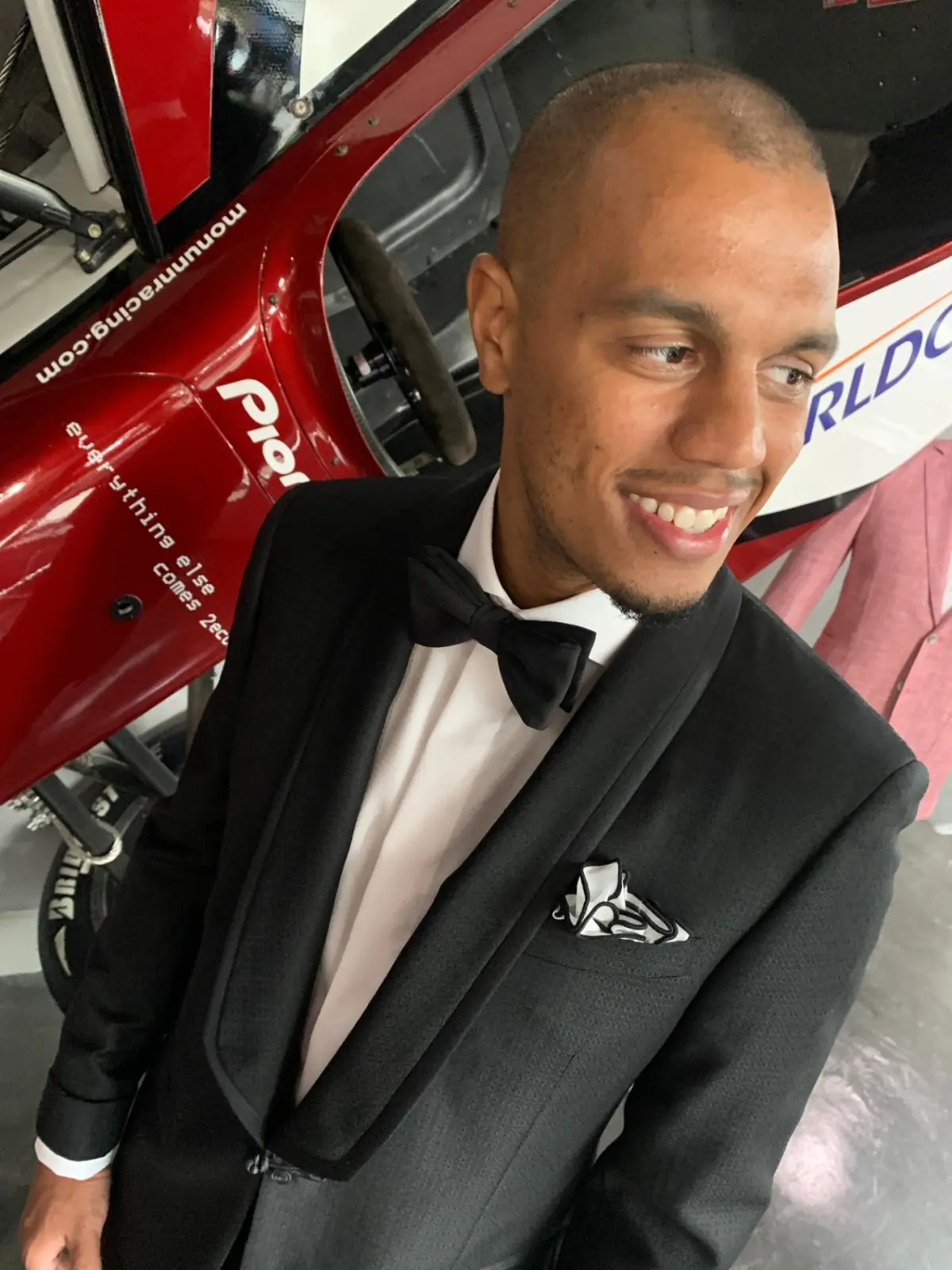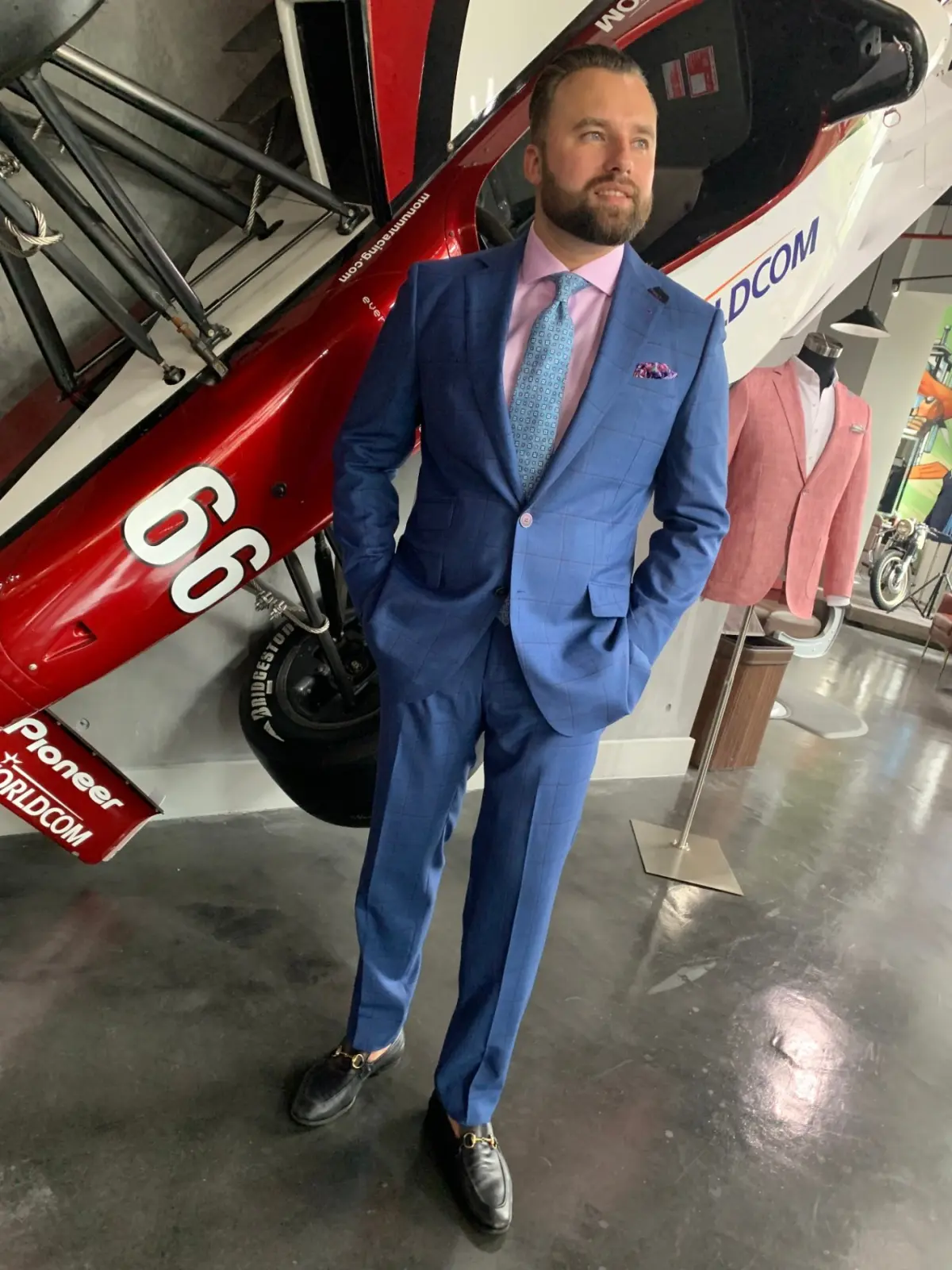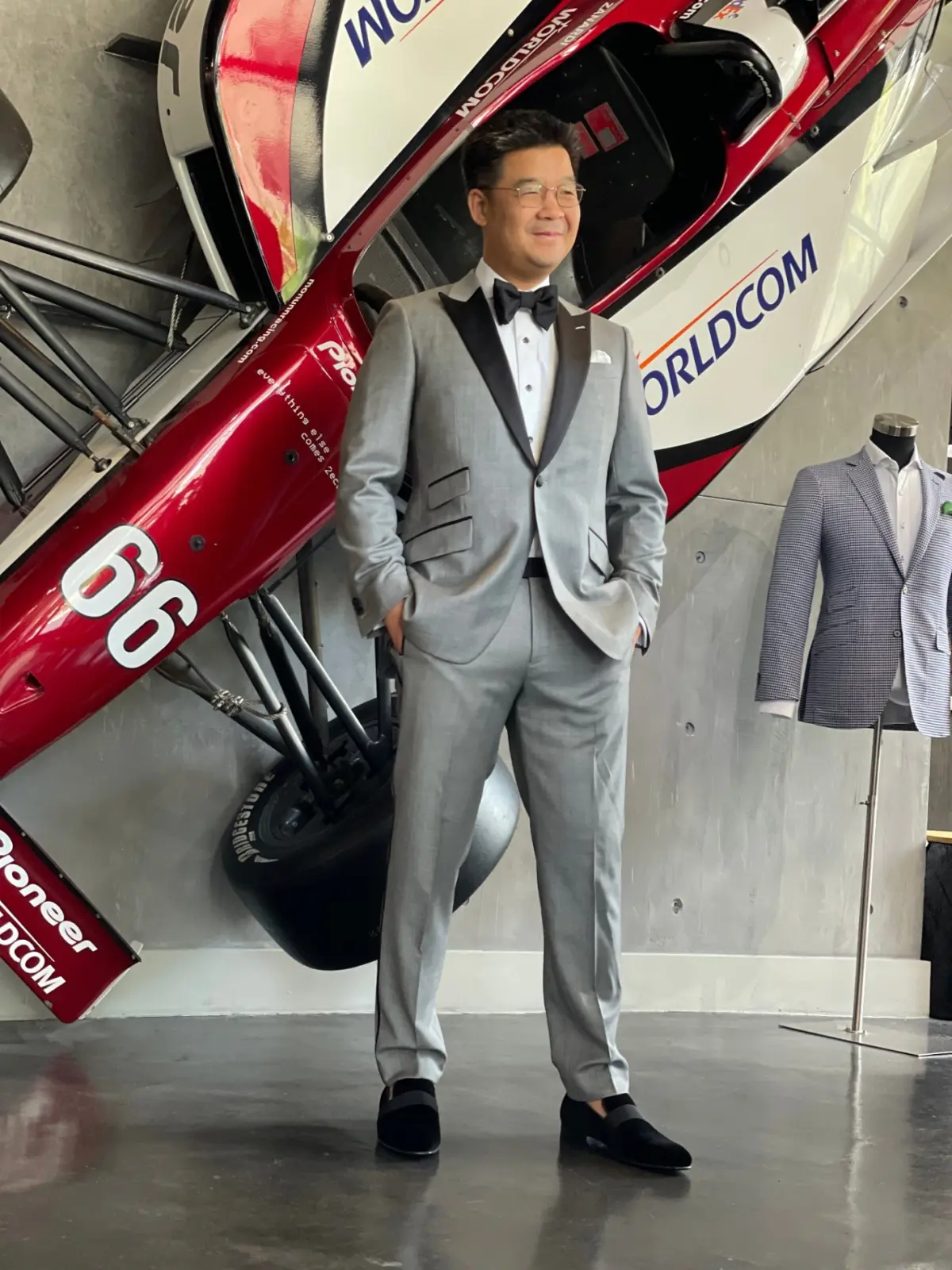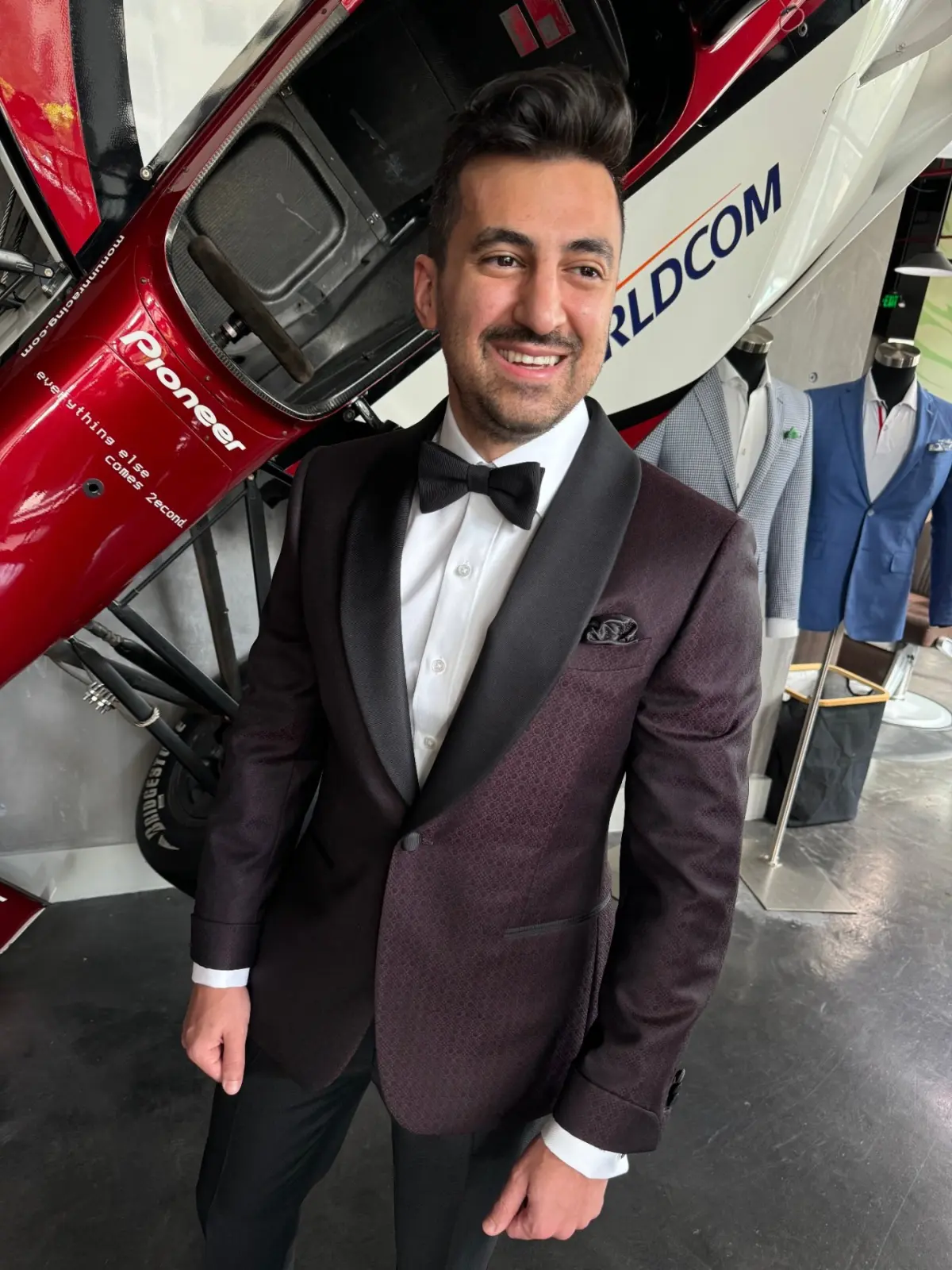
Miami's event calendar is relentless. Charity galas in Brickell, black-tie fundraisers in Coral Gables, destination weddings in the Keys, and corporate dinners along the waterfront: the occasions demanding formalwear come around more often than most men anticipate. And when they do, the question becomes unavoidable: rent again, or finally invest in something that actually fits?
A custom tuxedo is one of the best investments a man can make in his wardrobe. Not because it's extravagant, but because it solves a problem permanently. Once you own a tuxedo that fits your body with precision, you never again stand in a fitting room under fluorescent lights trying to make peace with a rental that bags at the seat and pulls across the shoulders.
At Bespoke CB, master clothier Christian Boehm has been creating custom formalwear for Miami's most discerning clients for more than 37 years. Here is everything you need to know about commissioning a custom tuxedo in Miami.
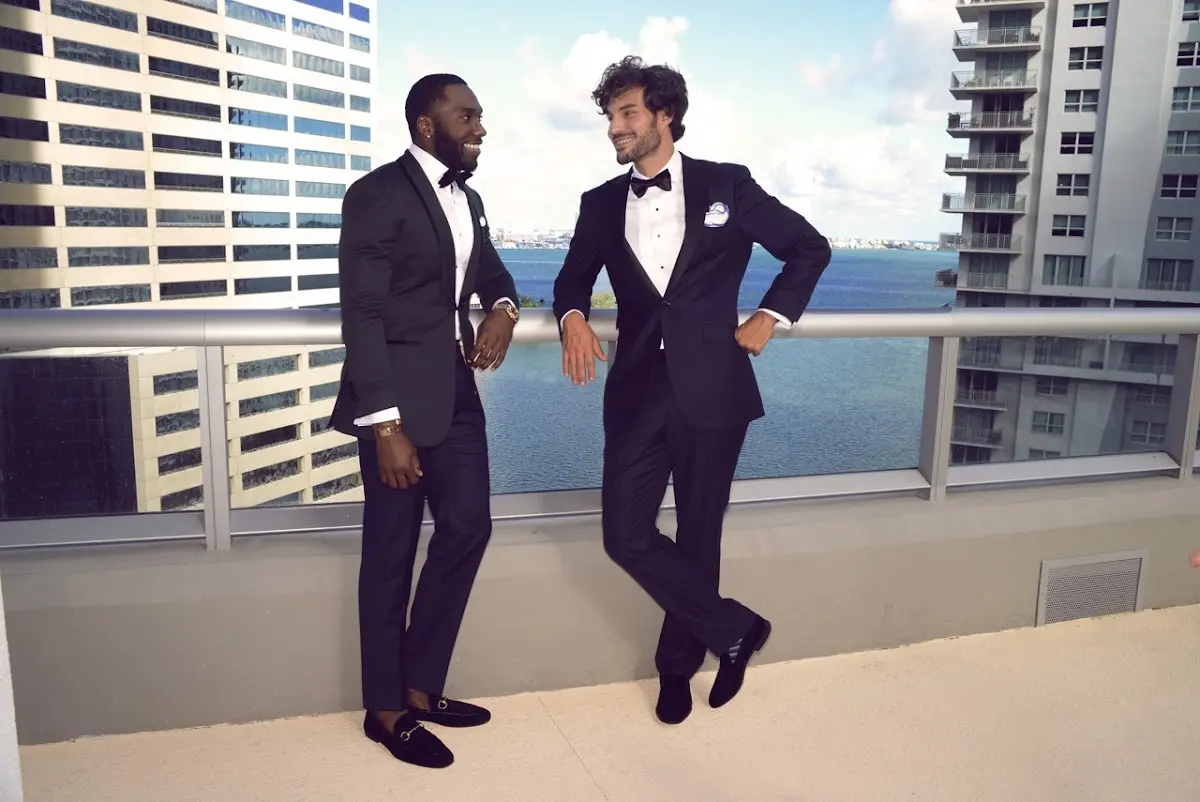
Why a Custom Tuxedo Outperforms Every Alternative
The comparison is straightforward once you've tried a properly fitted tuxedo. Rental formalwear is designed to fit the broadest possible range of bodies with the fewest number of sizes. The result is a garment that compromises in all directions simultaneously: too much fabric at the waist to accommodate different chest sizes, a jacket length that doesn't account for individual torso proportions, trouser breaks that assume an average inseam rather than yours.
Off-the-rack tuxedos available in department stores are marginally better but still built to statistical averages. If you fall outside the median for any combination of measurements, the fit suffers.
A custom tuxedo, by contrast, is built from scratch to your exact measurements, adjusted across multiple fittings, and finished to a standard that mass production cannot achieve. The result is a garment that enhances your silhouette rather than approximating it.
For clients who regularly attend formal events: and in Miami, that category includes a significant portion of the professional and social community: the economics are clear. A custom tuxedo typically costs more upfront than a rental, but after three or four events, you've already recovered the cost differential. After a decade, the comparison isn't even close.
The Anatomy of a Custom Tuxedo
Understanding what goes into a custom tuxedo helps you make better decisions during the design process and appreciate the quality of what you're investing in.
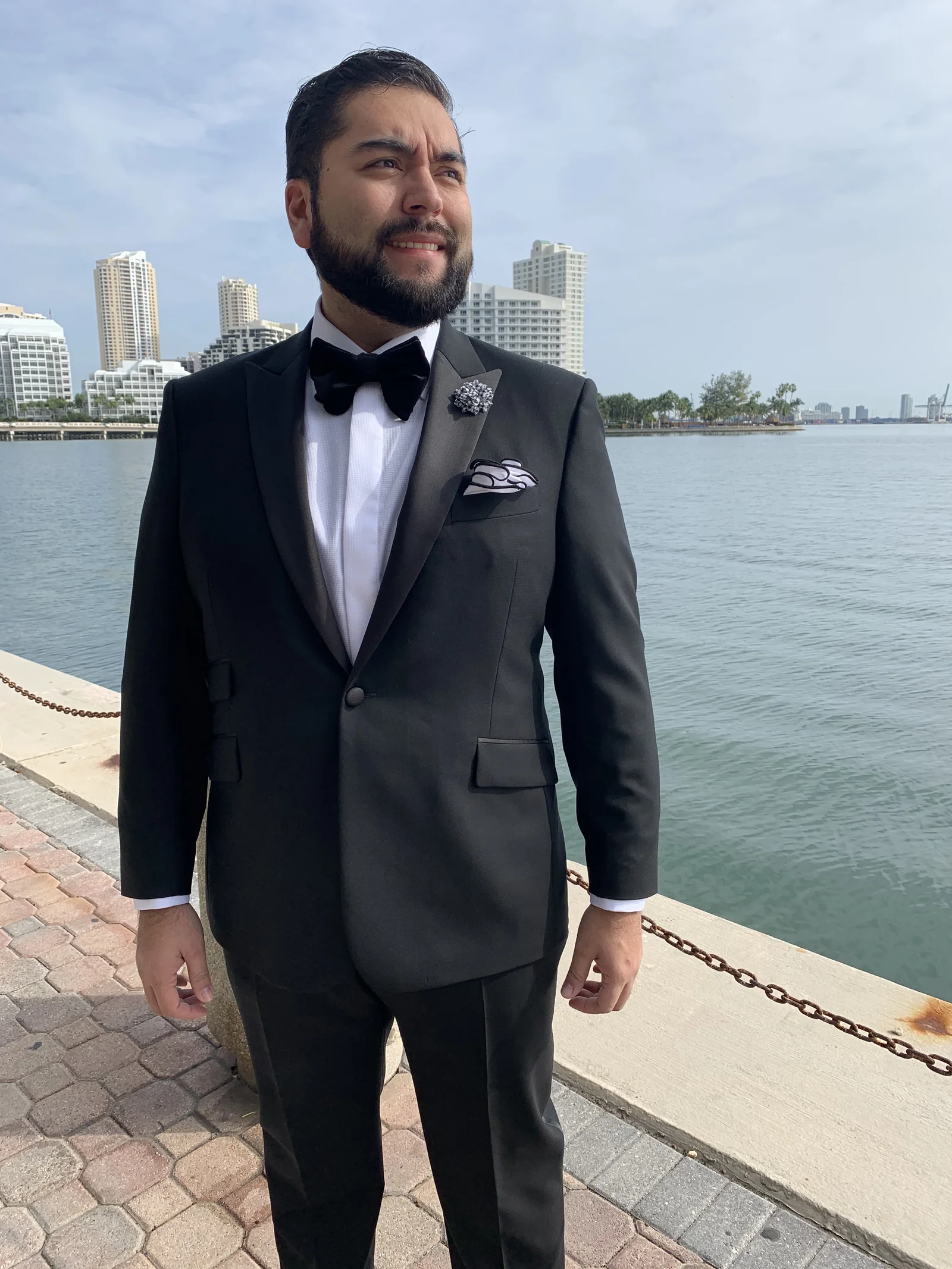
The jacket. The defining feature of a tuxedo jacket is the lapel, which is covered in silk or satin rather than the matching wool of a suit jacket. Peak lapels are the most formal option and give the broadest, most commanding silhouette. Shawl lapels are classic and elegant, often associated with the dinner jacket tradition. Notch lapels are the least formal and now rarely seen on true black-tie garments, though they work well for smart formal occasions where the dress code is flexible.
The trouser. Tuxedo trousers feature a single satin or silk stripe down the outer seam of each leg, which eliminates the need for a belt and creates a clean, unbroken line from waist to shoe. They are traditionally worn with braces rather than a belt, and always without cuffs.
The construction. At Bespoke CB, tuxedo jackets are built with full canvas construction. The chest piece is hand-sewn and floats against the chest, providing a drape and structure that fused or glued construction cannot replicate. This is what allows a well-made tuxedo to look better with each wearing as the canvas conforms to the body.
The fabric. Black is the traditional choice and remains the most versatile for Miami's formal event scene. Midnight blue is a sophisticated alternative that reads distinctly black indoors but carries a depth and richness that is unmistakable in natural light. Navy is occasionally appropriate for less formal occasions. The fabric itself is typically a fine wool barathea or a wool and mohair blend, both of which provide excellent drape and a slight sheen that reads as appropriately formal.
Tuxedo Styles and When to Wear Them
Not all formal occasions are equal, and understanding the range of appropriate tuxedo styles for Miami's event scene is useful before you commission your garment.
Classic black tie. Peak or shawl lapel jacket in black or midnight blue, matching trousers with satin stripe, white dress shirt with a bib or pleated front, black bow tie, black patent leather or cap-toe Oxford shoes. This is appropriate for any event that specifies black tie and is the most versatile formal investment you can make.
Black tie optional. Gives more latitude. A dark suit can technically suffice, but a tuxedo always reads appropriately. If you own one, wear it. If you don't, this is a good occasion to commission one so you're prepared for future events where the dress code is firmer.
Creative black tie. This designation invites personal expression within the formal framework. A velvet dinner jacket, a tuxedo in a deep jewel tone, or a distinctive lapel style can work well here. Christian Boehm has dressed clients for creative black-tie events ranging from Art Basel galas to waterfront charity dinners, and his guidance on reading the occasion is invaluable during the consultation.
For more context on navigating black-tie dress codes, the complete guide to black tie attire on the Bespoke CB blog covers the distinctions in depth.
The Custom Tuxedo Process at Bespoke CB
Every commission at Bespoke CB begins with a conversation. Christian Boehm takes time to understand the specific events you'll be attending, your body's particular proportions and asymmetries, your history with formal clothing, and your aesthetic preferences. This is where the design decisions are made: lapel shape, button configuration, pocket style, lining fabric: before a single measurement is taken.
Measurements are comprehensive. Christian accounts not just for the standard dimensions but for posture, shoulder slope, arm length variation, and the way the body moves. These subtleties are what prevent common fit problems: the jacket that rides up at the back, the collar that gaps, the trouser that twists at the thigh.
A basted fitting follows, where the shell of the garment is assembled for the first time. Adjustments are marked and refined. Subsequent fittings fine-tune until the garment is complete. The full process typically takes 8 to 12 weeks: time well invested for a garment you'll wear for decades.
Clients who have also commissioned custom suits in Brickell often add a tuxedo to their wardrobe at the same time, as the consultation and fitting process overlaps efficiently.
Planning Your Custom Tuxedo Commission
The most common mistake is waiting too long. If you have a specific event driving the commission, start the process at least three months in advance to allow for the full fitting schedule without pressure. Rush commissions are sometimes possible but add stress to a process that is much more enjoyable when unhurried.
If you don't have an immediate event on the horizon, this is actually the ideal time to commission. You can proceed at a leisurely pace, give full attention to design decisions, and have the garment ready when the occasion arises rather than scrambling to arrange fittings around a deadline.
Contact Bespoke CB to schedule your initial consultation. Christian Boehm and his team accommodate clients in Miami and South Florida, and can discuss travel options for clients further afield.
Frequently Asked Questions
What makes a custom tuxedo different from a rental?
A custom tuxedo is built specifically for your body across multiple fittings, using premium fabric and full canvas construction. A rental is a mass-produced garment in a standard size that approximates your measurements. The fit, drape, and quality are categorically different: and a custom tuxedo lasts for decades while a rental is returned after one use.
How long does it take to get a custom tuxedo made in Miami?
At Bespoke CB, the full custom tuxedo process takes 8 to 12 weeks from initial consultation through final delivery. This allows time for multiple fittings and refinements. If you have an upcoming event, plan to begin the process at least three months in advance.
What are the main styles of custom tuxedos?
The primary distinctions are in the lapel: peak lapels are the most formal and give the broadest silhouette, shawl lapels are classic and elegant, and notch lapels are the least formal option. Jacket fabric is typically black or midnight blue wool barathea or wool-mohair blend. Christian Boehm will guide you through the options based on your body type, the events you'll attend, and your personal aesthetic.
How much does a custom tuxedo cost in Miami?
The investment varies based on fabric selection, construction details, and the complexity of the garment. Bespoke CB offers transparent pricing during the initial consultation so you understand exactly what you're commissioning. The cost is higher than a rental upfront, but after just a few events the economics favor custom ownership significantly.
Can I wear a custom tuxedo to events with different dress codes?
Absolutely. A well-designed custom tuxedo in black or midnight blue is appropriate for black tie, black tie optional, and creative black tie events. With the right accessories, it can also work for ultra-formal occasions. The versatility of a quality custom tuxedo is one of the strongest arguments for commissioning one.
The Investment Case for a Custom Tuxedo
A bespoke tuxedo from Bespoke CB is an investment that appreciates in value every time you wear it. Unlike a rental, which you pay for and return, a custom tuxedo becomes a permanent part of your wardrobe. Over a decade of galas, charity events, and formal occasions, the per-wear cost of a bespoke tuxedo often falls below what you would spend renting repeatedly. More importantly, the confidence that comes from wearing a garment made for your body cannot be rented at any price.
Christian Boehm constructs each tuxedo with the understanding that it will be worn for decades, not seasons. Full canvas construction, premium fabric from the finest mills, and meticulous hand-finishing ensure that the garment improves with age rather than deteriorating. This is the fundamental difference between a garment that is made to be worn and a garment that is made to be sold.
What distinguishes Bespoke CB from other custom clothiers is not just the quality of the garments, though that quality is exceptional. It is the relationship between clothier and client. Christian takes the time to understand your lifestyle, your professional needs, your social calendar, and your personal style before recommending a single fabric or cut. The result is clothing that fits not just your body but your life, clothing that works seamlessly across every occasion and every season.
The bespoke process at Bespoke CB typically takes 8 to 12 weeks from initial consultation to final delivery. During that time, clients work directly with Christian and his team on fabric selection, construction details, and the iterative fitting process that ensures every dimension is correct. The experience is collaborative, educational, and genuinely enjoyable for men and women who take their appearance seriously.
Ready to experience the difference that bespoke clothing makes? Visit Bespoke CB to schedule your consultation with Christian Boehm. The full bespoke process takes 8 to 12 weeks and produces a garment that fits your body and your life in ways no off-the-rack option can match.
Finding the Right Fit for Your Tuxedo
Fit is the single most important factor in how a tuxedo looks on you. A tuxedo can be crafted from the finest Italian wool and hand-finished by a master tailor, but if the fit is off, none of it matters. This is the fundamental argument for custom formalwear, and why the fitting process lies at the heart of everything we do at Bespoke CB. A tuxedo is not a suit. The occasions that demand one are where every eye is trained on appearance and a wrinkle or gap is amplified rather than forgiven. The margin for error is narrower.
Jacket Fit: Shoulders, Chest, Waist, and Length
The shoulders are the foundation of the jacket and the one element that cannot be altered after construction. The seam should sit exactly where your shoulder meets your arm, with no overhang and no gap. At Bespoke CB, Christian Boehm accounts for shoulder slope and asymmetry during the measurement phase.
The chest should sit cleanly against your torso without pulling or gaping. When buttoned, the jacket should create a subtle V-shape. You should be able to fit a flat hand between the buttoned jacket and your shirt without strain. The lapel should lie flat, particularly important on a tuxedo where the silk or satin facing draws the eye.
Waist suppression gives the jacket its shape. Too much and the jacket pulls at the button, creating X-shaped wrinkles. Too little and you lose the tailored elegance that distinguishes a custom tuxedo from a rental. The degree should be calibrated to your body type: lean builds can handle aggressive shaping, while broader builds benefit from a gentler taper.
Jacket length should cover the seat and roughly reach the middle of your hands when arms hang naturally. Too short and it looks wrong; too long and it shortens your legs. On a tuxedo, the satin trouser stripe creates a continuous visual line from waist to shoe, and jacket length directly affects how that line reads.
Trouser Fit: Break, Rise, and Taper
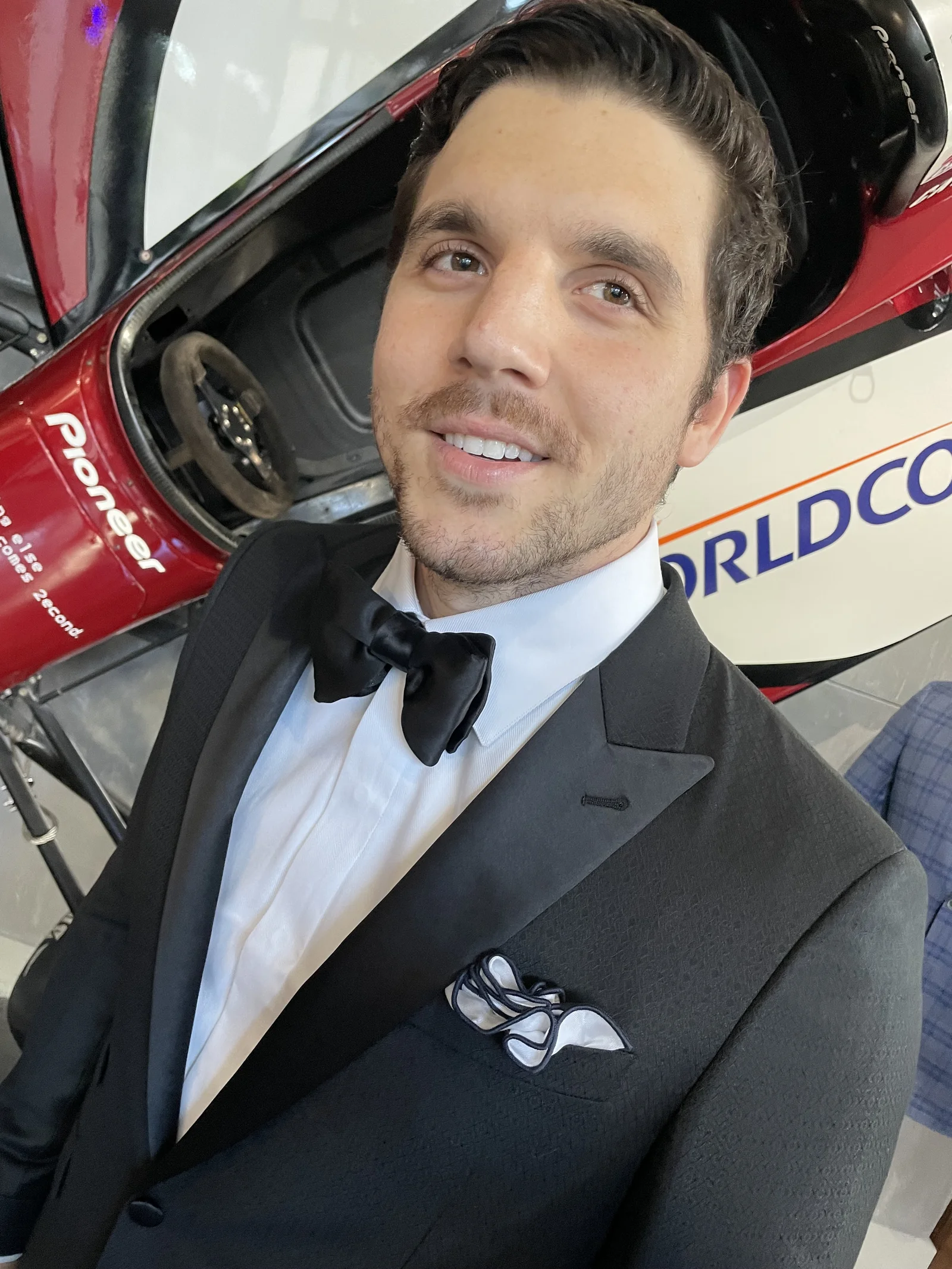
Tuxedo trousers differ from suit trousers in one key respect: the satin stripe down the outer seam creates a visual line that the eye follows instinctively. Any disruption calls attention to itself, making trouser fit especially critical on formalwear. The rise should sit at the natural waist, elongating the leg for a formal silhouette. The break is a matter of preference: a clean or no-break hem works particularly well with the sleek aesthetic of black tie. The taper should follow your leg without hugging it, keeping the satin stripe running perfectly straight from waist to hem.
How Tuxedo Fit Differs from Suit Fit
While fit principles remain consistent, a tuxedo is constructed differently. Higher armholes allow the jacket body to move independently of the sleeves so it stays in place when you gesture or reach. More structured construction with a firmer chest piece and defined shoulders maintains clean lines through an evening of wear. Satin details affect fit perception: the silk facing on the lapels and the trouser stripe catch light differently, meaning wrinkles and pulls are more visible on a tuxedo than on a suit in the same fabric weight. This is why the fitting process for a tuxedo is more meticulous.
Slim, Classic, and Tailored Fit Options
A slim fit is cut close to the body with higher armholes and aggressive waist suppression, creating a sharp, contemporary silhouette for lean to athletic builds. At Bespoke CB, slim means following the body's contours with minimal excess fabric while maintaining comfort.
A classic fit offers more room through the chest, shoulders, and waist. It is the most forgiving cut for broader builds. Even a classic-fit tuxedo should have some waist suppression and shape.
A tailored fit sits between slim and classic, offering a defined silhouette with slightly more room. It is the most versatile option and the one Christian Boehm recommends most often, where formality, comfort, and flattery intersect.
Common Fit Mistakes to Avoid
Collar gap: The jacket collar should sit flush against the shirt collar. A gap indicates a shoulder or posture issue. Sleeve length: The sleeve should end at the wristbone, showing roughly a quarter inch of shirt cuff. Trouser pooling: Excess fabric at the ankle disrupts the satin stripe. Always bring your formal shoes to fittings. Jacket too tight across the back: Horizontal pulling across the shoulder blades means the armholes are too high or the chest too narrow. The garment should move with you, not against you.
How Body Type Affects Fit Choices
Your body type should inform the cut and proportions of your tuxedo. For tall, slender builds, slightly structured shoulders add breadth and peak lapels widen the chest. For athletic builds with broad shoulders and a narrow waist, a tailored fit with moderate suppression accommodates the chest without losing waist definition. For broad builds, a classic fit with gentle suppression and a slightly longer jacket creates balance; shawl lapels minimize horizontal emphasis. For shorter stature, a slim or tailored fit with a shorter jacket and clean, no-break trouser creates the impression of height.
The Role of Fittings in the Bespoke Process
Fittings are where the theoretical becomes actual. No measurements, however precise, can fully predict how fabric drapes on a body in motion. At Bespoke CB, the process includes a basted fitting, where the garment shell is assembled with temporary stitching to assess proportion, followed by refinement fittings where adjustments are marked directly on the garment.
Christian Boehm often says the fitting is the most important part of the process, where his 37 years of experience translate into tangible results. A measurement tells you a number; a fitting tells you a truth. This is why you should bring the accessories you plan to wear to your fittings. The entire formal ensemble works as a system, and the tuxedo must be fitted in context.
Ready to begin? Book your consultation with Christian Boehm and experience the difference that a properly fitted tuxedo makes.
Frequently Asked Questions About Tuxedo Fit
How many fittings should I expect for a custom tuxedo?
At Bespoke CB, the standard process includes a basted fitting followed by one or two refinement fittings, for a total of two to three. The exact number depends on the complexity of the garment and how your body responds to the initial cut. Christian Boehm schedules fittings based on what the garment needs, not a fixed timeline.
Should a tuxedo fit tighter than a suit?
Not tighter, but more precisely. A tuxedo is cut with higher armholes, more structured shoulders, and a cleaner chest than most suits, giving it a more defined silhouette. The fit should feel secure and shaped without being restrictive. The satin details amplify any imperfections, so the margin for error is smaller and the fittings are more important.
What should I bring to my tuxedo fitting?
Bring the shoes you plan to wear, as the trouser break depends entirely on shoe height. If you have your dress shirt, bring it as well, since the collar and cuff length affect how the jacket is fitted. A belt is not worn with a tuxedo, but if you wear braces, bring them. The more complete your ensemble at the fitting, the more accurate the final result.