Let us get the jokes out of the way early. Yes, Miami has a winter. No, it does not involve snow. No, you do not need a parka. But if you have spent any real time in South Florida between November and February, you know the drill. The temperature drops to 65 degrees, everybody panics, and the streets fill with men who have no idea what to wear because their entire wardrobe was built for 90-degree humidity.
Miami winters are real. They are just different. The temperature swing is not dramatic, but the humidity drop is noticeable. The air gets drier. The breeze picks up. And the air conditioning inside every restaurant, office, and retail store stays cranked to the same sub-arctic setting it was on in July. That is the real challenge of Miami winter dressing. It is not about staying warm outdoors. It is about surviving the transition between a mild 68-degree morning and a frozen 72-degree steakhouse where the AC could double as a meat locker.
This guide is for the man who wants to look intentional during South Florida's coolest months without showing up in a heavy wool overcoat that screams "I just moved here from Chicago." We are going to cover the sport coat as your primary layer, knitwear that actually makes sense for this climate, scarf choices that will not make you sweat, fabric weights that transition between indoor and outdoor environments, and the specific wardrobe pieces Bespoke By CB recommends for a Miami winter.
The Miami Winter Reality: 60s and 70s With a Twist
A typical Miami winter day runs between 62 and 72 degrees. That is shorts weather in most of the country. But context matters. In Miami, that same 65-degree morning feels genuinely cool because your body has spent nine months acclimating to 90-degree heat and 80 percent humidity. When the dew point drops and the breeze comes off Biscayne Bay, 65 degrees feels sharper than it sounds.
Then there is the indoor problem. Miami businesses do not adjust their thermostats for winter. The restaurant that kept you comfortable in July at 75 degrees outside is still blasting the same AC in January when it is 68 degrees outside. You walk in from a pleasant evening and sit down in what feels like a refrigerator. Twenty minutes later, you are shivering in your linen shirt and wishing you had brought a layer.
This is why layering matters in Miami. You are not layering to survive the cold. You are layering to manage the delta between a mild outdoor environment and an aggressively air-conditioned indoor one. The man who figures this out looks polished all day. The man who does not is the one tying a sweater around his waist by 8 PM.
The Sport Coat: Your Main Layer
If you take one thing from this guide, let it be this. The sport coat is the single most useful layering piece in a Miami winter wardrobe. It is versatile enough to wear over a dress shirt for business meetings, over a knit polo for dinner, or over a t-shirt for a casual weekend. It provides exactly the right amount of warmth for a 65-degree evening without turning you into a sauna the moment you step back outside.
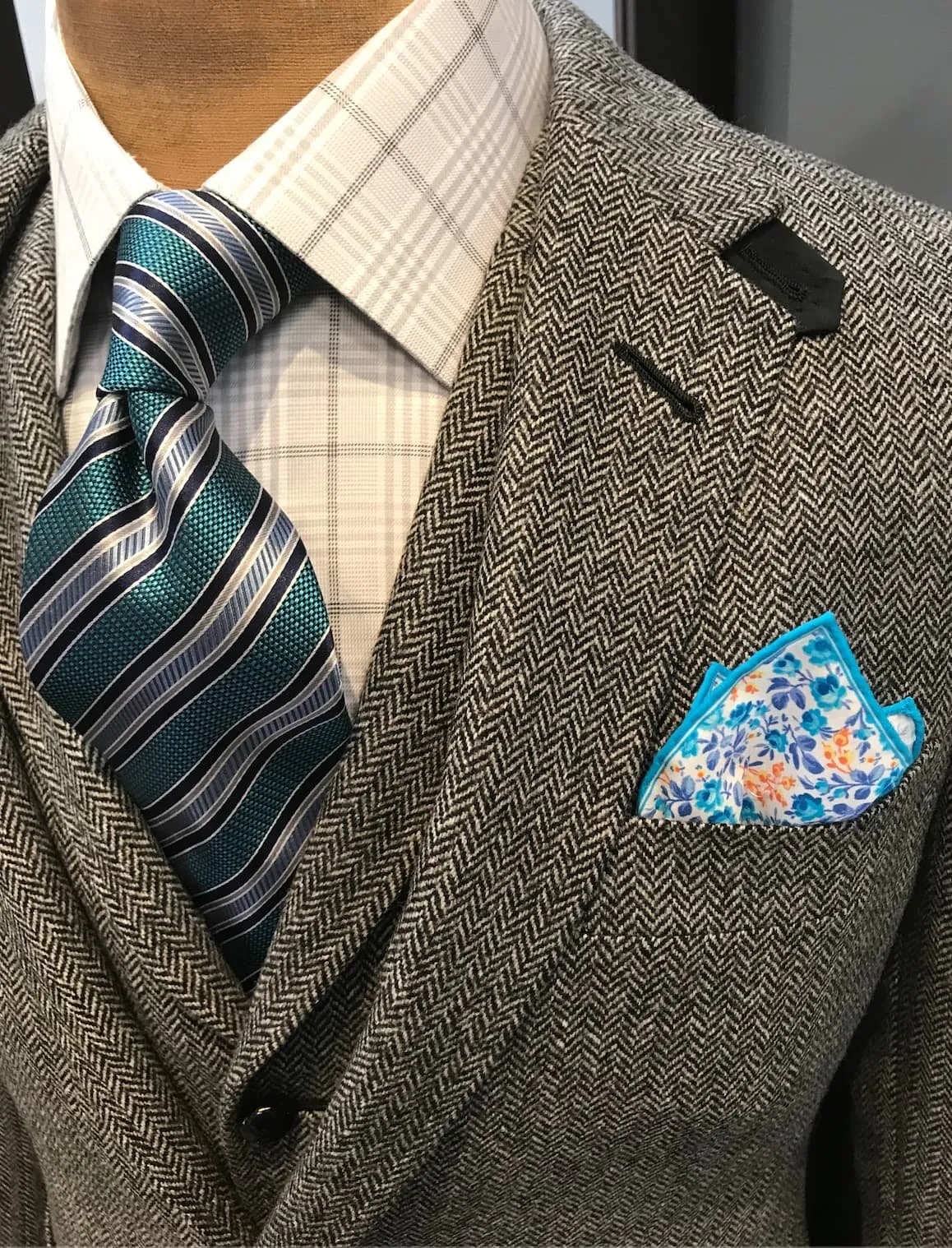
The key is choosing the right fabric. You are not looking for the heavy tweeds and flannels that your friends up north are wearing. You want mid-weight wool in the 250 to 280 gram per meter range. Tropical wool, also known as fresco, is ideal. It has an open weave that breathes well outdoors but provides enough structure to cut the chill of an air-conditioned room. Hopsack is another excellent option. It has a similar breathable quality with a slightly more textured surface that reads as smart casual.
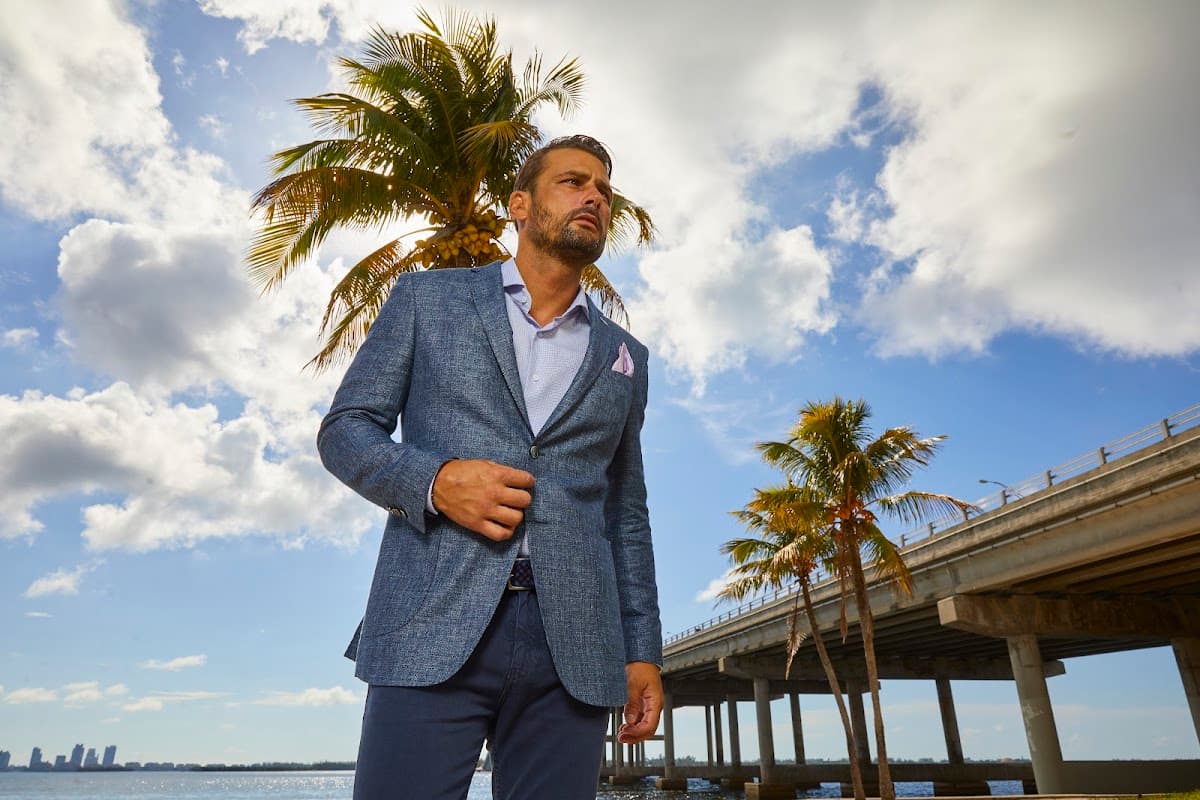
Color-wise, winter in Miami is your chance to wear the richer tones that feel too heavy in summer. A navy blazer is year-round, but winter opens the door to charcoal, deep olive, burgundy, and brown. A brown plaid sport coat paired with a light blue dress shirt and navy trousers is a perfect Miami winter evening look. It reads seasonal without looking like you are headed to a ski lodge.
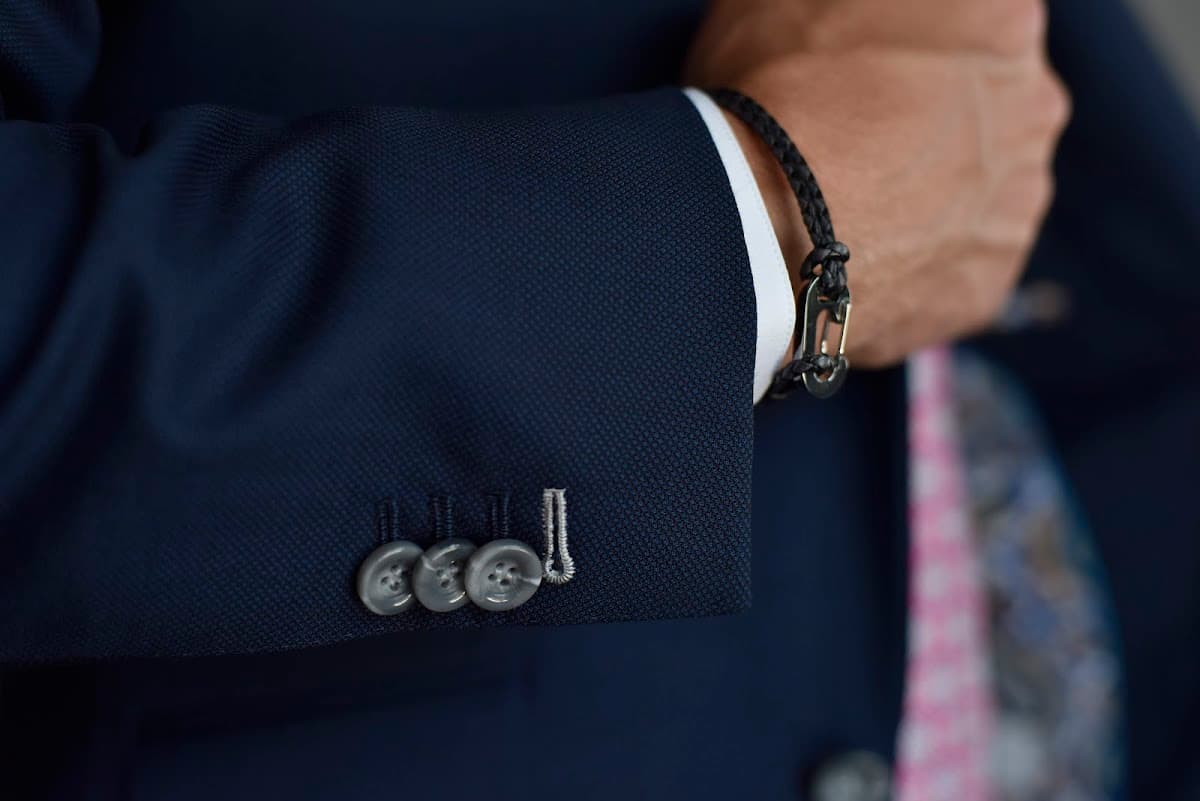
Bespoke By CB builds sport coats specifically for this climate. During your consultation, they walk you through fabric options that work for South Florida's winter temperatures, ensuring your jacket provides the right amount of warmth without sacrificing breathability. A custom suit or sport coat from Bespoke By CB is cut to your exact measurements, which means the layering fit is clean. No bunching under the arms. No pulling at the button. Just a jacket that sits perfectly over a shirt or knit layer.
Knitwear That Works in Warm Climates
Knitwear in Miami? Yes, but choose carefully. The heavy chunky cable-knit sweaters that look great in a Vermont catalog will have you sweating through your shirt in ten minutes. What works in Miami is fine-gauge knitwear in lightweight materials.
The Merino V-Neck Cardigan
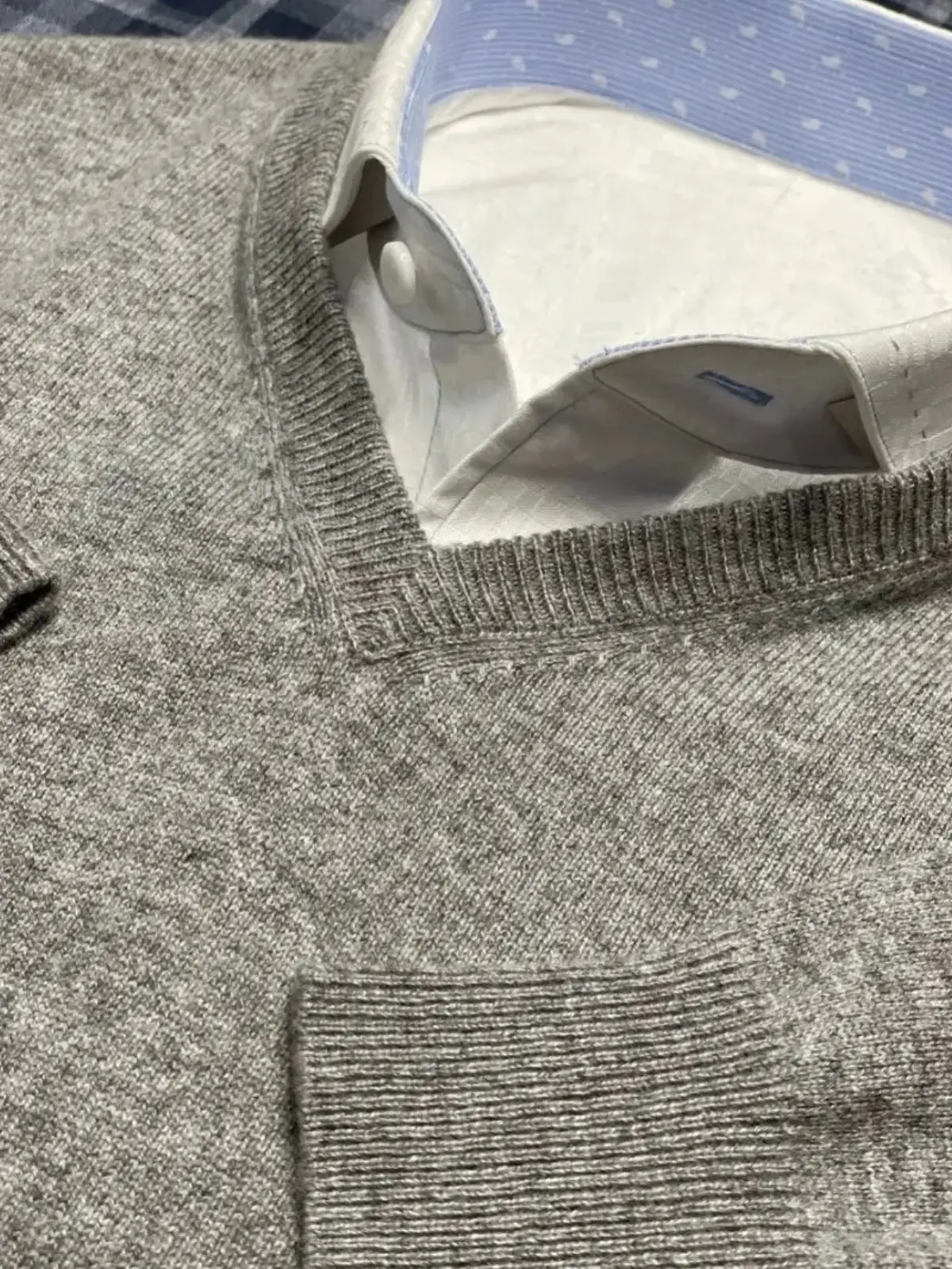
The merino v-neck cardigan is your single best knitwear investment for Miami winters. Merino wool is fine enough to wear against the skin, lightweight enough to layer over a dress shirt without bulk, and naturally temperature-regulating. It keeps you warm when the AC is blasting and stays comfortable when you step outside into 70-degree sunshine.
The v-neckline is important. It sits naturally under a sport coat without the collar popping out or creating bulk at the neck. Wear it buttoned up for a polished, almost professorial look, or leave it unbuttoned with the shirt collar showing for something more relaxed. Grey, navy, and charcoal are the three colors that will cover every Miami winter scenario from business meetings to weekend dinners.
The Fine-Gauge Crew Neck
If cardigans are not your style, a fine-gauge crew neck sweater in merino or cotton-cashmere blend serves the same purpose. Wear it over a dress shirt with the collar tucked inside, or over a t-shirt for a more casual look. The crew neck is slightly more casual than the v-neck cardigan, but it layers beautifully under a sport coat and handles the indoor-outdoor transition just as well.
What to Avoid
Skip anything chunky. Heavy cable knits, oversized fisherman sweaters, and thick wool blends will all be too warm for Miami winter days. You will put one on in the morning, feel great for about fifteen minutes, and then spend the rest of the day looking for somewhere to take it off. Stick to fine-gauge knits in the 7 to 9 gauge range. These provide a layer of warmth without insulation you do not need.
Scarf Choices for Warm Climates
This is where a lot of Miami men go wrong. The moment the temperature drops below 70, out come the thick wool scarves, the chunky knit infinity loops, and the heavy blankets masquerading as neckwear. You do not need any of that here.
A Miami winter scarf should be lightweight, narrow, and primarily a style accessory rather than a survival tool. Think cashmere or fine wool in a narrow width, wrapped once around the neck or simply draped. The scarf is there to add a layer of visual interest to your outfit and provide a small amount of warmth around the neck, which is one of the first places you feel a temperature drop.
Color and pattern matter more than material in Miami. A navy cashmere scarf with a subtle pattern adds sophistication to a sport coat outfit. A cream or camel scarf brightens up a darker jacket. Avoid anything oversized. If your scarf is wider than eight inches or longer than 70 inches, it is too much for this climate. You want something that adds to the outfit without dominating it.
Fabric Weights That Transition
The secret to Miami winter dressing is choosing fabrics that work across a 15-degree temperature range. You will be outside in 68 degrees, inside in 72-degree AC, back outside in 70 degrees, and back inside in another aggressively cooled room. Your fabrics need to handle all of those environments without requiring a wardrobe change.
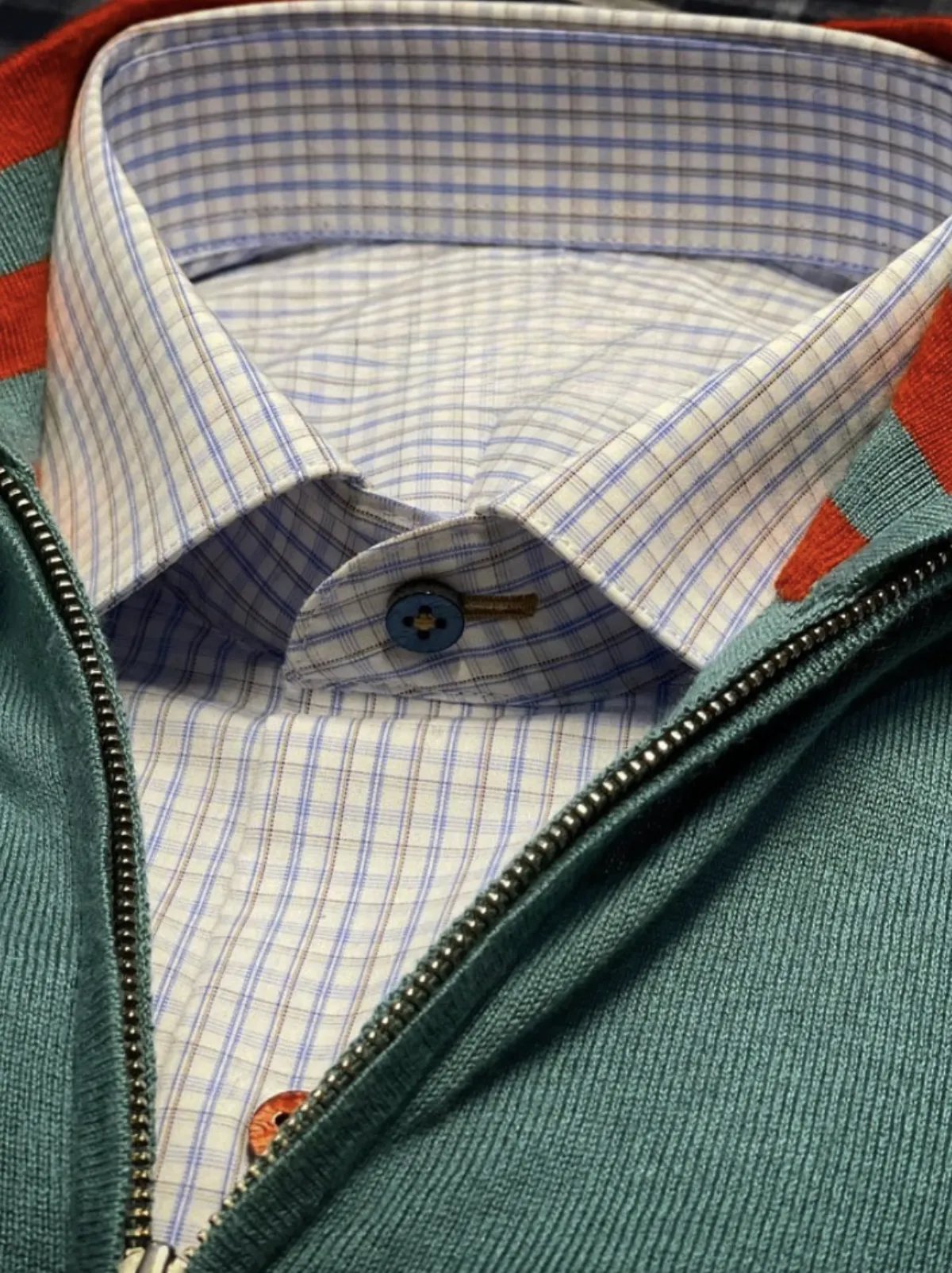
Wool Weights
For suits and sport coats, target wool in the 250 to 280 g/m range. This is the sweet spot for Miami winter. Anything lighter is strictly summer territory. Anything heavier will have you overheating the moment the sun comes out. Tropical wool, hopsack, and lightweight flannel all work. If you want something with a bit more texture for evening wear, a lightweight twill or a fine birdseye weave adds visual interest without adding weight.
Cotton and Linen Blends
Do not abandon linen entirely in winter. A linen-wool blend is one of the most versatile fabrics for South Florida's cooler months. The linen keeps the fabric breathable and gives it that relaxed drape that looks right in Miami, while the wool adds just enough structure and warmth for cooler evenings. Linen-cotton blends also work well for shirts, providing a slightly heavier hand than pure linen without becoming stiff.
Shirting Fabrics
Your winter shirts should be a step heavier than your summer shirts. Move from lightweight cotton poplin to cotton twill or oxford cloth. These fabrics have a denser weave that holds warmth slightly better, which helps when you are sitting in a freezing restaurant. Flannel shirts work for casual weekends, but keep them lightweight. A heavy flannel shirt in Miami is a one-way ticket to sweating through your layer.
Bespoke By CB carries an extensive range of shirting fabrics specifically curated for South Florida's climate. When you book a consultation, ask about their winter-weight cotton options. A set of custom shirts in twill, oxford, and linen-wool blends will cover every Miami winter scenario from business formal to weekend casual.
The Indoor AC vs Outdoor Mild Problem
This is the defining challenge of Miami winter dressing, and it deserves its own section because it trips up almost everyone. The problem is that the temperature differential between indoors and outdoors in Miami winter is often larger than the differential in summer. In July, it is 90 outside and 72 inside, an 18-degree gap. In January, it might be 68 outside and 70 inside, which sounds trivial. But the humidity is different. The outdoor air is dry and breezy. The indoor air is cold and still. Your body perceives the indoor environment as significantly colder than the outdoor one, even if the thermostat says otherwise.
The solution is layering with intent. Every Miami winter outfit should be built around a base layer that works alone indoors, plus one layer you can add or remove. Here is the formula:
The Base Layer
A dress shirt or knit polo in a fabric that feels comfortable at 70 degrees. This is what you wear indoors. If the restaurant is particularly cold, you add the second layer. If it is fine, you leave it off.
The Add Layer
A sport coat or fine-gauge cardigan that can go on over the base layer. This is what you wear outdoors and in cold indoor environments. It should be easy to put on and take off without disrupting the outfit underneath.
The Accessory Layer
A lightweight scarf that stays in your bag or pocket until needed. This is your fine-tuning adjustment. If the base layer plus add layer is not enough indoors, add the scarf. If it is too warm outdoors, remove the scarf and open the sport coat.
This three-layer system handles every Miami winter scenario. You never look over-dressed because each layer is lightweight and intentional. You never freeze because you always have the add layer available. And you never overheat because every layer is breathable enough for 70-degree outdoor air.
Building a Miami Winter Wardrobe With Bespoke By CB
This is where Bespoke By CB becomes essential. Building a winter wardrobe for Miami is not about buying heavy pieces. It is about choosing the right fabrics, the right weights, and the right fits for a climate that most clothiers do not understand. National chains and online made-to-measure brands design their winter collections for men in actual winter cities. Their "lightweight" options are still too heavy for South Florida.
Bespoke By CB is based in South Florida. They understand that a Miami winter requires a 260 g/m wool sport coat, not a 340 g/m one. They know that your winter shirt should be twill, not flannel. They know that a merino cardigan is the right knitwear choice, not a chunky cable pullover. And they know that all of these pieces need to work together as a system, not as random purchases that sit in your closet waiting for the one week it gets below 60.
When you work with Bespoke By CB, the process starts with a consultation. They learn about your daily routine, your dress code requirements, and the specific environments you spend time in. Then they build a wardrobe plan that covers your winter needs alongside your year-round wardrobe. A sport coat that works in December also works in March and on cool summer evenings. A merino cardigan layers under a blazer in winter and works on its own in spring. These are not single-season purchases. They are foundation pieces that extend your wardrobe across the full range of Miami temperatures.
The fit matters more than ever when you are layering. A sport coat that fits perfectly over a dress shirt might pull when you add a cardigan underneath. Bespoke By CB accounts for this. Your garments are cut with enough room to layer comfortably without looking baggy. The sleeve length, shoulder width, and torso taper all work whether you are wearing one layer or two. This is the advantage of custom clothing over off-the-rack. You are not forcing a standard size to accommodate a layering system. The garment is built around your layering needs from the start.
To get started, book a consultation with the Bespoke By CB team. Whether you visit their showroom or meet virtually, they will walk you through fabric options, take precise measurements, and help you build a winter wardrobe that works specifically for Miami. No more guessing at fabric weights. No more buying pieces that sit unworn because they are too heavy for this climate. Just a wardrobe built for where you live, by people who live there too.
Frequently Asked Questions
Does Miami actually get cold enough for layering?
Yes. Miami winter temperatures typically range from 62 to 72 degrees, and the humidity drops significantly compared to summer. The bigger issue is indoor air conditioning, which stays at the same sub-arctic settings year-round. Layering helps you manage the transition between mild outdoor air and cold indoor environments without needing a full wardrobe change.
What is the best layering piece for Miami winters?
A mid-weight wool sport coat in the 250 to 280 g/m range is the most versatile layering piece for Miami winters. It provides warmth for cool evenings and air-conditioned interiors while remaining breathable enough for outdoor wear. Bespoke By CB offers custom sport coats in tropical wool and hopsack fabrics that are perfect for this purpose.
Can I wear a sweater in Miami during winter?
Yes, but choose carefully. Fine-gauge merino wool is the best option. A v-neck cardigan or crew neck sweater in merino provides a lightweight layer of warmth that works indoors and outdoors. Avoid chunky knits, cable sweaters, and heavy wool blends. They will be too warm for Miami winter temperatures.
Do I need a winter suit in Miami?
You need a winter-weight suit, not a winter suit. The distinction matters. A winter-weight suit in Miami is a 260 g/m tropical wool suit in navy, charcoal, or brown. It is not a heavy flannel or tweed suit. Bespoke By CB can build you a custom suit in the right fabric weight for Miami winters, with a fit that accommodates a light layer underneath.
Should I wear a scarf in Miami?
A lightweight scarf in cashmere or fine wool is a great Miami winter accessory. Keep it narrow and relatively short. It adds visual interest to your outfit and provides a small amount of warmth around the neck. Avoid thick wool scarves and anything oversized. The scarf is a style accent in Miami, not a survival tool.
What fabrics should I avoid in Miami winters?
Avoid heavy wool (anything above 300 g/m), thick flannel, heavy tweed, chunky knitwear, and anything with a fleece lining. These fabrics are designed for real winter temperatures and will cause you to overheat in Miami, even on the coolest days. Stick to mid-weight wools, fine-gauge knits, and cotton or linen blends.
How does Bespoke By CB handle Miami winter wardrobes?
Bespoke By CB is a South Florida-based custom clothier that specifically understands the Miami climate. Their winter fabric selections are curated for subtropical temperatures, and their consultation process accounts for your indoor and outdoor environments. They build garments that layer correctly, fit precisely, and work across the full range of Miami temperatures, not just the two weeks it drops below 65.
How warm does it get inside Miami restaurants in winter?
Cold. Most Miami restaurants and offices do not adjust their thermostats for winter. The AC that kept a room comfortable at 90 degrees outside in July is still running at the same setting in January when it is 68 degrees outside. This is why layering is essential. You need to be able to add a layer indoors and remove it outdoors without disrupting your outfit.
When should I book a consultation for winter clothing?
Book as early as possible. Custom garments from Bespoke By CB take a few weeks from consultation to delivery. If you want your winter wardrobe ready by November, schedule your consultation in October at the latest. Book a consultation online or visit their showroom to get started.