A professional headshot is not a photograph of your face. It is a photograph of your face inside a frame, and the frame is your clothing. Long after the session ends, the picture keeps doing work you cannot supervise: it introduces you in email signatures, speaks for you on LinkedIn before you have spoken, sits in the "about us" grid while you are asleep, and gets cropped by whoever is building the company website at eleven at night. Most men treat headshot dressing as an afterthought and discover the consequences a year later, when a collar that was slightly loose in person looks completely unbuttoned at thumbnail size.
The difference between a headshot that flatters and one that disappears comes down to choices that are entirely within your control: color, contrast, pattern scale, collar shape, jacket fit, and how those elements interact with the background and the light. None of this requires fashion instinct. It requires understanding how a camera sees a tailored outfit, which is not how a mirror sees it. This guide walks through each of those decisions in the order you should make them, from the big color questions down to the details only the lens notices.
Why Headshots Punish Sloppy Tailoring
A camera does something a room full of people never does: it compresses three dimensions into two and then reproduces the result at many sizes. In a conversation, a slightly big shoulder or a collar that sits half an inch off your neck registers as nothing, because people watch your eyes and your hands and the sum reads as "well dressed." In a headshot, the same jacket shows its flaws with clinical honesty. The camera has one viewpoint, fixed light, and no ability to forgive.
Three compression effects matter most. First, anything with structure reads as sharper. A jacket with a clean shoulder line and a collar that hugs the shirt collar photographs as authority; a soft, sagging shoulder photographs as a garment that is wearing you. Second, small imperfections magnify as the image shrinks. A tie dimple twisted at the wrong angle or a collar gap of a quarter inch is invisible in a full-length mirror and obvious in a LinkedIn thumbnail. Third, the mid-torso area between lapels is the brightest real estate in most business portraits, because light falls on the shirt front and whatever fills that space, pattern or plain, becomes the visual anchor of the whole picture.
This is why headshot day is the worst possible day to wear a suit you have never had adjusted. The best headshot outfit is the garment you know fits, not the newest one in the closet.
Start With the Background, Not the Suit
Before choosing a single garment, find out what will be behind you. The background determines which suit colors separate you from the surroundings and which ones melt into them, and it is the one variable many men forget to ask about.
Ask the photographer or your office coordinator three questions. What color is the background, studio gray, office interior, brick, white wall, outdoor greenery? What will the final crop be, tight on the face, head and shoulders, or a looser half-body that marketing can crop later? And will the photos be color corrected to match the rest of the team page, which tells you how much you can rely on the suit's exact hue versus its general value?
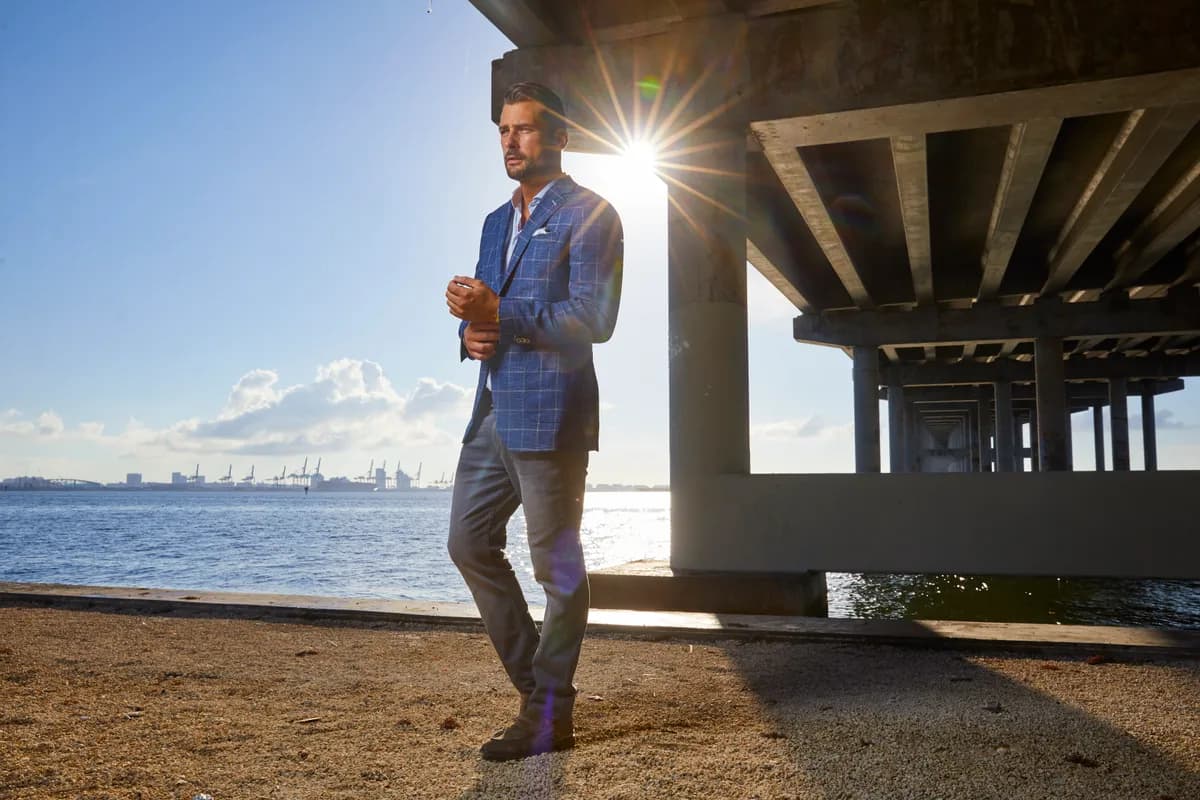
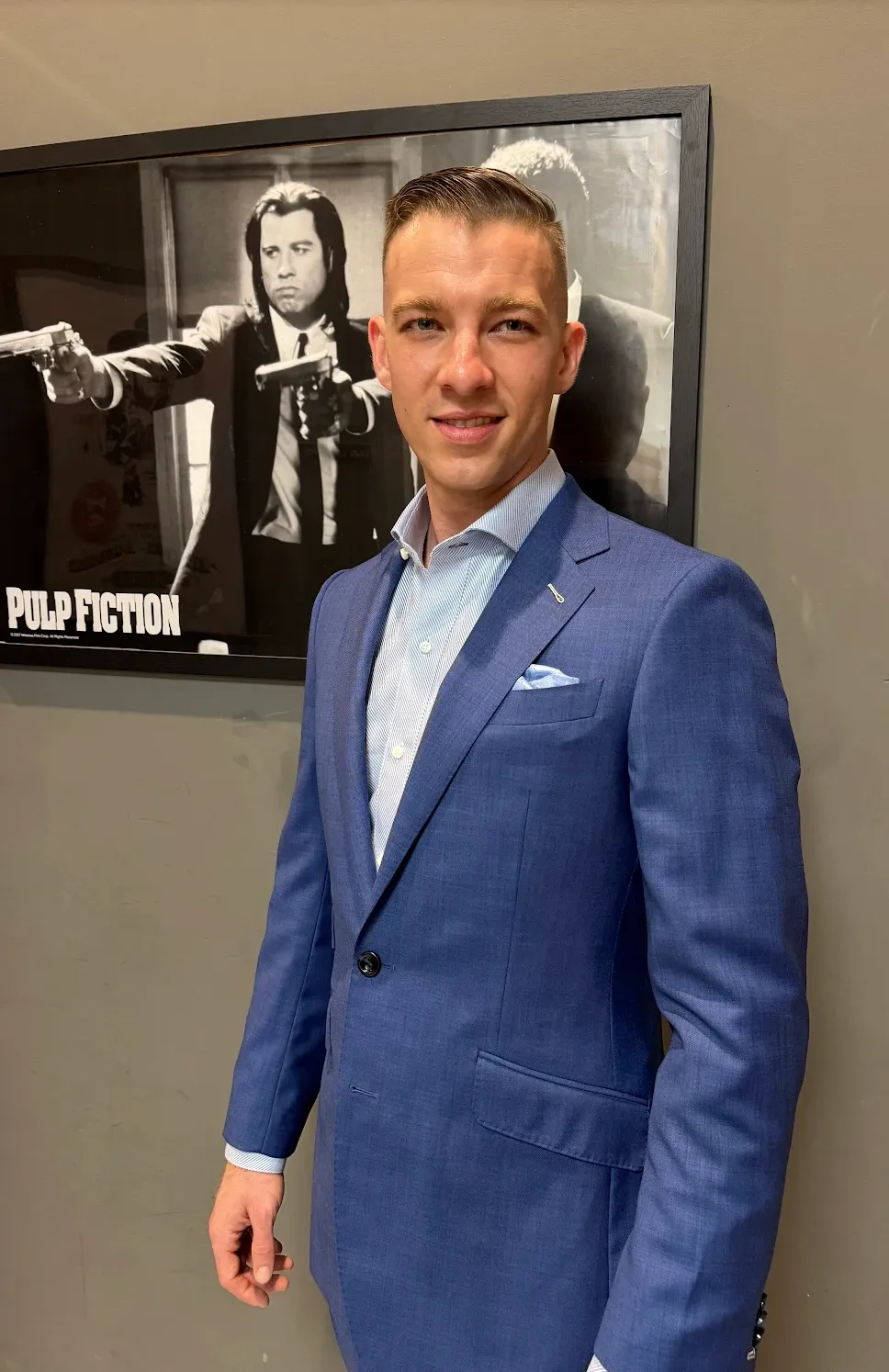
The rule that follows is simple: your jacket needs to be lighter or darker than the background, never the same value. A charcoal suit against a dark gray studio backdrop makes a floating head and a floating tie. A mid-blue suit against the same backdrop separates cleanly at every crop size. Against white or light backgrounds, almost any mid to dark suit reads well, and the real work shifts to contrast between the jacket, shirt, and skin tone. Outdoors, earth tones and mid blues sit comfortably against greenery and pale concrete, while very dark suits can look like a cutout pasted onto the park.
If you genuinely cannot get an answer before the session, a mid-navy or mid-gray suit is the safe default. Both separate from the majority of studio backgrounds and office interiors, and neither fights skin tones.
The Suit Colors That Photograph Best
Color in a headshot is not about beauty. It is about contrast architecture: creating three clearly separated values, your face, your shirt, and your jacket, so that nothing blends into anything else.
Mid-navy is the strongest all-around choice for most men. It reads as credible and current, separates from nearly every common background, and provides a smooth, unbroken frame around a white or light blue shirt. Unless your brand is deliberately creative or your office background is navy itself, mid-navy is the headshot color with the fewest failure modes. It is also the color most offices expect, which matters if the photo has to sit next to colleagues for a decade.
Charcoal and mid-gray are close behind. Charcoal is the more formal of the two and pairs naturally with white, though against a dark studio background it needs a brighter shirt to keep the frame alive. Mid-gray is softer and pairs well with white or pale blue, but against a gray backdrop it can vanish, so check the background first.
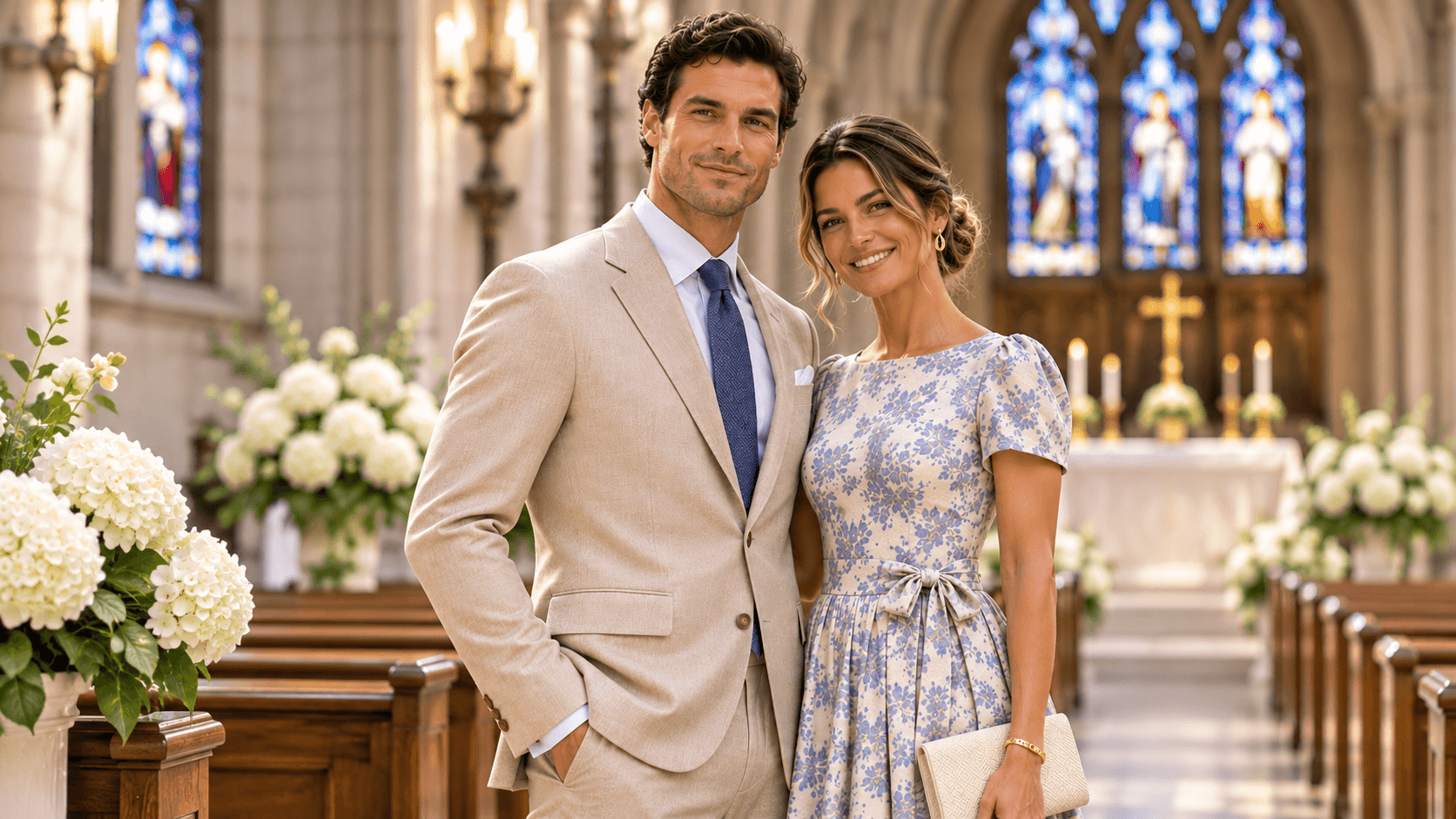
Earth tones, tan, mid-brown, olive, photograph warmly and stand out pleasantly in a feed full of navy. They work beautifully against white and outdoor backgrounds and against brick. The risk is venue and role context: a warm brown suit that looks confident on a creative director can look underdressed on a bond attorney. Read your industry before you reach for it.
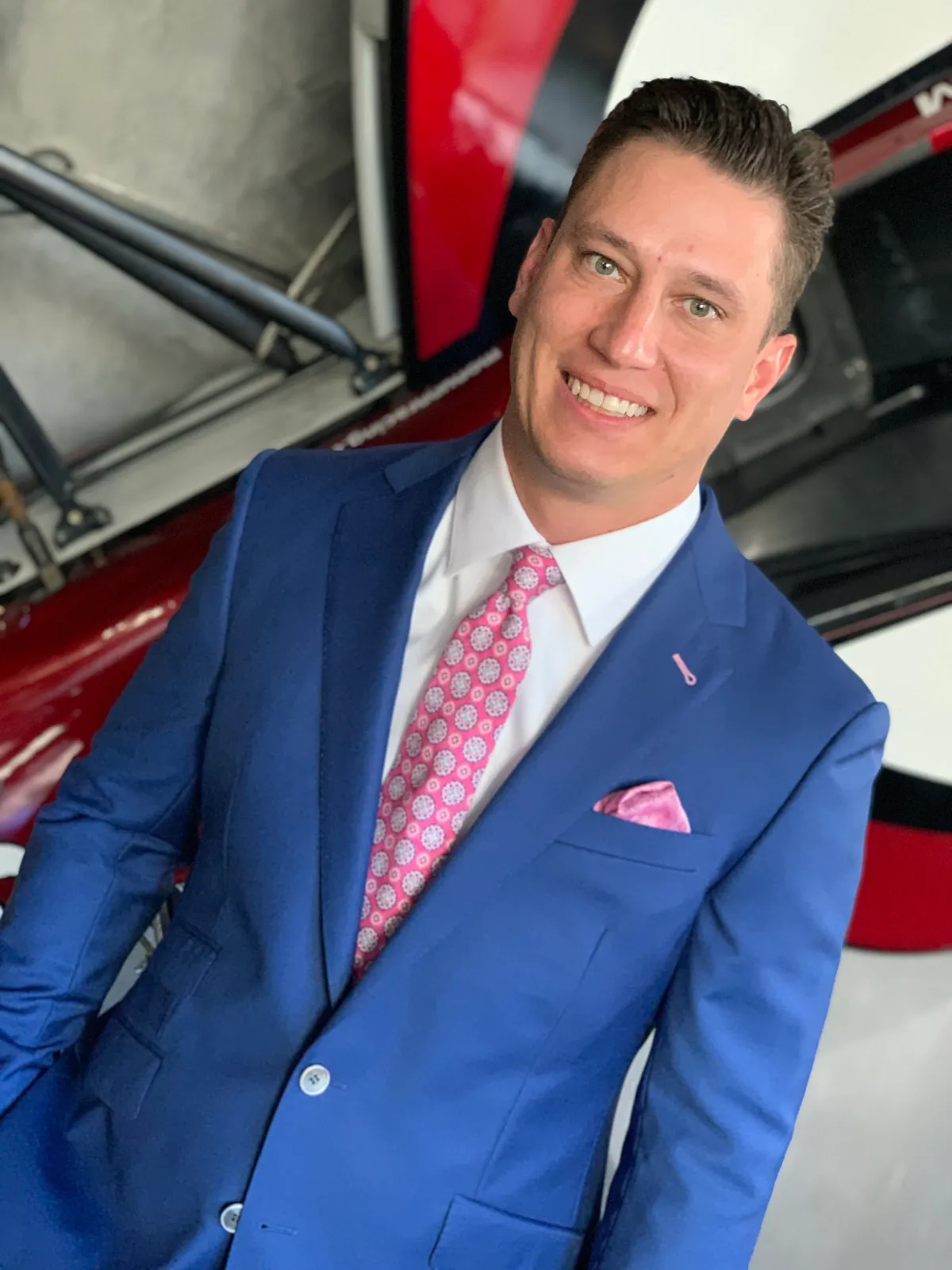
Deeper blues, a rich royal or a saturated cobalt, have earned a place in modern professional portraits. They photograph with more energy than navy and give a crisp, memorable separation against light backgrounds. The tradeoff is personality: a saturated blue suit makes a statement that a charcoal suit does not, so it suits founders, sales leaders, creatives, and anyone whose professional image is allowed to have an edge. Paired with a white shirt and a restrained accessory, it photographs exactly as confident.
Black suits photograph harshly in most studio light, losing lapel detail and pulling the whole frame darker. Reserve black for industries where it is the uniform, finance and law formal events, and even then prefer a very dark charcoal for the headshot itself.
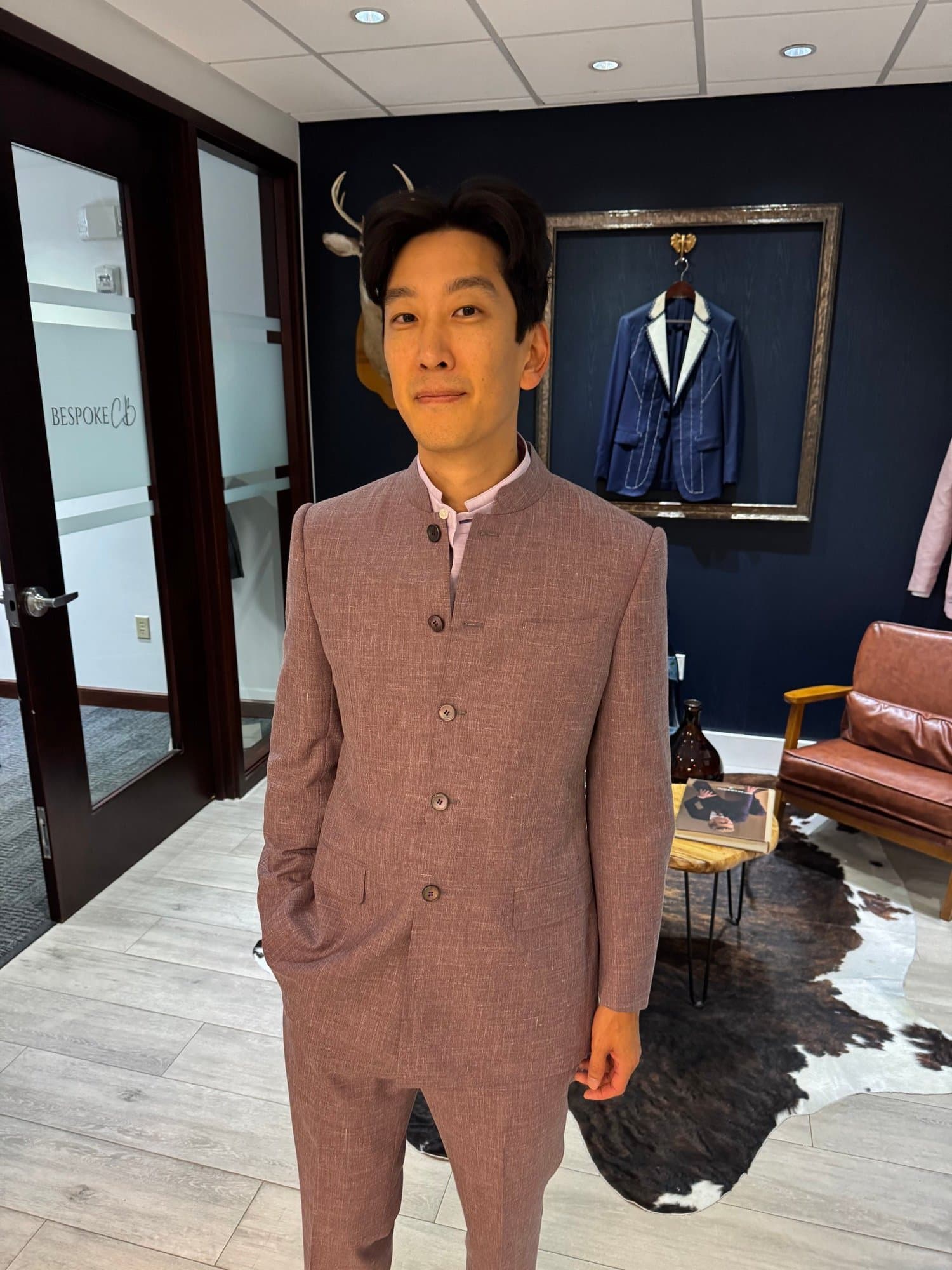
Finally, whatever the color, favor cloth with some texture or a subtle self-pattern: a hopsack weave, a quiet twill, a faint glen check. Perfectly flat, shiny cloth catches studio light in hard streaks and can look synthetic on camera, while textured cloth scatters the light and photographs richer. If you are choosing cloth for a custom headshot suit, this is where a conversation with Bespoke By CB pays off: the mills in the showroom, Holland and Sherry, Loro Piana, Vitale Barberis Canonico and the rest, all photograph differently, and a consultant can point you to weaves that have a track record in front of the lens.
Shirts: The Frame Around Your Face
The shirt is the most technically demanding part of a headshot outfit, because it sits in the brightest zone of the image and touches the part everyone actually looks at: your face and collar line.
White is the default and nearly always correct. It gives maximum contrast against any mid to dark suit, reflects flattering light up onto the jaw, and keeps the eye moving toward the face. The only caution is the opposite one: a white shirt against a white background, where the shirt disappears and the head floats. In that case, switch to pale blue, or keep the white shirt and choose a darker jacket so the frame still reads.
Pale blue is the best alternative. It flatters most skin tones, softens the overall contrast a notch, and still separates cleanly from mid-navy and mid-gray jackets. Light pink works the same way with a warmer cast and pairs well with earth-tone and navy jackets alike, but test it against your complexion; a pink that photographs well on olive skin can wash out a fair one.
Dark shirts are where most headshots go wrong. A black or navy shirt under a matching jacket flattens the collar zone and costs you the contrast that makes the face pop. If your brand genuinely calls for the dark-shirt look, keep the jacket a value apart, charcoal jacket over a black shirt, not black over black, and accept that the photo will read as intense rather than approachable.
Pattern scale is the detail most men miss. The camera at headshot distance records the collar band and the top third of the shirt placket, and if your shirt has a stripe or check that is large enough to read at that crop, the pattern sits an inch from your face and competes with your features. Choose fine patterns only: a narrow pinstripe, a subtle graph check, the kind of quiet texture that registers as depth rather than design. The same rule applies even more to the tie.
Collar fit is the one shirt issue that can ruin an otherwise perfect session. A collar that gaps away from the neck at the sides, or leaves visible daylight between itself and the jacket collar, photographs as a flaw every single time, because it sits directly under the chin where the eye lands first. The collar should touch the neck all the way around, sit level, and rise just high enough to frame the jaw. This is a fit point that matters almost nothing in daily wear and everything in a close crop, which is exactly why shirts made to your measurements are worth their modest cost before a session like this one. Custom shirts from Bespoke By CB start at $240 and are cut to your neck, posture, and collar preference, so the collar that photographs correctly is the collar you own.
Ties, Squares and the Question of Accessories
A headshot is a tie-hostile environment, so treat the tie as optional and small when present.
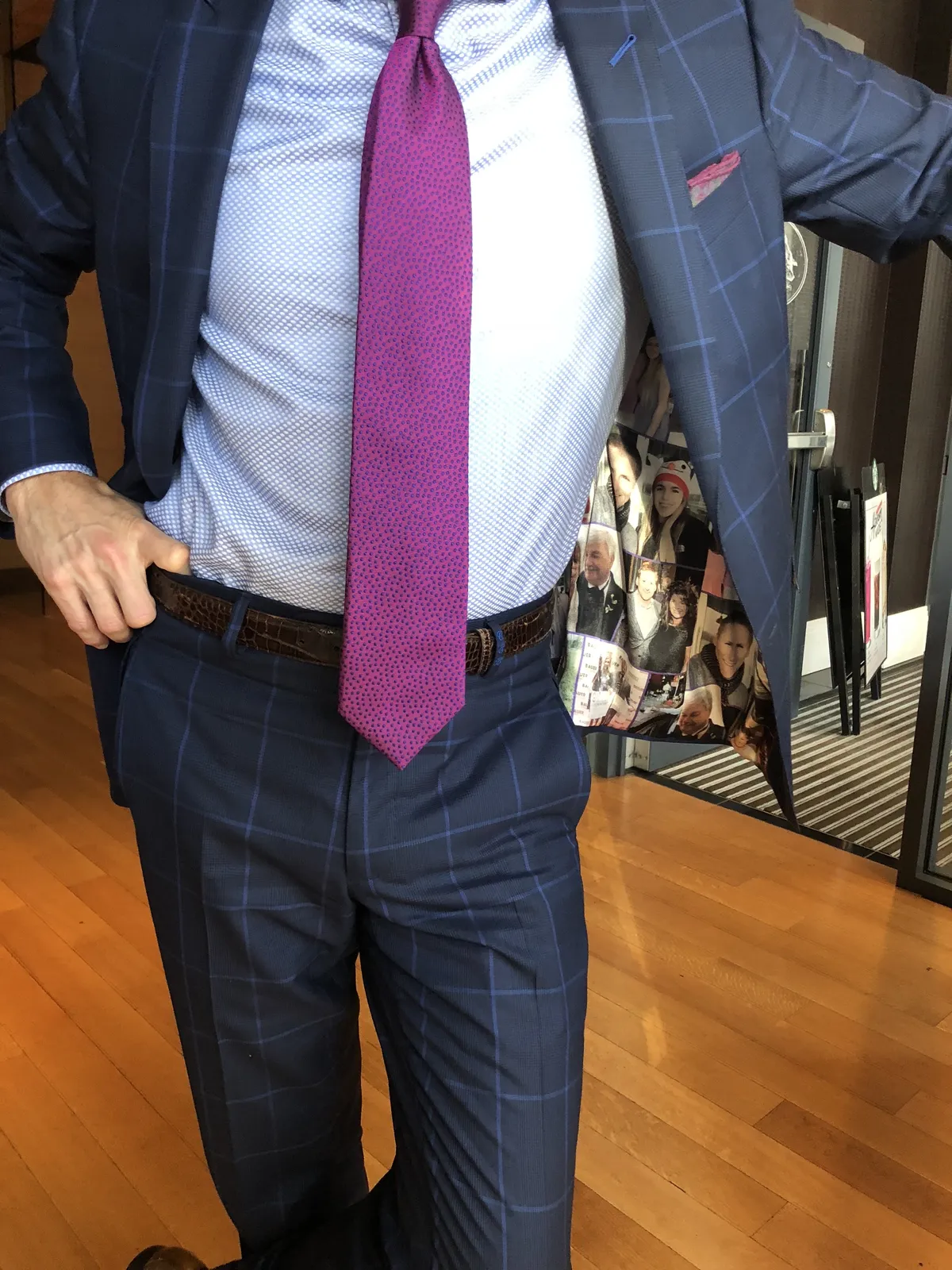
If you wear one, choose a solid or a micro-pattern: a grenadine weave, a fine dot, a narrow repp stripe. The pattern must be readable as texture, not as design, because the tie fills the triangle directly under your face. Bold paisleys, wide stripes, and novelty prints that look charming in person become the subject of the photograph. Color should sit a value apart from both the shirt and the jacket, and a shade that belongs to your broader brand is even better, since the photo will represent you for years.
The knot should be symmetric, modestly sized, dimpled once, and dimpled facing the camera. Ask the photographer to check it on the monitor before the first real frames; a knot that looks fine in the mirror is often twisted two degrees in the lens.
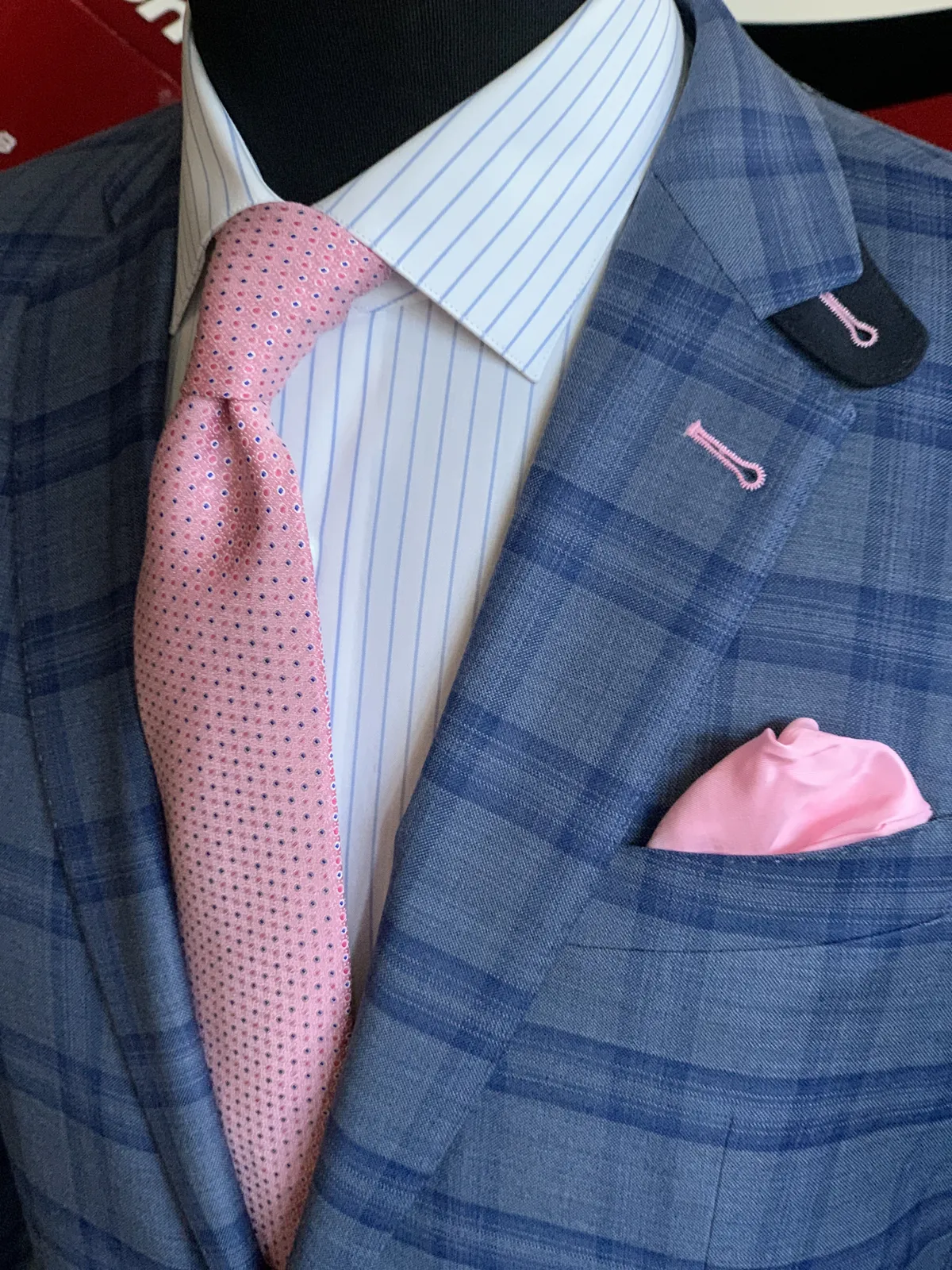
Skip the pocket square entirely, or keep it a quiet white television fold barely peeking above the pocket line. A pocket square adds nothing at headshot crop unless the framing is loose, and a loud fold can pull the eye down and out of the frame. Lapel pins, collar bars, and boutonnieres all have the same problem: at close crop they become jewelry competing with your eyes. Save them for the editorial shot if the photographer offers one.
Suspenders deserve a specific warning. They photograph as visible lines crossing your shirt, and unless that is a deliberate look for a looser crop, remove them before the session or keep the jacket buttoned and verify they are invisible on the monitor. Watch straps and cuff links are invisible at headshot distance, so do not spend energy there.
Collar Shape, Neckline and the Details the Lens Loves
Collar shape changes the geometry of your jawline more than any grooming choice except the haircut itself. A collar with more height and a modest spread raises the frame of the face and photographs as alert and composed. A very low, very soft collar, the kind that feels relaxed in a casual shirt, lets the line of the jacket lapel carry the face instead, which can read elegant in a wider editorial crop but loses structure at tight headshot distance. If you own a cutaway or semi-spread collar, it is a strong choice; if your shirts are all soft one-piece collars, at least choose the one with the most body.
The neckline rule for open-collar shots, which many offices now prefer for their warmer, more approachable feel, is that an open collar photographs well only when the collar itself is pressed and structured. A crisp collar worn open over a clean undershirt line reads as modern and confident. A collar already soft and wilting reads as if you left work early. If you go open collar, choose a white or heather gray undershirt that does not show through the shirt fabric, because a visible crew neckline under a white shirt photographs as a gray crescent at the collar. Our dedicated guide to wearing a suit without a tie covers the open-collar look in more depth for everyday wear.
Fit Decisions That Show Up on Camera
Four fit points dominate a headshot. The shoulder line, because the camera sees it as the top edge of your silhouette and any divot or ridge shows as a flaw in the frame. The collar, jacket and shirt together, because the gap or bunch under the chin sits exactly where the eye goes. The chest and button stance, because a button that sits too high crowds the tie and shirt triangle and a stance that sits too low lengthens the torso oddly. And the sleeve, which ends just at the wrist bone and shows a sliver of shirt cuff only if your crop includes it, a detail worth confirming.
None of this requires a wardrobe beyond what you already own, but it does require the right two or three garments, fitted properly, not the newest ones. Ready-to-wear suits average an allowance for a generic body, and studio light is not forgiving. If your role puts you in front of cameras regularly, real estate, law, finance, media, the men's tailoring guides on executive presence, like our executive suit style article, make the case that fit is the foundation of professional presence. A headshot is simply the moment that foundation is audited most closely.
What to Bring and How to Coordinate With the Photographer
Aim to bring at most three considered outfits, not a suitcase. One mid-navy or mid-gray suit with a white shirt, a tie, worn and photographed first, as the safest baseline. One alternative in a different value, earth tone or deeper blue with a pale blue or pink shirt, to give the photographer contrast options against the actual background. And one open-collar option, the same jacket or the second one with the collar worn deliberately, for the warmer set the office may want for social media.
Coordinate with the photographer on three specifics before you start shooting. First, the background color and the crop, so your outfit choices can react to the real conditions. Second, whether they will shoot tethered or show frames on the back of the camera between sets, which is your chance to check collar, knot, and shoulder line from the camera's viewpoint rather than the mirror's. Third, whether any team-page consistency rules apply, existing photos in a consistent palette, a house crop, a brand accent color, so you can match the grid instead of standing out from it. If marketing wants a touch of the brand color, the pocket square or tie is the place for it, not the suit.
Plan hair and grooming an hour before the session, not minutes before, and bring a lint roller, a small mirror, a spare pressed shirt, and a safety pin or collar clip. The lint roller earns its place: studio light finds every fleck on a dark shoulder.
Common Headshot Outfit Mistakes
The most frequent failure is matching the background: a gray suit against a gray wall, a navy blazer against a navy curtain. The fix costs nothing, ask in advance. The second is choosing a tie that photographs louder than the face; at headshot distance, even a medium stripe is large. The third is a shirt collar that fits in a mirror but not in a lens, either gaping at the sides or sitting too far below the jacket collar, and it is the reason the shirt deserves as much fit attention as the suit. The fourth is brand-new clothing, worn straight from the box, with factory creases and a collar that has never been ironed into shape. The fifth is a wrinkled shirt under studio light, which rakes across every crease and makes a pressed shirt look like couture by comparison. And the sixth is over-accessorizing, pin, square, and pocket gear all at once, turning a portrait of a professional into a catalog of products.
How Bespoke By CB Can Help
Bespoke By CB is a custom clothing house in Miami, and headshot preparation is one of the most common reasons professionals walk through the door. A consultation begins with your measurements, not with a bolt of cloth, and from there the decisions that matter for the camera can be built into the garments themselves rather than improvised on the morning of the shoot.
For the suit, you choose the exact color value you need for your brand and your office background, from mills like Holland and Sherry, Scabal, Loro Piana and Vitale Barberis Canonico, and a consultant will point you toward textured weaves that photograph with depth instead of flat shine. Custom suits start at $1,299, and the shoulder line, button stance, and collar relationship that dominate a headshot are exactly the points a made-to-measure garment controls. For the shirt, Bespoke By CB cuts collars to your neck and posture, so the collar that frames your jaw sits where it is supposed to sit, and custom shirts start at $240, a small price for the garment that anchors the entire portrait. The showroom, at 1000 Brickell in Miami, keeps a fabric library you can photograph yourself under showroom light before committing, and the four to six week lead time means the right move is to book a consultation as soon as the headshot session lands on the calendar, not the week before. Whether this is your first professional portrait or the refresh that comes with a promotion, Bespoke By CB builds the frame that makes the face work.
Frequently Asked Questions
What color suit is best for a professional headshot?
Mid-navy is the most reliable choice for most men. It separates cleanly from nearly every common studio and office background, frames a white or light blue shirt with strong contrast, and reads as credible without drawing attention away from your face. Mid-gray and charcoal are close behind, with the caveat that a gray suit can blend into a gray backdrop, so confirm the background first. Earth tones and deeper saturated blues photograph beautifully for creative or founder roles where your image can carry more personality.
Should I wear a tie for a professional headshot?
Wear one if the photo is for a formal context: law, finance, executive leadership, or a conservative company page. Choose a solid or micro-pattern tie in a color one value apart from the shirt, and keep the knot symmetric with a single dimple facing the camera. Skip the tie if the photo is for a creative, startup, or social-forward context, and wear a crisp open collar instead. The worst option is a loud tie worn "for personality," because at headshot crop the tie becomes the subject of the photograph.
What shirt color photographs best for headshots?
White is the strongest default: it maximizes contrast against mid to dark suits, reflects light up onto the jawline, and works under every jacket color. Pale blue is the best alternative when you want slightly softer contrast, and light pink pairs well with navy and earth tones. Avoid dark shirts, which flatten the collar zone, and skip large checks or stripes in favor of fine textures that read as depth rather than pattern.
How far in advance should I prepare my outfit before a headshot session?
Ideally two to six weeks out. That window leaves time for alterations, a pressing, a test photograph in similar light, and, if you are commissioning custom garments, a consultation. Custom suits from Bespoke By CB follow the standard four to six week lead time, so book the consultation as soon as the session is scheduled. If the session is this week, wear your best-fitting existing suit rather than the newest one, have it pressed, and focus your energy on the collar and tie.
Do patterns photograph well in headshots?
Only at small scale. The camera records just the collar band and upper placket of your shirt and the top few inches of your tie, so any pattern large enough to read at that crop competes directly with your face. Fine pinstripes, micro checks, grenadine textures and narrow dots photograph as richness and depth. Wide stripes, bold paisleys, and large windowpanes photograph as the reason nobody remembers your face.
Should my headshot outfit match my company's brand colors?
Match the palette, not the logo. If your company page uses a consistent dark suit and light shirt formula, follow it so you blend into the grid while your face stays the differentiator. If marketing wants an accent of the brand color, the pocket square or tie is the right vehicle, a small note of color that shows at some crops. Never make the suit itself the brand color unless that is an explicit creative direction, because the photograph has to outlive this quarter's campaign.
Is a custom suit worth it just for a headshot?
It depends on how many cameras your role faces. If the headshot is a one-off, your best-fitting existing suit, freshly pressed and possibly altered, is enough, and a good tailor can fix collar and sleeve issues for far less than a new garment. But if you are photographed regularly, real estate agents, attorneys, executives, and founders are the classic cases, a garment cut to your measurements is the permanent fix for the fit flaws a lens punishes, and it earns its cost every time it appears in a frame.