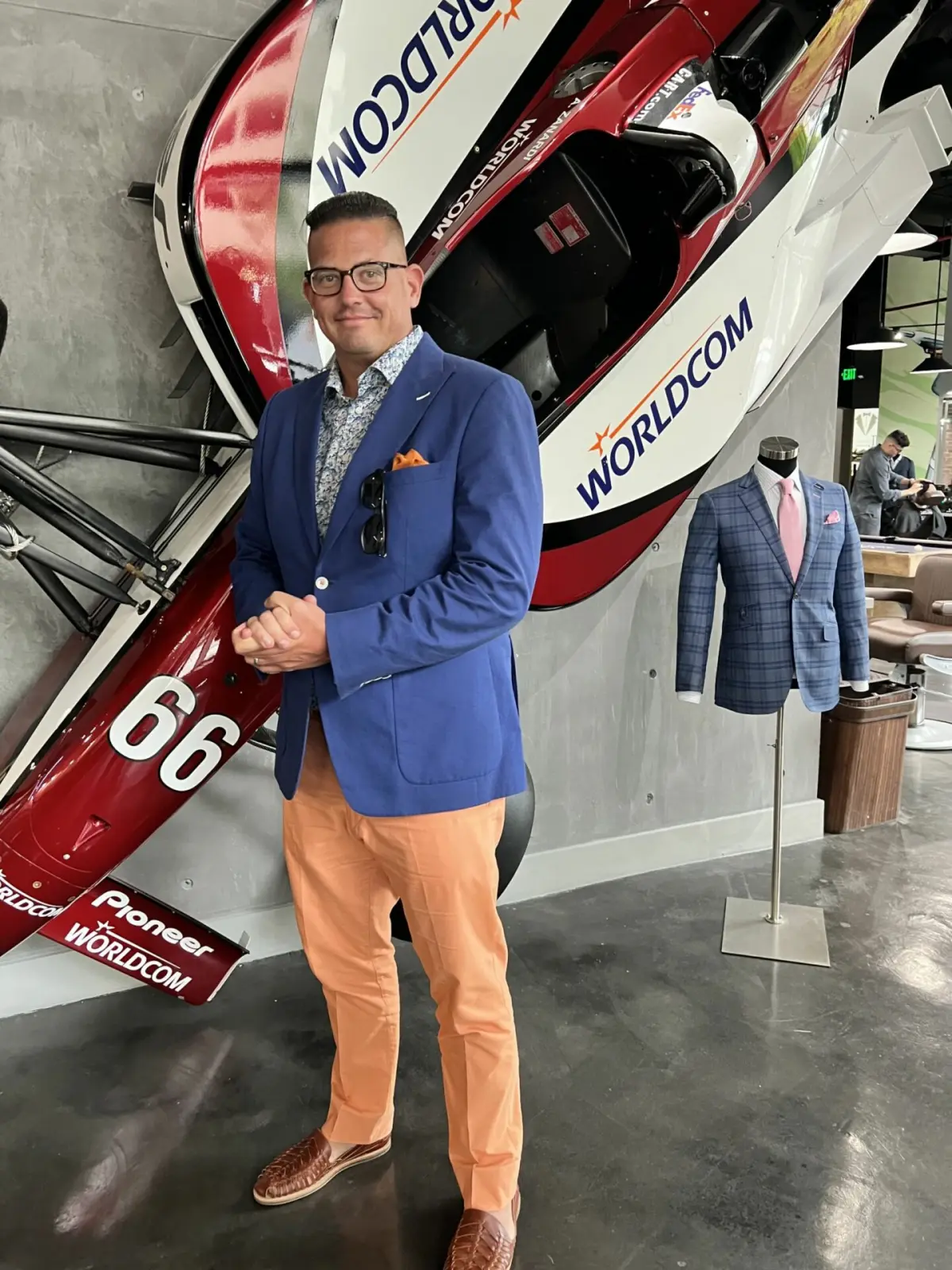
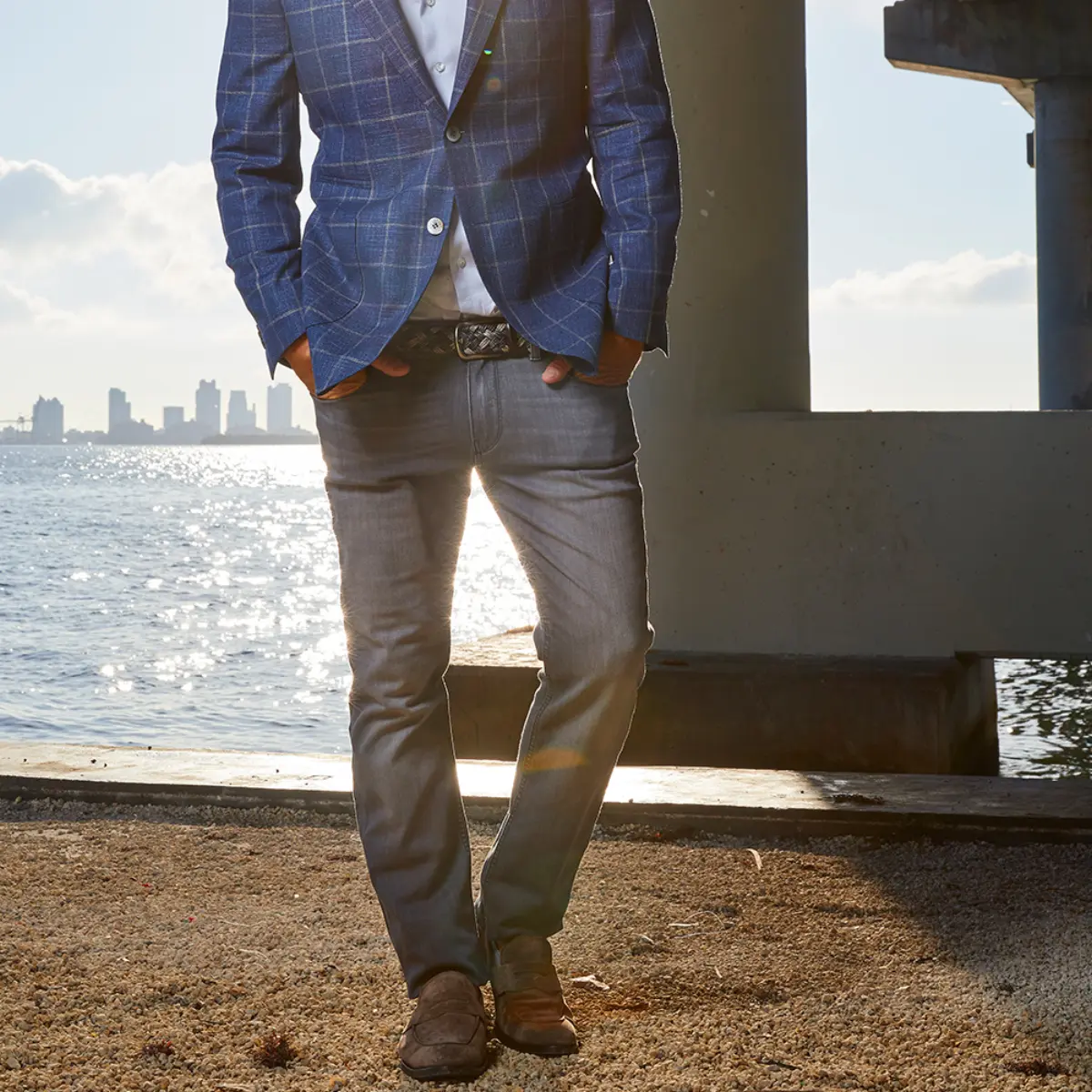
Why the Sport Jacket Is the Most Versatile Piece in Your Wardrobe
If there's one garment that deserves the title of "hardest-working piece in a man's wardrobe," it's the sport jacket. Unlike a full suit, which commits you to formality, or a casual jacket, which can't elevate beyond weekend wear, the sport jacket lives in the sweet spot. It's the bridge between dressed-up and dressed-down, between boardroom-ready and bar-appropriate, between "I tried" and "I didn't have to."
At Bespoke By CB, we've spent years crafting custom sport jackets for men across Miami and beyond. And in that time, we've learned that most guys own too many of the wrong ones, and too few of the right ones. This guide fixes that. We'll cover what makes a sport jacket versatile, what to look for in a business casual setting, how to style it casually, and how to choose fabrics that work year-round, especially in a climate like Miami's.
What Makes a Sport Jacket Versatile? The Anatomy of a Great Jacket
Before we talk about styling, let's talk about the jacket itself. Not all sport jackets are created equal, and versatility isn't an accident, it's engineered into the garment through specific design choices. Here's what separates a truly versatile sport jacket from one that only works with one outfit.
Color and Pattern
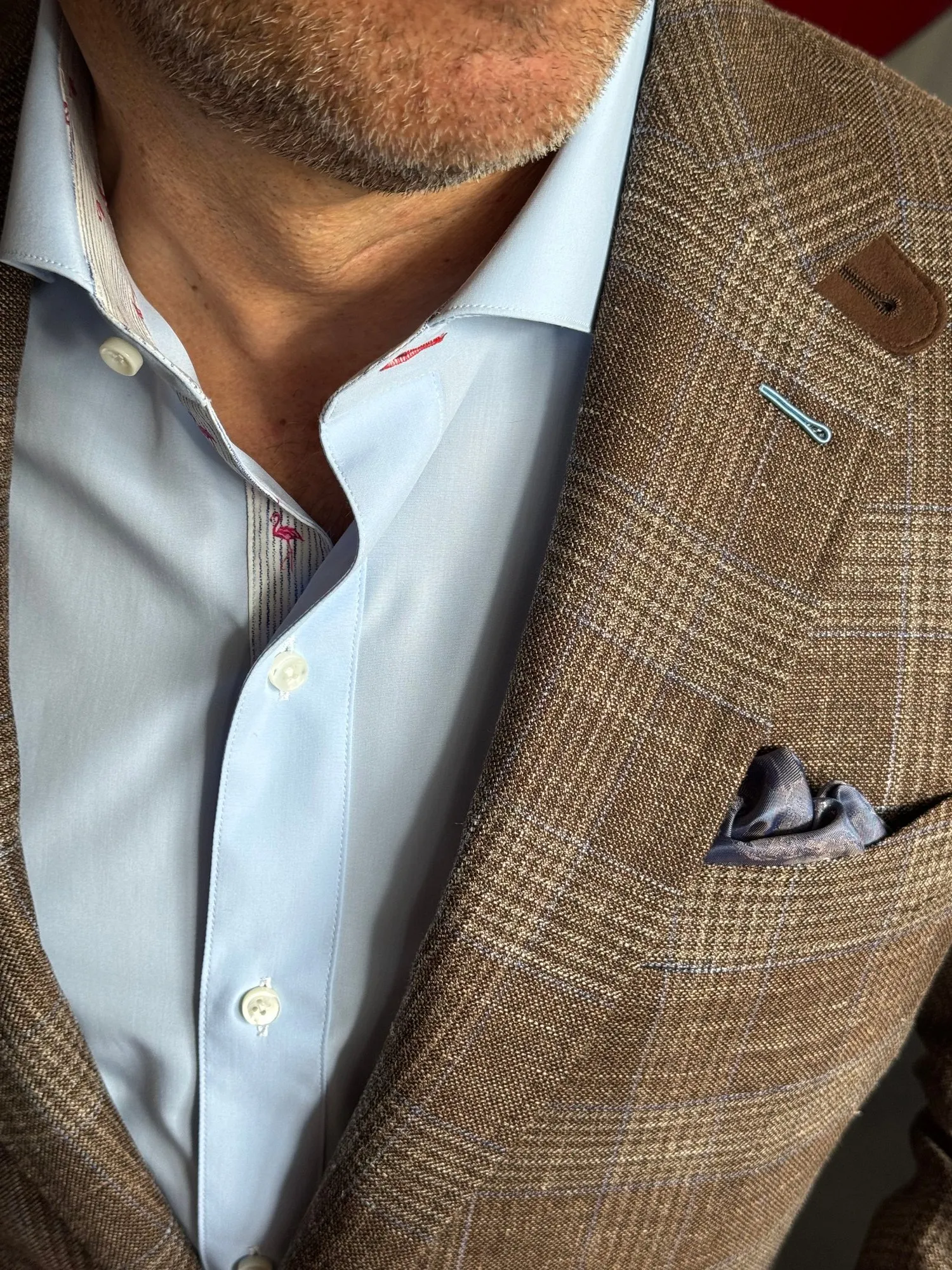
The most versatile sport jackets live in the neutral-to-earth-tone family. Navy, charcoal, medium grey, olive, and brown form the backbone of a wardrobe that can pair with virtually anything. These colors work with jeans, chinos, dress trousers, and even shorts in the right context. Patterns should be subtle: a glen plaid, a windowpane check, or a hopsack texture adds visual interest without limiting what you can wear underneath.
The mistake we see most often? Jackets in bold colors or loud patterns that only match one or two combinations. A burnt orange plaid jacket might look stunning in the store, but if it only works with one specific pair of trousers, it's not versatile, it's a costume. Save the statement pieces for when you already own two or three workhorses.
Construction: Soft Shoulders vs. Structured
Construction determines how a jacket feels and how it transitions between settings. A fully canvassed, structured shoulder jacket reads more formal, think business meeting, client dinner, evening event. A softly constructed jacket with minimal shoulder padding (what we often call a "Neapolitan" style) reads more relaxed and works beautifully in casual settings.
For maximum versatility, we recommend a half-canvas construction with light shoulder padding. It holds its shape for business casual use but softens enough for smart casual outings. This is the construction we default to for most of our Miami clients, it's comfortable in the heat but structured enough to command respect in a meeting.
Details That Matter: Pockets, Lapels, and Buttons
Small details shift the formality of a jacket dramatically. Here's a quick guide:
Patch pockets are the most casual, they're attached to the outside of the jacket and read as relaxed and approachable. Flap pockets are the middle ground, formal enough for business casual, relaxed enough for smart casual. Jetted pockets are the most formal and best reserved for suits.
Notch lapels are the most versatile, they work everywhere. Peak lapels add formality and swagger but can feel overdressed in casual settings.
Buttons matter too. Horn buttons add warmth and tradition. Matte resin buttons are more modern and understated. And a working surgeon's cuff, functional buttons on the sleeve, is a hallmark of bespoke tailoring that signals quality without shouting.
Fit: The Non-Negotiable
A versatile jacket that fits poorly is less useful than a mediocre jacket that fits perfectly. Fit is the foundation of everything. The shoulder seam should sit exactly where your shoulder ends. The collar should hug your neck with no gap. The jacket should button without pulling, and the sleeves should end at the wrist bone, showing about a quarter inch of shirt cuff.
This is why we're so passionate about custom tailoring. Off-the-rack jackets force your body into a pre-determined pattern. A custom sport jacket is built around your body's actual measurements, your posture, and your preferences. The difference is night and day, and once you wear a jacket that truly fits, you'll never go back.
Sport Jackets for Business Casual: What to Look For
Business casual is the trickiest dress code in menswear. It's not a suit, that's too formal. It's not chinos and a polo, that's too casual. The sport jacket is the exact tool that bridges that gap, but only if you choose the right one. Here's our framework for selecting a sport jacket that excels in business casual environments.
The Fabric Question
In a business casual context, your jacket's fabric should communicate "professional" without saying "formal." This means avoiding both extremes, no shiny, highly formal worsted wools, and no rough, rustic tweeds. Instead, look for fabrics with texture and character:
Tropical wool (also called fresco) is a lightweight, breathable plain-weave wool that's ideal for Miami's climate. It reads professional but feels comfortable in heat. A mid-grey or navy tropical wool jacket is arguably the single most useful business casual jacket you can own.
Hopsack is a basket-weave wool with a visible texture that adds visual interest without being loud. It's slightly more casual than a smooth worsted but still reads professional. Navy hopsack is a classic, pair it with light grey trousers and a white shirt and you're set for almost any business casual scenario.
Cashmere blends (typically 90% wool, 10% cashmere) add a soft hand and subtle luster that elevates the jacket without crossing into formal territory. These are excellent for cooler months or air-conditioned offices.
Color Selection for Business Casual
For business casual, we recommend building your jacket wardrobe around three core colors:
Navy. The absolute foundation. A navy sport jacket works with grey, tan, cream, olive, and even dark denim trousers. It pairs with every shirt color. If you own only one sport jacket, make it navy.
Medium grey. The second most versatile. Grey reads modern and sophisticated. A medium grey jacket with navy trousers is one of the most elegant combinations a man can wear.
Olive or brown. The third option adds warmth and character. Earth tones are underused in business casual and pair beautifully with cream, navy, and grey trousers. An olive sport jacket with cream chinos and a light blue shirt is a Miami staple.
Structure and Silhouette
For business casual, you want a jacket that's structured enough to look intentional but not so structured that it reads like you borrowed a suit jacket. The ideal business casual sport jacket has:
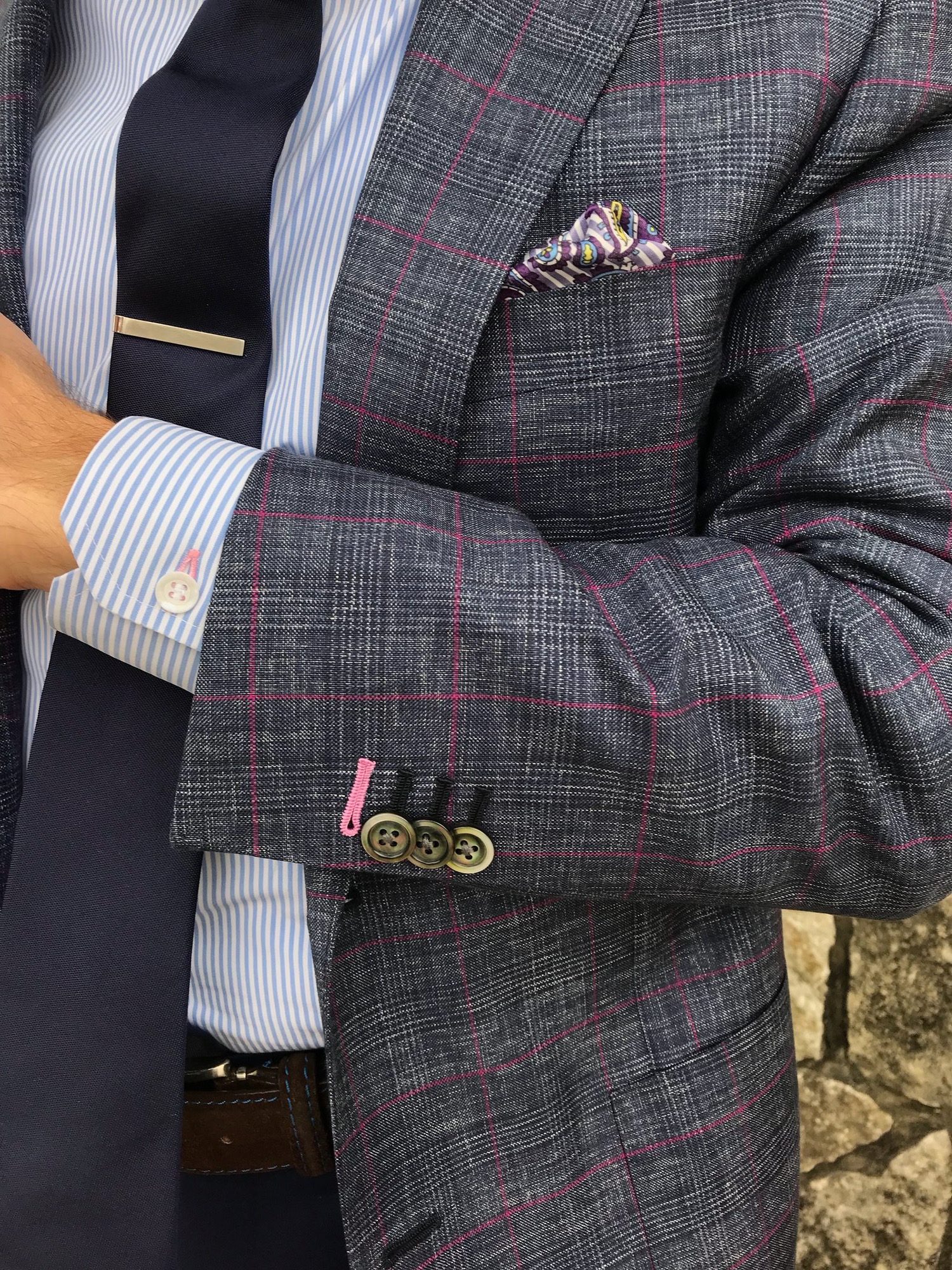
A half-canvas construction, this gives the jacket shape and structure without the rigidity of a full canvas. It's the goldilocks zone. A notch lapel of medium width (about 3 inches), not too skinny, not too wide. Flap pockets, they read professional but not stuffy. And a two-button front, the most versatile closure, working equally well buttoned for a meeting or open for a post-work drink.
What to Avoid in Business Casual
Avoid anything that looks like an orphaned suit jacket. The quickest tell is a smooth, worsted wool fabric in a pattern that clearly belongs to a suit, like a pinstripe or chalk stripe. If it looks like it's missing trousers, it probably is. Sport jackets should have texture, pattern, or color that distinguishes them from suit coats.
Avoid extreme patterns, bold windowpanes in bright colors, loud checks, or anything that draws too much attention in a professional setting. Save those for social occasions. And avoid overly casual details like contrast elbow patches or ticket pockets, which can read as costume-y in a modern office.
Casual Outfit Ideas: How to Dress Down a Sport Jacket
Here's where the sport jacket truly earns its keep. A great sport jacket doesn't just work in professional settings, it transforms casual outfits into something elevated and intentional. Here are our favorite casual sport jacket combinations, honed from years of dressing clients in Miami.
The Weekend Classic: Navy Jacket + White Tee + Dark Denim
This is the outfit that never fails. A navy sport jacket, ideally in hopsack or a textured wool, worn over a clean white t-shirt (no graphic prints), paired with dark rinse denim and clean white leather sneakers. It's effortless, it's timeless, and it works everywhere from a Sunday brunch to a gallery opening to a dinner date.
The key is in the details: the t-shirt should be high-quality, well-fitted, and free of logos. The denim should be dark and tailored, not skinny, but slim with a clean break. And the sneakers should be minimalist, think common projects style, not running shoes. The sport jacket elevates the casual pieces, and the casual pieces keep the jacket from feeling stuffy.
The Miami Special: Light Jacket + Linen Trousers + Loafers
In Miami, heat is a constant companion. A lightweight sport jacket in linen or a linen-wool blend, worn over a linen or cotton shirt (no tie), paired with cream or stone linen trousers and suede loafers, this is warm-weather elegance at its finest. The texture of the linen jacket adds character, the open collar keeps it relaxed, and the loafers bridge the gap between casual and polished.
Color-wise, think light. A tan, cream, or light grey linen jacket with cream trousers and a pale blue shirt. Or an olive linen jacket with stone trousers and a white shirt. The monochromatic or tonal approach looks intentional and sophisticated, and it photographs beautifully, which is why so many of our clients wear this combination for events and evening outings.
The Smart Casual Layer: Jacket + Knitwear + Chinos
When the temperature drops, or the AC is blasting, layering is your friend. A sport jacket over a fine-gauge merino wool crewneck or a cashmere sweater, paired with chinos and leather boots or brogues, creates a richly textured look that's perfect for dinner, travel, or evening events.
The trick here is color harmony. A charcoal jacket over a burgundy crewneck with grey chinos. A brown jacket over an oatmeal sweater with olive chinos. A navy jacket over a light grey crewneck with tan chinos. Each of these combinations is more interesting than a shirt-and-jacket pairing, and the knitwear adds a layer of comfort and approachability.
The Creative Professional: Jacket + Turtleneck + Tailored Trousers
For a look that's modern, creative, and a bit European, try a sport jacket over a lightweight turtleneck (merino wool or cashmere) with tailored trousers and leather Chelsea boots. This works particularly well in creative industries, tech, or any environment where you want to look sharp without looking corporate.
Stick to a tonal palette, a navy jacket with a black or charcoal turtleneck and dark grey trousers is sleek and powerful. A brown jacket with a cream turtleneck and navy trousers is warmer and more approachable. The turtleneck removes the formality of a collared shirt while maintaining a polished silhouette.
The Summer Evening: Unstructured Jacket + Polo + Tailored Shorts
Yes, you can wear a sport jacket with shorts, if you do it right. An unstructured, patch-pocket jacket in a lightweight fabric like linen-cotton blend, worn over a well-fitted knit polo, paired with tailored shorts (hitting just above the knee) and leather sandals or loafers. This is a South Florida-specific look that works for rooftop bars, boat clubs, and summer evening events.
Keep the color palette cohesive, a navy jacket with a white polo and navy shorts, or an olive jacket with a cream polo and stone shorts. The jacket should be soft and unstructured, almost shirt-jacket-like, so it reads as an intentional casual layer rather than a formal piece worn inappropriately.
Choosing Sport Jacket Fabrics for All Seasons
Fabric is the most important factor in how your sport jacket performs across seasons. The wrong fabric will have you sweating through a Miami afternoon or shivering through an air-conditioned dinner. The right fabric keeps you comfortable and looking sharp year-round. Here's our seasonal guide to sport jacket fabrics.
Spring and Summer: Lightweight and Breathable
In warm weather, and in Miami, that's most of the year, your fabric priorities are breathability, light weight, and moisture management. The best warm-weather sport jacket fabrics are:
Linen. The king of summer fabrics. Linen is incredibly breathable, dries quickly, and has a beautiful natural texture that gets better with wear. Yes, it wrinkles, but those wrinkles are part of linen's character. A linen sport jacket in navy, tan, or olive is a warm-weather essential. For a slightly more refined look, a linen-wool blend (60% wool, 40% linen) reduces wrinkling while maintaining breathability.
Tropical wool / Fresco. An open-weave wool that's specifically engineered for hot weather. It's more refined than linen, making it the better choice for business casual in summer. A grey or navy fresco jacket is perhaps the most useful single jacket you can own in a warm climate.
Cotton-linen blends. These sit between casual and smart. They have the breathability of linen with the structure of cotton. They're ideal for casual settings and summer social events. They read less formal than wool, which is exactly what you want for a weekend jacket.
Seersucker. A puckered cotton fabric that's a Southern tradition. It's lightweight, breathes well, and has a distinctive texture that means you never need to iron it. Seersucker is the most casual option here, best for social events, not business settings.
Fall and Winter: Texture and Warmth
When temperatures drop, or when you're dealing with aggressive air conditioning, you want fabrics with more body, texture, and insulating properties. The best cool-weather sport jacket fabrics are:
Flannel. Soft, brushed wool with a matte finish. Flannel is warm, elegant, and has a beautiful drape. A charcoal or navy flannel sport jacket is a fall/winter staple that pairs beautifully with knitwear and heavier trousers.
Tweed. A rugged, textured wool traditionally associated with the British countryside. A Donegal tweed or a Harris tweed sport jacket is warm, characterful, and ages beautifully. It's the most casual of the winter fabrics, best for weekends, social events, and creative workplaces.
Cashmere blends. A wool-cashmere blend (typically 80/20 or 90/10) adds softness, warmth, and a subtle luster. These are luxurious fabrics that work in both business casual and social settings. The cashmere adds warmth without bulk, making it ideal for travel.
Corduroy. A cotton fabric with a distinctive ribbed texture. Corduroy is warm, casual, and full of character. A fine-wale corduroy in navy, brown, or olive is a wonderful fall jacket, pair it with chinos and a sweater for a cozy weekend look.
The All-Season Sweet Spot
If you're building a wardrobe and want jackets that work across multiple seasons, especially important in Miami, where the temperature shift between "summer" and "winter" might be 20 degrees, focus on these fabrics:
Mid-weight hopsack (9-10 oz). This is the most versatile fabric we recommend. It's light enough for spring and summer comfort, substantial enough for air-conditioned interiors and cooler evenings, and textured enough to read as a sport jacket (not an orphaned suit coat). A navy hopsack jacket is the single most useful garment in a Miami wardrobe.
Fresco / Tropical wool (8-10 oz). The open weave makes it breathable in heat, and wool's natural temperature regulation keeps you comfortable in AC. It's the best business casual fabric for warm climates.
Lightweight flannel (10-11 oz). A lighter version of traditional flannel that works in fall, winter, and cool spring evenings. It's not a Miami summer fabric, but it's perfect for the 3-4 months when the temperature dips below 70.
The goal is to have 3-4 sport jackets that cover the full spectrum: one or two lightweight jackets for the heat, one mid-weight for the in-between months, and one heavier jacket for when it genuinely gets cool. This is a wardrobe that works, not a closet full of jackets that only work in one context.
Can You Wear a Sport Jacket with a Polo Shirt?
Yes, absolutely, and once you try it, you may never go back to the shirt-and-tie default. A sport jacket paired with the right polo shirt is one of the most effortlessly elegant combinations a man can wear. It bridges casual and polished in a way that feels intentional without trying too hard. But the keyword is right polo, because the wrong one turns this look from sophisticated to sloppy in seconds.
Why Knit Polos Work Best
Not all polos are created equal. A standard cotton pique polo, the kind you'd wear on a golf course, has a relaxed, slightly rumpled character that can look disjointed under a tailored jacket. The collar often lacks the structure to stand against a jacket lapel, and the overall silhouette reads more weekend than smart.
A fine-gauge merino knit polo is the ideal bridge piece. Merino knit polos have a refined, almost sweater-like quality that holds its shape beautifully under a jacket. The collar sits cleanly against the lapel, the fabric drapes smoothly without bunching, and the texture complements wool, linen, and hopsack jackets alike. Think of it as the smart-casual equivalent of a dress shirt, the comfort of a polo with the polish of knitwear.
Styling Tips: Tuck, Color, and Context
A knit polo with a clean, finished hem should be tucked in, this creates a sharp, tailored line at the waist. An untucked knit polo can work in relaxed settings, but the hem should hit no lower than mid-hip. For color pairing, the same rules that govern shirt-and-jacket combinations apply:
- Navy jacket + white or light blue knit polo, crisp, classic, impossible to get wrong
- Brown jacket + cream or oatmeal knit polo, warm, rich, perfect for fall evenings
- Grey jacket + black or charcoal knit polo, modern, sleek, with a slight edge
- Olive jacket + white knit polo, fresh and Miami-appropriate year-round
Avoid matching your polo color too closely to your jacket, a navy polo under a navy jacket creates a flat, monotonous look. Contrast is what makes the combination sing.
When It Works (and When It Doesn't)
The jacket-and-polo combination shines in smart casual dinners, creative offices, evening events, gallery openings, and rooftop bars. In Miami, it's practically a uniform for evening social events, it respects the climate while maintaining a put-together appearance. It's not appropriate for conservative business environments or formal events. If you'd feel underdressed in a polo alone, the jacket doesn't change that enough, reach for a button-down instead.
What to Avoid
- Graphic tees under jackets. A printed t-shirt under a sport jacket almost always looks wrong. If you're going tee-under-jacket, stick to a solid, high-quality crewneck in white or grey.
- Oversized polos. A polo that fits like a tent will bunch and destroy the clean line of your jacket. Your polo should fit trimly with shoulder seams at your shoulders.
- Logo-heavy polos. A large embroidered logo peeking out from under a lapel cheapens the look. Opt for minimal or no branding.
- Wrinkled polos. Knit polos should be steamed or lightly ironed. A wrinkled polo under a crisp jacket creates a jarring contrast in grooming levels.
Ready to build the perfect jacket for your knit polo combination? Explore our custom blazers and sport jackets or book a consultation to get started.
Sport Jacket Styling for Winter
Miami winters are mild, but our clients travel, and winter is arguably the most rewarding season for sport jacket styling. It's when layering, texture, and rich color palettes come into play, and when a well-chosen jacket transforms from a single garment into the centerpiece of a complete cold-weather look. The fabrics section above covered what to wear in winter; this section covers how to style it.
Layering Strategies
Winter styling is all about strategic layering, and the sport jacket is your outermost structured layer:
Jacket over sweater. The most classic winter combination. A fine-gauge merino crewneck or cashmere V-neck under a flannel or tweed jacket creates a richly textured, warm look. The sweater replaces the shirt-and-tie, simplifying the outfit while adding warmth. Ensure the sweater fits close to the body, a bulky sweater under a fitted jacket restricts movement and creates bunching.
Jacket over vest. A tailored waistcoat or thin quilted vest under a sport jacket is a European cold-weather staple. A charcoal vest under a navy jacket adds core warmth without restricting arm mobility. Avoid puffy outdoor vests, opt for tailored, thin vests in wool or technical fabrics that fit cleanly without bulk.
Shirt and jacket. For milder winter days, wear a sport jacket over an Oxford cloth button-down with the collar open, or a flannel shirt. Choose shirts with enough body and texture to stand up to winter-weight jackets, a thin summer cotton looks lost under heavy tweed.
Winter Color Palettes
Winter calls for deeper, richer tones that complement the season's lower light and heavier fabrics:
- Burgundy and oxblood, the quintessential winter accent. A burgundy crewneck under a charcoal flannel jacket is cold-weather perfection.
- Forest green, earthy and underused. A forest green sweater under a brown tweed jacket turns heads for the right reasons.
- Charcoal and slate, cool, modern, versatile. Tonal charcoal looks are powerful in winter when textures provide differentiation.
- Brown and camel, warm neutrals that feel right at home in cold weather. A camel sweater under a brown flannel jacket is timeless.
Accessories and the Indoor-Outdoor Transition
A wool or cashmere scarf in a solid color or subtle pattern, draped over the jacket collar, not knotted tightly, adds warmth and elegance. For gloves, leather is the only material that pairs properly with a sport jacket. Thin, unlined leather gloves in brown or oxblood read refined. Avoid thick knit gloves or anything with rubber grips, those are for the ski slope, not the dinner reservation.
The winter challenge isn't just staying warm outside, it's not overheating inside. The solution is removable layers. Your base layer should be comfortable at room temperature alone. Your mid-layer (sweater or vest) provides outdoor warmth but comes off inside. Choose a mid-weight flannel (10-11 oz) jacket that's warm enough for the cold but not a furnace indoors.
Four Winter Outfit Formulas
- The Executive Winter: Charcoal flannel jacket + burgundy merino crewneck + grey flannel trousers + black Chelsea boots. Boardroom-ready, bar-appropriate.
- The Weekend Tweed: Brown Donegal tweed jacket + forest green V-neck + tan corduroy trousers + brown brogue boots. Rugged, warm, full of character.
- The City Evening: Navy cashmere-blend jacket + charcoal turtleneck + dark grey trousers + black dress boots. Sleek, perfect for dinner or theater.
- The Layered Creative: Olive flannel jacket + tailored grey waistcoat + cream Oxford shirt + dark denim + brown suede chukkas. Interesting, warm, intentional.
Explore our custom menswear collection or book a consultation to design your winter sport jacket with the right fabric and styling for your climate.
How to Style a Sport Jacket with Jeans: The Complete Guide
The sport jacket and jeans is one of the most powerful looks in menswear, when done right. It's the ultimate smart casual expression: the structure of a jacket balanced against the ease of denim. But it's also one of the most commonly mishandled combinations. A great jacket with the wrong jeans creates a disconnect that reads as clueless rather than confident.
Choosing the Right Denim
Dark rinse, no distressing. The golden rule. Dark rinse denim, deep indigo or near-black, reads polished enough to sit alongside a tailored jacket. Distressing, rips, fading, and whiskering all signal "casual weekend" and clash with a sport jacket. Raw denim or a clean, uniform dark wash is ideal.
Slim-straight fit. The universally flattering cut, tailored enough to complement a fitted jacket but not so skinny it looks like leggings. Avoid bootcut, relaxed, or baggy fits. The break should be clean, with the hem touching the top of your shoe.
Color Pairing Rules
The relationship between your jacket and denim color determines whether the outfit works:
- Navy jacket + dark denim = safest. The foolproof combination. A navy jacket over dark indigo denim creates a tonal, cohesive look that's nearly impossible to get wrong.
- Brown jacket + mid-wash denim = stylish. A brown or tobacco jacket with clean mid-wash jeans is warmer and more interesting. The contrast between warm jacket and cool denim creates visual energy.
- Grey jacket + black denim = modern. A charcoal or medium grey jacket with black denim is sleek, urban, and slightly edgy. Works well for evening events and creative environments.
Avoid: Matching your denim too closely to your jacket color. A navy jacket with navy-tinted denim of the same shade looks like a failed suit. You want contrast.
What Shoes Work
- Sneakers: Clean, minimalist white leather sneakers. Avoid running shoes or anything with heavy branding.
- Boots: Chelsea boots, chukkas, and lace-up dress boots in leather or suede. Brown leather Chelsea boots with dark denim and a navy jacket is a combination that works as hard as your jacket does.
- Loafers: Penny or tassel loafers in suede or leather. Suede loafers with dark denim and a lightweight jacket is a Miami favorite.
Avoid: Boat shoes, flip-flops, hiking boots, and anything more function than fashion.
What to Wear Under the Jacket
- T-shirt: A high-quality, well-fitted solid crewneck in white, grey, or navy. Best with unstructured jackets. The tee should be substantial, thin, cheap tees look sloppy under tailoring.
- Knit polo: A fine-gauge merino knit polo is the sweet spot between casual and polished.
- Button-down shirt: An Oxford cloth button-down in white or light blue, open-collar (no tie), is the most versatile option. Works with every jacket and jean combination.
- Fine-gauge sweater: A merino crewneck or cashmere V-neck adds texture and warmth, pushing the outfit toward dressy.
Common Mistakes
- Matching denim too close to jacket color. A blue jacket with similar-shade jeans looks like a broken suit. Choose contrast.
- Distressed jeans with tailored jackets. Rips and fading belong with t-shirts, not with a jacket tailored to your measurements.
- Wrong shoe choice. When in doubt, choose leather over canvas, solid colors over patterns, clean over chunky.
- Neglecting fit. Baggy jeans under a fitted jacket look unbalanced. Aim for a coherent silhouette, tailored but not skinny.
Five Outfit Combinations
- The Classic: Navy hopsack jacket + white tee + dark rinse denim + white leather sneakers. The gold standard.
- The Elevated Casual: Brown tweed jacket + cream knit polo + mid-wash denim + brown suede chukkas. Warm and textured.
- The Evening Sharp: Charcoal flannel jacket + black turtleneck + black denim + black Chelsea boots. Sleek and dinner-ready.
- The Miami Smart: Olive linen-blend jacket + light blue Oxford shirt (open collar) + dark indigo denim + brown suede loafers. Climate-appropriate and polished.
- The Creative Professional: Grey glen plaid jacket + charcoal crewneck + dark rinse denim + brown brogue boots. Layered and intentional.
The sport jacket and jeans combination is one of the most rewarding looks in menswear once you know the rules. The jacket brings the tailoring; the jeans bring the ease. Explore our custom sport jacket options or book a consultation to design a jacket that pairs perfectly with your style.
Building Your Sport Jacket Wardrobe: A Practical Framework
If you're starting from scratch or refining what you own, here's the order in which we'd recommend building your sport jacket wardrobe. This is the same advice we give clients during consultations at Bespoke By CB.
Jacket #1: Navy Hopsack or Tropical Wool
Your first sport jacket should be navy. It's the most versatile color, it works in every setting from business casual to evening social, and it pairs with virtually any trouser color. Choose hopsack for texture or tropical wool for a smoother finish. This jacket will see more use than any other in your closet.
Jacket #2: Medium Grey
Your second jacket should be grey. Medium grey is the most elegant neutral, it pairs with navy, brown, olive, cream, and black. A grey sport jacket with navy trousers is a business casual combination that never fails. Choose a textured wool or a lightweight flannel depending on your climate.
Jacket #3: Brown or Olive
Your third jacket adds warmth and character. Brown is having a major moment in menswear, and for good reason, it's rich, it's warm, and it pairs beautifully with blue, cream, and grey. An olive jacket is the other option here, bringing an earthy sophistication that's particularly at home in warm climates.
Jacket #4: Something Seasonal or Patterned
Once you have the three core colors, you can have fun. A linen jacket for summer. A tweed or flannel for winter. A glen plaid or windowpane for visual interest. This is where you express personality, but only after the foundation is solid.
FAQ: Your Sport Jacket Questions Answered
What's the difference between a sport jacket, a blazer, and a suit jacket?
A sport jacket is designed to be worn on its own, typically featuring textured fabric, patterns, and casual details like patch pockets. A blazer is a specific type of sport jacket, usually navy, often with metal buttons, with a slightly more formal heritage. A suit jacket is part of a matching set, made from the same fabric as its trousers, and should generally only be worn as part of that set. Sport jackets and blazers are standalone garments designed for versatile styling.
Can I wear a sport jacket with jeans?
Absolutely, and you should. The key is contrast. Your jacket and jeans should be different enough in color and texture that it's clearly an intentional combination, not a mismatched suit. Navy jacket with dark denim is a classic. Avoid matching a navy jacket with navy jeans (it looks like a failed attempt at a suit), and avoid light wash or distressed denim, it clashes with the refinement of a sport jacket. Dark, clean, well-fitted denim is the way to go.
How should a sport jacket fit?
The shoulder seam should sit exactly at the edge of your shoulder, if it extends past, the jacket is too big; if it sits inside, it's too small. The collar should sit flush against your neck with no gap. When buttoned, the jacket shouldn't pull or create an X-shaped wrinkle pattern. Sleeves should end at your wrist bone, showing about a quarter inch of shirt cuff. The jacket length should cover your seat, roughly to mid-zipper on your trousers. For a truly perfect fit, nothing beats custom tailoring.
What fabric is best for a sport jacket in Miami?
For Miami's warm, humid climate, prioritize breathable, lightweight fabrics. Linen and linen-wool blends are excellent for casual wear and social events. Tropical wool (also called fresco) is the best choice for business casual, it's lightweight, breathable, but still reads professional. Hopsack in a mid-weight (around 9-10 ounces) is the most versatile option, working in both the heat and in air-conditioned interiors. Avoid heavy worsted wools, flannel, and anything above 12 ounces, you'll be uncomfortable within minutes of stepping outside.
Can I wear a sport jacket without a tie?
Yes, in fact, the tie-less sport jacket look is the defining silhouette of modern business casual and smart casual style. The key is making sure your shirt collar has enough structure to stand on its own. A button-down collar or a spread collar with collar stays works best. Avoid collarless shirts or soft, unstructured collars, they look sloppy under a jacket. A knit polo or fine-gauge merino crewneck also works beautifully without a tie.
How many sport jackets should I own?
For most men, a well-curated wardrobe of 3-4 sport jackets covers the full range of settings and seasons. Start with navy (your workhorse), add grey (your elegant option), then brown or olive (your character piece), and finally something seasonal or patterned for variety. Quality over quantity, one beautifully made, perfectly fitting custom sport jacket is worth five off-the-rack jackets that don't quite fit.
Should I dry clean my sport jacket after every wear?
No, over-dry-cleaning is one of the most common mistakes we see. Dry cleaning chemicals break down fibers and reduce the life of your jacket. Instead, let your jacket rest on a proper hanger (wide, contoured wooden hanger) for 24-48 hours between wears to let it air out and regain its shape. Spot clean minor marks, brush it with a soft garment brush to remove dust, and dry clean only when truly necessary, typically every 5-10 wears, or when there's visible soiling or odor.
What's the best way to transition a sport jacket from day to night?
The easiest day-to-night transition is swapping what you wear underneath. A sport jacket over a shirt and tie works for the office, remove the tie, open the collar, and you're ready for dinner. Or layer over a crewneck sweater for a cozy evening look. For a more dramatic shift, swap the trousers: wear the jacket with dress trousers and a shirt during the day, then switch to dark denim and a t-shirt or knit for the evening. The jacket stays the same, the pieces around it change the context entirely.
Building a versatile sport jacket wardrobe isn't about owning more, it's about owning better. A few well-chosen, beautifully fitted jackets in the right fabrics and colors will serve you in virtually every setting, from a Miami business meeting to a rooftop dinner to a weekend brunch. That's the philosophy we bring to every consultation at Bespoke By CB, we don't just make jackets, we build wardrobes that work for your life. Book a consultation with us, and let's find the jackets that will carry you through every season.
Frequently Asked Questions
What is the difference between a blazer and a sport jacket?
Blazers are typically solid-colored and more formal, while sport jackets feature patterns and textures for a more casual look. Both are versatile wardrobe essentials. Bespoke By CB in Miami offers custom options for both.
Can I wear a blazer with jeans?
Yes, a blazer with well-fitted dark jeans creates a stylish smart-casual look. Avoid distressed denim and choose a blazer in a complementary color. Bespoke By CB can create a custom blazer that transitions from casual to formal settings.
What fabric is best for a blazer in Miami?
Lightweight wool, linen, and cotton blends are ideal for Miami's warm climate. These fabrics keep you comfortable while maintaining a polished appearance. Bespoke By CB specializes in fabrics suited to South Florida's weather.
How should a blazer fit?
The shoulders should align with your natural shoulder line, the jacket should button without strain, and sleeves should end at the wrist bone. A custom blazer from Bespoke By CB ensures a perfect fit throughout.
What colors should my first blazer be?
Navy is the most versatile blazer color and should be every man's first choice. A navy blazer pairs with almost any trouser color and works for most occasions. Bespoke By CB can help you build a versatile blazer wardrobe.