

The Origins of Bespoke: A Word That Changed Fashion
Every great tradition has an origin story. Bespoke tailoring's begins with a single word, and that word has shaped the way men dress for nearly three centuries.
The term bespoke comes from the English verb bespeak, meaning "to speak for" or "to reserve." In the tailoring houses of 17th-century London, when a client selected a specific length of cloth from a tailor's bolt, that fabric was said to have been "spoken for." It was set aside, reserved exclusively for that individual, and no one else could claim it. From that simple act of reservation, an entire craft was born.
This was not merely a transaction. It was a declaration. The cloth had been chosen, the commission had been placed, and the tailor's work could begin. The garment would be made from scratch, cut, shaped, and sewn for one person and one person only. There was no pattern library, no standard sizing, no approximation. Just a blank sheet of paper, a bolt of fabric, and the skill of the tailor's hands.
That principle has not changed in 300 years. True bespoke tailoring still begins the same way: with a conversation, a selection, and a commitment to creating something that exists for one individual alone. Everything else, the measurements, the fittings, the hand-stitching, flows from that original act of speaking for the cloth.
Savile Row: The Street That Built an Industry
If bespoke tailoring has a spiritual home, it is Savile Row in London's Mayfair district. The street's association with tailoring began in the late 18th century, but it was the 19th century that cemented its reputation as the undisputed capital of men's bespoke clothing.
Tailors began establishing shops on Savile Row in the 1790s, but the street truly came into its own during the Regency era. By the 1840s, it was the destination for aristocrats, military officers, and statesmen who demanded garments cut to their exact specifications. Houses like Henry Poole (founded 1806), widely credited as the first tailor to open on Savile Row, established the template that others would follow for generations.
The Savile Row method was meticulous. A client's unique paper pattern was drafted from dozens of measurements. The garment was basted together for a first fitting, taken apart, adjusted, and rebuilt through successive fittings until the fit was flawless. The construction relied on a full floating canvas, a hand-stitched layer of horsehair canvas between the fabric and lining that allowed the jacket to mold to the wearer's body over time and move naturally with him.
This was not fast fashion. A single suit could require 60 to 80 hours of handwork. But the result was a garment that fit like nothing else on earth, and lasted for decades rather than seasons.
Beau Brummell and the Birth of Modern Menswear
You cannot tell the story of bespoke tailoring without telling the story of George "Beau" Brummell (1778, 1840). Brummell was the original dandy, a man so obsessed with personal style that he effectively invented the modern concept of menswear as we know it.
Before Brummell, men's fashion was dominated by ostentation: silk, velvet, embroidery, powdered wigs, and heels. Brummell rejected all of it. He championed a simpler, more refined aesthetic: a dark blue coat, buff trousers, a crisp white linen shirt, and an immaculately tied cravat. The effect was understated, but the craftsmanship behind it was extraordinary. Brummell spent hours each morning getting dressed, polishing his boots, and ensuring every line was perfect.
His philosophy was radical for its time: elegance should come from fit and quality, not from ornamentation. The cut of a garment mattered more than its decoration. The fabric's quality was more important than its color. And a man's clothing should be tailored to his body, not the other way around.
This idea caught fire. Brummell's influence spread through London society and eventually across Europe. Tailors who had previously worked to embellish existing garments now found themselves tasked with something far more demanding: creating garments from scratch that fit an individual body perfectly. The demand for bespoke tailoring exploded, and Savile Row was ready to meet it.
The Military Influence on Tailoring
Bespoke tailoring was not shaped by dandies alone. The military played an equally important role, and many of the details we now associate with fine menswear originated on the battlefield.
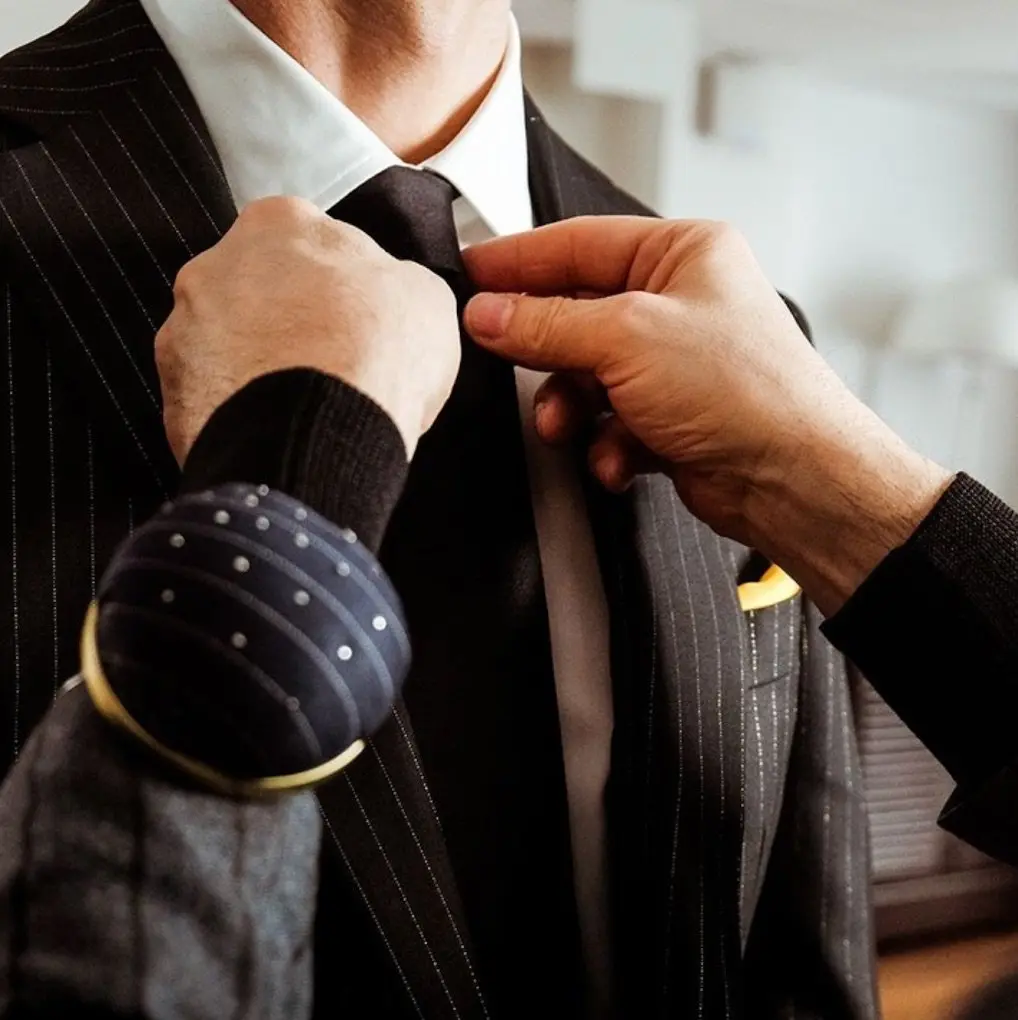
The regimental suit, with its structured shoulders and clean lines, descended directly from military dress uniforms. The ticket pocket on a jacket, that small pouch above the right hip pocket, was designed for officers to store train tickets without fumbling. The hacking jacket, with its flared skirt and angled pockets, was cut for men who spent their days on horseback. Even the side vents on a bespoke jacket have equestrian origins, allowing the garment to drape cleanly over a saddle.
Military tailoring also introduced the concept of the fitted shoulder. Uniforms needed to convey authority and structure, and a precisely shaped shoulder was the foundation of that silhouette. Savile Row tailors refined this further, developing the "roped shoulder", a slightly raised, defined sleeve head that gave jackets a distinctive architectural line.
These military details became permanent fixtures in the bespoke vocabulary. Today, every time a client chooses a hacking jacket or requests a structured shoulder, he is reaching back through two centuries of tailoring history.
English vs. Italian Tailoring: Two Great Traditions
As bespoke tailoring spread beyond England, distinct regional traditions emerged, and none became more influential than the Italian school. By the mid-20th century, two distinct philosophies had taken shape: English and Italian. Both were bespoke. Both were extraordinary. But they approached the craft from fundamentally different angles.
The English Tradition
English bespoke tailoring, the Savile Row tradition, is defined by structure, architecture, and precision. The classic English suit features:
- A full floating canvas construction for longevity and shape retention
- Structured, slightly padded shoulders with a defined sleeve head
- A clean, close-fitting chest with minimal drape
- Higher button stances and a longer jacket
- Hand-finished details throughout, from buttonholes to lining attachment
The English suit projects authority. It is architectural, composed, and built to last. When you put on a Savile Row suit, you feel the structure, the garment holds you as much as you hold it. This is the tradition that dressed British aristocracy, military officers, and statesmen for two centuries.
The Italian Tradition
Italian tailoring, centered in Naples, Rome, and Milan, took a different path. The Italian approach is defined by softness, fluidity, and natural elegance. Key characteristics include:
- Lighter, less structured shoulders (the famous Neapolitan "spalla camicia" or shirt-shoulder)
- A slightly draped chest that allows the fabric to breathe and move
- Shorter, closer jackets with a more relaxed silhouette
- Less internal construction, relying on the cutter's skill to shape the garment
- An emphasis on lightweight, luxurious fabrics from Italian mills like Loro Piana, Vitale Barberis Canonico, and Drago
The Italian suit projects ease. It is romantic, effortless, and designed for a climate where heavy structure would be oppressive. Naples, with its warm weather and passionate tailoring culture, became the heart of this tradition, producing a style that felt less like armor and more like a second skin.
Both traditions are valid. Both are beautiful. And at Bespoke By CB, we draw from both, combining English structural integrity with Italian lightness and fabric expertise to create garments perfectly suited for Miami's climate and lifestyle.
Bespoke Comes to America
Bespoke tailoring arrived in America through immigration and trade. In the 19th and early 20th centuries, European tailors, particularly Italian and Jewish immigrants, brought their craft to cities across the United States. New York became the first American center for custom tailoring, with shops on the Lower East Side and later in Midtown serving a growing class of American businessmen, entertainers, and politicians.
But American bespoke developed its own character. The American sack suit, a softer, less structured garment with a single vent and natural shoulder, became the domestic counterpart to the structured English cut. American clients valued comfort and practicality alongside elegance, and tailors adapted accordingly.
By the mid-20th century, custom tailoring was available in every major American city. But the rise of mass-produced ready-to-wear clothing, pioneered by companies like Brooks Brothers, began to erode the bespoke market. After World War II, the convenience and affordability of off-the-rack suits drew an entire generation away from custom tailoring. By the 1970s and 1980s, bespoke had become a niche pursuit, kept alive by a small number of dedicated tailors and a discerning clientele who understood the difference.
Miami: A New Frontier for Bespoke
Miami's relationship with bespoke tailoring is unique. The city's tropical climate, its position as a crossroads between Latin America and Europe, and its growing reputation as a luxury destination created a demand for custom clothing that could not be satisfied by traditional northern tailors.
Heavy English wool suits, magnificent in London or New York, are unwearable in Miami for eight months of the year. The city demanded a different kind of bespoke: one that preserved the craftsmanship and individual fit of the tradition but adapted the fabrics, construction, and silhouette for life in the tropics.
This is where Bespoke By CB found its calling. Christian Boehm brought 37 years of custom tailoring experience to Miami, combining the structural discipline of English tailoring with the lightweight, breathable fabrics of the Italian tradition. The result is a bespoke practice uniquely suited to South Florida, garments that look impeccable in a Brickell boardroom and remain comfortable on a warm evening in South Beach.
In Miami, bespoke is not just about looking good. It is about functioning well in an environment that punishes poor fabric choices. The city has become one of the most interesting bespoke markets in the country precisely because it demands innovation within tradition.
The Modern Bespoke Renaissance
After decades of decline, bespoke tailoring is experiencing a global renaissance. A new generation of men, and women, are rediscovering the value of garments made specifically for them. Several factors have driven this revival:
- The demand for individuality: In a world of mass production, having something made just for you is a statement of identity. Bespoke is the ultimate expression of personal style.
- The quality movement: Consumers are increasingly wary of disposable fashion. A bespoke suit lasts decades, not seasons. It is an investment, not an expense.
- The fit revolution: Men who have experienced a truly fitted garment rarely go back to off-the-rack. The difference is not subtle, it is transformative.
- Accessibility: Master tailors like Christian Boehm have made bespoke more approachable, offering in-home consultations and transparent pricing that demystify the process.
The renaissance is real, and it is growing. But it is also important to distinguish genuine bespoke from the many imitations that have emerged alongside it. Many operations use the word "bespoke" while actually offering made-to-measure, a fundamentally different process that starts with an existing pattern rather than drafting one from scratch. Understanding this distinction is essential for anyone considering custom clothing. Read our complete guide to bespoke vs. made-to-measure to learn the difference.
Bespoke By CB: A Tradition Continued
Bespoke By CB stands at the intersection of two great tailoring traditions and one great city. Christian Boehm's 37 years of experience represent a direct link to the craft's foundational principles, the same principles that guided the tailors of Savile Row in the 19th century and the Neapolitan masters of the 20th.
Every garment produced by Bespoke By CB follows the traditional bespoke method:
- 34+ unique body measurements taken by hand, not the 10, 15 typical of made-to-measure operations
- A unique paper pattern drafted from scratch for each client and kept on file permanently
- Full floating canvas construction, hand-finished throughout, for garments that mold to the body and last for decades
- Fabrics from the world's finest mills, Scabal, Holland & Sherry, Loro Piana, Ariston, Drago, Vitale Barberis Canonico, Dormeuil, and more, representing both the English and Italian traditions
- Personal fittings with fine-tuning by master tailors, with all adjustments recorded for future orders
This is not a shortcut. It is the long way, the way it has always been done. And it is the only way to produce a garment that truly belongs to the person wearing it.
The history of bespoke tailoring is a story of obsession with craft. From Beau Brummell's Regency London to the workshops of Savile Row, from the soft shoulders of Naples to the tropical elegance of Miami, the thread that connects every chapter is the same: a belief that clothing made for one person, with skill and care and the finest materials, is worth the effort.
That belief is alive at Bespoke By CB. Book your consultation and become part of the tradition.
Frequently Asked Questions
What does "bespoke" actually mean?
The word "bespoke" comes from the English verb bespeak, meaning "to speak for." In tailoring, it refers to cloth that has been selected and reserved by a specific client. A true bespoke garment is made entirely from scratch for that individual, with a unique pattern drafted from 30+ body measurements.
How is bespoke different from made-to-measure?
Bespoke drafts a unique pattern from scratch using 34+ measurements and involves multiple fittings during construction. Made-to-measure starts with an existing standard pattern and adjusts it using 10, 15 measurements. Bespoke offers unlimited customization and a truly individual fit; made-to-measure is limited by the base pattern. Learn more about the differences here.
How long does a bespoke suit take to make?
At Bespoke By CB, the typical turnaround is 4, 6 weeks from the first consultation to final delivery. This includes the initial measurement session, pattern drafting, construction, and a try-on fitting where any fine-tuning is completed. Rush options may be available for time-sensitive occasions like weddings.
What fabrics does Bespoke By CB use?
We carry fabrics from the world's most prestigious mills, including Scabal, Holland & Sherry, Loro Piana, Ariston, Drago, Vitale Barberis Canonico, Marzoni, Gladson, Albini/Thomas Mason, and Dormeuil. These represent both the English and Italian tailoring traditions, giving clients access to the finest cloth available anywhere.
Can I order a bespoke suit if I live outside Miami?
Yes. Christian Boehm offers in-home consultations across Miami-Dade, Broward, and Palm Beach counties. Once your pattern is on file, you can reorder from anywhere in the world without being re-measured. Explore our custom garments for men to see the full range.
How much does a bespoke suit cost in Miami?
Custom suits at Bespoke By CB start at $1,299. Final pricing depends on the fabric and construction details you choose. While bespoke is a significant investment, a properly constructed suit lasts 10+ years with proper care, far longer than off-the-rack alternatives.
Is bespoke tailoring only for men?
While the tradition originated in menswear, Bespoke By CB crafts custom garments for both men and women. The same principles, unique patterns, individual measurements, premium fabrics, and hand-finished construction, apply to every client regardless of gender.
Author: Bespoke By CB
Tags: bespoke history, Savile Row, bespoke tailoring, custom suits, tailoring tradition
