A single business meeting is a sprint. A conference is a tour: three days of sessions, hallway conversations, coffee lines, badge scans, rooftop receptions, and photographs you never knew were being taken. The man who dresses for day one usually looks great on day one and progressively rumpled by day three. The man who plans a multi-day conference wardrobe arrives at the closing dinner looking as composed as he did at registration, and colleagues notice, even if they never say so.
This guide lays out how to build a conference wardrobe that covers sessions, stage appearances, networking, and evening events without overpacking. The focus is on rotation logic: a small set of tailored pieces that recombine into distinct, credible outfits across several days. The goal is not more clothes. It is a system, the same logic Bespoke By CB uses when building professional wardrobes for Miami clients whose calendars mix boardrooms, conferences, and client dinners in a single week.
Why Conferences Punish One-Outfit Thinking
Most men pack for a conference the way they pack for a single meeting: one good suit, one backup, done. Then reality intervenes. The program runs three days. Tuesday evening has a cocktail reception. Wednesday you have been asked to speak on a panel you did not know about when you booked the flight. Thursday closes with a client dinner at a restaurant with a dress code described only as "resort elegant." The one-outfit plan collapses on contact with the actual schedule.
The second problem is physical. Conference days are long, twelve hours from breakfast meeting to last reception. You walk miles between session rooms. You sit for hours in chairs built for two-hour keynotes, not full days. You stand for networking blocks. A garment that photographs fine at 9 AM can look defeated by 6 PM if the cloth has no resilience, the shoulders have no room, and the trousers bind when you sit. Multi-day dressing is as much about fabric behavior and ease of movement as it is about color.
The third problem is repetition on camera. Conference photographers roam every session, and event apps publish attendee galleries. If you wear the identical outfit to every session, every photo of you across three days is interchangeable, and none of them flatters you on day two, when the creases have set. Distinct daily looks give you, and the event's visual record, variety without extravagance.
Start From the Schedule, Not the Suitcase
Before choosing a single garment, read the actual program and map your calendar into four dress zones: sessions, stage, networking, and evening. Nearly every conference outfit mistake traces back to skipping this step.
Sessions are your baseline. For most industry conferences, a tailored jacket with dress trousers or dark chinos is the correct register: polished enough to be taken seriously, comfortable enough for a full day of sitting and walking. A full suit every single session day is usually more than the room requires, and it spends your most formal garment before the events that actually need it. If the conference skews conservative, finance, law, consulting, raise the baseline to a suit for the days you have client-facing meetings booked, and keep the jacket-and-trousers formula for lighter days.
Stage is your peak. The day you speak, whether a keynote, panel, or workshop, you dress one notch above the room and keep the outfit camera-proof: a proper suit, a crisp shirt, clean shoes. Stage lighting is unforgiving and lanyards sit badly on soft collars, so favor structure. Photographers shoot speakers from below eye level with wide lenses; a jacket that fits through the shoulder and chest, and lapels with some presence, hold up in that geometry far better than soft, loose layers. Our executive suit style guide covers the stage-presence logic in more depth.
Networking blocks, coffee breaks, exhibit halls, hallway conversations, are where approachability matters more than authority. This is the register of the odd jacket or blazer with an open collar, or a knit polo under a soft jacket in warmer climates. People decide in seconds whether to interrupt you for a conversation; a slightly relaxed look invites it, while your peak-formal day-one suit says "scheduled meetings only."
Evening events are their own decision. Cocktail receptions at the venue usually mean the same jacket you wore all day, minus the tie or with a pocket square added. Offsite dinners and award banquets may call for a dark suit or a dinner jacket depending on the invitation's language. If the event says black tie, it means it; our tuxedo guidance covers that tier, and this article will not stretch a navy suit to fill it.
Build the Core: Two Jackets, Not Five
The engine of a multi-day conference wardrobe is rotation. Two jackets and two to three trouser options produce five or six distinct outfits, which is exactly what a three-day conference needs, and each piece gets a rest day so wrinkles fall out overnight.
Jacket one should be your anchor: a mid-navy suit jacket that reads as fully business. Navy is the correct anchor for conference travel because it pairs with every shirt color, works under every dress code from sessions to dinners, and photographs well in the event app, the stage livestream, and the candid hallway shot. A hopsack or quiet twill weave travels better than a shiny worsted, resisting creasing and reading as textured rather than flat under venue lighting. Worn with its matching trousers, this is your speaking outfit and your client dinner outfit.
Jacket two is the relief pitcher: a sport coat or blazer in a different value and texture. Mid-gray, taupe, or a subtle pattern such as glen check or faint windowpane separates it from the navy anchor at a glance. Its job is the networking day and the lighter session days, worn with trousers that do not match, which is precisely the register that says approachable professional rather than visiting executive. In a warm-weather city like Miami, a lightweight wool-linen blend in this slot handles humidity without wilting by the afternoon reception.
Around the two jackets, pack shirts as the cheapest unit of variety. Three to four shirts, white, pale blue, a fine stripe, and one warmer tone such as pale pink or lavender, recombine across both jackets so no outfit repeats. Shirts are also the garment that absorbs the most punishment across a long day, so favor easy-care poplins or tightly woven twills over delicate broadcloths, and if the conference runs longer than three days, use the hotel pressing service on the rest day rather than packing five.
Trousers complete the system. The navy suit's matching trousers, one pair of mid-to-light gray dress trousers, and optionally dark tailored chinos or a second trouser in charcoal cover everything. The gray trousers pair with the navy jacket and the patterned jacket alike; the chinos carry the patterned jacket on the most casual day. This is the logic behind wardrobe-building at Bespoke By CB: we plan garments in relationship to each other, so the second jacket is not a duplicate of the first but a deliberate counterweight, and every new shirt multiplies outfits instead of adding a one-off.
Fabric Choices for Long Days and Hotel Rooms
Multi-day conference dressing is decided as much by cloth as by color, and three properties matter: resilience, climate match, and recovery.
Resilience means the fabric resists creasing through hours of sitting. Heavier, open-weave wools like hopsack and high-twist wools are the travel champions; they bounce back from a four-hour panel and a red-eye in a way that superfine 120s suiting simply does not. If your suit currently exists only in a lightweight, delicate cloth, a conference-heavy calendar is one of the strongest arguments for commissioning a second suit in a travel-friendly weave. Custom suits from Bespoke By CB start at $1,299, and cloth selection is exactly where a consultant earns their keep: the mills we carry, Holland and Sherry, Loro Piana, Drago, Vitale Barberis Canonico, all offer high-twist and four-season weaves engineered for exactly this kind of schedule.
Climate match depends on the venue city. Winter conferences in the north reward flannels and heavier tweeds in the patterned-jacket slot; Miami and other warm-weather host cities reward wool-linen blends, fresco-style weaves, and half-lined jackets that survive a ten-block walk between the hotel and the convention center. Check the venue's typical weather before packing, not your home city's.
Recovery is the overnight test. Cloth should relax its creases while hanging, which means bringing a proper hanger or using the hotel's, and giving each jacket at least a day off between wears. Two jackets on a three-day conference is not a style preference; it is a maintenance schedule. A garment worn two consecutive days never fully recovers, and by day three the creases are structural.
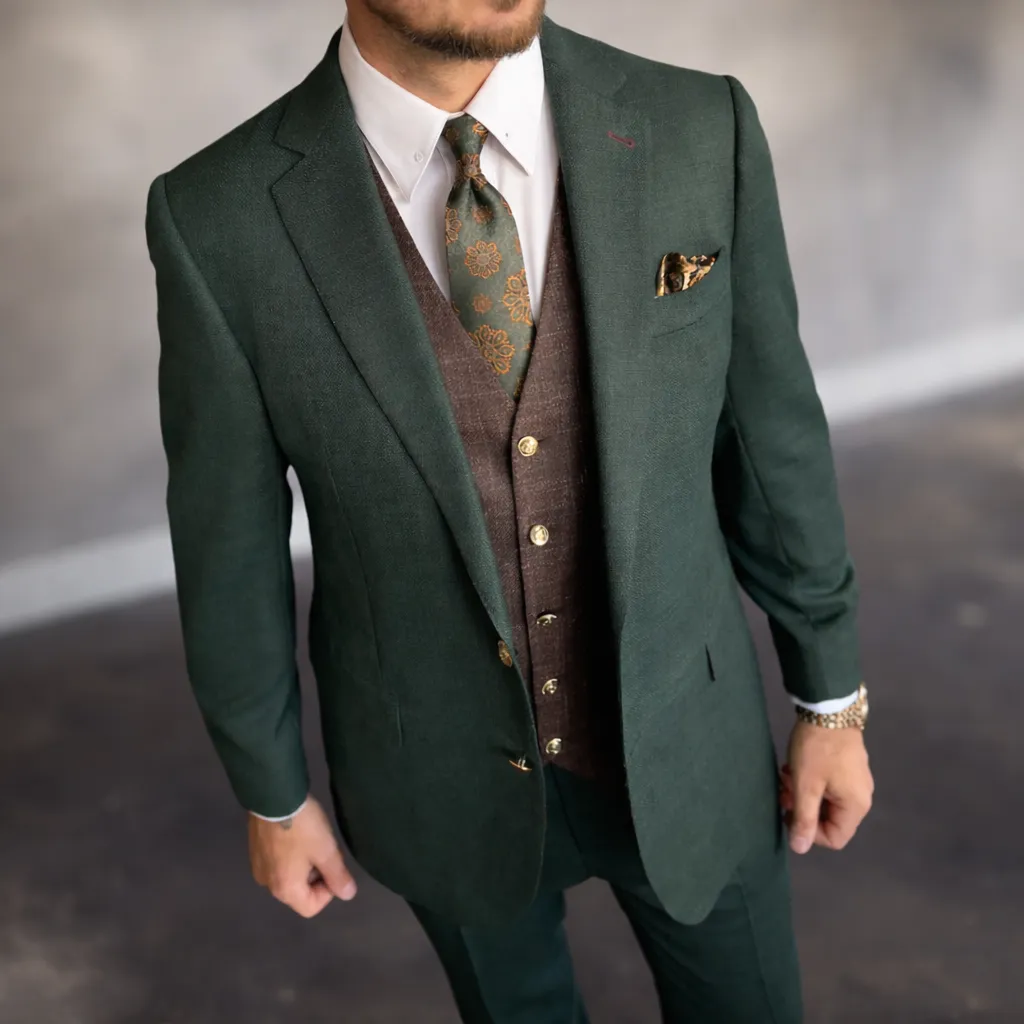
Packing Without Wrinkles
The wardrobe above packs into one carry-on if you do it correctly, and our suit-packing guide covers the full folding method, but the conference-specific rules are worth restating.
Pack the two jackets folded shoulder-to-shoulder or in a garment bag if the flight allows it, and hang them immediately on arrival, before anything else, so they have the maximum recovery window before day one. Roll the knitwear, if any, and fold shirts along their existing creases. Place shoes in bags and stuff them with the socks you will wear with them, which saves space and holds their shape. And pack one emergency kit: a lint roller, a travel steamer if the hotel lacks one, collar stays, a spare tie, and one spare pressed shirt. The spare shirt is the single highest-value item in the bag; conference days include coffee, crowded receptions, and food on the go, and a mid-afternoon shirt change rescues an evening event.
If the schedule includes a flight that lands the morning of day one, add buffer: travel in the most wrinkle-resistant outfit, the patterned jacket with the gray trousers, and save the navy suit for its stage moment, so an airline seat never touches it.
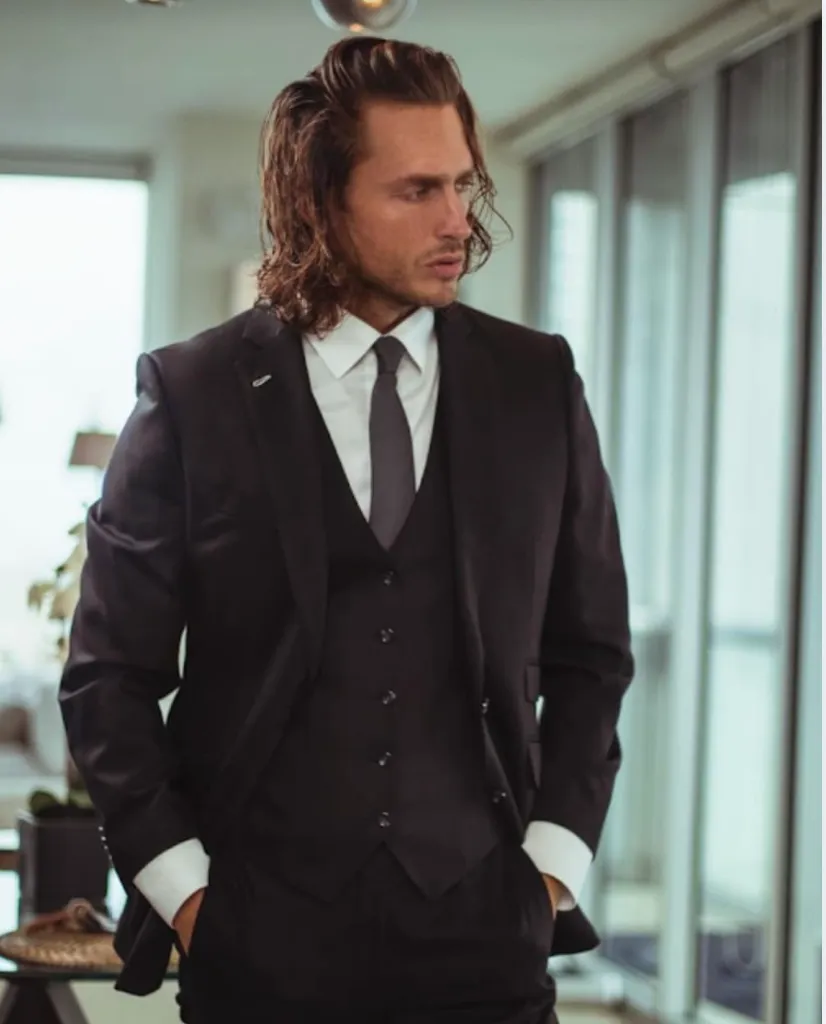
Day-By-Day: A Sample Three-Day Rotation
For a standard Wednesday to Friday industry conference, a complete plan looks like this.
Day one, arrival day, usually half registration and half opening receptions: patterned sport coat, light gray trousers, white shirt worn open collar, dark loafers. This is the approachability look. You will spend the day meeting people, and the soft register invites conversation. Swap the pocket square in and the collar buttoned for the welcome reception, and the same outfit carries into the evening without a hotel stop.
Day two, the heavy session day and your speaking slot: the full navy suit, white shirt, and a quiet tie, with the burgundy or navy grenadine doing its work as texture rather than pattern. Stage photos will dominate the event app, and this is the outfit you want in them. Between sessions, remove nothing; the jacket stays buttoned when standing, unbuttoned when seated, and the collar stays crisp. In the evening, if the reception is at the venue, keep the suit and drop the tie for the knit polo or open collar if the room allows; if it is offsite, return to the hotel and switch to the sport coat over a pale blue shirt so day three does not meet a twice-worn suit.
Day three, the wind-down, final sessions, closing conversations, and the farewell dinner: the navy suit trousers return, now worn with the patterned jacket, which produces a third distinct silhouette from the same small set. This is the classic "odd trousers inverted" move that makes a two-jacket wardrobe look like four outfits. A fine striped shirt keeps it from reading as a repeat of day one. For the closing dinner, if it is formal, the full navy suit returns, freshly pressed, with the pocket square added; if it is casual, the jacket-and-chinos formula finishes the week.
The system scales. A two-day conference drops day three and the chinos; a five-day monster adds a second pair of gray trousers and leans on the pressing service midweek. What never changes is the logic: anchor suit for peak moments, patterned jacket for the in-between days, shirts as the unit of variety, and no garment two days in a row.
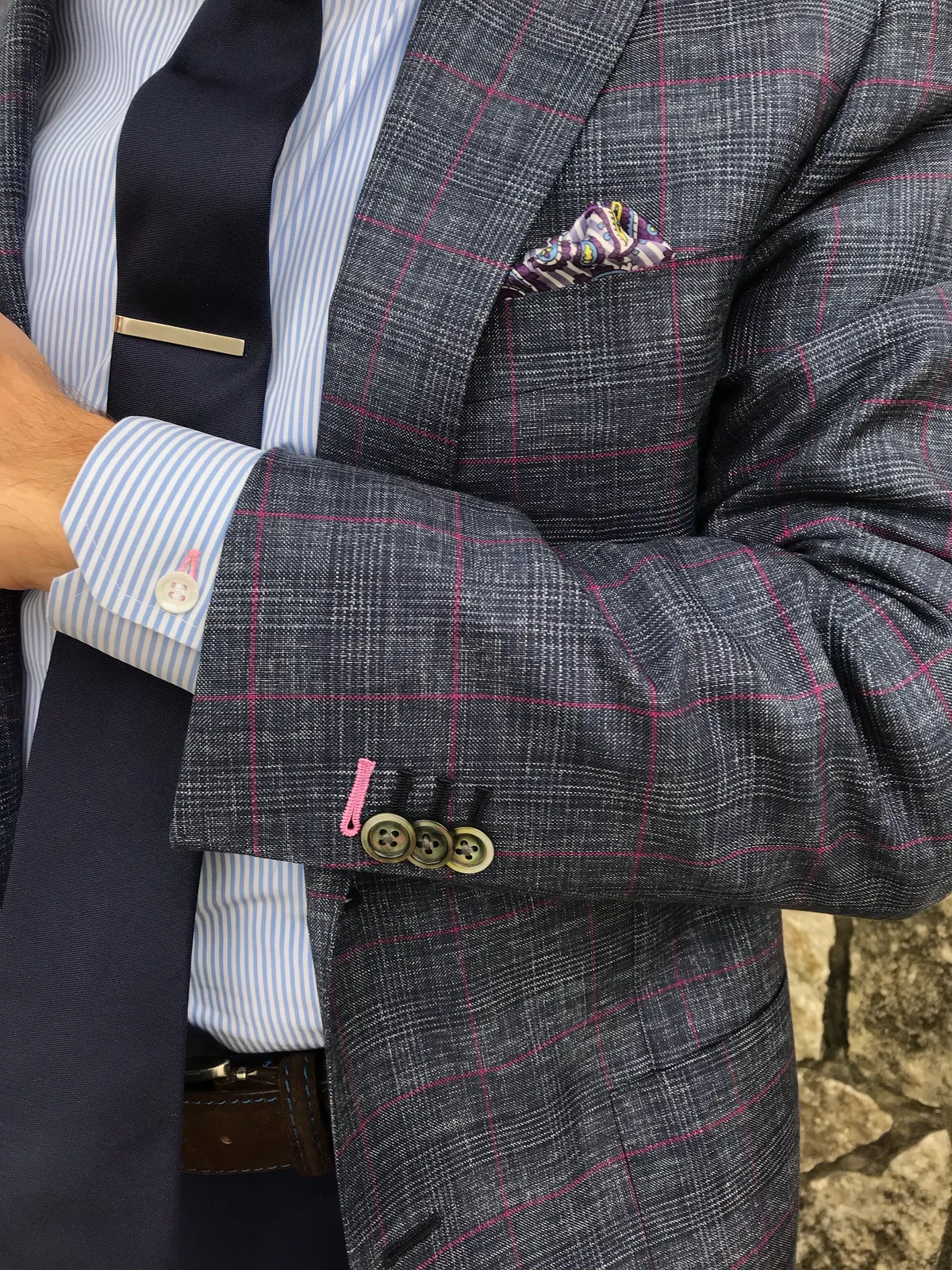
Miami Conferences and Warm-Weather Venues
For South Florida professionals, conference dressing carries a climate adjustment. Miami host venues, Brickell hotels, the convention center, outdoor reception spaces, demand fabrics that a Boston winter calendar never considers, and visitors arriving from cold-weather cities routinely overdress for our conferences, showing up in heavy flannels that wilt by the first coffee break.
The warm-weather conference formula favors lighter weights: fresco-style weaves and wool-linen blends in the navy anchor, a half-lined or unlined patterned jacket, and shirts in breathable poplins rather than heavy oxfords. Loafers and lighter-colored shoes replace the black cap-toe for daytime, and the evening register stays dark but light in weight. If your wardrobe was built for a northern office, a Miami conference calendar is a good reason to consult Bespoke By CB about a second, climate-specific suit: the fabric library in our Brickell showroom includes high-twist wools designed for exactly this weather, and a consultant can match the cloth to your actual schedule rather than a generic "four-season" label.
The same logic reverses for travel. A Miami professional heading to a winter conference in New York or Chicago should pack one warm layer, an overcoat that travels over the navy suit, and keep the venue city's climate in mind for the patterned-jacket slot. Our Miami versus New York dressing guide covers the two-city wardrobe split in more depth.
Accessories That Earn Their Bag Space
Conferences strip accessories down to what survives a badge lanyard and a ten-hour day.
Shoes: two pairs, maximum. Black loafers or cap-toes for the navy suit days, dark brown loafers or suede for the patterned-jacket days. Rotate them so neither pair absorbs two consecutive days of standing, and use shoe trees from the hotel closet or bring folding ones. Ties: pack two, one quiet solid and one subtle texture, in colors that work with every shirt you brought; a burgundy grenadine and a navy knit cover nearly everything. Pocket squares: two, white and one color, because they are the cheapest way to make a repeated outfit read as fresh at an evening event.
Belts should match the shoe family and travel rolled, not folded. Watches stay simple; a conference is not the place for the statement piece, because badge scanners, keyboards, and handshakes outnumber admirers. And leave the briefcase behind: a slim laptop bag or leather portfolio is the correct conference carry, small enough for the session rooms and polished enough for the reception.
How Bespoke By CB Builds Conference Wardrobes
A multi-day conference wardrobe is one of the most common projects that bring professionals to Bespoke By CB, because it exposes exactly what a ready-made wardrobe cannot do: coordinate. Our approach starts with your calendar, not a single garment. In the consultation, we map the actual occasions you attend across a year, the conferences, the client dinners, the speaking dates, and then design the pieces to serve that rotation: a navy anchor suit in a travel-resilient weave, a patterned jacket deliberately chosen as its counterweight, shirts specified in collar styles and fabrics that photograph well and wear long, and trousers that multiply across both jackets.
Every garment is cut to your measurements, which is what makes the twelve-hour conference day survivable: an armhole sized to your body lets the jacket move when you reach for a handshake without pulling at the button, and trousers with the right rise and seat stay comfortable from the morning keynote through the last reception. Custom suits start at $1,299 and custom shirts start at $240, and the fabric selection is where the conference-specific value lives; we will steer you to high-twist and half-lined cloths for heavy-travel calendars rather than letting a beautiful but delicate fabric sell itself. The showroom is in Miami at 1000 Brickell, and the four to six week lead time means the right time to start is before the season's conference calendar fills up. Whether you speak on stages or work the hallways, Bespoke By CB builds the wardrobe that keeps you dressed for every block of the program.
Frequently Asked Questions
How many outfits do I need for a three-day conference?
You need four distinct looks for a three-day conference: one for each day plus one for evening events, built from two jackets, two to three trouser options, and three to four shirts. The rotation logic matters more than the count. Two jackets, a navy anchor and a patterned sport coat, combine with different trousers and shirts into five or six outfits, so no garment repeats on consecutive days and every day photographs as a fresh look without overpacking.
Should I wear a suit to every day of a conference?
No, unless the conference is in a formally dressed industry such as finance or law and you have client-facing meetings daily. For most industry conferences, a tailored jacket with dress trousers is the correct baseline for session days, with the full suit reserved for the day you speak, client meetings, and formal evening events. Wearing a suit to every single session spends your most formal garment before the moments that need it, and reads as slightly off-register in rooms where the standard is business casual.
What should I wear when speaking at a conference?
Wear your best-fitting suit in navy or mid-gray, a crisp white or pale blue shirt, and a quiet tie, because stage photography, low camera angles, and event app galleries punish soft structure and loud patterns. The jacket should fit cleanly through the shoulder and chest, since speakers are photographed from below with wide lenses, and the shirt collar must hold its shape under a lanyard. Solid or micro-textured ties photograph as depth; wide stripes and bold patterns become the subject of the photo.
How do I transition a day outfit to an evening reception without changing?
Use accessories, not a hotel trip. Remove the tie and open the collar if the room allows it, swap in or puff up a pocket square, and switch the lapel badge for the pocket square's position as the visual interest point. The same navy suit that led a panel reads as evening-ready with an open collar and a white pocket square. If the reception is offsite and the schedule allows a hotel stop, changing the shirt entirely is the strongest refresh; a freshly pressed shirt after a twelve-hour day does more than any accessory.
What fabrics resist wrinkles best over a multi-day conference?
High-twist wools and hopsack weaves are the champions of multi-day wear, because they recover their shape overnight and resist creasing through long sessions. Open weaves like fresco add breathability for warm-weather venues, and wool-linen blends work well in tropical conference cities when chosen in a loose weave. Delicate, superfine suiting fabrics photograph beautifully on day one but crease structurally by day two, so a conference-heavy calendar argues for a travel-resilient second suit rather than another delicate one.
How do I pack a two-jacket conference wardrobe in a carry-on?
Fold each jacket along its existing creases or pack them in a garment bag if the flight allows, and hang them immediately on arrival so they recover overnight before day one. Pack shirts folded along their creases, roll knitwear, bag the shoes and stuff them with socks, and build the outfits around the rotation: navy suit trousers for peak days, gray dress trousers and the patterned jacket for lighter days, shirts as the variety. Bring one spare pressed shirt, a lint roller, collar stays, and a travel steamer; the spare shirt is the single most useful emergency item in the bag.
What shoes should I bring to a multi-day conference?
Two pairs: black loafers or cap-toes for the suit days and formal dinners, and dark brown loafers or suede for the patterned-jacket and networking days. Rotating two pairs lets each pair dry out and hold its shape across a three-day program, which matters when conference days involve more standing and walking than a normal office week. Match the belt family to the shoe, and keep the styles simple enough to move from session rooms to receptions without a change.
How do I dress for a conference in a hot-weather city like Miami?
Choose lighter-weight fabrics over lighter colors: a fresco-style or wool-linen navy suit, a half-lined or unlined patterned jacket, and breathable poplin shirts handle humidity without wilting by the afternoon reception. Loafers in brown or dark tan replace heavy black shoes for daytime, and the evening register stays dark but light in weight. Visitors from cold-weather cities routinely overdress for Miami conferences in heavy flannels; check the venue city's climate, not your home office's, when packing.
The Week, Planned
A multi-day conference rewards the same discipline as any professional project: understand the schedule, build a small system that covers it, and leave slack for surprises. Two jackets, a few trousers, a small shirt rotation, and fabric chosen for the actual venue city will carry you through every session, stage, hallway, and rooftop of the program, and the closing-dinner version of you will match the registration version. If the conference season on your calendar has outgrown a wardrobe built for single meetings, that is precisely the conversation Bespoke By CB's showroom was built for.