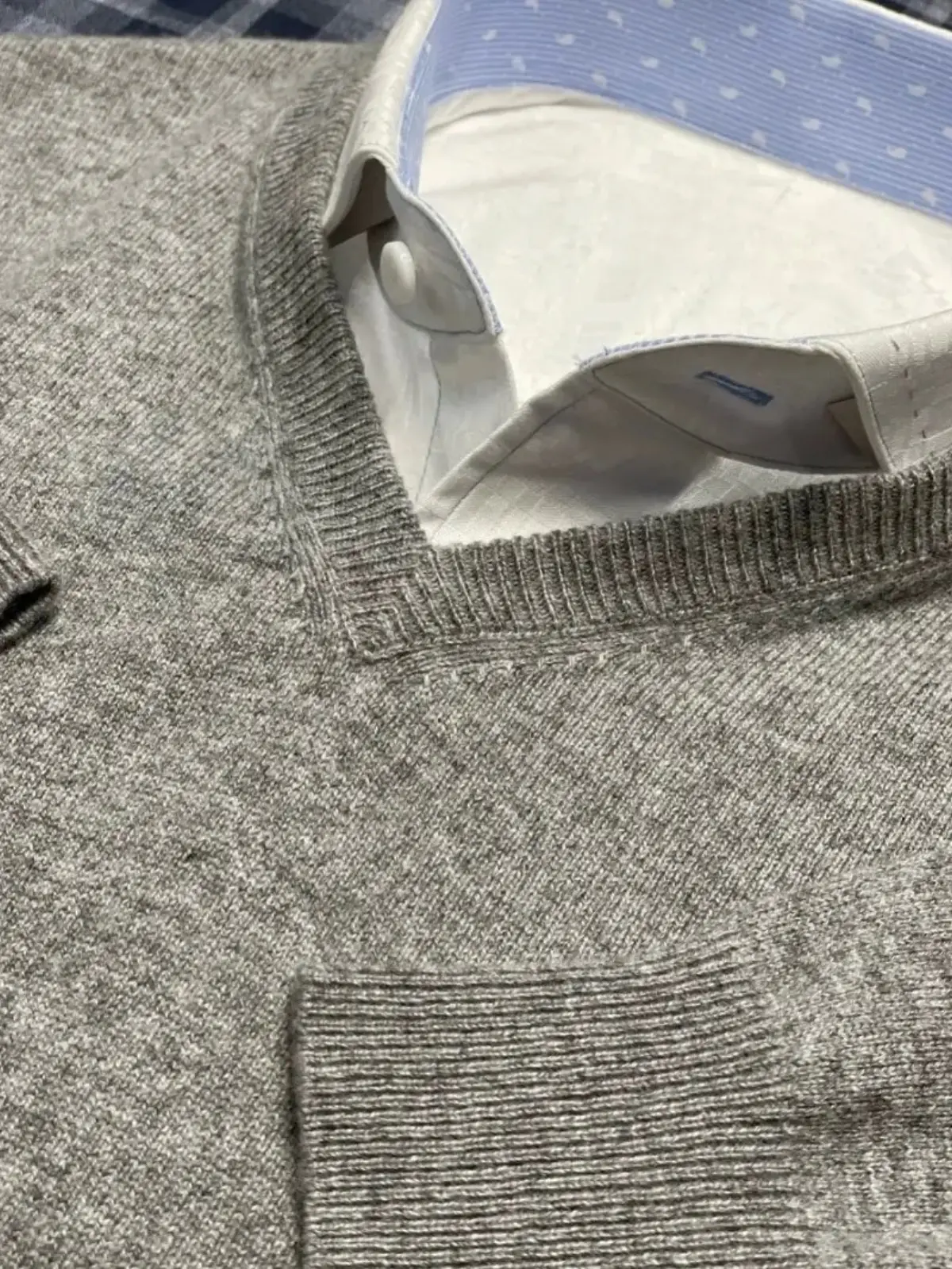
How Fabric Weight Affects Your Suit's Drape and Comfort
When most men think about buying a custom suit, they focus on fit, style, and color. But there is one factor that shapes how the suit looks on your body and how it feels after ten hours of wear more than almost anything else. That factor is fabric weight.
After years of consulting with clients in Miami and across South Florida, I have seen firsthand how the right fabric weight transforms a suit from something you tolerate into something you genuinely enjoy wearing. Get it wrong, and even the most beautifully tailored jacket will feel like a punishment by noon. Get it right, and the suit moves with you, breathes with you, and holds its shape from morning coffee to evening dinner.
Let me walk you through everything you need to know.
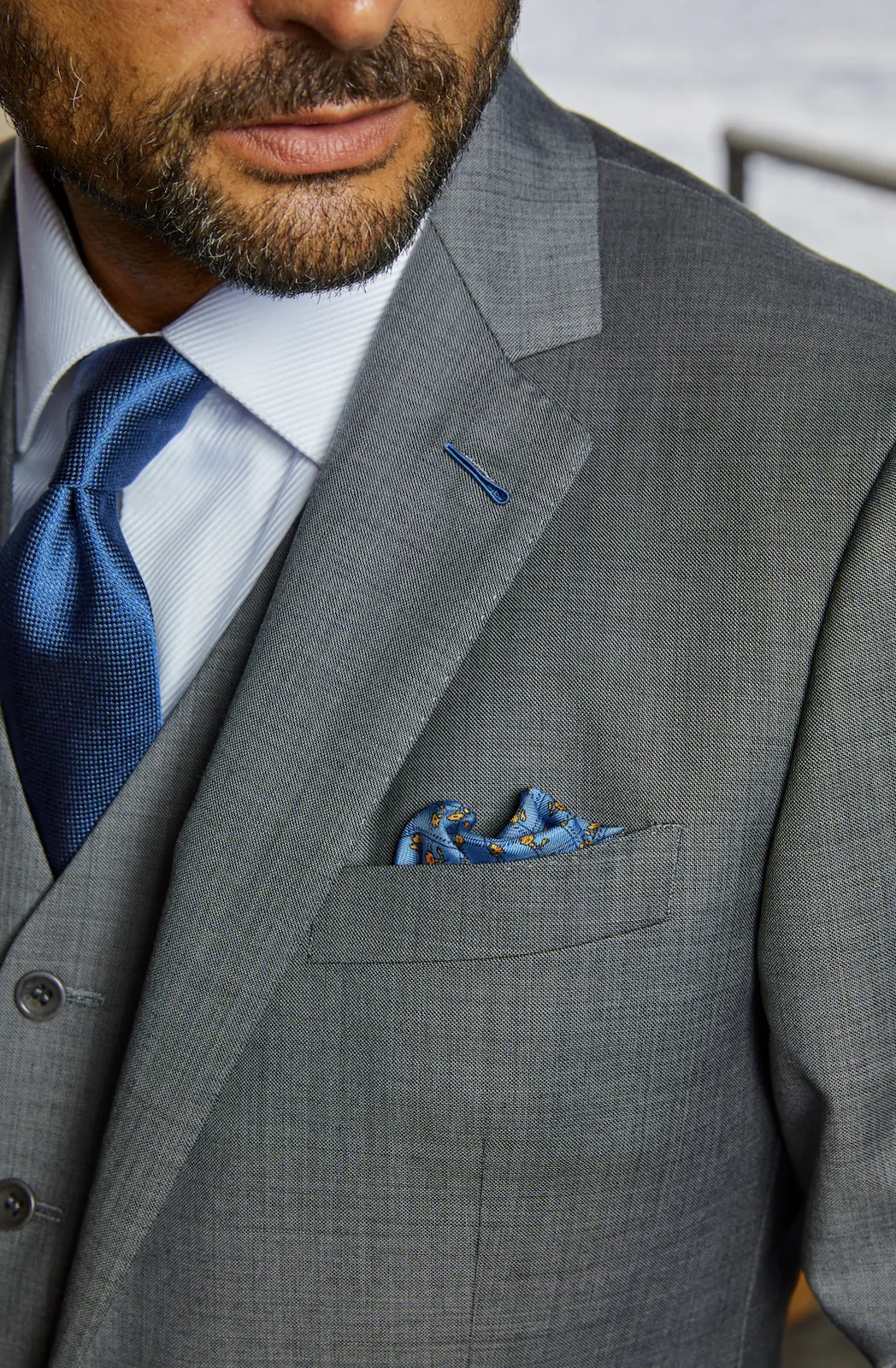
What Is Fabric Weight, Exactly?
Fabric weight refers to how heavy a given length of cloth is. The industry measures it in two ways:
- Ounces per yard (oz/yd): The traditional English measure, still used by most British and American mills. You will see fabrics described as "a 10-ounce wool" or "a 12-ounce flannel."
- Grams per meter (g/m or GSM): The metric equivalent, used by Italian mills and increasingly across the global textile industry. A 10-ounce fabric is roughly 340 grams per meter.
The two scales are not perfectly linear, but a simple rule of thumb helps: 1 ounce per yard is approximately 33-34 grams per meter. When you are browsing our fabrics collection, you will see both measurements depending on the mill.
What weight does NOT tell you is the quality of the wool. A 9-ounce fabric can be made from coarse worsted or from the finest Super 150s. Weight and quality are separate axes, and we will get to how they interact.
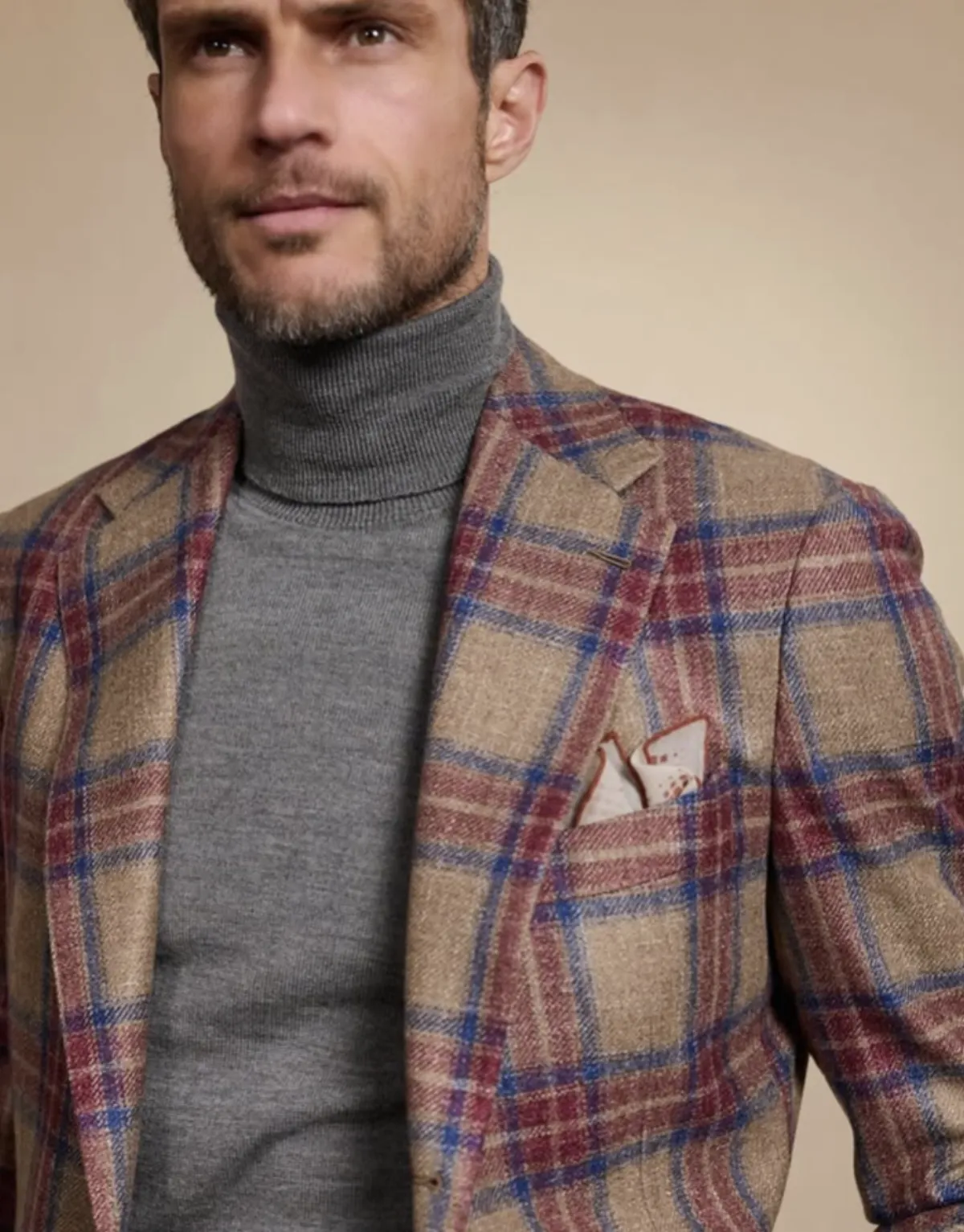
The Three Weight Categories
Every fabric you will encounter falls roughly into one of three buckets. Understanding these is the foundation of choosing the right cloth.
Lightweight: 7 to 9 Ounces (240-310 g/m)
These are the warmest-weather fabrics. Think tropical wools, fresco weaves, and lightweight linens. They are engineered for maximum breathability and minimum bulk.
Pros: Exceptional comfort in heat. They let air pass through the weave, which keeps you cooler. They feel almost weightless on the body.
Cons: Lighter fabrics do not drape as cleanly. The jacket can look a touch limp or soft rather than structured. Wrinkles form more easily, and the suit may need pressing more frequently.
Best for: South Florida weather, outdoor events, daytime occasions, and any client who runs warm. In Miami, this is my default recommendation for nine months of the year.
Mid-Weight: 10 to 12 Ounces (340-410 g/m)
This is the sweet spot for most men. Mid-weight fabrics include standard worsteds, twills, and many of the versatile cloths that mills like Loro Piana and Vitale Barberis Canonico build their reputation on.
Pros: Excellent drape. The fabric has enough body to hold a clean line from shoulder to hem. Wrinkles release more easily. The suit looks structured and sharp without feeling heavy.
Cons: In the peak of a Miami summer, 12 ounces can feel warm. If you spend time outdoors in August, you will notice it.
Best for: Office wear, evening events, year-round use in air-conditioned environments, and travel. If I could only recommend one weight to a client building their first custom suit, it would be an 11-ounce worsted.
Heavyweight: 13 to 16+ Ounces (440-550+ g/m)
These are the cold-weather workhorses. Flannels, Donegal tweeds, and heavy cavalry twills live here. Mills like Fox Brothers and Harrisons of Edinburgh produce some of the most beautiful heavy fabrics in the world.
Pros: Superb drape. Heavy fabric falls in clean, almost sculptural lines. It holds a crease beautifully, resists wrinkling, and looks sharp all day long. The structure it gives a jacket is unmatched.
Cons: Far too warm for Miami. Even in our brief "winter" (a few weeks in January where it drops below 70), a 16-ounce flannel is overkill unless you are spending the day outdoors. These fabrics also take up more room in a suitcase.
Best for: Travel to cooler climates, winter weddings up north, and clients who have a separate cold-weather wardrobe. In South Florida, I recommend these sparingly.
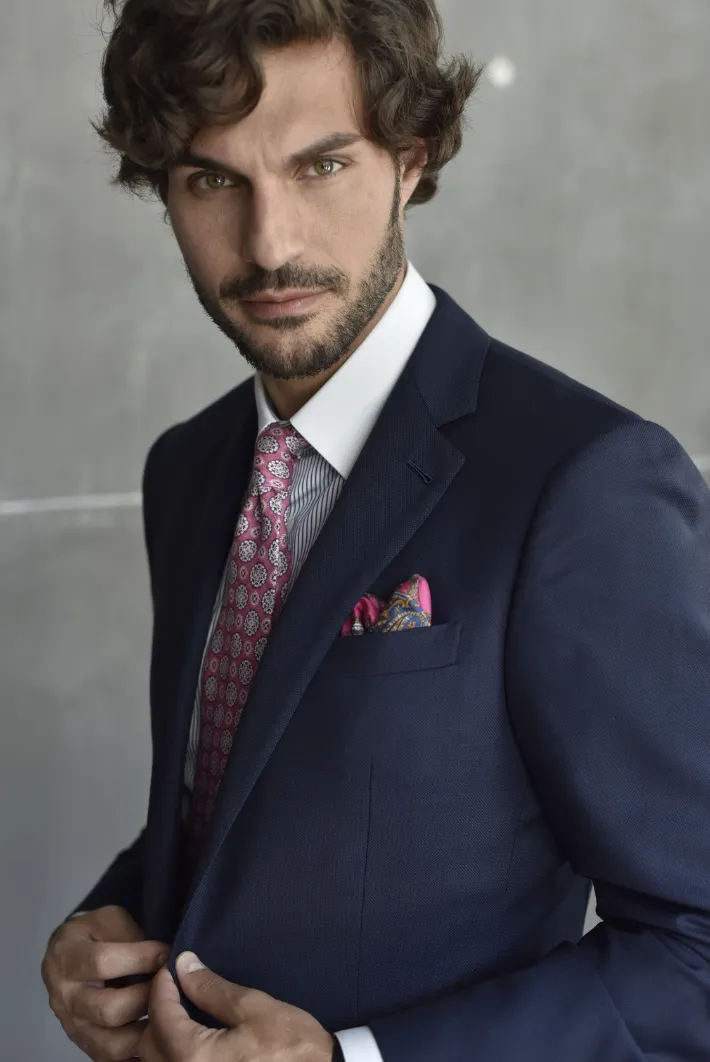
How Weight Affects Drape
Drape is the word tailors use to describe how fabric falls from the body. A well-draped jacket hangs in clean, uninterrupted lines. The lapel lies flat against the chest. The skirt of the jacket falls straight without flaring or clinging. The trousers break cleanly at the shoe.
Fabric weight is the single most important variable in drape. Here is why.
Heavier cloth has more mass per unit area. Gravity pulls it downward with more force, which means it falls more decisively. Think of it like a heavy curtain versus a sheer one. The heavy curtain hangs in a clean, straight fold. The sheer fabric floats and shifts.
For structured tailoring, drape matters. A jacket that drapes well looks like it was made for you, because it follows the architecture of your body rather than fighting it. Lighter fabrics, with less mass, are more prone to following every contour and movement, which can make a jacket look softer and less defined.
This does not mean lighter is worse. It means lighter is different. A soft, unstructured jacket in an 8-ounce fabric can look elegant and relaxed, which is exactly the vibe many Miami clients want. But if you are looking for that crisp, boardroom-ready silhouette, you need enough weight in the cloth to hold the shape.
The Super Number and Weight: What is the Relationship?
You have probably seen Super numbers on fabric tickets: Super 100s, Super 120s, Super 150s, all the way up to Super 200s and beyond. The Super number refers to the fineness of the wool fiber, measured in microns. Higher Super numbers mean finer, softer yarn.
Here is where confusion sets in. Many men assume that a higher Super number means a lighter fabric. It does not. You can have a Super 180s fabric in a 12-ounce weight, or a Super 100s in an 8-ounce weight. They are independent specifications.
What the Super number does affect is durability and feel. Finer yarns (higher Super numbers) are softer and silkier, but they are also more delicate. A Super 150s in a lightweight weave will pill and show wear faster than a Super 100s in the same weight.
My advice for most clients: stay in the Super 110s to 130s range for your workhorse suits. These offer the best balance of comfort, durability, and price. Save the Super 150s and above for special occasion suits that you wear a few times a year.
Why Lighter Does Not Always Mean Better
There is a common misconception, especially in warm climates like Miami, that you should always choose the lightest fabric available. I understand the instinct. When it is 90 degrees with 80% humidity, lighter feels like the only sane choice.
But going too light creates problems.
First, very lightweight fabrics (under 8 ounces) tend to lose their shape over the course of a day. What starts as a crisp jacket in the morning looks rumpled by lunch. You end up spending more on pressing and maintenance.
Second, ultra-light fabrics can be transparent. Stand near a window in an 8-ounce white shirt and you will see what I mean. The same happens with suits. A too-light fabric in a light color can show the outline of what you are wearing underneath, which undermines the polished look you are going for.
Third, extremely fine, lightweight wools are delicate. They snag, they pill, and they lose their surface finish faster than mid-weight cloths. If this is your everyday office suit, you will be replacing it sooner than you should need to.
The better approach is to choose the lightest weight that still drapes well for your body and your tailoring style. For most Miami clients, that lands in the 9 to 11 ounce range. You get breathability without sacrificing structure.
Choosing the Right Weight for Miami
South Florida is unique in the United States. Our climate is hot and humid for most of the year, with a brief, mild "winter" that barely warrants the name. This means the standard advice you read in menswear blogs written for New York or London does not fully apply.
Here is how I guide clients through the seasons in Miami:
Spring and Summer (March through October): Focus on 8 to 10 ounce fabrics. Look for open weaves like fresco, hopsack, and plain weave tropical wools. These let air circulate through the cloth itself, not just through ventilation in the jacket. Linen blends work well for casual and daytime events, though they wrinkle more. For office wear, a 9 or 10 ounce worsted in a breathable weave is your best friend.
Fall and Winter (November through February): You can comfortably wear 10 to 12 ounce fabrics. If you travel north for business or holidays, consider one heavier suit in the 12 to 14 ounce range. A mid-weight flannel is a beautiful thing in a Washington DC boardroom in January. But do not build your Miami wardrobe around it.
Year-round workhorse: An 11-ounce worsted in navy or charcoal. It is the most versatile suit you can own. It drapes well, breathes adequately in air conditioning, and looks sharp in any setting. Start here, then add lighter and heavier options as your wardrobe grows.
Matching Weight to Occasion
Beyond climate, the occasion should inform your fabric choice.
Business and professional settings: Lean toward mid-weight (10-12 ounces). The extra body in the fabric gives you a more authoritative, structured look. Worsted twills and plain weaves are ideal. Navy and charcoal are the standards for a reason.
Social and evening events: Mid-weight again, for the same reasons. A dinner jacket or evening suit benefits from clean drape. If it is a black-tie event, heavier barathea wool (13-14 ounces) gives the most beautiful sheen and structure, even in Miami.
Casual and daytime: Lightweight fabrics shine here. An unstructured jacket in an 8-ounce hopsack paired with odd trousers is a perfect Miami daytime look. The softness of the lighter cloth complements the relaxed silhouette.
Travel: Mid-weight is the traveler's friend. A 10 or 11 ounce wrinkle-resistant weave (like a tropical worsted) will come out of a suitcase looking presentable. Lightweight fabrics wrinkle too much for travel, and heavyweight fabrics take up too much room.
The Bottom Line
Fabric weight is not a detail. It is a decision that shapes every moment you spend in the suit. The right weight makes the difference between a suit you cannot wait to take off and one you forget you are wearing.
When you come in for a consultation, we will talk through your lifestyle, your typical day, where you will wear the suit, and how you want to feel in it. Then we will look at fabrics together, feel them in your hands, and make sure the weight matches both the climate and the occasion.
That is the advantage of custom. You are not stuck with whatever weight the rack happens to offer. You choose every element, from the mill to the weave to the weight, and the suit is built around your life.
If you have questions about fabric weight or want to explore options for your next suit, book a consultation at our Miami showroom. We will find the perfect cloth for your wardrobe, your climate, and your style.