What Is a Tuxedo Lapel?
The lapel is the folded flap of cloth on the front of a jacket, forming the neckline and framing the face. On a tuxedo or dinner jacket, the lapel is covered in a contrasting silk fabric, traditionally black, that catches the light differently than the wool body. This silk facing is what separates a tuxedo from a business suit.
But not all silk lapels are the same. The two main options, grosgrain and satin, have distinct textures, histories, and style implications. Choosing between them is one of the most personal decisions in formalwear, and the right choice depends on your aesthetic, your event, and even the lighting you'll be photographed under.

A Brief History of Lapel Silk
The practice of covering tuxedo lapels in silk dates to the 1860s, when the dinner jacket was first created as a less formal alternative to the tailcoat. The silk facing served a practical purpose: it protected the lapel from the oils and wear of evening use, while also creating a visual contrast that distinguished the garment from daywear. Originally, grosgrain was the standard, its heavy, ribbed weave was durable enough for repeated wear and matched the silk stripe on formal trousers.
Satin facings became more common in the 20th century, particularly in American formalwear. The smoother, shinier finish appealed to Hollywood and the emerging culture of red carpet glamour. By the 1950s, satin had become the default for most off-the-rack tuxedos, while grosgrain remained the preference of bespoke tailors and traditionalists on both sides of the Atlantic.
Today, both options are equally respected. The choice between grosgrain and satin is no longer about tradition versus modernity, it's about texture, shine, and the statement you want to make.
Grosgrain Lapels: The Textured Classic
Grosgrain (pronounced "grow-grain") is a heavy silk fabric with a distinct ribbed texture. The ridges run crosswise across the fabric, creating a subtle ridged pattern that catches light in a way flat satin cannot. Grosgrain is the traditional choice for British and European formalwear, and it remains the preferred facing for many Savile Row tailors.
The ribbed texture of grosgrain adds visual depth to the lapel. Up close, the ridges create a refined, almost sculptural quality that rewards close inspection. From a distance, grosgrain reads slightly duller than satin, which is exactly why some style purists prefer it. It signals quiet confidence rather than flash. The texture also provides a tactile experience; running your fingers across a grosgrain lapel reveals the craftsmanship in the weave itself.
Grosgrain is slightly thicker than satin, which means the lapel has a touch more body and structure. This can help the lapel hold its shape, particularly a peak or shawl lapel, over years of wear. For a tuxedo that will be in your wardrobe for decades, grosgrain's durability is a meaningful advantage.
When to Choose Grosgrain
You prefer a textured, matte finish over high shine
You're wearing a black or midnight blue tuxedo
You want a more traditional, British-inspired look
Your event is in a setting where understated elegance is preferred
You want a lapel that holds its shape over many years of wear
You're pairing with a textured fabric like a grenadine bow tie or ribbed socks
Satin Lapels: The Smooth Standard
Satin is a smooth, flat silk weave with a high-gloss finish. It's the most common lapel facing on American tuxedos and the default choice at most rental shops. The smooth surface reflects light evenly, creating a sleek, luminous sheen that stands out against the wool body of the jacket.
Satin's higher shine makes it more eye-catching under event lighting and photography. For black tie galas, weddings, and red carpet events, satin's reflective quality photographs beautifully and adds a touch of drama to the overall look. The smooth finish also creates a cleaner line on the lapel edge, which can make a peak lapel appear sharper and more defined.
Because satin is thinner than grosgrain, it tends to drape more closely against the jacket body. This creates a sleeker, more streamlined silhouette, which is why satin is often the preferred choice for slim-fit and modern-cut tuxedos. The trade-off is that satin is slightly more prone to showing wear over time: scuffs, pulls, and shine from friction can develop with repeated use.
When to Choose Satin
You want maximum shine and visual impact
You're attending a gala or high-profile event
You prefer a classic American tuxedo aesthetic
You want your tuxedo to photograph with more contrast
You're wearing a slim-fit or modern-cut tuxedo
Your event lighting is dim or dramatic (satin catches light beautifully)
Grosgrain vs Satin: Key Differences
Texture
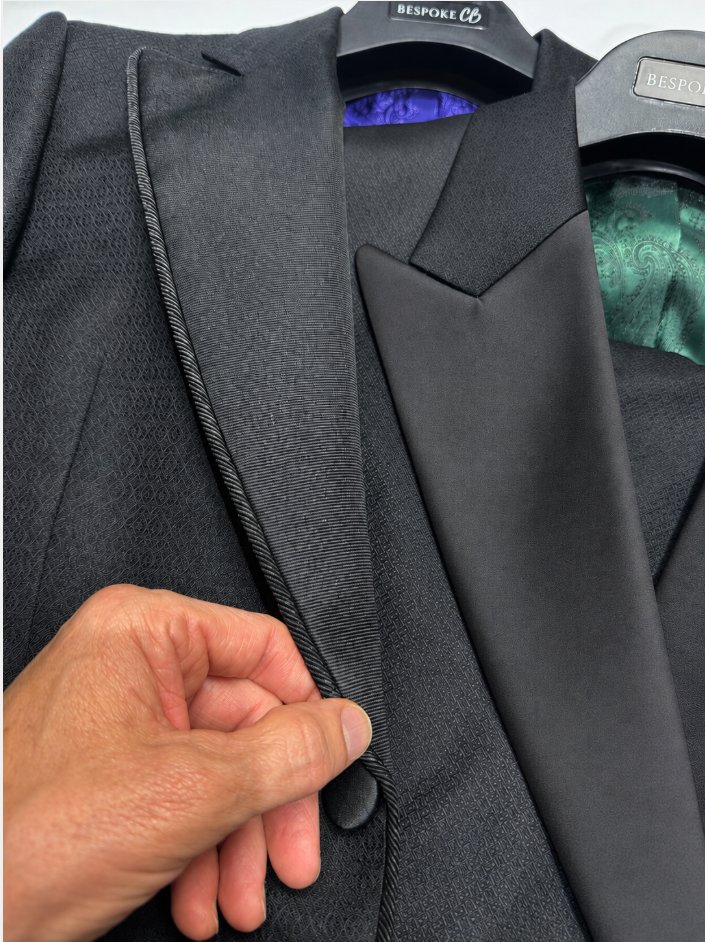
Grosgrain has a ribbed, ridged texture you can feel and see up close. Satin is completely smooth with no texture at all. If you run your finger across a grosgrain lapel, you'll feel the ridges; satin feels like glass. This textural difference is the most immediately noticeable distinction between the two.
Shine
Satin reflects more light, giving it a brighter, more luminous sheen. Grosgrain's ribbed surface diffuses light, resulting in a softer, more subdued glow. Under photography lighting, satin will typically appear more reflective, sometimes dramatically so under direct flash. Grosgrain's diffused finish is more forgiving in mixed lighting conditions.
Weight and Body
Grosgrain is a heavier weave, which gives the lapel more structure. This is particularly noticeable on peak and shawl lapels, where the silk needs to hold a defined shape. Satin is lighter and drapes more closely to the jacket, creating a slimmer profile but offering less inherent structure.
Formality
Both are equally formal and appropriate for black tie. Grosgrain is considered slightly more traditional and is often associated with Savile Row tailoring. Satin is the more mainstream American choice. Neither is "more correct", it comes down to personal preference and the overall look you're trying to achieve.
Durability
Grosgrain's heavier weave makes it slightly more resistant to wrinkling and wear. Satin, being thinner and smoother, can show scuffs or pulls more easily over time. For a tuxedo that will be worn frequently, grosgrain may hold up better. However, both are silk products that should be properly stored and cared for.
Color Matching
Both grosgrain and satin are available in black, midnight blue, and dark green silk facings. Black is the most versatile and traditional choice. Midnight blue offers a sophisticated alternative that pairs beautifully with a midnight blue tuxedo. The color should always match the trouser stripe and button coverings for visual consistency.
Matching Lapel to Covering
Whichever silk you choose for the lapel, the same fabric should be used for the buttons and the stripe down the trouser leg (if wearing a striped trouser). Mixing grosgrain and satin on the same tuxedo is a common mistake, the textures clash and break the visual cohesion of the outfit. A grosgrain lapel with satin buttons, for example, looks like two different tuxedos stitched together.
At Bespoke By CB, we source both grosgrain and satin silk facings from the same Italian mills that supply the world's finest tuxedo houses. Your consultant will show you both options side by side during your fitting so you can see and feel the difference in person, under the same lighting conditions you'll experience at your event.
Lapel Styles and Silk Pairings
The three classic tuxedo lapel styles, notch, peak, and shawl, each interact differently with grosgrain and satin:
Notch Lapel
The most common and versatile lapel style. Both grosgrain and satin work well on a notch lapel. Grosgrain adds a touch of textural interest to the simpler notch shape, while satin creates a clean, uninterrupted line. Notch lapels are the safest choice if you're unsure which silk to pick, both look excellent.
Peak Lapel
The peak lapel's sharp, upward-pointing edges benefit from grosgrain's structure. The heavier silk holds the peak's shape more firmly over time. Satin on a peak lapel creates a bolder, more dramatic look, the combination of sharp peaks and high shine is striking but less understated. If you want your peak lapel to maintain its crisp definition for years, grosgrain is the better choice.
Shawl Lapel
The shawl lapel's smooth, curved edge is the most elegant and formal of the three. Satin is the traditional pairing for shawl lapels, the smooth silk complements the uninterrupted curve beautifully. Grosgrain on a shawl lapel is less common but creates a distinctive textural contrast that some style-forward clients prefer. Both are acceptable, but satin is the more natural pairing.
What About the Bow Tie?
Your bow tie texture should complement, not match, your lapel silk. If you're wearing a grosgrain lapel, a slightly textured bow tie (like a grenadine or faille silk) creates a cohesive textural story. With a satin lapel, a smooth silk bow tie in the same finish creates a seamless, polished look, while a textured bow tie adds visual contrast.
Never wear a satin bow tie with a grosgrain lapel (or vice versa) if you can help it. The mismatched textures are subtle but noticeable to a trained eye. When in doubt, ask your consultant, they'll ensure your bow tie and lapel textures are coordinated.
Caring for Silk Lapels
Both grosgrain and satin are delicate silk products that require proper care:
Always hang your tuxedo on a wide, contoured hanger to maintain the lapel's shape
Store in a breathable garment bag, never plastic, which can trap moisture
Avoid pressing the silk facing directly; use a pressing cloth if ironing is necessary
Spot-clean only with a professional dry cleaner experienced with formalwear
Allow the jacket to air out for 24 hours after each wear before storing
Never store a tuxedo in direct sunlight, which can fade silk over time
Which Lapel Style Is Right for You?
There's no wrong answer, only the answer that fits your style, your event, and your tuxedo. Some clients choose grosgrain for a vintage-inspired dinner jacket and satin for a modern black tie gala look. Others commit to one finish across their entire formal wardrobe for consistency.
If you're still unsure, consider this: grosgrain rewards close inspection with its textured craftsmanship, while satin makes an immediate impression from across the room. One whispers, the other speaks. Both are correct.
The best way to decide is to see both textures in person. Book a consultation at our Miami studio and we'll walk you through grosgrain and satin lapel options on actual tuxedo jackets, along with fabric, cut, and fit recommendations tailored to your body and your event.
Frequently Asked Questions
Is grosgrain or satin more formal?
Both are equally formal and appropriate for black tie events. Grosgrain is considered more traditional (British), while satin is more common in American formalwear. Choose based on personal style preference, not formality. Both have been worn at the highest levels of formal dress for over 150 years.
Can I mix grosgrain and satin on the same tuxedo?
No. The lapel facing, button covering, and trouser stripe should all use the same silk type. Mixing grosgrain and satin creates a visual inconsistency that looks like a mistake to anyone familiar with formalwear. Always keep the silk type consistent across all facings on a single tuxedo.
Does grosgrain or satin photograph better?
Satin's higher shine tends to photograph with more contrast and luminosity, which works well for gala and red carpet photography. Grosgrain photographs with a softer, more textured finish that some prefer for intimate or editorial settings. If your event will be heavily photographed under bright lights, satin generally produces more dramatic images. For candlelit or ambient-lit events, grosgrain's softer sheen can look more natural.
Which is more expensive?
Grosgrain silk is typically slightly more expensive due to the more complex weaving process, but the price difference on a custom tuxedo is minimal, usually less than $50. Both are premium silk facings sourced from the same Italian mills. The cost should not be a factor in your decision; choose based on aesthetics and personal preference.
Can I request a specific silk mill for my lapel facing?
Yes. At Bespoke By CB, we source silk facings from several Italian mills, including Dormeuil and Scabal. If you have a preference for a particular mill's silk, perhaps to match a fabric you've chosen for the jacket body, let your consultant know and we'll source it for you.