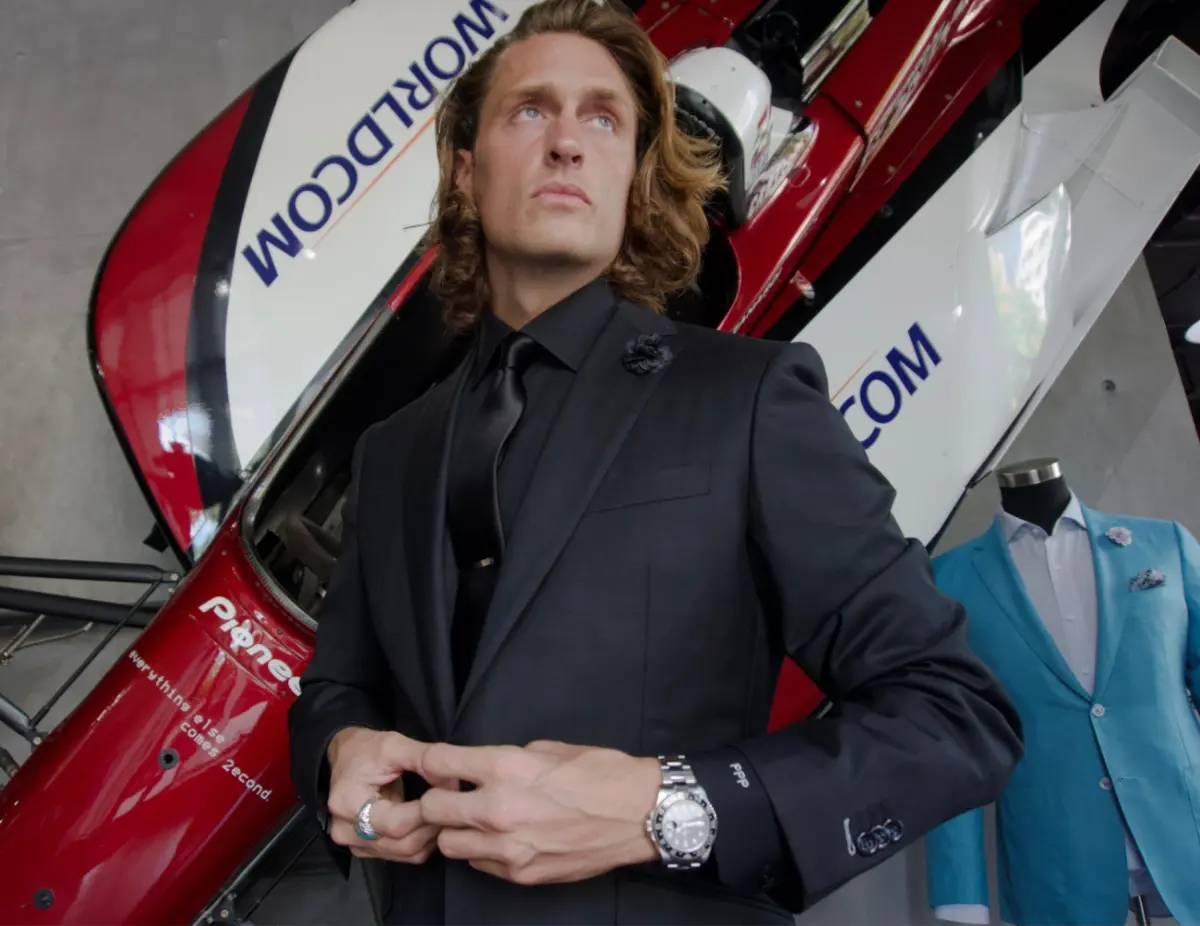
The tieless suit is one of the most misunderstood looks in menswear. Done right, it reads confident and modern. Done wrong, it looks like you forgot a step. The difference comes down to knowing which suits work without a tie, what shirts to pair, and where the look is actually appropriate.
When Going Tieless Works
The tieless look is not appropriate everywhere. Here is where it works and where it does not.
Where It Works
- Creative agencies and tech companies, these environments often expect modern, relaxed tailoring
- Dinners and evening social events, a suit without a tie reads elegant and effortless for restaurants, gallery openings, and parties
- Smart-casual offices, firms with business casual dress codes are the natural home for the tieless suit
- Daytime events in warm climates, in Miami, going tieless is practically a survival strategy
- Weddings (as a guest), daytime and outdoor weddings often call for a relaxed formal look
- Networking events and conferences, the tieless suit reads approachable without looking underdressed
Where It Does Not Work
- Courtrooms, never. Judges expect traditional formality.
- Traditional finance and banking, client-facing roles in conservative firms still require a tie
- Formal weddings, if the invitation says black tie or formal, wear a tie
- Funerals, a tie is a sign of respect. Do not skip it
- Job interviews, wear a tie unless you know the culture is casual
- Important client pitches, when in doubt, err on the side of formality
Which Suits Work Best Without a Tie
Not every suit looks right without a tie. The tie fills visual space between the collar and the chest, and when you remove it, the suit and shirt have to do that work on their own.
Textured and Patterned Suits
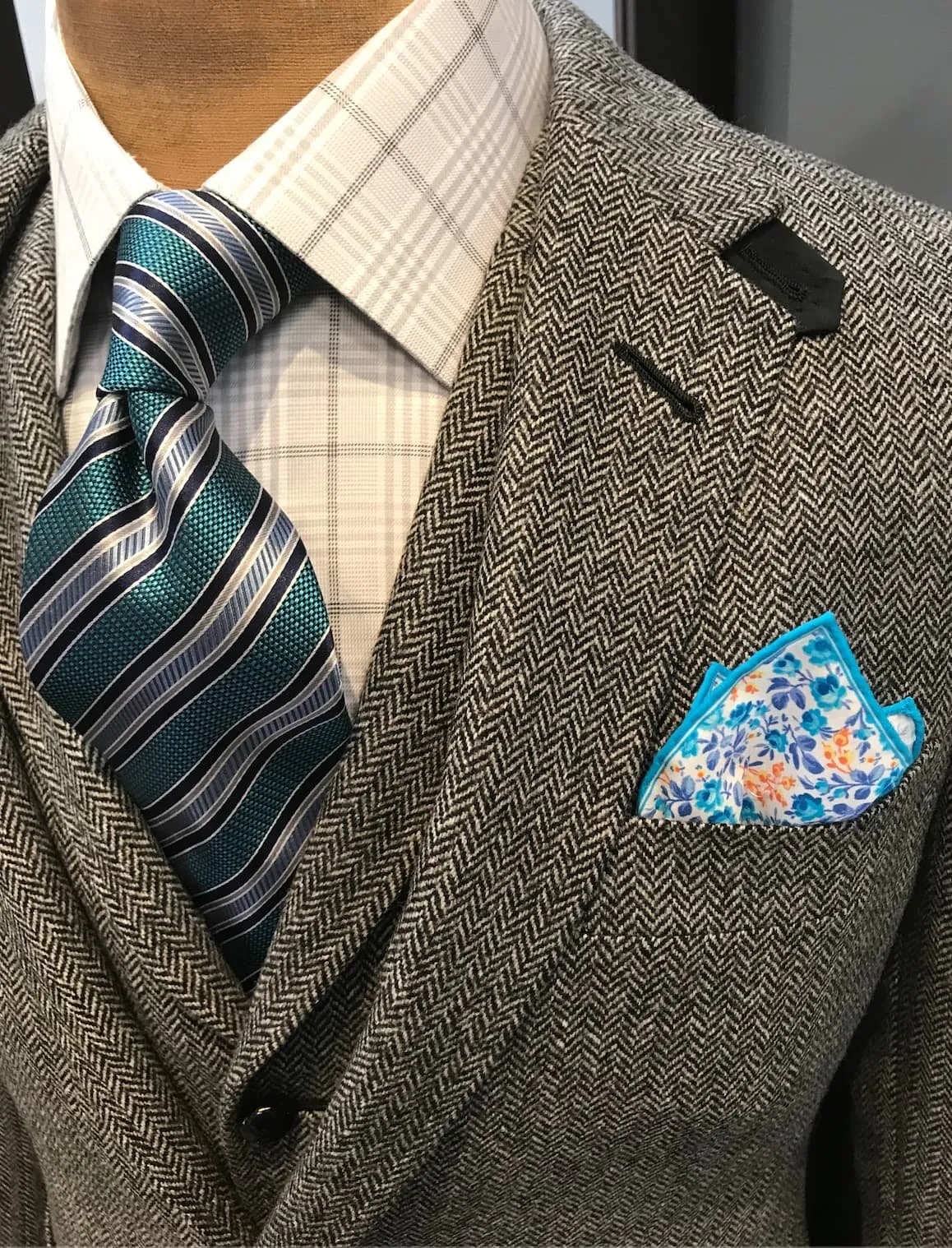
Suits with texture or pattern work best tieless because they carry visual interest on their own. A hopsack jacket, a subtle windowpane, or a glen check has enough detail that the missing tie is not noticeable.
- Hopsack, the texture adds depth without needing a tie
- Windowpane, the pattern fills the visual space
- Glen check, classic and textured, works beautifully without a tie
- Tweed, the most natural tieless suit for fall and winter
Solid Suits in Lighter Colors
A navy or charcoal suit without a tie can look incomplete because these are the most formal suit colors. Lighter colors read more relaxed:
- Light grey, reads less formal than charcoal and works tieless
- Mid-blue, softer than navy and looks intentional without a tie
- Cream or tan, natural tieless colors for spring and summer
- Olive, earthy and relaxed, a great tieless option for fall
Avoid This Without a Tie
- Black suits, a black suit without a tie looks like a uniform missing a piece
- Pinstripe suits, pinstripes read formal and corporate. Without a tie, they look unfinished
- Very dark, smooth worsted wool, the formality of the fabric clashes with the informality of the open collar
What Shirt to Wear
The shirt is the star when you skip the tie. It needs to hold the collar and fill the visual space.
Oxford Cloth Button-Down (OCBD)
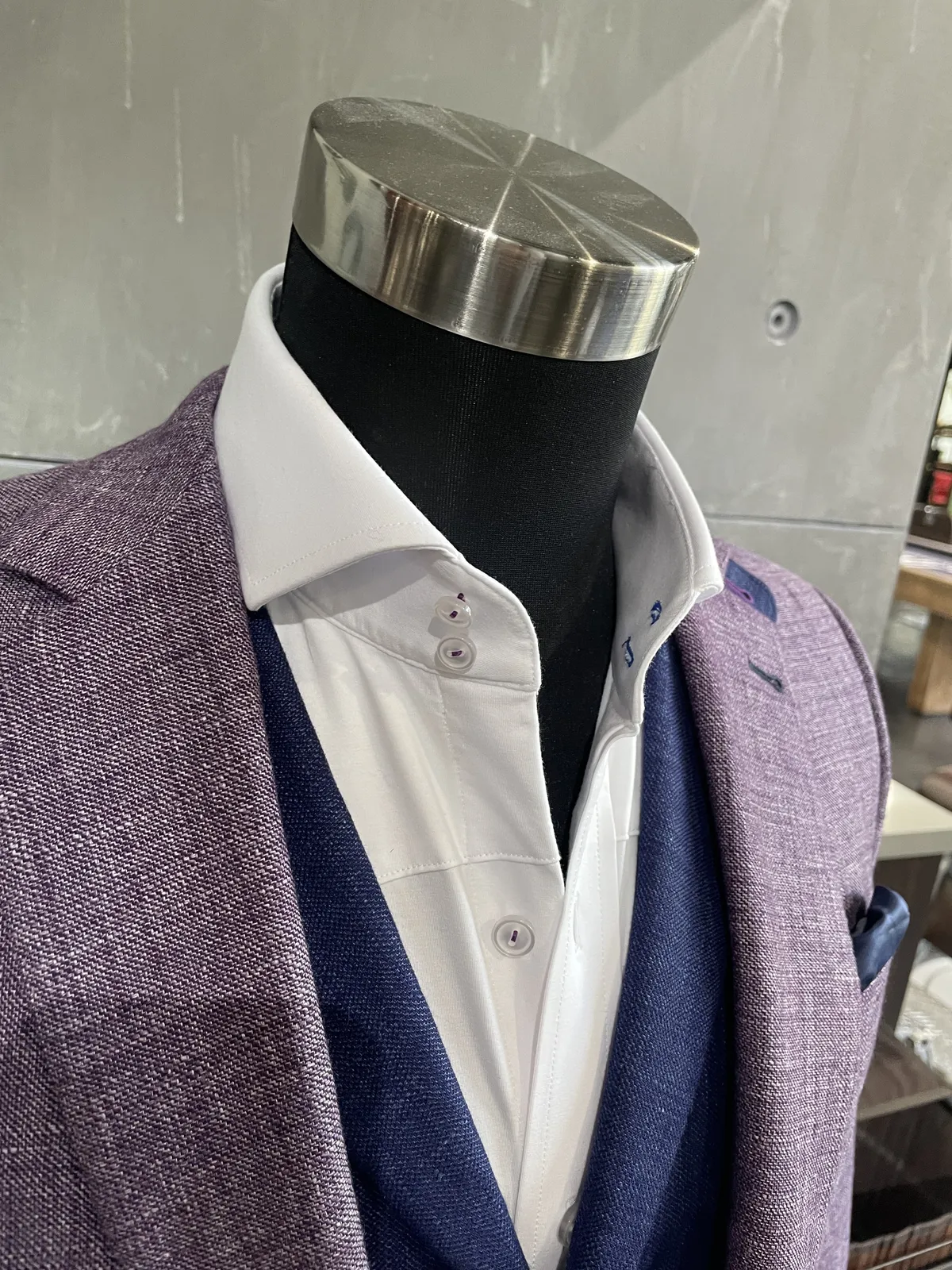
The classic tieless shirt. The button-down collar holds its shape without a tie, and the oxford cloth has enough texture to stand on its own. A navy or mid-blue suit with a white oxford shirt and no tie is one of the best smart-casual combinations in menswear.
Dress Shirts with Collar Stays
If you prefer a dress shirt, choose one with a structured collar and collar stays. A flimsy collar without a tie collapses and looks sloppy. A spread or semi-spread collar with stays holds its shape and looks intentional.
Knit Polos
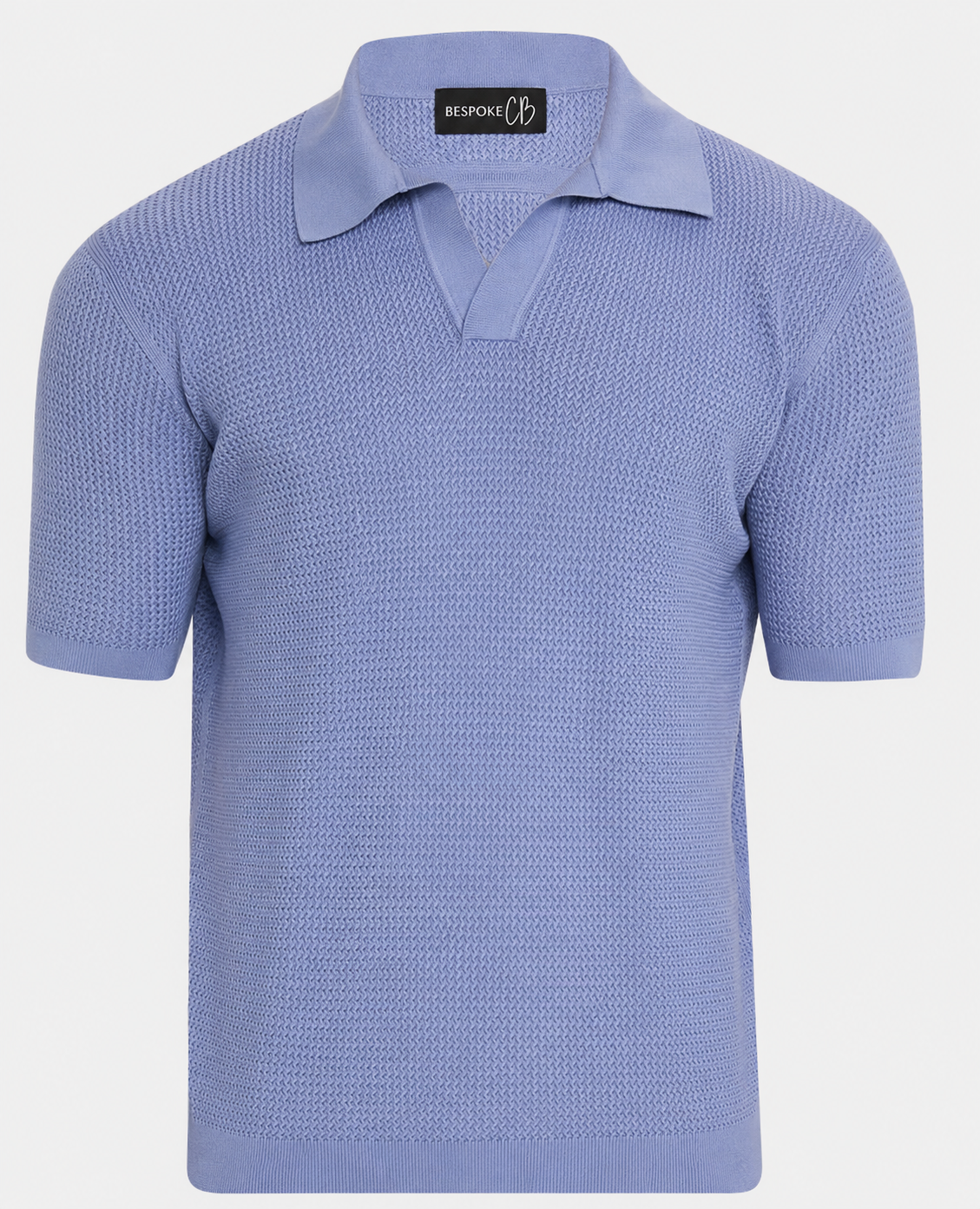
A knit polo under a suit jacket is a warm-weather favorite. The collar sits naturally without a tie, and the knit fabric adds texture. In Miami, this is one of the most practical combinations for looking sharp without overheating.
What to Avoid
- Shirts with weak collars, if the collar needs a tie to stand up, do not wear it without one
- T-shirts under a suit, unless you are in a very fashion-forward environment, a t-shirt under a suit reads underdressed
- Crew neck sweaters under a suit, the lack of a collar makes the suit look like it is missing something
Styling Tips for the Tieless Look
Fit Matters More
When you wear a tie, it draws the eye and distracts from fit issues. Without a tie, the fit of your suit and shirt is the only thing the eye has to judge. The collar has to sit flush against your neck. The jacket has to follow your body. The shirt should not bunch at the waist. A custom suit and custom shirt make the tieless look work because every element is fitted to you.
Use Accessories
When you drop the tie, accessories become more important:
- Pocket square, essential. A bare chest pocket with no tie looks even more incomplete than one with a tie. A white linen flat fold is foolproof.
- Lapel pin, a subtle lapel pin adds interest to the jacket without the formality of a tie
- Watch, a quality watch draws the eye and adds polish
- Belt or suspenders, a good belt in leather that matches your shoes completes the lower half
Button Stance
With no tie, how you button your jacket matters more. One button fastened (the middle button on a three-button, the only button on a two-button) is standard. Never button the bottom button. The jacket should frame the open shirt, not close it off.
Shirt Collar Details
The collar should be clean and pressed. A wrinkled collar without a tie looks like you just removed the tie. Iron the collar flat, make sure the points sit correctly, and check that collar stays are in place. The collar is the focal point of the tieless look, treat it accordingly.
Frequently Asked Questions
Can I wear a suit without a tie to a job interview?
Only if you know the company culture is casual. For most interviews, wear a tie. The cost of being overdressed is zero. The cost of being underdressed is the job.
What is the best shirt for a tieless suit?
An oxford cloth button-down. The collar holds its shape without a tie, the fabric has texture, and it reads intentional. A white or light blue OCBD with a navy or grey suit is the gold standard.
Is going tieless appropriate for a wedding?
For daytime and outdoor weddings, yes. For evening and formal weddings, no. If the invitation says black tie, wear a tie. When in doubt, ask the couple or wear one, you can always remove it.
Ready to build a wardrobe that works with or without a tie? Book a consultation at Bespoke By CB and we will help you create suits and shirts that look intentional no matter how you wear them.