
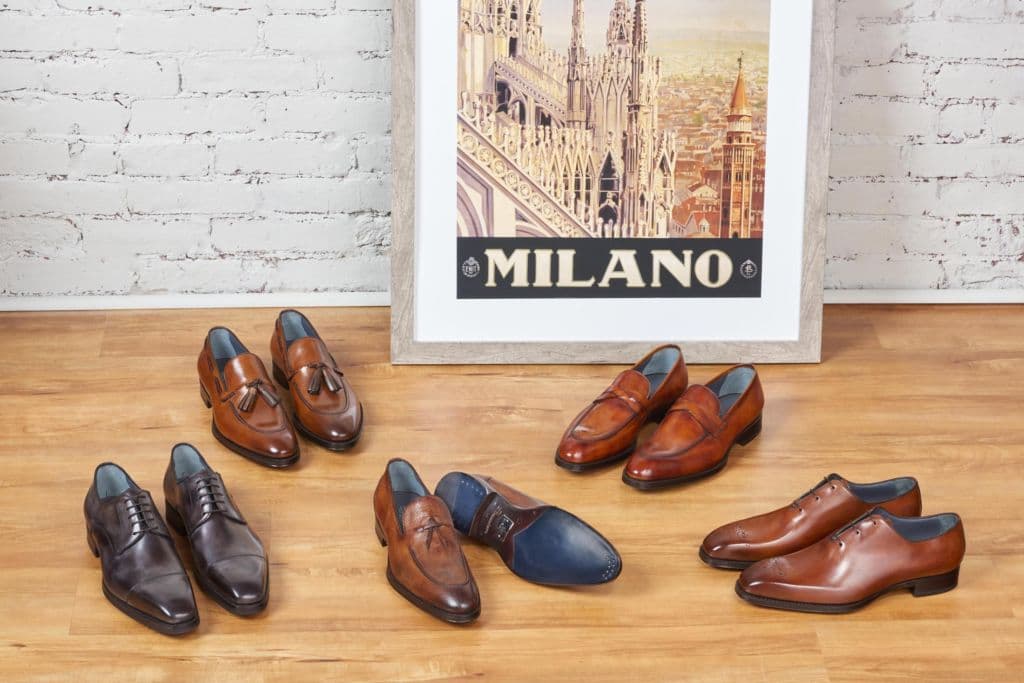
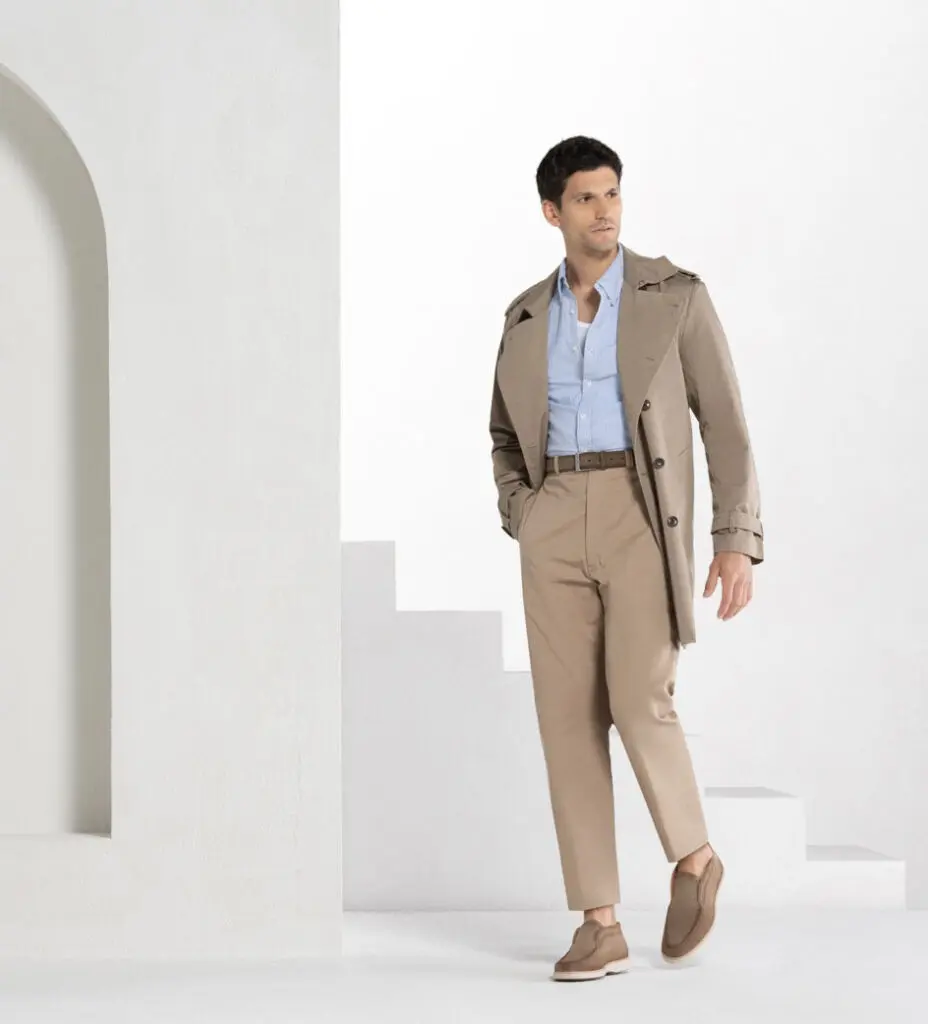
Dress shoes are the foundation of a sharp outfit. You can wear the finest men's custom suits in the world, but if your shoes are wrong, the whole look falls apart. At Bespoke By CB, we have dressed thousands of men in Miami and beyond, and footwear is where most guys get it wrong. This guide covers everything you need to know: the types of dress shoes, leather choices, sole options, color pairing, construction methods, fit, care, and how to build a collection that works for your wardrobe.
Whether you are building your first real wardrobe or upgrading from department store shoes, this guide will give you the knowledge to choose with confidence.
The Main Types of Men's Dress Shoes
Not all dress shoes are created equal. Each type has a distinct personality, formality level, and best-use scenario. Knowing the difference between an Oxford and a Derby is the first step to dressing well.
Oxford
The Oxford is the most formal dress shoe you can wear. Its defining feature is closed lacing, meaning the eyelet tabs are sewn underneath the vamp (the front part of the shoe). This creates a clean, sleek silhouette that sits close to the foot.
Oxfords are the shoe you wear with a tuxedo, a dark custom suit, or anything that demands sharp formality. The cap toe Oxford in black calf leather is the gold standard for business and black-tie optional events. Pair it with custom dress shirts and a tailored suit, and you are the best-dressed man in the room.
Best for: Formal events, business meetings, weddings, galas
Formality level: High
Derby
The Derby (sometimes called a Blucher) has open lacing, meaning the eyelet tabs are sewn on top of the vamp. This makes the shoe look slightly more substantial and allows for a wider opening, which is better for men with high insteps.
Derbies are versatile. A brown Derby works with everything from chinos to a tweed sport coat. They are less rigidly formal than Oxfords but still polished enough for most business settings. In Miami, a suede Derby in tan or snuff brown is a year-round staple.
Best for: Business casual, smart casual, everyday office wear
Formality level: Medium to high
Monk Strap
The monk strap replaces laces with a buckle and strap. It comes in single and double strap versions. The double monk strap has become a style icon, offering a distinctive look that sits between an Oxford and a Derby in formality.
Monk straps are statement shoes. They work beautifully with tailored trousers and a blazer. A black single monk can even pass for formal events. Brown and oxblood double monks are popular with men who want to stand out without being loud. At Bespoke By CB, we often recommend double monks for clients who want something different from the standard Oxford but still need a dressy shoe.
Best for: Business, smart casual, dinners, events where you want personality
Formality level: Medium to high
Loafer
Loafers are slip-on dress shoes with no laces. Within this category you have the Penny Loafer, the Tassel Loafer, the Horsebit Loafer, and the Belgian Loafer. Each has a slightly different vibe, but all share the convenience and comfort of a laceless design.
Loafers are the most Miami-friendly dress shoe. They breathe well, look great without socks, and transition effortlessly from office to evening. A dark brown or burgundy Penny Loafer is arguably the most versatile single shoe a man can own in a warm climate. Pair them with a lightweight suit or tailored shorts and a linen shirt.
Best for: Smart casual, business casual, warm weather, no-sock looks
Formality level: Low to medium (can be dressed up)
Brogue
Brogue refers to the decorative perforations (broguing) along the edges of the shoe. A full brogue is a wingtip, a semi-brogue has broguing on the toe cap, and a quarter brogue has minimal broguing. Brogues can be Oxfords or Derbies, so the term refers to ornamentation, not construction.
Brogues add character. A tan full brogue (wingtip) is a fantastic shoe for smart casual outfits. They pair beautifully with textured fabrics like tweed, flannel, and linen. They are slightly less formal than plain-toe shoes, so skip them for black-tie events.
Best for: Smart casual, business casual, adding personality to an outfit
Formality level: Medium
Wingtip
The wingtip is a specific style of brogue where the toe cap extends in a "W" shape that wraps around the shoe, resembling a bird's wing. This is the most decorative and visually distinctive of the classic dress shoe styles.
Wingtips are conversation starters. They work best when they are the focal point of your footwear. A well-made wingtip in cordovan or rich brown calf leather is the kind of shoe that lasts decades. For more on longevity, check out our guide on how to make your shoes last 20 years.
Best for: Business casual, smart casual, making a statement
Formality level: Medium
Chelsea Boot
The Chelsea Boot is an ankle-high boot with elastic side panels and no laces. It was popularized in the Victorian era and became a menswear icon in the 1960s. Today, the leather Chelsea Boot is a modern essential.
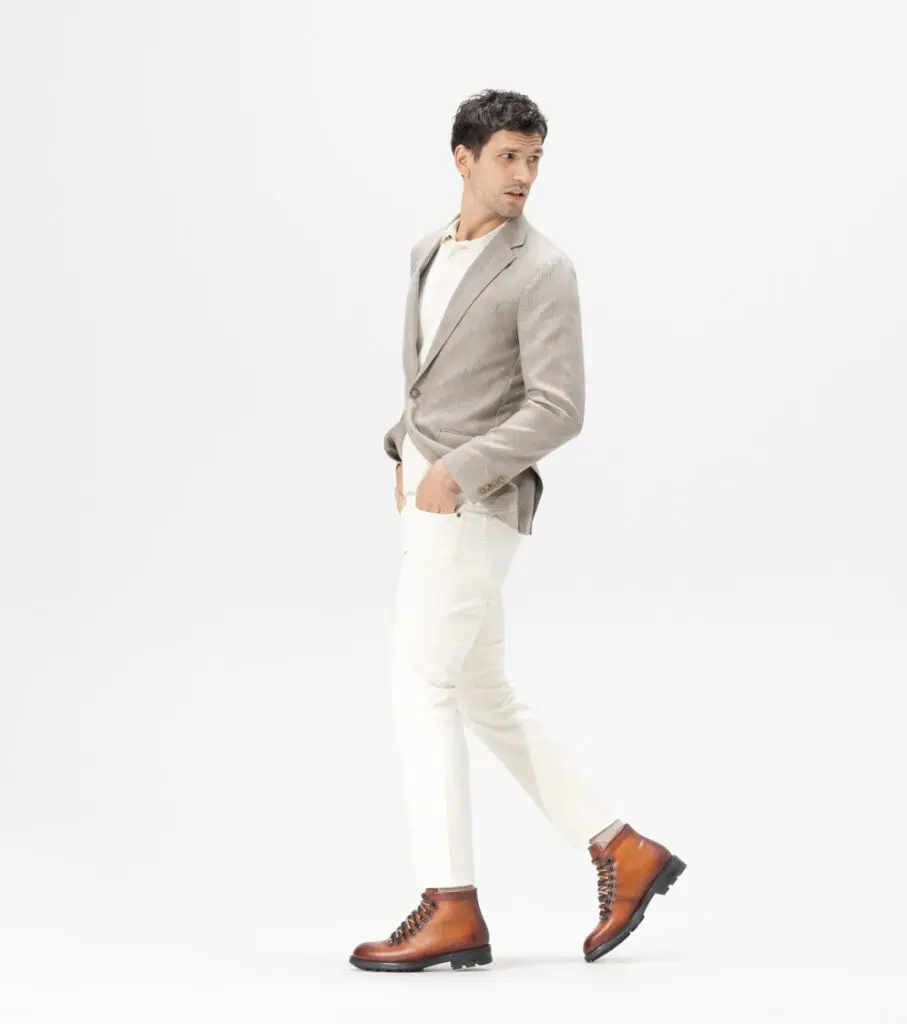
A black Chelsea Boot reads sharp and contemporary with a slim suit. A brown suede Chelsea is a cold-weather staple that pairs with everything from wool trousers to dark denim. They are not traditional dress shoes, but they fill the gap between dressy and casual better than almost anything else. For more casual shoe options, see our guide on shoes to wear with jeans.
Best for: Modern business, smart casual, fall and winter wear
Formality level: Medium
Oxford vs Derby: The Key Difference
This is the most common question we hear at Bespoke By CB, and it comes down to one feature: the lacing system.
Closed lacing (Oxford): The eyelet tabs are sewn under the vamp. When you lace the shoe, the leather pulls together seamlessly, creating a tight, clean V-shape. This makes the Oxford look sleeker and more formal. It also means the shoe fits closer to the foot, which is great for men with narrow to average feet.
Open lacing (Derby): The eyelet tabs are sewn on top of the vamp. The lacing sits on top of the shoe, and the two sides can pull apart more freely. This creates a slightly heavier, more robust look. It also accommodates wider feet and higher insteps much better.
Why does this matter? Because the lacing system determines both the formality and the fit. If you have a high instep or wide feet, an Oxford may pinch and feel uncomfortable, while a Derby will feel just right. If you are dressing for a formal event, a Derby may look too heavy with a tuxedo, while an Oxford will look perfect. Choose based on both your foot shape and the occasion.
Leather Types Explained
The leather is the single most important factor in a dress shoe's quality, durability, and appearance. Here are the main types you will encounter.
Calfskin
Calfskin is the most common and versatile dress shoe leather. It comes from young cattle, giving it a fine, smooth grain. It takes polish beautifully, ages well, and is available in every color. If you are buying your first quality dress shoe, calfskin is the way to go.
High-quality calfskin has a tight, even grain with minimal blemishes. It is durable enough for daily wear but refined enough for formal occasions. Most of the shoes we recommend at Bespoke By CB are calfskin.
Cordovan
Cordovan comes from the equine hide (horse), specifically the rump area. It is denser, thicker, and more water-resistant than calfskin. Cordovan does not crease, it ripples, and it develops a distinctive shine with minimal polishing.
Cordovan is expensive, often costing 50 to 100 percent more than calfskin. But it is also one of the most durable leathers in the world. A pair of cordovan shoes can last a lifetime with proper care. The color range is limited, typically dark brown, burgundy, and sometimes navy or black.
Suede
Suede is leather with the flesh side buffed to create a soft, napped finish. It is casual, comfortable, and perfect for warm weather. Suede loafers and Derbies are summer staples in Miami.
The downside is maintenance. Suede stains easily and is not water-resistant. You need a suede brush, protector spray, and the discipline to avoid puddles. But the look is worth it. A snuff suede Penny Loafer is one of the most elegant shoes a man can wear.
Nubuck
Nubuck is similar to suede but is made from the grain side of the leather, sanded to create a velvet-like surface. It is more durable than suede but still has the same casual, soft appearance. Nubuck is less common in dress shoes and more often found in boots and casual footwear.
Patent Leather
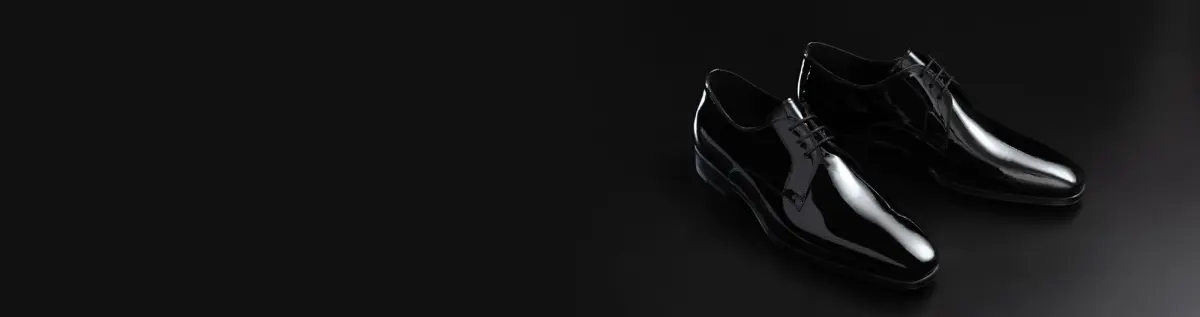
Patent leather is calfskin or cowhide treated with a lacquer to create a high-gloss, mirror-like finish. It is strictly for formal wear. Patent leather Oxfords (or Opera Pumps) are the correct shoe for black-tie events with a tuxedo.
Do not wear patent leather outside of formal events. It looks out of place in business settings and cracks easily if not stored properly.
Sole Types: What's Under Your Feet
The sole determines comfort, durability, and formality. Here is what you need to know.
Leather Sole
Leather soles are traditional, elegant, and formal. They are thin, flexible, and allow your foot to breathe. They look the best with dress shoes and are the standard for high-end footwear.
The trade-off is durability and weather resistance. Leather soles wear down faster than rubber and are slippery on wet surfaces. They are also not ideal for daily wear on concrete. But for office, evening, and formal events, nothing looks better.
Rubber Sole
Rubber soles offer superior grip, cushioning, and durability. They are practical for daily wear and essential in rainy or snowy climates. The downside is that they look heavier and less elegant than leather.
That said, modern thin rubber soles (like Dainite) have narrowed the gap. You can now get the grip of rubber with a profile that looks almost as sleek as leather.
Dainite Sole
Dainite is a specific brand of studded rubber sole that has become the gold standard for dress shoe rubber soles. It is thin, discreet, and looks almost like leather from a distance. Dainite soles offer excellent traction without sacrificing the dressy appearance of the shoe.
Many high-end shoemakers now offer Dainite as an option alongside leather. If you want one shoe that works in both dry and wet conditions, Dainite is the answer.
Combination Sole
A combination sole has a leather front half and a rubber heel section. This gives you the elegance of leather where it shows (the forefoot) with the grip and durability of rubber where you need it (the heel). It is a practical compromise that works well for business shoes.
Dress Shoe Color Guide
Color is where most men make mistakes. The right color depends on the suit, the occasion, and the time of day. Here is the breakdown.
Black
Black is the most formal color. It is the only correct choice for black-tie events, funerals, and the most conservative business settings. Black shoes pair with black, charcoal, and navy suits. They do not pair well with brown, tan, or olive. If you own one pair of dress shoes, many would argue it should be a black cap toe Oxford.
Brown
Brown is the most versatile color in menswear. From light tan to dark chocolate, brown shoes work with almost every suit color except black. Dark brown is formal enough for business, while lighter browns lean casual. A medium brown Derby or Oxford is the shoe you will reach for most often.
Oxblood (Burgundy)
Oxblood is the connoisseur's color. It is rich, distinctive, and incredibly versatile. Oxblood pairs with navy, charcoal, grey, brown, and even olive. It adds depth to an outfit without being flashy. A pair of oxblood Monk Straps is a signature look for men who know style.
Navy
Navy dress shoes are a bold choice. They pair beautifully with grey and navy suits, creating a tonal, sophisticated look. Navy is harder to find and harder to style, but when done right, it is striking. Bespoke By CB clients who want a unique shoe often go navy.
Tan
Tan shoes are warm-weather specialists. They pair with linen suits, cotton trousers, and light-colored fabrics. Tan loafers are a Miami essential. Avoid tan for formal evening events or conservative business settings.
Matching Shoes to Suits
Here are the fundamental rules for pairing dress shoes with suits. At Bespoke By CB, we walk every client through this during their fitting.
- Black suit: Black shoes only. No exceptions.
- Charcoal suit: Black or dark brown. Black is more formal.
- Navy suit: Black, brown, or oxblood. Brown and oxblood are more versatile.
- Grey suit (light to medium): Black, brown, oxblood, or navy. Brown is the safest bet.
- Brown suit: Brown shoes in a similar or darker shade. Never black with brown.
- Tan or khaki suit: Brown or tan shoes. Loafers work well here.
- Olive or green suit: Brown or oxblood. These earth tones complement each other.
The general principle: match the formality of the shoe to the formality of the suit. A black Oxford with a navy suit reads formal. A brown loafer with the same navy suit reads business casual. Same suit, completely different message.
Dress Shoes for Miami's Climate
Miami is hot, humid, and sunny for most of the year. This creates specific challenges for dress shoes. Heavy leather shoes can make your feet sweat, and leather soles can be slippery on wet pavement during sudden rainstorms.
Here is how we advise Bespoke By CB clients to adapt:
- Embrace loafers: Penny and tassel loafers are the quintessential Miami dress shoe. They breathe well and look great sockless or with no-show socks.
- Choose suede for summer: Suede is lighter and more breathable than calf leather. A suede Derby or loafer in tan or snuff brown is perfect for Miami's warm months.
- Consider Dainite soles: Miami's rain makes leather soles risky. Dainite gives you grip without sacrificing style.
- Rotate your shoes: In humid climates, shoes need 24 hours to dry out between wears. Never wear the same pair two days in a row.
- Use cedar shoe trees: Cedar absorbs moisture and odor, which is critical in Miami's humidity. Insert shoe trees immediately after each wear.
- Go sockless strategically: The no-sock look works with loafers and tailored trousers. Use no-show socks for hygiene, and let your ankles breathe.
Construction Methods: Why They Matter
The way a shoe is constructed determines its lifespan, comfort, and resole-ability. There are three main methods.
Goodyear Welt
Goodyear welting is the gold standard. A strip of leather (the welt) is sewn to the upper, the insole, and the outsole in a multi-step process. This creates a durable, water-resistant bond and a cavity that can be filled with cork for comfort and breathability.
The key benefit: Goodyear welted shoes can be resoled repeatedly. You can replace the sole 5, 10, even 15 times over the life of the shoe. This makes them the most economical choice long-term, even though they cost more upfront. A $400 Goodyear welted shoe that lasts 15 years is cheaper than a $150 cemented shoe you replace every 2 years.
At Bespoke By CB, we always recommend Goodyear welted shoes for clients who want a long-term footwear investment.
Blake Stitch
Blake stitch construction sews the upper directly to the insole and outsole in a single stitch. This creates a lighter, more flexible shoe than Goodyear welting. Blake-stitched shoes are popular with Italian shoemakers and offer a sleeker, more refined profile.
The downside is that Blake stitched shoes are harder to resole. Not every cobbler has the machinery for it, and the stitching goes through the insole, which can make the shoe less water-resistant. Blake is a good choice for dressy shoes you wear indoors or in dry conditions.
Cemented
Cemented construction uses adhesive to attach the sole to the upper. This is the cheapest and fastest method, used by most mass-market shoe brands. Cemented shoes are inexpensive, lightweight, and often look fine out of the box.
But they cannot be resoled. When the sole wears out, the shoe is done. They also tend to use lower-quality leather and have shorter lifespans overall. If you are serious about dressing well, cemented shoes are a false economy.
Fit and Sizing Tips
Even the best shoe will feel terrible if it does not fit. Here is how to get it right.
- Get measured: Have your feet measured by a professional. Your size can change over time due to weight, age, and pregnancy (for the parents out there). Measure both feet, as they are often slightly different sizes.
- Size for your larger foot: If one foot is bigger, buy the size that fits the larger foot. You can add an insert to the smaller shoe.
- Shop in the afternoon: Feet swell throughout the day. Buying shoes in the afternoon ensures they will fit comfortably all day long.
- Check the break: When you try on a shoe, look at where the leather creases when you walk. It should break cleanly across the toe cap, not diagonally. A diagonal break means the shoe is too long or too narrow.
- Heel slip is normal at first: A new stiff leather sole may cause slight heel slip. This goes away as the sole softens. If it persists after a few wears, the shoe is too wide.
- Break them in slowly: Wear new dress shoes for 2 to 3 hours the first day, then increase gradually. Never wear brand new shoes to an all-day event.
- Consider width: Many quality shoe brands come in multiple widths. If standard sizes feel too tight or too loose, ask about width options.
Care and Maintenance
Quality dress shoes are an investment, and like any investment, they need maintenance. Here is the routine we recommend at Bespoke By CB.
Daily Care
- Insert cedar shoe trees immediately after taking off your shoes.
- Let them rest for at least 24 hours before wearing again.
- Never wear the same pair two days in a row.
Weekly Care
- Wipe down with a soft horsehair brush to remove dust.
- Apply a thin layer of leather conditioner once every 2 to 4 weeks, depending on wear.
- Use shoe horns to protect the heel counter when putting them on.
Monthly to Quarterly Care
- Polish with a quality cream or wax polish in a matching color.
- For a mirror shine on the toe and heel, use a wax polish applied in thin layers with a damp cloth.
- Clean the welt with a soft brush to remove dirt from the stitching.
Annual Care
- Take your shoes to a cobbler for a check-up.
- Have the sole replaced before it wears through to the welt.
- Consider a full refinishing if the leather looks tired.
For a deep dive into making shoes last decades, read our guide on how to make your shoes last 20 years.
How Many Pairs of Dress Shoes Do You Need?
This depends on your lifestyle, but here is a practical capsule collection that covers most situations.
The 3-Shoe Starter Collection
- Black cap toe Oxford (calfskin, leather sole): For formal events, interviews, and conservative business.
- Brown Derby or Monk Strap (calfskin, Dainite sole): For everyday business and smart casual.
- Tan or brown Penny Loafer (calfskin or suede): For warm weather, smart casual, and weekend wear.
The 6-Shoe Comprehensive Collection
- Black cap toe Oxford (formal)
- Dark brown Oxford or Monk Strap (business)
- Brown or tan Derby (smart casual)
- Oxblood or brown Loafer (warm weather, casual)
- Suede Derby or Loafer (summer casual)
- Black or brown Chelsea Boot (cold weather, rain)
With these six shoes, you can handle any dress code, any season, and any occasion. Rotate them properly and they will last you a decade or more.
Price Tiers: What You Get at Each Level
Under $150 (Cemented Construction)
These are disposable shoes. They use cemented construction, corrected grain leather (which is lower quality and coated to look smooth), and glue-down soles. They look okay in photos but will not last more than 1 to 2 years with regular wear. Fine for a young man building his first wardrobe, but upgrade as soon as you can.
$150 to $350 (Entry Goodyear Welted)
This is where real quality begins. Brands in this range use genuine Goodyear welting, decent calfskin, and replaceable soles. They are not as refined as premium shoes, but they are solid, durable, and resole-able. This is the sweet spot for a first quality dress shoe.
$350 to $700 (Mid-Range Premium)
Shoes in this range offer better leather (full grain calfskin, sometimes cordovan), superior finishing, and more elegant lasts (the foot-shaped forms the shoe is built on). The construction is excellent, and the aesthetics are noticeably sharper. This is where Bespoke By CB recommends most clients start.
$700 and Up (High-End and Bespoke)
At this level, you get the finest leathers, hand-finished details, and in some cases, hand-welted construction. These shoes are works of art. The leather is often sourced from the best tanneries in the world. The fit and comfort are superior. If you wear dress shoes daily and can afford the investment, these are worth every penny.
Common Dress Shoe Mistakes
At Bespoke By CB, we see the same mistakes over and over. Here is what to avoid.
- Wrong formality level: Wearing casual shoes with a formal suit, or overly formal shoes with chinos. Match the shoe to the outfit.
- Cheap construction: Buying cemented shoes because they look similar. They will not last, and the leather will crack and peel.
- Poor fit: Buying the wrong size because you did not get measured. A shoe that is too big will cause blisters and heel slip. Too small will deform the leather and hurt all day.
- No shoe trees: Skipping shoe trees is the fastest way to ruin good shoes. Moisture builds up, the leather warps, and odors set in.
- Wearing the same pair daily: Leather needs to rest. Wearing the same shoes every day will wear them out in months instead of years.
- Neglecting maintenance: Not conditioning, not polishing, not resoling. A $500 shoe treated poorly will look worse than a $100 shoe treated well.
- Black shoes with everything: Black is not a universal color. It looks wrong with brown, tan, and light-colored suits. Expand your collection.
- Wrong socks: Athletic socks with dress shoes look sloppy and fit poorly. Wear thin dress socks or no-show socks with loafers.
How Bespoke By CB Helps You Choose the Right Shoes
At Bespoke By CB, we believe footwear is the finishing touch that completes a custom outfit. When you come in for a custom suit, we do not just stop at the jacket and trousers. We look at the whole picture, from custom dress shirts down to the shoes on your feet.
Our stylists are trained to assess your wardrobe, lifestyle, and personal taste, then recommend shoes that match. We consider the climate (especially important in Miami), the formality of your typical events, and your budget. We help you build a shoe collection that works with your suits, not against them.
When you book a consultation, we will walk you through:
- Your current wardrobe and what shoes would fill the gaps
- The formality levels you dress for most often
- Color coordination with your existing suits and shirts
- Climate-appropriate options for Miami and travel
- Care and maintenance to protect your investment
Bespoke By CB has dressed executives, grooms, and men across Miami for years. We know what works, what lasts, and what makes a man look his best. Shoes are not an afterthought. They are part of the package.
Frequently Asked Questions
What is the difference between an Oxford and a Derby?
The key difference is the lacing. Oxfords have closed lacing, where the eyelet tabs are sewn under the vamp, creating a sleek and formal look. Derbies have open lacing, where the eyelet tabs are sewn on top of the vamp, creating a slightly heavier look with more room for wider feet and higher insteps. Oxfords are more formal, while Derbies are more versatile.
How many pairs of dress shoes should I own?
A minimum of three pairs covers most needs: a black cap toe Oxford for formal occasions, a brown Derby or Monk Strap for business, and a loafer for warm weather and casual wear. Ideally, aim for six pairs to cover all seasons and dress codes with proper rotation. The most important rule is to never wear the same pair two days in a row, as leather needs time to breathe and dry out.
Are Goodyear welted shoes worth the extra cost?
Yes, absolutely. Goodyear welted shoes cost more upfront but can be resoled repeatedly, meaning they can last decades instead of years. They also use higher quality leather and construction overall. A $400 Goodyear welted shoe that lasts 15 years is far cheaper over time than a $100 cemented shoe you replace every year. Bespoke By CB always recommends Goodyear welted construction for clients who want lasting value.
What shoes work best in Miami's hot climate?
Loafers are the best dress shoe for Miami. They breathe well, look great sockless, and transition from office to evening effortlessly. Suede loafers and Derbies in tan or snuff brown are excellent warm-weather choices. Consider Dainite soles instead of leather for better grip during Miami's frequent rainstorms. Always use cedar shoe trees to combat humidity, and rotate your shoes daily.
How should dress shoes fit?
Dress shoes should fit snugly but not painfully tight. Your heel should stay in place when walking with minimal slip. There should be about a thumb's width of space between your longest toe and the front of the shoe. The shoe should not pinch across the ball of the foot. Always get measured professionally, shop in the afternoon when feet are slightly swollen, and size for your larger foot if they differ.
How do I care for leather dress shoes?
Insert cedar shoe trees immediately after every wear. Let shoes rest 24 hours between wears. Brush them weekly with a horsehair brush. Condition the leather every 2 to 4 weeks. Polish monthly with a cream or wax polish in a matching color. Take them to a cobbler annually for inspection and resoling before the sole wears through. Proper care can extend a quality shoe's life by years or even decades.
Conclusion
Dress shoes are the detail that separates a man who dresses from a man who dresses well. The right pair of Oxfords can elevate a custom suit from good to unforgettable. The wrong pair can undermine the entire outfit.
At Bespoke By CB, we believe in dressing the whole man. From the custom dress shirts to the shoes on your feet, every element matters. When you understand the types of dress shoes, the leathers, the construction, and the care, you make better choices. And better choices mean a wardrobe that lasts, looks sharper, and makes you feel confident every time you walk into a room.
Ready to complete your look? Book a consultation with Bespoke By CB today. We will help you build a wardrobe from the ground up, starting with the suit and finishing with the shoes.


