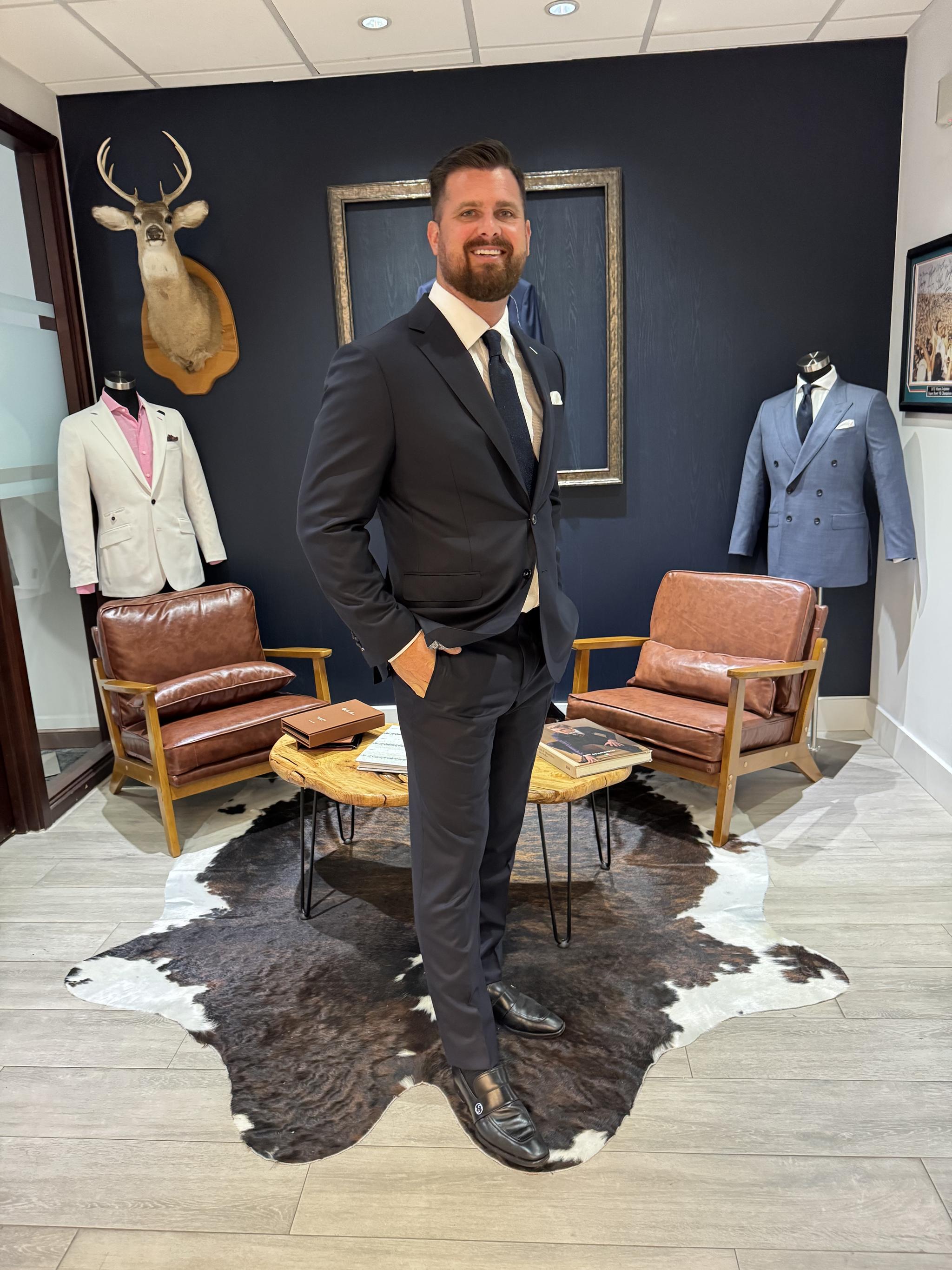
The Detail on the Back of Your Jacket
Turn a jacket around and you will find one of the most overlooked decisions in tailoring: the vents. Those slits cut into the skirt of the coat are not decoration. They are working hinges that control how the jacket behaves when you move, sit, walk, reach, and drive. A jacket can have a single vent at the center back, a double vent with an opening on each side, or no vent at all, and each configuration changes the way the cloth falls, the way the jacket returns to shape after you move, and the overall formality of the garment.
Most men never choose their vents. Off-the-rack brands decide for you, usually following the tradition of whatever market the pattern came from, and you inherit the consequences. When you order a custom suit, the vents become your decision, made with guidance from an experienced consultant who can show you how each option behaves on your own body. That conversation is exactly the kind of detail Bespoke By CB has with every client, because it is one of the clearest examples of how a considered garment beats a defaulted one.
This guide walks through what vents actually do, how center, side, and ventless constructions differ in practice, how the choice interacts with fit, body, climate, and use, and how to decide for each jacket in your wardrobe rather than applying one blanket rule.
What Jacket Vents Actually Do
A vent is a slit cut from the hem of the jacket upward, finished on both edges so the cloth never frays, and anchored at the top so the two panels stay aligned. The purpose is mechanical. When you move, your hips and seat push the skirt of the jacket out of position. The vents give that displaced cloth somewhere to go. Instead of the whole jacket riding up or flaring outward, the panels separate along the vent line and then fall back into place on their own.
Think of the vents as the jacket's suspension. Without them, the skirt is a rigid tube of cloth. With them, the lower part of the coat can articulate independently from the upper part, which stays anchored across your shoulders and chest. The more your day involves sitting, standing, reaching across a table, or climbing into a car, the more the vents earn their keep.
Vents also shape the silhouette at rest. A double-vented jacket tends to present two clean, parallel panels that overlap slightly at the center back, which lengthens the line of the torso and keeps the seat area smooth. A single vent creates one centered opening that can flare open in wind or with your hands in your pockets. A ventless jacket presents one unbroken sweep of cloth from shoulder to hem, which some men find the cleanest of all, at the cost of movement and recovery.
The Center Vent: The Single, Practical Choice
The single center vent sits directly over the seat, splitting the back panel in two. It is the traditional choice of British country tailoring, where a man might spend a morning on horseback and needed a jacket that spread over the saddle without tearing or bunching. That origin tells you its strengths: it is simple, sturdy, and gives generous room when you sit down or move forward.
For everyday wear, the center vent is the most forgiving option. It allows the jacket to spread comfortably when you sit, it is easy to press and maintain, and its construction is the least complicated of the three, which historically made it the most common choice on mass-produced suits. If you tend to put your hands in your trouser pockets, the single vent opens easily and accommodates the gesture without dragging the whole side of the jacket upward.
The single vent's weakness is the same as its strength. One opening in the middle means the two back panels are only loosely controlled, so a brisk Miami crosswind or an active gesture can flip the vent open and leave it gaping until you smooth it down. On a jacket with a fuller cut, the single vent can flare outward and emphasize width across the seat. Men who carry more weight through the middle often find that a single vent behaves less cleanly than side vents, not because of any hard rule, but because one wide opening gives the displaced cloth a single unstructured exit.
The center vent also reads slightly less formal in most modern wardrobes. It is perfectly at home on a business suit, but it appears most naturally on sport coats, blazers, and more casual tailored pieces. If your goal is a relaxed, understated jacket for a smart-casual rotation, the single vent fits that register well.
The Double Vent: The Tailored Standard
Double vents, also called side vents, place one opening on each side of the back, leaving a solid center panel that covers the seat. This is the construction most associated with fine tailoring, and for good reason: it controls the cloth better than any other arrangement. When you sit, the side panels ride up and out of the way while the center panel stays down and smooth over the seat. When you walk, the jacket stays closed through the middle and preserves an unbroken line down your back.
The double vent's recovery is its defining trait. Reach across a desk, shake hands, drive a car, and a well-made side-vented jacket falls back into position almost immediately, because each panel is anchored to a stable center section. The two vents also let a tailor shape the back more precisely. Side seams, darts, and vent positioning can be balanced so the panels overlap cleanly at the center, which is why side vents look so sharp on a fitted coat.
The trade-offs are minor but real. Two vents mean two sets of finished edges, more interlining, and more precise pattern work, which is one reason budget manufacturers skip them. They also demand a good fit: if the jacket is cut too tight through the seat, the vents will splay open even when you are standing still, and the elegant overlapping panels turn into a constant visual distraction. A vent that gaps open at rest is a fit problem to correct, not a reason to abandon the style.
In terms of formality, side vents sit at the top of the scale for regular tailored jackets. They are the natural choice for business suits, dressier sport coats, and evening tailored pieces where the jacket should look composed from every angle. For a man building a wardrobe in a city like Miami, where a jacket often has to go straight from a morning meeting to an evening event without losing its shape, the double vent's reliability makes it the default recommendation of most tailors, including ours.
The Ventless Jacket: The Clean Sweep
The ventless back has no openings at all. The cloth runs unbroken from the shoulders to the hem. Continental tailoring, particularly the Italian tradition of the mid twentieth century, favored this construction on slim, short jackets, where a single smooth expanse of cloth emphasized a lean, uninterrupted silhouette. On the right body, with the right cut, a ventless jacket looks exceptionally clean from behind.
What you gain in smoothness you sacrifice in function. With nowhere for the cloth to go, a ventless jacket buckles and creases when you sit, rides up when you drive, and generally requires you to manage it more consciously through the day. The hem can flare outward at the sides when you move forward, since the only escape for tension is at the edges. Some men accept that entirely for the look, particularly on a slim dinner jacket or a fashion-forward piece where the silhouette is the whole point.
Practically, ventless works best on jackets with a shorter, closer cut, in cloth with some resilience, on men whose days involve more standing than sitting. It is the rarest choice in modern wardrobes, and it rewards an experienced hand in the fitting, because the pattern has to be shaped to the body very precisely when the vents cannot absorb the errors. In a consultation, ventless is worth considering for a specific occasion garment, but it is rarely the choice for a workhorse jacket that has to survive an unpredictable day.
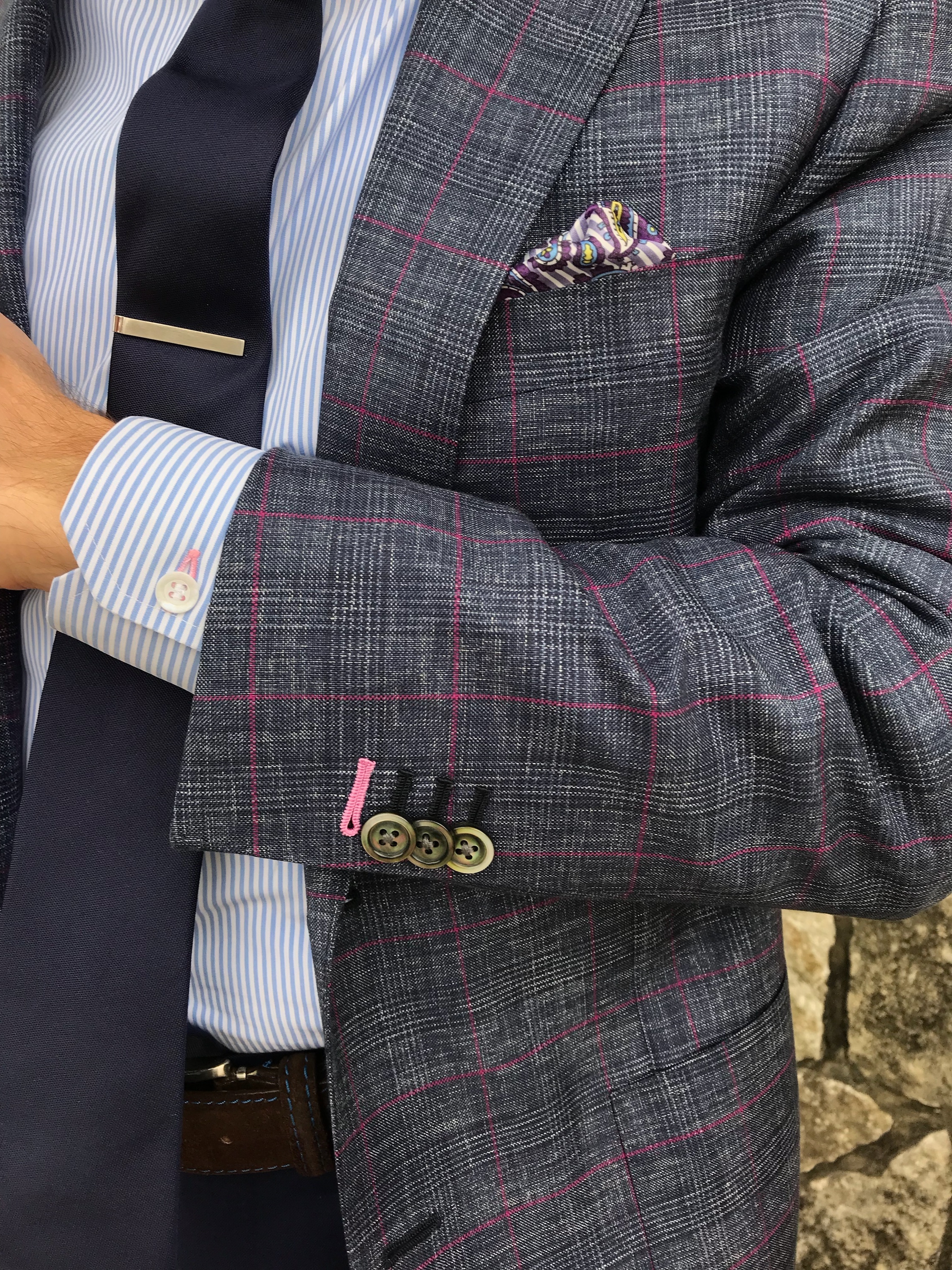
How Vents Change the Way a Jacket Moves
The clearest way to understand vent construction is to wear each option through a real day. Sit down in a chair with arms. The single vent spreads immediately; the double vent's side panels part while the center stays down; the ventless jacket creases across the lap and needs a smooth-out when you stand. Reach across a table to shake hands. The side-vented jacket barely registers the gesture, while the center vent often flips open. Drive a car. The ventless back bunches against the seat, the single vent splits, and the double vent keeps the center panel lying flat while the sides ride up.
Now consider walking. A jacket is in motion all day, and the vents govern how the skirt swings. Double vents hold the back panels in a controlled overlap, so the swing is minimal and the line stays clean. A single vent can swing open and shut, which some men find perfectly acceptable and others find untidy. The ventless jacket moves as one piece, which looks elegant from the front and can pull across the back when your stride is long.
Hands in pockets deserve their own note. This is the classic single-vent gesture, and it is also where the single vent shows its looseness: the whole side of the jacket drapes over your hand and the vent gapes. With side vents, your hand slides into the pocket between the panels and the back stays composed, one reason men who fidget, present, or simply stand around at events often prefer the double vent.
Vents and Body Proportions
No single vent style is universally right for every figure, and honest tailoring advice avoids hard body-type rules. But proportions matter, and it is worth understanding how vent construction interacts with your build so you can decide with your tailor rather than by habit.
For taller men, the double vent's two vertical lines can emphasize height and keep a long jacket from looking like a column, because the vent openings break the back visually. The single vent's centered split has a similar but softer effect. Ventless backs on tall, slim frames can read as very sleek but also very severe, and the shorter jackets that suit the ventless style best may not be the cut a taller man wants.
For shorter men, the unbroken center panel of a side-vented jacket tends to create the longest continuous vertical line, which many shorter clients find flattering, provided the vents overlap cleanly and never splay. A center vent that flares open will shorten and widen the silhouette, so if you go single, the fit through the seat has to be spot on.
For men with a fuller seat or more width through the middle, the double vent is usually the most controlled option, because the center panel covers the seat and the side openings give the cloth somewhere to go without exposing the seat the way a gaping center vent does. None of these are commands. They are starting points for a fitting conversation, and the right answer always depends on the specific cloth, cut, and garment in front of you.
Climate and Comfort: The Miami Factor
Vents affect more than movement. They change airflow. A jacket with open vents allows air to circulate through the back of the garment as you walk, which can feel noticeably cooler than a sealed ventless back in a warm climate. In South Florida, where a tailored jacket worn to a morning meeting has to survive a walk across a sun-baked parking lot, that airflow is not a trivial consideration.
Ventless jackets trap the most warmth against the lower back. Double and single vents both breathe better, though the difference is modest and should never outweigh fit, cloth weight, and lining choices. Which raises the honest point: vents are one of several comfort levers, and they are not the biggest one. A half-lined jacket in a high-twist tropical wool will do more for Miami comfort than any vent configuration, and the two decisions can be made together in a consultation.
Vents also interact with humidity. Cloth that absorbs moisture and relaxes will drape differently after a humid walk, and a jacket that relies on precise vent overlap can look less crisp at the end of a long day. This is another reason Bespoke By CB favors stable, resilient cloths for Miami wardrobes: the vent geometry only looks as good as the fabric underneath it.
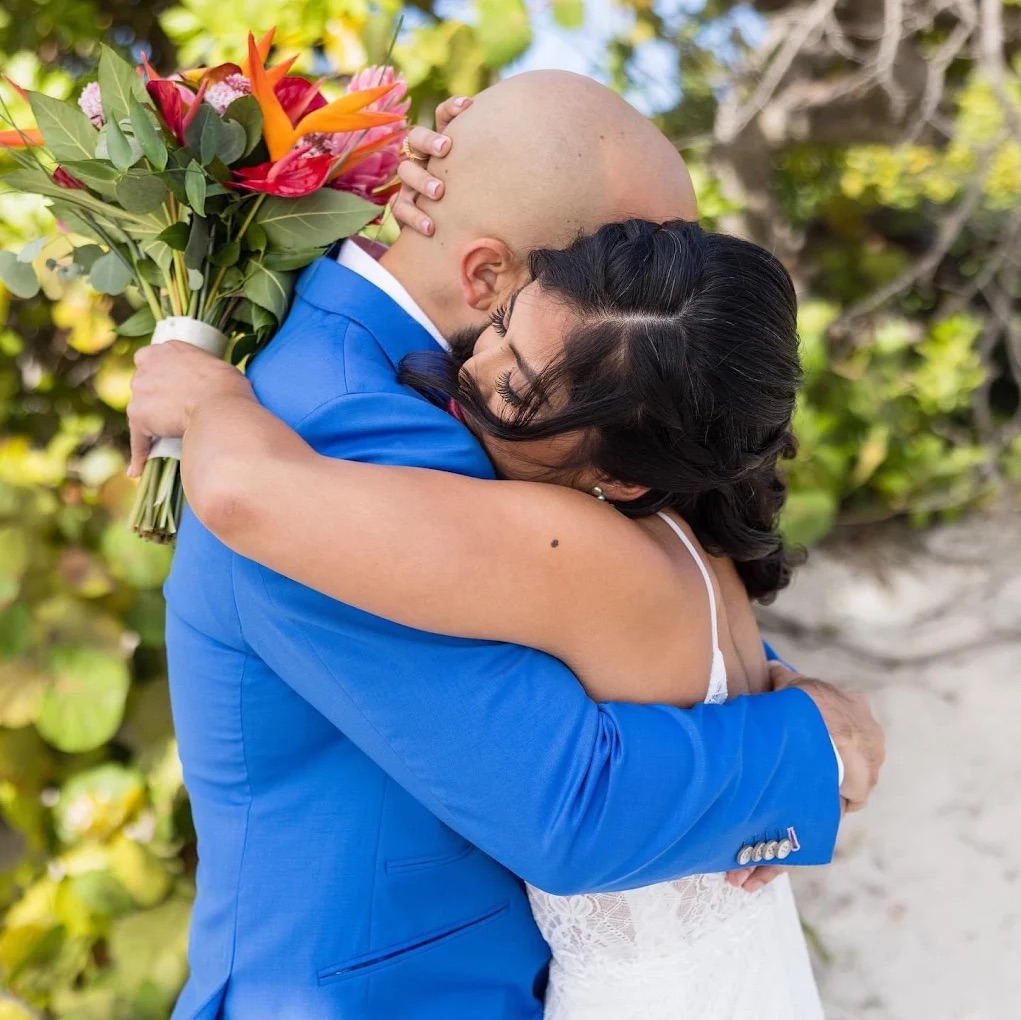
How Vents Affect Formality and Style
Vent choice signals intent. In the modern wardrobe, side vents read as the most polished and deliberate choice, appropriate for business, evening, and any occasion where the jacket should look composed from every angle. Center vents read as relaxed and practical, the natural partner for a soft-shouldered sport coat, a weekend blazer, or a linen jacket for daytime events. Ventless reads as fashion-forward or formal-sleek, a statement choice that asks for a confident, well-fitted garment.
These are conventions, not laws. A beautifully made single-vented business suit is entirely correct, and a side-vented casual jacket looks perfectly at home on a brunch patio. But when every element of a garment is chosen deliberately, the vent should join the lapel width, the button stance, and the pocket style in supporting one clear idea. A structured, formal suit wants side vents. A soft, casual coat is happiest with a center vent. Match the vent to the garment's personality rather than choosing in isolation.
Evening wear follows its own lean logic. Dinner jackets and tuxedo fronts are usually kept simple and clean, and a ventless or side-vented back supports that minimalism. The center vent is the least common choice on formal evening tailoring, partly because the single opening interrupts the long clean line that black tie is built around. When in doubt for a custom tuxedo, side vents or ventless are the classic answers.
Vents and Construction Quality: What to Look For
Not all vents are made alike. When you try on a jacket or evaluate a garment, check the vent construction itself. The vent edges should be cleanly finished and lie flat, with no puckering where the slit meets the hem. The two panels of a double vent should overlap at the center by roughly an inch, covering each other so no gap shows at rest. The vent depth matters too: a vent that ends too high leaves the jacket tight through the seat, while a very deep vent can look unbalanced on a short jacket.
Press the vent closed and let go. A quality vent returns to a flat, aligned position immediately. A cheap one stays wrinkled or curls outward, which is usually a sign of poor interlining or hasty finishing. Look at the inside of the vent as well: the anchoring stitch at the vent's top should be strong and neatly placed, because that point takes the most stress whenever the vent opens. In made-to-measure and bespoke work, the vent interior is finished as cleanly as the exterior, and a peek inside tells you a lot about the maker's standards.
Bespoke By CB checks these details at every fitting, and they are a good example of why construction choices deserve a conversation rather than a dropdown menu. A vent that gapes, curls, or splay opens at rest is telling you something about the fit or the make, and correcting it early is far easier than living with it.
Making the Decision: A Practical Framework
Start with the garment's job. If the jacket is your primary business piece, worn to meetings, worn in the evening, expected to look composed from every angle through a long day, choose side vents. The double vent's control and recovery are worth the extra construction, and its formal polish matches the setting.
If the jacket is a relaxed sport coat or a casual layer, worn open, worn with knitwear or denim, worn to weekend events where you will move, sit, and stand freely, a center vent is a natural and honest choice. It behaves well under casual use and its softer formality matches the garment. The single vent also suits very soft, unstructured jackets where anything fussier would fight the coat's character.
Choose ventless only deliberately. It is right when the silhouette is the entire point: a slim evening jacket, a fashion-forward coat, a garment for an occasion that involves more standing than sitting. Accept the management that comes with it, and make sure the fit through the seat is generous enough that the jacket can survive a chair.
Then let your own habits vote. If you put your hands in your pockets, prefer double vents. If you drive a lot, sit a lot, or present standing, side vents serve you best. If your day is unpredictable and the jacket has to handle all of it, side vents are the safest all-around choice, which is why so many tailors, including our consultants at Bespoke By CB, recommend them as the default for a first custom suit.
Common Vent Mistakes and How to Avoid Them
The most common mistake is inheriting a vent without ever considering it. Most wardrobes are full of single-vented jackets not because their owners chose them but because they were on the hanger. Once you know the difference, test it: put on a single-vented jacket, sit down, stand up, put your hands in your pockets, and repeat with a side-vented jacket. The behavior gap is obvious within minutes, and it will inform every jacket you buy or commission afterward.
The second mistake is treating vents as a body-type law. Advice that says tall men must do one thing and stocky men another oversimplifies a decision that really belongs to the fitting room. The right vent for you depends on the cloth, the cut, the shoulder, the length, and how all of them interact with your proportions. A good tailor will show you the options on your body and let the mirror make the argument.
The third mistake is ignoring vent behavior when judging fit. Gaping vents mean the seat or waist is too tight. Vents that hang past each other with no overlap mean the back is cut too full. A vent that curls outward points to pressing or interlining issues. Diagnose the jacket through its vents and you will understand its fit faster than by any other single clue.

Why Bespoke By CB Builds Vents Around You
Vent construction is a small choice with daily consequences, which makes it exactly the kind of decision that Bespoke By CB was built around. When you commission a garment with us, the vents are not a default inherited from a factory pattern. They are chosen with you, in the fitting room, after a consultant has seen how you stand, how you sit, how you move, and what the garment is actually for. A Miami attorney who spends his day in courtrooms needs a jacket that survives a bench and a boardroom; a groom needs one that looks composed from behind in every photograph. Those are different vent conversations, and we have both every week.
Our approach starts with measurement and ends with behavior. At a consultation in Miami, we map your posture, seat, and shoulder line, then cut the back of the jacket so the vents overlap cleanly at rest and open exactly as far as they need to when you move. Miami's climate shapes the rest of the decision: lighter cloths, considered lining, and vent geometry that keeps air moving through the back of the jacket on the walk from the car to the door.
Whether it is a first business suit, a warm-weather sport coat, or a full wedding wardrobe, Bespoke By CB handles vent construction as part of the garment's whole architecture, alongside the canvas, the shoulder, and the cloth. The result is a jacket that behaves itself all day, from the first meeting to the last photograph, and keeps its shape year after year in a climate that punishes careless construction.
FAQ: Jacket Vent Questions
Are double vents better than a single vent?
Not universally, but for most business and dressier jackets, yes, in pure function. Double vents control the cloth better when you sit and move, recover their shape faster, and keep the back of the jacket smooth at rest. Single vents are simpler, slightly more casual, and behave well on relaxed sport coats. The best choice depends on the garment and how you wear it.
Do vents make a jacket more comfortable?
They help. Open vents let air circulate through the back of the jacket as you move, which matters in a warm city like Miami, and they give the cloth somewhere to go when you sit, so the jacket presses and creases less. Lining and cloth weight matter more for heat, but vents contribute.
Why do my jacket vents gap open when I stand still?
Usually a fit issue. Vents that splay open at rest mean the jacket is too tight through the seat or the hips, forcing the panels apart. A tailor can often correct it by letting the seat out or adjusting the side seams. Persistent gaping on a ready-made jacket is a sign the cut does not suit your build.
Can a tailor change the vents on an existing jacket?
Not practically. Vents are cut into the cloth at the pattern stage, so converting a single vent to side vents or adding vents to a ventless jacket is not a viable alteration. Choose the vent construction when the garment is commissioned or bought. Other back adjustments, like taking in the center seam, remain possible.
Which vent style is most formal?
For standard tailored jackets, side vents read as the most polished and deliberate, followed by ventless on certain sleek evening cuts, with the single center vent reading as the most casual and relaxed of the three. For black tie, side vents or a ventless back are the classic choices.
What is the best vent choice for a first custom suit?
Most consultants, including ours, recommend side vents for a first business suit. They keep the jacket composed through a full working day, recover cleanly after sitting, and photograph well from every angle. If the suit leans casual, a center vent is a legitimate alternative.
Do vents affect how a jacket looks from behind in photos?
Yes, which matters for grooms and speakers. Side vents preserve a solid center panel over the seat, so the back of the jacket photographs as one clean line. Single vents can flip open with movement or wind, and ventless jackets can bunch when you sit before a shot. Wedding parties we dress at Bespoke By CB are fitted with this in mind.
Is a ventless jacket ever the right choice in Miami?
Occasionally, for a specific garment. A slim, short evening jacket or a fashion-forward coat can justify the ventless look, provided you accept the warmth and the need to manage the jacket when sitting. For everyday Miami wear, vented backs in light cloth are the more practical choice.


