The Trouser Front Decision Every Man Gets Wrong
Buy a pair of trousers off the rack and the front is already decided for you. Somewhere between the factory pattern and the store hanger, a choice was made about whether your trousers would carry pleats or sit flat across the waistband. Most men never think about it. They grab what fits, what is on sale, or what the sales associate handed them, and then wonder why some trousers feel great from nine to nine while others pull, pinch, or billow in all the wrong places.
That single construction detail shapes more of how a trouser performs than almost anything else in the pattern. It influences how the fabric drapes from your waist to your shoe, how much room you have when you sit down, how the pocket mouths behave, and how the whole silhouette reads from across a room. It can make the same man in the same size look either sharp and streamlined or shapeless and bulky. In a city like Miami, where a tailored look has to survive heat, humidity, long lunches, and a walk from the parking garage to the boardroom, the front of your trousers is doing real work.
This guide settles the question properly. We will walk through what pleats actually are, what flat fronts really do, how each one interacts with rise, drape, body proportions, cloth, and occasion, and how to decide which front belongs in which garment of your wardrobe. Along the way we will clear up the persistent myths: that pleats are only for older men, that flat fronts are inherently slimmer, and that one front is universally correct. Neither is. The right answer depends on your body, your cloth, your rise, and how you intend to live in the trousers. At Bespoke By CB we build both fronts every week for clients across South Florida, and the choice is never arbitrary; it follows from the pattern we draft for you. If you want the practical takeaway first, here it is: judge the front together with the rise, never in isolation.
What Trouser Pleats Actually Are
A pleat is a fold of fabric, permanently pressed into the trouser just below the waistband, that opens as the fabric needs to expand and lies flat when it does not. Look at a pleated trouser hanging on a hanger and you see two neat crease lines stacked at the front. Wear it, stand still, and the pleats mostly stay closed, presenting a relatively clean front. Sit down, climb stairs, or reach for something across the table, and the pleat unfolds to release extra cloth exactly where your body demands it. The fold runs downward and inward toward the fly, which is why pleats expand without adding width at the waist itself.
There are two families. Single pleats run one fold per side, usually around three quarters of an inch to an inch deep. Double pleats stack two folds per side, and the two folds can be cut either both opening toward the fly, called forward pleats, or toward the pockets, called reverse pleats. Forward pleats tend to look tidier and feel more formal, which is why classic tailored and dress trousers favor them. Reverse pleats open outward and are common on looser, more casual and heritage designs, including many American cuts from the middle of the last century.
The direction and depth of the pleat matter more than the count. A deep single pleat cut forward can give nearly as much expansion as a shallow double pleat. The count is not a formality dial on its own; the overall pattern, the cloth, and the styling decisions around the pleat decide whether the finished trouser reads boardroom or weekend. This is where so many men go wrong: they remember an unflattering pair of billowy pleated trousers from a bad decade and blame the pleat, when the real culprit was a shapeless pattern, a low rise, or a stiff, bulky cloth.
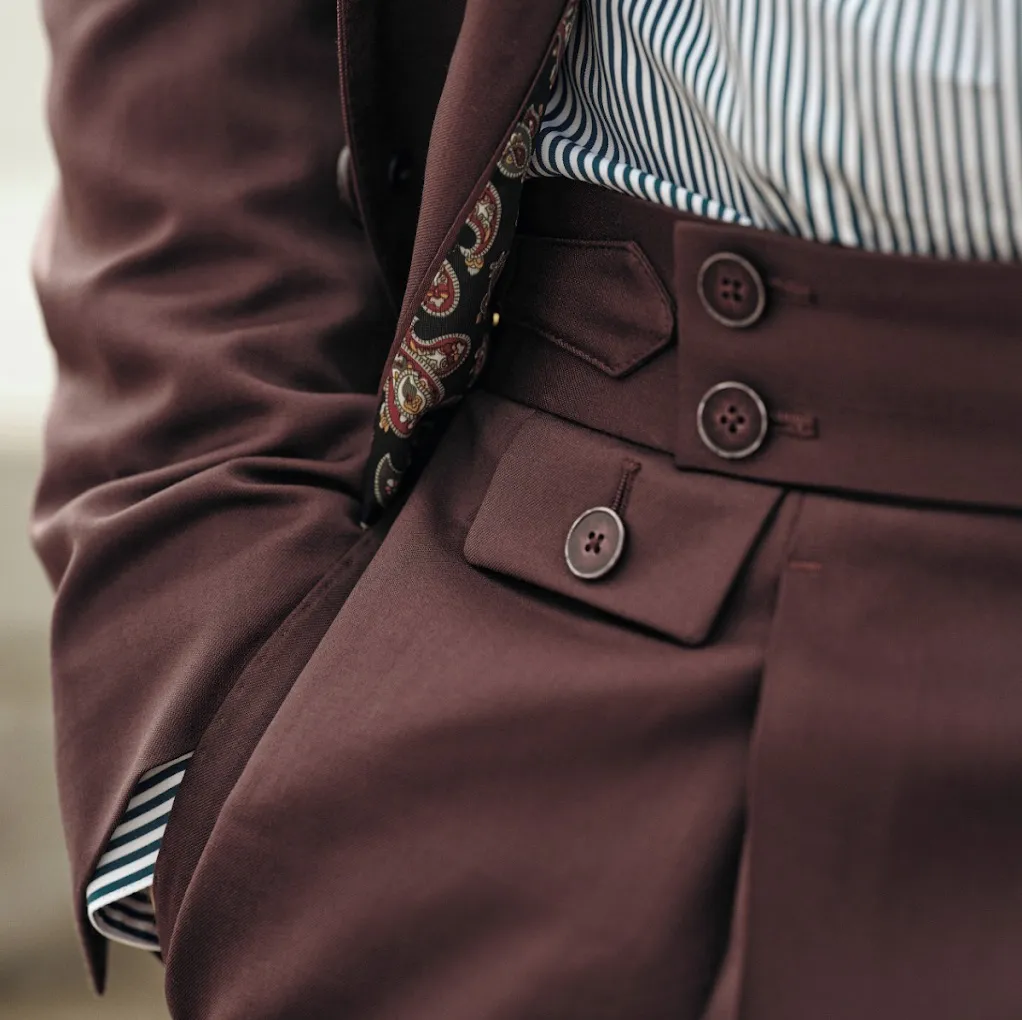
One related term worth knowing is the drop. Tailors talk about the "drop" from waist to seat and thigh, and a pleat is one of the pattern tools for managing that drop gracefully. When your seat and thighs need more cloth than your waist does, that extra fabric has to enter the leg somewhere. It can flare from the pocket line, it can be cut into a fuller straight leg, or it can be organized into pleats at the waist. The pleat is simply the most orderly way to deliver room where it is needed while keeping the waist clean.
What a Flat Front Really Does
A flat-front trouser has no fold at the waist. The front panel is a single smooth expanse of cloth from waistband to fly, pressed clean with no stacked crease lines. The visual effect is a continuous, unbroken vertical surface at the front of the leg, which is precisely why flat fronts read as lean and modern. Nothing interrupts the line, nothing catches shadow, and the eye travels straight down from waist to shoe.
Because there is no fold of reserve cloth, everything the front panel has is what you see. When you sit, the fabric has to stretch, shift, or pull rather than unfold. When your thighs need more room than the pattern provides, the trouser has to borrow it from somewhere: a slightly lower crotch, a touch more width cut into the leg, or the waistband riding where it can. There is no mechanism for expansion, so the pattern must either build roominess into the leg or accept a snugger feel. That is why a slim flat-front trouser is comfortable on a man whose waist-to-thigh drop is modest, and why the identical trouser feels like a tourniquet on a man with athletic thighs.
The flat front also changes the geometry of the pocket. On a well cut flat front, slant pockets sit close and clean, but they have less fabric depth behind them, so heavy keys, a wallet, or a phone pull the pocket mouth open and distort the line. This is not a defect; it is arithmetic. The pocket sits in cloth that would otherwise have been consumed by the pleat. Many flat-front designs switch to a curved or jetted pocket, or simply expect you to carry less in your pockets, and that expectation is worth taking seriously if you live in your trousers the way most Miami professionals do.
Where the flat front earns its reputation is visual precision. Under a jacket, a flat front shows a clean vertical from lapel to shoe. In lighter cloth, it looks crisper because there are no pleat lines to soften or collapse in humidity. In a photograph, nothing at the front competes with the crease of the leg. If your priority is a sleek, uninterrupted line and your build and cloth cooperate with that priority, the flat front is hard to beat.
Bespoke By CB cuts flat fronts for a large share of our Miami clients precisely because the clean line suits warm-weather tailoring so well, but we make the choice cloth by cloth and client by client, after measuring, rather than defaulting to it. A flat front in a dry, crisp wool behaves differently from a flat front in a soft high-twist trousering or a linen that relaxes with wear, and the right call depends on all three factors together.
Rise: The Decision That Hides in Plain Sight
You cannot talk sensibly about pleats versus flat fronts without talking about rise, meaning the distance from the crotch to the top of the waistband. The rise determines where the trouser sits on your body, and the front style only makes sense in the context the rise creates. This is the single most overlooked relationship in menswear, and it explains most of the confusion around pleats.
Pleats want a higher rise. The fold needs vertical room below the waistband to lie flat, open, and close cleanly. Set a pleat under a low, hip-hugging rise and there is nowhere for the fold to live; it bunches, it gapes, or it stays permanently half open, which is exactly the sloppy look that gave pleats a bad name in low-rise decades. Put the same pleat under a proper rise that sits at or near your natural waist and it behaves beautifully: it closes when you stand, opens when you sit, and drapes in long clean lines. A classic pleated trouser cut with a high rise is one of the most flattering things a man can wear, because the long rise lengthens the leg and the pleat organizes the fullness.
Flat fronts tolerate lower rises more gracefully, and this is a genuine structural advantage. Because there is no fold that needs vertical room, the flat front can sit lower on the hip and still look clean. That flexibility made flat fronts the natural partner of the lower rises that came back into mainstream tailoring, and it cemented the modern slim silhouette: low rise, flat front, tapered leg. The look is real and it works, but note what it costs. A low rise shortens the visual leg, moves the waistband to the widest part of many men's bodies, and reduces the seated comfort, because the crotch point sits higher relative to where the trouser rests.
Our standing advice at Bespoke By CB is simple: if you want pleats, commit to the rise that lets them work. A single forward pleat under a waistband set at your natural waist will look and feel dramatically better than a double pleat squeezed under a hip-bone rise. If you prefer a lower rise, whether for comfort, proportion, or how you wear your shirts untucked on casual days, lean flat front and let the clean line carry the look. The front and the rise are one decision, not two.
Drape and the Cloth You Choose
Drape is how a fabric falls and moves, and the front style changes drape in both directions. Pleats add cloth and create structure at the top of the leg, which helps heavier and stiffer fabrics fall in clean, vertical channels instead of collapsing into shapelessness. A pleat in a dense flannel or a substantial woolen cloth keeps the crease of the leg organized all the way down. Flat fronts flatter softer, lighter cloths, where the uninterrupted panel showcases the fabric's natural fall without the pleat lines fighting it.
Weight is a good first filter. Heavier worsteds, flannels, tweeds, and brushed cottons generally benefit from pleats, which is why heritage and cooler-season tailoring favors them. Lighter worsteds, high-twist wools, linens, cotton-linen blends, and fine gabardines generally present better flat, which is part of why flat fronts conquered warm-weather wardrobes in Miami and beyond. There are exceptions in both directions. A soft, high-twist wool can carry a single pleat beautifully because the cloth has give and the pleat opens and closes without creasing hard. A crisp dry linen can look sharp flat, but a softer washed linen in a fuller cut can take a pleat and look deliberately relaxed rather than sloppy.
Pattern interacts with the front too. A windowpane, glen check, or stripe has to align across the pleat, and a poorly matched pleat telegraphs cheap construction from across the room. A flat front avoids that alignment challenge entirely, which is one reason patterned flat fronts look so clean. Conversely, on a pleated trouser, a well matched pattern across the fold is one of the small signs of real tailoring, and it is something Bespoke By CB checks at the cutting stage for every patterned trouser we build, along with the matching at the seams and pockets.
Color and texture shift the reading as well. Dark, smooth, flat-front trousers look lean and formal. The same dark cloth with a pleat looks more classic and substantial. In light tan, stone, or cream, a flat front can look almost bare in strong sun, while pleats give the front some visual weight and structure, which is why cream pleated trousers are such a staple of classic warm-weather dressing. None of these are rules; they are tendencies to weigh when you commission a pair.
Comfort, Sitting, and Real Life
Here the pleat has an honest structural advantage, and it is worth saying plainly: pleats are more comfortable, especially when seated, and especially for men whose thighs need more cloth. The fold exists to release fabric under load. Sit in a properly pleated trouser and the pleat opens at the thigh exactly where the fabric would otherwise pull. Stand and it closes. Over a long day of meetings, flights, dinners, and traffic, that small piece of engineering pays for itself.
The flat front has no such mechanism, so its comfort comes from cut and cloth: enough width in the thigh, enough ease in the seat, a waistband that can shift, and a fabric with natural give. A well designed flat front is perfectly comfortable. The problems arise when a flat front is cut slim for looks and then asked to do a sitting job, which is when you get the familiar pull lines across the thigh, the waistband that digs when you sit, and the constant small adjustments all day.
Pocket behavior is part of real life too. Pleated trousers usually carry their pockets better. The extra cloth around the pleat lets the pocket mouth sit flat even when loaded, and many pleated patterns place the pockets slightly forward where they disturb the silhouette less. Flat-front pockets sit in tighter cloth, so contents print and pull the mouth open. If you carry a phone, wallet, and keys every day, this practical difference deserves real weight, or you need a design that gives the pocket its own depth, which is an easy thing to request in custom trousers and an impossible thing to fix off the rack.
A third comfort factor is heat. Pleats hold a small amount of air at the front, which can feel cooler in warm weather and more forgiving in heavy cloth. Flat fronts press a smooth layer of cloth against the body. In Miami humidity the difference is modest but real, and it is one more reason lighter, flatter trousers dominate the South Florida workweek while pleated trousers in breathable cloth own the seasons and occasions where the fabric has body.
Proportions: Reading the Front on Your Build
Neither front is universally slimming, whatever the marketing says. What each front does is manipulate visual proportions differently, and the result depends on your build and the rest of the pattern. Used correctly, each one can make a man look taller, leaner, and better put together. Used carelessly, each can do the opposite.
Flat fronts minimize front bulk, so they read leanest when the pattern's width is moderate. A flat front in a trimly cut trouser presents the slimmest possible front silhouette, which is why slim builds love them. But a flat front in a generously cut wide trouser does not read slim; it reads shapeless, because the smooth panel gives the eye nothing to organize the fullness. Fullness needs either structure, which pleats provide, or a taper the fabric follows, or both.
Pleats, meanwhile, have two opposite effects depending on execution. Cut correctly with a good rise, forward direction, and moderate depth, a pleat creates vertical lines from waist to knee that lengthen the leg and keep fullness orderly, and on fuller builds that organization is far more flattering than an unbroken expanse of tight or billowing cloth. Cut badly, with a low rise or excessive depth, pleats add stacked horizontal bulk exactly where men least want it, and the trouser reads dated and baggy. The lesson is not that pleats suit this or that body type; it is that pleats punish bad patterns and reward good ones.
Consider proportion from the top of the outfit too. Under a jacket, the trouser front mostly hides, and the drape from pocket line to shoe matters more than the pleat itself. Unpaired with a jacket, worn with a tucked shirt, the front is fully visible and the choice becomes more prominent. Waistcoat? A high pleated front under a waistcoat is a classic combination because the waistband hides under the vest and the pleat organizes the visible skirt of the trouser. Athletic builds with a strong drop from waist to thigh are the clearest case for pleats, while slimmer builds have the widest range of choice. If you are unsure which proportions suit you, this is precisely the conversation to have with a tailor rather than a sales rack: Bespoke By CB drafts each trouser pattern to your measurements and shows you how the front will sit before cloth is cut.
A word on height myths: the old saw that short men must avoid pleats is false as stated. A shallow single forward pleat under a high rise lengthens the leg on a shorter man. What shortens anyone is a low rise, a deep bulky pleat, or a break that swallows the shoe. Proportion comes from the whole geometry, not from one feature.
Formality and Occasion
Dress codes do not mention pleats, but formality is still affected by the front. Black tie trousers are traditionally flat front: a single pleat is acceptable in classic codes, and the smooth, uninterrupted face of a flat-front dinner trouser with its satin side stripe is the sharpest formal presentation. If you are commissioning a tuxedo, the flat front is the default and the pleat is the deliberate, classic exception. When we build formal trousers at Bespoke By CB, the front is chosen to match the formality of the stripe, the waistband treatment, and the whole evening silhouette.
Business tailoring lives in both camps. The conservative American boardroom of the mid twentieth century ran on pleated trousers; the sharp contemporary office runs on flat fronts. Today both are completely acceptable in professional dress, and the choice follows your cloth, your build, and how traditional you want the look to read. Charcoal or navy worsted with a flat front reads modern and precise. A fuller flannel or a soft high-twist with a single pleat reads classic and confident. Neither will raise an eyebrow in any serious workplace.
Casual trousers tilt flat by habit but not by rule. Chinos are overwhelmingly flat front, and that is fine. But casual pleated trousers in washed cotton, linen, or soft wool are one of the most comfortable, characterful weekend garments a man can own, and the relaxed pleat is a deliberate style choice rather than a leftover. Denim, being rigid, usually stays flat and cut close, since a pleat in heavy denim sets a hard crease that fights the fabric's nature.
Weddings and events deserve a note of their own. For grooms and wedding parties in Miami, the climate pushes toward lighter cloth, and lighter cloth often means flat front for the sake of the clean line in photographs. But a high-waisted pleated trouser in a light flannel or tropical wool photographs beautifully, gives the groom comfort through a long day of standing and sitting, and pairs naturally with suspenders instead of a belt. If the wedding trousers will be worn for ten hours, weigh seated comfort heavily; a pleat earns its keep on days like that. Our wedding consultations at Bespoke By CB walk through exactly this tradeoff with grooms, because the front choice affects how the trousers feel at hour eight of hour ten.
Wearing Each Front Well
Assume you have chosen. Here is how to get the most from each front.
With pleated trousers: wear the rise high, at or near the natural waist, so the pleat has room to work. Keep the pleat depth modest unless you are deliberately dressing relaxed. Choose forward pleats for dress trousers and reserve reverse pleats for looser casual cuts. Skip the belt whenever possible, since pleats and a belt fight each other; suspenders or side adjusters, which we build into most of our custom waistbands, are the natural partners. Press the crease sharp from pleat to hem so the fold stays disciplined. And keep the break clean, because a puddling hem below an open pleat is what makes the whole style read sloppy rather than classic.
With flat-front trousers: keep the front panel honest by carrying less in your pockets, or ask for deeper pocket construction in custom pairs. Watch the thigh; if you see pull lines when you stand, the pattern is too slim for your legs regardless of how the waist feels. Let the clean line work by keeping the shirt tucked or by wearing a shorter, trimmer untucked shirt that does not bury the waistband. Choose flatter, smoother cloths that showcase the uninterrupted panel. And do not mistake flat front for a mandate to size down; a flat front that fits the waist and thigh correctly will always look better than a smaller size wrangled into service.
Both fronts share the same finishing rules: the hem should break where you intend it to break, the crease should run down the center of the knee and over the second eyelet of the shoe, and the waistband should sit where the pattern expects it to sit. Get those right and either front looks intentional. Get them wrong and either front looks accidental. For hem finish and overall leg balance, our suit pants fit guide walks through the checkpoints in detail, including how the back of the leg should fall over the shoe.
The Custom Trouser Advantage
Off the rack, the front choice is bundled: a store trouser comes with a rise, a pleat or its absence, a pocket style, and a leg width, all decided by a pattern drafted for a theoretical average man. If your waist, seat, thigh, and rise measurements match that average, congratulations. Most men do not, which is why so many trousers pull, gape, or billow in ways the fitting mirror cannot explain. You can find the general principles of fit in our suit tailoring guide, but the front of a trouser is one of the places where made-to-measure decisions really separate themselves from rack shopping.
Custom trousers let you choose the front with your body and cloth in the room. At Bespoke By CB, the process starts with measurements that include your waist, seat, thigh, rise, and preferred waistband position. From those numbers we draft a pattern, and the front style becomes a genuine decision: single forward pleat under a natural rise for a fuller thigh and a drape-oriented cloth; clean flat front with a moderate rise and eased thigh for a leaner look in lighter fabric; or a flat front with a slightly fuller leg if you love the smooth front but need real sitting comfort. Custom construction also lets us give pockets their own depth so a phone does not wreck the line, add side adjusters so no belt is needed, and match pattern across the pleat if your cloth has one.
Men are often surprised how affordable and quick the process is. Custom trousers at Bespoke By CB start at $399, and each pair is drafted to your measurements rather than a size scale, with fabric options spanning workday worsteds to summer linens. The difference from rack trousers is not subtle; it is the difference between cloth organized around your body and your body organized around cloth. Whether you prefer the vertical structure of a pleat or the clean sweep of a flat front, custom is where that preference actually gets honored in the pattern.
Making the Choice: A Practical Decision Path
Here is the decision compressed, the way we walk clients through it in a consultation.
Start with your build and your drop. If your thighs and seat need visibly more room than your waist, a single forward pleat deserves first consideration; fighting that geometry with a slim flat front means comfort problems forever. If your waist and thighs are close in measure, both fronts are open to you and the choice moves to cloth and taste.
Then weigh your cloth. Heavier, structured, or patterned fabric tends to reward pleats; lighter, softer, smoother fabric tends to reward the flat front. In Miami's climate, plan for the months the trousers will actually serve: breathable flat fronts for the peak heat, pleats in light flannel or high-twist wool for the season when wool is wearable and for travel north.
Then set the rise honestly. Want a natural waist, suspenders, a classic read? Rise high and consider the pleat. Want a lower, modern, easy wear? Rise lower and go flat. Refuse the mismatch: a pleat under a hip rise, or a flat front cut skinnier than your legs, are the two mistakes that make men believe trousers hate them.
Then think about the day. Ten-hour wear, lots of sitting, heavy pocket carry: the pleat and a deep pocket design earn their keep. Photography-first occasions and clean minimal lines: the flat front presents better. Black tie: flat front unless you are deliberately going classic.
And if you are building a wardrobe rather than a single pair, own both. A rotation of flat-front trousers in light workday cloth and a few pleated trousers in flannel or high-twist covers every occasion, mood, and meal your calendar can produce. We plan exactly this kind of split wardrobe with clients constantly, and if you want help structuring yours, Bespoke By CB's guide to ordering bespoke lays out how the process works from first measurements to final fitting.
How Bespoke By CB Can Help
Choosing between pleats and flat fronts is a small decision with outsized consequences, and it is exactly the kind of decision that benefits from a tailor who measures you before advising you. Bespoke By CB is a Miami custom clothing house that drafts every trouser from your measurements, so the front style you choose is executed in a pattern built around your waist, your seat, your rise, and your proportions, not around a size scale. We will tell you honestly whether your build and cloth favor a single forward pleat or a clean flat front, show you how each will sit before any cloth is cut, and build details like side adjusters, proper pocket depth, and clean pleat pattern matching that off the rack simply cannot offer.
You do not need a full suit to start. Trousers are one of the most rewarding entry points into custom clothing because you wear them every day and the fit problems are felt immediately. Come in for a consultation in Miami, or reach out with the trousers you have and the problems you have with them, and we will turn that into a pattern: rise set correctly, front chosen deliberately, cloth matched to the South Florida calendar. Whether you end up team pleat, team flat, or, like most of our best dressed clients, happily both, Bespoke By CB builds trousers that make the choice look easy because the pattern did the hard work before you ever put them on.
Frequently Asked Questions
Are pleated trousers out of style?
No. Pleated trousers left mainstream fashion for a stretch of slim-fit years, but they never left classic tailoring, and they have returned as a deliberate, well cut choice. What went out of style was the badly built pleat: the low-rise, deep-folded, shapeless trouser of the 1990s and early 2000s. A single forward pleat under a proper rise in good cloth reads as classic and confident today, not dated. The pleat is a construction feature, not a trend; trends only decide how it was abused.
Do pleats make you look bigger?
A badly cut pleat can, which is where the reputation comes from. But a properly cut pleat does the opposite: it organizes fabric into vertical lines, releases room where you need it, and keeps fullness orderly rather than letting it pool anywhere it likes. If your thighs need more cloth than your waist, a pleat will usually look leaner than a flat front straining across the same legs, because the flat front's pull lines add far more visual bulk than a closed pleat does. Judge the execution, not the feature.
Are flat-front trousers always slimmer?
They read leanest when the rest of the pattern is moderate. A flat front in a trim trouser with a reasonable thigh presents the slimmest possible front. But a flat front in a wide, shapeless cut just looks empty, and a flat front cut skinnier than your legs looks worse than any pleat. The front is one input into the silhouette; the leg width, rise, and break do the rest. No single construction feature is a shortcut to looking slim.
Can a tailor add pleats to flat-front trousers?
Generally no, and this matters for expectations. A pleat is not a modification; it requires extra cloth cut into the front panel from the start. A tailor cannot fold in fabric that is not there. What a tailor can do is take in or let out seams, adjust the rise slightly at the waist, taper the leg, and re-hem. If you want pleats, the garment must be made with them, which is one of the practical reasons men move to custom trousers. Our article on custom suit alterations covers what alterations can and cannot change.
Should I wear a belt with pleated trousers?
Traditionally, no. Pleats were designed to work with suspenders or with a waistband that holds its position at the natural waist, and cinching a belt over pleats can force the folds open and add bulk at the waistband. Side adjusters are the cleaner modern solution and come standard on many custom waistbands. With flat fronts, a belt is perfectly natural and often part of the look. If you love belts, that is a small point in favor of flat fronts.
Which front is better for Miami's climate?
Both work in breathable cloth; the front is secondary to fabric weight and weave. In the peak heat, most men reach for flat-front trousers in linen or light high-twist wool because the smooth panel in airy cloth looks crisp, and a pleat can soften in high humidity. In Miami's cooler stretch, and for travel to northern cities, pleats in light flannel or high-twist worsted are excellent, with the pleat's seated comfort carrying you through long travel days. Choose the cloth for the weather and the front for your build, not the other way around.
How many pleats should I choose?
One, cut forward, under a rise at or near your natural waist, is the versatile classic: enough expansion for comfort, tidy enough for dress and business. Two pleats are a deliberate style statement that suits looser cuts and casual cloth; on a trim dress trouser they read heavy. Depth matters as much as count: a deep single pleat can give more room than a shallow double. When Bespoke By CB drafts pleated trousers for a client, we set the count and depth together from the measured drop between waist and thigh, not from a house habit.
Can I wear pleated trousers with a t-shirt or polo?
Yes, if the trouser is cut and clothed for it. A washed cotton or soft wool pleated trouser with a fuller leg and a relaxed pleat looks excellent with a tucked polo or a trim t-shirt; it is a deliberate, comfortable casual style. What does not work is a stiff, sharply pressed dress trouser with double pleats worn with weekend knits, because the formality of the execution clashes with the casuality of the top. Match the cloth's temperament to the outfit and the pleat stops being a dress-only feature.
What rise works with each front?
Pleats want a rise that puts the waistband at or near your natural waist, because the fold needs vertical room to open and close cleanly. Flat fronts are flexible: they work at the natural waist for a classic look or lower on the hip for a modern one. The most common real-world mistake we see is not the pleat or the flat panel itself but the mismatch: pleats under a low rise that leaves them nowhere to live. Decide the rise first and the front becomes much easier to choose.
Do pleats affect how long my trousers last?
Slightly, in both directions. A pleat adds a pressed fold that can wear a faint crease line over years of dry cleaning, particularly in delicate cloth. But a pleat also reduces stress at the thigh and seat when you sit, because the fabric expands instead of straining, and reduced strain means less seam stress over the garment's life. In practice, cloth quality and rotation matter far more than the front. Treat both fronts well, with the care habits in our suit care guide, and either will outlast the trends that made you second-guess them.
Where can I try both fronts before deciding?
A consultation is the fastest way to see the difference on your own body rather than on a mannequin. Bespoke By CB offers fittings in Miami where we take your measurements, discuss cloth and rise, and show you how each front will sit, open, and drape at your build. You can also test the concept cheaply at home: sit, stand, and climb stairs in your current best-fitting trousers and note where they pull. Where they pull is where a pleat, or a better pattern, would help.