The word bespoke has never been used this loosely. Department stores hang it above racks of factory-made jackets. Online startups promise a bespoke suit measured from your phone in ten days. Walk the menswear blocks of Miami and you will find the word on the doors of shops whose garments are cut in overseas factories from standard patterns.
Almost none of that is bespoke in the true sense. The word has a precise meaning, rooted in a precise craft, and once you understand what the process actually requires, you can separate the real thing from the label in one short conversation. This guide from Bespoke By CB explains what true bespoke means, how it differs from made to measure and from alterations, and how to find the genuine article in Miami, Fort Lauderdale, and Palm Beach.
How Bespoke Became a Marketing Word
Bespoke began as a term of the English tailoring trade. When a client chose a length of cloth from a tailor's book, that cloth was said to be bespoken, spoken for, reserved for that client alone. The word described the moment the fabric left the general stock and became yours. Over time it grew to describe the whole craft around that moment: a garment cut from scratch, by hand, for one person.
Because the word carried prestige, marketing borrowed it. You can now buy bespoke shoes, bespoke coffee, even bespoke headphones. In menswear the label slid downward until it covered almost anything that was not pulled off a rack. The result is honest confusion. A man shopping for custom suits can visit three shops that all say bespoke and be shown three completely different products.
Here is the answer to that confusion. Ignore the word on the door and look at the process. The process never lies.
The Three Actual Tiers of Custom Clothing
Nearly every garment sold as custom falls into one of three tiers, and the differences between them are practical, not semantic. Each tier involves a different kind of pattern, a different amount of handwork, and a different number of times the garment touches your body before delivery.
True Bespoke
True bespoke starts with a pattern drafted for your body alone. A cutter takes your measurements, studies your posture, notes which shoulder sits higher, and drafts a paper pattern that exists for exactly one person. There is no standard block behind it. The garment is then built around that pattern with substantial handwork, and it passes through multiple fittings on your body before it is finished. When it is done, the pattern stays on file so your next garment starts from everything that was learned.
Made to Measure
Made to measure starts with a factory's standard pattern and adjusts it to your measurements. The adjustments are real, but the base block is not yours. The garment is cut by machine in a factory, and you typically get one fitting, sometimes none. A good made to measure garment can look quite good. It is simply not bespoke, and the difference shows up in precision of fit, in how the garment moves with you, and in how long it holds its shape.
Alterations
Alterations begin with a garment that already exists. A tailor takes in the waist, shortens the sleeves, tapers the sides. Done well, alterations can rescue a decent off-the-rack suit, and a good alterations tailor is worth knowing. But no alterations, however skilled, can turn a standard pattern into a personal one, and none can add a chest canvas that was never there. Alterations adjust a garment. They do not create one.
What Makes True Bespoke Genuine
Five things separate the genuine article from every imitation. If a house does all five, you are looking at the real craft.
- A pattern cut for you alone. Your paper pattern is drafted from your measurements and your posture, not adapted from a standard block, and it is kept on file for every future order.
- Floating canvas construction. The chest piece is a layer of canvas stitched between the cloth and the lining with handwork rather than glue. It flexes with you and molds to your chest over the years.
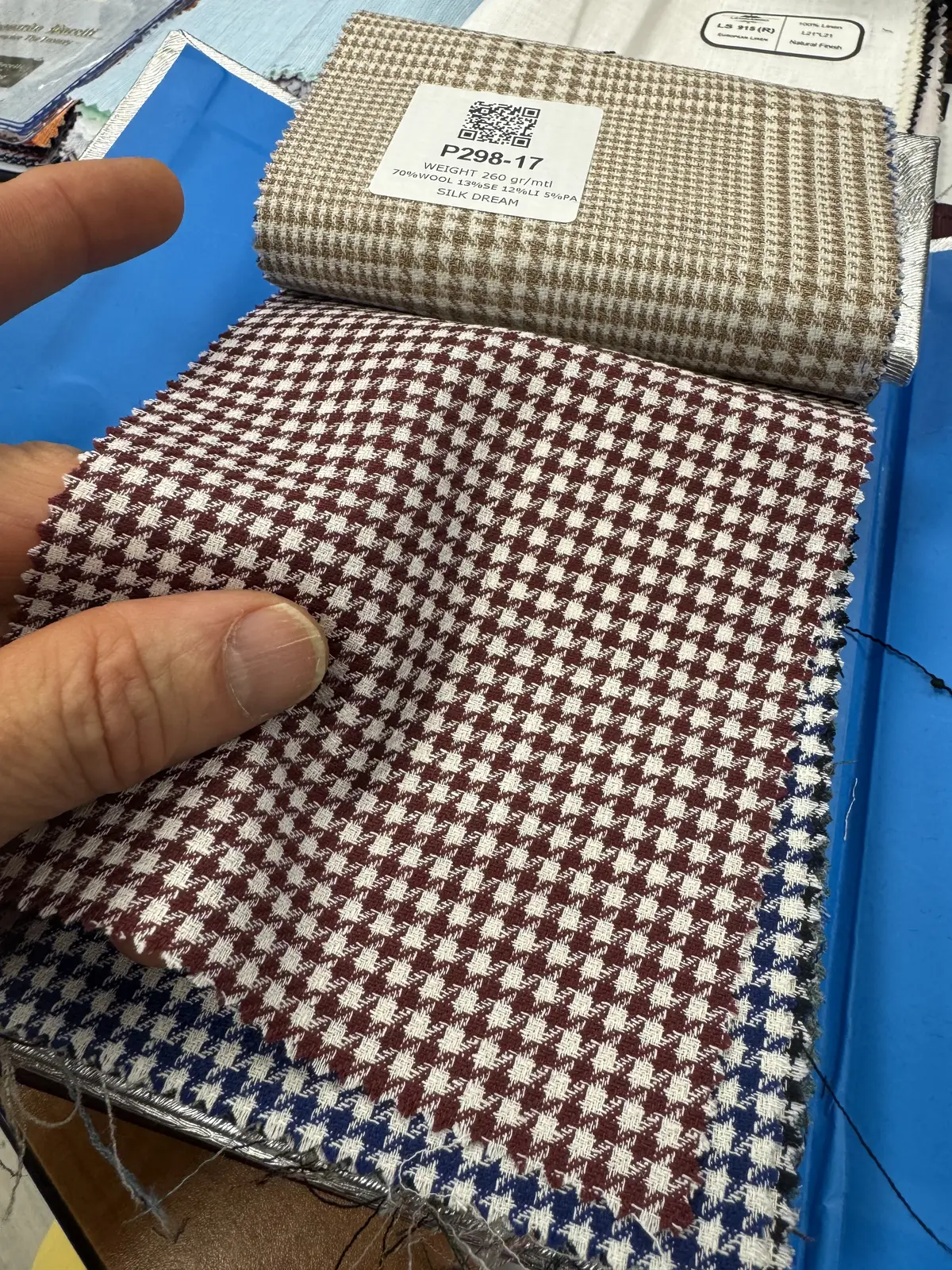
- Fabric chosen from full mill books. You select from the complete collections of the great mills, Loro Piana, Zegna, Dormeuil, Holland and Sherry, not from a house's curated swatch card.
- Basted fittings. Before the garment is finished, you try on a jacket held together with loose white basting thread. At that stage shoulders, balance, and length can still be changed on your body.
- Multiple appointments. Measurement, cloth selection, a basted fitting, often a second fitting, then delivery. Each visit refines the pattern.
Notice what all five have in common. Every one of them happens before the garment looks finished. That is why you cannot judge bespoke from a photograph. You judge it from the process.
Red Flags of Fake Bespoke
Just as there are markers of the genuine article, there are markers of the imitation. One of these alone can mean a shop doing honest work under a loose label. Several together mean you should keep walking.
- The word bespoke over a made to measure process. If the shop takes your measurements, emails them to a factory, and hands you a finished garment weeks later with no fitting, that is made to measure whatever the sign says.
- No pattern kept on file. Ask what happens on your second order. If nothing was learned and nothing was stored, there was no bespoke pattern.
- One appointment from start to finish. Bespoke requires your body during construction. A single visit cannot produce that.
- Fused construction. If the front of the jacket is glued rather than stitched, it will bubble and blister with age, especially in a subtropical climate.
That last point deserves special weight in South Florida. A fused jacket endures heat, salt air, and months of air conditioning swings. Glue does not age gracefully here. A floating canvas does.
Questions to Ask Any Tailor
You do not need decades of tailoring knowledge to evaluate a house. You need three plain questions, and you need to watch how plainly they are answered.
First, do you keep my pattern? A true bespoke house will happily tell you where its patterns live, usually as paper bundles in cabinets or above the cutting table. Ask what happens on your second order. The honest answer is that your pattern is on file and every order refines it.
Second, how many fittings, and at what stages? The answer you want includes a basted fitting before the garment is finished. If the first time you see your garment is at delivery, it is not bespoke.
Third, is the canvas floating or fused? A house doing real canvas work will usually be glad to show you, because its people know what it costs in hours. A house that hedges, or does not seem to understand the question, has answered you anyway.
For a wider view of the local scene, our guides to finding custom tailors in Miami and what does a clothier do walk through the selection process in more depth.
Finding True Bespoke in South Florida
South Florida dresses well and always has. All three of its main markets support real tailoring, but each has its own landscape, and every one of them rewards a buyer who knows the tiers.
Miami. The center of fine menswear is Brickell, where the financial district's dress culture supports genuine craft houses alongside made to measure showrooms. Bespoke By CB keeps its atelier here, minutes from the offices where many of its clients work. When you shop the neighborhood, ask the three questions above early, because the word bespoke appears on more doors than the process appears on cutting tables.
Fort Lauderdale. You will find a mix of old-line tailors who have dressed the same families for decades and newer boutiques riding the wave. The craft tends to live with the old-line houses. Look for a shop that talks about fittings before it talks about fabric.
Palm Beach. This is one of the great tailoring towns in America, with standards shaped by generations of seasonal residents. The good houses are proud of their process, so the three questions are welcomed rather than resented. Expect some of the most experienced cutters you will meet anywhere in the state.
Why the Distinction Matters
If this sounds like a debate over labels, look at what actually happens to the garment. The tier you buy shows up in three concrete ways.
Fit. A garment cut from your own pattern fits in a way an adjusted standard block never will. The clean back, the collar that does not gap, the sleeve that follows your arm: these all come from a pattern drawn for your particular asymmetries. Everyone's shoulders sit unevenly. Only your own pattern knows which side is higher.
Longevity. A floating canvas jacket can be recut, recanvassed, and repaired for decades. It molds to you over years of wear, and a skilled tailor can adjust it as your body changes. A fused jacket cannot be reworked the same way. The glue is the ceiling.
Value. A true bespoke garment costs more at the start and then stops costing. Because your pattern is on file, the second and third garments arrive with the hard questions already answered. Measured over ten years, the cost per wear of a bespoke suit that still fits and still looks right is usually lower than the cost of cycling through factory garments that never quite do.
How Bespoke By CB Practices True Bespoke
Bespoke By CB is a bespoke tailoring house in Brickell, serving clients across Miami, Fort Lauderdale, and Palm Beach. The house was founded by Christian Boehm, a master tailor with more than 37 years in the trade. That number is not decoration. It is the difference between a pattern drafted correctly the first time and a pattern that takes three commissions to stop surprising you.
Every Bespoke By CB commission begins with a personal pattern cut for the client alone. Measurements are taken, posture and carriage are observed, and the pattern is drafted rather than adapted. Each garment passes through basted fittings on the client's own body, with shoulders, balance, and length refined in person before anything is finished. Construction is floating canvas, stitched rather than glued, which is why Bespoke By CB garments keep their shape through South Florida's humidity and years of hard wear.
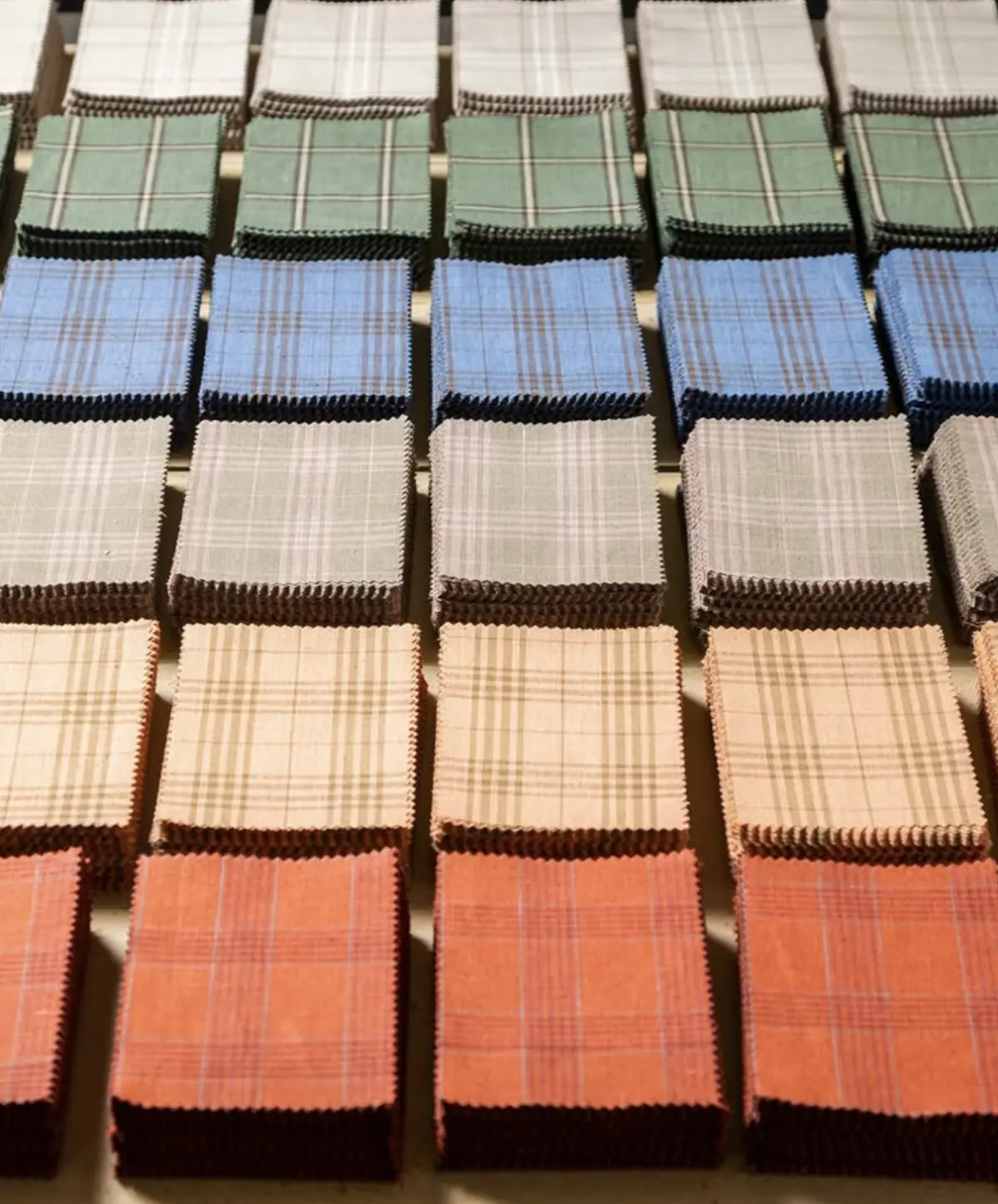
Fabric is chosen from full mill books, so clients see complete collections instead of a curated card. Every pattern stays on file, so the second garment starts ahead of the first. That is the entire promise of the word bespoke, practiced the way the word was meant. If you would like to feel the process on your own shoulders, you can book a consultation at the Brickell atelier.
Frequently Asked Questions
What does bespoke actually mean?
Bespoke means a garment cut from a pattern drafted for you alone, built with substantial handwork, and refined through multiple fittings on your body. The word comes from the English tailoring trade, where cloth chosen by a client was said to be bespoken, spoken for. Anything that starts from a standard factory pattern is not bespoke, whatever the label says.
What is the difference between bespoke and made to measure?
Bespoke starts from your measurements and your posture alone. A personal pattern is drafted, and the garment is built around it through several fittings. Made to measure starts from a factory's standard pattern and adjusts it to your measurements, usually with one fitting or none. Both can produce a handsome garment. Only one produces your pattern.
Is made to measure ever the right choice?
Yes. If your build is close to a standard block, your budget is fixed, and you need the garment on a deadline, made to measure can serve you well. The problem is not made to measure itself. The problem is shops selling made to measure at bespoke prices under the bespoke name. Ask the three questions in this guide, then buy the tier you are actually being sold.
How many fittings should a true bespoke garment have?
Expect at least two and often three. A measurement and cloth selection appointment, a basted fitting where the garment is held together with temporary thread and adjusted on your body, and a final fitting or delivery. The basted fitting is the one that cannot be skipped, because it is where balance is set.
What is a floating canvas, and why does it matter in South Florida?
The canvas is a layer of horsehair or wool stitched between the cloth and the lining of a jacket front. When it floats, it is attached with hand stitches that let the jacket move with you and mold to your chest over time. In Miami's humidity, fused construction, which relies on glue, tends to bubble and break down. A floating canvas wears in rather than wearing out.
Do real bespoke tailors keep my pattern on file?
Yes, and that is one of the clearest tests. A true bespoke house keeps your paper pattern permanently. On your second commission, the cutter starts from your pattern and from the lessons of the first garment, so the fit improves instead of starting from zero. Future orders also become simpler, because the work of learning your body is already done.
How do I start my first bespoke commission?
Start with a conversation, not a purchase. Wear the shoes and shirt you plan to pair with the garment, be ready to talk about how you dress now and how you want to dress, and let the house show you its process before you commit. If you are in Miami, Fort Lauderdale, or Palm Beach, you can book a consultation with Bespoke By CB in Brickell.
