
The $4,500 Question
You are standing in a designer boutique in the Miami Design District. The suit on the rack is beautiful, the wool drapes cleanly, and the price tag reads $4,500. The associate tells you it is the finest ready-to-wear the house produces.
Maybe it is. But a quiet question follows you to the parking garage. Where exactly did that money go? Onto the cloth and the hands that shaped it? Or onto the name stitched inside the lining?
For 37+ years, Christian Boehm and the tailors of Bespoke By CB have had this exact conversation with clients across Miami, Fort Lauderdale, and Palm Beach. A man investing four or five thousand dollars in a suit deserves to know precisely what he is buying. So let's open the ledger together, respectfully, on both sides.
What You Are Actually Paying for With a Designer Suit
First, a point of fairness. Zegna, Brioni, and Canali make excellent clothing. These are houses with real heritage, real looms, and real archives. This is not about tearing them down. It is about arithmetic.
When you buy a designer ready-to-wear suit, the price is split across buckets that have nothing to do with the garment on your back. There is the wholesale markup between factory and store, and the retail markup, which keeps the lights on in some of the most expensive retail square footage in the world.
And there is the marketing machine. Celebrity campaigns, magazine spreads, runway shows in Milan, stadium sponsorships, and the advertising budget that keeps a creative director famous. Somewhere in that price tag, you are paying for a Formula 1 livery.
None of it is hidden. It is the business model of luxury retail. The physical product commonly represents a fraction of what you pay, because the rest is buying you a name, an image, and a beautifully lit room. That is a legitimate thing to sell. It is worth knowing how much of the suit is actually suit.
The Price Spectrum: What Designer Suits Cost Today
Walk the stores and the pattern holds. Entry level designer suits start around $3,000 to $3,500. Mainline collections from the major Italian houses typically run $4,000 to $5,500. The special handmade lines push past $6,000 before you have paid for a single alteration.
Here is what should stop you in the middle of the showroom. That is exactly the price band where true bespoke lives. For the same money, you can have a suit cut from a paper pattern made only for you, built on a full floating canvas, and fitted across multiple fittings. That comparison is the reason this article exists.
Construction: The Difference You Cannot See on the Hanger
Two suits can look identical on a hanger and behave completely differently on your body. The difference is in the chest.
Most designer ready-to-wear at the entry and middle price points uses a fused construction. The chest canvas is glued to the cloth. It looks crisp for a season or two. But over years of wear, and especially through South Florida humidity and dry cleaning, the glue can separate and bubble. The jacket slowly loses the shape that sold it to you.
A full floating canvas is built differently. The interlayer of horsehair and wool is stitched to the cloth with thousands of small handworked stitches, never glued. The jacket moves with you rather than around you, molds to your chest, and can be pressed and refreshed for decades without degrading.
Then there are the hours. A true bespoke jacket involves roughly 60 to 80 hours of work, much of it by hand: a padded lapel, a hand set collar, pick stitching, bar tacks at the stress points. Every hour is spent on your measurements, not on a standard block graded for ten thousand other men.
Finally, the personal pattern. A bespoke house cuts a paper pattern unique to your body and keeps it on file. Every future garment starts from it, refined at every fitting. No designer garment comes with anything comparable, because no designer garment was made for you.
Fabric: The Same Mills, a Different Experience
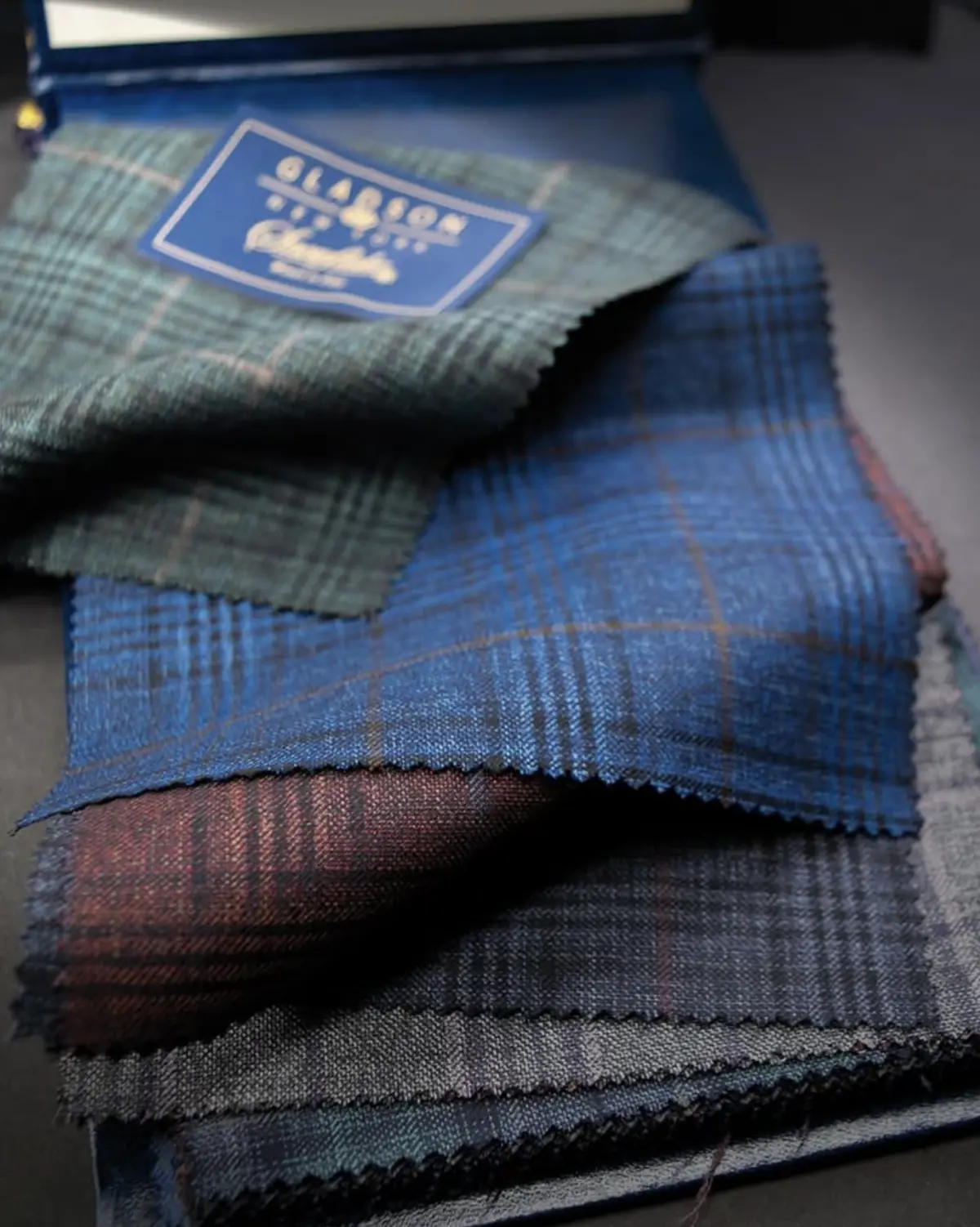
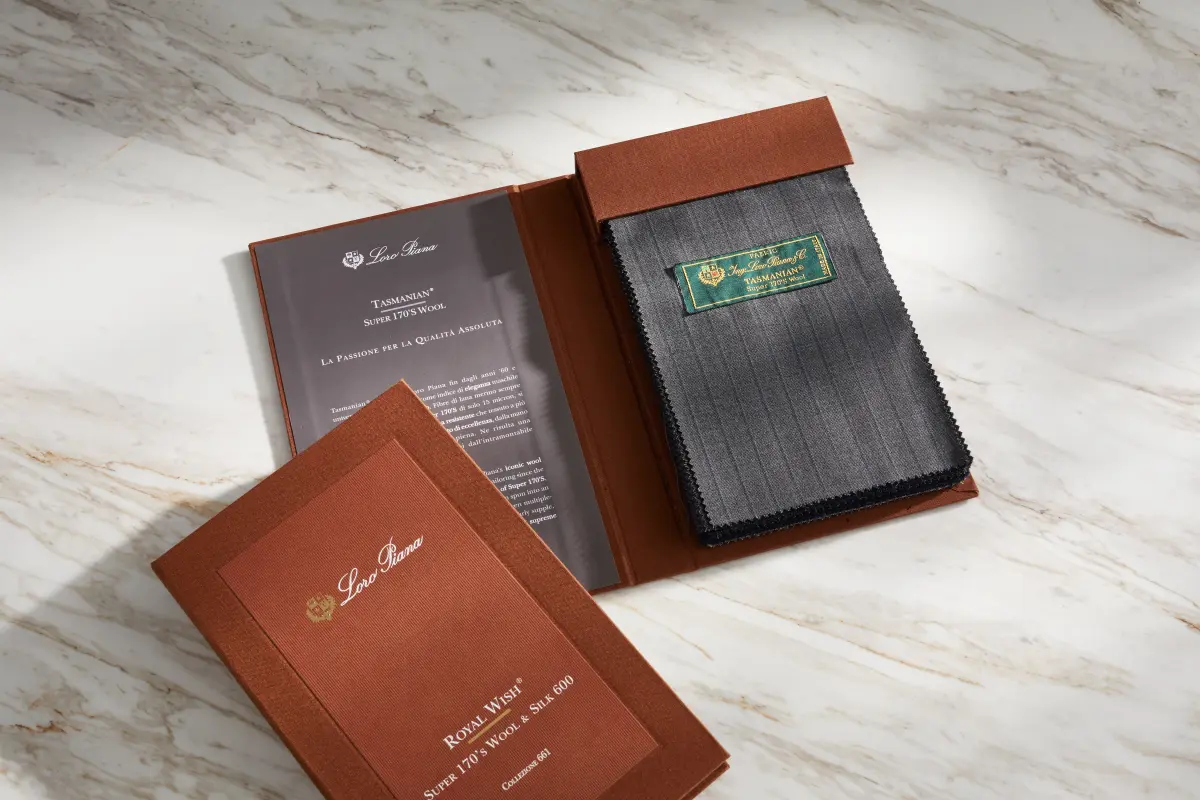
Here is a fact that surprises people. The cloth inside a $4,500 designer suit likely came from the same mills a bespoke house orders from. Loro Piana, Vitale Barberis Canonico, Holland & Sherry, and their peers supply both worlds. The famous mills do not make a separate, better wool for famous labels.
The difference is choice. A designer house selects its collection more than a year in advance, weighted toward what photographs well on a runway. When you stand in the store, you choose from whatever the house happened to send. Perhaps two dozen cloths, in one weight.
Bespoke hands you the entire book. Thousands of cloths: high twist wools that shrug off a Miami summer, frescoes that breathe in August, flannels for a Palm Beach winter evening, super 150s for black tie. And beside you stands a tailor who will tell you honestly which cloth will crease on the drive to Boca and which will still look pressed at midnight.
Fit: A 42R Is Not a Body
A designer 42R is cut for a theoretical average man. The pattern is designed once, in one fit, then graded up and down for every other size. If your shoulders slope, if one arm sits lower, if your posture pitches forward from years at a desk, the jacket was not designed for you. It was designed near you.
Off the rack, most men are choosing between close enough and the least bad option. The shoulders are wrong first, and the shoulder is the one part of a jacket no alteration can rebuild. The eye learns to forgive the gap at the collar and the blousing at the back.
A bespoke suit is cut from your pattern: your shoulder slope, your chest, your posture, your stance. When the cut is correct, the garment stops registering as clothing. That is the fit most men assumed was reserved for people with stylists.
Alterations: The Hidden Cost of Ready-to-Wear
Buy a designer suit and the alterations are extra, typically another $150 to $400 for hemming trousers, suppressing the waist, and shortening sleeves. Nobody includes that number in the price they quote you.
The larger issue is what alterations can and cannot do. A tailor can work at the edges: hems, seams, sleeve lengths. What no alteration can fix is the fundamental cut. The shoulder line, the chest shape, and the front-to-back balance are decided when the suit is constructed. Once the jacket exists, that architecture is permanent. Alterations cost extra money and never fix the cut.
Bespoke includes the fittings in the price, because the fittings are how the garment is built. A basted fitting, a refinement fitting, a final check. Every adjustment is cut into your pattern, so the suit improves with each visit. We compare the two shopping experiences in detail in our custom suit vs department store breakdown.
Where Designer Brands Honestly Win
Fairness cuts both ways, so let's give the boutiques their due. There are real reasons to buy a designer suit, and pretending otherwise would make this guide a sales pitch.
- Instant availability. You can walk in on Thursday and wear it to a wedding on Saturday. Bespoke takes weeks, because clothing made for you cannot be made overnight. If the event is this weekend, buy ready-to-wear and let a good tailor finish the edges.
- The recognizable name. In some rooms, the label does work. A designer name is a signal that travels before you do, and in certain circles that signal has real value.
- The store experience. Beautiful rooms, attentive service, a glass of champagne while you browse. A pleasant way to spend an afternoon.
It is simply worth knowing that the champagne is built into the price of the suit.
Where Bespoke Wins
On every dimension that stays with the garment itself, bespoke is the stronger purchase.
- Fit. A pattern cut for your body instead of a size near it, noticed every single time you put it on.
- Construction. A full floating canvas and real handwork hours, built to hold its shape for decades rather than a few seasons.
- Fabric choice. The full mill book instead of one curated seasonal selection, with honest advice about what suits your life and your climate.
- Personalization. Functional buttonholes, a monogram, a lining you chose, your name on the pattern. The details are yours because the garment is yours.
- Longevity. A bespoke suit can be recut as your body changes, refreshed as fashions move, and worn for twenty years or more. Measured by cost per wear, bespoke quietly wins.
The Honest Verdict: Who Should Buy Which
Buy the designer suit if you need it this week, if your body genuinely matches the house block, or if the label performs real work for you professionally or socially. That is a legitimate purchase, with no judgment here. Just buy it with clear eyes about how the price splits between garment and marketing.
Choose bespoke if you are already spending $3,000 or more anyway and want the money to follow the cloth and the construction rather than the campaign. Choose it if fit has been a lifelong struggle, if you are hard to size, or if the next suit you buy should be the last one you think about.
If you are still weighing the tradeoffs, our guide on is a custom suit worth it walks through the numbers, including cost per wear over a decade.
What Bespoke By CB Delivers at Designer-Suit Prices
Bespoke By CB is a bespoke tailoring house in Brickell, founded by master tailor Christian Boehm, who has spent more than 37 years cutting clothing for men across Miami, Fort Lauderdale, and Palm Beach. We sit in exactly the price band this article has been describing. A Bespoke By CB garment costs about what a mainline designer suit costs off a rack in the same neighborhood.
What changes is where the money goes. There is no wholesale layer, no retail layer, and no advertising budget inside the price of your jacket. The investment buys cloth from the same mills the designer houses use, a full floating canvas, the handwork hours, and a personal paper pattern kept in our cabinet for life.
Our custom suits begin with a conversation in our Brickell atelier: measurements, posture, how you dress now, where you wear it, and what South Florida does to fabric. Then comes the cutting, then the fittings, with every adjustment cut into the pattern. Every Bespoke By CB garment is built to be recut, refreshed, and worn for decades, and many clients still wear suits we cut for them twenty years ago.
If this article sounds like the suit you have been trying to buy off the rack for years, book a consultation with us in Brickell. Come see the difference between a suit made for an average man and one made for you.
Frequently Asked Questions
Is a bespoke suit really better than a designer suit?
Better at what? A designer suit is better at being available today and carrying a famous name. Bespoke is better at fit, construction, fabric choice, and longevity. If those four things are what you are shopping for, bespoke wins, and by a wider margin than most clients expect.
Why are designer suits so expensive if the product is only part of the price?
Because you are funding the whole brand: celebrity campaigns, runway shows, flagship rents, and stacked wholesale and retail margins. The product is real. So is the markup that pays for the image.
How much does a true bespoke suit cost compared to a designer suit?
Most men will find both live in the $3,000 to $6,000 range. Entry level bespoke often starts below entry level designer. The interesting number is not the price, which is similar. It is the share of that price that becomes garment.
Can a good tailor alter a designer suit to fit as well as bespoke?
No. A tailor can refine edges: hems, waists, sleeve lengths. The fundamental cut, meaning the shoulder, the chest, and the balance, is decided when the suit is constructed and cannot be rebuilt afterward. Alterations can improve a designer suit. They cannot transform it.
Do designer brands use better fabric than a bespoke house?
Usually not. Both buy from the same small group of Italian and English mills. The difference is that a designer store offers its seasonal selection, while a bespoke house opens the full mill book and advises you cloth by cloth for your climate and calendar.
How long does a bespoke suit take to make?
Plan on roughly six to ten weeks from consultation to finished garment, with two or three fittings along the way. The basted fitting is where most of the magic happens: a half finished jacket on your body, chalk in hand, corrections cut into the pattern on the spot. If you have a hard date, tell us early.
Is bespoke worth it if I only wear a suit a few times a year?
Arguably especially then. The few occasions you dress formally are the ones that get photographed and remembered, and a garment built for decades makes the annual cost per wear surprisingly modest. A $4,500 suit worn well for twenty years costs less per wear than most men spend on ties.
Does Bespoke By CB keep my pattern if I come back years later?
Yes. Your paper pattern stays in our cabinet indefinitely. Return in three years or ten and your next Bespoke By CB garment starts from your pattern, already knowing your shoulders, your posture, and every correction from your fittings. That continuity is something no designer purchase can offer.
