Finance is one of the few industries where how you dress still matters as much as what you know. A banker's wardrobe communicates trust, attention to detail, and an understanding of institutional culture. Whether you are starting at a boutique firm in Brickell or managing wealth in Coral Gables, the principles are the same.
Understanding Finance Dress Codes
Banking dress codes fall into two categories: business formal and business casual. Knowing which one applies to your firm determines everything.
Business Formal
Traditional investment banks, wealth management firms, and client-facing roles in commercial banking still expect business formal. This means:
- A suit and tie every day
- Conservative colors (navy, charcoal, medium grey)
- White or light blue shirts
- Polished oxford or derby shoes
- Minimal accessories
This is the default for client meetings, presentations, and any setting where you represent the firm externally.
Business Casual
Many modern finance firms, especially fintech and wealth-tech companies, have moved to business casual. This typically means:
- A jacket or blazer without a tie
- Dress trousers or chinos
- A collared shirt (oxford, pinpoint, or knit polo)
- Loafers or brogues
The shift to business casual does not mean sloppy. It means the standards are different, not lower. A well-fitted blazer with a crisp oxford shirt and tailored trousers reads professional without the formality of a full suit.
The Essential Suits
If you are building a finance wardrobe from scratch, start with these three suits. They cover every situation you will encounter in banking.
Suit One: Navy
Your first suit should be navy. It is the most versatile suit color in menswear, and it is the one most associated with trust and authority in professional settings. A navy suit works for client meetings, presentations, and after-work events without needing to change.
Choose a medium-weight wool (around 250-280 grams) for year-round wear in Miami. If you run warm, consider a tropical wool or a fresco weave that breathes better in humidity.
Suit Two: Charcoal
Your second suit should be charcoal grey. It is slightly more formal than navy and reads authoritative without being severe. Charcoal pairs with the same shirts and ties as navy but gives you a second option so you are not wearing the same suit two days in a row.
Suit Three: Medium Grey
Your third suit should be a medium grey. It is lighter and more approachable than charcoal, making it ideal for daytime meetings and less formal settings. Medium grey with a light blue shirt and a navy tie is one of the best combinations in professional dress.
The Shirt Rotation
A working banker's wardrobe needs five to seven shirts in rotation. Here is the ideal starting collection:
- Two white shirts, the most formal option. Wear for client meetings, presentations, and any setting where you need to be at your most polished.
- Two light blue shirts, slightly less formal than white but still professional. Light blue is the most versatile colored shirt in menswear.
- One cream or pale pink shirt, for days when you want a subtle change without breaking protocol.
- One striped shirt, a fine blue and white stripe adds variety. Keep the stripes subtle.
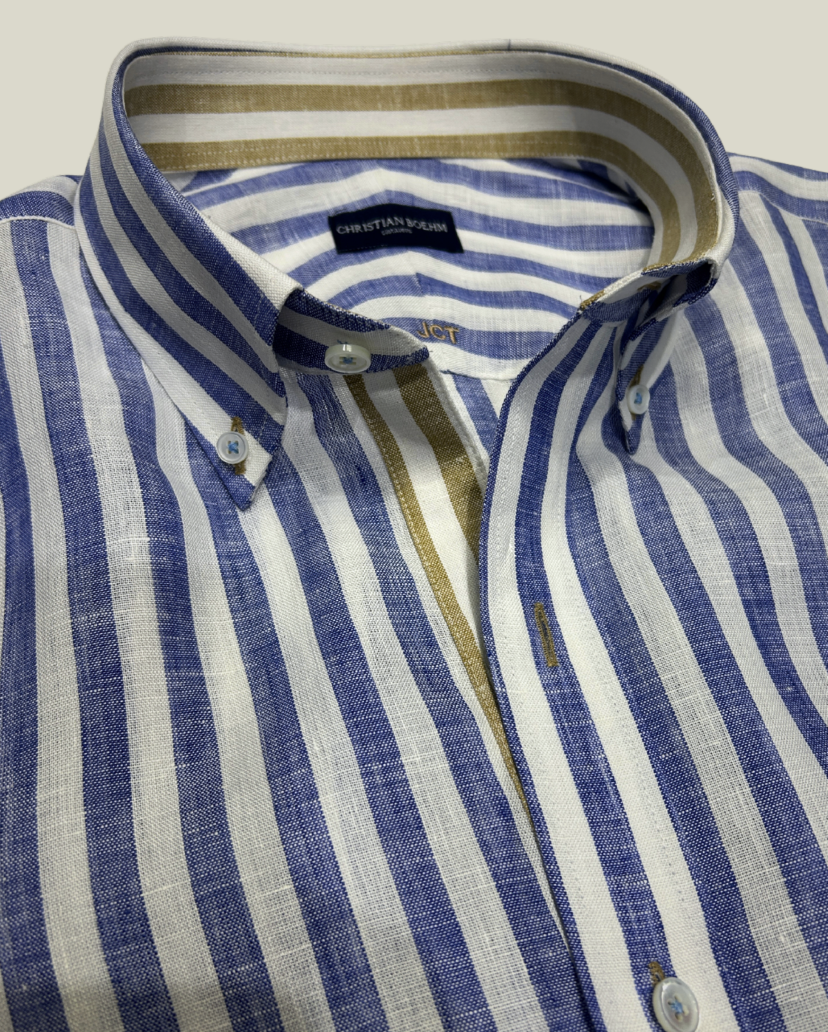
All shirts should be cotton with a spread or semi-spread collar. Button-down collars are too casual for formal banking environments.
Tie Selection for Finance
In finance, ties should be conservative and high-quality. This is not the place for novelty patterns or bold colors.
Safe choices:
- Navy and burgundy stripes (regimental style)
- Solid navy grenadine
- Burgundy with subtle dots
- Navy with small repeat patterns
- Dark green with a subtle texture
Avoid:
- Novelty ties (cartoon characters, holiday themes)
- Bright colors
- Oversized patterns
- Linen ties (too casual for formal finance settings)
Invest in three to five quality silk ties. A good tie lasts years and never goes out of style. Patterns should be subtle and colors should be in the navy, burgundy, and dark green family.
Shoes and Accessories
Shoes
Two pairs of shoes are enough to start. Rotate them so each pair gets a day of rest.
- Black oxfords, the most formal shoe. Wear with navy and charcoal suits for client meetings.
- Brown oxfords or brogues, slightly less formal. Wear with medium grey and navy for everyday office wear.
Keep shoes polished. Scuffed shoes undermine an otherwise perfect outfit. In Miami's climate, choose shoes with rubber soles or Dainite studded soles for grip on wet surfaces.
Accessories
- Belt, should match your shoes. Black belt with black shoes, brown belt with brown shoes.
- Watch, a simple, classic watch. A metal or leather strap. Avoid oversized or flashy watches.
- Briefcase, leather, structured, in black or brown. Should match your shoes and belt.
- Cufflinks, simple silver or gold knots. Avoid anything novelty.
Miami-Specific Considerations
Banking in Miami presents a unique challenge: you need to look professional in a city where the temperature regularly exceeds 90 degrees with high humidity.
Fabric choices:
- Choose tropical wool or fresco weaves instead of standard worsted wool. These weaves allow air to pass through the fabric.
- Consider half-lined or unlined suit jackets. They are cooler and still look structured.
- Avoid flannel and heavy tweed entirely. They are impractical in South Florida.
- Cotton suits work for business casual settings in summer.
Practical tips:
- Keep a spare shirt at the office for days when you arrive damp from the walk from your car.
- Use undershirts, a thin, moisture-wicking undershirt extends the life of your dress shirts and keeps sweat off the fabric.
- Have your suits half-lined. Full linings trap heat.
Frequently Asked Questions
Can I wear a brown suit in a banking environment?
It depends on the firm. Brown is less traditional than navy or grey but is increasingly accepted, especially in wealth management and private banking. A medium brown suit with a navy tie is a sophisticated look. Avoid brown for the most conservative settings.
How many suits do I need for a banking wardrobe?
Three suits are enough to start. Five is ideal for a full-time in-office schedule. With three suits, you can rotate so you never wear the same suit two days in a row. With five, you have room for seasonal variations and a backup.
Is business casual in finance really casual?
No. Business casual in finance means no tie, not no effort. A tailored blazer, a quality oxford shirt, pressed trousers, and polished shoes are the floor, not the ceiling. The standards are different from business formal, but they are still high.
Should I get custom suits or buy off the rack?
For a professional wardrobe, custom is worth the investment. The fit difference is visible from across a room. A well-fitted suit reads competence and attention to detail. An off-the-rack suit that fits poorly undermines your credibility before you say a word.
Ready to build a finance wardrobe that works? Book a consultation at Bespoke By CB and we will help you build a collection that reads professional and handles Miami's climate.