
Why Your Blazer Fabric Matters More in Summer
If you have ever worn a heavy wool blazer to an outdoor event in Miami in August, you already know why fabric choice matters. The wrong material turns a blazer into a sauna. The right one lets you look sharp, stay comfortable, and move between the humid sidewalk and a freezing conference room without missing a beat.
At Bespoke By CB, we craft custom blazers from the world's finest mills, and we help every client pick the right cloth for how and where they actually live. This guide breaks down the best fabric types for a summer blazer, with specific recommendations for South Florida's heat and humidity.
The Best Summer Blazer Fabrics, Ranked
1. Linen, The King of Breathability
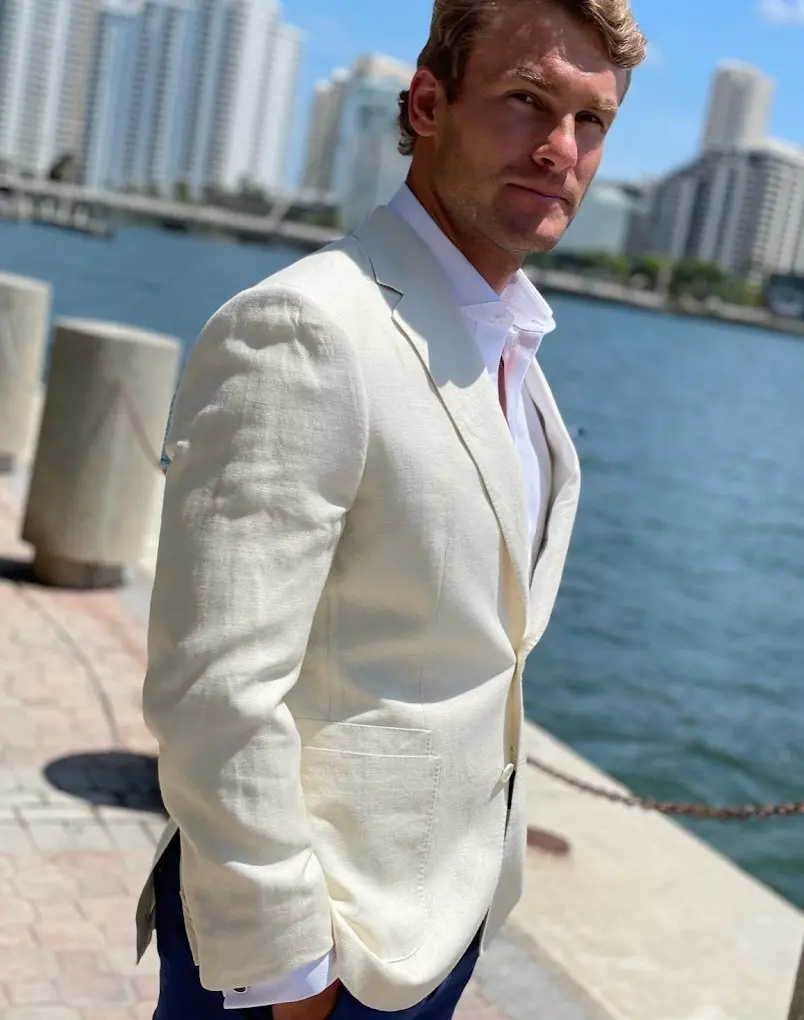
Linen is the fabric most people think of first for summer, and for good reason. Made from the flax plant, linen fibers are naturally hollow, which allows air to circulate freely through the weave. On a 90-degree day in Brickell, a linen blazer feels noticeably cooler than any other option.
Pros: Maximum breathability, lightweight, beautiful natural texture, and it only gets softer with age.
Cons: Linen wrinkles. There is no way around it. The same relaxed structure that lets air flow also means the fabric creases easily.
Styling tips: Embrace the wrinkles, they are part of linen's character. Pair a navy or tan linen blazer with a crisp white shirt and tailored chinos. For a more casual look, wear it open over a fine-gauge cotton tee. If wrinkling bothers you, ask us about a linen blend instead.
Book a consultation to explore our linen options from Ariston and Marzoni, two Italian mills that produce exceptional summer-weight linen.
2. Linen-Wool Blends, The Best of Both Worlds
If you want the breathability of linen with the structure and wrinkle-resistance of wool, a linen-wool blend is the answer. These blends typically run 50/50 or 60/40, and they solve the biggest complaint people have with pure linen.
The wool adds body and drape, so the blazer holds its shape through a long day. The linen keeps it light and cool. You get a jacket that looks polished enough for the office but breathes well enough for an outdoor lunch on Lincoln Road.
Best for: Business casual settings, travel, and anyone who wants a summer blazer that does not look rumpled by 3 PM.
3. Tropical Wool / Fresco, Professional and Breathable
Tropical wool (also called Fresco) is a specifically engineered warm-weather fabric. It is woven from high-twist yarns in an open plain weave that allows air to pass through while maintaining the crisp, structured look of a traditional wool blazer.
If you need a blazer for professional settings in summer, client meetings, court appearances, or a wedding where linen feels too casual, tropical wool is your best option. Mills like Holland & Sherry and Scabal produce excellent Fresco-weight cloths that come in well under 10 ounces.
Best for: Professional environments, formal summer events, and anyone who needs to wear a blazer to work year-round.
4. Cotton-Linen Blends, Casual Smart
A cotton-linen blend gives you a blazer that sits right between dressy and relaxed. The cotton adds softness and helps the fabric hold its shape better than pure linen, while the linen keeps it breathable. The texture is typically a bit smoother than pure linen, with a slight sheen.
This is the fabric we recommend for weekend brunches, gallery openings, and smart-casual dinners. It pairs beautifully with a custom shirt left open at the collar, no tie needed.
Best for: Smart casual occasions, weekends, and clients who want one versatile summer blazer that works everywhere.
5. Hopsack, Lightweight Wool With Texture
Hopsack is not a fabric type, it is a weave. The hopsack weave is an open, basket-style weave that can be made from wool, cotton, or blends. What makes it special for summer is the loose weave structure, which allows excellent airflow while giving the fabric a distinctive textured appearance.
A wool hopsack blazer in navy or mid-blue is one of the most versatile jackets you can own. It looks at home in a business casual office, at a restaurant, or at an evening event. The texture adds visual interest without being loud, and the open weave keeps you cooler than a standard twill wool.
Best for: A do-everything summer blazer that works from day to night.
6. Bamboo Fabric, The Modern Option
Bamboo fabric is a newer entry in the bespoke world, and it deserves attention. Gladson Bamboo, in particular, has developed a following among tailors for its exceptional softness, natural moisture-wicking properties, and subtle sheen that looks more refined than you might expect.
Bamboo is naturally antibacterial, which is a genuine advantage in humid climates where odors build up fast. It drapes beautifully, resists wrinkles better than linen, and has a cool-to-the-touch feel that is immediately noticeable. We consider it one of the most underrated options for a summer blazer in Miami.
Best for: Clients who want something modern, ultra-soft, and naturally odor-resistant.
7. Seersucker, Southern Tradition, Miami Casual
Seersucker is a puckered cotton fabric that originated in the American South, and it is practically purpose-built for hot, humid weather. The puckered weave holds the fabric slightly away from your skin, allowing air to circulate. The texture also means the fabric does not cling when you sweat.
Traditionally, seersucker comes in light blue and white stripes, but modern iterations from mills like Ariston offer a wider range of colors and patterns. A seersucker blazer is inherently casual, you would not wear it to a board meeting, but for a summer cocktail party, a yacht club dinner, or a Saturday in Wynwood, it is hard to beat.
Best for: Social events, daytime gatherings, and anyone who appreciates classic American summer style.
Fabric Weight: What to Look For
When choosing a summer blazer fabric, weight is one of the most important numbers to understand. Fabric weight is measured in ounces per yard or grams per linear meter. For a summer blazer in South Florida, we recommend staying under 10 ounces (approximately 280 grams).
Here is a quick breakdown:
7–8 oz: Very lightweight. Ideal for peak summer (June–September in Miami). Pure linen and fine cotton-linen blends typically fall here.
8–9 oz: Lightweight with a bit more structure. Linen-wool blends and tropical wool often sit in this range. A great all-day weight.
9–10 oz: The upper limit for summer. Hopsack wools and some Fresco cloths. Still breathable, but better for early summer or late afternoon events.
Above 10 oz: Move these to your fall and winter rotation. Wearing a 12-ounce wool blazer in Miami in July is a form of self-punishment.
During your fabric consultation, we will show you exactly what each weight feels like so you can make an informed choice.
Weave Types and Breathability
The weave of a fabric affects breathability just as much as the fiber. Two fabrics made from the same wool can feel completely different depending on how they are woven.
Twill weave: A diagonal rib pattern. Used in most standard worsted wool. More structure and drape, but less breathable than plain weave.
Plain weave: The simplest over-under weave. Used in tropical wool, hopsack, and cotton-linen blends. Maximum airflow, minimal structure.
Basket weave (hopsack): A variation of plain weave with a looser, more open structure. Excellent for warm weather because the gaps between yarns let air through.
Jacquard / textured weaves: These can be hit or miss for summer. Some, like a loose honeycomb weave, breathe well. Others trap heat. We will guide you based on the specific cloth.
The general rule for summer: the more open the weave, the better the airflow. If you hold a summer fabric up to the light and can see tiny pinpoints of light coming through, that is a good sign.
Color Recommendations for Summer Blazers
Color is not just about aesthetics, dark colors absorb heat, while light colors reflect it. A charcoal blazer in July will feel noticeably warmer than a cream one in the same weight.
Our favorite summer blazer colors for men's custom tailoring:
Navy: The universal standard. Works in any setting. In a lightweight fabric, navy remains the most versatile blazer color you can own.
Mid-blue: Softer and more summery than navy. Excellent in linen and hopsack.
Tan / Khaki: A classic summer color that pairs well with white shirts and lighter trousers.
Cream / Ivory: The coolest option in every sense. Reflects heat, looks elegant, and stands out without being loud. Stunning in linen-wool.
Olive / Sage: A modern earth tone that works beautifully in South Florida. Pairs well with stone, white, and navy trousers.
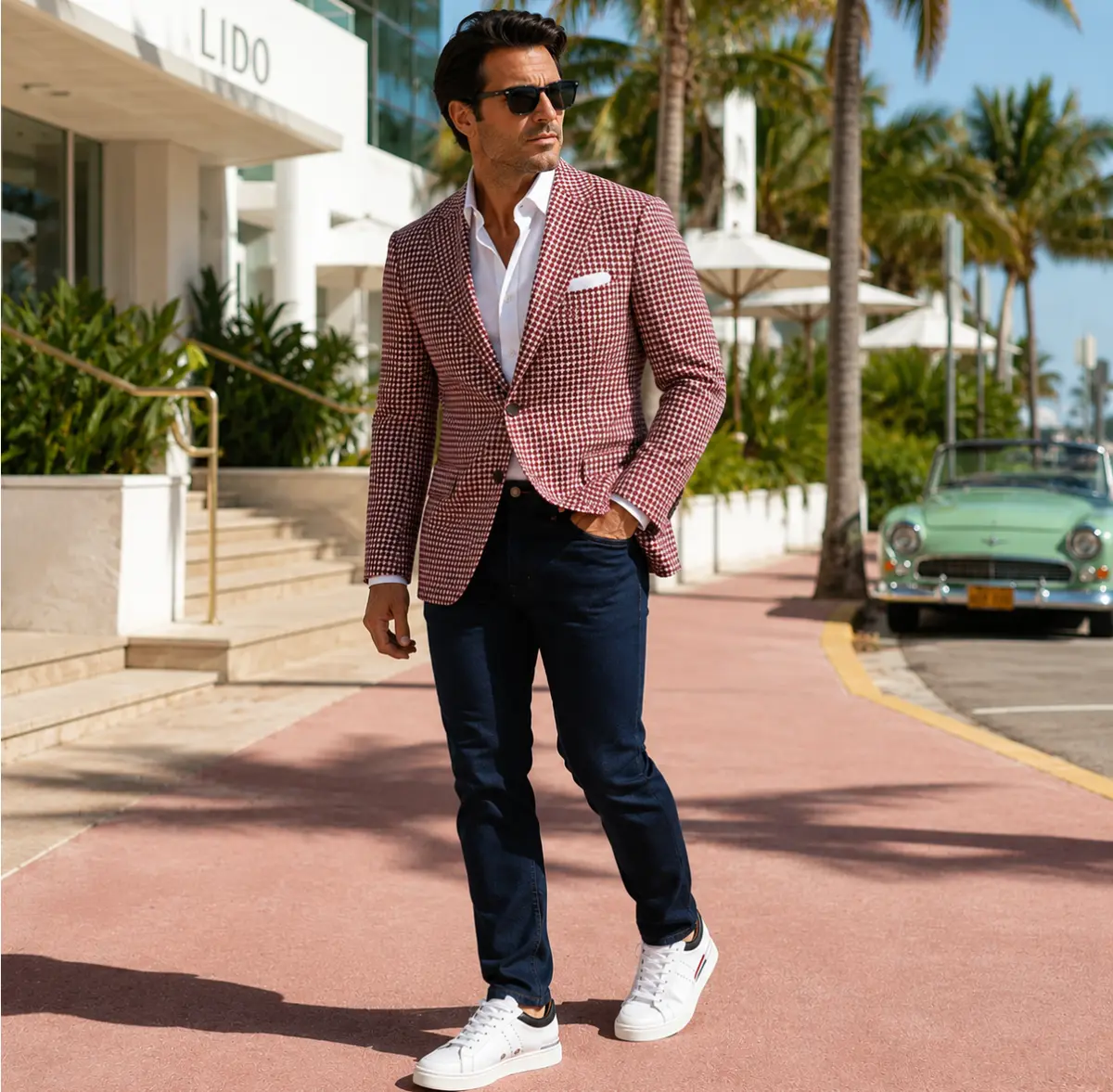
Burgundy / Deep Red: For evening events. Darker than the ideal summer palette, but rich and distinctive in a lightweight fabric.
Miami-Specific Advice: Humidity and AC Transitions
Miami presents a unique challenge that most style guides ignore: the constant transition between brutal outdoor humidity and aggressive air conditioning. You step from 90 degrees and 80% humidity into a 68-degree restaurant, and your blazer needs to handle both extremes.
Here is how we approach it:
Choose fabrics that breathe and recover. Linen-wool blends and tropical wool handle this transition better than pure linen, which can feel clammy when you walk into AC while sweating.
Avoid fully lined blazers in summer. A half-lined or unlined blazer allows air to circulate through the back, which makes a bigger difference than you might expect. We offer unstructured options specifically for this reason.
Embrace unstructured construction. A blazer without shoulder padding and canvas floats cooler and adapts better to temperature swings than a fully structured one. For summer in Miami, this is often the single most important design choice.
Carry the blazer, do not wear it, during transit. If you are walking more than two blocks in Miami summer, carry your blazer over your arm and put it on when you arrive. This prevents sweat from soaking into the fabric and keeps you looking fresh.
Have two summer blazers in rotation. One for professional settings (tropical wool or hopsack), one for social events (linen or cotton-linen). This lets each fabric rest and recover between wears.
The right summer blazer is not just about the fabric, it is about the construction, the fit, and how it works with your lifestyle. That is why every custom blazer from Bespoke By CB is built around your measurements, your climate, and your calendar.
Frequently Asked Questions
What is the best fabric for a summer blazer in Miami?
For Miami's heat and humidity, we recommend linen-wool blends as the best all-around choice. They breathe well, resist wrinkling, and transition smoothly between outdoor heat and air-conditioned interiors. For pure comfort, pure linen is the coolest option. For professional settings, tropical wool (Fresco) is the most appropriate.
Is linen too casual for a blazer?
Not at all. A linen blazer in navy or tan is perfectly appropriate for most smart casual and business casual settings. For formal business environments or evening events, a linen-wool blend or tropical wool is a better choice, as they hold a crisper, more structured appearance.
What weight should a summer blazer be?
Aim for fabrics under 10 ounces per yard (approximately 280 grams per linear meter). For peak summer in South Florida, 7 to 9 ounces is ideal. Anything heavier will trap heat and feel uncomfortable in temperatures above 85 degrees.
Can I wear a wool blazer in summer?
Yes, if it is the right wool. Tropical wool (Fresco) and hopsack wool are specifically designed for warm weather. They are woven from lightweight, high-twist yarns in an open weave that allows air to pass through. Standard worsted wool at 11+ ounces is too heavy for Miami summers.
What is Gladson Bamboo fabric?
Gladson Bamboo is a modern fabric made from bamboo fibers. It is exceptionally soft, naturally moisture-wicking, antibacterial, and cool to the touch. It is an excellent choice for a summer blazer if you want something contemporary that performs well in humid conditions.
Should a summer blazer be lined?
For maximum comfort in hot weather, we recommend a half-lined or unlined blazer. Lining restricts airflow and adds weight. An unlined or half-lined construction allows air to circulate through the back of the jacket, which makes a significant difference in South Florida's climate.
How do I prevent wrinkles in a linen blazer?
You cannot fully prevent wrinkles in pure linen, it is the nature of the fabric. To minimize wrinkling, choose a linen-wool or linen-cotton blend instead. If you wear pure linen, hang the blazer in a humid bathroom for 15 minutes after wearing; the steam helps relax the fibers. Always hang linen on a broad-shouldered hanger.
What colors are best for a summer blazer?
Light colors reflect heat and look appropriate for the season. Navy and mid-blue remain the most versatile choices. Tan, cream, olive, and sage are excellent summer options that pair well with light trousers. Avoid black and charcoal, which absorb heat and look heavy in warm weather.
Author: Bespoke By CB
Tags: summer blazer, blazer fabric, linen blazer, lightweight wool, Miami heat

