

From Lessona to the World: Drago's Founding in 1973
In 1973, Umberto and Laura Drago founded a small spinning mill in Lessona, a commune in the Biella province of Piedmont, Italy. Lessona sits in the foothills of the Italian Alps, in a region that has been the heart of European wool textile production for centuries. The Biella district's reputation rests on a combination of alpine water, generations of craft knowledge, and a dense ecosystem of specialized workshops, but in 1973 most mills in the area focused on a single stage of the production process. A mill might spin yarn, or weave cloth, or finish fabric, but very few did all three.
The Drago family started with spinning. Their particular expertise was in working with ultra-fine counts, producing yarns so thin and delicate that most other spinners could not achieve them consistently. This specialization in fineness would become the foundation of everything Drago is known for today. From the beginning, Umberto and Laura understood that the quality of a finished fabric is determined long before the loom ever turns. It starts with the yarn, and the yarn starts with the fiber.
The timing of the founding matters. The early 1970s were a period of significant transition in the Italian textile industry. Many historic mills were struggling with rising costs and increasing competition from lower-wage producing countries. Some closed. Others consolidated. But the Dragos saw an opportunity in that disruption. They believed that the future of Italian textiles lay not in competing on volume, but in offering a level of quality and refinement that mass producers could not match. That conviction has guided the company for over fifty years.
The 1993 Acquisition of Lanificio Fintes: Becoming a Fully Integrated Mill
For the first twenty years, Drago operated as a specialized spinner. Their yarn was sought after by weavers who needed ultra-fine counts, but the Dragos did not control what happened to their yarn once it left the mill. They could not determine how it was woven, how it was finished, or how the final cloth was presented to the market. For a family obsessed with quality at every stage, this was a limitation.
In 1993, Drago acquired Lanificio Fintes, a weaving and finishing operation in Biella. This was a pivotal moment. The acquisition transformed Drago from a spinning mill into a fully integrated wool mill, capable of controlling every step of production from raw fiber selection through to the finished bolt of cloth. Spinning, weaving, and finishing were now under one roof, managed by one family, governed by one standard of quality.
The integration was not just about capability. It was about control. When you spin yarn and hand it off to another company to weave, you lose oversight of half the production process. A weaver might set the loom differently than you would prefer. A finisher might prioritize speed over the hand feel you intended. By bringing every stage in-house, Drago ensured that the cloth they shipped reflected their exact vision at every step.
This vertical integration also gave Drago a technical advantage that no specialized spinner or independent weaver could replicate. When the people selecting the raw fiber, the people spinning the yarn, the people setting the looms, and the people doing the finishing all work in the same building and report to the same ownership, information flows freely. A spinner can tell a weaver that a particular batch of yarn needs a slightly different tension. A finisher can tell a spinner that the yarn count for a specific cloth needs to be adjusted by a fraction to achieve the desired hand. This kind of real-time, cross-stage feedback is impossible when production is split across independent companies.
Why Vertical Integration Matters for Your Fabric
Vertical integration is an industry term that sounds abstract, but it has a direct impact on the cloth that ends up in your custom suits. Here is what it means in practice.
When a mill controls every stage of production, it can achieve things that a divided supply chain cannot. Drago's spinners can produce an ultra-fine yarn, their weavers can set the looms to handle that yarn without breaking, and their finishers can apply treatments that preserve the yarn's delicacy while giving the cloth the hand feel and surface quality that customers expect. At a non-integrated mill, the spinner might produce the same fine yarn, but the weaver might not have experience with it and set the loom too aggressively, causing breakages. Or the finisher might apply a standard treatment that overwhelms the yarn's natural lightness.
The result is that Drago can produce ultra-lightweight wool cloths at weights and fineness levels that other mills simply cannot replicate. Their vertical integration is not a marketing claim. It is a structural advantage that shows up in the fabric itself.
Consistency is another benefit. When every stage of production happens under one roof, batch-to-batch variation is minimized. The same people are doing the work, using the same equipment, following the same processes. For a custom clothier like Bespoke By CB, consistency is essential. When I select a Drago fabric for a client, I need to know that the cloth I am showing them from the swatch book is the same cloth that will arrive when we order the length for their garment. With Drago, it always is.
Ultra-Lightweight Wool: Drago's Signature Innovation
Drago's particular specialty is ultra-lightweight wool. This is where their spinning expertise, honed since 1973, meets their integrated production capability. Producing a truly lightweight wool fabric, one that feels almost weightless in the hand yet maintains the structure and drape a tailored garment requires, is one of the hardest things a mill can do.
The challenge is this: to make wool lighter, you need to use less of it. That means spinning a finer yarn, which requires higher-quality raw fiber. It also means weaving that yarn at a lower density, which makes the fabric more fragile during production. And it means finishing the cloth in a way that preserves its open, breathable structure without making it feel flimsy. Every stage has to be executed precisely, or the result is a fabric that is either too delicate to wear or too heavy to be worth the effort.
Drago's ultra-lightweight wools are woven at weights that can go below 250 grams per meter. For context, a standard suitting wool is typically in the 280 to 320 gram range. The difference might sound small, but in a finished garment worn for a full day, it is the difference between feeling comfortable and feeling constrained. Drago's lightweight cloths achieve their weight without sacrificing the wool's natural resilience. The fabric still springs back after being compressed, still holds a crease, still drapes cleanly over the body.
The key to this balance is raw fiber selection. Drago sources some of the finest merino wool available, typically in the 16 to 18 micron range, from carefully selected growers in Australia and New Zealand. The relationship between fiber diameter and fabric weight is direct: finer fiber allows for finer yarn, which allows for lighter cloth. But finer fiber is also more expensive and more difficult to work with, which is why many mills stop at a certain weight threshold. Drago's integrated production allows them to push past that threshold while maintaining quality.
Sport Jacket Cloths: Texture and Character
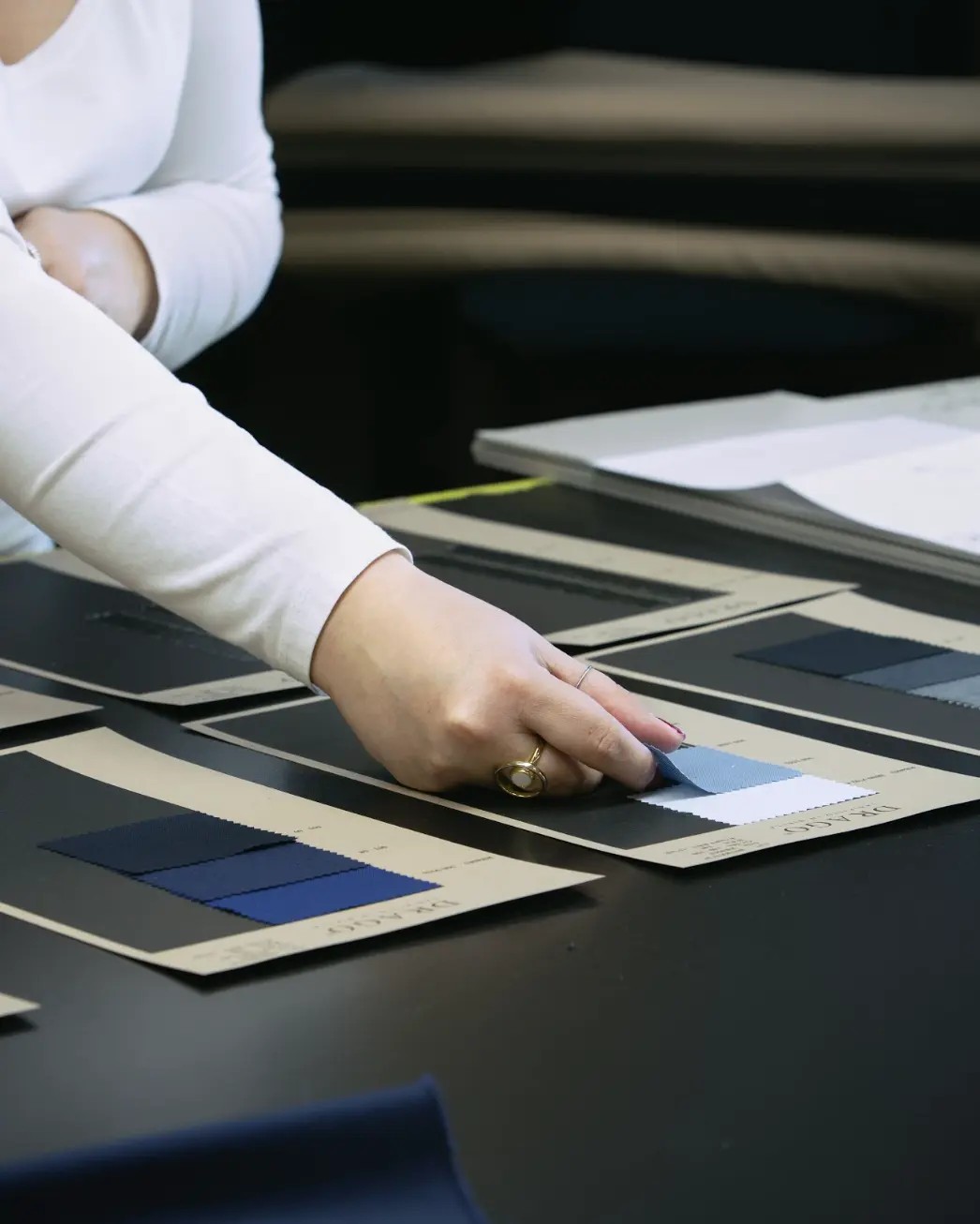
While Drago is best known for their ultra-lightweight suiting wools, they also produce an exceptional range of sport jacket cloths. These fabrics feature textured weaves and patterns that add visual and tactile interest to a jacket, making them ideal for pieces meant to be worn with contrasting trousers rather than as part of a suit.
Drago's sport jacket collection includes a variety of weave structures. You will find hopsack weaves with their characteristic open, basket-like texture that catches light beautifully. There are twill variants with pronounced diagonal ridges that give the fabric a rhythmic surface pattern. Some cloths use a barleycorn weave, which creates a subtle, multi-tonal speckle effect that reads as solid from a distance but reveals complexity up close. Others feature micro-checks and overchecks that add structure without overwhelming.
The color palette for Drago's sport jacket cloths tends toward earth tones and muted shades. You will see olive greens, tobacco browns, mid-tone blues, and warm grays. These are colors that pair easily with navy or charcoal trousers, making them versatile additions to a wardrobe. The textured weaves add enough visual interest that the jacket does not need a bold pattern to stand out.
For a client building a wardrobe beyond their first suit, a Drago sport jacket cloth is an excellent choice. The combination of texture, lightweight construction, and refined color makes for a jacket that is comfortable in Miami's climate and elegant in both professional and social settings. I often recommend these cloths for clients who already have a navy and a charcoal suit and are ready to add character to their wardrobe.
Why Drago's Open-Weave Breathability Is Perfect for Miami
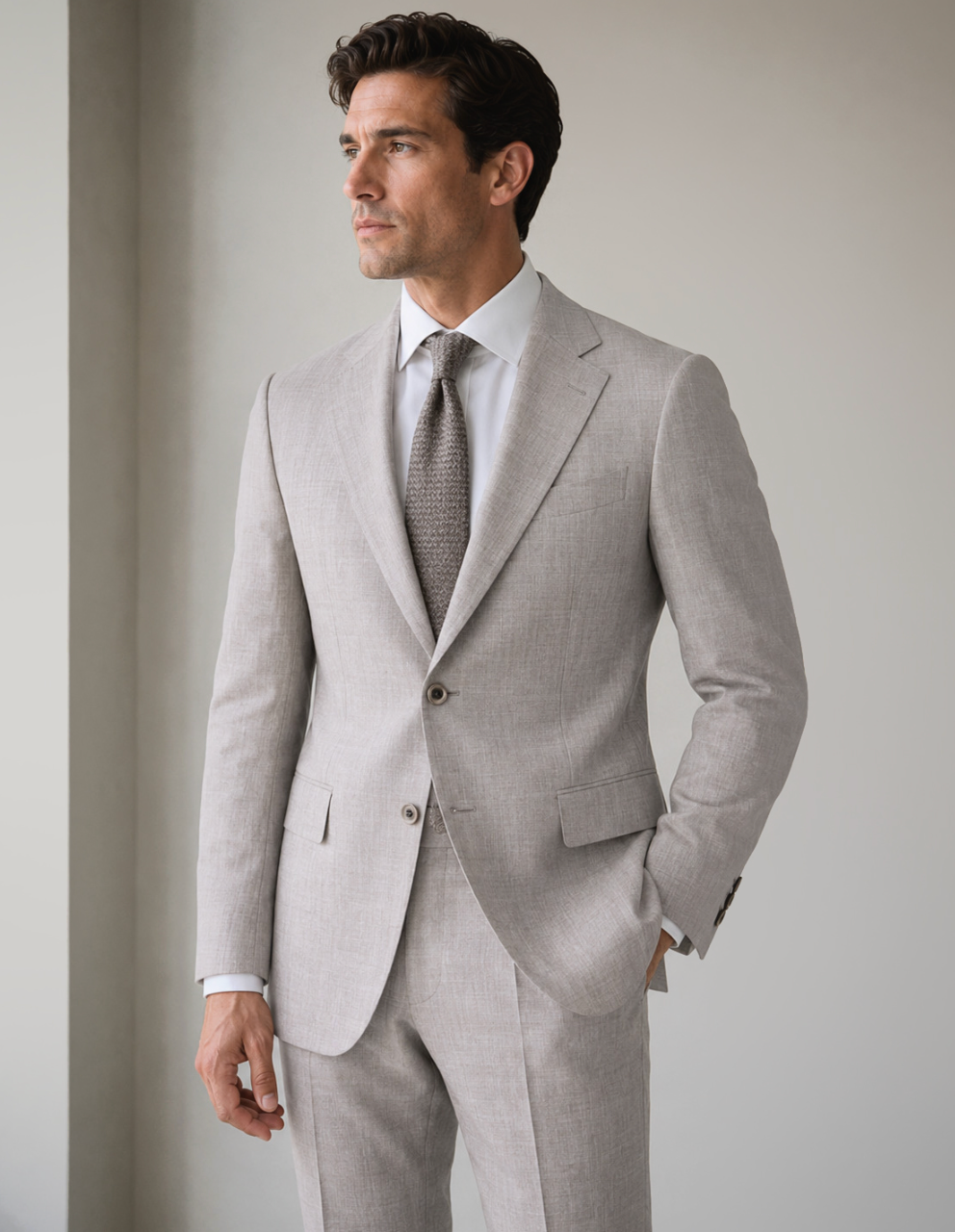
Miami's climate presents a specific challenge for tailored clothing. From roughly April through October, daytime temperatures routinely exceed 85 degrees with humidity to match. Even in the cooler months, a heavy fabric can feel oppressive during the middle of the day. The key to comfortable tailoring in South Florida is not just light weight, but breathability. The fabric has to allow air to pass through it.
Drago's ultra-lightweight wools are woven at low densities, which means there is more space between the individual yarns than in a conventionally woven cloth. This open structure allows air to circulate through the fabric, carrying heat and moisture away from the body. In a sealed, densely woven cloth, heat gets trapped between the fabric and the skin. In a Drago open-weave, that heat has somewhere to go.
The difference is immediately apparent when you put on a garment cut from Drago cloth. The fabric feels cool against the skin. There is a lightness to it that you can sense the moment you put your arms through the sleeves. When you step from an air-conditioned building into the Miami heat, the fabric adjusts quickly, allowing air movement rather than trapping body heat.
Wool's natural properties amplify this effect. Wool fibers are hygroscopic, meaning they absorb and release moisture from the air. A wool garment can absorb up to 30 percent of its weight in moisture without feeling damp. In a humid climate like Miami's, this means a Drago wool suit actively manages perspiration, pulling moisture away from the skin and releasing it through the fabric's open weave. No synthetic fabric performs this function as effectively.
This is why I frequently recommend Drago fabrics to clients at Bespoke By CB who are concerned about comfort in the Miami heat. A Drago cloth gives you the structure and refinement of a proper tailored garment without the penalty of trapped heat. You can wear a jacket in July and still feel like yourself.
The Second Generation: Family Continuity at Drago
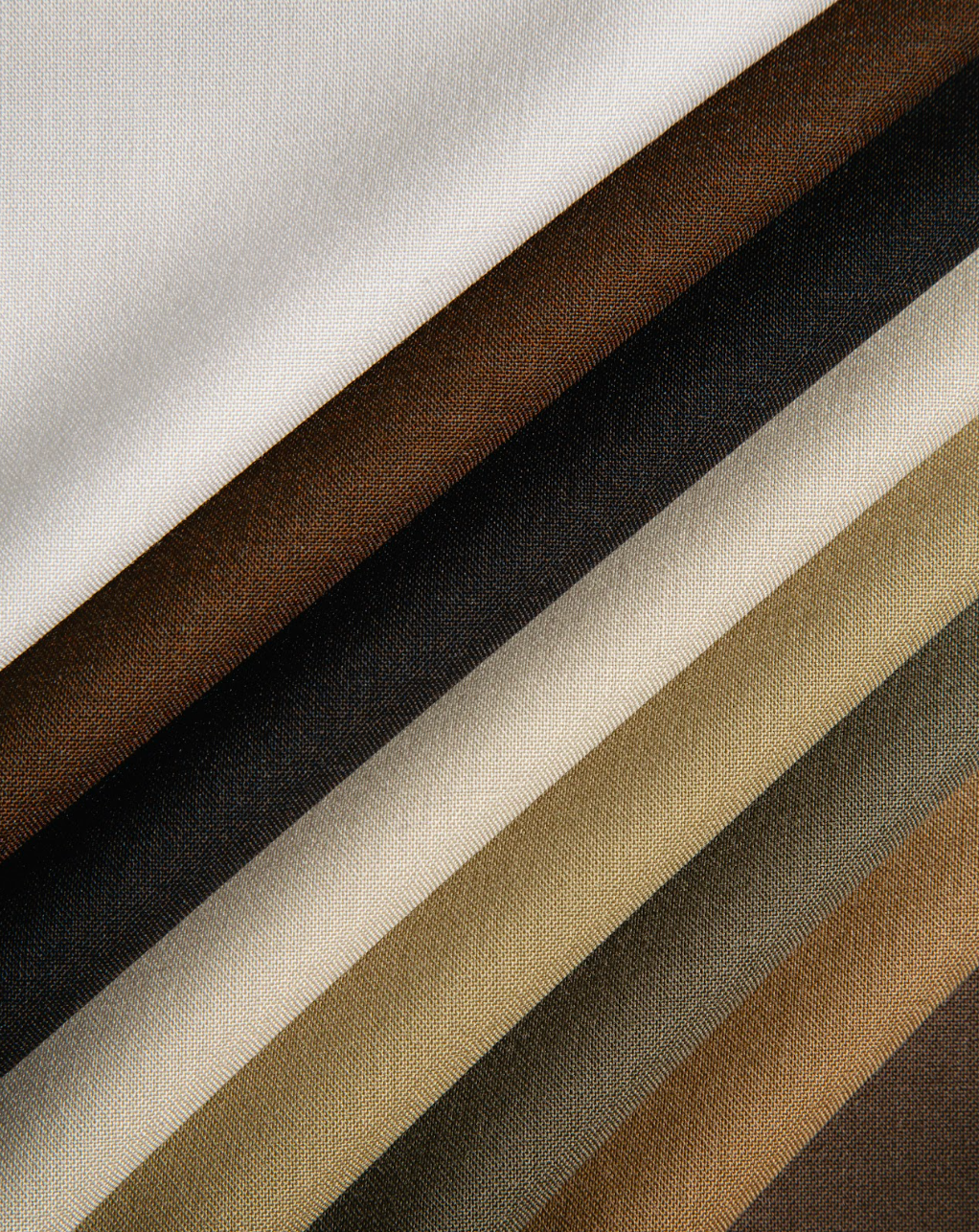
Today, Drago is run by the second generation of the Drago family. The transition from founders to the next generation is a critical moment for any family business, and in the textile industry, it is where many mills lose their way. The original founder's obsessive attention to quality can dilute when handed off to heirs who did not build the company from nothing.
Drago has avoided this fate. The second generation has maintained the same family-first philosophy that Umberto and Laura established in 1973. The company remains privately held, family-managed, and headquartered in Biella. Decisions are made with a multi-generational time horizon, not quarterly earnings in mind. This matters because the investments that keep a mill at the top of its game, upgrading equipment, sourcing finer raw materials, training the next cohort of spinners and weavers, do not pay off in a single fiscal year. They pay off over decades.
The family's continued involvement also means that the institutional knowledge built up since 1973 stays within the company. When the people running the mill grew up around the business, when they learned to evaluate wool by touch from their parents, they carry an understanding of the craft that no hired executive could replicate. This is the same principle that makes Biella itself so important: knowledge passed down through generations, refined and accumulated over time.
What I Look for When Selecting Drago Cloths for Clients
As the founder of Bespoke By CB, I review Drago's collections regularly to select the cloths that best serve our clients. Here is what I evaluate.
Lightness and drape. I hold the fabric up and let it hang. A good Drago cloth falls cleanly, with a fluid drape that follows the body's contours without collapsing. If the fabric is too light for its weave structure, it will look limp in a finished garment. If it is too dense, it defeats the purpose of choosing an ultra-lightweight mill. I look for the sweet spot where lightness and structure coexist.
Openness of the weave. I hold the fabric up to a light source and look at how much light passes through. More light transmission means more breathability, which is what I want for Miami clients. But there is a threshold. If the weave is too open, the fabric can look sheer in certain lighting, which undermines the polished appearance a suit should project. Drago's best cloths balance openness with opacity.
Surface character. Drago's finishing process produces a distinctive surface quality. Their ultra-lightweight wools have a smooth, slightly dry hand that feels distinctly different from the slicker finish of a heavier worsted. I check that the surface is consistent across the bolt, with no patches or irregularities.
Color quality. Biella's water and Drago's dyeing expertise produce colors with real depth. I examine each shade under both natural daylight and indoor lighting to ensure it performs well across environments. Drago's navy, in particular, has a richness that I find exceptional.
Suitability for the client. Not every Drago cloth is right for every client. For a first-time custom suit buyer in Miami, I will often recommend a Drago ultra-lightweight wool in navy or mid-gray, which offers maximum versatility and year-round comfort. For a client with an established wardrobe, I might suggest one of their sport jacket cloths with a textured weave and a more expressive color. The fabric consultation is where we match the cloth to the person.
Bespoke By CB and Drago: A Partnership Built on Standards
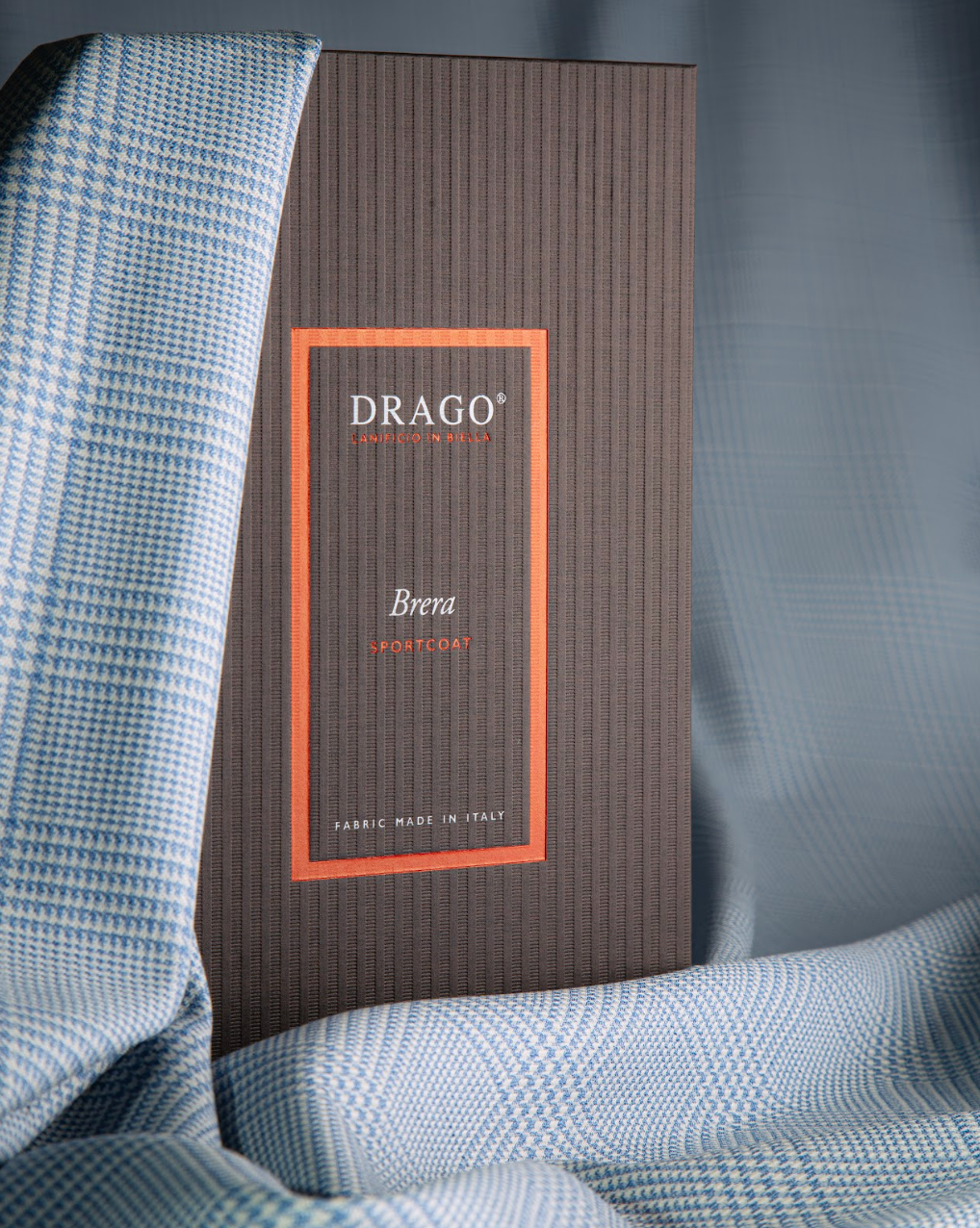
At Bespoke By CB, we work with a select group of mills whose fabrics we trust enough to put our name behind. Drago is one of them. Their commitment to vertical integration, their family ownership, their specialization in ultra-lightweight wool, and their Biella heritage align with the standards we set for every garment we produce.
When you book a consultation with us, you will have the opportunity to see and feel Drago fabrics from our swatch library. I will walk you through the options and help you understand why a particular cloth is right for your wardrobe, your lifestyle, and the climate you live in. For our Miami clients, Drago's ultra-lightweight wools are often the first cloths I reach for, because they solve the specific problem of wearing tailored clothing comfortably in South Florida's heat.
You can explore our full fabric collection online, including our Drago fabric selection. But there is no substitute for feeling the cloth in your hands. That is when you understand why the mill you choose matters, and why a fabric produced by a family that has been obsessing over wool fineness since 1973 feels different from anything else.
Drago's story is not just about a mill in Biella. It is about a family that bet on quality over scale, invested in capabilities their competitors did not have, and spent fifty years perfecting a category of fabric that most mills do not even attempt. That is the cloth that goes into your garment when you choose Drago at Bespoke By CB.
Frequently Asked Questions
When was Drago founded and by whom?
Drago was founded in 1973 by Umberto and Laura Drago in Lessona, a commune in the Biella textile district of Piedmont, Italy. The company began as a specialized spinning mill focused on ultra-fine yarn counts.
What makes Drago different from other wool mills?
Drago is a fully vertical mill, meaning they control every stage of production from raw fiber selection through spinning, weaving, and finishing, all under one roof in Biella. This integration gives them a level of oversight and consistency that mills reliant on external partners cannot match, and it allows them to produce ultra-lightweight wools at fineness levels others cannot replicate.
When did Drago become a fully integrated mill?
In 1993, Drago acquired Lanificio Fintes, a weaving and finishing operation. This acquisition transformed Drago from a specialized spinner into a fully integrated wool mill capable of controlling the entire production process from fiber to finished cloth.
Are Drago fabrics suitable for Miami's climate?
Yes. Drago's ultra-lightweight wools are woven at low densities, creating an open structure that allows air to circulate through the fabric. This breathability, combined with wool's natural moisture-wicking properties, makes Drago cloths exceptionally comfortable in hot, humid conditions like Miami's.
What types of fabrics does Drago produce besides suiting wool?
In addition to their ultra-lightweight suiting wools, Drago produces a range of sport jacket cloths featuring textured weaves such as hopsack, twill variants, and barleycorn weaves. These fabrics come in earth tones and muted shades that work well as separates.
Is Drago still a family-owned company?
Yes. Drago is now run by the second generation of the Drago family. The company remains privately held and headquartered in Biella, with the same family-first philosophy that guided its founding in 1973.
Can I see and feel Drago fabrics at Bespoke By CB?
Yes. Drago fabrics are part of the swatch library at Bespoke By CB. When you book a consultation, you will be able to examine the cloths firsthand and I will help you select the right fabric for your custom garment based on your wardrobe needs, lifestyle, and climate.
What weight range are Drago's ultra-lightweight wools?
Drago's ultra-lightweight wools can be woven at weights below 250 grams per meter, compared to a standard suiting wool in the 280 to 320 gram range. The combination of fine yarn, low-density weave, and precise finishing is what allows Drago to achieve these weights while maintaining the structure a tailored garment requires.


