Few accessories work as hard as the belt. It shows up in your routine every morning, steadies your trousers through long days in the Brickell heat, and quietly signals whether you know the rules of dress. Yet most men barely think about it. They buy one black belt, one brown belt, and wear both for a decade without a second look.
This guide fixes that. Below you will find the leather worth buying, the four buckle styles that matter, the width rules for dress and casual wear, how to match a belt to your shoes, and the moments when the correct move is to skip the belt entirely. At Bespoke By CB, we fit trousers every week for clients across Miami, Fort Lauderdale, and Palm Beach, so we see exactly what a good belt does, and more often, what a poor one undoes.
Why Belts Exist and What They Actually Do
A belt has two jobs. The first is practical: it keeps your trousers stable at your waist. The second is visual: it draws a clean line between the top and bottom halves of your outfit, anchoring the whole silhouette.
Here is the part most men miss. A belt is not meant to rescue trousers that do not fit. If your trousers sag or slide without a belt cinching them, the problem is the waist measurement, not the missing leather. A properly fitted trouser sits at your waist and stays there on its own. The belt is fine tuning, a quarter inch of adjustability plus a finishing touch.
Treat the belt as an accessory, not a suspension system. Get the fit right first, then choose a belt because it looks right, not because you need it to hold everything together.
Full-Grain Leather vs. Bonded Leather
Leather quality is where most belts go wrong, and the labels confuse everyone. Four grades matter.
- Full-grain leather is the top layer of the hide with the grain surface untouched. It flexes without cracking, develops a rich patina, and often outlasts the trousers it serves. This is the belt you buy once and keep.
- Top-grain leather is lightly sanded to remove natural marks. It is still a solid hide, slightly more uniform and slightly less durable than full-grain.
- "Genuine leather" is a legal grade, not a promise. It only means some real hide is present, often in a stiff, plasticky form that ages badly.
- Bonded leather is leather scraps ground up and glued around a fiber sheet. It peels, it cracks, and it belongs nowhere near a good outfit.
How do you spot quality in a store? Look at the edges first. A fine belt has burnished, rolled edges that feel smooth and closed. A cheap one shows raw cut edges with visible fibers and a felt-like backing. Smell it next: real leather has a warm, rich scent, while bonded leather smells chemical. Then flex it. A quality belt bends easily and returns to shape without creaking or holding a crease. At Bespoke By CB we judge leather the way our founder Christian Boehm has judged cloth for more than 37 years, and the standard is simple: if it will not age beautifully, it does not earn a place in your wardrobe.
Belt Buckle Styles Explained
The buckle sets the register of the belt, from formal to casual. Four styles cover nearly everything you will see.
- Frame buckle. The classic. A metal frame holds the strap and a pin passes through a punched hole. Polished silver or gold frames on thin leather are the standard for tailoring.
- Plate buckle. A flat metal plate sits over the front of the strap. Engraved plates read Western or bold, while plain brushed plates suit casual belts.
- Box-frame buckle. A hollow metal box with no holes at all. The strap passes through and folds back inside the frame to grip. It is sleek and modern, and common on reversible belts.
- O-ring. Two rings with the strap threading through and folding back on itself. The most relaxed style, at home with canvas and cotton belts and weekends on the water.
A simple rule: the shinier and simpler the buckle, the more formal the belt. Save the heavy hardware and aged finishes for casual wear.
Belt Width Rules: Dress vs. Casual
Width is the fastest way to look wrong. A formal belt should measure about 3 centimeters, roughly an inch and a quarter. That width slides cleanly under the loops of tailored trousers and keeps proportion with slim dress shoes.
Casual belts run wider, 3.5 to 4 centimeters, filling out the heavier loops of jeans and chinos. Below that, a skinny belt with a suit looks fragile. Above that, a wide strap under a jacket looks heavy and out of scale. Your trouser loops set the ceiling: the belt should fill the loop it passes through, not rattle around inside it.
How to Match Your Belt to Your Shoes
The rule is old and reliable: your belt should echo your shoes in color and formality. Black shoes take a black belt. Brown shoes take a brown belt in a nearby shade. The tones do not need to match perfectly, but they should sit close. Dark brown shoes ask for dark or medium brown leather, and tan shoes look right with a tan or lighter brown strap.
Texture matters as much as shade. Suede shoes pair beautifully with a suede or pebbled belt, while polished calfskin asks for smooth, polished leather. Match the formality too: oxfords take a sleek dress belt, while loafers open the door to braided or woven straps. If you are still building your shoe rotation, our dress shoes guide walks through the pairs worth owning first and the leathers that age best.
Dress Belts vs. Casual Belts
A dress belt is thin, smooth, dark, and quiet. It has a small frame buckle, clean burnished edges, and usually a single keeper loop. It disappears into a suit and lets the tailoring speak.
A casual belt has room for personality: wider cuts, braided leather, suede, canvas, or a brushed box-frame or O-ring buckle. These live happily with denim, linen trousers, and open collars, which makes them a natural fit for Miami weekends.
Most wardrobes go wrong by asking one belt to cover both jobs. Own at least two, one polished dark strap for tailoring and one relaxed strap for everything else. And if you want the accessory with more personality, it lives at the cuff, not the waist. Our cufflinks guide covers that side of the wardrobe well.
When Trousers Do Not Need a Belt at All
The best-dressed men often wear no belt at all, and their trousers never move. That is the quiet secret of a proper waist fit. Trousers cut to your waist hold their position on their own, and a belt becomes optional rather than essential.
Side adjusters, small metal slides set into the waistband, replace the belt entirely. They let you fine-tune the fit by a few millimeters while keeping the waistline perfectly smooth. Formal evening trousers skip belt loops by tradition too, because a belt line breaks the clean drape of the cloth.
In a Miami wardrobe this matters even more. Lightweight wools and linens hang better without a strap pulling the waistband into a crease, and a smooth waistband breathes more comfortably through the heat.
Belts vs. Suspenders
Suspenders hold trousers from the shoulder instead of the waist. They suit heavier men, very full-cut trousers, and the most traditional formal dress codes, and they keep the trouser line perfectly straight. The rule that never changes: wear one or the other, never both. If you wear suspenders with tailoring, they should button into the waistband, not clip on.
Caring for Leather Belts
A full-grain belt will outlast several pairs of trousers if you treat it well.
- Store it flat or loosely rolled, never folded sharply at the buckle, which creases the leather at the same stress point every time.
- Rotate two or three belts. Leather holds moisture from wear, so resting between wears lets each strap dry out and keeps it from stretching.
- Condition sparingly, two or three times a year, with a quality leather balm worked in with a soft cloth. Skip silicone-heavy sprays.
- Keep it dry. If a belt gets soaked, let it dry flat at room temperature, away from sun and heat, which stiffen and crack leather.
Common Belt Mistakes
- A tail that hangs too low. After buckling, the tail should end between the first and second trouser loop. Anything longer looks unfinished.
- A buckle that shouts. Oversized logos and flashy gold plates fight your tailoring. With a suit, a belt should be felt, not noticed.
- The wrong width. A wide casual belt under a suit jacket, or a thin dress strap through heavy denim, throws off the whole proportion.
- Belting evening wear. Dinner suits and formal trousers are made without loops on purpose. Respect the clean line.
- Trusting bonded leather. The peeling and cracking always arrive in year two, usually at the worst moment.
Why Bespoke By CB Builds Trousers Without Belt Loops
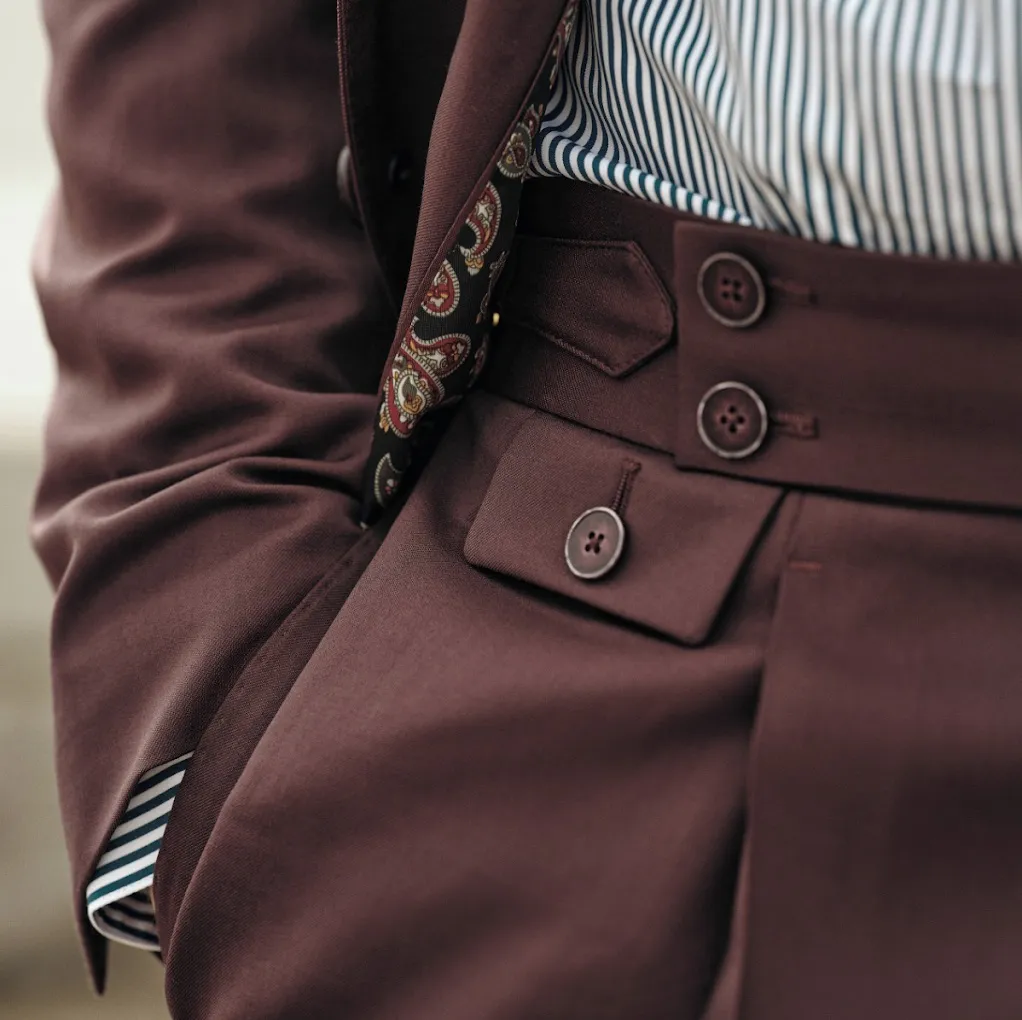
Walk into the Bespoke By CB atelier in Brickell and you will notice something about the trousers we cut: most have no belt loops at all. The waistband carries discreet side adjusters instead, and the choice is deliberate.
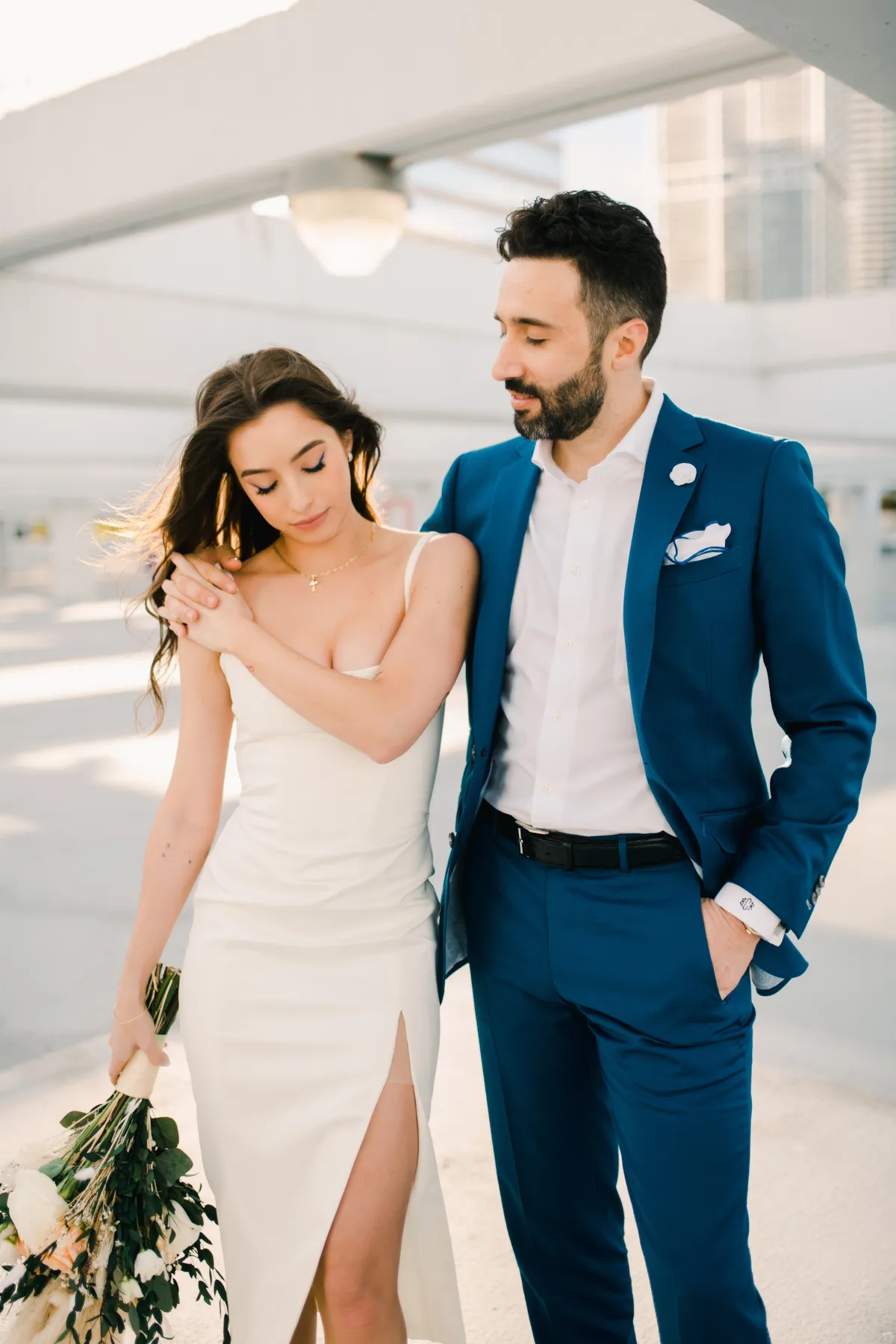
Bespoke trousers are drafted from your own measurements, so the waist is exact from the first fitting. Side adjusters let you fine-tune it by a few millimeters after a long lunch or through the seasons, which is all the flexibility real life demands. The result is a waistband that sits flush, a front that falls in one clean line from chest to shoe, and no buckle interrupting the drape of the cloth.
Clients notice the difference in portraits and at events, where the smooth waistband of their custom suits is one of the first details people see. Christian Boehm has spent more than 37 years cutting trousers this way for clients across Miami, Fort Lauderdale, and Palm Beach, because the goal was never a belt that works hard. It is a garment that needs no help at all. To see the difference yourself, book a consultation and we will walk you through every option, side adjusters included.
Frequently Asked Questions
Should my belt match my shoes exactly?
No, close is enough. A dark brown belt with dark brown shoes reads as a match even when the shades differ slightly. Stay in the same color family and a similar level of polish.
How do I know my belt size?
Choose a belt sized about two inches larger than your trouser waist, or simply try it on. Buckled on the middle hole, the tail should end between the first and second loop of your trousers.
Is "genuine leather" a good sign?
Not really. The label only certifies that some real hide is present, and much of it is stiff and short-lived. Full-grain leather is the grade worth paying for, and the words mean something at a serious menswear house like Bespoke By CB.
Can I wear a belt with a tuxedo?
No. Dinner suits and formal trousers are finished without belt loops by design, and the waistband carries side adjusters or nothing at all. A belt under a dinner jacket breaks the line of the cloth.
What are side adjusters?
Small metal slides built into the waistband at each hip. They replace the belt with a few millimeters of adjustment and keep the waistline smooth. Most bespoke trousers, including ours at Bespoke By CB, carry them instead of loops.
How often should I condition a leather belt?
Two or three times a year is plenty. Work in a small amount of leather balm with a soft cloth, let it absorb, then buff. Over-conditioning can leave a belt too soft and floppy.
Can I wear the same belt with a suit and with jeans?
You can, but you should not. Keep a thin, smooth, dark belt with a small frame buckle for tailoring and a wider, more textured strap for denim and chinos. Two belts cover almost every dress code.