Cufflinks are one of the last pieces of jewelry most men still wear, and they are among the most rewarding to get right. A good pair sits quietly at the wrist, peeks out from under a jacket sleeve, and tells the room you dressed with intention. Whether you just bought your first French cuff shirt or inherited a pair from your grandfather, this guide covers everything you need to know.
We build French cuff shirts every week at Bespoke By CB, so we hear every cufflink question there is. Below is the advice we give clients in our Brickell showroom, trimmed to what matters: cuff styles, materials, occasions, and the small mistakes that quietly undercut an otherwise sharp outfit.
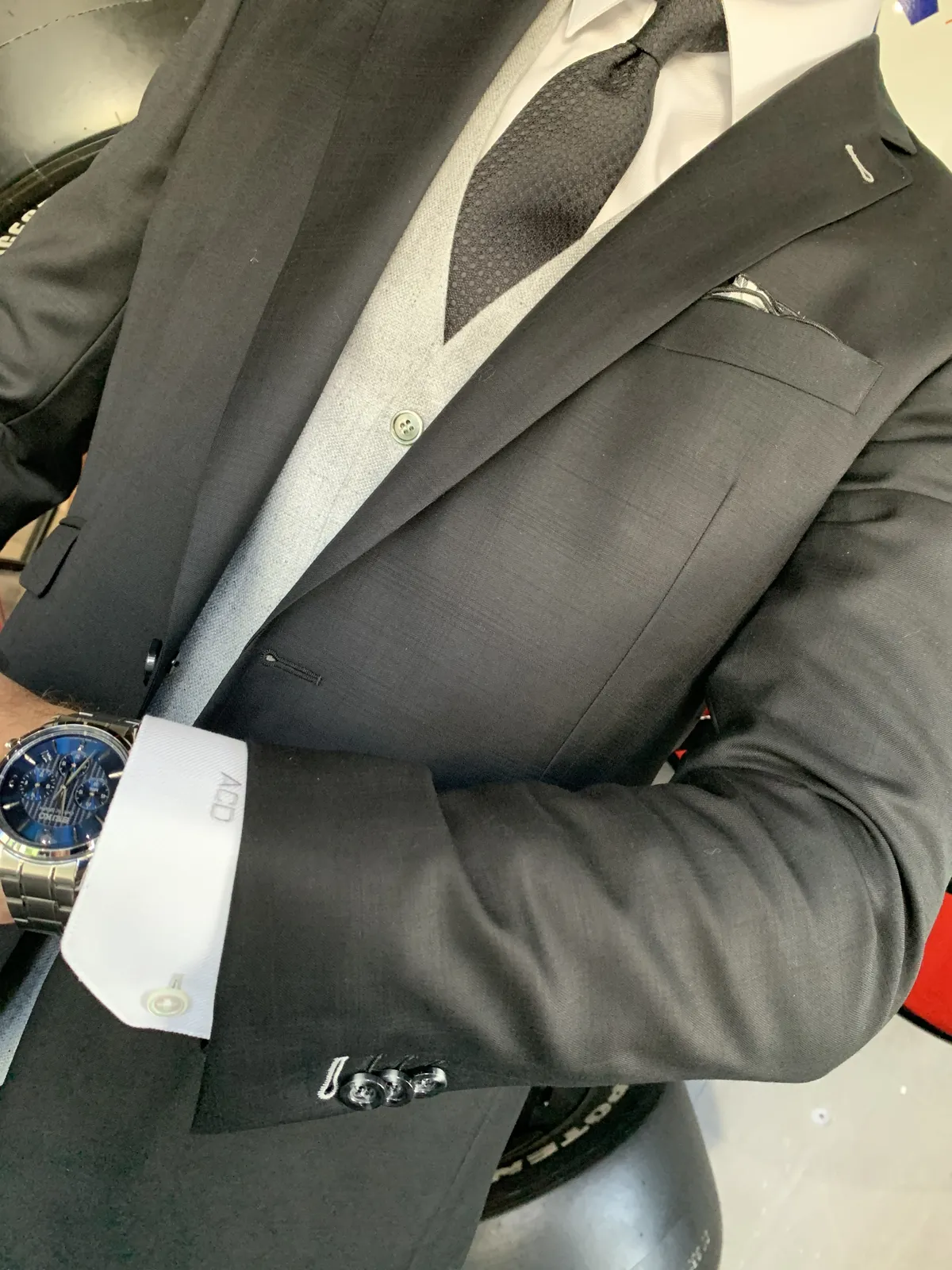
What Cufflinks Are, and Why French Cuffs Exist
A cufflink is a small fastener that closes a shirt cuff where a button would normally sit. It passes through holes on both sides of the cuff and holds the layers together with a bar, a chain, or a swivel on the back.
Cufflinks exist because French cuffs do. On a French cuff shirt, the cuff is cut twice as long as normal, folds back on itself, and forms a stiff doubled layer with four holes, two on each side. There are no buttons, so the shirt cannot be worn without links. Tailors have favored this construction for over a century because the doubled cuff is crisp, symmetrical, and holds its shape all evening. It is also the dressiest cuff in menswear, which is why it pairs so naturally with a tuxedo.
The style was practical long before it was formal. Before mass-produced buttons became cheap, linked cuffs were simply how a well-dressed man closed his shirt. Practicality became a signal of taste, and it still works that way today.
French Cuff Shirts vs Barrel Cuff Shirts
The barrel cuff is the shirt most men already own. It wraps around the wrist and closes with a button, sometimes two. It is faster, it works under any jacket, and for an ordinary workweek it is hard to beat.
The French cuff is dressier by design. The fold creates a visible band of doubled fabric at the wrist, and the link adds a deliberate glint of metal. The doubled cuff also sits flat and crisp under a suit sleeve in a way a buttoned cuff rarely does, and it lets you change your look by swapping links instead of shirts.
Our rule for clients is simple. Barrel cuffs handle routine business days. French cuffs handle everything that deserves ceremony: weddings, important presentations, galas, dinners where you want to feel put together. If most of your calendar runs casual, our sport shirts guide covers the no tie, no cufflink side of the wardrobe.
Whichever cuff you choose, fit matters more than hardware. The cuff should kiss the wrist bone, and about half an inch of shirt sleeve should show beyond your jacket sleeve. That is a detail worth engineering rather than hoping for, which is why our custom shirts are cut to your exact sleeve length and wrist measurement.
The Five Cufflink Styles Worth Knowing
Every cufflink on any accessories wall belongs to one of five mechanical families. Learn these and you can read any pair in seconds.
- Whale-back. A flat face with a hinged bar that flips flat for threading, then flips back to lock in place. The most common and most secure style, and the easiest to fasten. If you own one pair, make it this one.
- Chain-link. Two decorative faces joined by a short chain. The chain drapes slightly at the wrist, which many men find comfortable, and both sides of the cuff look finished. The tradeoff is a slightly looser, less rigid cuff.
- Ball-return. A face connected to a short chain that ends in a small ball, which pulls through the holes and holds from the inside. The elegance of a chain-link with a cleaner, lower profile. A favorite for finer, lighter fabrics.
- Fabric knots. Two soft silk knots on an elastic cord. Light, colorful, and inexpensive, and they read as relaxed charm rather than luxury. Ideal for warm Miami evenings when metal at the wrist feels too formal.
- Novelty. Everything from skulls to sailboats. Worn with a wink they can land at casual parties. For business and formal events, keep them in the drawer.
Materials Worth Owning
Style is the mechanism. Material is the personality. These five cover nearly every situation you will meet.
- Sterling silver. The workhorse. Brushed or polished, it pairs with navy, gray, and black and flatters almost every watch. Buy one well made pair now and you will still be reaching for it in twenty years.
- Gold tone. Warmer and a touch louder than silver, beautiful against white and cream shirts and a natural partner for a gold case watch. Quality vermeil or gold tone delivers the look without the price of solid gold.
- Enamel. Colored glass fired onto a metal base. It adds color while staying formal, and it lets you echo a tie or pocket square without copying it. Deep navy and oxblood are the most versatile shades.
- Onyx. Black stone set in silver. The most useful black tie pair you can own, because black links almost disappear against a dinner jacket and never compete with a bow tie.
- Mother-of-pearl. The other black tie standard. The white iridescence ties into white shirt fronts and pearl studs, which is why it has looked right with tuxedos for generations.
When to Wear Cufflinks
Cufflinks raise the formality of everything you wear, so the skill is choosing occasions that can handle the lift.
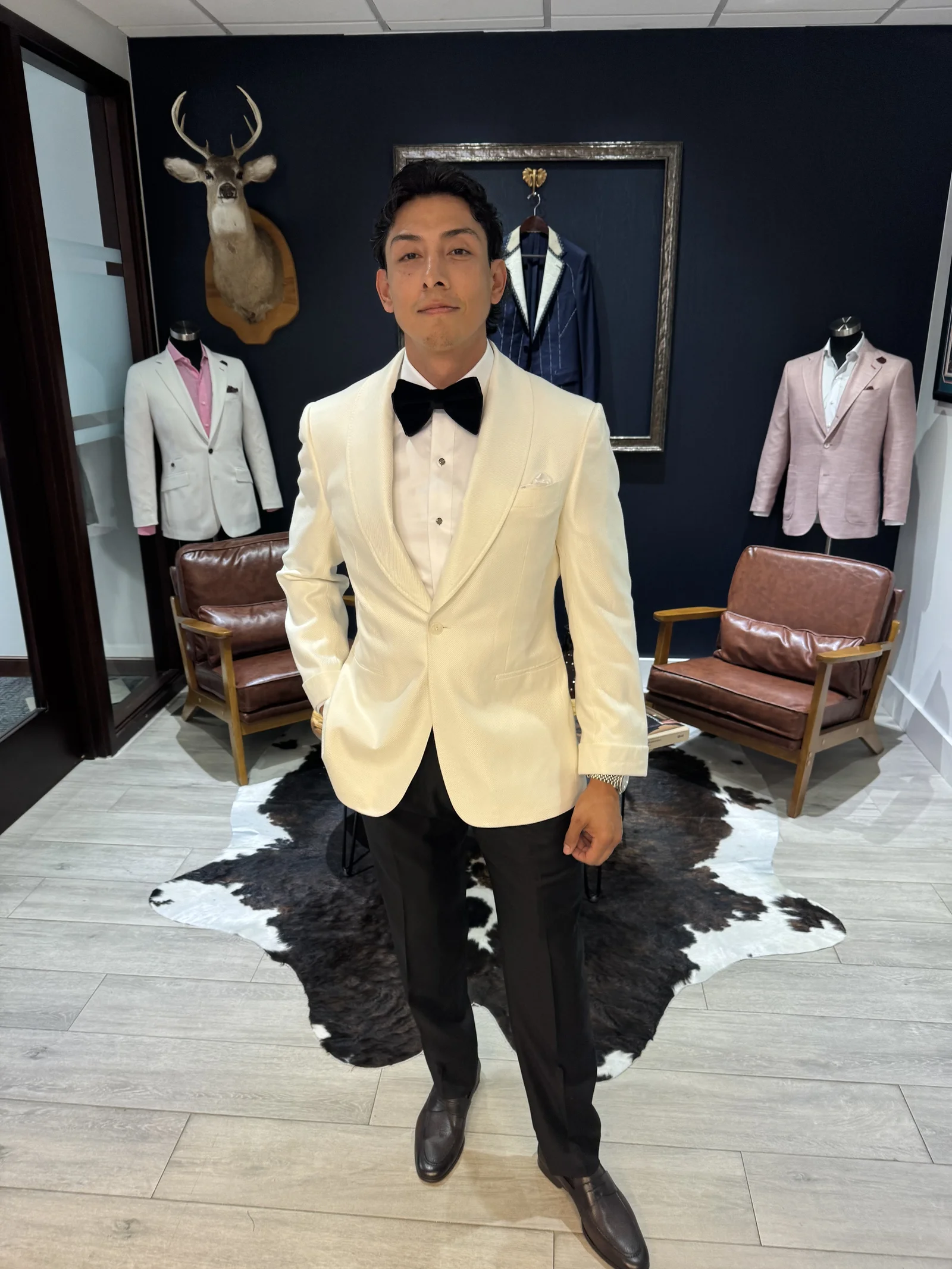
- Black tie. French cuffs with tuxedo stud sets are the traditional uniform. Pearl or onyx links with matching studs have looked correct for a hundred years.
- Weddings. For a groom, French cuffs photograph beautifully. For guests and groomsmen, links show effort without stealing attention. Just skip colors that compete with the wedding party.
- Business. A solid silver pair with a navy or charcoal suit reads as polish rather than flash. Save the louder enamel for the day you are presenting.
- Miami evenings. Brickell dinners, charity galas, waterfront weddings from Fort Lauderdale to Palm Beach. South Florida dress codes run lighter and more open, and a linen-blend French cuff shirt with silver links or silk knots threads that needle perfectly.
When in doubt, read the invitation. For cocktail attire and above, French cuffs are always appropriate. For anything that says casual, leave the links home and enjoy the night.
How to Put On Cufflinks, Step by Step
Every man fumbles his first pair in front of a mirror. After a few tries it takes ten seconds.
- Step one. Put the shirt on with the cuffs unfolded and unfastened.
- Step two. Fold each cuff back on itself so the four holes line up and the edges meet evenly. Most dressers prefer the kissing closure, where the edges touch face to face rather than overlapping like a barrel.
- Step three. Pinch the doubled layers together and thread the link through the hole nearest your wrist, from the outside in.
- Step four. Pass the post through the remaining three holes so all four layers are engaged, with the decorative face on the outside of the cuff.
- Step five. Flip the whale-back flat, or draw the ball or chain through, until the link feels locked. Give the cuff a gentle tug. It should hold snug without pinching or rotating loosely.
One habit worth forming: shirt first, then links, then watch. A French cuff will not slide comfortably over a closed hand wearing a watch band, and this order saves you a few minutes of wrestling every time.
Pairing Cufflinks with Studs and Watches
The wrist is a small stage, and everything on it should agree on one metal. Steel or silver watch, silver links. Gold case, gold tone links. Two metals at the wrist looks accidental even when it is deliberate.
With a tuxedo, extend the rule up the front of the shirt. Pearl links belong with pearl studs, onyx with onyx, and a matched set pulls the whole dinner jacket together. Our tuxedo stud sets guide covers the full system, from front styles to fit.
Scale matters too. A slim dress watch pairs with slim links, while a chunky watch balances better with substantial ones. When you skip the watch entirely, as many men do at black tie, slightly larger links keep the wrist from looking bare.
Common Cufflink Mistakes
- Piercing a barrel cuff. Some shirts ship with a spare buttonhole and a hopeful marketing story. A real cufflink needs a French cuff, so do not jam a link through a buttonhole and hope for the best.
- Mixing metals. Silver links with a gold watch, or gold links with a steel watch, is the clash we see most often in the Bespoke By CB showroom.
- Ignoring sleeve length. A doubled cuff adds bulk. If your sleeves were fitted for barrel cuffs, the French cuff can ride up or peek too far past the jacket. It is a two minute fix at a shirt fitting.
- Overdoing novelty. Humor has a place, but not at a funeral, an interview, or a black tie gala. Reach for novelty when the room will laugh with you, not at you.
- Choosing links too small. Faces under ten millimeters can vanish inside the cuff. A visible link is the point of the exercise.
- Leaving them in at the dry cleaner. Machines rattle links loose and chip enamel. Make removing them part of your end of night routine, right next to emptying your pockets.

How Bespoke By CB Builds French Cuff Shirts
Bespoke By CB is a bespoke tailoring house in Brickell, founded by Christian Boehm, who brings more than 37 years of tailoring experience to every fitting. Our clients come from across Miami, Fort Lauderdale, and Palm Beach, and many arrive for a suit and end up rebuilding their shirt wardrobe one fitting at a time.
Every Bespoke By CB shirt begins with a conversation rather than a catalog. At your first appointment we record a full set of measurements, including the two that matter most for French cuffs: exact sleeve length and wrist circumference. You then choose from hundreds of shirting fabrics, and we guide you on weight, weave, and collar, because a crisp poplin and a soft linen want different cuff shapes. You also choose the corner of the cuff, square for classic or rounded for softer, plus details like a monogram or a contrasting cuff interior.
Because each pattern is drafted to the individual, your French cuffs will meet evenly at the wrist and show precisely the right amount of sleeve beyond your jacket. That is the difference between wearing cufflinks and wearing them well. The easiest way to start is to book a consultation at our Brickell showroom, where the fabric books and the espresso are both waiting.
Frequently Asked Questions
Do French cuff shirts require a tie?
No. French cuffs look excellent with a tie, but the collar rules are the same as any dress shirt. An open collar French cuff shirt under a light suit is a warm weather look that works beautifully for dinners and parties.
Can I wear cufflinks with a regular button cuff shirt?
Not properly. A true cufflink needs the four aligned holes of a French cuff. Some shirts come with a convertible cuff that closes with either a button or a link, and those work. Everything else will fall open or tear at the buttonhole.
What is the best first pair of cufflinks?
At Bespoke By CB, we usually point first time buyers to a sterling silver whale-back pair with a brushed finish. They suit every suit color, they are easy to fasten, and they never look out of place. Add silk knots for travel and onyx for black tie, and you are set for years.
How tight should a cufflink feel?
Snug but never pinching. The cuff should hold your wrist without cutting into it, and the link should not rotate freely. If the cuff bunches above the link, the sleeve is too tight. If it flops, the measurement is too loose. Both are fixed in a single fitting.
Are silk knot cufflinks acceptable for business?
Usually, yes. Silk knots lean relaxed, so pair them with softer shirts and skip them with a formal pinstripe. They shine on creative office days, at dinners, and through Miami's warmer months, when metal at the wrist can feel heavy.
How do I care for cufflinks?
Wipe sterling and gold tone pairs with a soft cloth after wearing, and store pieces separately so faces do not scratch. Protect enamel from hard knocks, because a chip cannot be polished out. A small fitted box preserves the finishes for decades.
Should cufflinks match my watch?
Match the metal family rather than the exact piece. Steel and silver tone watches call for silver links, gold watches for gold tone. When the watch comes off, as it usually does at black tie, match the links to your studs instead.