Moving from South America to Miami is a journey many make for career, family, or lifestyle, but few anticipate how profoundly it changes the way they dress. South American style is rich with tradition. From the sharp business culture of Buenos Aires to the polished corporate dress of São Paulo and the refined elegance of Bogotá, each city has its own sartorial identity. Yet when you arrive in Miami, you discover that the rules shift. The heat is different here. The social calendar is different. The expectations for what a well-dressed man wears to a business meeting, a wedding, or a Friday evening in Brickell are distinctly Miami. Your South American wardrobe, no matter how well tailored, was built for a different climate and a different cultural rhythm. This is a guide to understanding what translates, what does not, and how rebuilding your wardrobe with custom tailoring at Bespoke By CB can elevate your style for life in South Florida.
The South American Wardrobe: Tradition Meets Climate
Let us begin by acknowledging the strengths of your South American wardrobe. If you are arriving from Buenos Aires, you likely own beautifully constructed wool suits in navy and charcoal, tailored with a European influence that reflects the strong Italian and Spanish heritage of Argentine style. The suits are sharp, the shirts are crisp, and the shoes are almost always leather. If you come from São Paulo, your wardrobe probably reflects a corporate culture that values formality, with dark wool suits and conservative ties dominating the workweek. Bogotá's cooler highland climate means your suits may be heavier, your jackets more structured, and your layers more numerous than anything Miami will ever require.
The craftsmanship in South America is often excellent. Many cities have a tradition of local tailors who produce garments with real skill. The problem is not quality. The problem is that your suits were selected for a specific climate and social context that does not exist in Miami. Buenos Aires winters dip into the 40s. Bogotá sits at 8,600 feet of elevation, giving it a cool, spring-like climate year-round. Even São Paulo, despite its summer heat, has winter months where a mid-weight wool suit feels entirely appropriate. Miami has no winter. The average low temperature in January, the coldest month, is 62 degrees. The average high in August is 91 degrees with humidity that regularly pushes the heat index above 105. A 280-gram worsted wool suit that felt perfectly comfortable in a Buenos Aires office in July will make you miserable in Miami in any season. The fabrics, the construction methods, and even the color palettes that served you well in South America need to be reconsidered entirely.
What Stays and What Goes: A Wardrobe Audit
Before you start shopping, conduct an honest audit of what you brought from South America. Some pieces can be repurposed for Miami's rare cool snaps or for travel back home. Others should be retired entirely. Here is a practical breakdown.
Keep for occasional use: One heavy charcoal or navy wool suit for winter travel back to South America, funerals, or formal evening events during Miami's brief cool season in December and January. A single overcoat if you travel frequently to cooler climates. Your leather dress shoes, particularly your black cap-toe oxfords, which remain appropriate for formal evening events regardless of city. Any high-quality accessories like cufflinks, pocket squares, and silk ties that transcend climate.
Retire or donate: Multiple heavy wool suits in the same weight class. Thick flannel trousers. Heavy tweed sport coats, particularly if you are coming from Bogotá where the cool climate made these daily staples. Anything with a thick synthetic lining. Dress shirts in high-thread-count cotton with a dense weave that restricts airflow. Heavy silk ties in dark patterns that trap heat around your neck.
Replace entirely: Your everyday suit rotation. Your dress shirts. Your casual professional wear. Your shoe collection. Miami demands an entirely different approach to fabric, construction, and color. This is where Bespoke By CB becomes an essential partner rather than just a clothing store.
Fabric Fundamentals for the Tropical Wardrobe
The single most important change you will make when rebuilding your wardrobe for Miami is your fabric selection. In South America, you chose fabrics for their structure, weight, and versatility across distinct seasons. In Miami, you must choose fabrics for their breathability, moisture management, and ability to maintain a polished appearance in high humidity. Let us walk through the essential materials.
Tropical wool, also known as high-twist or fresco wool, is the backbone of any Miami professional wardrobe. This fabric is woven from tightly spun yarns in an open weave pattern that allows air to flow freely through the material. If you hold a swatch of premium tropical wool up to the light, you can literally see through the microscopic gaps. Despite this porous nature, the high-twist yarns resist wrinkling and maintain a clean drape throughout the day. A tropical wool suit at 220 to 250 grams per meter will keep you comfortable in a Miami boardroom while still looking sharp enough for a client presentation. This is the fabric that replaces your South American worsted wool.
Linen and linen blends are essential for Miami's social and semi-formal occasions. Many South American men are already familiar with linen from coastal cities like Cartagena or Rio de Janeiro, but in Miami, linen becomes a year-round staple rather than a vacation fabric. Pure linen offers unmatched breathability and moisture wicking, though it wrinkles characteristically. For professional settings, Bespoke By CB often recommends wool-linen blends that combine the breathability of linen with the structure and wrinkle resistance of wool. A 60 percent wool and 40 percent linen blend in a light grey or navy creates a suit that looks polished in a meeting yet feels comfortable in the Miami heat.
Cotton in lightweight weaves like poplin or voile is excellent for shirts and casual professional wear. A crisp cotton suit in khaki or light blue works beautifully for daytime events. South American men often associate cotton suits with casual wear, but in Miami, a well-fitted cotton suit is perfectly acceptable for a range of business and social settings.
Color and Culture: Miami's Palette vs South America's
One of the most exciting changes when moving from South America to Miami is the shift in acceptable color palettes. South American business culture tends toward conservative dressing. Dark navy, charcoal, and black dominate the corporate landscape of Buenos Aires and São Paulo. Bogotá's cooler climate makes darker colors practical year-round. Miami is different. While the corporate environments in Brickell and downtown Miami still respect a dark suit for formal occasions, the broader culture embraces color in a way that South American business dress rarely does.
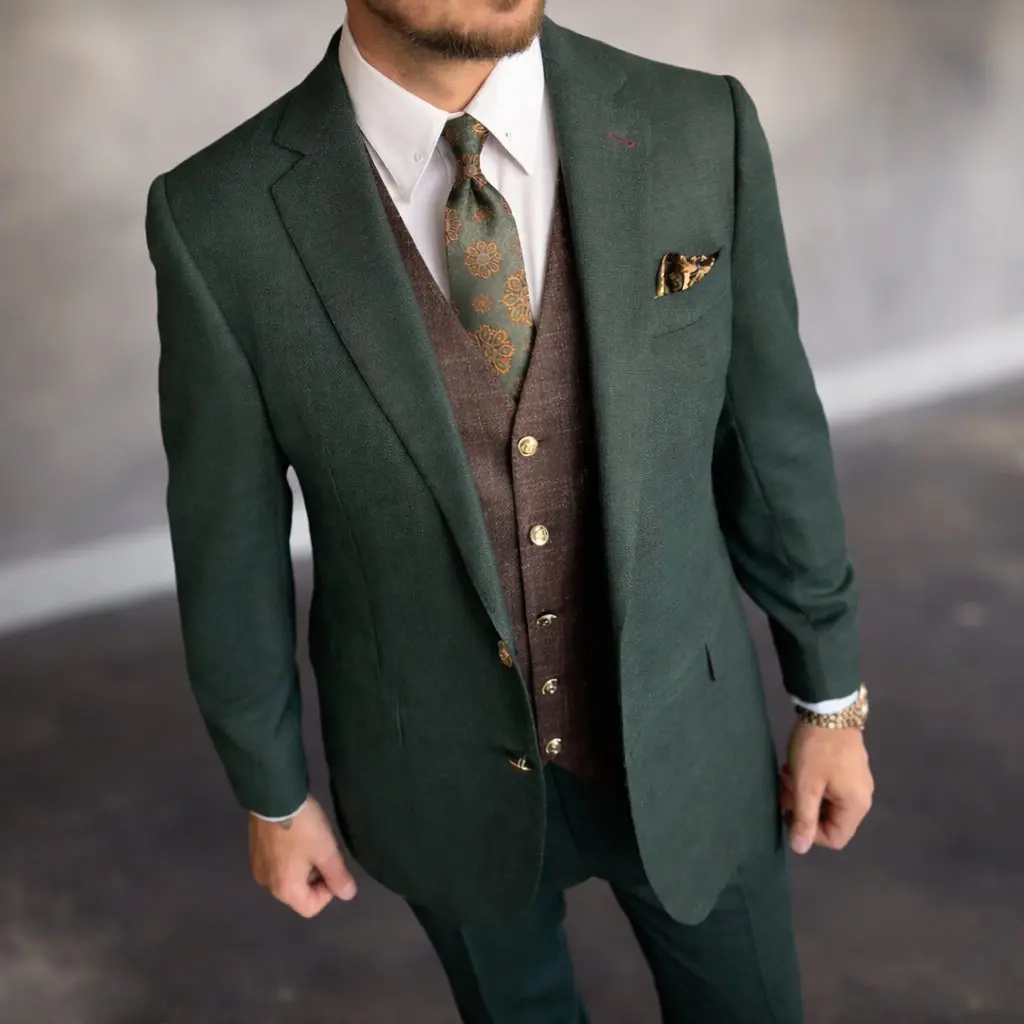
Light grey is the most versatile suit color in Miami. It reflects sunlight, looks crisp in photographs, and transitions effortlessly from day to evening. Tan and beige are staples for daytime events and social occasions. Soft blue, in shades like powder blue or French blue, looks striking under the Miami sun and pairs beautifully with the turquoise waters of South Florida. Olive green works exceptionally well for outdoor events and garden weddings. Even bolder choices like a teal or a warm rust can be worn with confidence in Miami's more expressive style culture. At Bespoke By CB, Christian Boehm helps clients from South America navigate this transition, selecting colors that complement their skin tone while embracing the lighter, brighter palette that Miami encourages.
Construction: Why Your South American Suits Feel Heavy in Miami
Beyond fabric, the internal construction of your suits plays a massive role in how they perform in the heat. Many South American tailors produce beautifully structured jackets with full canvas interlinings and heavy shoulder pads. This construction creates a commanding silhouette that looks magnificent in the marble lobbies of Buenos Aires banks or Bogotá law firms. However, that same structure traps heat against your body in Miami.
For Miami, Bespoke By CB recommends half-canvas or unstructured constructions. A half-canvas jacket uses a single layer of natural horsehair and cotton in the chest, providing shape without excess weight. An unstructured jacket removes the canvas entirely, creating a soft, relaxed silhouette that moves with your body and allows maximum airflow. Additionally, removing the lining from the back of the jacket, a technique known as quarter-lining or buggy lining, allows the outer shell to breathe directly. When combined with a lightweight outer fabric, these construction techniques create a garment that feels dramatically cooler than a traditionally structured suit. The lining itself matters too. Inexpensive suits use synthetic polyester linings that trap moisture. A proper bespoke summer jacket features a lining made from Bemberg cupro, a natural cellulose fiber that is exceptionally porous and silky against the skin.
The Social Calendar: Dressing for Miami's Lifestyle
Miami's social calendar is unlike anything in South America. The city hosts Art Basel in December, one of the most important art fairs in the world, where the dress code is creative formal. There are gallery openings in Wynwood, yacht parties in Key Biscayne, charity galas in Coral Gables, and weddings on South Beach year-round. Each of these occasions demands a different approach to dressing, and your South American wardrobe likely does not cover all of them.
For Art Basel and gallery events, you need pieces that are polished but expressive. A tailored blazer in an interesting fabric, like a textured linen-silk blend, paired with a crisp shirt and tailored trousers, hits the right note. For yacht and beach club events, lightweight separates in breathable fabrics are essential. A linen shirt worn untucked with tailored shorts and suede loafers is a classic Miami look that you will not find in a Buenos Aires or São Paulo wardrobe. For galas and formal weddings, a bespoke tuxedo or a dark tropical wool suit is appropriate. Bespoke By CB can build each of these pieces for you, ensuring that every garment fits perfectly and serves its specific social purpose.
Footwear: Trading Leather Boots for Loafers
South American men take footwear seriously. In Buenos Aires, leather oxfords are the default. In Bogotá, the cooler climate makes heavier leather shoes practical year-round. Many South American men also own riding boots or country boots from their time on estancias or rural properties. In Miami, heavy leather shoes become a liability. They trap heat, they absorb humidity, and they look out of place in a tropical city.
The Miami footwear rotation centers on loafers. A high-quality pair of suede tassel loafers or penny loafers is the most versatile shoe in the city. Worn without visible socks, using hidden loafer socks instead, they allow air to circulate around your ankles and look sharp with everything from a suit to tailored trousers. For more formal occasions, a lightweight leather Oxford in brown or burgundy works well. White sneakers, particularly minimalist leather sneakers, are acceptable for casual professional settings in a way that would be unthinkable in a Buenos Aires law firm. Bespoke By CB can guide you on footwear selections that complement your custom suits and fit the Miami dress code.
How Bespoke By CB Helps South American Transplants
Rebuilding an entire wardrobe is not a simple task, and doing it with off-the-rack clothing from a department store will leave you with garments that fit poorly and wear out quickly. Bespoke By CB offers a better path. Christian Boehm brings over 37 years of sartorial expertise to every client relationship, and he has worked with many South American clients who have relocated to Miami. He understands the transition intimately, from the fabrics that work in the heat to the cultural shifts in dress codes.
The process begins with an in-depth consultation at the Bespoke By CB studio in Miami. Christian will discuss your lifestyle, your profession, your social calendar, and your personal style preferences. He will then present a curated selection of fabrics from the world's finest mills, including legendary names like Loro Piana, Ariston, and Scabal. You will be able to feel the textures, examine the drape, and understand the precise benefits of each material. Once the fabric is selected, a unique pattern is drafted exclusively for your body. The suit is then meticulously constructed using the finest half-canvas or full-canvas techniques, ensuring it breathes properly and fits flawlessly.
What sets Bespoke By CB apart for South American clients is the cultural understanding. Christian knows that a man from Buenos Aires expects a certain sharpness in his tailoring. He knows that a client from Bogotá may prefer a more structured shoulder. He accommodates these preferences while adapting the garment for Miami's climate, creating suits that honor your sartorial heritage while serving your new reality. The bespoke process is not merely about ordering a suit. It is about creating a wardrobe that empowers you to feel completely confident and comfortable in your new city.
For more insights into elevating your personal style, you can explore the Bespoke By CB website and discover how a truly custom garment can transform your wardrobe.
Conclusion
Moving from South America to Miami is an exciting chapter, but it requires a wardrobe reset that most men underestimate. The fabrics, construction methods, colors, and social dress codes that defined your style in Buenos Aires, São Paulo, or Bogotá do not translate to South Florida's tropical climate. By working with Bespoke By CB, you can rebuild your wardrobe with intention, selecting breathable fabrics, lighter constructions, and a color palette that embraces your new environment. The result is a collection of garments that fit perfectly, perform beautifully in the heat, and project the confidence and polish that South American men are known for, adapted for life in Miami.
Frequently Asked Questions
Can I wear my South American wool suits in Miami?
Most heavy wool suits from South America are too warm for Miami's year-round heat and humidity. A single heavy suit can be kept for winter travel or formal evening events during Miami's brief cool season in December and January, but your everyday rotation should be rebuilt with lightweight tropical wool, linen blends, and cotton fabrics.
How is Miami style different from Buenos Aires style?
Buenos Aires style leans heavily on European tradition with dark wool suits, structured shoulders, and conservative color palettes. Miami embraces lighter fabrics, brighter colors, and more relaxed constructions. Light grey, tan, and soft blue suits are common in Miami, and unstructured or half-canvas jackets replace the heavy full-canvas builds common in Argentine tailoring.
What should I look for in a custom tailor in Miami?
Look for a tailor with deep experience in warm-weather dressing, access to premium lightweight fabrics from top mills, and an understanding of how to construct garments that breathe. Bespoke By CB has over 37 years of experience and works with fabrics from Loro Piana, Ariston, and Scabal to create suits specifically engineered for Miami's climate.
How many suits do I need for a Miami wardrobe?
Most transplants from South America should plan for three to five custom suits in lightweight fabrics, rotating between tropical wool for the office, linen blends for social occasions, and a dark tropical wool for formal events. This rotation covers the vast majority of professional and social needs in Miami year-round.
Can Bespoke By CB match the quality of my South American tailor?
Yes. Bespoke By CB uses full-canvas and half-canvas construction techniques, sources fabrics from the same premium European mills that supply top South American tailors, and adds the critical advantage of climate-specific expertise. Every garment is built from a unique pattern drafted for your body, ensuring a fit that off-the-rack clothing cannot match.


