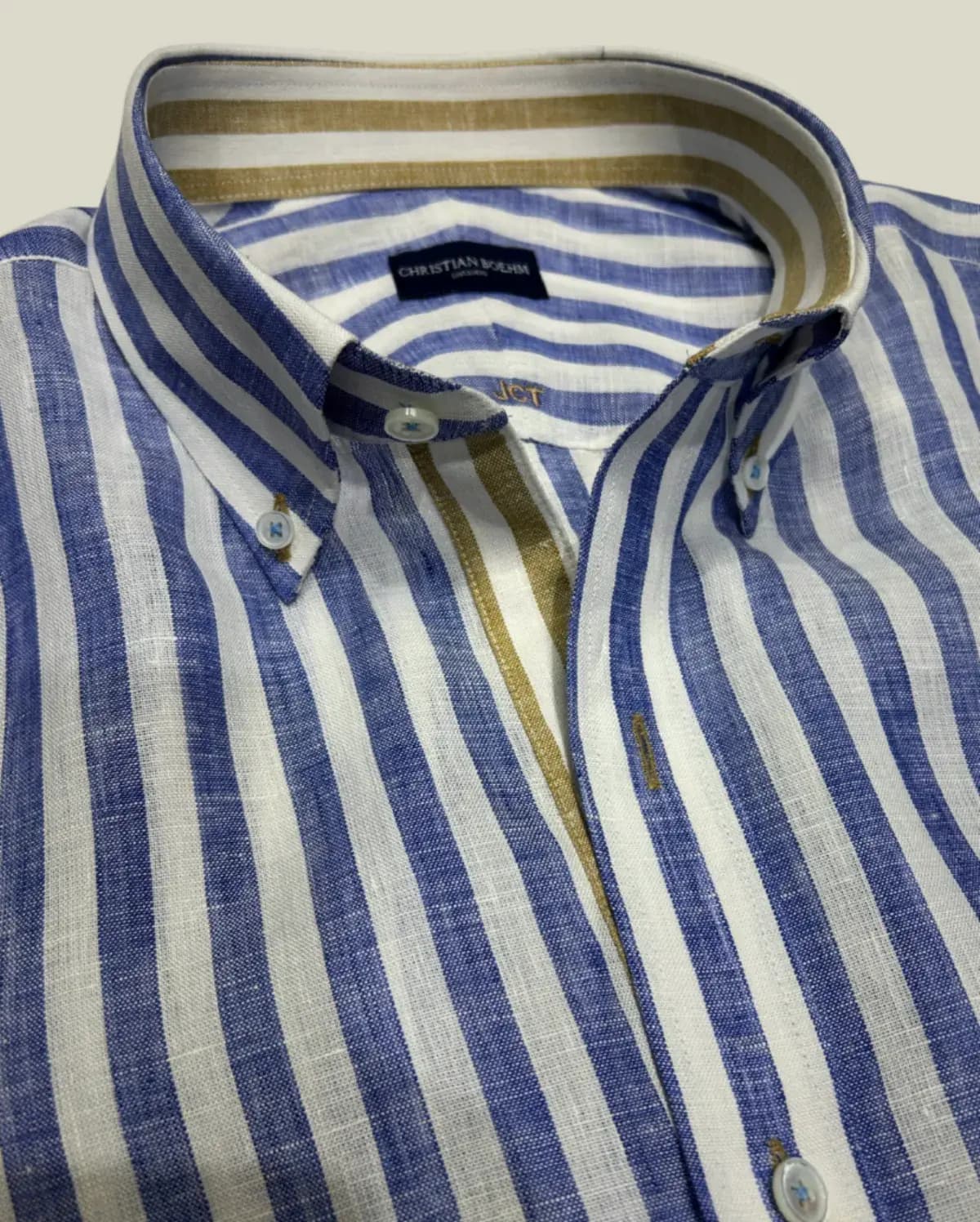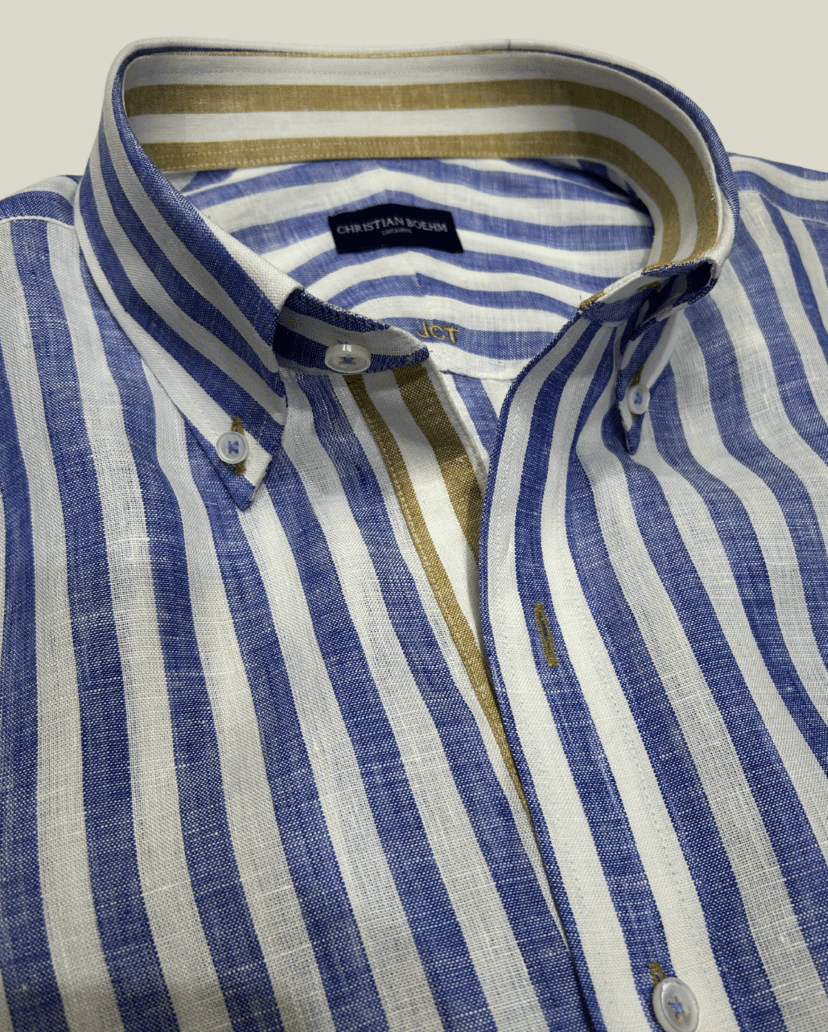
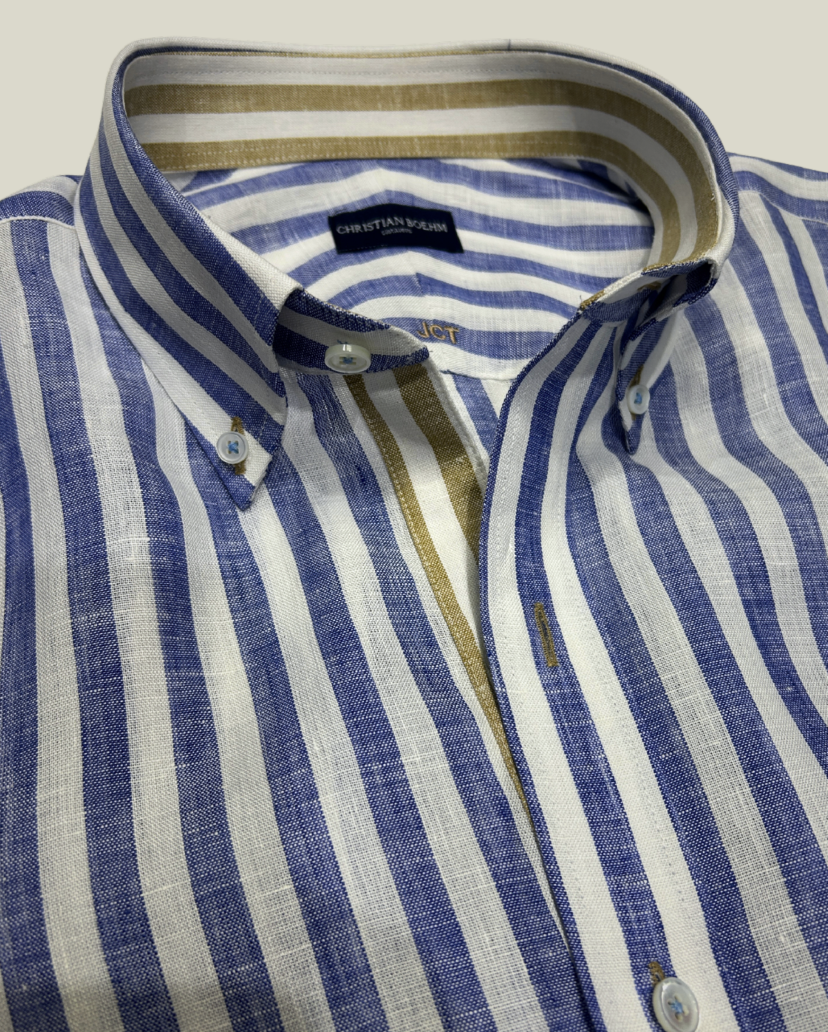
The shirt and tie are the two elements closest to your face. They are what people notice first when they look at you. Getting this pairing right is the difference between looking like you know what you are doing and looking like you got dressed in the dark.
The Foundation: Solid Shirts
A solid white or light blue shirt is the foundation of a working wardrobe. These two shirts will pair with almost any tie you own, and they should be the first custom shirts you commission if you are building from scratch.
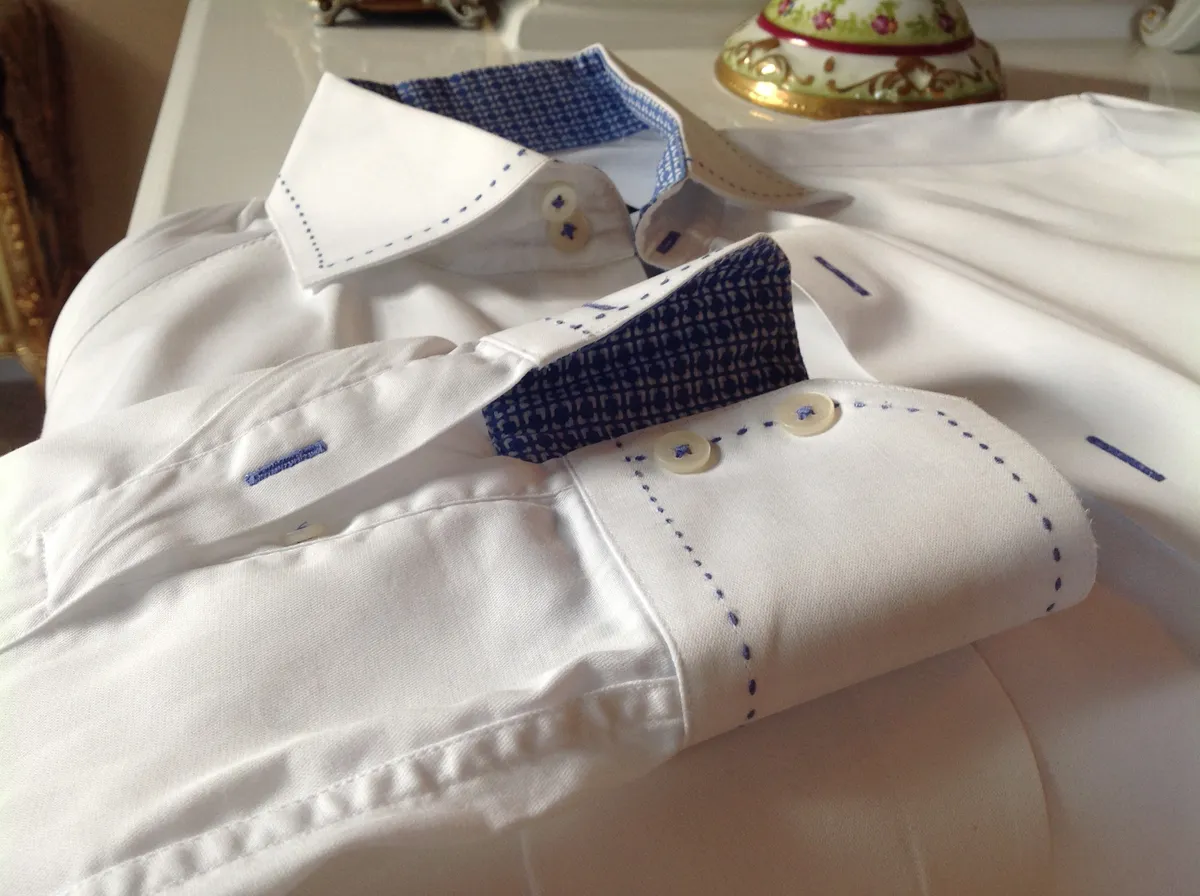
White Shirts
A white shirt is a blank canvas. Every tie works with a white shirt. This is not an opinion, it is a fact of menswear. If you are ever unsure about a tie and shirt combination, put the tie against a white shirt. If it does not work there, it will not work anywhere.
The only caution with white shirts is formality. A white shirt with a tie reads formal. If the occasion is not formal, a light blue shirt is usually a better choice.
Light Blue Shirts
Light blue is the most versatile colored shirt in menswear. It pairs with:
- Navy ties, the monochromatic blue-on-blue look is clean and professional
- Burgundy ties, the warm-cool contrast is classic
- Green ties, works beautifully, especially forest and olive shades
- Brown ties, earthy and sophisticated, great for fall
- Patterned ties, almost any pattern in the above colors
Other Solid Shirts
Pink, cream, and pale grey shirts work for specific combinations. A pink shirt with a navy tie is a strong look for spring and summer. A cream shirt with a brown tie reads warm and approachable. These are useful additions to a wardrobe but should not be your first three shirts.
Patterned Shirts: The Rule of Scale
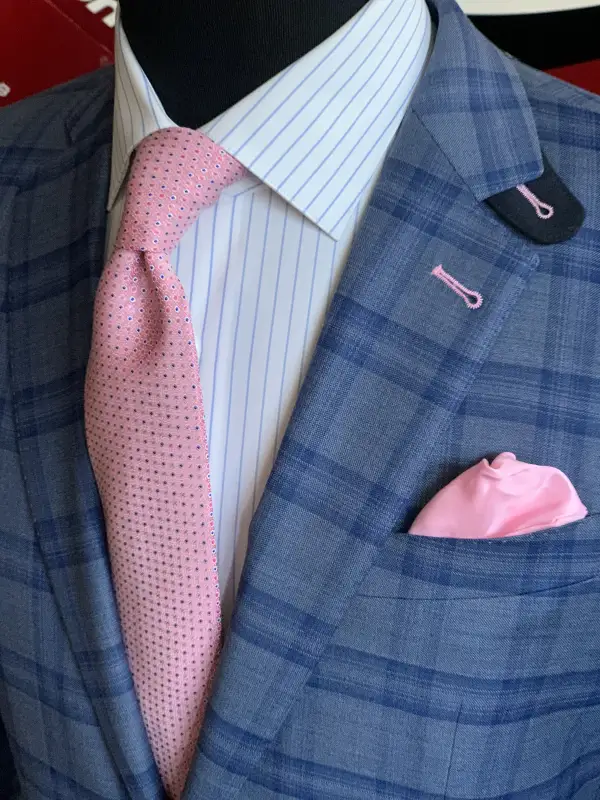
When you introduce a patterned shirt, the rule of scale becomes critical. This is the single most important rule in tie and shirt pairing.
What Is Scale?
Scale is the size of the pattern. A wide striped shirt has a large scale. A fine micro-check shirt has a small scale. The rule is simple: your shirt pattern and your tie pattern should be different in scale.
- Large shirt pattern + small tie pattern, works. A wide striped shirt with a small dot tie.
- Small shirt pattern + large tie pattern, works. A fine check shirt with a large paisley tie.
- Large shirt pattern + large tie pattern, does not work. The patterns compete.
- Small shirt pattern + small tie pattern, risky. The patterns blend into visual noise.
Striped Shirts
A striped shirt is the most common patterned shirt. The stripes can be broad (regimental), medium (bengal), or fine (pencil). Pair them with:
- Solid ties, always safe. A solid grenadine tie with a striped shirt is foolproof.
- Dot ties, the round dots contrast nicely against linear stripes.
- Paisley ties, the organic curves of paisley against the straight lines of stripes create visual interest.
- Striped ties, can work if the stripes are very different in width and direction. A horizontal striped shirt with a diagonal striped tie is fine. Two stripes of similar width going the same direction is a mistake.
Checkered Shirts
Check shirts come in several forms, gingham, tattersall, graph check. They pair with:
- Solid ties, the safest choice. A solid knit tie with a gingham shirt is a great smart-casual look.
- Striped ties, the linear tie pattern contrasts with the grid of the check. Works well.
- Paisley ties, can work if the check is small and the paisley is large.
Avoid pairing a check shirt with a check tie. Two grids fight each other.
Color Theory for Tie and Shirt Pairing
Complementary Colors
Colors opposite each other on the color wheel create contrast. Blue and orange, red and green, purple and yellow. In menswear, this means:
- A blue shirt with a rust or burgundy tie (blue and red-orange are near complementary)
- A pink shirt with a green tie
- A light blue shirt with a gold tie
Complementary pairings are visually striking but should be used with restraint. One complementary pairing per outfit is enough.
Analogous Colors
Colors next to each other on the color wheel create harmony. Blue and green, red and purple, yellow and orange. These pairings feel cohesive and understated:
- A light blue shirt with a green tie
- A pink shirt with a burgundy tie
- A cream shirt with a gold tie
Analogous pairings are the safest way to introduce color without risking a clash.
Monochromatic
Same color, different shades. A light blue shirt with a navy tie. A pale pink shirt with a deep burgundy tie. Monochromatic pairings are elegant and foolproof. They read sophisticated without being flashy.
When to Go Bold vs Subtle
Go bold when:
- You are wearing a solid suit in a conservative color (navy, grey)
- The occasion is social rather than formal business
- You are confident in the combination
- The rest of the outfit is restrained
Stay subtle when:
- You are in a conservative business environment
- Your suit or shirt already has a pattern
- You are meeting clients for the first time
- You are in a courtroom or formal setting
The general principle: one element of the outfit can be bold. The rest should support it. A bold tie with a solid suit and solid shirt works. A bold tie with a patterned suit and patterned shirt is too much.
Seasonal Considerations
- Spring and summer, lighter colors, cotton and linen ties, pastel shirts. A light blue shirt with a cream silk tie works in May. The same combination looks out of place in November.
- Fall and winter, deeper colors, wool and cashmere ties, flannel shirts. A cream shirt with a burgundy wool tie works in October. The same combination feels heavy in April.
Rotate your shirt and tie combinations with the seasons the way you rotate your suits. The same wardrobe year-round does not work in a climate like Miami's, but the principle of seasonal color adjustment still applies.
Frequently Asked Questions
Can I wear a patterned tie with a patterned shirt?
Yes, but the patterns must be different in scale and ideally different in type. A striped shirt with a dot tie works. A striped shirt with a striped tie is risky unless the stripes are very different in width and direction.
What is the most versatile shirt color for tie pairing?
Light blue. It works with navy, burgundy, green, brown, and most patterned ties. If you only own three custom shirts, one should be white, one should be light blue, and the third should be whatever you like.
Should my tie be lighter or darker than my shirt?
Generally, your tie should be darker than your shirt. A dark tie against a light shirt creates contrast and draws the eye up to your face. A tie lighter than your shirt can work in summer with pastel combinations, but it is harder to pull off.
How do I pair a knit tie with a shirt?
Knit ties work with both solid and patterned shirts. A navy knit tie with a white shirt is a classic. A brown knit tie with a light blue shirt is a cold-weather favorite. The texture of the knit adds interest without needing a pattern.
Ready to build a shirt collection that pairs with everything? Book a consultation at Bespoke By CB and we will help you design custom shirts that work with your existing ties and suits.