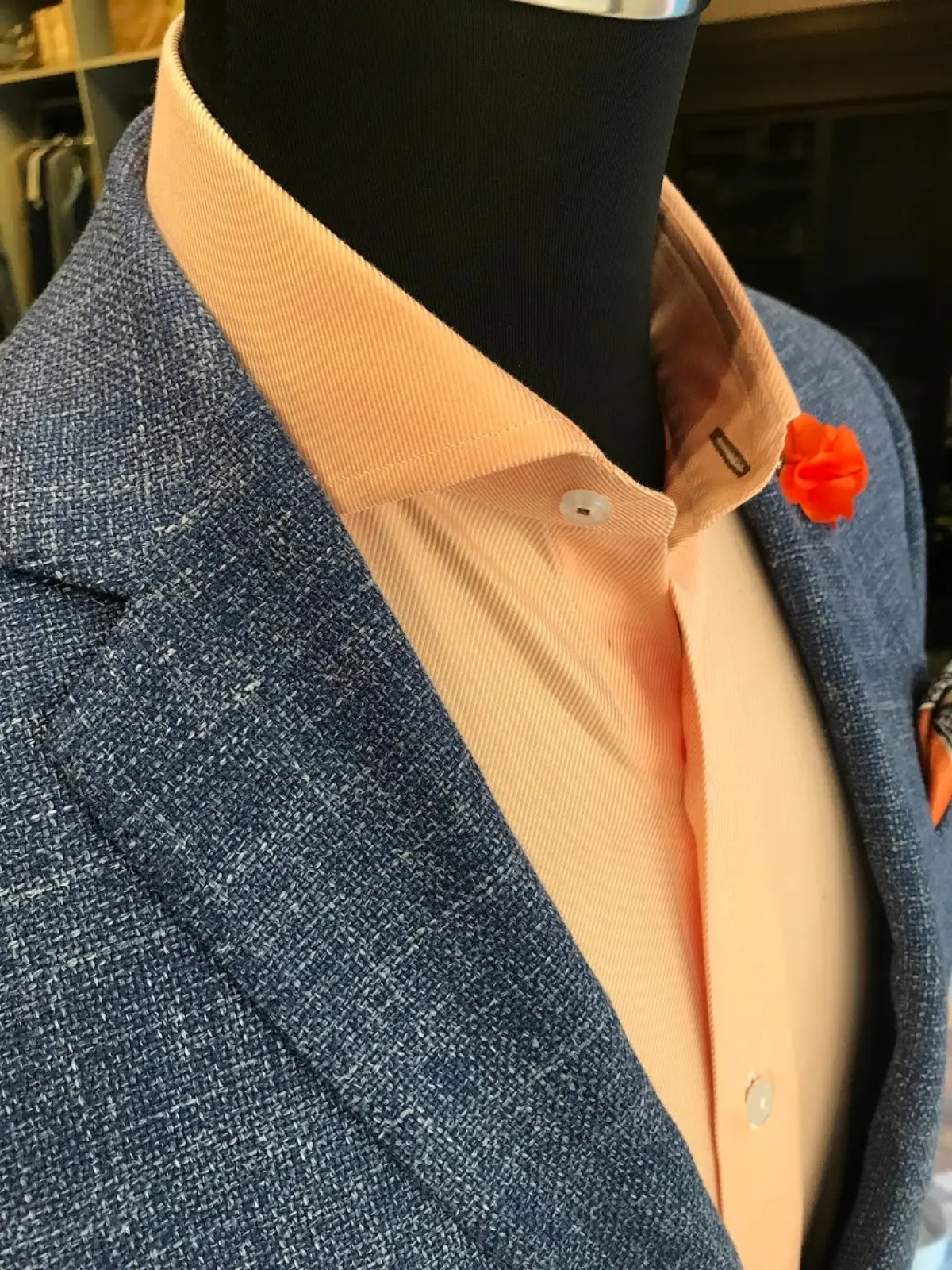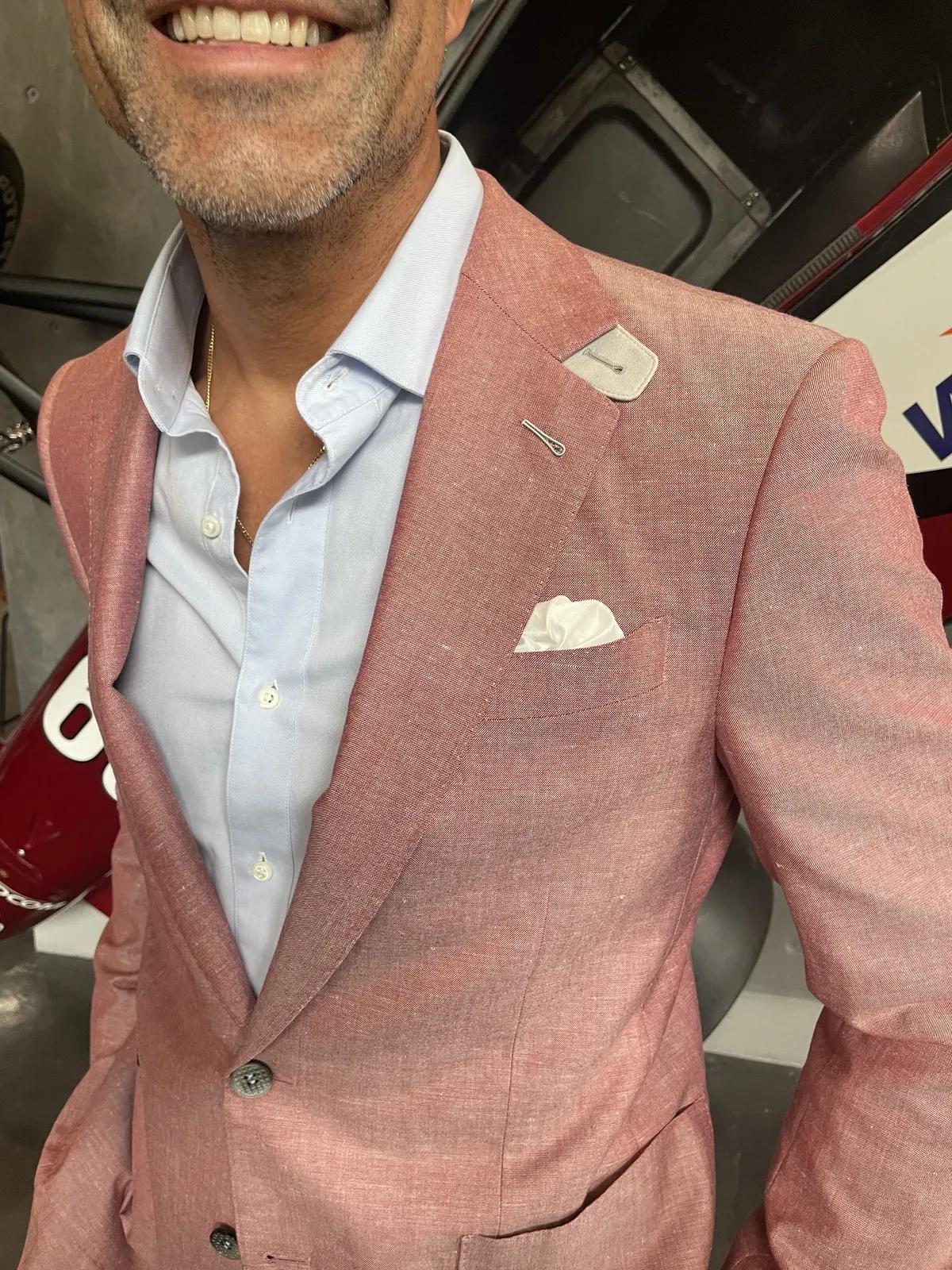
Ask ten men what they notice first about a jacket and most will say the fit, the color or the lapels. But tailors know the truth: the shoulder line is what a viewer reads before anything else. It frames the face, sets the silhouette of the whole garment, and determines how the jacket behaves when you move, sit and raise your arms. No amount of skilled pressing or clever styling can rescue a jacket whose shoulders are wrong for the wearer or the occasion.
Shoulder construction is also one of the most misunderstood parts of a custom order. Men ask for a "slimming" cut without realizing the shoulder expression is what creates that impression. Others assume padded shoulders are old fashioned, or that a roped sleevehead means a jacket is automatically better. Bespoke By CB hears these shorthand ideas in almost every consultation, and none of them survives a closer look. This guide explains what natural, padded and roped shoulders actually are, how they relate to one another, and how to choose between them when ordering a custom suit or sport coat in Miami.
What the Shoulder of a Jacket Actually Is
When tailors talk about the shoulder, they mean the whole upper structure of the jacket: the shoulder seam that runs from the collar to the top of the sleeve, the padding or canvas underneath that seam, the sleevehead that joins the sleeve to the body, and the way all of these elements sit on your own shoulder bones. Your body already has a shoulder line. The question is how much the jacket echoes it, extends it or reshapes it.
Three separate decisions interact here. The first is how much padding sits under the shoulder seam, from nearly none to a firm built-up ridge. The second is the shape of the sleevehead, meaning whether the top of the sleeve sits flat and clean or gathers into a visible ridge, which is the roping. The third is the overall silhouette the tailor cuts, from soft and rounded to square and extended. These are related choices, not one choice. You can have a lightly padded shoulder with a roped sleevehead, or a firm shoulder with a flat sleevehead. Confusing them is the most common reason men end up with a jacket that does not look the way they imagined.
It helps to compare this with the other structural decisions you make in a custom order. In earlier guides in this series we covered jacket vents, lining coverage and pocket styles. The shoulder deserves the same deliberate attention, because like those details it is fixed at the cutting stage. A tailor can adjust a sleeve length or take in a waist after the fact. Rebuilding a shoulder means taking the jacket apart to its skeleton.
Natural Shoulders: Soft, Close and Modern
A natural shoulder uses very little padding. The seam follows the contour of your own body with only a thin layer of wadding, often just a strip of felt or canvas a few millimeters thick, to smooth the transition between jacket and body. The sleevehead is typically kept flat, so the sleeve joins the body in a clean, uninterrupted line. Worn well, the jacket looks like it grew around you rather than being built on top of you.
The appeal is easy to state. A natural shoulder reads as relaxed, current and honest. It flatters men whose own shoulders are already fairly level and proportionate, because the jacket simply presents what is there. It also suits the way men in warmer cities dress. A shoulder with less building inside it is a shoulder that lets the jacket drape more loosely over the chest, which in Miami, where a suit can go from an air conditioned boardroom to a humid afternoon walk in a single afternoon, matters more than most style guides admit.
The limitations are equally real. Very little padding means very little correction. If one shoulder sits lower than the other, as is true for a great many men, a natural shoulder shows it. The jacket also relies heavily on the quality of the drape and the cutting, because there is no structure hiding small flaws. And in a room full of formal business dress, a very soft shoulder can read as casual, fairly or not.
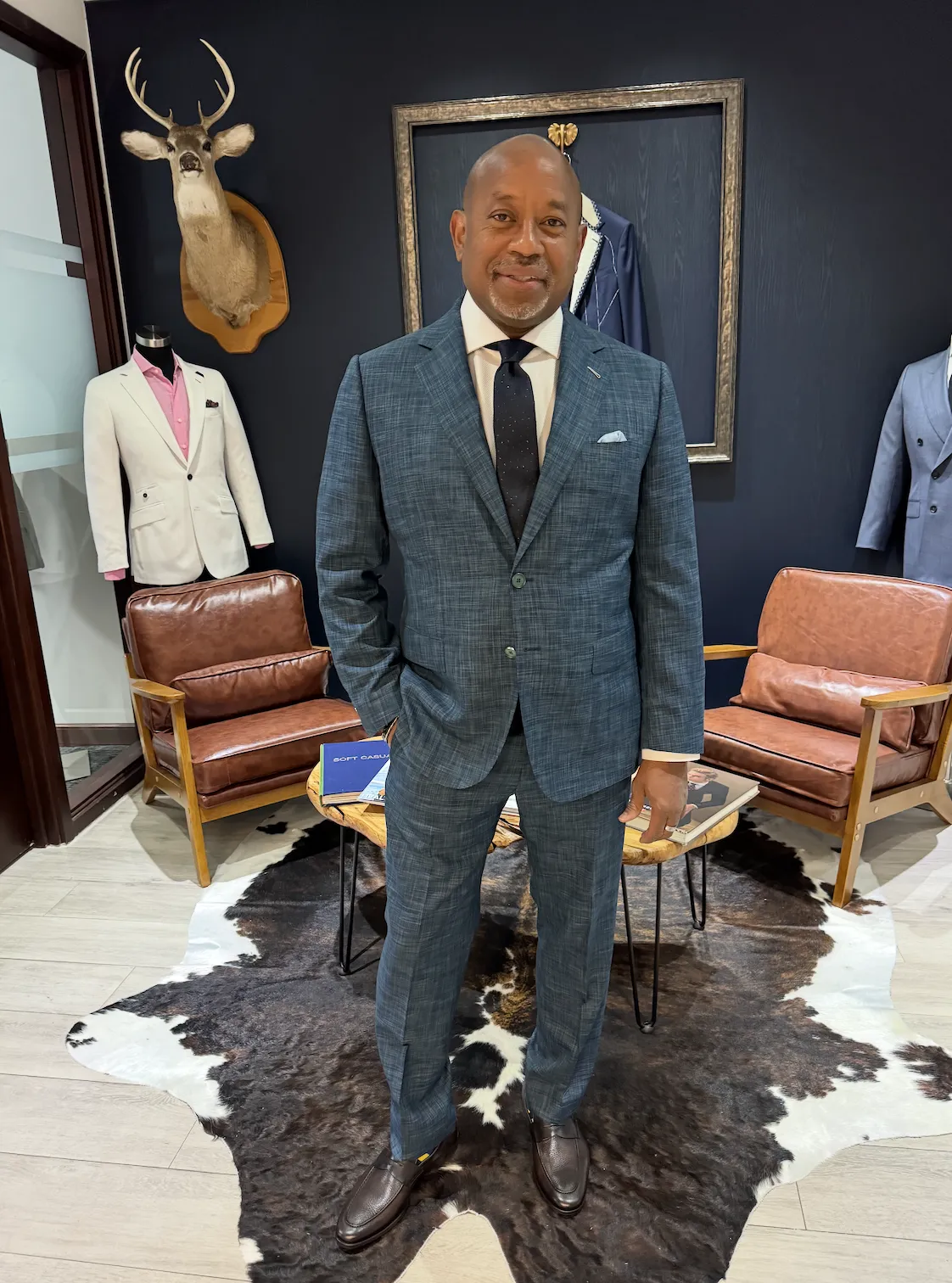
The photograph above shows the effect in practice: gently sloping, rounded shoulders with modest structure, photographed in a tailoring showroom. This is the look most men picture when they say they want a jacket that does not look stiff.
Padded Shoulders: Structure, Authority and Shape
A padded shoulder does exactly what it says. A fuller layer of wadding is placed under the shoulder seam, extending the line of the jacket past the point of your own shoulder bone and creating a firmer, straighter, more defined silhouette. Padding is not one thing but a range. A lightly padded shoulder adds definition while staying close to the body. A firmly padded shoulder builds a visible shelf, squaring the wearer out and making the chest read broader.
Why would anyone choose this in 2026? Because it still does things nothing else can. Padding corrects asymmetry, squaring up a sloping shoulder so the jacket hangs level. It adds visual mass to a narrow frame, which is why some men find a structured jacket makes them look stronger and more anchored. And in the most formal and traditional business settings, a defined shoulder remains the default visual language of authority. The power suits of the 1980s took padding to its extreme, which we covered in our guide to 80s power dressing, but the lesson of that era is not that padding is a costume. It is that proportion is everything. A moderate, well cut padded shoulder looks timeless. An exaggerated one looks like a period costume.
The tradeoffs are the mirror image of the natural shoulder. Padding adds warmth, which in South Florida is a genuine consideration rather than a theoretical one. A firm shoulder line can look heavy on a man with a large build, who usually benefits from structure that streamlines rather than structure that adds bulk. And an extended shoulder that reaches past your own shoulder by too much creates a break in the sleeve line that reads as a jacket that does not fit.
Roped Shoulders: The Sleevehead With a Signature
Roping is technically separate from padding, which is why it confuses so many buyers. A roped shoulder refers to the sleevehead: the tailor deliberately gathers the fabric where the sleeve joins the body, creating a raised ridge along the top of the sleeve. The result is a visible kick at the seam, a small Alpine silhouette along the shoulder line. The classic reference is the Neapolitan spalla camicia tradition taken to its most theatrical, and the look is strongly associated with Italian tailoring.
Visually, roping adds interest and craft to the top of the jacket. It catches light along the seam, it emphasizes the roundness of the shoulder, and it signals handwork, because a pronounced roped sleevehead is not something a machine pattern replicates gracefully. Men who love roped shoulders tend to love them, the same way some men love patch pockets or swelled edges. It is a signature, not a correction.
The honest caveats: roping draws the eye upward, which can make a very broad man read broader. It sits most naturally on a shoulder with some softness in the padding, because a firm built-up shoulder combined with a heavy rope can look overbuilt. And like any strong visual signature, it should be chosen because you want the look, not because a salesperson called it a mark of quality. A roped sleevehead is a style. It is not a certificate.

The image above shows the structured end of the spectrum in wear: a clean, defined shoulder line with a subtly raised sleevehead, photographed in a conference room setting where this kind of structure reads naturally.
How the Three Styles Compare Side by Side
- Silhouette: a natural shoulder follows your body; a padded shoulder extends and squares it; roping adds a raised ridge along the sleevehead on top of either of the other two.
- Correction: padding corrects sloping or uneven shoulders; a natural shoulder honestly shows what is there; roping corrects nothing and is purely expressive.
- Formality: structured shoulders still dominate the most formal boardrooms and black tie; soft shoulders own smart casual and warm weather dress.
- Climate: in Miami, less building inside the shoulder keeps a jacket comfortable in heat and humidity, which is why soft and lightly padded shoulders dominate our showroom orders.
- Body relationship: soft shoulders flatter fuller and athletic builds by avoiding added bulk; moderate padding flatters narrow or sloping frames by adding a defined line.
- Altering later: padding can sometimes be reduced and minor shoulder adjustments made, but the shoulder is the hardest area of a jacket to alter, so decide it before the cloth is cut.
Notice that roping appears in the comparison as a modifier rather than a third equal option. That is the correct mental model. You are really choosing how much structure you want in the shoulder, and then separately deciding whether you want the sleevehead expressed flat or roped. A flat sleevehead on a lightly padded shoulder gives you the soft American look. A roped sleevehead on a similar shoulder gives you the Neapolitan look. A firm shoulder with a flat sleevehead gives you a classic English business silhouette. Combinations, not categories, are how tailors actually work.
Which Shoulder Suits Your Life and Your Climate
Start with your own body, because the shoulder is the one place where the jacket cannot lie for you. Stand in front of a mirror in a fitted t shirt and look at the line from your neck to the point of your shoulder. If the line is fairly level, every option is open to you and you can choose purely on style. If your shoulders slope, some light padding will help the jacket hang evenly. If one shoulder sits lower than the other, tell your tailor at the measuring stage, because that asymmetry, which is ordinary and nothing to be self conscious about, is exactly what shoulder padding was invented to address.
Next, think about where the jacket will actually be worn. A litigator who stands in court all day has a different need than a creative director at a waterfront dinner. The courtroom rewards the anchored, level, quietly authoritative look of a structured shoulder. The dinner rewards the relaxed ease of a soft one. Most men need at least one jacket that leans each way, which is a good argument for deciding the shoulder deliberately on every order instead of defaulting to whatever the house pattern does.
Climate is the third factor, and in South Florida it is not a footnote. Heavy padding and a firm built up shoulder trap warmth across the upper back and reduce airflow through the jacket. A lighter shoulder keeps the garment cooler and lets the chest drape more openly. This is the same logic that makes half lined or unlined bodies, which we covered in our guide to jacket lining, so popular here. The two choices compound: a lightly padded, lightly lined jacket is the closest thing a tailored garment gets to air conditioning.
Choosing the Shoulder on a Custom Order
Ready to wear forces you to accept whatever shoulder the brand's pattern uses, which is why so many men own jackets whose shoulders look borrowed from someone else's body. A custom order removes that constraint, but only if you use the freedom. The right sequence is to come to the consultation knowing three things: how structured you want the shoulder, whether you want the sleevehead roped or flat, and what asymmetries the tailor needs to know about. The fabric and the color can be revised with a conversation. The shoulder is decided when the pattern is drafted.
At Bespoke By CB, shoulder expression is discussed as a standard part of the consultation at our Brickell showroom, not an upsell at the end. Christian will look at your shoulder line, your posture and the way you carry your arms before recommending structure, because a recommendation made without seeing how you stand is a guess. Men ordering a first jacket can see the difference directly: we can hold a structured shoulder and a soft shoulder against the same body and let the mirror decide, which is faster and more honest than any vocabulary. If you are still weighing the broader question of whether custom is worth it for you at all, our first custom suit guide covers the whole journey from consultation to delivery.
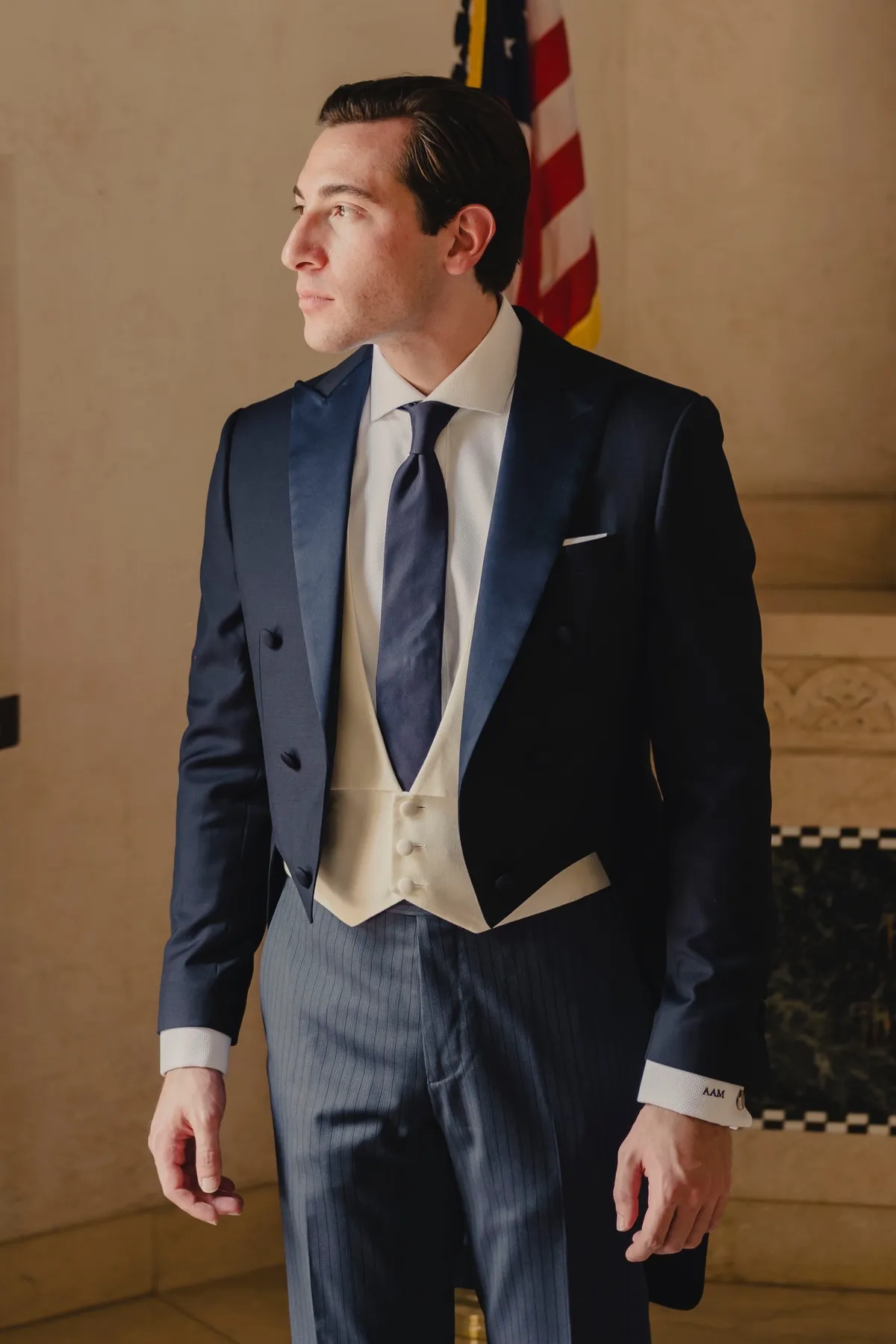
The formal end of the spectrum, shown above, illustrates why structure survives in eveningwear: a firm shoulder line with a raised sleevehead reads as occasion, and photographs with a crispness that softness cannot fully match under formal lighting.
How Bespoke By CB Helps You Get the Shoulder Right
Bespoke By CB is a custom clothing house in Miami, and the shoulder is exactly the kind of decision we exist to get right. Every jacket we cut is drafted from your own measurements, never adjusted from a stock block, so the shoulder seam can sit where your shoulder actually is rather than where a factory pattern assumes it should be. That includes recording your shoulder slope on both sides, discussing how much padding you want and why, and expressing the sleevehead the way you ask for it, flat and clean or roped for character. Custom suits start at $1,299 and sport coats at $1,199, with a lead time of four to six weeks.
Because we work with Miami clients every day, we also bring climate judgment to the conversation. Most of the jackets we cut for South Florida wear end up with a light touch at the shoulder, paired with an open lining and a cloth chosen for heat. Men who still need a structured shoulder for courtrooms, boardrooms and formal evenings get one cut honestly, with the padding placed to correct their actual posture rather than to copy a silhouette from a magazine. Both are right answers. The wrong answer is the shoulder nobody chose.
If you want to see how different shoulder expressions sit on you, book a consultation at the Brickell showroom or a fitting appointment anywhere in Miami-Dade, Broward or Palm Beach. You can also book an appointment online, or explore our custom suits and sport coats and blazers before your visit. The consultation is where the shoulder conversation belongs, and it is a conversation worth having in person.
Frequently Asked Questions
Are padded shoulders out of style?
No, but exaggerated ones are. The 1980s took padding to costume extremes and gave it a reputation it has spent decades living down. A moderate, well proportioned padded shoulder remains a standard in formal and traditional business dress, and it is still the best structural tool for correcting sloping or uneven shoulders. What has changed is the default, not the validity: a lighter touch is now the everyday expectation in most settings.
Does a roped shoulder mean the jacket is higher quality?
A roped sleevehead is a style choice, not a quality certificate. It does usually indicate handwork at the sleevehead, because a pronounced rope is shaped rather than pressed, and it is strongly associated with Neapolitan tailoring. But a beautifully made jacket can have a flat sleevehead, and roping on a poorly cut jacket is still a poorly cut jacket. Choose it because you like how it looks, not as a proxy for construction.
Can a tailor change the shoulder of an existing jacket?
Only within limits. Reducing light padding is sometimes possible, and minor adjustments to the shoulder seam can be made, but the shoulder is the most labor intensive area of a jacket to alter and often costs nearly as much as remaking. Extending a shoulder or adding significant structure to a jacket that was cut without it is usually not practical. This is exactly why the shoulder should be decided before a custom jacket is cut, not discovered afterward.
Which shoulder is best in hot weather like Miami?
Lighter structure is almost always the more comfortable choice in heat and humidity. Less padding at the shoulder keeps the jacket more open across the upper back and chest, and it pairs naturally with the half lined or unlined bodies and lightweight open weave cloths that suit South Florida. That said, a man who needs a structured shoulder for formal occasions should have one; the answer is to reserve it for the right garment rather than to suffer through a soft shoulder that does not fit the occasion.
Should the shoulder be different on a suit versus a sport coat?
Often, yes. A business or formal suit benefits from a cleaner, more defined shoulder, because the occasions it serves reward a crisp silhouette. A sport coat worn open collared in casual settings flatters a softer shoulder, and it is also where a roped sleevehead has the most room to breathe as a signature. Many men end up with structure across their suits and softness across their sport coats, and that split is a sensible use of a custom wardrobe rather than an inconsistency.
Can a natural shoulder still look formal enough for a wedding?
Yes, when the rest of the garment is chosen for the occasion. Formality is produced by the whole composition: cloth, color, lapel treatment and accessories matter as much as the shoulder. A dark, well pressed jacket with a natural shoulder and a formal shirt and tie reads dressed for an evening wedding, particularly in a warm weather destination where guests dress lighter by convention. If the invitation calls for black tie, a firmer shoulder or a dinner jacket is the safer visual match.
How do I know if my shoulders slope?
Look at a straight on photo or mirror of yourself in a close fitting shirt and follow the line from the base of your neck outward. If the line drops noticeably toward the point of your shoulder, you have some slope, and if one side drops differently than the other, that asymmetry is common and worth mentioning. A tailor measures this directly during a custom consultation, which is a better method than self diagnosis, but knowing in advance helps you understand why a given amount of padding is recommended.
Do Bespoke By CB jackets come with a standard shoulder, or is it always my choice?
Shoulder expression is chosen with you during the consultation rather than imposed. We will measure your shoulder slope and posture, show you how different amounts of structure sit on your frame, and recommend based on where you will wear the garment and how it must perform in Miami conditions. Most South Florida clients choose a light shoulder, but the decision is documented on your order and your pattern stays on file, so every future jacket can repeat it or revise it deliberately.