The Hidden Layer That Changes Everything
Ask a man what distinguishes one jacket from another and he will usually point at the outside: the color, the cloth, the lapels, the buttons. But turn the jacket inside out and you find the layer that quietly shapes how it feels, how it hangs, how long it lasts and how comfortable you are on a warm afternoon. The lining is the hidden half of the garment, and its coverage is one of the most practical decisions you will make when ordering anything from a business suit to a summer blazer.
Broadly, there are three approaches. A fully lined jacket carries a complete interior layer of fabric from shoulders to hem and down each sleeve. A half lined jacket covers the upper back and stops there, leaving the lower back and sometimes the sides bare. An unlined jacket, sometimes called a skeleton or naked jacket, has no body lining at all beyond the finishing needed to hold the garment together, though it may still carry sleeve lining or raw-finished seams by design.
Each approach trades comfort against structure, and breathability against durability. In a city like Miami, where an eleven oclock meeting can leave the wrong jacket feeling like a sauna, those tradeoffs are not theoretical. This guide from Bespoke By CB explains what lining coverage actually does, how the three options differ in everyday wear, and how to choose the right one for each garment and each season of your life.
What Lining Coverage Actually Does
A lining is not just decoration sewn inside the jacket. It performs four distinct jobs at once, and changing how much lining a jacket carries changes all four.
First, it protects the outer cloth. The lining sits between your body, your shirt and the shell fabric. It absorbs friction, absorbs perspiration and keeps skin oils away from the outer cloth. A jacket worn regularly without lining puts that wear directly onto the shell fabric, which matters more for loosely woven, delicate or dry clean only materials than it does for sturdy wools.
Second, it shapes how the jacket hangs. A full lining adds a smooth, even tension across the interior of the garment. It helps the cloth drape in clean lines, hides the structure inside the chest and shoulders and keeps the interior layers from imprinting on the exterior. Remove that layer and the jacket behaves differently: the cloth itself is now responsible for the drape, which can look relaxed and soft or simply rumpled depending on the fabric.
Third, it hides the interior construction. Canvas, shoulder padding, seam allowances, pocket bags and reinforcement tape all live inside a jacket. Lining conceals them. An unlined jacket instead celebrates them, with careful finishing, taped seams and often hand sewn edges doing the work a lining would do invisibly, which is why a well made unlined jacket can represent more labor, not less.
Fourth, it affects breathability. Lining is a second layer of fabric between you and the air. Less lining means more direct airflow through the garment and faster evaporation from the cloth itself, which is why half and unlined constructions feel so different on humid days. The same jacket silhouette can feel like two different garments depending on what is inside it.
Fully Lined Jackets: Structure, Protection and Longevity
The fully lined jacket is the traditional default for business suits, dinner jackets and formal tailoring, and it remains the right choice for a lot of wardrobes. In a full construction, a smooth lining fabric, classically a fine bemberg or silk like rayon, covers the entire interior: the back panel, the sides around to the front facing, and each sleeve from shoulder to cuff.
The benefits are easy to feel. The jacket slides smoothly over your shirt instead of catching, which makes it comfortable to put on and take off and pleasant for long days of movement. The shell cloth is protected from direct contact with your body, so the garment tends to age gracefully and hold up over years of regular rotation. The interior structure stays hidden, so the chest, lapel and shoulder present a clean, uninterrupted surface. And the extra layer adds a touch of weight that helps the cloth fall in clean vertical lines, which is especially valuable in lighter, springier fabrics that would otherwise puff or crease without it.
The cost is heat. A fully lined jacket in heavy tweed on a Miami sidewalk in July is an endurance event. The lining traps a layer of warm air, slows evaporation and keeps the jacket feeling substantial long after you wish it would not. For winter suiting, evening tailoring and garments built for daily professional wear, that is an acceptable price, and in colder climates it is a benefit. In South Florida, it argues for reserving full lining for the garments that genuinely need it.
When to choose full lining
- A business suit you will wear year after year, where durability and clean drape matter most.
- Evening and formal jackets, including tuxedos and dinner jackets, where you want every interior layer concealed.
- Jackets in delicate or loosely woven cloth that needs a backing layer to hang cleanly.
- Cool season garments where the added warmth works in your favor.
Half Lined Jackets: The Middle Path
The half lined jacket answers the comfort question without giving up all of the protection. In this construction, the lining covers the upper portion of the jacket, typically the back from the shoulders down to roughly the middle of the shoulder blades, and stops there. Below that line the interior is open, showing finished seams and taped edges, and the lower half of the garment breathes directly.
The result is a jacket that behaves like a lined garment where it matters most. The upper back is where a jacket contacts your body most and where perspiration concentrates, so a half lining keeps that vulnerable zone covered. The shoulder and chest area keeps its smooth glide over shirts. Meanwhile the lower back and sides, which do the most work when you sit, walk and reach, stay open to moving air.
The half lining also preserves much of the visual interior of a tailored garment. When you hang the jacket on the back of a chair, which you should never do, but everyone does, the exposed upper interior still looks like a finished piece of tailoring. Only the deliberately pared lower half reveals the construction, and in a well made jacket that construction is finished cleanly enough to be part of the design.
For most men in warm climates, the half lined jacket is the sensible default for seasonal suiting and blazers. It is the workhorse answer to the Miami question: enough lining to protect the jacket and keep it easy to wear, not so much that you spend August avoiding outer layers. When Bespoke By CB builds warm weather jackets for Miami clients, half lining is one of the most requested specifications for exactly this reason.

When to choose half lining
- Spring and summer blazers and suits in wool, linen blends or fresco type cloths.
- Business jackets worn in warm offices and climates where you still want a lined feel across the shoulders.
- Garments where breathability matters but you still want protection where your back meets the chair.
- Jackets where you want the drape benefits of lining through the upper body without the full heat cost.
Unlined Jackets: Maximum Air, Deliberate Exposure
The unlined jacket takes the logic to its end point: no body lining at all. What you see inside the jacket is the jacket itself, the shell cloth, the seams, the finishing. In a quality garment those seams are taped or bound, the edges are cleaned by hand and the interior is as considered as the exterior. The unlined jacket is not a cheaper product. Done properly it can demand more from the maker, because there is nowhere to hide.
The payoff is the most breathable tailored garment possible. With nothing between your shirt and the outer cloth, air moves through the jacket almost as if you were wearing a shirt jacket. On a humid evening, a linen or open weave wool jacket with no lining is as close to air conditioning as tailored clothing gets. The jacket also becomes lighter overall, which many men find more comfortable for travel, driving and long evenings on your feet.
The tradeoffs deserve honesty. Without lining, the shell cloth carries the drape alone, so an unlined jacket looks softer, rounder and less sculpted than its fully lined counterpart. Fine cloths can show seam lines, and a dark shirt or dark pocket contents can telegraph through a light outer fabric. The cloth also wears from the inside out, directly against your body and shirt, so an unlined jacket generally wants a more forgiving rotation than a fully lined suit that lives in weekly service. And some tailoring details simply require a lined canvas to sit properly, so not every silhouette translates to the unlined format.
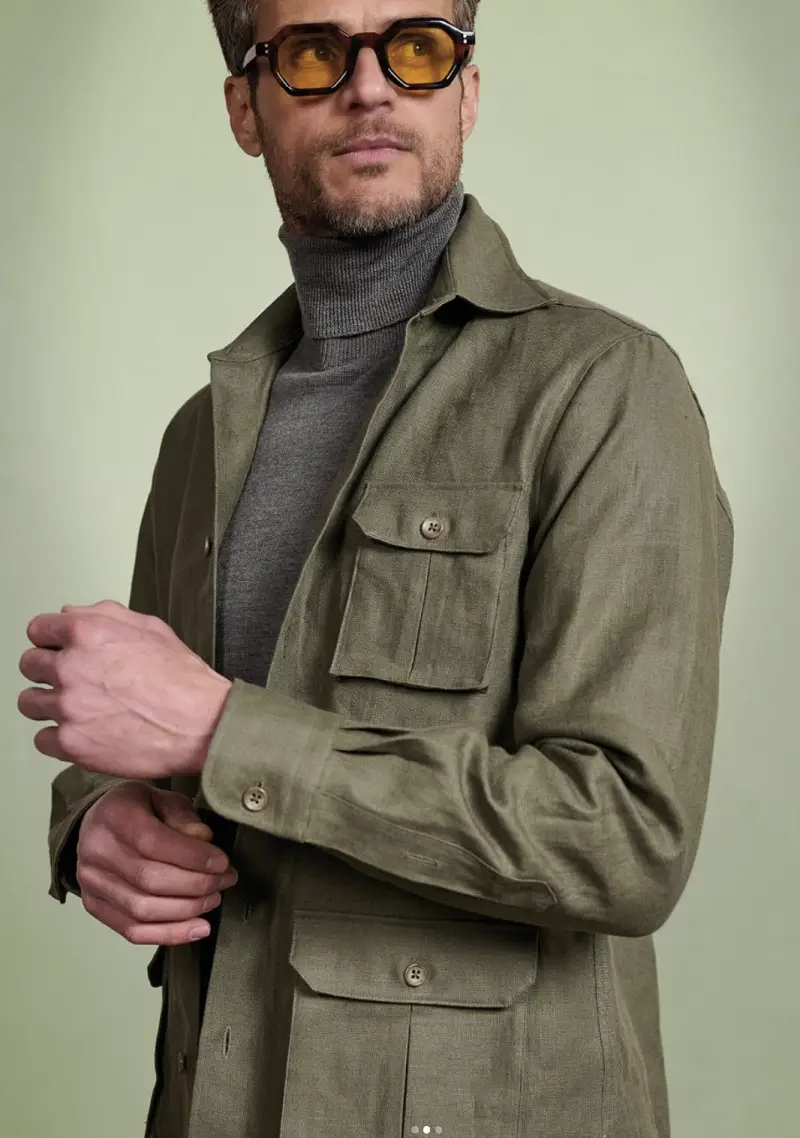
That is why unlined construction pairs naturally with relaxed garment types: linen and cotton blazers, shirt jackets, unstructured travel coats and the kinds of soft tailored pieces that dominate warm weather wardrobes. An unlined formal suit, by contrast, fights its own purpose. The formality of the silhouette wants the clean interior that lining provides.
When to go unlined
- Linen, cotton and open weave summer jackets where airflow is the priority.
- Soft, casual blazers and shirt jackets where you want the relaxed look, not a structured silhouette.
- Travel and evening garments in warm climates where lightness beats formality.
- Occasion specific pieces you rotate deliberately, rather than a daily workhorse suit.
Sleeves Deserve Their Own Decision
Body lining and sleeve lining are separate choices, and they should be made separately. The sleeve is the part of the jacket you move most, and an unlined sleeve drags against the shirt sleeve underneath every time you bend your arm. Over a long day that friction becomes noticeable, and over years it wears the cloth.
Most makers, including Bespoke By CB, generally recommend keeping the sleeves lined even on a half lined or unlined body. A lined sleeve lets your arm slide smoothly, helps the sleeve keep its shape and protects the interior from abrasion. The comfort difference between a lined and unlined sleeve is negligible on a warm day, because the sleeve is not where heat builds up; the back and torso are. Keeping sleeves lined captures almost all of the breathability benefit of an unlined body while avoiding its most annoying cost.
The exception is the fully unlined summer jacket built to be as light as possible, where the maker finishes the sleeve seams cleanly and accepts the tradeoff deliberately. It is a legitimate choice for a casual piece. It is rarely the right choice for a jacket you plan to wear often.
Lining Coverage Is Not the Same as Canvas or Shoulder Structure
A common and understandable confusion: men assume that an unlined jacket is an unstructured one, and that a fully lined jacket must be heavily structured. The two systems are independent, and mixing them up leads to bad decisions.
Structure comes from the chest canvas, the shoulder construction and the padding, if any, that shapes the silhouette. Lining coverage is simply how much of the interior is covered with a separate layer of fabric. A jacket can be fully canvassed, with a soft natural shoulder and no body lining, and it will still have a tailored, structured look. Conversely, a jacket can be fully lined while remaining soft shouldered and relaxed.
So when you choose half or no lining, you are choosing breathability and interior finish, not a silhouette. If you want a jacket that looks crisp and formal but stays cool, ask for a firmer canvas and lighter shoulder with half lining rather than removing lining and hoping the shape follows. A Bespoke By CB consultant can walk through how these layers interact before you commit, and can point to finished garments in the showroom that demonstrate each combination.
The same separation applies to decorative interior linings. A bold patterned lining in school colors, a map, a family monogram or a sports reference is a chance to express personality inside a garment that looks conservative outside, but it is an expression applied to whatever coverage you choose. You can have a fun patterned upper back in a half lined jacket just as easily as in a fully lined one. If the decorative lining idea appeals to you, the details of what is possible live on the custom linings page.
How Fabric Choice Interacts with Lining
Lining coverage never exists in isolation. The shell fabric changes the math.
Linen and cotton. These breathable naturals pair beautifully with half or no lining. Their texture and slight rumple are part of their character, so the softer drape of an unlined or half lined interior suits them. An unlined linen blazer is a warm weather classic for good reason. The main caution is that fine, light colored linen can show interior seam lines and shirt color, so consider the opacity of the cloth before choosing full exposure.
Tropical and high twist wools. Fresco type open weave wools are engineered for airflow through the cloth itself. They breathe well even fully lined, and half lining makes them close to ideal for Miami business wear. For a deeper look at warm weather cloth in general, the linen suit guide on this site covers how these fabrics behave in practice.
Flannel and heavier tweed. These fabrics want the support and clean hang that lining provides, and they are cool climate cloths anyway, so full lining is usually correct. A half lined flannel is not impossible but it rarely serves the garment.
Delicate and loosely woven luxury cloths. Cashmere blends, high twist silks and some super fine wools benefit from the protective layer a full lining provides, because the shell is easier to abrade and more expensive to replace. The durability argument for lining is strongest exactly where the cloth is most precious.
If fabric selection feels like the harder question, start with the fabric guide that walks through choosing suit cloth, then let the lining decision follow from it. The two answers should agree with each other.
A Practical Wardrobe Strategy for Warm Climate Men
Most men do not need one lining answer. They need the right answer per garment, and a coherent wardrobe has room for all three.
- Your primary business suit or two: fully lined. These garments work hardest, need the durability and should present a clean, structured interior when the jacket comes off at the desk.
- Your warm season suit or blazer: half lined, in a high twist wool or linen blend. This is the daily driver through South Florida springs, summers and honestly most of the calendar.
- Your casual jacket rotation: one unlined linen or cotton piece for evenings, weekends, travel and the months when any extra layer feels like too much.
- Formal wear: fully lined, without exception. Black tie and formal business tailoring want every interior concealed and every drape advantage working.
That spread keeps you comfortable across seasons without sacrificing the look each occasion demands. It also spreads wear sensibly: the lined workhorses carry the heaviest rotation, the unlined pieces stay occasional by design.
Caring for Half Lined and Unlined Jackets
Less lining means the interior needs a little more attention, and none of it is difficult.
Always hang the jacket on a proper hanger with shape, and give it breathing room in the closet so air can move through the cloth. Steam rather than press the shell when it creases, and let the jacket rest at least a day between wears so perspiration can dry out of the fibers. For unlined jackets, wear an undershirt if you tend to perspire heavily, since your skin contacts the shell cloth directly through a shirt. Dry clean sparingly, only when the jacket genuinely needs it, because the process is hard on natural fibers and harder still on the interior finishing of an unlined garment.
Watch the interior seams of half lined and unlined jackets over the years. Taped and bound seams are durable, but catching a seam on a chair back or a rough wall is easier when the interior is exposed. A small interior repair caught early is trivial. For broader garment care, the suit care guide on this site covers dry cleaning frequency and long term storage in more depth.
How Bespoke By CB Approaches Lining Decisions
Lining coverage is a perfect example of why custom tailoring beats a defaulted garment. Off the rack, the lining was decided by a product team designing for an average customer in an unknown climate, and you inherited it without ever being asked. When you order a made to measure or bespoke jacket from Bespoke By CB, the lining becomes a conversation: what climate you dress for, how often you will wear the garment, what you will pair it with and how much interior expression you want.
That conversation happens as part of every custom suit, blazer and tuxedo consultation at Bespoke By CB. Your consultant can show you finished jackets in each construction side by side, so you can feel the weight difference, see how the drape changes and judge the interior finishing before deciding. If you want the breathability of half lining for your Miami office wardrobe, that is a standard specification. If you want a fully lined suit for a season of weddings and interviews, that is equally standard. And if you want an unlined summer jacket with clean finished seams and sleeves that still glide, that is exactly the kind of detail custom construction exists to deliver.
The starting point is the same as every Bespoke By CB garment: fabric first, then fit, then the construction details that make the garment yours. Custom suits start at $1,299, custom shirts start at $240, and the lining specification is part of designing the piece, not an upsell after the fact. The easiest first step is to book a consultation, bring the jacket you currently reach for most, and compare it against the alternatives in person. You will likely find the lining was the detail you never knew you were missing.
Frequently Asked Questions
Is an unlined jacket better for hot weather?
Generally yes, for the garment itself. Removing the body lining lets air pass directly through the shell cloth and speeds evaporation, so an unlined jacket feels noticeably cooler than the same jacket fully lined. The qualifier is that the fabric still matters more than the lining: an unlined jacket in a heavy, closed weave cloth will still run warmer than a half lined jacket in open weave wool or linen. Choose the cloth and the coverage together rather than expecting the lining alone to solve the heat.
Does a half lined jacket look unfinished?
Not when it is made properly. In a well constructed half lined jacket, the exposed lower interior is deliberately finished with taped or bound seams and clean edges, so the openness reads as a design choice rather than a shortcut. The lined upper back also preserves the finished look where it is most visible. Cheaper garments can use minimal lining to save cost, which is a different thing, and the finishing quality is usually obvious on inspection.
Can a fully lined jacket be made cooler?
Yes, within limits. Choosing a lighter weight shell fabric, an open weave cloth and a breathable lining material such as bemberg all reduce heat retention while keeping full coverage. A high twist wool suit with a light lining is wearable in Miami for months of the year even fully lined. What you cannot do is make a fully lined jacket in heavy cloth feel like an unlined linen one, so for the hottest months the coverage itself is the lever to pull.
Do unlined jackets wear out faster?
They can, because the shell cloth contacts your shirt and skin directly and absorbs the friction a lining would have taken. The practical effect depends on how often you wear the garment and how you care for it. An unlined summer jacket worn occasionally and rested between wears can last for many years. An unlined jacket worn daily through a long summer will age faster than a lined equivalent in the same rotation, which is a good reason to keep unlined pieces as part of a rotation rather than a single daily garment.
Should the sleeves be lined if the body is unlined?
In most cases, yes. Sleeve lining lets your arm slide smoothly over the shirt sleeve, helps the sleeve hold its shape and protects the interior from constant friction when you bend your arms. Because heat builds in the torso rather than the arms, keeping sleeves lined costs almost nothing in comfort and avoids the most annoying drawback of an unlined body. Fully unlined sleeves are a legitimate choice for a deliberately minimal summer jacket, but they are a comfort tradeoff, not an improvement.
Is lining coverage the same thing as a canvassed jacket?
No. Canvas refers to the chest construction that gives a jacket its shape, and it is a separate system from lining, which is the interior fabric coverage. A jacket can be fully canvassed and unlined, giving it a structured look with maximum breathability, or fully lined with a soft, minimal canvas. Removing lining does not remove structure, and keeping lining does not add it. Decide the silhouette you want first, then choose the coverage that fits your climate and use.
Can I get a custom lining pattern with half coverage?
Yes. Decorative linings, including school colors, team patterns, maps and personal motifs, are applied to whatever lining the jacket carries, so a half lined jacket can absolutely include a patterned upper back. The pattern will simply cover less interior area than it would in a fully lined garment. If a bold interior is the main appeal for you, full coverage shows more of it, and half coverage keeps the effect for whoever sees the jacket on a hanger.
Which lining should I choose for a Miami wardrobe?
As a default, half lining for seasonal suits and blazers, full lining for formal wear and your heaviest rotation business suits, and one unlined linen or cotton jacket for the hottest stretch of casual wear. That combination keeps you comfortable year round in South Florida without giving up the structure that business and formal tailoring need. Bespoke By CB builds all three constructions routinely, so the fastest way to decide is to feel finished examples side by side in a consultation.