The Strip of Fabric That Decides Your Shirt's Character
Most men can describe a shirt in a sentence: blue, striped, button down. Almost none can name the strip of reinforced fabric that runs down the front of every button-front shirt they own. That strip is the placket, and it is quietly responsible for how clean the shirt front looks, how well the buttons hold the garment closed, how the shirt behaves under a jacket and how formal the shirt reads from across a room.
The placket is not a single universal part. It comes in several distinct constructions, and choosing among them is one of the small decisions that separates a shirt that is merely wearable from a shirt that is exactly right for its job. A shirt with the wrong placket for the occasion can look either fussy or careless, and no amount of expensive fabric fixes that first impression.
This guide explains the three placket styles that matter: the standard placket with visible buttons, the French placket that hides its hardware beneath a clean fold, and the covered placket that conceals the buttons behind an extra panel of cloth. It covers how each one is built, what it says, where it belongs, and how the choice interacts with fabric, climate and the rest of your wardrobe. If you order custom shirts in Miami, or you are simply tired of not knowing what to ask for, this is the reference to keep.
What a Placket Actually Is
Start with the mechanics. A button-front shirt has two front panels that overlap slightly in the middle of the chest. If you sewed the buttons directly through that overlapping seam, the stress of daily wear would tear the buttonholes out within months. So shirtmakers reinforce the opening with a doubled strip of fabric, folded and stitched to create a stable band on both sides. The left band carries the buttonholes; the right band carries the buttons. Together, those bands are the placket.
Because the placket is folded and stitched, it is also the thickest, most structured part of the shirt front. That has consequences. Under an iron, the placket takes and holds a crease better than the rest of the body. Under a jacket, a bulky placket can press a visible ridge into the shirt front when the jacket is buttoned. Under bright light, the layers of the placket read differently from the single-layer body around them. Every placket style is, at bottom, a different answer to the same question: how much structure do you want at the center of your chest, and how visible should it be?
It is worth saying plainly what a placket is not. It is not the collar, whose shapes are covered in our shirt collar guide. It is not the cuff, whose barrel and French constructions are a separate decision at the wrist. And it is not a sign of quality on its own. A beautifully made casual shirt may have the most visible placket of all, and a cheap manufacturer can sew a covered placket badly. The placket is a design choice, and the craft shows in how cleanly it is finished.
The Standard Placket: The Workhorse
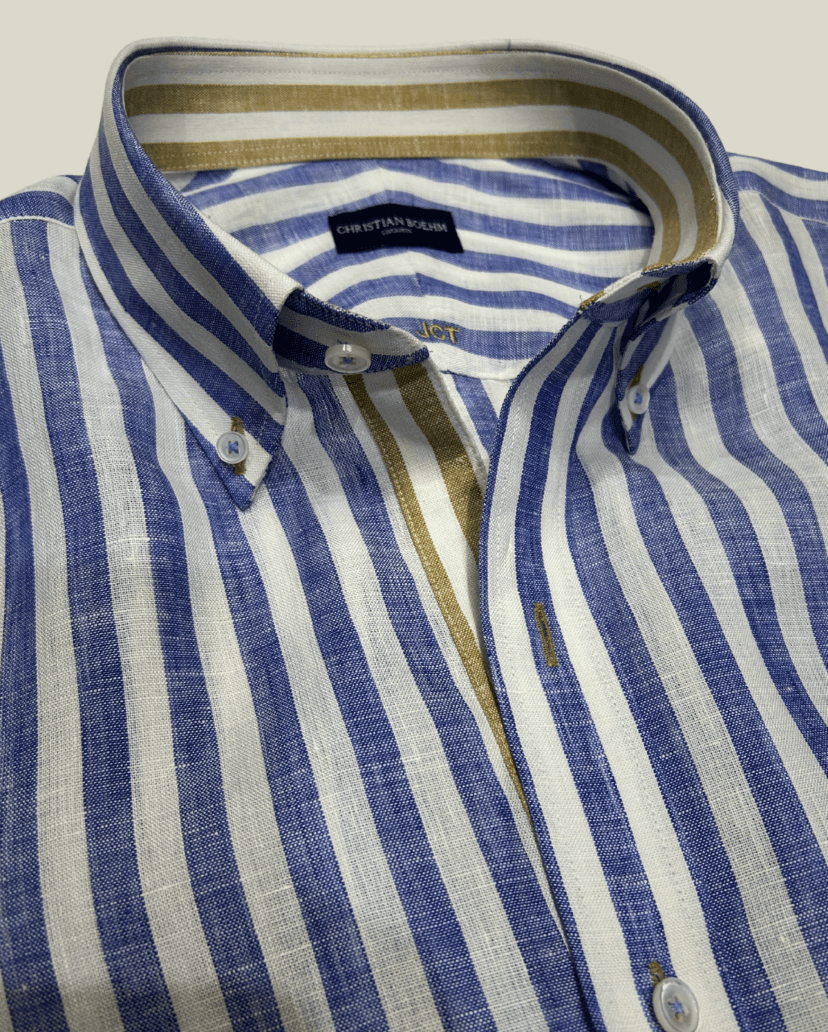
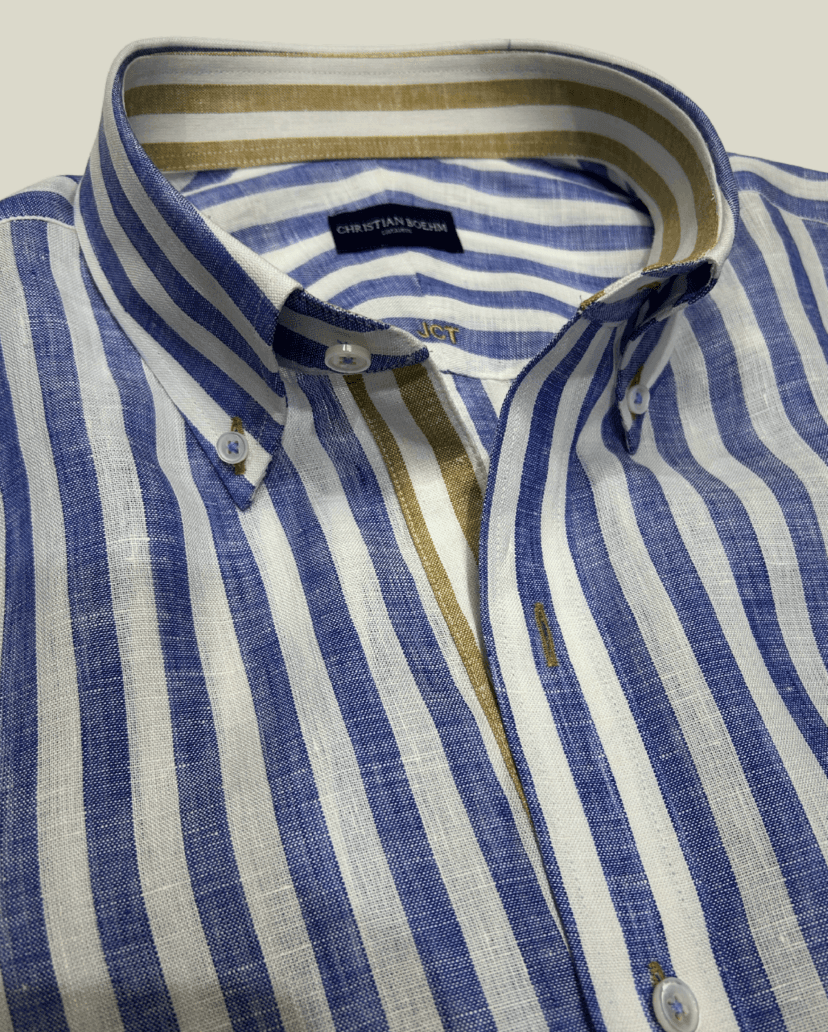
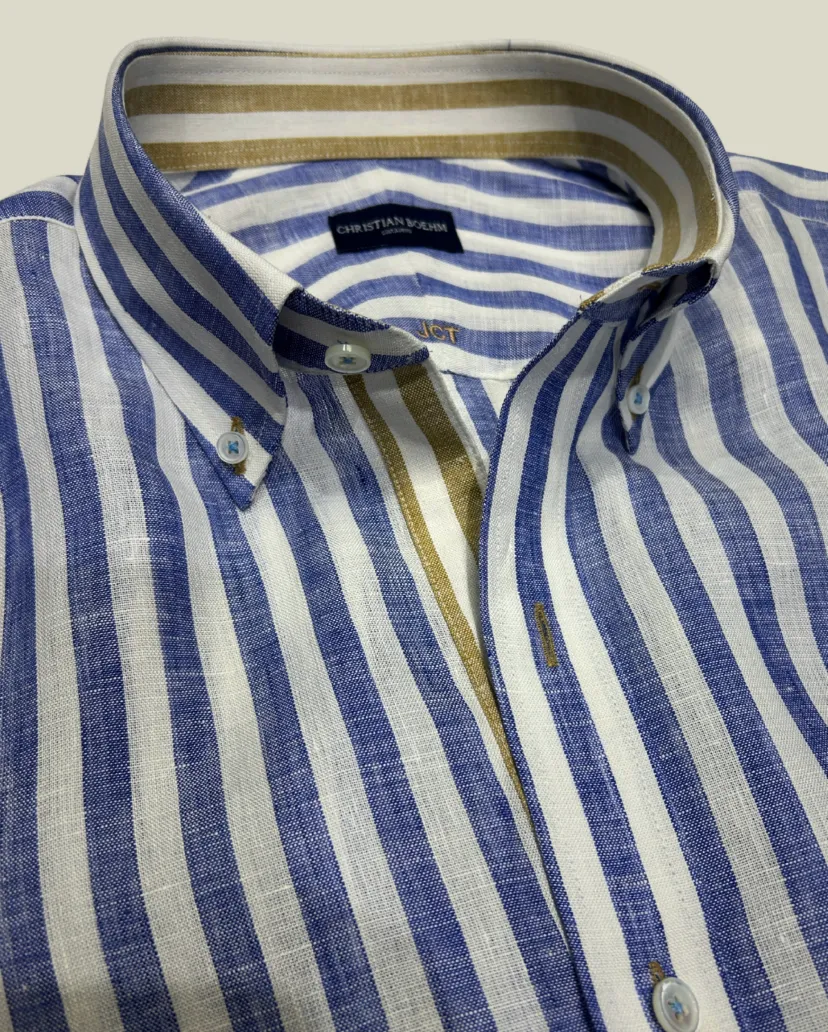
The standard placket, sometimes called the American placket, is the construction you picture when you picture a dress shirt. A folded band runs down each side of the front opening. The buttonholes sit in the left band with the buttons visible on the right, and an additional row of stitching anchors the band to the shirt body. The result is a crisp, slightly raised strip down the chest with its hardware on full display.
That visible stitching is the whole personality of the standard placket. It gives the shirt front a bit of texture and a bit of engineering on show: buttons, buttonholes, a raised seam, all lined up like a well kept tool. On an oxford cloth button down, that honest, utilitarian look is exactly the point. The standard placket is why a classic oxford reads as sturdy and approachable rather than precious.
The standard placket is also the most durable and most practical of the three. The doubled band is stiff enough to keep the buttonholes from distorting over years of laundering, the buttons are easy to fasten because they sit on a stable platform, and repairs are simple because everything is accessible. When a shirt has to survive a heavy workweek, a packed travel schedule or a Miami commute that alternates between a blazing sidewalk and a freezing office, this is the placket that takes the abuse best.
Where the Standard Placket Fits
- Business shirts: With a point or spread collar and a solid or subtly striped fabric, it is a completely normal choice for ordinary office wear.
- Oxford and casual button downs: The standard placket is the traditional partner to a button down collar and belongs in that context.
- Textured fabrics: Oxford, twill, flannel and linen weaves carry a visible placket naturally; the placket disappears into the texture rather than fighting it.
Where It Reads as Too Casual
The one place the standard placket can feel out of its depth is the most formal end of the spectrum. Under a tuxedo, a row of visible plastic or mother of pearl buttons down a pleated or bib front competes with the stud set and the bow tie for attention. Formal shirts solve this with their own conventions, including the stud closures covered in our tuxedo shirt guide. The lesson is not that the standard placket is inferior; it is that visible hardware is a casual-to-business signal, and formalwear prefers hardware that hides.
A note on gapping: because the standard placket is a band of stiffer fabric, a shirt cut too slim across the chest will pull at the middle buttons and open a visible gap between the plackets. That is a fit problem, not a placket problem, and it is fixed by drafting the shirt from your real measurements rather than a nominal size. Our custom dress shirt fit guide covers the measurement side in detail.
The French Placket: The Clean Minimalist
The French placket, also called a seamless or hidden placket, is the standard placket's elegant cousin. The construction folds the front opening inward so that the stitching that holds the placket is hidden inside the fold. On the finished shirt you see no raised band and no topstitching at the front, only a clean vertical seam with the buttons sewn directly onto the single-layer front. The hardware is still visible, but the architecture beneath it is not.
The effect is a smoother, quieter shirt front. The eye slides down the chest without interruption, which makes the French placket especially good at showing off a beautiful fabric: a fine herringbone, a lustrous two ply poplin, a subtle self stripe. When there is no topstitched band to stop the eye, the cloth itself becomes the ornament. The same logic applies to patterned fabrics, where a clean placket lets stripes or checks flow across the front with less visual interruption.
There are real trade-offs. A French placket is less stiff than a standard one, so the front opening gets slightly less internal support, and the hidden fold is more demanding to sew well: a crooked seam or an uneven fold is impossible to hide because there is no decorative stitching to disguise it. On very lightweight or soft fabrics the front can look slightly less crisp, and heavy duty wear favors the sturdier standard band. This is the placket of the man who wants his shirt to whisper rather than announce.
Where the French Placket Shines
- Business and dress shirts: Paired with a spread collar in a fine poplin or twill, it is the natural choice for a polished professional shirt.
- Evening and smarter occasions: The clean front suits dinners, client entertaining and evening events where a standard placket would read as one notch too utilitarian.
- Beautiful fabrics: Any cloth where you want the weave and finish to be the story.
A Clarification That Saves Embarrassment
Do not confuse the French placket with the French cuff, because the two have nothing to do with each other. A French cuff is a doubled cuff that folds back on itself and closes with cufflinks rather than buttons, a wrist construction explained alongside barrel cuffs in our cufflinks guide. The French placket is a front construction. You can order any combination of the two: a French placket with barrel cuffs, a standard placket with French cuffs, or both French together for the sleekest possible formal-leaning shirt. The word French in each case simply signals a certain pared back, Gallic sense of refinement, not a shared mechanism.
The Covered Placket: Buttons Vanish Entirely
The covered placket takes concealment one step further. Instead of sewing the buttons onto the visible front, the shirtmaker builds an extra flap of fabric that folds over the button row and closes the shirt behind it. From the outside you see a single clean panel running down the chest. The buttons and buttonholes exist, but they live permanently out of sight beneath the flap, and the shirt is fastened by slipping the buttons through their holes beneath the covered fold.
The result is the most uninterrupted shirt front possible. No buttons, no visible buttonholes, no stitching story, just cloth. On a well pressed shirt, the covered placket reads almost like a pullover from a few steps away, and it creates a distinctly formal, almost sculptural calm at the center of the outfit.
That formality is both its strength and its limit. A covered placket on an oxford button down would look odd, like a tuxedo shirt lost on a weekend. It belongs at the dressy end: evening shirts, formal shirts worn with dark suits, and shirts intended to evoke black tie's sense of concealed hardware. The covered placket is the front construction most closely related to the bib fronts and stud closures of true formal shirting, and it carries a whiff of that world wherever it goes.
Practically, the covered placket is the least convenient of the three. Fastening buttons you cannot see takes practice, the extra flap adds a layer of cloth at the chest, and the fold needs careful pressing to sit flat rather than bowing open. On a humid Miami evening, a covered placket in a heavy fabric can feel like one layer too many, which is one reason it is most at home in lightweight formal shirtings and in evening contexts where the shirt is worn under a jacket rather than against the afternoon sun.
It also makes a statement, and that should be a conscious one. Wear a covered placket to a Saturday barbecue and you will look like you lost a bet with your own closet. Wear one with a midnight navy dinner suit at a wedding reception and the choice explains itself. The covered placket is not better than the others; it is more specific.
Comparing the Three Side by Side
- Visibility of hardware: Standard shows buttons and topstitching. French shows buttons on a clean, seam-only front. Covered hides everything behind a flap.
- Formality range: Standard spans casual to business. French spans business to dressy evening. Covered is dressy to formal, full stop.
- Structure and durability: Standard is the stiffest and hardiest. French trades a little stiffness for smoothness. Covered adds a layer of cloth and needs the most careful pressing.
- Ease of wear: Standard is the easiest to fasten and launder flat. French is nearly identical in daily use. Covered is the most fiddly.
- Fabric pairing: Standard loves texture. French loves fine, smooth cloth. Covered loves lightweight formal shirting where the extra layer never becomes heavy.
Notice that none of these comparisons crowns a winner. The right placket depends on the shirt's job, the cloth it is cut from and the context it will be worn in. A well planned wardrobe uses all three where each is appropriate, which is precisely the kind of decision a custom shirt process makes easy and a store rack never lets you make at all.
Plackets and the Rest of the Shirt
No placket decision happens in isolation. It interacts with the collar, the cuff, the fabric and the fit, and a shirt that gets one detail dramatically wrong can look off even when every other detail is right.
Collar. A soft button down collar belongs with the honest visibility of a standard placket. A crisp cutaway or spread collar pairs naturally with the French placket's clean front, and the dressier the collar, the better a covered placket can look beneath it. If you are unsure, match the placket's formality to the collar's: they should tell the same story.
Cuff. The wrist should agree with the chest. A covered placket with rough casual barrel cuffs sewn with heavy thread is a mixed message, while a French placket with neat barrel cuffs is a perfectly coherent business shirt. French cuffs push the whole shirt dressier, so treat them as a signal when you choose the front. The point is coherence, not a rulebook.
Fabric. Texture hides plackets; smoothness reveals them. On a brushed flannel, the difference between a standard and a French placket barely registers. On a lustrous white poplin, it is the first thing a knowledgeable eye notices. Choose the placket with the cloth in hand whenever you can.
Fit. Whatever the placket, a shirt that pulls across the chest will gap at the front opening, and the placket style controls how bad that looks. A standard placket gaps along its visible stitch line; a covered placket can bow open at the fold, which is harder to ignore. The fix is the same in every case: a pattern drafted from your actual measurements, so the front closes without strain in your postures, both standing and seated.
Climate, Care and the Miami Wardrobe
South Florida gives the placket decision a practical edge. In a climate where a shirt can dampen on the walk from the car, every layer of structure at the chest is worth thinking about.
The standard placket's stiff double band holds a press well, which matters if you launder frequently, but it is also the warmest construction at the front. The French placket removes the topstitched band and gives you slightly less cloth layered over the sternum, a small but real comfort difference on a humid afternoon. The covered placket adds a full extra flap over the button row, so in heavy cloth it is the hottest of the three; in a fine, airy formal shirting it stays perfectly reasonable, which is exactly how it should be worn here.
Care differences are modest but real. A standard placket irons easily along its stitched bands and forgives a hurried press. A French placket rewards a careful pass with the iron so the hidden fold sits perfectly flat, and steam from the inside helps the front hold its clean line. A covered placket demands the most attention: press the flap flat and give the fold a definite crease, or the front will rumple at the exact center of your outfit. If your shirts go through a professional laundry, all three survive well; if you press at home, be honest with yourself about which constructions you will keep looking sharp.
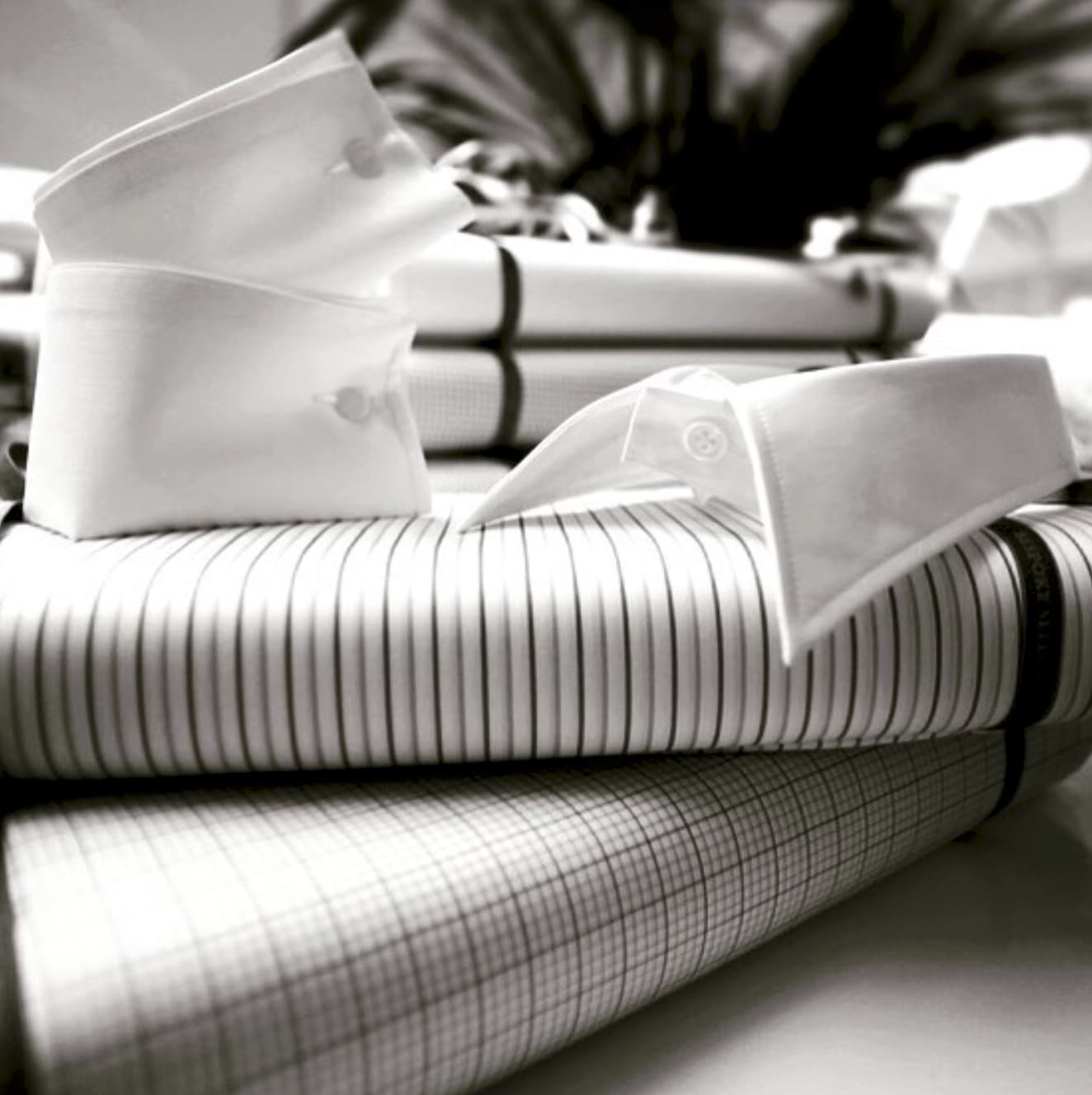
For Miami wardrobes, a sensible spread is this: standard plackets on your oxford and textured casual shirts, French plackets on your fine business poplins and twills, and one or two covered plackets saved for evening shirts in the lightest formal cloths you own. That mix covers a year of South Florida occasions without ever putting the wrong front on the wrong shirt.
Building the Shirt Around a Placket Choice
A placket is also a useful organizing principle for a shirt wardrobe. Instead of thinking only in colors and fabrics, think in jobs: the shirt that works hardest, the shirt that impresses, the shirt that disappears under black tie's cousins. Each job points to a placket before it points to anything else.
Start with the workhorse. If you could own only one shirt, it would be a standard placket in a mid blue or white, because that front construction is the one that can attend a Monday meeting and a Saturday lunch without anyone registering a change. Add the elegant shirt second: a French placket in a fine two ply, in white or a pale stripe, for dinners and presentations where smoothness is the message. Add the formal shirt last: a covered placket in a lightweight cloth, ready for the evening invitations that arrive without much notice. Three plackets, three registers, and suddenly every other shirt you consider has a clear role to fill rather than piling up as a variation of the same idea.
This is also where custom shirts earn their keep. A rack shirt hands you whichever placket the designer chose, and your only vote is to buy it or leave it. A made-to-order shirt asks you the question directly: what front do you want, with what collar, in what cloth? The Bespoke By CB custom shirt process includes monogramming and custom placket styles among the details you define, so the placket becomes a choice you make on purpose rather than a default you inherit. Custom shirts from Bespoke By CB start at $240, and the difference between a drawer of defaults and a drawer of decisions is something you feel every single morning.
If you have never chosen a placket before, start with the shirt you wear most and ask what its front is doing. Most men discover their favorite shirt is a favorite partly because its placket suits its job, and that discovering it was a choice they could have made all along is the quiet pleasure of learning the vocabulary.
How Bespoke By CB Helps
Placket selection is exactly the kind of detail the Bespoke By CB consultation exists to sort out. When you sit down with Bespoke By CB in Miami, the conversation begins with how you actually dress: where your shirts go in a given week, what jackets they live under, what your laundry routine looks like and how much South Florida heat they have to survive. Those answers turn the placket question from a trivia item into a plan.
Because every Bespoke By CB shirt is drafted from your measurements and built from cloths we select with you, the placket choice gets made with the fabric in hand and the collar already chosen. A French front on the fine poplin you fell for at the appointment, a standard band on the oxford that will carry your weekdays, a covered front for the evening shirt that finishes the order: each one leaves the workshop as a complete thought rather than an assembly of disconnected options.
If you are rebuilding a wardrobe in the Miami heat or dressing for a season of weddings and events, Bespoke By CB can map your calendar to your closet the same way. Book a consultation, feel the fabrics, and choose a front for every shirt that needs one. It is the kind of small decision that ends up defining how put together you look, and Bespoke By CB makes it easy to get it right every time.
Frequently Asked Questions
What is a placket on a dress shirt?
The placket is the reinforced strip of fabric that runs down the front opening of a button-front shirt. It consists of two folded bands: the left band holds the buttonholes and the right band holds the buttons. Its job is structural, keeping the front opening stable so the buttons hold the shirt closed without the fabric tearing or distorting at the point of highest stress. Beyond that structural role, the placket is also a major visual element, since its construction determines how clean, textured or formal the center of the shirt front looks.
What is the difference between a standard and a French placket?
A standard placket is a folded band stitched visibly to the shirt front, with a row of topstitching holding it in place and the buttons sewn onto the band. A French placket folds the front opening inward so the anchoring stitching is hidden, leaving a clean vertical seam with the buttons sewn directly onto the single-layer front. The standard placket is stiffer, more durable and reads casual to business; the French placket is smoother and more refined, showing off fine fabrics and suiting dressier shirts.
Which placket is most formal?
The covered placket is the most formal of the three, because concealed hardware has long been a signal of eveningwear and formal shirting, where stud closures replace visible buttons entirely. The French placket is the next most formal, since its clean front suits business dress and evening occasions. The standard placket is the most casual, though it is entirely appropriate for ordinary business wear; it simply belongs less and less as the occasion climbs toward black tie, where formal shirt conventions take over.
Does a French placket mean the shirt has French cuffs?
No, and the two are unrelated. The French placket is a front construction that hides the placket's stitching beneath a folded seam, while French cuffs are a cuff construction that folds back on itself and closes with cufflinks instead of buttons. They share the word French only in the sense of suggesting a certain refined, pared back style. A shirt can have any combination of front and cuff: French placket with barrel cuffs is a common and perfectly coherent business shirt.
Can I choose the placket style on a custom shirt?
Yes, and that is one of the best reasons to order custom at all. Bespoke By CB's custom shirt process includes monogramming and custom placket styles among the details you choose, alongside collar, cuff, fabric and fit. Rather than inheriting whatever front a rack shirt was designed with, you decide whether each shirt gets a standard, French or covered placket based on the cloth in hand and the occasions the shirt is being built for. Custom shirts start at $240.
Which placket is best for hot, humid weather like Miami?
The French placket is a small comfort winner in serious heat, because it removes the topstitched double band at the chest and layers slightly less cloth over the sternum than a standard placket. A covered placket adds an extra flap over the button row, making it the warmest construction in heavy cloth, though in a fine, lightweight formal shirting the difference is negligible. For most Miami wardrobes, the practical answer is standard plackets on textured casual shirts, French plackets on business shirtings, and covered plackets reserved for lightweight evening shirts.
Why does my shirt gap between the buttons at the front?
Front gapping is almost always a fit issue rather than a placket issue. When a shirt is cut too slim across the chest, the placket bands pull apart at the middle buttons and open a visible gap. The fix is a pattern drafted from your actual measurements with enough ease through the chest to close cleanly standing and seated, which is exactly what a custom shirt pattern is built to do. A stiffer standard placket will hold its shape through the pull better than a soft French placket, but no placket style cures a shirt that is simply cut too tight.
Are covered plackets harder to care for?
Somewhat, yes. The covered flap needs a deliberate press so the fold sits flat with a clean crease; a hurried iron can leave the flap bowing open, which shows at the very center of your outfit. The concealed buttons also take a little practice to fasten by feel. Standard plackets are the easiest to press and most forgiving of home laundering, with French plackets falling in between, needing a careful pass so the hidden fold stays crisp. If your shirts go to a professional laundry, all three constructions hold up well.
Can I wear a covered placket shirt with a regular suit?
You can, but know what you are signaling. A covered placket reads distinctly dressy, so it sits most naturally under a dark, polished suit at evening events, dinners and formal-leaning occasions. Under a business suit in a daytime office it will look intentional but formal, and under a casual jacket or on a weekend it will feel out of place, much like wearing a necktie to a barbecue. Match the placket to the shirt's job and it always looks considered rather than accidental.