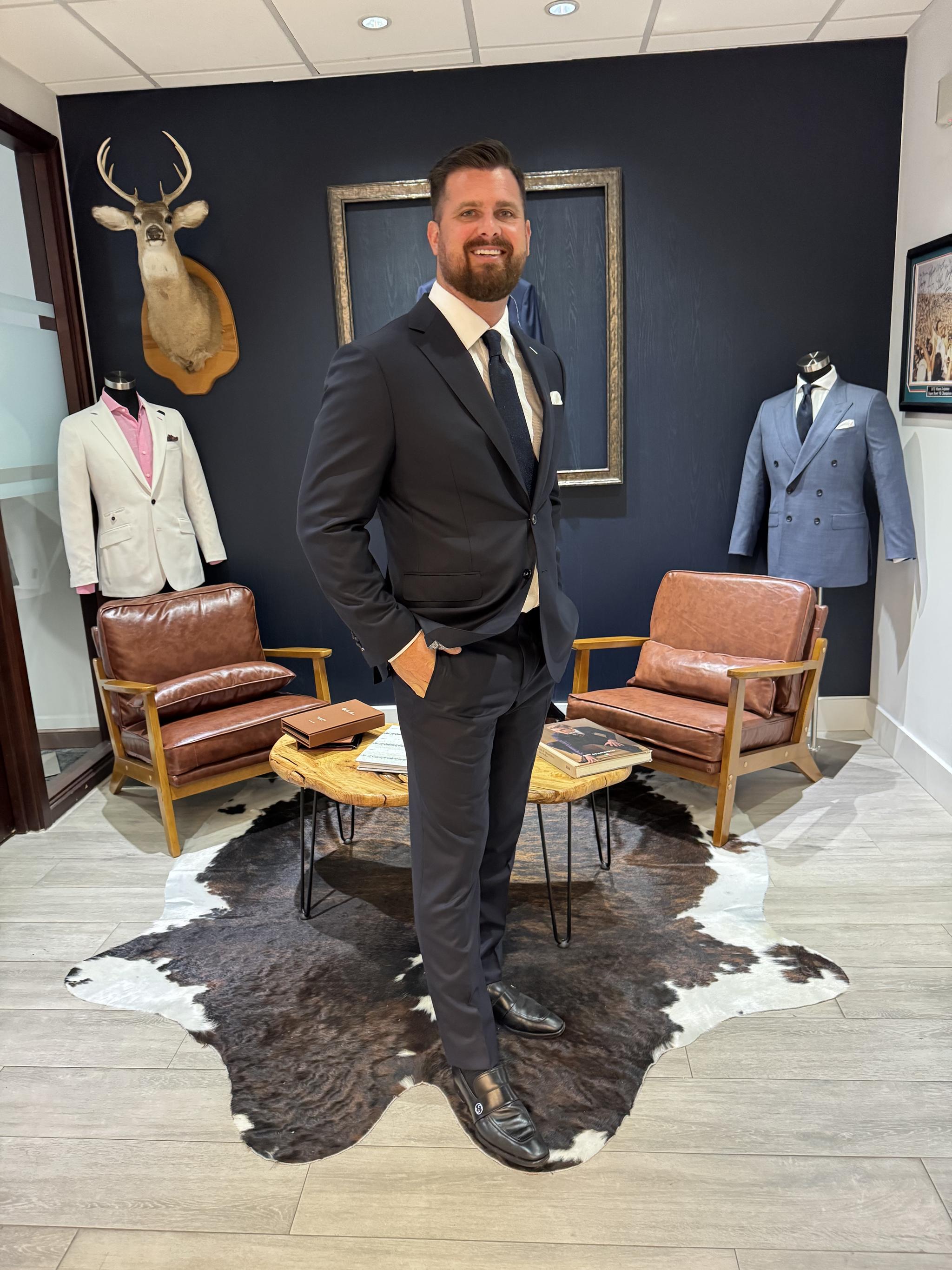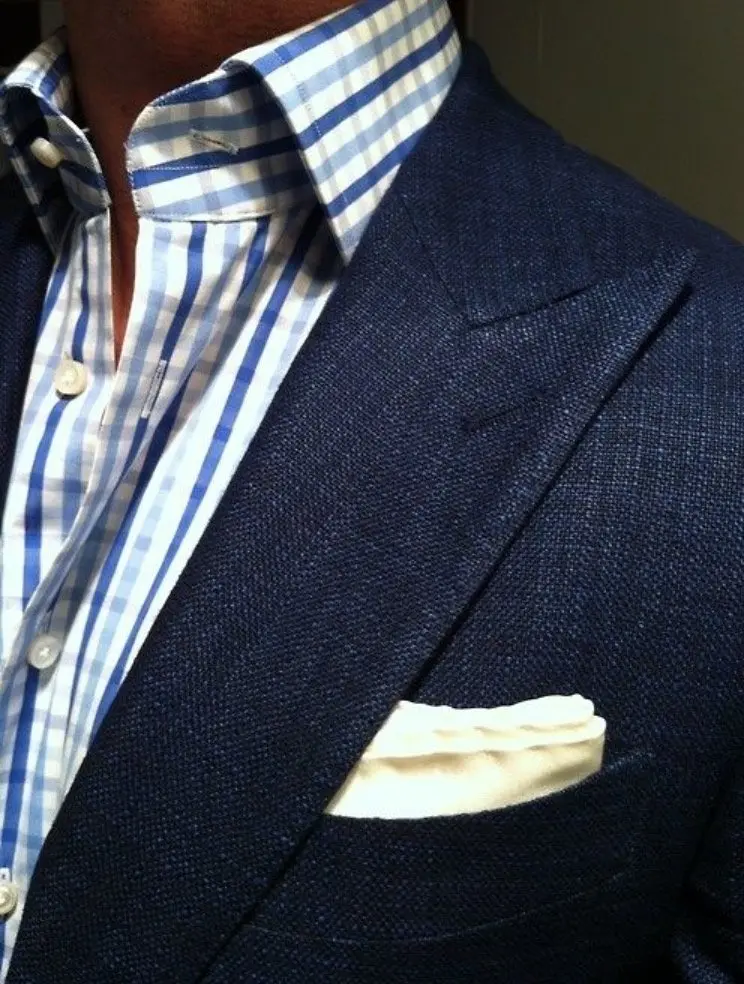
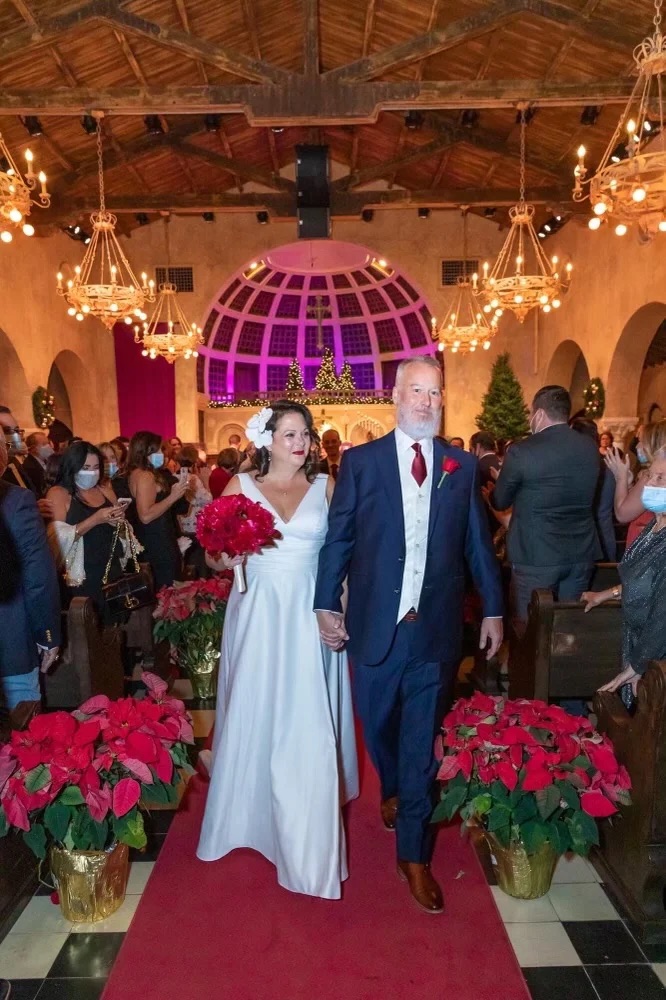
You can buy the right suit in the right fabric and still wear it wrong in the ten seconds it takes to button it. Jacket buttoning is one of those details that separates a man who understands tailoring from a man who simply owns a suit. The good news: the rules are short, logical and easy to practice. This guide from Bespoke By CB walks through one-, two- and three-button single-breasted jackets, the elegant three roll two style, what changes when you sit down, and the exceptions that make the rules worth knowing rather than memorizing.
Why Jacket Buttoning Matters at All
A suit jacket is not a cardigan. It is a shaped garment, cut with a specific front balance, and the buttons are part of the architecture, not just a closure. When you fasten a jacket correctly, the front pulls in toward your waist, the lapels roll cleanly against your chest, and the silhouette narrows where a tailored jacket is supposed to narrow. When you fasten it incorrectly, the jacket bunches at the button, the collar lifts off your neck, the lapels splay open, and the whole garment looks a half-size too big. Nothing about the suit has changed. Only the buttoning has.
There is also a structural reason behind the rules. Fastening the bottom button of a traditional single-breasted jacket pulls the front panel down and shortens the visual drape over your hips. The jacket was drafted on the assumption that this button stays open. Tailors cut extra length and suppression into the front precisely so the coat hangs correctly from the fastened point above it. That is why buttoning "everything" does not look more formal. It looks like a misunderstanding of how the garment was made.
The exception is double-breasted jackets, which follow their own logic and stay buttoned while standing. We cover that briefly below, and our double-breasted suit style guide handles it in depth.
The Two-Button Jacket: The Modern Default
Most suits made today, and certainly most suits we make at Bespoke By CB, carry two front buttons. The rule is simple: fasten the top button, leave the bottom one alone, always. The top button sits at or just below your natural waist, which is the point the jacket was designed to close. The lower button exists to set the visual rhythm of the front and to shape the closure line when the coat is cut, not to be used.
Button placement, called the button stance, changes the perceived balance of the whole jacket. A slightly higher stance lengthens the visible lapel line and reads more formal and Italian; a lower stance shows more shirt and tie and reads more relaxed. When clients try on custom patterns at our Miami showroom, the stance is one of the first things we adjust, because the same two-button rule flatters completely different torsos depending on where that top button lands relative to your waist and chest.
Practical habits for a two-button jacket:
- Standing: top button fastened, bottom button open.
- Sitting: unfasten the button as you sit, refasten it when you stand.
- Moving around: fasten when you want a composed, formal line; open the jacket whenever comfort or airflow matters more, especially in South Florida heat.
- Never fasten only the bottom button. It inverts the balance of the front and looks like an error.
The One-Button Jacket: Minimal and Bold
A single-button jacket closes exactly where it closes, usually a bit lower than a two-button stance. There is nothing to decide, which is precisely its appeal. One button gives a long, sweeping front and a deep V opening for the shirt and tie, which is why the style shows up so often on dinner jackets and tuxedos. Our tuxedo clients gravitate to it for exactly this reason: the unbroken lapel-to-closure line photographs beautifully and keeps black tie minimal.
Because the stance sits low, a one-button jacket shows more shirt. That makes the shirt and waistline more important than they would be under a higher closure, so proportion matters. If you are commissioning a one-button coat for the first time, have the lapel width, shirt collar and trouser rise considered together; the buttoning rules are trivial here, but the balance is not. One button, fastened when standing, unfastened when seated. That is the entire manual.
The Three-Button Jacket: Traditional, With a Catch
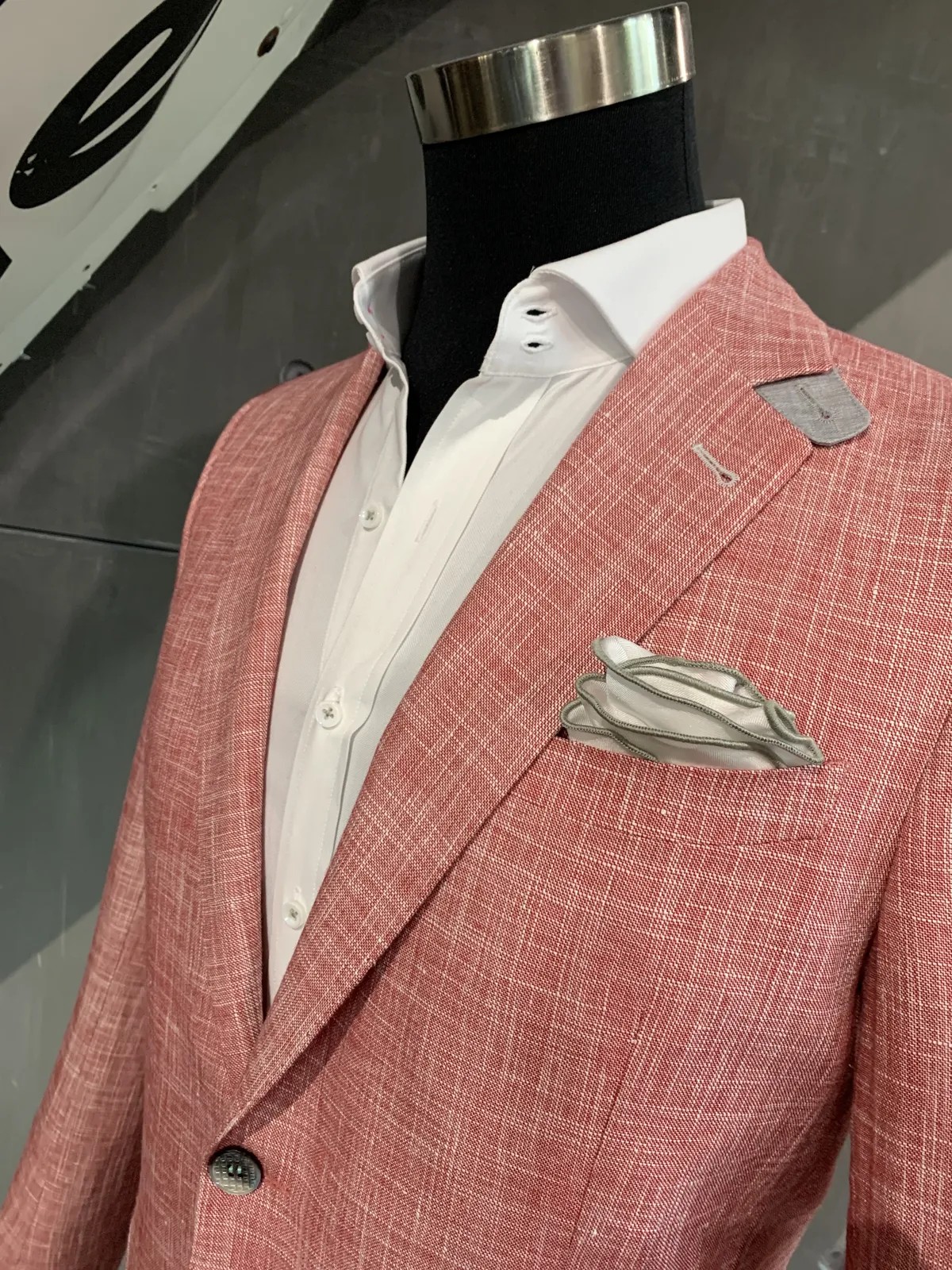
On a classic three-button jacket, the traditional guidance is "sometimes, always, never": fasten the middle button, optionally fasten the top, and never fasten the bottom. The middle button is the working closure, the anchor the coat was drafted around. The top button is optional because lapel roll and collar height determine whether it can close cleanly without dragging the lapels out of shape. The bottom button stays open for the same structural reason as on a two-button coat.
Three-button jackets read more traditional and more covered than two-button designs. They suit men who like a higher, more buttoned-up look, taller men who want the longer lapel line, and vintage-inspired wardrobes; if you respond to the mid-century look, our 1960s style guide shows how that era wore higher stances with confidence. What a three-button jacket is not is more formal than a two-button one. Formality comes from cloth, finish and setting, not from button count.
Three Roll Two: The Style That Pretends to Be Three Buttons
The most elegant variation on the three-button jacket, and one we love building at Bespoke By CB, is the three roll two. The jacket is cut with three buttons, but the lapel is pressed and canvassed so it rolls softly past the top button, effectively hiding it in the fold of the lapel. Worn correctly, the coat presents as a soft two-button design: the middle button closes, the bottom stays open, and the top button is a tailoring flourish rather than a working closure.
What makes the three roll two special is the roll itself. It requires a softer canvas and careful pressing so the lapel keeps its shape through wear, which is exactly the kind of construction detail custom tailoring exists to deliver. Off the rack, a three roll two either rolls beautifully for about a season or was never really rolled at all. A custom one holds its roll because it was shaped for your chest and finished by hand.
One caution: do not force the top button on a three roll two. If the roll is correct, the top button should sit naturally inside the lapel fold; fastening it flattens the roll and creases the lapel. If the button sits flat and reachable instead of inside the roll, the jacket is a standard three-button design, which is fine too. Just know which one you are wearing.
Lapel Roll Versus Button Count
Here is a distinction that clears up most confusion: the number of buttons sewn on a jacket is not the same as the number of buttons the jacket is designed to close with. The lapel roll determines the answer. On a three roll two, three buttons exist and two matter. On a high-stance two-button jacket with a long roll, the top button may sit almost at your sternum, while a Neapolitan soft-shouldered coat might carry two buttons that are meant to be worn almost always open. When in doubt, look at where the lapel naturally creases when the coat hangs on you. The button sitting at or just under that crease is the working closure. Everything below it stays open; everything above it belongs to the roll.
This is also why trying on a jacket matters more than reading about it. Two men of the same height can need different working stances because of chest depth, posture and shoulder slope. When we draft a custom pattern, we fit the roll and stance to your body rather than asking you to adapt to a factory stance.
Sitting, Standing and Common Sense
The single most practical rule in this entire guide: unfasten your jacket when you sit, fasten it when you stand. When you sit with the jacket buttoned, the front pulls, the shoulders hitch upward and the cloth strains across your midsection. Over time, repeatedly sitting while buttoned stresses the button, the thread and the front canvas. Unfastening takes one second and preserves the garment.
When you stand again, refasten before you start moving. The moment of rising is exactly when an open jacket flaps and looks most disheveled; a quick hand to the button restores the line before anyone sees you at full height. If you are standing for long stretches at a reception, a gallery or a Miami outdoor event, fastening is optional and comfort is a legitimate factor. A correctly fitted jacket looks good open too, which is a point in favor of getting the fit right in the first place.
Double-Breasted and Waistcoats: A Brief Signpost
Double-breasted jackets keep both sides closed while standing because the overlap only hangs correctly when fastened; the interior "jigger" button does most of the work. The classic move is to unbutton only the lower of the front buttons when seated, or to open the jacket fully if the cut allows it. Because closure is structural on a double-breasted coat, never leave it hanging open while standing; it loses its shape instantly. For the full treatment, read our double-breasted suit guide.
Waistcoats follow the same logic as jacket fronts: leave the bottom button of a waistcoat unfastened, always, for the same balance reasons. If you wear a three-piece suit, think of the waistcoat and jacket as two fronts working together, each with its own working closure. Our three-piece suit guide covers that combination in detail.
Exceptions and Context
Style rules earn their keep when you know when to bend them. A few honest exceptions:
- Very casual jackets. Unstructured summer jackets and some linen coats are cut to be worn open all day in heat. Forcing them closed fights the relaxed design.
- Photography. For formal portraits, fasten the working button for the cleanest line; for candid or motion shots, an open jacket often looks more natural. Our headshot outfit guide applies the same thinking to business portraits.
- Miami weather. In South Florida humidity, an open jacket is not sloppy; it is sensible. Fit and press matter more than closure.
- Physical work. If you are presenting, then moving equipment, then presenting again, the button is a tool. Use it when it helps the line, drop it when it constrains.
None of these exceptions weaken the core rules; they confirm that buttoning is about presenting the jacket as it was cut, in the context you are actually standing in.
How Bespoke By CB Can Help
Buttoning rules are easy to memorize. What no rule can give you is a jacket whose stance, lapel roll and front balance were drafted for your body in the first place. At Bespoke By CB, we fit the working button to your natural waist, press the lapel roll to hold its shape, and adjust the stance until the coat flatters you standing, seated and moving. Whether you want a crisp two-button business suit, a three roll two with a soft Neapolitan roll, or a one-button dinner jacket for black tie, we build the front to your build. Custom suits and tuxedos start at $1,299, and every detail, including where your working button sits, is your call. Book a consultation at our Miami showroom or online, and bring the jackets you already own. We will tell you in two minutes which fronts are working with you and which were never cut for you at all.
Frequently Asked Questions
Do you button the bottom button of a suit jacket?
No. On a single-breasted jacket, the bottom button should stay open whether the coat has two or three buttons. The front was drafted assuming that button never closes; fastening it pulls the drape out of balance and strains the closure. Double-breasted jackets and some waistcoat styles are the exception, not the rule.
Which button do you fasten on a two-button suit?
Fasten the top button and leave the bottom open. The top button sits at or near your natural waist, which is where the jacket is designed to close, so the lapels roll cleanly against the chest and the front suppresses at the right point. Fasten it standing and unfasten it when you sit.
What does three roll two mean?
Three roll two describes a jacket cut with three buttons whose top button is hidden inside a soft lapel roll. The coat looks like a relaxed two-button design when worn, with only the middle button fastened. It requires careful canvassing and pressing so the roll holds, which makes it a favorite expression of custom tailoring.
Should you unbutton your jacket when sitting?
Yes. Sitting with a single-breasted jacket buttoned strains the button, thread and front canvas, and it visually pulls the shoulders upward. Unfasten as you sit and refasten the working button as you stand. On a double-breasted jacket, unbutton only the lower front button when seated when the cut allows it.
Is a three-button suit out of style?
No, but it reads more traditional than a two-button design. The three roll two variation in particular is prized by men who enjoy soft, vintage-inspired tailoring. What matters more than button count is the stance, the lapel roll and the fit; a well-cut three-button jacket looks considerably sharper than a poorly fitted two-button one.
Can you wear a suit jacket unbuttoned?
Yes, provided the jacket fits well. An unfastened jacket is appropriate in casual settings, in heat, while walking or whenever comfort matters more than a formal line. Fasten the working button when you want the most composed presentation, such as walking into a meeting, giving a toast or being photographed formally.
Where should the top button of a suit jacket sit?
At or just below your natural waist, which is the narrowest point of your torso and roughly level with your trouser waistband. That placement, called the button stance, lets the front hang correctly from the closure. Because chest depth and posture vary, the right stance for you is a fitting question, which is why custom patterns beat fixed factory stances.
Does buttoning a jacket differently make it more formal?
No. Formality comes from the cloth, the finish and the setting, not from how many buttons you fasten. Closing the bottom button does not add polish; it disrupts the balance the tailor built. Use the working button as designed and let the fabric and fit carry the formality.