Almost every detail of a trouser changes how it looks and feels, and the hem is the one detail people notice last and regret first. A cuff, also called a turn-up, is a band of fabric folded up and sewn at the bottom of the leg. A plain hem, sometimes called a slit hem or bare hem, is a simple finished edge with no fold. The choice between them sounds minor, but it affects the weight at your ankle, the way the cloth falls, the overall proportion of your leg line, and even how formal the finished trouser reads.
This guide walks through what cuffs and plain hems actually do, how each finish interacts with cloth weight and trouser cut, and how to decide between them for business, social and South Florida settings. At Bespoke By CB, hem finish is one of the many construction decisions we make together during a custom trouser consultation, because a detail this small deserves the same attention as the fabric itself. Our custom pants start at $399 and are cut to your measurements in Miami.
What a Trouser Cuff Actually Is
A cuff is made by turning a band of the trouser cloth upward, typically between one and a half and two inches wide on dress trousers, and stitching it in place at the bottom of the leg. The extra fabric adds a small amount of physical weight at the ankle. That weight pulls the trouser leg straighter and keeps it hanging cleanly instead of flapping around the shoe. This is why tailors often describe cuffs as giving a trouser a more weighted, deliberate drape.
Cuffs also change the visual tempo of an outfit. The horizontal band interrupts the vertical line of the leg, which can look relaxed and confident on the right cut, or heavy on the wrong one. Because the folded fabric is visible, a cuff puts a small piece of engineering on display, and on patterned cloth such as a stripe or a subtle check, the pattern is interrupted at the fold in a way that reads as intentional detail.
A common rule of thumb says cuffs pair naturally with pleated trousers. A single forward pleat and a one and three quarter inch cuff come from the same classic tailoring vocabulary, and the two details reinforce each other: the pleat opens over the thigh while the cuff anchors the hem. That said, flat-front trousers can absolutely be finished with cuffs, particularly on heavier cloth where the added weight helps the drape. If you are still deciding between pleats and flat fronts, our pleated vs. flat-front comparison covers that decision in detail.
What a Plain Hem Does
A plain hem is simply the raw edge of the trouser folded once, pressed, and sewn close to the bottom of the leg. There is no added band, no visible fold, and almost no added weight. The result is an uninterrupted vertical line from waist to shoe, which is one reason plain hems dominate formal wear. On a black tie trouser, where the leg is finished with a braid or side stripe, a plain hem keeps the line long and clean; our guide to pinstripe suiting shows the same logic applied to business stripes, where an unbroken stripe reads sharper and more formal.
Plain hems also make a trouser look slightly longer, because nothing interrupts the downward flow of the cloth. On a slim or tapered leg, that continuous line is often the whole point. The plain hem is the default on most tuxedo trousers, most modern slim-fit suits, and nearly all tapered casual trousers.
The tradeoff is weight. Without the band of folded cloth, a lightweight trouser moves more freely around the ankle, and on a very light cloth a plain hem can look lively or even flutter on a windy day. With the right length and a modest break, that is rarely a problem; with too much length, it can look sloppy.

Drape and Cloth Weight: the Real Deciding Factors
The single most honest way to choose between a cuff and a plain hem is to look at the cloth. Heavier cloth, meaning tweeds, flannels, heavier twills and structured wool suitings, benefits from cuffs. The extra fabric adds enough weight to stretch the leg line and keep the hem sitting where it should, which gives the trouser a calm, steady swing when you walk. On a 12 or 14 ounce flannel trouser, a cuff is not decoration; it is working hardware.
Lighter cloth argues for a plain hem. Linen, cotton, lightweight wool and open-weave fabrics are better left unencumbered, since a cuff on very light cloth can look thick and can trap heat around the ankle, which matters a great deal in Miami. A plain hem on a light high-twist wool or a linen trouser keeps the silhouette light and airy, and it presses cleanly after the inevitable humidity wrinkles. Our guide to linen suiting covers caring for exactly these fabrics.
Between the extremes, most mid-weight suitings around 9 to 11 ounces can support either finish comfortably, which is where proportions and personal style take over. When Bespoke By CB helps a client choose cloth from mills like Drago, Guabello or Holland and Sherry, hem finish is discussed alongside the weight, because the two decisions are really one decision about how the finished trouser should hang.
Proportions and Leg Line
Cuffs shorten the visible leg. The horizontal band stops the eye at the ankle, and on a shorter leg or a fuller figure that interruption can make the leg look shorter than it is. The classic response is a taller shoe, a longer rise, or a slightly narrower cuff, but the simplest response is often a plain hem with its uninterrupted line.
Cuffs also widen the bottom of the leg visually. On a heavily tapered or slim trouser, a wide cuff can look like a mismatch, a wide band perched at the end of a narrow leg. The narrower the leg opening, the more a cuff needs to shrink with it. On a fuller cut, including wide-leg trousers and classic pleated cuts, cuffs look completely at home because the proportions already carry visual volume.
Avoid rigid height charts here. Rather than a formula, we look at the whole trouser during a fitting: rise, pleat or flat front, leg width, and finally the hem, all on your actual body. Two men of the same height can carry the same cuff very differently depending on the cut of the jacket and the shoe underneath. If the overall silhouette is slim and close, a plain hem keeps the story consistent; if the silhouette is fuller and classic, cuffs complete the sentence.
Formality: Where Each Finish Belongs
The plain hem owns formal wear. Evening trousers, black tie, and most formal dinner suits are finished plain, because the long unbroken line is considered dressier. If a garment's job is to look as elegant and uninterrupted as possible, the plain hem is the correct tool.
The cuff belongs to tailored daywear and everything below it. Business suits in classic cuts, sport coats with flannel trousers, separates, chinos with real weight, and casual trousers all wear cuffs well. Cuffs read as relaxed, confident and a little more expressive, which is why a cuffed grey flannel trouser with an odd jacket has been a tailoring signature for generations.
There is a wide middle ground where either finish is acceptable. A charcoal business suit, for example, can be finished either way: plain for a sharper, more formal presence, or cuffed for a softer, more personal one. If you wear one suit to everything, a plain hem is the safer all-rounder; if you rotate several trousers, you can afford to express both finishes. Our charcoal suit styling guide and the first custom suit guide cover those versatile scenarios.
Cuffs, Breaks and Length
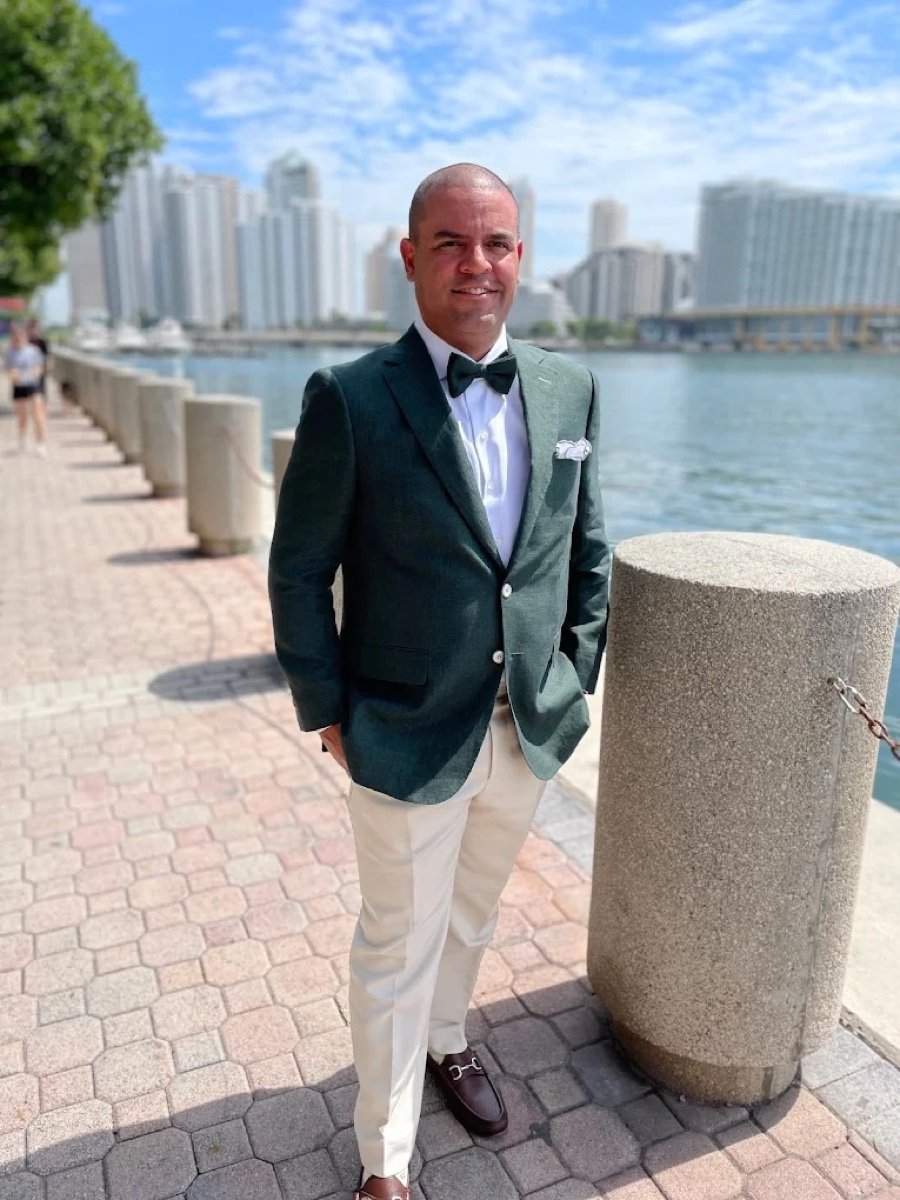
Hem finish and trouser length are inseparable. A cuffed trouser is usually finished with little to no break, so the cuff sits at or just above the top of the shoe, letting the band itself be seen. If you hem a cuffed trouser too long, the cuff disappears into a pile of fabric and you lose the entire benefit.
A plain hem gives you more length options. No break for a modern, sharp line; a slight break for business classic; a full break for a more generous, old-school drape on heavier cloth. Because the plain hem is just an edge, it wears each of those lengths cleanly.
One practical note: a cuff should never be so long that the trouser leg drags on the ground, and never so short that the sock shows while standing. Your fitter will check the length standing, sitting and walking, because a cuff that looks right standing still can behave differently when you sit and the trouser rides up. Bespoke By CB fittings always check hem length in motion for this exact reason.
Practical Durability and Care
A cuff adds a double layer of cloth at the hem, which is the part of a trouser that takes the most abuse from shoes, pavement and weather. On trousers you wear hard, that extra layer genuinely extends the life of the hem edge.
Plain hems are slightly easier to press and keep crisp, and there is no fold to trap dust or lint at the ankle. Both finishes wear well when the cloth is right for the job, but cuffs hold a crease a little more firmly on heavier cloth thanks to the added weight, while plain hems on light cloth press out wrinkles faster.
If you already own a trouser you would like to convert, note that adding a cuff or removing one is a real alteration with real limits, since the fitter needs enough inlay or hem allowance to work with. Our alterations guide explains what tailors can and cannot change on a finished garment.
Miami Considerations
South Florida Wardrobes lean light, and that tilts the local default toward plain hems. In Miami heat, a plain hem on linen, high-twist wool or lightweight cotton feels cooler and looks airier, and it survives humidity and sea air with less fuss. Cuffs still have a place here, mainly on heavier year-round suitings and on the smart-casual trousers you wear in air-conditioned offices and evening dinners.
A reasonable Miami strategy is plain hems on your warm-weather trousers and cuffs reserved for the one or two heavier pieces you keep for travel, winter months or formal day events. Clients who split time between climates often do exactly this: light plain-hem trousers for South Florida and cuffed flannels or tweeds for the northern leg of the calendar. If you are rebuilding a wardrobe for this climate, Bespoke By CB routinely plans hem finish garment by garment as part of a custom wardrobe consultation.
Historical and Style Context
Cuffs entered mainstream menswear in the early twentieth century and became a signature of classic dress through the 1930s, when full-cut trousers with wide turn-ups were standard. The 1950s slimmed everything down, and cuffs shrank or vanished on narrower trousers. The 1960s mod era removed them almost entirely in favor of a plain, narrow hem, while the 1970s brought wide legs and generous cuffs back. Today both finishes are fully accepted, which is why the decision belongs to the cloth and the cut rather than to a trend calendar.
That history is useful for one reason: it shows the pendulum swings. The constant across every decade is the relationship between cuff, cloth weight and leg width. When you understand that relationship, you can wear either finish with conviction. Our vintage styling guide on wearing vintage style today and the 1950s golden era style guide show how those proportions translate to modern custom clothing.
How Bespoke By CB Can Help
Choosing between cuffs and plain hems is easier when you can see and feel the cloth, and that is exactly what a Bespoke By CB consultation provides. During your visit to our Miami showroom or a mobile fitting at your home or office, we pull the actual cloth, discuss the cut and rise, and finish the decision live: cuff width or plain edge, break, and length, checked standing and sitting. Bespoke By CB builds custom trousers from $399 and full custom suits from $1,299, with a fabric library spanning lightweight warm-weather weaves to structured year-round suitings. You can book a free consultation at bespokecb.com/book or browse our custom pants service to see what we make. With 37+ years of tailoring experience, Bespoke By CB will make sure the last inch of your trousers gets the same care as the first.
Frequently Asked Questions
Are cuffed trousers out of style?
No. Cuffs have cycled in and out of fashion prominence for a century, but today both cuffed and plain-hem trousers are fully accepted in menswear. The stylish choice is the one matched to your cloth weight and leg cut, not a trend. Heavier, fuller trousers wear cuffs beautifully; slim, light trousers usually prefer a plain hem.
Can you add cuffs to trousers after they are made?
Sometimes. Converting a plain hem to a cuff requires enough fabric allowance at the hem, and removing a cuff requires enough inlay to re-hem the leg at the same length. Many off-the-rack trousers are hemmed with minimal allowance, which limits what a tailor can do. It is far easier to decide the hem finish before the trouser is made, which is one advantage of custom trousers.
Do cuffs make you look shorter?
The horizontal band interrupts the leg line, which can read as shortening on some men, particularly with a low rise or a very wide cuff. The effect depends on the whole trouser, including rise, leg width and shoe height. Rather than a hard rule for any height, judge the cuff in a mirror with the actual shoes you will wear.
What width should trouser cuffs be?
Dress trouser cuffs typically run one and a half to two inches. The wider the leg, the wider the cuff it can carry; narrow tapered legs look better with a narrower cuff or none at all. The right width also depends on the cloth: heavier flannels carry a generous cuff, while lighter cloth suits a slimmer band.
Should tuxedo trousers ever have cuffs?
No, tuxedo and dinner trousers are traditionally finished with a plain hem, usually trimmed with a braid or side stripe. The plain hem preserves the long, uninterrupted formal line that evening wear depends on. Cuffs on formal trousers are widely considered a style error.
Are cuffs better for pleated trousers?
Cuffs and pleats are natural companions in classic tailoring, because the pleat's fullness over the thigh balances the cuff's weight at the hem. That said, the pairing is a convention, not a requirement. Flat-front trousers in heavier cloth can also wear cuffs well when the proportions support the band.
Do cuffs work in hot climates like Miami?
They can, but the local default leans plain. A cuff adds a doubled layer of fabric at the ankle, which can feel warm on light cloth, so Miami wardrobes usually reserve cuffs for heavier year-round trousers and evening pieces while keeping linen and lightweight wool trousers plain hemmed.
How long should cuffed trousers be?
A cuffed trouser is usually finished with little to no break, so the cuff sits at or just above the top of the shoe and stays visible. If the leg is hemmed too long, the cuff buries itself in fabric at the shoe and loses its point. Check the length standing, sitting and walking, ideally with the actual shoes you plan to wear.
Can a tailor change my mind later?
Within limits, yes, if the garment has enough hem allowance or inlay, and the earlier the better. This is worth confirming at the original order stage. When Bespoke By CB makes custom trousers, we finalize the hem finish in the fitting and can revisit it at later stages before construction is complete.
Whichever way you go, the hem deserves a real decision. Cuffs bring weight, character and a classic fullness that suits heavier cloth; plain hems keep the line long, light and formal. If you want help deciding, Bespoke By CB is a consultation away.